Leidsid 33 sarnast õppematerjali, mis on seotud failiga "Summary Britta Kase". Need materjalid aitavad sul teemat sügavamalt mõista.
europe, work, country, booklet, member, relevant, states, quality, live, other, sure, train, cooperation, coal, could, britta, kase, offers, lives, areas, benefit, come, important, there, border, between, study, living, students, program, volunteer, different, economic, power, join, peace, mutual, brief, simple, everyday, gives, readable, overview, knowAll EU members are devoted to peace, democracy, human rights respecting and working together to spread these values all the world. History The beginning of EU might consider the year 1951, when European Coal and Steel Community (ECSC) was constitute. Six countries joined with it for peace: Belgium, Netherlands, Luxembourg, Italy, France and Germany. With that move, coal and steel industry were put under one organisation, so war was almost impossible between these six country. Cooperation in different areas improved, when in 25. March 1957 Treaties of Rom , European Economic Community and European Atomic Energy Community memorandum of association were signed. These were sundry organisations. But they had one name- European Community. As the authorisations broaden, it become European Union in 1993. The European Union was formally established when the Maastricht Treaty came into force. In
The accession negotiations and the forthcoming Turkish accession present challenges to both Turkey and the EU. It is widely accepted that Turkey's accession would be different from previous enlargements because of the combined impact of Turkey's population, size, geographical location, economic, security and military potential. The case of Turkey will be different and more challenging from previous accessions for a number of reasons, some of them are presented below. Turkey is a country with a large population and geographic area. With a population of 74 million today, it is projected that it could be the largest member state at the time of accession. As a Moslem secular country, Turkey will also add a new demographic and religious dimension to the EU. Also, the presence of a large number of Turkish immigrants in European countries raises the issue of possible additional migration, as a natural consequence of accession, which may affect the labor market and
Writting a summary I read the following sections of the booklet „Europe. A journal for young people“. The booklet is listed in 7 sections:“ Europe in everday life“; „The European Union- what does this mean exactly?“; „How does the European Union work?“; „What exactly does the EU do?“; „Europe moves on_ the enlargement of the European Union“; „Europe and the wider world“ and „The future of Europe“. ‘Europe is somewhere else.’ This provocative statement opens the first chapter of „Europe. A journal for young people“. It is, of course, not true. As EU citizens, Europe is our home. It affects our lives in many areas. For example: money (euro is a common currency); flying has become much cheaper and safer; the police
partners can eliminate its shortages and make corrections in their infrastructure and political field. 2. of the ENP is the conditionality for the EU's benefit, partner country's benefit, for mutual benefit, or business benefit? Bring at least three (3) specific examples. The EU offers financial assistance to countries within the European Neighbourhood, so long as they meet the strict conditions of government reform, economic reform and other issues surrounding positive transformation. This clearly shows that what EU is doing, it is creating better environment around the EU to larger the safety net and also creating good democratic atmosphere. There are also many interest that the partnership countries have, but as the program is created by the EU, it states that we have more interest in those countries than they have. 1. Incentives and support for economic and social reforms, which leads to better
European Union economic 9th May 1951, six Western-Europe countries (Belgium, Italy, Luxembourg, Netherlands, France and Germany) signed a treaty to run their heavy industries coal and steel under a common management. From this economic cooperation agreement, European Union has grown up. For today, the aim of this union has made 180º turn but the reason why more and more countries are joining it is still same to rise the economy. So how does it work? European Union is functioning like an independent country. It collects taxes to reach its objectives. Taxes are collected mainly from member countries GDP (1,1% of countries budget) but as well the import duties on good bought into EU. Also, every member country is paying 0,1%-0,33% of their VAT (value added tax). It is the way how EU gets its budget which is about 120 billion per year. This money is spent mainly to improve
The economic benefits are the biggest cornerstones of the relations. Cooperation between Russia and the European Union progressively strengthens in foreign policy and security issues, in combating illegal migration, organised crime and terrorism. The main achievement of recent years, which can be hardly overestimated, is the understanding increasingly gaining ground that partnership between Russia and the EU is one of the cornerstones of maintaining stability and prosperity not only in Europe, but world-wide. Joint Russian-EU program called "A Partnership for Modernization" was launched. The main achievement has been the fact that the talks on Russia's membership in the WTO have finally ended in Russia's favor. Another important achievement is the recently reached agreement which stipulates that no visas will be needed for short-term trips between Russia and the EU countries. In my opinion at one point of view, the EU is more interested because we have made more trade- offs
1978 European Council establishes the European Monetary System based on a European currency unit (the ECU) and the Exchange Rate Mechanism (ERM). The Ecu has some characteristics of a real currency and is used in travellers’ cheques and bank deposits. ERM gives national currencies a central exchange rate against the Ecu. All the community’s members apart from the UK join the ERM. 1975 Launch of European Monetary System June 1979 – First election of the EP 1981 January: Greece becomes 10th member of the European Community. 1984 February: draft Treaty on the establishment of the European Union passed by the European Parliament. 1985 European Council in Luxembourg agrees to amend the Treaty of Rome and to revitalise integration by drawing up a Single European Act – bigger EU Schengen Agreement 1986 1 January: Spain and Portugal join the Community. February: Single European Act signed, aiming to create a Single Market by 1992, and reforming the legislative process to speed this up
Introduction The European Union (EU) is an economic and political union.EU policies aim to ensure the free movement of people, goods, services, and capital, enact legislation in justice and home affairs, and maintain common policies on trade, agriculture, fisheries, and regional development. Within the Schengen Area, passport controls have been abolished.The monetary union was established in 1999 and came into full force in 2002. It is currently composed of 18 member states that use the euro as their legal tender. At the moment there are 28 member states in the EU. To become a member, a country must meet the Copenhagen criteria. These require a stable democracy that respects human rights and the rule of law; a functioning marketeconomy; and the acceptance of the obligations of membership, including EU law. No member state has ever left the Union. After 1952, there have been 7 enlargements: 1973, 1981, 1986, 1995, 2004 (including Estonia), 2007, 2013.
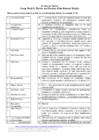
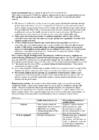
EU Internal Market Group Work I: History and Purpose of the Internal Market Please connect terms (numbers) with correct description (letter), for example 17 M 1 Common Market A ... is characterized by free movement of goods between the participating countries, but autonomous external trade policies in relation to non-participants.
do belong to a “goods” category so as it is described in CJEU case law that a good is a product which can be valued in money and which is capable of forming the subject of commercial transactions. Therefore PB&R company and its business is selling dogs, or shall I say goods not just on a local fields, but the movement of goods is linked to abroad EU countries by making a profit of it I shall conclude that it involves a “movement of goods within the EU Member States” (Articles 26 and 37). 2. Is there a restriction of trade in goods? a. Can we name an animal, or to be more exact a dog as a “good” – yes, in accordance of Article 13 TFEU: “In formulating and implementing the Union's agriculture, fisheries, transport, internal market, research and technological development and space policies, the Union and the Member
Economic Country Review: Finland, Estonia and Hungary Girli Vasiljev Report Business Economics, RB1X 06.05.2012 Abstract 06.05.2012 Experience and Wellness management Author Group Girli Vasiljev RB1X Title of report Number of pages Economic Country Review: Finland, Estonia 20 and Hungary Teacher Kalevi Torunen The goal of this paper is to compare the economic performance of Finland, Estonia and Hungary. First, a general overview on the countries will be given. After, economic indicators (real GDP growth rate, inflation, unemployment, household consumption, investment, current account, government budget and deficit) of the three countries will be compared to draw a conclusion. Keywords
European Council, the Council of the European Union (the Council), the European Commission, the Court of Justice of the European Union, the European Central Bank and the Court of Auditors.The first four of these hold the executive and legislative power of the European Union. Of these four institutions, the only one directly elected is the European Parliament whose 736 members are elected every 5 years; each citizen in each member state having the right to vote. Seats are subsequently assigned to member-states in accordance with their population, and for the purpose of sustaining some balance and proportionality, no member-state takes in excess of 99, however no less than 5. In addition to this, the European Council consists of the heads of state and the Council consists of representatives for each member, who have been elected by the citizens of their own country. In contrast, the
Switzerland Liisi Nigul Turundus II Sociological factors: Religions: Main religion is Roman Catholic 41,8%, then comes Protestants with 35,3% and on the third place are so called non-believers (people with no religion) 11,1%. (Other: muslin, orthodox, other Christian and so on). Birth rates: Switzerland has a birthrate of 9, 51 births to 1000 people, it's in the 199 place in the world's birth rate comparison. Leisure activities: Leisure activities range from taking part in grueling sports to relaxing with family and friends. Many people also devote part of their leisure time to the public service. Life expectancy at birth: total average is 81 years but if you look at genders separately it's: male 78 years and female 84 years.
Life in Estonia through the eyes of an economics student With a population of 1 313 271 people, Estonia is one of the least populous member states of the European Union. However, according to the IMF, it is a developed country with an advanced and high-income economy. Estonia follows market economy system which ensures the little government intervention and the determination of prices of goods and services in a free price system. Therefore, economic decisions are guided solely by the aggregate interactions of a country's citizens and businesses. In addition to mentioned afore, Estonia tends to perform favourably in measurements of civil liberties, education, and press freedom.
EU Internal Market Law Mid-term online evaluation assignment for Distance Learning Students The Assignment: Hypothetical Case In the Member State A several NGOs, uniting parents concerned with safety of children and young adults, ordered a study of dog attacks on people (and especially children) resulting in deaths or maiming. The aim of the study was to identify, if possible, the dog breeds of potentially enhanced danger for people. The study’s results showed that pit bulls and their close mixes as well as Rottweilers and their close mixes were jointly responsible for over 70% of attacks. The authors of the study explained
Tartu 2013 TABLE OF CONTENTS INTRODUCTION ................................................................................................................... 4 1. UKRAINE ...................................................................................................................... 5 1.1. General information ..................................................................................................... 5 1.1.1. Country Profile ..................................................................................................... 5 1.1.2. Post-Independent Ukraine. Economy and politics ............................................... 6 1.1.3. Key Macroeconomic indicators ......................................................................... 14 1.1.4. Foreign Direct Investments ................................................................................ 16 1.1.5
Tallinna Mustamäe Humanitargümnaasium Valeria Jefremenkova ENGLISH AS A GLOBAL LANGUAGE INGLISE KEEL KUI ÜLEMAAILMNE KEEL Research work Supervisor: Jevgenija Kozlova Tallinn 2016 1 Table of Contents СONTENT…………………………………………………………………………………...2 INTRODUCTION…………………………………………………………………………...3 CHAPTER I……………………………………………………………………………….....5
that euro improves the standard of living - I hope they are right because at the moment Estonia is one of the poorest countries in the European Union being ahead of only Poland, Latvia and Lithuania (based on statistics of 2004). I also picked this problem due to the unawareness of myself and many others. If I help at least one person (excluding myself) to clarify this concern then I've achieved my purpose. European Union is a political and economic union, which has 27 member countries. 17 of them have taken collective currency into use - euro. The main goal of this union is to assure uncommitted movement of citizens, commodities, services and capital. The first usage of euro (as an electronical currency) was in 1999 within banks and enterprises. In 2002 first bank-notes came into money-traffic. The whole value of issued euro coins and notes is over 704 billion euros. In 1995 on 25th November Estonian prime minister Tiit Vähi signed the
Public International Law is a system of law, different from domestic law. Why is this system unique? Usually law regulates relations between people, people and the state etc, PIL regulates relations between states. Thats why PIL is important for international relation students. PIL influences the life of everybody, it doesn't regulate people directly but indirectly (through the decisions of the states), because it's everywhere. It's like air. E.g. when you want to send a letter to Brazil, you put a stamp from your own country and send it from your post office and the letter gets delivered. Why is this so easy, because there are certain international conventions that regulate postal services
Even though Brexit is seen by its leaders as a positive change, it will also have quite a negative effect on Britain and play a big role in reshaping European Union. Most British people were voting for Brexit to regain sovereignty, to ‘take back control’ and regulate their laws. At first glance, it may seem that they would be in charge of their actions which would mean that nobody on the outside can manipulate them. Although nowadays countries depend on each other a lot and the UK is no exception. Everything is more connected than ever and because of that existing completely on your own is quite an impossible task. For that matter, giving up a little bit of sovereignty can be beneficial. For example, trading in the EU. It is not always regulated by countries and some may not like it, but it can also lead to new routes, destinations which in the end can bring bigger profits. Also, being on your own and
giant of Africa. In the last 32 years, I have watched with horror and outright helplessness as the downward slide of the African race continues to escalate. But rather than address the problems, we resort to blaming the Caucasians, Asians and others for our misfortune. We are not men enough to accept responsibility for our actions. Africans blame either the British, French or little Portuguese/Spanish for their problems. Africans in America blame the Caucasians for all their problems, or any other ethic group they have allowed to take over their neighbours, a frequently recurring phenomena. Africans blame the International Monetary Fund, the World Bank, the Group of 7, the former colonial masters for the abject poverty in our respective countries. We blame the wars ravaging several African sectors on the interference of our former colonial masters on “our internal affairs.” Ha! – some kind of independence!
business principles of efficiency. NPM is based on the understanding that all human behavior is always motivated by self-interest and, specifically, profit maximization. Epistemologically, it shares with STE the quantification myth, i.e. that everything relevant can be quantified; qualitative judgments are not necessary. It is popularly denoted by concepts such as project management, flat hierarchies, customer orientation, abolition of career civil service, depolitization, total quality management, and contracting-out. NPM comes from Anglo-America, and it was strongly pushed by most of the International Finance Institutions (IFI's) such as the World Bank and the IMF. It originates from the 1980s with their dominance of neo-liberal governments (especially Thatcher and Reagan) and the perceived crisis of the Welfare state, but it came to full fruition in the early 1990s. NPM is part of the neo-classical economic imperialism within the social sciences, i.e
.....................................................................................9 2.5 Industrial and Manufacturing Energy Use..................................................................11 2.6 Transportation Energy Use.........................................................................................12 RENEWABLE ENERGY..................................................................................................14 3.1 What Role Does Renewable Energy Play in the United States?................................ 14 3.2 Why Don't We Use More Renewable Energy?..........................................................15 NONRENEWABLE ENERGY.........................................................................................16 SIGNFICANT EVENTS IN THE HISTORY OF ENERGY BY FUEL.......................16 5.1 Signficant Events in the History of Energy Uses....................................................... 18 SAVING ENERGY ...........................................
The Membership of World Organisations Merilin Tamme Xa Tallinna Järveotsa Gymnasium 2008 The schedule · 04.04.1949 establishment of NATO. · 1951 Supreme Headquarters Allied Power Europe (SHAPE) was created near Paris in France. Later, SHAPE was relocated to Mons in Belgium. · 1952 Greece and Turkey join NATO. · 1955 Western Germany joins NATO. · 1982 Spain joins NATO. · 1991 Rome summit. Estonia is one of the founding members of the NACC. · January 1994 Brussels summit. Estonia joins PFP on 3 February. · March 1995 Estonia submits the first Individual Partnership for Peace (IPP) to NATO
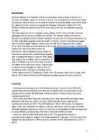
Introduction Estonia, officially the Republic of Estonia (Estonian: Eesti or Eesti Vabariik) is a country in the Baltic region of Northern Europe. It is bordered to the north by Finland across the Gulf of Finland, to the west by Sweden across the Baltic Sea, to the south by Latvia (343 km), and to the east by the Russian Federation (338,6 km). The territory of Estonia covers 45,227 km² and is influenced by a temperate seasonal climate. The Estonians are a Finnic people closely related to the Finns, with the Estonian language sharing many similarities to Finnish. The modern name of Estonia is
Single European Act: harmonisation of health and safety conditions at work; possibility for social partners at European level to negotiate collective agreements + Community policy for economic and social cohesion. Maastricht treaty: promotion of high level of employment and social protection was officially introduced as one of tasks conferred to the European Community. Amsterdam treaty: encourages cooperation between Member states in order to combat social exclusion. European Council – Lisbon: aimed to make the EU the most competitive economy in the world and achieving full employment by 2010. Treaty of Nice: adopted European social policy agenda up to 2005, converting the political commitments made at Lisbon into concrete action. Treaty of Lisbon: emphasizes EU’s social objectives, among which full employment (social employment policy),
Benefits and drawbacks of the EU Joining the European Union in 2004 has definitely brought some good and some bad things to Estonia in the past 9 years. As they say, you have to take the good with the bad. One positive thing that almost immediately pops into my head is the fact that being in the EU makes travelling so much easier between the member countries. So, along with the EU currency the euro, travelling in Europe has never been this easy. Now people don't even have to exchange their currency when travelling for example to Finland. But the simplification of travel could also bring some drawbacks. With leaving the country being so easy, many students who are looking for better opportunities abroad now have the chance to easily leave their homeland and maybe never come back. So Estonia is losing some of its valuable young people. And since the use of euro, prices have gone up a lot, and Estonians are
Kihelkond - parish Come/enter into force - jõustuma Legislative bodys seadusandlikud organid Curia.europa.eu Eur-lex.europa.eu c-200/02 Zhu Chen 12.02.09 Case brief You have to know the name and nr of the case (ex Zhu or Chen) When I answer home reading start with the name and nr of the case. And then the parties. (preferably ,,Full court"). Then the relevant problems and events. Let the details be. The next one is what was the question that was asked from court. (Normally very concrete question). Then the decision of the court with my own words. (5 things all together!): 1. Name and nr of the case 2. The parties (there is a trick queen v Smith might mean state v Smith (in UK) a not criminal case; people v Smith it is a criminal case; Brown v Smith means that it's a civil case.) 3
................................ ................................. Aborigines and first settlers.......................................................................................... Sports............................................................................................. .................................... Culture............................................................................................. .................................. Factfile Australia is the only country in the worlf that fills the whole continent. The continent is also called Australia, if you want to make clear that you are speaking about the country you may call it by its official name: Commonwealth of Australia. Australia is the smallest continent, but one of the largest countries in the world. Its area is about 7,6 million sq kilometers. Its population is about 20,0 million and most of the people live in bigger cities: Sydney (4.2 million), Melbourne (3
Tallinn English College Topic Estonia Tallinn 2008 1. Introduction Estonia is a small country about the size of Switzerland, or New Hampshire and Massachussetts combined. Estonia is named after the people called "Ests" who lived in the region in the 1 st century AD. The Republic of Estonia is one of the three countries commonly known as the "Baltic States". The other Baltic States are Latvia and Lithuania. 2. Geographical position Estonia is situated in northeastern Europe. Estonia is bounded on the north by the Gulf of Finland, on the east by Russia, on the south by Latvia and on the west by the Baltic Sea. In the north it borders on Finland. The coastline of the Baltic Sea in Estonia is characterized by numerous gulfs and bays, the biggest of them being the Gulf of Finland, the Gulf of Riga and the Gulf of Pärnu. Bays include the
This essay is about criticism to IMF and World Bank. Critics of the World Bank and the IMF are concerned about the ‘conditionalities’ imposed on borrower countries. Often the conditionalities are attached without due regard for the borrower countries’ individual circumstances and the prescriptive recommendations by the World Bank and IMF fail to resolve the economic problems within the countries. As a example author is using Ecuador that is a small country in South America. In 1968- 1998 IMF and World Bank interviened with large loans to help the country but the growth of poverty increased form 50% to 70%, under or unemployment 15%to 70% and the public debt grew from 240 million to 16 billion (Perkins, 2004, lk 239). This essay is going to explore how this kind of thing could have happened? The idea is not to blame well-known organizations. The idea is to observe and
Pros and Cons of the European Union The European Union is a unique partnership between 27 democratic countries in the Europe. The European Union has brought peace and economic prosperity to Europe. The European Union helps a lot of countries and many Europe countries wish to be EU members. But is it really useful to join into the union? The European Union has a lot of pros, but there are also some cons. On the one hand, the European Union gives benefits to Member States. Firstly, it is easy to travel from one Member State to another, live, study or even work there. Secondly, there is no need to change money because most Member States use Euro as the common currency. Thirdly, thanks to the European Union food products became safer and phone calls to European countries cheaper. Furthermore, if somebody has own company, it is easy for him to offer his products and services in other Union countries. Finally, all of the
Preparing for exam. Focus areas Defining innovation ● “An innovation is an idea, practice, or object that is perceived as new by an individual or other unit of adoption.” (Rogers 1952) ● CIS survey: “Product innovations must be new to your enterprise, but they do not need to be new to your market”. ● “Companies achieve competitive advantage through acts of innovation. They approach innovation in its broadest sense, including both new technologies and new ways of doing things” – (Porter 1990) ● “An innovative business is one which lives and breathes “outside the box”. It is
 annaabi.ee