Leidsid 33 sarnast õppematerjali, mis on seotud failiga "Stonehenge". Need materjalid aitavad sul teemat sügavamalt mõista.
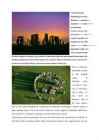
stone, henge, stonehenge, stones, monument, burial, other, phase, land, construction, surrounding, around, however, suggested, ditch, evidence, years, river, english, below, recent, first, early, bank, project, dating, place, meaning, shown, function, sites, whilst, another, heritage, itself, owned, found, least, mike, parker, pearson, beginning, domainSTONEHENGE Stonehenge is surely Britain's greatest national icon, symbolizing mystery, power and endurance
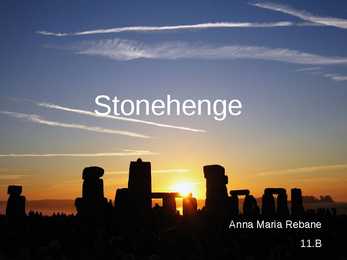
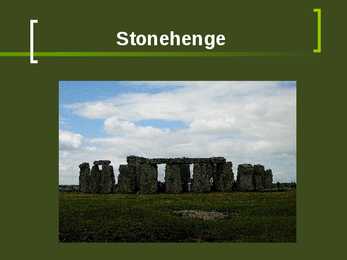
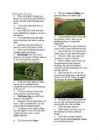
Stonehenge Anna Maria Rebane 11.B Facts about Stonehenge · 5000 year old prehistoric ritual monument · the most famous prehistoric monument in Europe · one of the most ancient and mysterious structures in the world · 3.2 kilometers west of Amesbury and 13 kilometers north of Salisbury · south-western England; in the English county of Wiltshire · built in the late Stone Age (Neolithic) and the Bronze Age The History of Stonehenge · "The Mystery of Stonehenge" · the building began in 3000 BC by semi-nomadic peoples · The first stone to be placed - Heel Stone. · some stones weigh about 45 tons each and are 7m high · the largest stone weights as much as 50 tons · no wheels and no metals · their tools - stones, bones and wood · built in several stages
Stonehenge Hort 4000 Mary Laine What is Stonehenge? Derived from words that mean hanging stones, circle of stones, or stone hinges 162 stones originally and about half remain today Southern England, eight miles north of Salisbury and 30 miles north of the English Channel Nearby hillsides are covered with hundreds of burial pits known as barrows 80% of the barrows face east towards where the sun rises on the horizon There are at least 900 circles in Wales, Scotland, England, and Ireland. Most are made of stone, but wood was also used. Soil was also piled up to create banks, ditches, and circles. Many of these structures are of archaeological interest and are found throughout the countries. The builders Prehistoric people Carbon dating shows that it
England Sightseeings Stonehenge Is a prehistoric monument located in the English county of Wiltshire, about 3.2 kilometres (2.0 mi) west of Amesbury and 13 kilometres (8.1 mi) north of Salisbury. The dating of cremated remains found that burials took place as early as 3000 B.C, when the first ditches were being built around the monument. One of the most famous prehistoric sites in the world. The site and its surroundings were added to the UNESCO's list of World Heritage Sites in 1986 in a co-listing with Avebury henge monument, and it is also a legally protected Scheduled Ancient Monument. Biggest stone is press 26 ton. Cambridge'is College was founded in the 13.century. this is world oldest ang the best collage. Oxford college Is founded in 1379. The College's motto, created by William of Wykeham, is "Manners Makyth Man"
1) INDIAN ROCK ART: A NATIONAL TREASURE IN DANGER Unrecognized, unprotected, this priceless legacy of primitive art has endured the ravages of nature only to fall victim to wanton destruction by ,,civilized" man. Like the huge stone statues of Easter Island and prehistoric cave paintings of Altamira and Lascaux, North American Indian rock art is surrounded by an atmosphere of mystery. Although examples of rock art exist at some 15000 sites in canyons, deserts, caves and river gorges. Nowadays, however, primitive rock art in the United States has become a new field of scientific study. Klaus F Wellmann wrote two books about rock art. He is a professor of medicine. Rock art represents the history of aboriginal Americans
Stonehenge About Stonehenge History "Mystery of Stonehenge" Construction Location Stonehenge Tour Location South-England 90 miles west of London 3.2 kilometres west of Amesbury, 13 kilometers north of Salisbury. History Evolved between 3,050BC and 1,600BC Constructed in three main phases: 3050BC, circular ditch and bank 2600BC, wooden structure constructed at centre 2500-1500BC, monument constructed, arranged and re- arranged "Mystery of Stonehenge" Multiplicity of theories: Stonehenge was domain of the dead, Woodhenge was land of the living. Place of healing. Observatory, temple Used for astronomical views. Construction Three periods: Period I (c. 2950-2900 BC) - circular enclosure (56 Aubrey holes and 4 Station Stones inside it), outlined by two banks, ditch with an entrance to the northeast, heel stone,
1. The Queen’s official title. Elizabeth the Second, by the Grace of God, of the United Kingdom of Great Britain and Northern Ireland and of Her other Realms and Territories Queen, Head of the Commonwealth, Defender of the Faith. 2. The Queen’s working day. Starts after breakfast. Reads the newspapers which are prepared by the Press Secretary, and a report on the previous day’s proceedings in the Parliament and the letters she receives. Also phone calls. Once a month she attends the Privy Council in order to give Royal Assent to various items of government legislation.
Study questions on chapter 1 Stonehenge - is pre-historical moument located in the English county of Wiltshire. 2400 BC 22 000 BC. It is composed of a circular setting of large standing stones. The site and its surroundings were added to the UNESCO's list of World Heritage Sites in 1986 Celtic Invasion It begun about 500 years BC. Celts brought iron with them to Britain (and pagan traditions). But it is belived that there was never an organized Celtic invasion.(Celts were too fragmented to make it happen) Iron Celts brought iron with them into Great Britain which made some big changes. Iron is stronger then bronze and iron ore is more common(it made tools and weapons better)
Main Sights England is known for its many world-famous sightseeings and people all around the world come to see them. Some of them are even like symbols of England. The most famous ones are: Stonehenge is one of the greatest national icons of Britain. That prehistoric monument is located in the plain of Salisbury, in the county of Wiltshire in the south-west of England. It is built of 150 enormous stones which are set in a purposive circular pattern. Stonehenge was probably built to mark the longest and shortest day of the year because it lies on the line of the midsummer sunrise and the midsummer sunset. That would have enabled people to keep a record of changing of seasons. Although it is still unclear who built it. Hadrian’s Wall is an ancient wall which was built in 2nd century by Hadrian, the emperor of Rome from AD 117 to 138, and it marked the northern border of the Roman Empire in Britain
Prehistoric Britain · They built forts on hilltops and · When the English Channel was pro-tected them with ditches and formed by meltic ice(around 6000 BC), ramparts. Britain was part of the European land mass. · The earliest inhabitants lived in limestone caves. · About 3000 BC the British Isles were inhabited by a people as known as the Iberians. · Celts and Iberians both lived under · They used stone axes and made the primitive system: there was no antlers and bones into leather-working private property, no classes and tools.
(stone, wood, cast and wrought iron, and what we use today - concrete and steel). The purpose of this contextual essay is to provide parameters of value and significance so that we can focus our attention on those bridges - globally - that best illustrate the history of bridge building, and to encourage their preservation. What is a World Heritage bridge? The World Heritage Committee states that to be of World Heritage status a monument or site must be of outstanding universal value. It must illustrate or interpret the heritage of the world in terms of engineering, technology, transportation, communication, industry, history, or culture. World Heritage industrial sites and monuments must meet one or more of the following criteria and pass the test of authenticity: Represent a masterpiece of human creative genius; Have exerted great influence, over a span of time or within a cultural area of the world, on
Great Pyramid of Giza The Great Pyramid of Giza (also called the Pyramid of Khufu and the Pyramid of Cheops) is the oldest and largest of the three pyramids in the Giza Necropolis and is the only one of the Seven Wonders of the Ancient World that survives mostly intact. Originally the Great Pyramid was covered by casing stones that formed a smooth outer surface, and what is seen today is the underlying core structure. Some of the casing stones that once covered the structure can still be seen around the base. There have been different scientific and alternative theories regarding the Great Pyramid's construction techniques. Most accepted construction theories are based on the idea that it was built by moving huge stones from a quarry and dragging and lifting them into place. There are three known chambers inside the Great Pyramid. The lowest chamber is cut into the bedrock upon which the pyramid was built and was unfinished
Snowdonia and include Snowdon, which at 1085 m (3,560 ft) is the highest peak in Wales. Welsh flag has a red dragon on a white and green background. It is not represented on the Union Jack. England is 130 000 square kilometres. Its capital is London. The population is about 50 million people and growing because of immigration. England is bordered to the north by Scotland and to the west by Wales. It is closer to continental Europe than any other part of Britain, divided from France only by a 38 km sea gap. The Channel Tunnel, near Folkestone, directly links England to the European mainland. The English/French border is halfway along the tunnel. London is by far the largest English city and one of the largest and busiest cities in the world. Birmingham is the second largest. A number of other cities, mainly in central and northern England, are of substantial size and influence. These
Ergo Pikas Integration of Lean Construction and Building Information Modelling DISSERTATION Tallinn 2010 2 UNIVERSITY OF APPLIED SCIENCES Author: Ergo Pikas- Civil Engineering student, Faculty of Construction, Tallinn University of Applied Sciences Supervisor: Rafael Sacks- Associate Professor, Faculty of Civil and Env. Engineering, Technion Israel Institute of Technology Consultant: Roode Liias- Professor and Dean, Faculty of Civil Engineering, Tallinn University of Technology Title: Integration of Lean Construction and Building Information Modelling
White Cart Water.Crookston is surrounded by a defensive ring-ditch that dates back to the 12th century when Sir Robert de Croc, built a timber and earth castle. Remains of a chapel founded by de Croc in 1180 have been uncovered. Evidence of an even earlier fortification on the same site has also been found. The lands of Crookston were bought by Sir Alan Stewart in 1330, and passed to Sir John Stewart, 1st Lord Darnley, in 1361. The Darnley Stewarts replaced the early castle with the present stone structure around 1400.In 1489 the Stewart Earl of Lennox rebelled against James IV. James responded by bringing the cannon Mons Meg from Edinburgh, and bombarding the castle, virtually destroying its western end, and ensuring a quick surrender. In 1544 the castle was besieged and taken by the Earl of Arran and Cardinal Beaton, while the then Earl of Lennox was defending Glasgow Castle.Charles, the Earl of Lennox.The castle passed through several owners, until in 1757 it
customs posts to allow trade taxation. A significant portion of the wall still exists, particularly the mid-section, and for much of its length the wall can be followed on foot. It is the most popular tourist attraction in Northern England, where it is often known simply as the Roman Wall. It was made a UNESCO World Heritage Site in 1987. English Heritage, a government organization in charge of managing the historic environment of England, describes it as "the most important monument built by the Romans in Britain".[1] Sections of Hadrian's Wall remain near Greenhead and along the route, though other large sections have been dismantled over the years to use the stones for various nearby construction projects. Dimensions Hadrian's Wall was 80 Roman miles (73 and a half Modern miles or 117 kilometres) long, its width and height dependent on the construction materials which were available nearby: east of
EHITUSTEADUSKOND Ehitustootluse instituut KUIDAS MUUDAB MUDELPROJEKTEERIMINE TERASKONSTRUKTSIOONIDE PROJEKTEERIMIST, VALMISTAMIST JA EHITAMIST? HOW ARE 3D AND BIM CHANGING THE DESIGN, FABRICATION AND CONSTRUCTION OF COMPLEX STEEL STRUCTURES? EPJ 60 LT Üliõpilane: Tanel Friedenthal Juhendaja: Prof. Roode Liias Kaasjuhendaja: Prof. Carrie S. Dossick Tallinn, 2010.a. Olen koostanud lõputöö iseseisvalt. Kõik töö koostamisel kasutatud teiste autorite tööd, olulised seisukohad, kirjandusallikatest ja mujalt pärinevad andmed on viidatud.
The church suffered in the fire of 1684 and was largely reconstructed. A baroque tower was added in the 18th century and the dated weather-vane (1779) crowning the spire is the only original one on Toompea today. The church has a valuable collection of Baltic German noblemen's coats of arms, since it was the Baltic nobility's parish church. Many of them were carved from wood by the famous Tallinn wood carver Christian Ackermann in the 17th century. Among other functions, the church served as a burial ground for the rich and the noble. The church also features grave slabs, an oaken Baroque altar by Christian Ackermann and a number of monuments to famous people (e.g. Pontus de la Gardie, Karl Horn and Otto Uexküll, all Swedish military leaders; Admiral Samuel Greigh, a hero of Russo-Turkish sea battles; and Admiral Adam Johann Krusenstern, a Baltic German who was the first Russian citizen to sail round the world.
History exam *Stonehenge - is a monument located in England. It is one of the most famous prehistoric sites in the world and is composed of earthworks surrounding a circular setting of large standing stones. The surrounding circular, earth bank and ditch, have been dated to about 3100 BC. Stonehenge was produced by a culture with no written language. Many aspects of Stonehenge remain subject to debate. There is little or no direct evidence for the construction techniques used by the Stonehenge builders. *The Celts in Britain and their legacy The Cets lived in Britain in The Iron Age. They were warring tribes who were battleful amongst themselves as well as inter-tribal war. They were not centrally governed. The Celts brought iron working, iron ploughs and metal swords, horses, wheels and chariots - all these things gave them an instant superiority over the native tribes. The Celts built a number of hill forts throughout the region
Romans. The Roman Londinium grew up on the northern side of the "London Bridge" in the past. Products such as olive oil, wines and fruit were brought by ships from different parts of the Roman Empire and unloaded onto wooden quays along the river. In AD 61 the native Celtic Iceni tribe, led by Queen Boudicca, rose up against The Romans. They burnt Londinium to the ground but Roman armies eventually defeated Boudicca. The city was rebuilt and was gradually surrounded with a wall of stone and brick which lasted for many centuries. During the archeological excavations in 1954 the Roman Temple of Mithras was revealed. It was a pagan temple dedicated to the Persian Sun-god. The Temple was later reconstructed only a short way from its original site and the relics are displayed in the Museum of London in the Barbican. At the end of the fourth century AD the Roman Empire began to crumble and the Roman armies were recalled from Britain to defend Rome itself. Once they had
It was built in 1599 by Shakespeare's playing company. On 29 June 1613 the Globe Theatre went up in flames during a performance of Henry the Eighth. Two of the six Globe shareholders, Richard Burbage and his brother Cuthbert Burbage, owned double shares of the whole, or 25% each; the other four men, Shakespeare, John Heminges, Augustine Phillips, and Thomas Pope, owned a single share, or 12.5%.Theatre was built by James Burbage. · The London Eye - Is a giant 135-metretall Ferris wheel situated on the banks of the River Thames. It is the tallest Ferris wheel in Europe, and the most popular paid tourist attraction in the United Kingdom, visited by over 3
It seems that the Celts, who had been arriving from Europe from the 8th cent BC onward, intermingled with the peoples who were already there. The Celts were extremely talented people, creative and artistic. More than 1 Celtic tribe invaded Br. The descendants of ancient Celts live in Wales, Scotland, Cornwall and Ireland. They lived in primitive society. Druids priests, more powerful than chiefs. Acted like prophets. 2. Stonehenge From prehistoric period. Was built on Salisbury plain between 2500 and 1500 bc. One of the most famous and mysterious archaeological sites in the world. One of the mysteries is how it was built at all with the technology of the time. Another is its purpose. It appears to function as a kind on astronomical clock and we know it was used by the Druids for ceremonies marking the passing of the seasons. It appears in number of novels. These days it is not only the interest of tourists but is also a
50 000 BC in a milder Ice Age period Britain became habitable again. People from that time were the ancestors of the modern British. 10 000 BC ige age ended and Britain became inhabited by small groups of hunters who probably followed herds of deer. 5000BC Britain became an island and deer died out. 3000BC the Neolithic people came (probably from Spanish peninsula or even North African coast). They may be the forefathers of the people from Cornwall and Wales. The building of Stonehenge started around that time. 2400BC the 'Beaker' people arrived in Britain. They had better metal working skills and they soon became the leaders of the British society. They started building individual graves. 1300BC the farming society became more important than the henge society. 55BC the Romans arrived. The Celts The Celts arrived from central Europe or further east around 700BC. They were tall and had fair or red hair and blue eyes. They knew how to work with iron
The first bridge on record was constructed by the Romans, and since then many bridges have risen at the hands of various empires. London Bridge today remains one of the most popular tourist attractions in Britain as well as an icon for the City of London. London Bridge history records the building of a wooden bridge by the Romans about 2000 years ago. Historians suspect that the location was chosen for its relatively convenient access to the deeper ocean waters, as well as the excellent land conditions available for bridge building. The home of the London Bridge as it appeared in Roman times was in virtually the same spot as the home of the London Bridge today, suspended over the Thames River. The Romans were not the only people in London Bridge history to construct a wooden bridge. After the fall of the Roman Empire, the Saxons were known to have built at least one, if not many (due to destruction by fire and other calamities) timber bridges. The first stone structure in London
The Pennine Chain runs from the north to south, splitting northern England into western and eastern parts. The Lake District in situated in the north-west of England and there are the most beautiful landscapes and the highest peak in England is Scafell Pike (978 m). The warmest part in England is the Peninsula of Cornwall in summer. Scotland Densely / 'densl / tihedasti Scotland features very wild landscapes, large areas of untouched land, mountains and lochs. Scotland can be divided into two parts: the Lowlands and the Northern Highlands. The highest peak in Scotland is Ben Nevis (1343 m) Wales Earthwork / :w:k / mullavall Beacon / 'bi:kn / tuletorn, majakas Peninsula / p'nnsjl / poolsaar Wales is surrounded by the sea on three sides and has two major mountain systems: the Black Mountains and the Brecon Beacons. The rivers offer a wide variety of fish.
Northern Ireland * the population is about 60,000,000 people, the population density is 242 people/sq km * its coasts are washed by the Atlantic Ocean, the North Sea, the English Channel, the Celtic Sea, Saint George's Channel, and the Irish Sea. It is linked to France by the Channel Tunnel * the United Kingdom is a constitutional monarchy. The current monarch is Queen Elizabeth II, who is also the Queen and Head of State of fifteen other Commonwealth Realms, such as Canada, Australia, New Zealand and Jamaica. England: * it has 50 cities, the capital city is London * despite of the density of population and the high degree of urbanisation, England has many unspoilt rural and coastal areas which have been placed under protection * the flag is called the Saint George's Cross Scotland: * the biggest cities are Glasgow and Edinburgh (the capital)
Captain James Cook set the colonization of Australia into motion by exploring and mapping the fertile eastern coast of Australia, but he was not the first to visit Australia. There is evidence suggesting Aborigines in northern Australia maintained trade with some of the Indonesian islands closest to the coast. Chinese and Arab's may have had contact with the Aborigines in the 15th century. When British people came to live in Australia, they decided that the land was empty, that there were no people living there. This was called "Terra nullius", Latin words for "empty land".Under British law, all land belongs to the king,who is then able to sell it to other people. The sacred sites and other land which had belonged to aboriginal people for thousands of years were simply taken from them. If they did not leave peacefully then the new settlers used force to get them to leave. Many aboriginal people were killed during the settlement of Australia
probably also built the first church there. It was presumably a wooden building located at the site of the present cathedral. However, a serious conflict with the Order of the Brothers of the Sword broke out soon as the latter wanted to gain control of the entire Estonia. The order succeeded in subordinating Tallinn and the whole of North Estonia to its rule in 1227. The monks of the Dominican Order began the construction of a stone church in Toompea in 1229. The first written data on the cathedral date back to 1233, the date of a battle between the order and the pro-papal vassals, who attempted for the last time to turn Tallinn into the centre of the ecclesiastical state, and were defeated. According to the records, the battle had spread to the interior of the church and the bodies of the fallen knights had piled at the altar. The resettling of the Dominican monks from Toompea to
It was believed that a witch often joined a pact with the devil to gain powers to deal with infertility, immense fear for her children's well-being, or revenge against a lover. The long-term result of amalgamation of distinct types of magic-worker into one is the considerable present-day confusion as to what witches actually did, whether they harmed or healed, what role they had in the community, whether they can be identified with the "witches" of other cultures and even whether they existed as anything other than a projection. Present-day beliefs about the witches of history attribute to them elements of the folklore witch, the charmer, the cunning man or wise woman, the diviner and the astrologer. Powers typically attributed to European witches include turning food poisonous or inedible, flying on broomsticks or pitchforks, casting spells, cursing people, making livestock ill and crops fail, and creating fear and local chaos.
height 38 meters and is located at the top of Corcovado Mountain is 710 m high in the Tijuca Forest National Park, overlooking the city. Chichen Itza It is a Mayan archaeological heritage in Mexico is the most complete and still well maintained. According to the Mayan culture of Chilam Balam, the temple complex was built between the years 502-522 AD. Mayans occupy just over 200 years, then they migrate to coastal areas in Campeche. Itza is the central point of the complex and other buildings such as the Pyramids of Kukulcan, Temple of Chac Mool, and building the Thousand Pillars. Colosseum Is a large theater / Amphitheater, located at the State Capital of Italy, Rome, called the original "Flavian Amphitheatre", founded by King Vespasian and completed by his son Titus. Some argue that the Colosseum was made in the year 79 BC. Originally Colosseum name comes from a statue 130 feet or 40 m are called Colossus. This place is set to accommodate 50,000 spectators.
Scotland ! Scotland (Gaelic: Alba) is a country in northwest Europe that occupies the northern third of the island of Great Britain. It is part of the United Kingdom, and shares a land border to the south with England. It is bounded by the North Sea to the east, the Atlantic Ocean to the north and west, and the North Channel and Irish Sea to the southwest. In addition to the mainland, Scotland consists of over 790 islands including the Northern Isles and the Hebrides. Edinburgh, the country's capital and second largest city, is one of Europe's largest financial centres. It was the
Baroque, Neoclassicicm, Historicism and even Art Nouveau. The origin of the name "Lai" Lai Street belongs among the oldest streets of Tallinn. Despite its length and width its share in the city's inner traffic is fairly modest. The extraordinary width of the street is likely due to the fact that the town wall used to be there and the street then sprang up on both sides of the city wall. But that city wall was eliminated in the construction of a new wall to the west. The freed area became a beautiful wide street with local significance, its main purpose was to create a link between the monastery of St Michael's female Cistercians (founded in 1294) and St Olaf's church. Previous names of the street also refer to it: Susterstrate 1361; Platea sororum 1364-1380; 1606 Süsterstrasse and Schwestergasse, all of which include the concept of a nun or a sister.
1.3. High and Low Profile Games Marner distinguishes between high profile and low profile games [Marner 2002]. A high profile game is endowed with massive development costs (perhaps US$5 million or more), a generous advertising budget, a large development staff, and a very visible presence for game retailers and magazines. To recoup the enormous upfront expenses, high profile games tend to utilise cutting-edge graphics (which require high hardware performance), and tie-ins with other media such as movies or books. A low profile game is aimed at a smaller market, and may be limited to a single platform, or user community. It may have been developed by a single person (or small group), and be advertised in specialized newsgroups and mailing lists, leading to a substantial reduction in costs. Low profile games may have less `polish', use less state-of the-art graphics, and place more emphasis on game design and characterization. 2. Java for Games
 annaabi.ee