Leidsid 33 sarnast õppematerjali, mis on seotud failiga "St Paul's Cathedral ". Need materjalid aitavad sul teemat sügavamalt mõista.
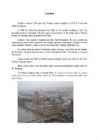
cathedral, service, services, here, sights, church, charge, hill, building, today, held, attend, those, there, important, marriage, queen, wren, importance, seat, bishop, present, dates, 17th, century, sits, highest, busy, working, daily, welcome, whilst, wish, cost, seeking, place, quiet, pray, chapel, admission, sightseeing, royal, westminister, abbeyand the third-tallest free-standing clock tower in the world. The clock first ticked on 31 May 1859. The pendulum is installed within an enclosed windproof box sunk beneath the clockroom. It is 3.9m long, weighs 300 kg and beats every 2 seconds. The clockwork mechanism in a room below weighs 5 tons. · Buckingham Palace is the official London residence of the British monarch. Originally known as, the building which forms the core of today's palace was a large townhouse built for the Duke of Buckingham in 1703 on a site which had been in private ownership for at least 150 years. During the 19th century it was enlarged, principally by architects John Nash and Edward Blore, forming three wings around a central courtyard. Buckingham Palace finally became the official royal palace of the British monarch on the accession of Queen Victoria in 1837.
Queen Caroline made a division between the two. THE TOWER OF LONDON: Her Majesty's Royal Palace and Fortress, more commonly known as the Tower of London (and historically as The Tower), is a historic fortress and scheduled monument in central London, England, on the north bank of the River Thames. It is located within the London Borough of Tower Hamlets and is separated from the eastern edge of the City of London by the open space known as Tower Hill. It is the oldest building used by the British government. [1] TOWER BRIDGE: Tower Bridge is a combined bascule and suspension bridge in London, England, over the River Thames. It is close to the Tower of London, which gives it its name.It has become an iconic symbol of London. WESTMINISTER ABBEY: Westminster Abbey is steeped in more than a thousand years of history. Benedictine monks first came to this site in the middle of the tenth century, establishing a tradition of daily worship which continues to this day
Roman armies were recalled from Britain to defend Rome itself. Once they had left Anglo-Saxons invaded and settled in Britain. They were farming people who preffered to live outside towns. For a while London probably lay in ruins, but it eventually developed again, partly because of its position on the river was good for trading. The Tower of London There is more of London's history in the Tower than anywhere else in London. It is the oldest surviving building in the capital. The Tower of London was begun by William the Conqueror in 1078 as a castle and a palace but even before the site had been used by the Romans and Anglo-Saxons. The tower comprises not one, but 20 towers, the oldest, the White Tower, dates back to the 11 th Century. The Roman stone wall, parts of which can still be seen on the territory of the Tower, may have been a small Roman fort near the river. The White Tower, called so on account of the white Caen stone Brought from
census and also straight roads, central heating and concrete. Anglo- Saxons around AD 400 Anglo- Saxons were warrior farmers from Germany, Denmark and the Netherlands. Later in the 5th century, Anglo-Saxons settled just west of Londinium, around the Strand, and formed the town of Lundenwic. The area of the old Roman city became a landing-place for ships and a centre for trade.The first English King to convert to Christianity, King Ethelbert, founded St Paul's Cathedral in 604. The Vikings 8th and 9th century By the 9th century, London was a very prosperous trading centre, and its wealth attracted the attention of Danish Vikings. The Danes periodically sailed up the Thames and attacked London. In 851 some 350 longboats full of Danes attacked and burned London to the ground. King Alfred the Great totally defeated the Danes in 878 and they split the country between them. The Danes took eastern England including London while Alfred took the South and West
a while London probably lay in ruins, but it eventually developed again, partly because its position on the river was good for trading. In 1666 most of the City of London was destroyed in the Great Fire of London. London Bridge The home of the London Bridge is the Thames River, and a bridge has existed on the spot for at least the last 2000 years. The first bridge on record was constructed by the Romans, and since then many bridges have risen at the hands of various empires. London Bridge today remains one of the most popular tourist attractions in Britain as well as an icon for the City of London. London Bridge history records the building of a wooden bridge by the Romans about 2000 years ago. Historians suspect that the location was chosen for its relatively convenient access to the deeper ocean waters, as well as the excellent land conditions available for bridge building. The home of the London Bridge as it appeared in Roman times was in virtually the same spot as the
its seat is the Palace of Westminster in the City of Westminster, one of the Boroughs of the British capital - London. Tower of London The Tower of London, officially Her Majesty's Royal Palace and Fortress of the Tower of London, is a historic castle located on the north bank of the River Thames in central London. It lies within the London Borough of Tower Hamlets, separated from the eastern edge of the square mile of the City of London by the open space known as Tower Hill. It was founded towards the end of 1066 as part of the Norman Conquest of England. St. Paul`s Cathedral St Paul's Cathedral, London, is an Anglican cathedral, the seat of the Bishop of London and the mother church of the Diocese of London. It sits on Ludgate Hill at the highest point of the City of London and is a Grade 1 listed building. Its dedication to Paul the Apostle dates back to the original church on this site, founded in AD 604.
into English. As the Saxons began to accept their Norman conquerors, however; language change became more rapid, with 10,000 Anglo-Norman words entering English before the 15th century. Vocabulary Change Of the 10,000 French words adopted during the Norman occupation, three-quarters of these are still in use. Currently, French vocabulary is found in all areas-government, law, art, and literature. More than one third of English words today are derived, directly or indirectly, from French. This is so pronounced, that without prior study, English speakers already know 15,000 French words. Pronunciation Change Much of current English pronunciation can be traced to definite French influence. Old English had many unvoiced, fricative sounds, while French introduced voiced counterparts. English French f v
the wonderful feeling of strolling the streets and landmarks. Take the following questions with you, find answers to them and put them down for yourself in this MSWord document. Don't forget to "take" photos - you are supposed to recognise the landmarks later on! At the end of the tour send the worksheet to yourself so that you could use it again. Good luck with exploring the city! DAY 2. The route: Westminster Abbey The Houses of Parliament London Eye 10 Downing Street St Paul's Cathedral The Tower of London Tower Bridge Globe Theatre Greenwich Observatory Destination 1: Westminster Abbey When was Westminster Abbey founded? (see its homepage: http://www.westminster-abbey.org/home ) 960 When was the last royal wedding held in Westminster Abbey? Whose was it? 29 April 2011 Prince William and MissCatherine Middleton How many monarchs have been buried in Westminster Abbey? 17 Destination 2: The Houses of Parliament
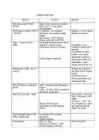
Wars of the Roses (1455- 1488) Henry VIII - 1534 the Breach with the papacy Act of Supremacy made The formation of the Anglican the crown the spiritual church head of the nation The Elizabethan period (1558- Fourfold growth in London 1603)- A golden age population Timber buildings Stuart dynasty The Civil War Oliver Cromwell Execution of Charles I - 1649 Puritan Republic (1653-60) Charles II took the throne 1660
difficult to forecast. It is not unusual for people to complain that the weathermen were wrong. Fortunately there is no extreme weather conditions, it is never very cold or very hot. The first inhabitants were Iberians and Celts who settled on the land and were often at war with each other. In AD 43 the Roman Emperor Claudius invaded, and made Britain a Roman province. They stayed for three hundred years, and built villas, roads and towns. Many Roman remains can be visited in Britain today. The Romans finally abandoned Britain in AD 410 and a long period of invasion by Nordic peoples (from northern Germany and Scandinavia) started. The Angles, Saxons and Jutes began to settle from the sixth to the eighth centuries, and the Angles gave England its name. These invaders introduced a new culture to Britain, and even today British customs and habits are described as ´Anglo-Saxon`. Anglo-Saxon England was one of
But, under the control of various English kings, London once again prospered as an international trading centre. However, Viking raids began in the late 10 th century and reached a head when they took the city under Danish king Canute and forced the then-English king to flee. Years later, following a victory at the Battle of Hastings, William the Conqueror was crowned King of England in the newly-finished Westminster Abbey in 1066. William granted the citizens of London special privileges while building a castle in the corner of the city to keep them under control. This castle was expanded by later kings and is now known as the Tower of London. The city grew in wealth and population during the Middle Ages. In 1100 its population was around 18,000 but after 200 years it had grown to nearly 100,000. However disaster struck during the Black Death, when London lost nearly a third of its population. After the defeat of the Spanish Armada, stability in politics allowed the city to grow even more
In 1337 the Hundred years war against France began. The black death in 1348 took many many lives. Almost half of the city's population. In 1381 the grievances [griivensis] of the lower class exploded into the ,,Peasant's [pesents] revolt". The Hundred Years War was almost immediately followed by the war of roses. It was between two branches of the Royal house York and Lancaster. It was ended by Henry Tudor in 1485. (lancaster) Henry Tudor started with a great act of piety: The building of a beautiful fan roofed chapel in Westminster Abbey. It was completed by his son. His son Henry the VIII made the crown the spiritual head of nation. A huge amount of property which had previously been owned by Roman Catholic Church was sold or given away and the houses stood empty. The Elizabethan period is often considered to be the golden age. Elizabeth was succeeded by her closest relative James VI of Scotland. The unhappy Stuart Dynasty witnessed the Civil
family. During the summer Queen usually stays at her other residence the Winsor Castle Another Symbol of London is the Trafalgar square, which was named after Nelson's vicotry over Napoleon at Trafalgar. The statue on top is about 5m high and shows Nelson without on arm and eye. Near the Trafalgar Square is the National Gallery, where you can see paintings from Rubens to Van Gogh. Big Ben and the houses of parliament are known to everyone. The building stands on the north bank of the river and is most known symbol of UK. The tower of london is a fortress built by William the Conqueror. It is guarded by Beefeaters and the ravens. There is a legend which says that if one of the eight ravens left, the tower would fall. The crown yewels are held there. Tower bridge is a bridge near the Tower of London. It is on the river Thames. It's a draw bridge, which can be raised to let the ships pass through.
Later that year he was defeated by William, Norman duke. William I was crowned king in Westminster Abbey. In the following years London grew rapidly and by 1300 about 80,000 people lived there. The Black Death killed of 134850 killed about half this population. Tudor London London grew in importance under Tudor rule. King Henry VIII created palaces such as St James's. He is also famous for closing the country's monasteries in 1536, after the Catholic Church refused to grant him a divorce. During the reign of Elizabeth I, London was a wealthy and successful city. Theatre became popular, helped by the arrival of playwright William Shakespeare some time between 1584 and 1593. Plague and fire London suffered two disasters in later Stuart years. In 1665 the Great Plague killed about 70,000 people. In the 1666 the Great Fire destroyed almost all of the City and a large area to the west
had a white rose as their symbol. The war was about who should be on the throne, the red rose won and thereafter the red rose has been the symbol of England. 7. How was Protestantism established in England? When and by who? It was established by Henry VIII because he wanted to divorce his first wife. Up until then England was Catholic and divorcing was not allowed for him. He really wanted a new wife, so he declared that England was no longer a part of the Catholic Church and made himself as the head of the new church. It happened in 15 8. What good did the invasion of Romans bring to England? It brought roads and order. They also built the first version of London. 9. What do you know about the Tower of London? It was at first a castle for the king of England, but Henry VIII turned it into a prison. There are Beefeaters, who are the tour guides now but used to be the guards. They keep the royal jewels there
The first railway ran from London to Greenwich. During the long reign of Queen Victoria London took on, for the most part, its present appearance. In attempt to solve the serious traffic problems the construction of the Underground began. In 1895 rower bridge was opened. In 1939 WW II broke out and many children were moved out the city. Unfortunately many of them had returned when the Blitz began in 1940. The German bombs started to fall on London like rockets. In 1991 the highest building in the UK, Canary Warf Tower, was opened. Today London is the home for seven million people speaking over 200 languages. Sights London boasts four World Heritage Sites: Westminster Abbey, the Tower of London, the historic settlement of Greenwich and the Royal Botanic Gardens. Westminster Abbey is mainly Gothic church. It served as a cathedral from 1546 1556. It is the traditional place of burial site for English monarchs . It is Located next to the Houses of Parliament.
London London is almost 2,000 years old. Romans came to England in 43 AD. It was first called Londinium. In 1666 the Great Fire destroyed four fifths of the wooden buildings in the City including St Paul`s Cathedral. The fire began in the kitchen of the King`s baker Thomas Farriner in Pudding Lane and lasted for five days. London is the capital of England and the United Kingdom. By now London has swallowed up many of the small towns and villages that once surrounded it. London is on the same latitude as Warsaw. London is a city were more than 7 million inhabitants live. In London there are famous Telephone booths and taxis. Also there are red double- decker buses
Tallinn Mustamäe College G2K Jaana-Kristiina Jõgevest The Four oldest churches of Tallinn Report Supervisor: Ingrid Teigar Tallinn 2009 The Dome Church The Danes began fortification of Toompea after the conquest of Tallinn in 1219 and probably also built the first church there. It was presumably a wooden building located at the site of the present cathedral. However, a serious conflict with the Order of the Brothers of the Sword broke out soon as the latter wanted to gain control of the entire Estonia. The order succeeded in subordinating Tallinn and the whole of North Estonia to its rule in 1227. The monks of the Dominican Order began the construction of a stone church in Toompea in 1229. The first written data on the cathedral date back to 1233, the date of a
BRITISH HISTORY 17TH-19TH CENTURY SEVENTEENTH-CENTURY ☄ When James I became the first English king of the Stuart dynasty, he was already king of Scotland, so the crowns of these two countries were united. ☄ The kind of Middle English spoken in lowland Scotland had developed into a written language known as Scots ☄ The Scottish Protestant church adopted English rather than Scots bibles ☄ Religion and politics are inextricably linked ☄ Some people tried to kill the king because he wasn't Catholic enough and another king had been killed, partly because he seemed too Catholic ☄ Anger grew in the country at the way that the Stuart monarchs raised money ☄ Puritanism- ideological Protestantism ☄ Some of them thought the luxurious lifestyle of the king and his followers was immoral
Sculptures and monuments St. John's Lutheran Church St John's Church was probably built in the first third of the 14th century. There is no other brick church decorated with so much terracotta plastic in Europe Eduard Tubin Monument The Eduard Tubin monument, marking the 100th birthday of the composer, was dedicated in 2005. The authors of the statue are sculptor Aili Vahtrapuu, architect Veronika Valk, with sound installations by Louis Dandrel.Eduard Tubin (1905-1982) was a versatile composer and conductor, one of the most recognized symphonists throughout history. He served as concert master and conductor at the Vanemuise Theatre
The throne of England passed to Canute the Great. The new king married Emma of Normandy and the couple had a son, Hardicanute. Edward lived in exile until 1041. At the death of Canute in 1035, Edward led an abortive attempt to capture the crown for himself. He was recalled, for some reason, to the court of Hardicanute. Edward was crowned at the cathedral of Winchester, the royal seat of the West Saxons on 3 April 1043. According to those who compiled the Anglo- Saxon Chronicle, the first thing Edward did, despite his religious views, was to deprive his mother of all of her estates and reduce her to relative poverty. It is said that Edward blamed her for his miserable and lonely childhood.
Kunda Ühisgümnaasium Tallin Old Town Report Student: Kristin Karu Teacher: Kristi Aron Kunda 2012 The Alexander Nevsky Cathedral The Alexander Nevsky Cathedral is an orthodox cathedral in the Tallinn Old Town,Estonia. It was built to a design by Mikhail Preobrazhensky in a typical Russian Revivalstyle between 1894 and 1900, during the period when the country was part of theRussian Empire. The Alexander Nevsky Cathedral is Tallinn's largest and grandest orthodox cupola cathedral. It is dedicated to Saint Alexander Nevsky who in 1242 won the Battle of the Ice on Lake Peipus, in the territorial waters of present-day Estonia. The late Russian patriarch, Alexis II, started
Field. Henry Tudor was later crowned King Henry VII of England. 14. Henry VIII. 1491-1547. He is famous for his six wives and his ambitions. He was a natural leader but not really interested in the day-to-day running of government and this encouraged the beginnings of a professional bureaucracy. It was during his reign that the reformation took place. When he chose to divorce his first wife, who had not given him a son, he broke away from the Roman Catholic Church. The Parliament’s Act of Supremacy in 1534 made the kind Head of the Church of England, which became Protestant. King Henry VIII held the title Defender of the Faith, which was given to him by the Pope. His daughter Elizabeth I became one of England’s greatest monarchs. 15. Elizabeth I. Elizabeth I, daughter of Henry VIII, was the first of three long-reigning queens in the British history (the other two are Victoria and Elizabeth II). During her long
Thanks to the rain Britain has a richly fertile countryside which is famous for its deep green colour. History The first inhabitants were Iberians and Celts who settled on the land and were often at war with eaeh other. In AD 43 the Roman Emperor Claudius invaded, and made Britain a Roman province. Julius Caesar had previously visited Britain to have a look around. The Romans stayed for three hundred years, and built villas, roads and towns. Many Roman remains can be visited in Britain today. Later, Christian missionaries ca me from other parts of the Roman Empire to bring Christianity to the people. The Romans finally abandoned Britain in AD 410 and a long period of invasions by Nordic peoples started. The Angles, Saxons and Jutes began to settle from the sixth to the eighth centuries, and the Angles gave England its name. These invaders introduced a new culture to Britain, and even today British customs and habits are described as 'Anglo-Saxon'.
Names of town ● Lindanise - it was first used in 1219, derived from mythical Linda, the wife of Kalev and the mother of Kalevipoeg, national hero. ● Koluvan - found in old Russian chronicles, the name possibly deriving from the Estonian mythical hero Kalev ● Reval - used after 1219; comes from two german words ‘reh’ and ‘fall’, meaning the falling of the deer - as they fall down the Toompea hill, probably when escaping from the Danish occupation or just the hunters. ● Tallinn - used after Estonia gained its independence in 1918, origin is definitely estonian; meaning Taani-linn, tali- linn. Liberty Square ● The central square of Tallinn, it was renovated in 2008. There used to be Harju gate, which can now be seen through glass. ● The statue of Liberty, 2009; represents freedom, Estonia has been under many foreign powers, starting with Danes,
After the shelling lessens, the recruit comes to and notices with embarrassment that he has defecated in his pants. Paul explains that many soldiers experience this problem at first. He instructs the boy to remove his underpants and throw them away. The men hear the wrenching sounds of wounded horses shrieking in agony. Detering is particularly horrified because he is a farmer and loves horses. After the wounded men are gathered, those in charge of shooting the wounded animals do their job. Detering declares with disgust that using horses in war is the "vilest baseness." As the trucks drive the men back, Kat becomes restless. A flurry of bombs then lands around them. The men take cover in a nearby graveyard. Paul crawls under an uncovered coffin for protection. Kat shakes him from behind to tell him to put his gas mask on. After he dons his mask, Paul helps a new recruit put his on. He then dives into a hole created by an exploding
History of Great Britain Prehistory (55BC) no written records 6th 3rd c. BC the Celts came to British isles hill figures, hill forts, stone circles ( Stonehenge ) RomanBritain (55BC 400AD) Julius Caesar, named the country Albion Hadrian's Wall, villas, roads, the town of Bath The AngloSaxon, Danish and Norman invasions Germanic tribes settled and stayed Anglia Christianity was brought, religion became important, churches were built 8th century = raids by the Vikings and the Danes 1016 1042 : Under Danish rule ( York was the capital ) 1042 : local AngloSaxons regain their rule
North Estonia on the coast of the Gulf of Finland. It has nearly half a million inhabitants and covers an area of almost 160 sqkm. It is also an important economic and cultural centre and one of the main ports in the Baltic States. Tallinn is one of the oldest cities on the Baltic Sea. It is unique for its well-preserved architecture from the 13-15 centuries. In contrast to the ancient town-walls and towers, Tallinn of today offers modern hotels, restaurants, sport and cultural centres. Every five years national song and folk dance festivals take place in Tallinn. The yachting regatta of the 1980 Moscow Olympic Games was held at Pirita. History Tallinn means in English "Danish town". The place is believed to have been settled by Finno-Ugric people about 2500 BC. It was first marked on a map of the world by the Arab geographer al-Idrisi in 1154. The Estonians were the first to build a stronghold on
workers were resettled from Russia and new blocks of flats sprang up on the outskirts to provide housing for the newcomers. Tallinn was the biggest grain-handling port in the Soviet Union. Russian speakers outnumbered Estonians in Tallinn. Estonia re-established its independence on 20 August 1991. There is still a large block of granite on Toompea which recalls the days when people barricaded Lossiplats (Castle Square) to prevent Soviet tanks gaining access. Today, Tallinn is the largest city in Estonia, with a population of about 400,000. Tallinn boasts a wonderful medieval Old Town where the atmosphere of the 15th and 15th centuries can still be strongly felt. Its narrow cobbled streets, medieval buildings with various decorative elements, attractive weather-vanes and soaring spires are very special and draw visitors in large numbers. Only a few town in northern Europe have medieval districts as well preserved as in Tallinn. It was included in
2 Towns (Upper & Lower Town) Tallinn used to be divided into 2 parts - Upper Town where lived the aristocracy, gentry and the clergy; and Lower Town with traders, craftsmen and merchants. Legend says the Toompea Hill is actually the tumulus mound of the great Kalev. Linda carried rocks to his grave. It is a naturally- formed limestone hill. Lower Town was a merchantile centre, Tallinn also belonged to the Hansaetic League (1285). It is often referred to as the town of citizens. Any grown-up, married and economically independent person, born in a legal marriage between two free people and having lived in the town for at least 3 months, could apply to the Magistracy for citizenship. Serfs could escape from serdom after having successfully hidden in town for a year and a day.
of Nations. In her specific role as the monarch of the United Kingdom, one of her 16 realms, she is also Supreme Governor of the Church of England. Elizabeth was born in London, and educated privately at home. Her father acceded to the throne as George VI in 1936 on the abdication of his brother Edward
Gümnaasium Prague referaat Autor: Klass: Juhendaja: 2010 CONTENTS 1. Contents 2. Introduction 3. Compendium about Prague 4. Important about Czech Republic and Prague 5.-7. History 8. Independence 9. Main sights 10. the Czech Republic 11. List of famous people from Prague 12. Geography 13. Weather and climate 14. Population 15. Culture 2 INTRODUCTION The Czech Republic lies at the heart of Central Europe and at its center is the beautiful and historic city of Prague. With a population of some 1.3 million residents, the city lies on either side of the
surely Buckingham Palace, which is the official London residence of British monarch, built in 1703 as a large townhouse for Duke of Buckingham. Also, Big Ben, the 150-years-old great bell of the clock at the north-eastern end of Palace of Westminster and is also the largest four-faced chiming clock in the world, and the Tower of London, a historic fortress and scheduled monument in Central London on the north bank of the River Thames, are great tourist attractions as well as St. Paul’s Cathedral, The British Airway’s London Eye, Westminster Abby and Piccadilly Circus. Tourists also love to visit Greenwich, which is best known for giving its name to the Greenwich Meridian (0° longitude) and Greenwich Mean Time. Foods and drinks English cuisine is formed by country’s history, its temperate climate and geography. The food of England has historically been characterised by its simplicity of approach and a reliance on the high quality of natural produce.
 annaabi.ee