 50 punkti
Autor soovib selle materjali allalaadimise eest saada 50 punkti.
50 punkti
Autor soovib selle materjali allalaadimise eest saada 50 punkti.
 ~ 6 lehte
Lehekülgede arv dokumendis
~ 6 lehte
Lehekülgede arv dokumendis
 2009-11-23
Kuupäev, millal dokument üles laeti
2009-11-23
Kuupäev, millal dokument üles laeti
 10 laadimist
Kokku alla laetud
10 laadimist
Kokku alla laetud
 0 arvamust
Teiste kasutajate poolt lisatud kommentaarid
0 arvamust
Teiste kasutajate poolt lisatud kommentaarid
 Kellyli
Õppematerjali autor
Kellyli
Õppematerjali autor
It displays waxworks of historical and royal figures, film stars, sports stars and famous murderers. · Millenium Bridge - The London Millennium Footbridge is a steel suspension bridge for pedestrians crossing the River Thames in London. The southern end of the bridge is near Globe Theatre, the Bankside Gallery and Tate Modern, the north end next to the City of London School below St Paul's Cathedral. The bridge has two river piers and is made of three main sections of 81 metres144 metres and 108 metres with a total structure length of 325 metresthe aluminium deck is 4 metres. Approximately 5,000 people can be on the bridge at one time. · National Gallery in London was founded in 1824 and houses a rich collection of over 2,300 paintings dating from the middle 13th century
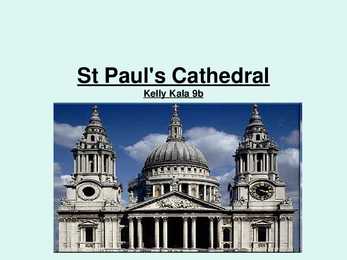
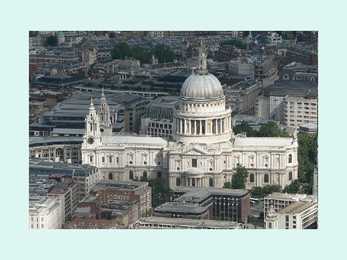
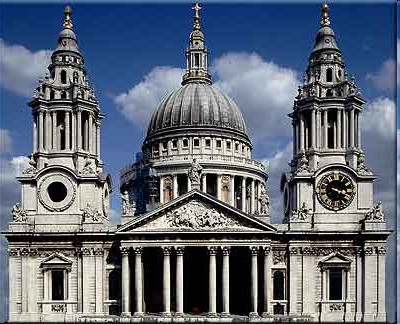
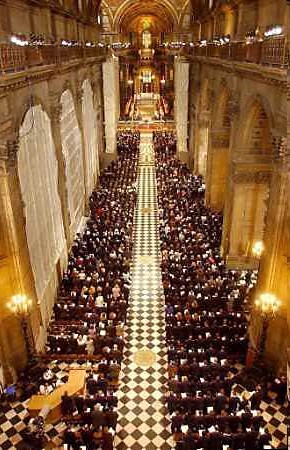
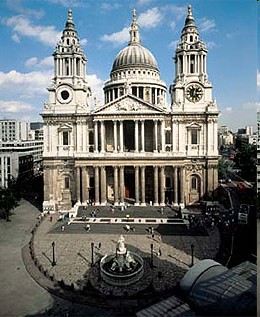
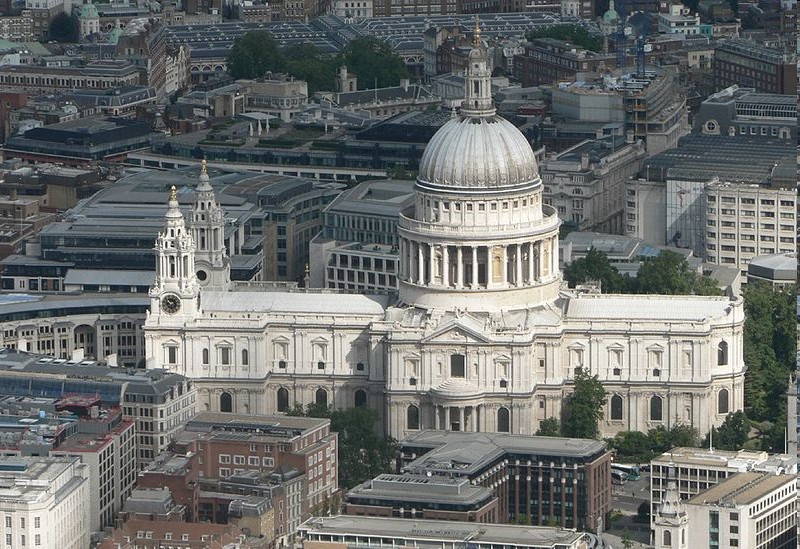
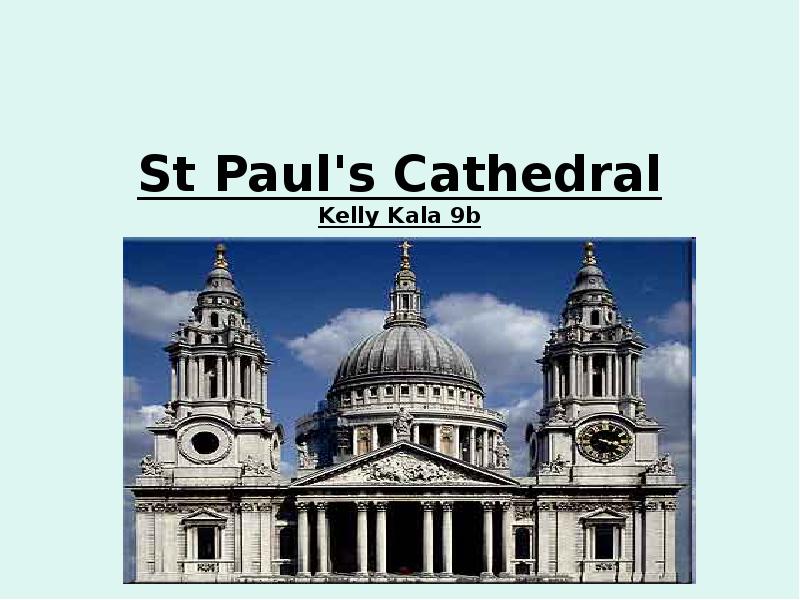
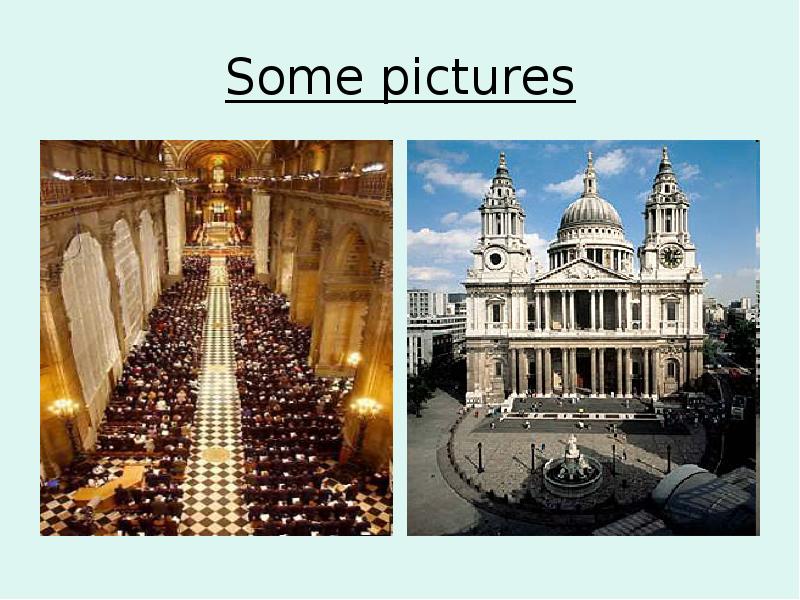
in the world. It celebrated its 150th anniversary in May 2009 (the clock itself first ticking on 31 May 1859), during which celebratory events took place. BUCKINGHAM PALACE: Buckingham Palace is the official London residence of the British monarch. Located in the City of Westminster, the palace is a setting for state occasions and royal hospitality. It has been a rallying point for the British people at times of national rejoicing and crisis. ST.PAUL'S CATHEDRAL: St Paul's Cathedral is the Anglican cathedral on Ludgate Hill in the City of London and the seat of the Bishop of London. The present building dates from the 17th century and is generally reckoned to be London's fifth St Paul's Cathedral, not counting every major medieval reconstruction as a new cathedral. The cathedral sits on the highest point of the City of London, which originated as the Roman trading post of Londinium situated on the River Thames. The cathedral is one of London's most visited sights.
It had been thought that there have been at least six ravens in residence at the tower for centuries. The legend says that if the ravens ever leave the Tower of London, the White Tower, the monarchy, and the entire kingdom would fall. Charles, following the time of the English Civil War, superstition or not, was not prepared to take the chance, and instead had the observatory moved to Greenwich. Wild ravens were once used for "cleaning" the execute site. St. Paul's Cathedral By this time England had been invaded by the Normans under William the Conqueror and so the new building was in the Norman style and took over 200 years to complete. It was the largest building in the country and was built of imported Caen stone. It was even bigger than the present day St Paul's and its spire was the tallest ever built. When the spire was struck by lightning in the mid 16th century, it was not rebuilt. During the English Civil War and the period of the Cromwell's rule, the
census and also straight roads, central heating and concrete. Anglo- Saxons around AD 400 Anglo- Saxons were warrior farmers from Germany, Denmark and the Netherlands. Later in the 5th century, Anglo-Saxons settled just west of Londinium, around the Strand, and formed the town of Lundenwic. The area of the old Roman city became a landing-place for ships and a centre for trade.The first English King to convert to Christianity, King Ethelbert, founded St Paul's Cathedral in 604. The Vikings 8th and 9th century By the 9th century, London was a very prosperous trading centre, and its wealth attracted the attention of Danish Vikings. The Danes periodically sailed up the Thames and attacked London. In 851 some 350 longboats full of Danes attacked and burned London to the ground. King Alfred the Great totally defeated the Danes in 878 and they split the country between them. The Danes took eastern England including London while Alfred took the South and West
city, a royal palace for assemblies or treaties, a prison of state for the most dangerous offenders; the only place of coinage for all England...The armoury for warlike provision; the treasury of the ornaments and jewels of the crown; and general conserver of the most records of the queen's courts of justice". In fact the Tower was no longer used as a royal residence, except before coronations, when Stow wrote those words. The Tudors had changed all that. St. Paul's Cathedral St. Paul's Cathedral has had an eventful history. The first records date from 604 AD, when Mellitus, Bishop of the East Saxons built the first wooden church on the summit of one of London's hills. At the end of the 7th century, it was built in stone by Erkenwald, Bishop of London. In 962 and 1087, the Cathedral was destroyed by fires, but each time it was rebuilt. By that time, it was one of the largest cathedrals in Europe. Rebuilding and extensions in the 13th and 14th century enlarged the cathedral even more
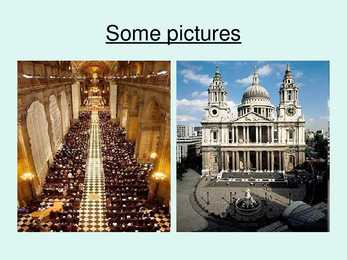
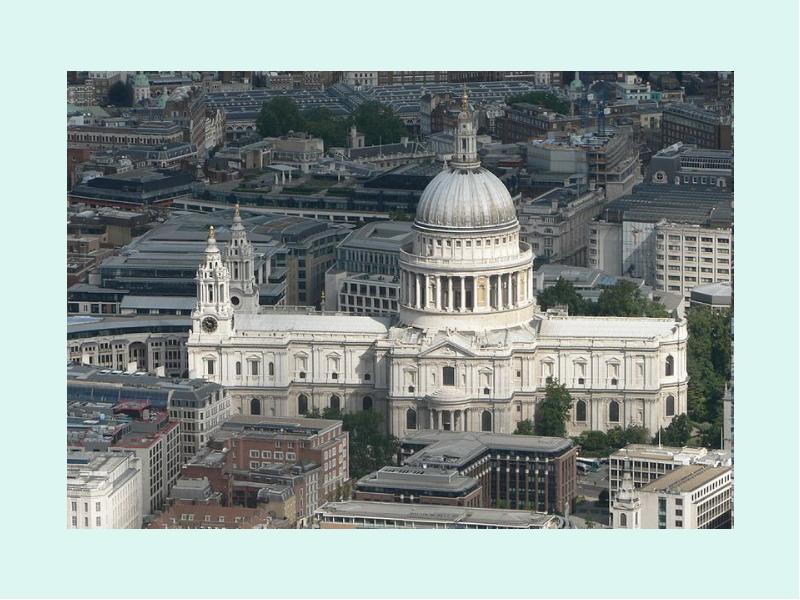
Tower of London The Tower of London, officially Her Majesty's Royal Palace and Fortress of the Tower of London, is a historic castle located on the north bank of the River Thames in central London. It lies within the London Borough of Tower Hamlets, separated from the eastern edge of the square mile of the City of London by the open space known as Tower Hill. It was founded towards the end of 1066 as part of the Norman Conquest of England. St. Paul`s Cathedral St Paul's Cathedral, London, is an Anglican cathedral, the seat of the Bishop of London and the mother church of the Diocese of London. It sits on Ludgate Hill at the highest point of the City of London and is a Grade 1 listed building. Its dedication to Paul the Apostle dates back to the original church on this site, founded in AD 604. The present church, dating from the late 17th century, was designed in the English Baroque style by Sir Christopher Wren
stands today; it has retained its original style and status as a royal residence for ceremonial purposes. The Palace is one of the centres of political life in the United Kingdom; "Westminster" has become a metonym for the UK Parliament, and the Westminster system of government has taken its name after it. Westminster Abbey - Westminster Abbey is a Gothic monastery church in London that is the traditional place of coronation and burial for English monarchs. Neither a cathedral nor a parish church, Westminster Abbey is a place of worship owned by the royal family. Located next to the Houses of Parliament in the heart of London, Westminster Abbey is a must-see for any London visitor. With its oldest parts dating to the year 1050, the Abbey contains some of the most glorious medieval architecture in London. Because of its royal connections, it was spared King Henry VIII's general assault on monastic buildings during the Reformation.
the wonderful feeling of strolling the streets and landmarks. Take the following questions with you, find answers to them and put them down for yourself in this MSWord document. Don't forget to "take" photos - you are supposed to recognise the landmarks later on! At the end of the tour send the worksheet to yourself so that you could use it again. Good luck with exploring the city! DAY 2. The route: Westminster Abbey The Houses of Parliament London Eye 10 Downing Street St Paul's Cathedral The Tower of London Tower Bridge Globe Theatre Greenwich Observatory Destination 1: Westminster Abbey When was Westminster Abbey founded? (see its homepage: http://www.westminster-abbey.org/home ) 960 When was the last royal wedding held in Westminster Abbey? Whose was it? 29 April 2011 Prince William and MissCatherine Middleton How many monarchs have been buried in Westminster Abbey? 17 Destination 2: The Houses of Parliament
 annaabi.ee










Kõik kommentaarid