Leidsid 33 sarnast õppematerjali, mis on seotud failiga "Soil microflora". Need materjalid aitavad sul teemat sügavamalt mõista.
soil, bacteria, activity, microorganisms, flora, influence, organic, other, action, grow, condition, there, factor, plant, root, change, conditions, oxygen, algae, growth, carbon, effect, matter, activities, nutrient, increase, require, important, role, cultural, composition, formation, active, depend, plants, while, forms, light, interact, balancer w gametes C , C ; F1 genotypes and phenotypes 1 mark: r w F1 genotypes (all) C C F1 phenotypes (all) pink; F2 genotypes and phenotypes 1 mark: r w r w gametes C , C C , C ; r r r w r w w w F2 genotypes C C C C C C C C F2 phenotypes red pink (pink) white; F2 ratio 1:2:1; accept other symbols if key given. accept r and w as symbols without key. 6 (c) (i) 65; 130; 65; 3 (ii) 0.138 + 0.007 + 0.061; (or other suitable working) 0.206 – 0.208; 2 marks for correct value if no working shown ecf for both marks but calculated value must be to three decimal
middle latitudes typically have between 25 cm and 50 cm of precipitation a year. Much of this falls as snow, serving as reservoir of moisture for the beginning of the growing season. Warm to hot summers are experienced, depending on latitude. In the winter, grassland temperatures can be as low as -40° C, and in the summer it can be as high 20° C. There are two real seasons: a growing season and a dormant season. The growing season is when there is no frost and plants can grow (which lasts from 100 to 175 days). During the dormant (not growing) season nothing can grow because it's too cold. Taiga- Long, cold winters, and short, mild, wet summers are typical of this region. In the winter, chilly winds from the arctic cause bitterly cold weather in the taiga. The length of day also varies with the seasons in the taiga. Winter days are short, while summer days are long. The average temperature is below freezing for six months out of the year
Almost all tundras are located in the Northern Hemisphere, encircling arctic desert and extending south to the coniferous forests of the taiga. The ecotone (ecological boundary region) between the tundra and the forest is known as the tree line or timberline. Tundra comes from the Finnish word tunturi, meaning treeless plain. It is noted for its frost-moulded landscapes, extremely low temperatures, little precipitation, poor nutrients, and short growing seasons. Dead organic material functions as a nutrient pool. The two major nutrients are nitrogen and phosphorus. Nitrogen is created by biological fixation, and phosphorus is created by precipitation. The most distinctive characteristic of tundra soil is its permafrost, a permanently frozen layer of ground. The average winter temperature is -28°C, but the average summer temperature is 3-16°C. During the brief summers, the top section of the soil may thaw out allowing plants and microorganisms to grow and
All brand names and product names used in this book are trade names, service marks, trademarks or registered trademarks of their respective owners. The publisher is not associated with any product or vendor men- tioned in this book. This publication is designed to provide accurate and authoritative information in regard to the subject matter covered. It is sold on the understanding that the publisher is not engaged in rendering professional services. If professional advice or other expert assistance is required, the services of a competent professional should be sought. Library of Congress Cataloging-in-Publication Data Handbook of meat processing / edited by Fidel Toldrá. p. cm. Includes bibliographical references and index. ISBN 978-0-8138-2182-5 (hardback : alk. paper) 1. Meat—Handbooks, manuals, etc. 2. Meat industry and trade—Handbooks, manuals, etc. I. Toldrá, Fidel. TS1960.H36 2010 664′.9—dc22
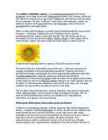
The sunflower (Helianthus annuus) is an annual(iga aastane) plant in the family Asteraceae, with a large flower head (inflorescence(õiekobar, õisik, õitseaeg, õidumine)). The stem(tüvi) of the flower can grow up to 3 metres tall, with the flower head reaching 30 cm in diameter. The term "sunflower" is also used to refer(nimetama, viitama, üle andma) to all plants of the genus(perekond, sugu) Helianthus, many of which are perennial(alaline, aastaringne) plants. What is usually called the flower is actually a head (formally(ametlikult) composite(liit-, komposiit- ; korvõieline, komposiit) flower) of numerous flowers (florets) crowded(täistuubitud, tunglev, rahvarohke) together
Miina Härma Gymnasium Acid Rain Report Compiler: Teisi Timma 8a Teacher: Esther Linask Tartu 2009 Acid Rain Acid rain is rain consisting of water droplets that are unusually acidic because of atmospheric pollution - most notably the excessive amounts of sulfur and nitrogen released by cars and industrial processes. Acid rain is also called acid deposition because this term includes other forms of acidic precipitation such as snow. Acidic deposition occurs in two ways: wet and dry. Wet deposition is any form of precipitation that removes acids from the atmosphere and deposits them on the Earth's surface. Dry deposition polluting particles and gases stick to the ground via dust and smoke in the absence of precipitation. This form of deposition is dangerous however because precipitation can eventually wash pollutants into streams, lakes, and rivers.
1. Ökoloogiateaduse uurimisobjektid Ecology (from Greek: , "house"; -, "study of") is the scientificstudy of the relation of living organisms to each other and their surroundings.[1] Ecology includes the study of plant and animalpopulations, plant and animal communities and ecosystems. Ecologists study a range of living phenomena from the role of bacteria in nutrient recycling to the effects of tropical rain forest on the Earth's atmosphere. Autökoloogia on ökoloogia haru, mis tegeleb organismide keskkonnanõudluste ja keskkonna- suhete uurimise ja kirjeldamisega. Demökoloogia ehk populatsiooniökoloogia (Schwerdtfeger 1963: 1314) on ökoloogia haru, mis uurib organismide populatsioone ja nende keskkonnaoludest johtuvat dünaamikat.
6. What is the role of wildfires in the temperate grassland plants’ lifecycle? Wildfires play a very important role. They allow the grasslands to be open and free of trees and shrubs. Any seedling of a tree that appears is killed off by the intense heat. If the fire does not clear out the seedlings, the grasslands would become a shrubland changing forever. Remarkably, the plants in the grasslands have adapted to the wildfires that come through, and actually need them to keep healthy and grow new vegetation in the spring 7. How are plants adapted to life in temperate grassland? (vt. ka õpik lk 61) During a fire, while above-ground portions of grasses may perish, the root portions survive to sprout again. Some prairie trees have thick bark to resist fire. Prairie shrubs readily resprout after fire. Roots of prairie grasses extend deep into the ground to absorb as much moisture as they can Extensive root systems prevent grazing animals from pulling roots out of the ground
Käesoleval ajal kaevandatakse põlevkivi Eestis, Venemaal, Hiinas, Austraalias ja Saksamaal. Eesti maardlas on põlevkivi kaevandamise tingimused võrreldes teiste leiukohtadega lihtsad - väike sügavus, rõhtne lasuvus, kihindi püsiv paksus. Teadlaste arvates on Eesti põlevkivi ehk kukersiidi tekkimisel olnud lähteaineks sinivetikad (tsüanobakterid). Huumus Humiinained Huumus Nonliving, finely divided organic matter in soil, derived from microbial decomposition of plant and animal substances. Humus, which ranges in colour from brown to black, consists of about 60 percent carbon, 6 percent nitrogen, and smaller amounts of phosphorus and sulfur. As humus decomposes, its components are changed into forms usable by plants. Humus is classified into mor, mull, or moder formations according to the degree of its incorporation into the mineral soil, the types
Hansen's report, and the debate over global warming continues today. Current fears stem largely from the fact that global warming is occurring at such a rapid pace. Models are predicting that over the next century, the global temperature will rise by several degrees. Some scientists still do not think that the effects of global warming are as severe as some people say. They think that droughts, hurricanes, and floods often blamed on global warming might actually have other causes. One major difficulty in studying global warming is the fact that weather data only exists for the last century and a half. As a result, understanding the present and predicting the future are very difficult. Rain forest destruction The atmosphere and oceans are not the only parts of the environment being damaged. Rain forests are being quickly destroyed as well, and their survival is questionable. E.O
Main functions of a shoot system are: * Stem- to support the plant, to transport water, minerals and sugar * Leaves- to make food by photosynthesis, to absorb water from air * Flower- to contain reproductive organs, the reproductive function *Fruit- to enclode the seeds, to protect seeds 4. What are the main functions of a root system? Main functions of a root system are to take in, absorb water and minerals, to hold the plant firmly in the soil. 5. What happens in the process of photosynthesis? For the process of the photosynthesis is sunlight necessary. Water from the soil and carbon dioxide from the air are converted into sugars and after carbohydrates. Durning the process oxygen is formed and relased into the air. 6. Name the reproductive organs of a flower. How they function? reproductive organs of the flower are the stamens and the carpel. The stamens
maintained by anthropogenic fire. These fires are usually confined to the herbaceous layer and do little long term damage to mature trees. However, these fires do serve to either kill or suppress tree seedlings, thus preventing the establishment of a continuous tree canopy which would prevent further grass growth. Prior to European settlement aboriginal land use practices, including fire, influenced vegetation and may have maintained and modified savanna flora. It has been suggested by many authors that aboriginal burning created a structurally more open savanna landscape. Aboriginal burning certainly created a habitat mosaic that probably increased biodiversity and changed the structure of woodlands and geographic range of numerous woodland species. It has been suggested by many authors that with the removal or alteration of traditional burning regimes many savannas are being replaced by forest and shrub thickets with little herbaceous layer.
Distilled water(doesn't contain CO 2), has pH level 7. Liquids with pH level less than 7 are acidic, liquids with pH level greater than 7 are alkaline. Unpolluted rain has a pH level over 5.7, so it is slightly acidic. Affected areas Places significantly impacted by acid rain around the globe include most of eastern Europe from Poland northward into Scandinavia, the eastern third of the United States and southeastern Canada. Other affected areas include the southeastern coast of China and Taiwan Causes · It is caused when sulfur dioxide and nitrogen oxides are released into the air. In the atmosphere they react with water, oxygen and other chemicals to form more acidic pollutants, known as acid rain. Sulfur dioxide and nitrogen oxides dissolve very easily in water and can be carried very far by wind
Summarized by: Student X Introduction • What is a weed? • Disadvantages and advantages • Seed bank • Different ways to deal with weeds • Resistance of herbicides What is a weed? • Older definitions: -a plant not valued for its use or beauty -a plant whose virtues have yet to be discovered • Modern definitions: -plants that are considered undesirable by producers -unwanted plant which in some way hinders or interfers with human activity. (Crops may at some point also be weeds) Weed disadvantages • Reduces crop yield – weeds and crops have to share resources such as light, water and nutrients • Reduces crop quality and health – increases moisture and disease levels • Delay harvesting – conservation of moisture may delay ripening Beneficial effects of weeds • Valuable indicators • Help against erosion • Many weeds are used as herbs for flavouring • Some weeds are used for their
http://www.bbc.co.uk/nature/programmes/tv/jungle/vjungle.shtml Virtual Jungle worksheet I 1. Structure 1.1. Describe these layers Emergents The canopy trees are tall, but some species grow even taller until they stick right out above the canopy. These are called 'emergents' and can reach almost 90m in height. Up here they don't have to compete with other trees for light, but they are exposed to the high winds that lash the canopy during tropical storms. Emergents are the favourite nest sites of jungle eagles such as the harpy eagle of South America. Canopy Suspended 40m above the ground is the canopy - a belt of tree crowns supported by enormous rainforest tree trunks. This is the most productive and diverse habitat on Earth - perhaps 40% of the world's species spend their lives among its branches. The canopy's function is to photosynthesise
1. Loopealsed 2. Nõmmemetsad 3. Palumetsad 4. Laanemetsad 5. Salumetsad 6. Soovikumetsad 7. Rabastuvad metsad 8. Rohusoometsad 9. Samblasoometsad 10. Kõdusoometsad ALVAR FORESTS LOOPEALSED METSAD This groupof types includes forests of low productivity and with a peculiar xeromesophilous ground vegetation, which grow on a layer of limestone, gravel, grit or shingle. See metsa kasvukohatüüp sisaldab madala tootlikkuse ja iseloomulikult suure või keskmise kuivusnõudlikkusega alustaimestikku, mis kasvab pae-, kruusa- , peenkruusa või klibukihil. This layer is close to surface, with thickness of soil up to 30 centimetres. See rinne on maapinnale lähemal, mullatüsedus on kuni 30 sentimeetrit. Alvar forests grow mainly in western Estonia (also on the islands) and to a lesser extent in Northern Estonia
.......................... Producing process............................................................................................... Nowadays............................................................................................................ Areas where biogas is used in............................................................................. Biogas as replacement of fuel.......................................................................... Other benefits..................................................................................................... Health.............................................................................................................. Economical....................................................................................................... Dangers of biogas............................................................................................... Future prospects
Margit Tepner k0848752 Sustainability aspects of biofuels 1. Introduction The literature review will discuss the sustainability aspects of biofuels. Food production will be the main concern as it is the most debated issue, but other aspects, such as land use change and water consumption will be also considered as they are essential aspects in the biofuels sustainability criteria. The review will discuss the viability of biofuels based on the current technologies. Second-generation biofuels are not yet commercially viable and therefore will not be discussed; although they could significantly improve the sustainability of biofuels when they break through to the industrial scale. 2. The scale of biofuels production 2
become increasingly aware of the problems that surround it. With a massive influx of natural disasters people need to be aware of what types of environmental problems our planet is facing. Current environmental problems make us vulnerable to disasters and tragedies, now and in the future. Unless we address the various issues seriously we are surely doomed for disaster. Current environmental problems require urgent attention. 1. Pollution: Pollution of air, water and soil require millions of years to recoup. Industry and motor vehicle exhaust are the number one pollutants. Heavy metals, nitrates and plastic are toxins responsible for pollution. While water pollution is caused by oil spill, acid rain, urban runoff; air pollution is caused by various gases and toxins released by industries and factories and burning of fossil fuels; soil pollution is majorly caused by industrial waste that deprives soil from essential nutrients.
is 9740 km2). The output is 70m3/s, mean altitude above the sea level - 50 m, maximum altitude - 78 m, mean flow 64,4 m3/s and precipitation 700 mm. Main problems are floods, agricultural pollution, pollution from the local communities, drainage system and flood plain grasslands. There is an excessive flooding in spring. The most known is the Soomaa swamplands flooding in april. It is called to be the fifth season. A lot of rich soil are situated near the pärnu river, for example some of the biggest farmlands are situated in the Järva county. 83% of phosphorus and 79% of nitrogen originates from human activities of the total discharge of biogenes from Pärnu River basin. The soil does not bind a huge amount of the nutrients. 65 % of the treatment plants are over 15 years of age and most of them are programmed in a way, that when the water level exceeds some point, the sewage water will be sent
4. How are plants adapted to life in the biome? Tundra plants are small -- usually less than a foot high .The hairs on the stems of many tundra plants, such as the Arctic crocus, help to trap heat near the plant and act as protection from the wind. Plants adapted to the tundra have small waxy leaves to prevent the loss of precious water in this dry environment. Quick-Developing, Cup-Shaped Flowers Soil Not Needed for Growth Polar Desert- Plants that grow in the Arctic regions must be very hardy and adapted to the extreme winter cold of these environments. Polar desert plants have a summertime growing season, but in the Arctic and Antarctic that season is short---often wildflowers and the other plants that manage to survive here are active only from June to July Alphine biome- Because of the blustery weather, most plants are small groundcover plants, which grow and reproduce slowly
Different types of forests and their forms of usage TARTU 2010 Forest A forest (also called a wood, woodland, wold, weald, holt, frith) is an area with a high density of trees. Forests cover approximately 30% of land and 9.4% of all the planet earth. They are also responsible for regulating our planet's climate and act as large purifiers of airs, by absorbing carbon dioxide, and giving out oxygen. Different types of forests Forests are divided into following main types: o Tropical forest o Subtropical forest o Plantations o Boreal forest o Temperate forest o Seasonal or monsoon forest Tropical and Subtropical Forests Tropical and subtropical forests, also known as rainforests or tropical rainforests, are lavish and ample forests with broad leave tree. They are mostly found at lowlands near the equator - Asia, Africa, South & Central America and on many of the Pacific Islands. Almost 5
I'll speak about 15min to allow time for questions at the end. Firstly clay bricks are known for centuries as one of the most solid and reliable structural elements is set to play a role in reducing global warming. Apart form the many benefits obtained from using clay bricks in construction, such as their durability, insulation properties and aesthetic qualities, recent findings show that they also produce less carbon emissions than any other masonry material. History (slide 3) In more detail the earliest bricks were dried bricks, meaning they were formed from clay- bearing earth or mud and dried usually in the sun until they were strong enough for use. The oldest discovered bricks, originally made from shaped mud and dating before 10000 BC, were found in Mesopotamia related to the first known cities. Ceramic or fired bricks were first introduced by the Romans. These were mainly flat, broad
To produce young-offspring To react to something-respond to To become adjusted to new conditions-able to adapt Plants and animals living in one place-natural community Type of plant or animal-specie Area covered with growing trees-woodland Organisms that feed on dead tissues-decomposers 6.able to grow- change to different size or shape Replace-something -living things can to for themselvs Repair parts-living things can to for themselvs Respond to stimuly- ability to grow toward the light Able to adapt-to survive in nature Natural selection-ability to make living things better to survive and live longer Interact- to act upon one another. Surrounding- all round a particular place or thing Dominated-different species that are more existing Species- a group of living organisms consisting of similar individuals Food chain- a series of organisms each dependent on the next as a source of food Carbon dioxide- a colourless, odourless gas
America. Climate: The average temperature in temperate forests is 50° F. Summers are mild, and average about 70° F, while winter temperatures are often well blow freezing. The average yearly precipitation is 30-60 inches. This precipitation falls throughout the year, but in the winter it falls as snow. There are four seasons in this biome, with warm summers and cold winters, often snowy. In autumn, the leaves change color and fall from the trees. The leaves decay on the forest floor, so the soil is very rich. Because of this, and because of the long growing season, many deciduous forests have been cut down for farming purposes. Plants: Trees of this biome include hardwoods such as maple, oak, hickory, and beech. There are often some evergreens, such as hemlock, spruce, and fir growing amongst them. Decidous forests have usually 3-5 layers of plants; Top layer, or canopy: tall deciduous trees.
(instantaneous) values Resin properties Value determined change modulus values by ASTM test Modulus affects Standard dog wavespeed in surge bone test events specimen Modulus important in Fixed strain rate buried pipeline design Modulus is needed to Modulus values at determine deflection other temperatures and buckling from and design life are design loads required for design Determination of Modulus 1% Proportional Limit 85% of Tangent Modulus Properties of Materials Hoop Stress Ring Bending Strain Importanceof Strain Property Comparison to other materials ABS 1% PE 4.0% PVC-U 1% PVC-O 1.3% Steel & DICL Not relevant GRP 0.2 to 0.6 % Stiffness AS 2566.1 ABS is classified as a rigid thermoplastic over its
If you were asked to show on a world map the regions with the most biodiversity, your finger would probably end up pointing at the Amazon, the Congo Basin or the island of Borneo. But I chose New Guinea, an island that represents no more than 1% of the world's landmass, an array of extraordinary animals and plants have also flourished, such as tree kangaroos and birds of paradise. Close to 10% of the world's vertebrates are concentrated here, while 7% of the world's higher (vascular) plants grow on the island's productive soils. 3 Geography Papua New Guinea consists of over 600 islands and lies in the middle of the long chain of islands stretching from mainland South-East Asia. The mainland and larger islands are mountainous and rugged, divided by large fertile upland valleys. Fast- flowing rivers from the highlands descend to the coastal plains. A line of active
course Introduction • I have grown basil • Member of mint family • Belongs to the genus ocimum • The genus includes over sixty species of annuals Chemistry • Essential oils in the plant • Most basils contain methyl chavicol, eugenol and linalool • Methyl chavicol provides a sweet flavor Nutrition • Low in calories • No fat • Source of vitamin A • Also contains Calcium and smaller amounts of other vitamins Cultivation indoors • Growing indoors is challenging • Basil needs alot of water • As a tropical plant, basil requires plenty of heat and light • Good soil is sphagnum, perlite and wood chip mix • Cool white or warm white fluorescent tubes on a timer work best from light • Whatever type of container you choose, be sure it has plenty of drainage holes. Cultivation outdoors • Sowing seeds “close together”
It's geographical position in co- ordinates is 83°N north, 42°N south, 53°W east, 141°W west. Canada borders with United States of America by land; Pacific Ocean, Arctic Ocean and Atlantic Ocean by coastline. Canada is one of the largest countries in the world, second only to Russia in territorial size. It has a total area of 9.9 million square kilometers. This includes 755,170 square kilometers of water. Toronto is the largest city in Canada with a population of 4.3 million. Other major cities include Montreal (3.3 million people), Vancouver (1.8 million people). Located in the southeast corner of the nation, Ottawa is the nation's capital. Relief Canada is a vast country comprised of a multitude of very different landscapes: Atlantic provinces, the Appalachians, St. Lawrence and Great Lakes lowlands, Canadian Shield, The Prairies, mountain ranges and high plateaus of the Canadian Cordillera, and northern Canada. Climate
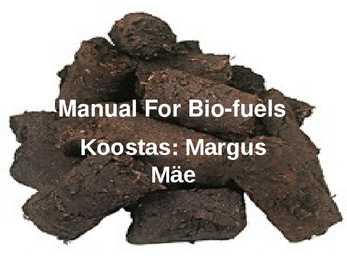
The calorific value is the amount of heat generated by a given fuel mass when it is completely burned and it is measured with a socalled bomb calorimeter. The higher or gross calorific value and lower or net calorific value (qgr and qnet ,respectively) can be found via the calorific value measured in the bomb calorimeter. Wood fuels Final products from wood How pellets are made http://www.youtube.com/watch?v=B4VP129rWcY Peat properties Peat is an organic deposit formed from the accumulation of decomposed remains of plants in the oxygenpoor environment of excess water. Peat consists mainly of partially decomposed remains of plants and humus. The most essential indices of peat are decomposition degree, moisture content, mineral (ash) content, density and calorific value. Although peat is of biological origin, it is not considered a renewable biofuel usually, but a slowly renewable fuel of biological origin.
Formaldehyde Formaldehyde is a colorless, flammable gas at room temperature. It has a pungent, distinct odor and may cause a burning sensation to the eyes, nose, and lungs at high concentrations. Formaldehyde is also known as methanal, methylene oxide, oxymethylene, methylaldehyde, and oxomethane. Formaldehyde can react with many other chemicals, and it will break down into methanol (wood alcohol) and carbon monoxide at very high temperatures. Formaldehyde is naturally produced in very small amounts in our bodies as a part of our normal, everyday metabolism and causes us no harm. It can also be found in the air that we breathe at home and at work, in the food we eat, and in some products that we put on our skin. A major source of formaldehyde that we breathe every day is found in smog in the lower atmosphere. Automobile
CANADA Canada is a vast country, second largest country of the world after Russia. It stretches from the Atlantic Ocean in the east to the Pacific Ocean in the west and to the Arctic Ocean in the North. Canada Covers most of the northern part of North America and its geography is very diverse. Canada's area is about 10 million square kilometers and its population is 31 000 000. Its capital is Ottowa and other main cities are Toronto, Montreal and Vancouver. Almost 75 % of canadians lives within 300 kilometer of the USA border, because the climate is softer in the South. 89 % of Canada is almost unhabited. Its official languages are English and French, but many other languages are spoken too. Like Italian, Chinese, German, Polish, Ukrainian, Dutch and Creek. There are also many native languages such as Algonquian. Most of the canadian's speak English (67 %), but French is very largely
The problems the contemporary world faces Over Loorits LE108 Pollution Air pollution produced by industry and motor vehicles. Water pollution caused by chemicals and sewer water dumped into water. Soil pollution caused by chemicals released into underground lakes. Natural resources running out Rainforests are being cut down constantly. There are not enough fresh water in some parts of the world. Fossil fuels are used too much and most of its reserves will be used up by 2050. Endangered species 40 percent of all organisms are endangered All the different species are important for biodiversity Habitat loss and hunting are the most widespread cause of species
 annaabi.ee