Leidsid 33 sarnast õppematerjali, mis on seotud failiga "Short analysis of two phonetics articles". Need materjalid aitavad sul teemat sügavamalt mõista.
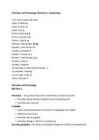
sexual, experiment, judgment, vowel, phone, vowels, between, speech, speak, women, frequency, phoneme, consonant, male, results, sound, differ, single, here, upon, english, conclusion, characteristic, articles, found, both, words, differences, perceptual, authors, characteristics, showed, perceived, such, forming, possible, solely, there, done, tracyNasal, Alveolar: n Nasal Velar: Plosive, Bilabial: p; b Plosive, Alveolar: t; d Plosive, Velar: k; Affricate, Post-Alveolar: t; d Fricative, Labio-dental: f; v Fricative, Dental: ; Fricative, Alveolar: s; z Fricative, Post-Alveolar: ; Fricative, Velar: x Fricative, Glottal: h Approximant, Alveolar ja Post-Alveolar: Approximant, Palatal: j Approximant, Velar: w Lateral, Alveolar: l Phonetics and Phonology. Mid-term 1. Phonetics the general study of the characteristics of speech sounds: how they may be "strung" together to form meaningful units how they are produced It studies: how to describe the speech sounds in the languages of the world what these sounds are how they fall into patterns how they change in different circumstances Acoustic phonetics the study of the physical properties of the sounds themselves. Auditory phonetics the study of the way listeners perceive these sounds.
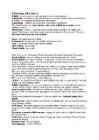
Phonology. Mid-term 2. Syllable - is a phonological unit consisting of one or more phonemes. In phonetics a syllable is a unit which consists of a centre, that has little or no obstruction to airflow; it is comparatively louder than other sounds. In phonology syllables are the possible combinations of phonemes. The syllable consists of - onset, nucleus, coda. (every syllable has a nucleus: vowel, syllabic l, or m, n). Rhyme/rime nucleus + coda; the nucleus and the coda constitute a sub-syllabic unit rhyme. Words rhyme, when their nucleus and coda are identical. (E.g 'cr-o-wn', 'd-o-wn'). The hierarchical structure of the syllable: Onset the beginning of the syllable Nucleus/peak the open part of a syllable, generally a vowel. Coda a consonant sound which ends the syllable. Open syllable - has no coda Closed syllable - has a coda!
key role in behavior. 2) Animals may be studied as a means of understanding human behavior. 3) There are biological correlates of behavior. Cognitions, emotions and behaviors are products of the anatomy and physiology of our nervous and endocrine system. Explain how principles of the biological level of analysis may be demonstrated in research. 1) Correlational studies: Study by Buss, who hypothesized that across cultures, men will prefer to marry younger women because of greater reproductive capacity and women will place greater value on a potential mate's earning potential to provide survival advantages. This evolutionary hypothesis was tested in 37 cultures by sending out questioners. 2) Twin studies (type of correlational studies) compare trait similarities in identical and fraternal twins (Minnesota twin study by Tellegen, Buchard). 3) Experiment: Split-brain experiments by Gazzaniga & Sperry, brain plasticity
The latin word ,,stilus" meant a writing instrument used by the ancients for writing on waxed tablets. Already, in classical latin the meaning of style was extended to denote the manner of expressing one's ideas in written or oral form. One of the abts/the best was given by Jonathan Swift: ,,Proper words in proper places." In present- day english, the world style is used in about half a dozen basic meanings. 1. the characteristic manner in which a writer expresses his ideas. Some speak about the style of Hemingway, Dickens etc. 2. the manner of expressing ideas, characteristic of a literary movement or period. Style of symbolism, romanticism 3. the use of language to pick a literary genre-comedy, novel, drama, O.D (poetic form) etc. 4. the selective use of language that depends on spheres of human activity fiction, scientific prose, newspapers, official documents, business correspondenc etc.
Loan words (Old Norse, Old French). Dual pronouns. Determiners - no separate definite article. Strong and weak verbs. Word order relatively free with tendencies towards SVO. SVO, SOV, VSO most common. Adposition and podposition were both possible (eesliide ja tagaliide). About syntax: clauses were joined much simpler than nowadays, using and, then etc. Because of case syncretion the word order in a sentence became much more important to be able to tell the difference between words. FIRST CONSONANT SHIFT (GRIMM'S LAW) Grimm's Law (also known as the First Germanic Sound Shift or Rask's rule) is a set of statements named after Jakob Grimm describing the inherited Proto-Indo-European (PIE) stop consonants as they developed in Proto-Germanic (the common ancestor of the Germanic branch of the Indo- European family) in the 1st millennium BC. It establishes a set of regular correspondences between
The variety first came to public prominence in an article by DavidRosewarne in the Times Educational Supplement in October 1984. [2] Rosewarne argued that it may eventually replace RP (Received Pronunciation) in the south-east. Studies have indicated that Estuary English is not a single coherent form of English; rather, the reality behind the construct consists of some (but not all) phonetic features of working-class London speech spreading at various rates socially into middle-class speech and geographically into other accents of south-eastern England.[3][4] Rosewarne (1984) states that "the heartland of this variety lies by the banks of the Thames and its estuary". However, in the name itself the Thames is not mentioned. This seems to have irritated some of the academics, who willingly displayed their reluctance to the term. In his posting to the Linguist List, for instance, Battarbee (1996) talks of "..
the present tense is used for some defective verbs (shall, can, and must have only the one form). In Latin, Ancient Greek, and Modern Greek (which has no infinitive), however, the first person singular present tense is normally used, though occasionally the infinitive may also be seen. The pronunciation form in a dictionary will usually relate to the citation form of the word in question. This may differ in various respects from the forms to be expected in connected speech, sometimes referred to as phonotypical forms. Wells, J.C. 1999. Phonetic transcription and analysis. Available at https://www.phon.ucl.ac.uk/home/wells/transcription-ELL.pdf, accessed January 19, 2016. Lyons, John. 1981. Language and Linguistics. Available at https://books.google.ee/books/about/Language_and_Linguistics.html?id=8Wg57a3DdYYC, accessed January 19, 2016 World Heritage Encyclopedia & Project Gutenberg. 2016
Stylist--a writer or a speaker skilled in a literary style Stylistition--a scholar who studies stylistics The word "style" is applied to many things. A linguistic style is a variety of subsystem of lg with its peculiar vocabulary, phraseology, grammatical and phonetic features that are used selectively and purposefully to express ideas in a given situation. The stylistics of language studies different styles, including registers, stylistic devices and shades of meaning. The stylistics of speech studies individual text, viewing the way the author's message is expressed. Literary stylistics--analyzes means of artistic expressiveness, characteristics of a literary work, a writer, a literary trend or a whole epoch. It is part of literary criticism and poetics. Poetics--studies the structure of a literary work and aesthetic means employed in it. Linguistic stylistics--views linguistic facts from the point of view of their ability to convey additional shades of meaning.
). STYLISTICS Stylistics is the study of style. The very term "stylistics" came in more common use in English only some 45 years ago. Stylistics is a part of style; it studies principles of selecting and using different linguistic means (grammatical and phonetic) that serve to render shades of meaning. The Stylistics of language studies stylistic devices and expressive shades of linguistic units (words, construction of phrases). The Stylistics of speech studies individual texts viewing the way the message or content is expressed. Literary Stylistics concentrates on artistic expressiveness that characterizes a literary work, a writer, or a whole time period. Linguistic Stylistics studies linguistic facts from the point of view of their ability to convey extra shades of meaning (connotations we call them). Stylistics has no fixed single unit of study. Stylistics studies everything that makes the utterance of the text expressive.
5. Regularisation of ,,be" ,,Me/You/They was" 6. Regularisation of some irregular verbs draw/drawed/have drawed; go/went/have went 7. Optional ,,-ly" ending on adverbs ,,He writes real quick." 8. Unmarked plurality on amounts of measurement after numerals 10 pound, 20 year 9. Different forms of the relative pronoun ,,The man what lives there."/ ,,The man as lives there." 10. Regularisation of reflexive pronouns myself; herself; hisself; theirselves 11. Distinction between main and auxiliary verb ,,do" ,,You done it, did you?" 2) The spread of English. The Inner / Outer / Expanding Circle THE SPREAD OF ENGLISH · 16-18th century the spread took place. · By the beginning of the 19th century English had spread to virtually every part of the world. · 19-20th century the number of speakers only grew. The growth was achieved by covering more land, exploring more land, going west, and accepting new immigrants from other places of the world.
fashioned and long out of common use. 19th-Century Archaisms "We do not have to go back as far as Elizabethan English or the Middle Ages to encounter archaisms. Here are some from the Victorian and Edwardian eras: beastly (as in 'so beastly critical') blest, deuced (if I know) guv’nor luncheon spiffing 20th-Century Archaisms "Among the technological archaisms I've had to explain to the Tuned In children--what a 'record' is, why they call it 'dialing' a phone, the fact that, once, you couldn't rewind TV shows--is the fact that, a long time ago, musicians used to make little movies of their songs, and people would watch them on TV." 17. Neologisms A neologism is a newly coined word or term which has emerged into everyday usage. Some neologisms are formally accepted into mainstream language (at which point, they cease to be neologisms), and some wither until they can longer be considered everyday terms. A neologism can be:
FGI 1081 Stylistics (I. Ladusseva) 1 STYLISTIC TERMS: Understatement (nonce-words) Style Zeugma Common Coll. Voc. Stylistics Semantically false chain Special Coll. Voc.: The styl. of lg. Pun Slang The styl. of speech Periphrasis Jargon Denotation Simile Cant Connotation Euphemism Vulgarisms Inherent Personification Professional w. Adherent Bathos Dialectal w. Phonestheme Allusion Rhythm
underlying basic assumptions (meanings, beliefs, attitudes and values). The tree model: contrasts visible and hidden culture: the roots- the historical origin of C; the stem- meanings, beliefs, attitudes, values; the branches and leaves- food, clothing, behaviour Communication: is the intentional transmission of ideas from one individual to one or more others. C= the exchange of meaning, involves the sending and receiving of info between a sender and a receiver. C happens through the use of words+ non-verbal factors (eg facial expressions and gestures). Stereotype is a fixed idea or image that many people have of a prticular type of person or thing, but which is not true in reality. The word comes from printing (describes the printing plate used to produce the same image over and over again). Culture shock: is precipitated (caused) by the anxiety that results from losing all our familiar
it as a motivational given, as a goes-without-saying factor that deserves acknowledgment, but not ex- tensive description. CHAPTER Weapons of Influence Civilization advances by extending the number of operations we can perform without thinking about them. -Alfred North Whitehead _ Chapter 1 WEAPONS OF INFLUENCE I GOT A PHONE CALL ONE DAY FROM A FRIEND WHO HAD recently opened an Indian jewelry store in Arizona. She was giddy with a curious piece of news. Something fascinating had just happened, and she thought that, as a psychologist, I might be able to explain it to her. The story involved a certain al- lotment of turquoise jewelry she had been having trouble selling. It was the peak of the tourist season, the store was unusually full of customers, the turquoise pieces
Definitions: Phonology is the study that describes the systems and patterns of speech sounds in a language. Phonetics is the general study of the charecteristics of speech sounds – studies how different speech sounds are produced. Phoneme is a meaning-distinguishing sound in a language. E.g. artistic-al-ly To know if a sound is a phoneme use the minimal contrasting pair method where the difference is only one sound: pin vs pen. Allophones are different variations of how a phoneme is pronounced according to the context. E.g. dark and clear l – clear and dull. Segmentation is the act of dividing speech sounds into units. E.g. segment- ation Larnyx (kõri) is the voice box.
non-related ones. The most common words (`good', `to be', `to go', `much', "people", etc). General principle: the more frequently used a word, the more one can "afford" it to be irregular/non-iconic. Suppletion perhaps the most drastic form of irregularity/iconicity), covers mainly the most frequent words Metathesis-Two sounds, at least one of which is a consonant, change places inside a word. When one of the sounds is a vowel,the other is usually /r/. Fyrst/first/frist a typical case of metathesis.Another case in the passage: beorht/briht.Metathesis present in many languages, a universal phenomenon. For Instance, Proto-Indo-European had tworoots *spek- and the metathetical *skep-, both with the basic meaning of "look, observe, examine". The first is behind Latin words that produced such English loans as spectacle, spectator, expect, inspect, perspective, etc
Human language at all levels is rule- or principle- governed (valitsema) meaning that language corresponds to the grammar. Natural language is usually spoken, while language can also be encoded into symbols (such as letters, morse etc) For example: Estonian, English. Linguistics → The scientific study of human natural language. Broadly, there are three aspects to the study which are Pragmatics (studies the use of language → interested in the gap between the sentence’s meaning and the speaker’s meaning). Semantics (concerned with the meaning of the language aspects and the way they change, also how objects and language and thinking and language are related). Syntax (concerned with the rules [grammar] and how sentences and words are formed). Synchronic approach to language → A focus in language study on how language exists in
plausible way, yielding, in these examples, sparrow grass and sandblind. 6 o Foreign words Cucaracha – cockroach o One part of the word becoming obsolete Isle-land – island Samblind – sandblind 15. Archaisms Use of a form of speech or writing which is no longer current or that is currently only within a few specific contexts. Form or use of a form which is obsolete or recognizably belongs to an older state of a language. (thou, thee, whence, whilst) 16. Neologisms Newly coined words or expressions, which are in the process of entering common use. o Selfie, fauxhawk, vape, Tebowing 17. Affixation
English literature is one of the oldest literatures in Europe; dates back to the 6th century AD. Oral literature, i.e. not written down, spread from person to person. In 449 AD Anglo-‐Saxon tribes invaded England – beginning of the Anglo-‐Saxon period in English literature. The first form of literature was folklore, carried by scops and gleemen, who sang in alliterative verse (a kind of simple poetry). Prose developed much later. The first form of recorded English literature was the epic Beowulf, which was produced sometime near the end of the 7th and beginning �
Witchcraft Witchcraft is the alleged use of supernatural or magical powers. A witch (from Old English wicca m. / wicce f.) is a practitioner of witchcraft. Historically, it was widely believed that witchcraft involved the use of these powers to inflict harm upon members of a community or their property, and that all witches were in league with the devil. Since the mid 20th century, the term witchcraft has sometimes been used to distinguish between bad witchcraft and good witchcraft, with the latter often involving healing. Human misfortune was often blamed on a supernatural entity or a known person in the community. Reasons for accusations of witchcraft fall into four general categories: · A person was caught in the act of positive or negative sorcery · A well-meaning sorcerer or healer lost their clients' or the authorities' trust · A person did nothing more than gain the enmity of their neighbours
In a sense, a code comprises a gigantic cipher alphabet, in which the basic plaintext unit is the word or the phrase; syllables and letters are supplied mainly to spell out words not present in the code. In ciphers, on the other hand, the basic unit is the letter, sometimes the letter-pair (digraph or bigram), very rarely larger groups of letters (polygrams). The substitution and transposition systems illustrated above are ciphers. There is no sharp theoretical dividing line between codes and ciphers; the latter shade into the former as they grow larger. But in modern practice the differences are usually quite marked. Sometimes the two are distinguished by saying that ciphers operate on plaintext units of regular length (all single letters or all groups of, say, three letters), whereas codes operate on plaintext groups of variable length (words, phrases, individual letters, etc.). A more penetrating and useful distinction is that code operates on
Helpful Measurements and Conversions Getting Tested--From Nutrients to Muscle Fibers Muscles of the Body (Partial) The Value of Self-Experimentation Spotting Bad Science 101: How Not to Trick Yourself Spotting Bad Science 102: So You Have a Pill ... The Slow-Carb Diet--194 People The Slow-Carb Diet--194 People Sex Machine II: Details and Dangers The Meatless Machine I: Reasons to Try a Plant-Based Diet for Two Weeks The Meatless Machine II: A 28-Day Experiment BONUS MATERIAL Spot Reduction Revisited: Removing Stubborn Thigh Fat Becoming Brad Pitt: Uses and Abuses of DNA The China Study: A Well-Intentioned Critique Heavy Metal: Your Personal Toxin Map The Top 10 Reasons Why BMI Is Bogus Hyperclocking and Related Mischief: How to Increase Strength 10% in One Workout Creativity on Demand: The Promises and Dangers of Smart Drugs An Alternative to Dieting: The Bodyfat Set Point and Tricking the Hypothalamus ACKNOWLEDGMENTS
g., mechanics, style, organization) of IEA are not fixed, but rather are constructed as a function of the domains assessed in the rating rubric. The weights for prox variables associated with these domains are predicted based on human ratings, and then are combined with the score calculated for content. Reliability and Validity,Because AES models often formed by using more than two raters, studies that have evaluated inter-rater agreement have usually showed that the agreement coefficients between the computer and human raters is at least as high or higher than among human raters themselves (Elliot, 2003; Landauer et al., 2003; Page & Petersen, 1995). All AES engines have obtained exact agreements with humans as high as the mid-80's and adjacent agreements in the mid-high 90's--slightly higher than the agreement coefficients for trained human raters. Several validity studies have suggested that AES engines tap the same construct as that being evaluated by human raters
He finds communism helpful. The question is wheter bloodshed is justified and humane. Unlike earlier hemingway heroes Jordan is an intellectual. Jordan is against suicide, which is major theme in the novel, because Jordan's father commited suicide. Falls in love with Maria, daughter of republican mayor. Three days of love bring him back to life. Maria was raped by facists and her father was killed by facists, disturbed girl. Secondary characters are rememorable. Men and women act differently to war. Men are carried away by war propaganda, women are shown to be wised and appreciate life more than political parties. Men think on taking sides but women value life more. Jordan is an idealist. He is willing to give his life for this cause. But Maria's first loyalty is to her lover, jordan. She places love above war, politics. Pablo is another type, he is a moral coward, he is a defeatist, who wants to avoid personal danger and wants to save his life, he is mean and
2005; Welk, 2004) or, less often, identify themselves as travellers whilst fundamentally still recognising this subject position as a category of tourist types (O’Reilly, 2005). By contextualising backpacking as a lifestyle within a wider range of forms of lifestyle travel, it 4 can be seen in a broader light wherein distinctions between tourism, migration and mobilities over the life course may blur. Nonetheless, Maoz and Bekerman (2010) stress the importance of listening to how tourists describes themselves when (de)constructing social categories. It is with this focus on emic perspectives and unpacking the discourses in which these subject positions are embedded that this paper turns to empirical exploration of the practices, ideologies and social identity of lifestyle travellers. EXPLORING LIFESTYLE TRAVELLERS
Otherwise, the child may get the impression that it is only good for the parents that the child is put to bed early. It is important to remember that, although body language does give you an additional channel of communication, which sometimes contradicts the spoken word, it should be interpreted with care. For one thing, body language can be affected by particular habits of the speaker. Apart from individual differences, there are also differences between geographical regions, as well as between cultural groups. For example, in Greece, you nod your head for 'no', and shake your head for 'yes'. The human brain communicates to the body how it is to position itself. Body language is subconscious and is intended to create a balance between inner feelings and outer appearance. If we develop increased sensitivity to our own body language, our ability to read others' body language is increased.
Until I do more teaching children, I can't say I've developed any insights or made any guidelines, except I know all students respond to enthusiasm and like to become fascinated. Educational systems of European and American types Being exposed to educational systems of both European and American types, I would point out the following positive trends in higher education of the USA in comparison to European style: 1. Link between the needs of real life and higher education which manifests itself in existence of Career Service, Job Fairs, study plus work possibilities ( Co-op system). Good students get well-paid jobs after graduating; 2. Support system . Psychological and academical ( Student Service Center). Fraternity and Sorority Organizations. International House with Center for International Education for foreign students; 3. Small number of subjects studied during the year
Topics are structured in four parts in the book. Part I, Reference and Referring, includes topics such as Russell's Theory of Descriptions, Donnellan's distinction, problems of anaphora, the description theory of proper names, Searle's cluster theory, and the causalhistorical theory. Part II, Theories of Meaning, surveys the competing theories of linguistic mean- ing and compares their various advantages and liabilities. Part III, Pragmatics and Speech Acts, introduces the basic concepts of linguistic pragmatics, includes a detailed discussion of the problem of indirect force and surveys approaches to metaphor. Part IV, new to this edition, examines the four theories of metaphor. Features of Philosophy of Language include: · new chapters on Frege and puzzles, inferentialism, illocutionary theories of meaning, and relevance theory · chapter overviews and summaries · clear supportive examples · study questions
that is destined to take place in the human species. This is the spiritual awakening that we are beginning to witness now. THE PURPOSE OF THIS BOOK Is humanity ready for a transformation of consciousness, an inner flowering so radical and profound that compared to it the flowering of plants, no matter how beautiful, is only a pale reflection? Can human beings lose the density of their conditioned mind structures and become like crystals or precious stones, so to speak, transparent to the light of consciousness? Can they defy the gravitational pull of materialism and materiality and rise above identification with form that keeps the ego in place and condemns them to imprisonment within their own personality? The possibility of such a transformation has been the central message of the great wisdom teachings of humankind. The messengers – Buddha, Jesus, and others, not all of them known – were humanity’s early flowers.
its geographical distribution, as well as use ininternational organizations and diplomatic relations. [4] The authour’s personal interest in this issue predetermined the choice of the topic. The rapid spread of the English language all over the world and its broad employnment in our country defines the actuality of the given research paper. This work seeks to understand why English has become the language of international scope, what future awaits this language, how many people speak it worldwide and what is the history of the English language expansion in the world. The current work examines the history of the English language, tracing the origins of English as a global language, as well as the role of English in the modern world. The subject of the research is the study of the English language as itself, its history and possible future perspectives within the context of increasingly globalized world. The
speakers and writers. Prescriptive grammar: a set of rules and examples dealing with the syntax and word structures of a language, usually intended as an aid to the learning of that language. Prescriptive grammar refers to the structure of a language as certain people think itshould be used. Phonology: the subfield of linguistics that studies the structure and systematic patterning of sounds in human language. Phonetics: of the acoustic detail of speech sounds and how they are articulated. Phone: [p] A phone is actual pronunciation of a phoneme. A phone is represented between brackets Allophone: e.g. pin spin Phoneme: /p/ - /iz/ `houses' /s/ voicless `cats' /z/ `boys' /t/ `learned' /id/ `wanted' A phoneme is the smallest unit of the sound system of a language. If two sounds have the same phoneme, they are treated equally. A phoneme is represented between slashes.
Nietzsche believes that the true strength of man is unique and not of everybody: Marlow and Kurtz have this uniqueness. The hero that Nietzsche considers is the law of himself: he does not have to be limited by the consideration for the other people, and by stupid laws and rules. So, the true Nietzsche's hero can be very similar to Kurtz. Darkness of human heart: Frame story: Marlowe taken on board by 5 boatmen on the Thames awaiting tide, story, tide missed, darkness ahead, darkness in between, London: another dark place on earth. Brits to ancient romans what Africans to 20th century. Civilization versus barbarism: which is which? Different levels of darkness: of Congo wilderness, of European exploitation of natives, of general human nature-inherent evil. Outside social control(superego). Man is capable of committing heinous (jälk ) actions. Civilization vs barbarism: which is which? The treatment of the natives at the Company's
sequencing of the heterogeneous amplicon. This method is based on determining the expected signal intensity values (corresponding to peak heights from the sequencing electropherogram) by sequencing clones from the same or highly similar amplicon and comparing hypothesized combinations against the values obtained by direct sequencing of the heterogeneous amplicon. This method allowed to differentiate between all specimens analysed. Citation: Karlep L, Reintamm T, Kelve M (2013) Intragenomic Profiling Using Multicopy Genes: The rDNA Internal Transcribed Spacer Sequences of the Freshwater Sponge Ephydatia fluviatilis. PLoS ONE 8(6): e66601. doi:10.1371/journal.pone.0066601 Editor: Mary Bryk, Texas A&M University, United States of America Received January 24, 2013; Accepted May 7, 2013; Published June 18, 2013 Copyright: ß 2013 Karlep et al
 annaabi.ee