Leidsid 33 sarnast õppematerjali, mis on seotud failiga "Referaat Islami usust". Need materjalid aitavad sul teemat sügavamalt mõista.
islam, muslim, muslims, muhammad, other, prophet, century, consider, tradition, times, during, angel, once, able, unit, angels, religion, considered, faith, religious, these, established, such, fast, while, though, europe, five, revelation, found, part, convert, place, early, movement, first, issue, perform, sent, nationce, including, abrahamHomereading 4 Changing world Religions Islam Islam is a monotheistic Abrahamic religion originating with the teachings of Muhammad, a 7th century Arab religious and political figure. The word Islam means "submission", or the total surrender of oneself to God An adherent of Islam is known as a Muslim, meaning "one who submits (to God)". There are between 1.1 billion and 1.8 billion Muslims, making Islam the secondlargest religion in the world, after Christianity. Muslims believe that God revealed the Qur'an to Muhammad, God's final prophet, and regard the Qur'an and the Sunnah (words and deeds of Muhammad) as the fundamental sources of Islam.They do not regard Muhammad as the founder of a new religion, but as the restorer of the original monotheistic faith of Abraham, Moses, Jesus, and other prophets.
ISLAM Islam is a monotheistic and Abrahamic religion articulated by the Koran, a book considered by its adherents to be the verbatim word of God. By the teachings and normative example of Muhhamad, considered by them to be the last prophet of God. An adherent of Islam is called Muslim. Muslims believe that God is one and incomparable and the purpose of existence is to worship God. Muslims are beliving that Islam is the complete and universal version of a primordial faith that was revealed before many times throughout the world, including notably through Noah, Adam, Abraham, Jesus and Moses, whom they consider prophets. They belive that the previous messages and revelations have been partially misinterpreted or alerted over time, but consider the Arabic Koran to be both the unalerted and the final revelation of God. Religious
wealthier, more developed and more stable. Turkey is not alone in that sense. All members came into this Union with the same motives. Britain, France, Germany, Spain, Czech Republic, Malta... Regardless of how big and powerful, prosperity and stability are the most important reasons. There is nothing strange in Turkey's aspiration for membership. However, Turkey offers a remarkable difference than other members. Turkey has certain qualities that no other member has. It does have material expectations from the EU, on the other hand, it has so much to offer to European civilization that other members cannot offer. Turkey is not only a ,,demanding" party vis-à-vis the EU. It also wants to contribute. It has the features that can ease Europe, on the verge of yet another edge, to leap to the next stage. In this respect, Turkey has a request from the EU not just for itself but also for the future of Europe and the whole world
Islam religion M:Our presentation is about Islam religion and we want to show you how islam religion people are praying. Religious people are praying three times a day. Pray 1x Next situation takes place in Afganisthan. A: Hello our dear friend, what are you doing? L: Hello, I'm praying! Please, come and join with me. G: Why are you praying? L: I'm praying, because I want to be close with my God Allah. G: Do you have any scripts about praying? L: We, Islam religion people are praying according the holy book, which is called Quran. A: Holy... L: Do you want to learn about about our religion, life, praying and Quran? A: Yes, we want. Is it free? L: Yes, it is free. G: Please, teach us! L: Yes, it's time me to pray the second time. Please, watch carefully. Music is palying! M: The religion is based upon the belief that God is Allah. The followers of Islamic religion, muslims, believe that this revelation to humanity is the flawless word of God.
ISLAM Deivid Armulik Kadrina Secondary School 2016 GENERAL INFORMATION Muslim (Moslem) Quran Allah Second-largest Fastest-growing religion 1.7 billion followers 23% of the global population HISTORY 7th century Originated in Mecca Spread in the Arabian peninsula Prophet Muhammad Islamic Golden Age (8th – 13th century) DENOMINATIONS SUNNI Largest, 75-90% of population Caliph should be elected Righteous and acts according to Quran Hadith SHIA Second-largest, 10-20% of population Muhammad appointed his son-in-law as his successor Only descendants could be Imams (leaders) Son-in-law first Imam Rejecting the legitimacy of the previous three Caliphs ISIS Islamic State of Iraq and Syria
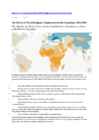
http://www.pewforum.org/2015/04/02/religious-projections-2010-2050/ APRIL 2, 2015 The Future of World Religions: Population Growth Projections, 2010-2050 Why Muslims Are Rising Fastest and the Unaffiliated Are Shrinking as a Share of the World’s Population The religious profile of the world is rapidly changing, driven primarily by differences in fertility rates and the size of youth populations among the world’s major religions, as well as by people switching faiths. Over the next four decades, Christians will remain the largest religious group, but Islam will grow faster than any other major religion
Should a mosque be built in Tallinn? Dear classmates and teacher, Today I want to talk to you about a topic that has brought with it a great deal of controversy in recent years. Namely, should the construction of a mosque in Tallinn be permitted? Estonians often like to pride themselves for being more tolerant and open-minded than those from other post-soviet nations. This sort of a progressive mindset, however, rarely extends to the principles of religious freedom. But why? Why are so many people opposed to something that in its core is just another place of worship much-like any other? After all, the construction of the mosque wouldn't even be funded by tax-payers. In addition, most of us don't oppose the building of churches, even though Estonia is currently the 3rd least religious country on the planet.
-All Member States must obey the Charter. -Countries must try to settle their differences by peaceful means. -Countries must avoid using force or threatening to use force. -The UN may not interfere in the domestic affairs of any country. -Countries should try to assist the United Nations. The basic structure of the United Nations is outlined in an organizational chart. What the structure does not show is that decision- making within the UN system is not as easy as in many other organizations. The UN is not an independent, homogeneous organization; it is made up of sovereign states, so actions by the UN depend on the will of Member States, to accept, fund or carry them out. Especially in matters of peace-keeping and international politics, it requires a complex, often slow, process of consensus-building that must take into account national sovereignty as well as global needs. The organization won the 2001 Nobel Peace Prize, and a number of its
BOOKS (From Wikipedia, the free encyclopedia) A book is a set or collection of written, printed, illustrated, or blank sheets, made of paper, parchment, or other various material, usually fastened together to hinge at one side. A single sheet within a book is called a leaf, and each side of a leaf is called a page. A book produced in electronic format is known as an electronic book (e-book). Books may also refer to works of literature, or a main division of such a work. In library and information science, a book is called a monograph, to distinguish it from serial periodicals such as magazines, journals or newspaper
and by Spain to the north and east. The Atlantic archipelagos of the Azores and Madeira are Portuguese territory as well. The country is named after its second largest city, Porto, whose Latin name was Portus Cale. SETTLEMENT The land within the borders of the current Portuguese Republic has been continuously settled since prehistoric times. In the 8th century most of the Iberian Peninsula was conquered by Moorish invaders professing Islam, who were later expelled by the Knights Templar. During the Christian Reconquista, Portugal established itself as an independent kingdom from León in 1139, claiming to be the oldest European nation-state. In the 15th and 16th centuries, as the result of pioneering the Age of Discovery, Portugal expanded western influence and
British Literature in the 20th-21st Century REVISION QUESTIONS 1. The Contradictory, diverse, chaotic 20th century. New developments in science and philosophy. The essence and influence of Freudian theory. Contradictory, diverse, chaotic 20th c- simultaneous rejection and invocation of the past. While modernists apotheosized the creative geniuses of the past, they also rejected old poetic forms. Challenge old and established beliefs and more and more people had access to books and education more people went to universities. profound change in morals:
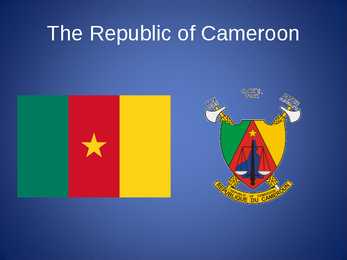
law with common law influences · The judiciary is officially divided into tribunals, the court of appeal, and the supreme court. Politics and Government · Human rights organisations accuse police and military forces of mistreating and even torturing criminal suspects, ethnic minorities, homosexuals, and political activists · The National Assembly makes legislation. The body consists of 180 members who are elected for five-year terms and meet three times per year. Laws are passed on a majority vote. Rarely has the assembly changed or blocked legislation proposed by the president. · President Paul Biya's Cameroon People's Democratic Movement (CPDM) was the only legal political party until December 1990. Numerous ethnic and regional political groups have since formed · The last parliamentary elections were held on 22 July 2007. Education · Most children have access to free, state-run schools or
pass through. As knowledgeable guides of the desert they controlled the desert trade routes, and escorted caravans. Table 1. Bedouin Total population Regions Languages Religion Related ethnic groups Sunni Islam, extremely few Arabic dialects, Arab World, Bedouins who practice Shia ? Bedawi, Najdi, Arabs Africa, Israel Islam and other religions Hassani exist
Ajanta (200 BC to 650 AD) Ellora (600 and 1000 AD ) Kailasa Temple Ajanta caves http://upload.wikimedia.org/wikipedia/commons/c/c3/Ajanta_ Ellora caves http://www.sacred-destinations.com/india/ellora-caves-photos/view-cc-shok.jpg Kailasa Temple Represents Mt. Kailasa, home of god Shiva; Largest monolithic structure in the world; 200 000 tons of removed rocks; 2x the area of Parthenon and 1,5 times higher; 7000 labourers; 150 years. Kailasa Temple Indo-Islamic Architecture Muslims in medieval time Imperial style under patronage of the Sultans of Delhi Mughal architecture round domes, high minarets, pillars, open courtyards Indo-Islamic style most important symbol is tomb provided spaciosness, massiveness and breadth Examples : Qutub Minar, Alai Darwaza, Tughlaqabad Fort, Fatehpur Sikri, Agra Fort, Taj Mahal, Red Fort Delhi
Cromwell’s dictatorship. In 1660, monarchy restored under Charles II. 1668 the Glorious Revolution + constitutional monarchy, i.e. constitution added to restrict the power of the monarch and divide obligations and power with the Parliament. Beginning of the century, literature, especially drama flourished. Emergence of puritanism – poetry becomes leading form. Puritanism – purification of religion, of all unnecessary rituals and decorations, in essence, all pleasure equals sin. Closed theatres and denounced all drama, dance, rural festivals, even country sports
They usually had a "coming out" during an evening at the Theatre d'Orleans, which marked the beginning of their search for a husband. The whole family attended the performance and sat in a box. Young men who were interested in the girl stopped by the box to pay their respects. They had intermediaries talk to the father and ask if they would be permitted to call on the girl at home. The first formal visit was brief, with the girl's mother and perhaps other relatives in attendance who would find out the young man's intentions. After four home visits the father asked the young man if he was serious about his daughter. If the young man wanted to marry the girl the two fathers negotiated the dowry. A notary came to write a list of the couple's possessions and drew up the marriage contract. Once the contract was signed, the families announced the engagement. The girl's family gave a big dinner at her house where the young man gave her an
Sir Ahmed Salman Rushdie is a British Indian novelist and essayist. He is born on 19. June 1947. He is the only son of Anis Ahmed Rushdie and Negin Bhatt, a teacher. Rushdie was born in Bombay, India, into a Muslim family of Kashmiri descent.[10][11][12] He was educated at Cathedral and John Connon School in Mumbai, Rugby School, and King's College, University of Cambridge, where he studied history. Rushdie's first career was as a copywriter, working for the advertising agency Ogilvy & Mather. It was while he was at Ogilvy that he wrote Midnight's Children, before becoming a full-time writer. His first novel, Grimus, a part-science fiction tale, was generally ignored by the public and literary critics
Teaduslik revolutsioon 15431600 I One of the most important developments in the western intellectual tradition was the Scientific Revolution. The Scientific Revolution was nothing less than a revolution in the way the individual perceives [ tajub ] the world. As such, this revolution was primarily an epistemological revolution it changed man's thought process. It was an intellectual revolution a revolution in human knowledge. Even more than Renaissance scholars who discovered man and Nature, the scientific revolutionaries attempted to understand and explain man and the natural world
supported the church and liked to keep things as they were, unlike the Ghibellines. The Ghibellines were mostly supporters of the German emperor and at the time Dante was born, were relieved of their power. When this change took place, the Guelphs for whom Dante's family was associated took power. Although born into a Guelph family, Dante became more neutral later in life realizing that the church was corrupt, believing it should only be involved in spiritual affairs. At the turn of the century, Dante rose from city councilman to ambassador of Florence. His career ended in 1301 when the Black Guelph and their French allies seized control of the city. They took Dante's possessions and sentenced him to be permanently banished from Florence, threatening the death penalty upon him if he returned. Dante spent most of his time in exile writing new pieces of literature. It is believed that around 1307 he interrupts his unfinished
The making of a new nation. The Enlightenment in America. The emergence of the notion of the American Dream. The great Enlighteners: Crèvecoeur, Jefferson, Paine, Franklin. The American Enlightenment is the intellectual thriving period in the United States in the midtolate 18th century (17151789), especially as it relates to American Revolution on the one hand and the European Enlightenment on the other. Influenced by the scientific revolution of the 17th century and the humanist period during the Renaissance, the Enlightenment took scientific reasoning and applied it to human nature, society, and religion. American Enlightenment a gradual but powerful awakening that established the ideals of democracy, liberty, and religious tolerance in the people of America.
1734) married Isaac Roosevelt, which makes her the great-great-grandmother of Franklin Delano Roosevelt, president of the US from 193345. · Hans Rebane = 1897 founded the first Estonian-language newspaper in the US Eesti Ameerika Postimees (published in NY until 1911) · 1898 founded an Estonian Lutheran congregation in NY (still exists today) 2. Signficant waves of migration from Estonia to the US in the 20th century, their reasons. *The failure of the 1905 Revolution: The first significant wave of immigration · Brought a strong Socialist contingent to the United States; led to the formation of many Estonian American Socialist and Communist organizations. * The 1920s30s: · Establishment of independent Estonia · Tightening of American immigration laws · Estonian immigration to the United States slowed down dramatically
1. Beowulf. The dating of Beowulf is still controversial. The poem is one of the earliest and greatest monuments of the Germanic literatures. The main stories of the poem (the fights of B.) are versions of common folk-tales, but the poet also introduces many incidental stories, some of which belong to the world of ancient Germanic legend. He writes his folk-tales and legends in a web of other events, mainly set in the Baltic Kingdoms. He shows a very rich and leisurely portrayal of this Baltic world, providing many customs like the close relationship between lord and man in the war-band and others. All this encouraged the supposition that the unknown author of the poem was himself a bard of the ancient type portrayed within the poem (a lord's scoop). However, many people propose that the author could be
but it was quickly recognised as an important development in the novel genre. The metaphysical and symbolic style, the juxtaposition of tones and the innovative narrative technique make it a rich and a complex work which encompasses many themes, including the battle between man and nature, the conflict between good and evil and man's quest to live in a largely hostile world. The emergence of the Transcendentalist movement in New England in the middle years of the century marked a significant break from the Puritan tradition. Influenced by English Romanticism and German and Eastern philosophies, the Transcendentalist exalted feeling and intuition over reason. They rebelled against the materialism of contemporary society and rejected the established Church. Unlike the Puritans, they believed that man was fundamentally good and should be allowed to develop free from rules and restrictions. The most influential figures in the
War on Terror The War on Terror is an international military campaign led by the United States and the United Kingdom with the support of other NATO and non-NATO countries. Officially, the War on Terror label has not been used since Barack Obama came to office in 2009, but the war in Afghanistan continues. The campaign was launched in 2001 with the US/UK invasion of Afghanistan in response to the September 11 attacks. Since then, other operations have commenced, the largest being the War in Iraq, beginning with a 2003 invasion. Originally, it was waged against al-Qaeda and other terrorist organizations with the purpose of eliminating them. The phrase War on Terror was first used by former US President George W. Bush and other high-ranking US officials to denote a global military, political, legal and ideological struggle against organizations designated as terrorist and regimes that
dominions. They were given "responsible government" and became part of the Commonwealth. The Head of State was the British monarch. Nowadays, the word "dominion" is not used. 6. The British Commonwealth of Nations freely unites Britain and its former colonies. Ireland 1. The first inhabitants were hunters and fishers from the European mainland in 6000 BC. In 200 BC, the Celts arrived. 2. Christianity was established during the 5th century by Saint Patrick, who is also Ireland's patron saint. His feast day is on 17th of March, the day he died. 3. The English conquest of Ireland began in the 12th century by Henry II. 4. King James I settled English and Scottish Protestants in the province of Ulster. This has resulted in conflicts between the Irish Catholics and the "planted" Protestants. 5. Home Rule was the name given to the Movement of Independence in 1916. Ireland
versification, as well as on the methodology of literary criticism, a number of major courses being offered in these specialist areas. The Division of the Russian Language and Literature unites the Department of the Russian Language, the Department of Russian Literature, the Department of Russian Literature of XX century, and the Department of Russian Folklore. The core curriculum includes courses in the history of Russian literature (from Kievan Rus times to the present) and folklore, modern Russian , Old Slavonic, the history of the Russian language and Russian dialectology, etc. The Department of Russian Literature of XX century in Russian literature explore (from 1890s to the present), including works of Russian emigrants abroad and nonRussian writers in Russia proper. Curriculum at the Division of Russian as a Foreign Language is similar to the one of the
American literature The literary history of this nation when the first humanbeing living in what has since become the U.S used language creatively. · Mid to late 18 century put down · Words are powerful, magical · Words must be remembered · Native Americans stories creation of the world · Attidude thought their land/language · Similar stories Dates and names · America was discovered in 1492 by Columbus · 1497 John Cabot went to Canada · 1579 San Fransisco/St. Fransis · 1607 Jamestown collony/John Smith · 1620 a boat called MayFlower
Test on Romantic Poetry and Prose 1. Approximate dates of romanticism: in the second half of the 18th century. Major events on world history at that time: · Industrial revolution · In America the Declaration of Independence, July 4, 1776 · The French Revolution, 1789 · The King of England was George III, after him George IV and then Queen Victoria Outcomes: · Revolution did not bring welfare · Lives of the lower-classes worsened · Extended the distance between the lower and upper class
English is the dominant language What is the situation of the Irish language at present? Irish is compulsory in all those schools that receive public money. In 2007, Irish was recognized as an official language of the EU. Road signs are usually bilingual. According to the 2011 Census, 41% of the population claim to be able to speak Irish 77,000 people speak Irish daily outside the education system 9. What languages is the Irish language related to? Irish is a Celtic language. Other Celtic languages include Breton, Cornish, Manx, Scottish Gaelic and Welsh. In what alphabet were the earliest sources written? The Ogham alphabet was used tp write the Irish language in C4-C9. 10. Which is the most famous medieval manuscript? The Book of Kells from C9 11. Which famous writers are of Irish origin? W.B. Yeats George Bernard Shaw Samuel Beckett Seamus Heaney Oscar Wilde 12.The Irish people outside Ireland. Who of the US presidents come from Irish families? J.F. Kennedy
Tallinn English College Topic Estonia Tallinn 2008 1. Introduction Estonia is a small country about the size of Switzerland, or New Hampshire and Massachussetts combined. Estonia is named after the people called "Ests" who lived in the region in the 1 st century AD. The Republic of Estonia is one of the three countries commonly known as the "Baltic States". The other Baltic States are Latvia and Lithuania. 2. Geographical position Estonia is situated in northeastern Europe. Estonia is bounded on the north by the Gulf of Finland, on the east by Russia, on the south by Latvia and on the west by the Baltic Sea. In the north it borders on Finland. The coastline of the Baltic Sea in Estonia is characterized by numerous gulfs and bays, the biggest of them being the Gulf of Finland, the Gulf of Riga and the Gulf of Pärnu. Bays include the
population (Rozenberg 1990). Language While Catalan and Spanish are the official languages of Ibiza, a "dialectal variation [of Catalan]...called Eivissenc or Ibicenco is more readily spoken by both the residents and those of Formentera. Additionally, because of the influence of tourism (see below) and expatriates living in or maintaining residences on the island other, atypical languages, such as English, German and Russian are also spoken. Polylinguality is the norm, not the exception. Tourism Nightlife Ibiza is considered a popular tourist destination, especially due to its legendary and at times riotous nightlife centered around two areas: Ibiza Town, the island's capital on the southern shore and Sant Antoni to the West. Well-known nightclubs are Privilege (the
5. The Angles, Saxons and Jutes. The Angles were one of the main groups that settled in Britain in the post-Roman period, founding several of the kingdoms of Anglo-Saxon England, and their name is the root of the name "England". The Saxons were a confederation of Old Germanic tribes. Their modern-day descendants are generally considered ethnic Germans, Dutch or English.. Saxons participated in the Germanic settlement of Britain during and after the 5th century The Jutes were a Germanic people who were one of the three most powerful Germanic peoples of their time. They are believed to have originated from Jutland in modern Denmark. Were associated with the Saxons. The Jutes, along with some Angles, Saxons and Frisians, sailed across the North Sea to raid and eventually invade Great Britain from the late 4th century onwards, either displacing, absorbing, or destroying the native Celtic peoples there. 6. The Anglo-Saxon invasion
questioned about the British national symbols...........................................................................23 Surprisingly, according to the results, more than 50 percent of students are aware of the national flags of Great Britain, Scotland, Northern Ireland and Wales. As can be seen, quite a lot of children also know the name of the Great Britain flag. However, almost all of the students have no idea about other names of the British flags, as well as about the patron saints. In addition, almost 90 percent of students are also unaware about the national holidays..........23 All things considered, we see that there is a need for students to pay more attention to Scotland, Northern Ireland and Wales and to learn more information concerning those parts of the United Kigdom.....................................................................................................................23 2
 annaabi.ee