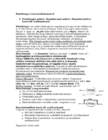
Tüüpiline pluripotentse tüviraku näide on vereloome tüvirakk. · Kas on looduses esineb erinevate diferentseerunud raku tüüpide vahelisi üleminekuid? Too näiteid. Üldiselt mitte, aga... · Mis on retinoolhape? Kuidas retinoolhape mõjutab rakku (retseptorid, tsütoplasmaatilised RA-siduvad valgud, TRIP kompleks; cis-elemendid)? Retinoolhape-Vitamiin A derivaat . Retinoic acid (RA) is a powerful morphogen, bound by a family of cytoplasmic RA receptors (RAR) which with bound RA translocate into the nucleus and bind DNA. This mechanism is similar to that seen with steroidal hormones and their receptors. The RAR has 3 domains: N-terminal, DNA-binding and C-terminal RA binding domain. Retinoolhape indutseerib mitmeid kasvufaktoreid ja ka protoonkogeene. ... Vitamiin A :(retinool): organismile tasakaalu ja kaitset pakkuv antioksüdant, tagab silmade, limaskesta ja maksa tervise, vajalik luukoe, hammaste ja kõhrede arenguks,
is a building unit of all proteins* and other biologically important substances. AMINO ACID NEUROTRANSMITTERS – A group of fast acting neurotransmitters* which includes glutamate (excitatory) and GABA (gamma-amino butyric acid, inhibitory). AMNESIA – Loss of memory. AMYGDALA – A structure in the forebrain which is a component of the limbic* system. It is implicated in control of emotions. ANTAGONIST – A chemical which blocks receptors* and stops (inhibits) the effects of agonists*. ANTERIOR – Towards the front, e.g. anterior cingulate cortex – frontal part of the cingulate cortex (part of the brain). ANTEROGRADE AMNESIA – Inability to remember new information since the moment, which triggered amnesia (e.g. stroke, head trauma). ANTEROGRADE TRANSPORT – Transport of materials, e.g. neurotransmitter molecules, along the axon, away from the neurone body to axon terminals* where the material is needed
14 A normal dose of caffeine is generally considered to be 100 mg, which is roughly the amount 15 found in a cup of coffee. However, more than half of all American adults consume more than 300 16 mg of caffeine every day, which makes it America's most popular drug. Caffeine is generally 17 consumed in coffee, cola, chocolate, and tea, although it is also available over-the-counter as a 18 stimulant. 19 Caffeine is believed to work by blocking adenosine receptors in the brain and other organs. This 20 reduces the ability of adenosine to bind to the receptors, which would slow down cellular 21 activity. The stimulated nerve cells release the hormone epinephrine (adrenaline), which 22 increases heart rate, blood pressure, and blood flow to muscles, decreases blood flow to the skin 23 and organs, and causes the liver to release glucose. Caffeine also increases levels of the 24 neurotransmitter dopamine.
In addition, dogs have ear mobility, which allows them to rapidly pinpoint the exact location of a sound. Eighteen or more muscles can tilt, rotate, raise, or lower a dog's ear. A dog can identify a sound's location much faster than a human can, as well as hear sounds at four times the distance. Smell The olfactory bulb in dogs is roughly forty times bigger than the olfactory bulb in humans, relative to total brain size, with 125 to 220 million smell-sensitive receptors. The wet nose is essential for determining the direction of the air current containing the smell. General visibility A countershaded animal will have dark coloring on its upper surfaces and light coloring below, which reduces its general visibility. Many breeds will have an occasional "blaze", stripe, or "star" of white fur on their chest or underside. More pictures Thank you for listening!
Basic Nervous Functions: Reception, Integration, Reaction: Psychologists today agree with Descartes that much of behavior can be understood as reactions to outside events: the environment poses a question and the organism answers it. This approach must lead to a tripartite classification on nervous functions: reception through the senses, reaction from the muscles and glands, and a conduction and integration system that mediates between these two functions. Stimulus excites receptors, specialized structures capable of translating some physical energy into a nervous impulse. Once a receptor is stimulated, the excitation is conducted farther into the nervous system. Bundles of nerve fibers that conduct excitation toward the brain or spinal cord are called afferent nerves. These fibers transmit their message still farther; in the simplest case, to other fibers that go directly to the effectors, the muscles and glands that are the organs of action.
resistance. 3. Radius of the vessel. The smaller the radius the greater the resistance. Verevoolu kontroll/ regulatsioon http://www.biosbcc.net/doohan/sample/htm/COandMAPhtm.htm 1) Arterioraalse raadiuse sümpaatiline kontroll a. Arterioles are enervated (ослаблен) by the sympathetic nervous system only. b. Sympathetic nerve fibers secrete norepinephrine. c. Binding of norepinephrine to receptors on the smooth muscles of arterioles causes contraction and thus leads to vasoconstriction. d. Arterioles servicing tissues at rest receive a baseline amount of sympathetic stimulation and thus are slightly constricted (vessel b in the figure). e. This baseline level of constriction is called Vascular Tone. f. Vasodilation is accomplished by decreasing
With each puff of a cigarette, a smoker pulls nicotine into his or her lungs where it is absorbed into the blood. In eight seconds, nicotine is in the brain, changing the way the brain works. This process happens so fast because nicotine is shaped like the natural brain chemical acetylcholine. Acetylcholine is one of many chemicals called neurotransmitters that carry messages between brain cells. Neurons have special spaces called receptors, into which specific neurotransmitters can fit, like a key fitting into a lock. Nicotine locks into acetylcholine receptors in different parts of the brain, rapidly causing changes in the body and brain. Nicotine raises the heart rate and respiration (breathing) rate, and causes more glucose, or blood sugar, to be released into the blood. This might be why smokers feel more alert after smoking a cigarette.
down process due to the indirect process that involves making assumptions about the world. 1 05144023 However, another theory of visual perception is called bottom-up/data driven processes Gibson (1979). As the major bottom-up theorist, he argues that perception is a direct process, determined by the information presented to the sensory receptors. In other words, perceptions starts with light reflected by objects which creates an optic array containing all the visual information from the environment to the eye as a stationary perceiver. Although motion changes some aspects in optic array, however, it provides unambiguous and invariant information about the layout and objects in space. He differs in this information in three forms: optic flow patterns (motion and stereopsis), texture gradient and affordances.
immuunvastus ca 5-7 päevaga. Adaptiivne immuunvastus tekib kiiremini, kui täpselt sama mikroob teist korda siseneb. Omandatud immuunsusel on kahte tüüpi vastust: Ühe reaktsioonina (humoraalne vastus) sekreteerivad B-lümfotsüüdid antikehasid ja teise reaktsioonina (rakuline vastus) tapavad tsütotoksilised T-lümfotsüüdid viirusinfekteeritud rakke. Kuidas kaasasündinud immuunsus nakkuse ära tunneb? Nii selgrootutel kui ka selgroogsetel on Pattern Recognition Receptors (PRR), mis tunnevad ära patogeenidele omaseid molekulaarseid struktuure (Pathogen Associated Molecular Patterns - PAMP). PAMP need on kindlad molekulid ja struktuurid, mida leidub vaid prokarüootidel. PAMP-e toodavad vaid mikroobid ja seega kaasasündinud immuunsüsteem on võimeline tegema vahet oma ja võõra vahel. 3. Joonista adaptiivses immunsuses osalevad tähtsaimad molekulid: Ig, TCR, MHCI ja MHCII, millistel rakkudel need ekspresseeruvad, millistele
or off, thereby adapting their repertoire of proteins to meet current needs. Such control of gene activity depends on DNA-binding proteins called transcription factors, which bind to DNA and act as switches, either activating or re- pressing transcription of particular genes. The activities of many transcription factors are indirectly regulated by binding of extracellular proteins and peptides to cell-surface receptors. These receptors activate intracel- lular signal transduction pathways that regulate specific transcription factors through a variety of mechanisms. · Transposoon - A segment of DNA that is capable of independently replicating itself and inserting the copy into a new position within the same or another chromosome or plasmid. Transposons act somewhat similarly to viruses and in humans are an underlying
- Stimulation of growth of new blood vessels - Secretion of growth factors - August 2012: first successful integration of human ESC-derived cardiomyocytes - Diabetes human ESC grown in cell culture may be stimulated to form insulin- producing cells, that can be lately transplanted into patient - Stem cells from umbilical cord blood are used to re-educate a diabetic`s own T cells The Nobel Prize in Chemistry 2012 for studies of G-protein-coupled receptors · Robert J. Lefkowitz · Born: April 15, 1943 (age 69) · Alma mater: Columbia University · Institutions: Duke University; Howard Hughes Medical Institute · Notable awards: National Medal of Science (2007); Nobel Prize in Chemistry (2012) · Brian K. Kobilka · Born: University of Minnesota Duluth; Yale University · Institutions: Standford University; Duke University Notable awards: Nobel Prize in Chemistry (2012 · 1968 identification of -adrenergic receptor
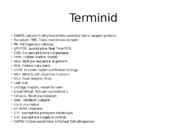
Terminid · SNARE, soluble N-ethylmaleimide sensitive factor adaptor protein; · Receptors TMD, Trans-membrane domain; · PR, Pathogenesis-related; · qRT-PCR, quantitative Real Time PCR; · CDD, Conserved Domain Database; · HMM, Hidden Markov Model; · MSA, Multiple sequence alignment; · PDB, Protein Data Bank; · DOPE, Discrete Optimized Protein Energy; · MOF, MODELLER Objective Function; · NILs, Near-isogenic lines · Leaf rust; · Ustilago maydis, maisinõe seen · bread wheat, Triticum suvitrühvel L · tobacco, Nicotiana tabacum
TOLL retseptorid ( PRR retsetorid) Avastati Drosophila m. arengut uurides 1985a. (toll saksa keeles kummaline,võigas, imelik 1997 tuvastati imetajatel, Bruce Beutler 1998 TLR 4 ja LPS seos –Nobeli preemia 2011 a. Käivitavad NF-κB ja MAP kinaaside aktivatsiooni raja Osa raku välismembraanil-osa endosomaalselt N-Formylmethionin MiIline on tähtsus eukarüootidele? Scavenger (prügivedaja, raisasööja, püüdur) retseptorid inimesel Tsütoplasmaatilised PPR (pattern recognition receptors) NOD –(Nucleotide oligomerization domain) retseptorid . Üle 20 imetajatel (NOD2-muramüül dipeptiid) RLR retseptorid RNA helikaasid Taimede PPR retseptorid(XA21, FLS2) MBL (mannan-binding lectin) C-reaktiivne valk Komplemendi retseptorid RNA helikaasid RIG-I ja MDA5 RIG-I ja akronüümid immunoloogilistes tekstides RIG-I(retinoic-acid-inducible protein ) retseptorite (tsütosoolsed RNA helikaasid) käivitatud signaalirajad Taimede immuunsüsteemi elemente
This status is conveyed in the mother's perceived attitudes about life. The mother's emotions, such as fear, anger, love, hope among others, can biochemically alter the genetic expression of the offspring. Our perceptions of the environment, and their attendant emotions, elicit physiological responses in the body by releasing "signal" molecules into the blood. Blood-borne emotion-related signals activate specific receptor proteins on the surfaces of cells in tissues and organs. Activated receptors serve as molecular switches that adjust the metabolic system and behavior of the organism, so as to accommodate environmental challenges. Physiologic responses to environmental signals include regulations of the nervous system, endocrine organs, and the cardiovascular, respiratory, digestive and excretory functions. During pregnancy, the parent's perception of the environment is chemically communicated to the fetus through the placenta, the cellular barrier between the maternal and fetal blood
+ 3 Na / sodium ions, enter; R sodium / Na 4 depolarisation / –65mV to +40mV; 5 receptor / generator, potential; 6 ref to threshold; 7 action potential; allow only if linked to idea of threshold reached 3 max (iv) neurotransmitter only, in presynaptic knob / released from presynaptic membrane; receptors only on postsynaptic membrane; ref to refractory period / hyperpolarisation; 2 max [10] 79. 1 eutrophication; 2 increased growth of, algae / seaweeds; 3 block, light / space; 4 ref to competition; 5 (so) alters food chain / example; 6 decomposition of, sewage / dead organisms;
(2002) A multiprocess perspective on the neuroscience of emotion. In: Mayne T.J., Bonanno G.A. (Eds.), Emotions: Currrent Issues and Future Directions. The Guilford Press, New York, NY, pp. 3881. Ochsner K.N, Ray R.D., Cooper J.C., Robertson E.R., Chopra S., Gabrieli John D.E. & Gross J.J. (2004) For better or for worse: neural systems supporting the cognitive down- and up- regulation of negative emotion. Neuroimage 23: 483 499 Pariante C.M., & Miller A.H. (2001) Glucocorticoid receptors in major depression: relevance to pathophysiology and treatment. Biological Psychiatry 49: 391404. Parrott W. G. (1993) Beyond hedonism: Motives for inhibiting good moods and for maintaining bad moods. In D. W. Wegner & J. W. Pennebaker (Eds.), Handbook of mental control (pp. 278-305). Englewood Cliffs, NJ: Prentice Hall. Polk D. E., Cohen S., Doyle W. J., Skoner D. P., Kirschbaum C. (2005) State and trait affect as predictors of salivary cortisol in healthy adults
Selle põhimõtte äärmuslik erijuhtum on antagonisti poolt uuritava ravimi täielik väljatõrjumine - afiinsus on null Kui ravim ei moodusta retseptoriga kovalentset sidet, võivad teised ained, sealhulgas endogeenne ligand, ta sealt välja tõrjuda vastavalt afiinsuste suhtele. NB - kasutati sulpiriidi stereoisomeeri (kui vt slaide) G-valkudega seonduvate retseptorite toimemehhanism Teisesed virgatsained vahendavad signaali G-valkudega seotud retseptoritelt Retseptorite reserv (spare receptors) - ravimi kontsentratsiooni seos 4 agonist - seotuna retseptoriga avaldab sarnast toimet. 5 antagonist - seostudes retseptoriga ei anna bioloogilist signaali, seega nõrgestades või täielikult blokeerides agonisti-vahendatud toimet 6 partsiaalagonist f-n vastus retseptoriga seostused võib varieeruda 7 inversagonistid - can have effects similar to those of an antagonist, but causes a distinct set of downstream biological responses
The accuracy of the results (around 610%) different sponges to be able to form a single unified body and their would allow anyone to decide if the sequence variants are present cells to adhere, the aggregation factors (supramolecular proteo- glycan-like complexes) and their interactions with cell surface either in 1:3 or 2:2 ratio, for example. For indels the same receptors must be specific enough [39,40], therefore the cells need modelling approach can be used with higher precision. to be similar enough on a genetic level as well. These recognition mechanisms are not directly linked with rDNA, nevertheless Supporting Information studying the ITS profiles allows us to assess the genetic similarity of File S1 Direct sequencing electropherograms. Catalogue individuals
mis seostuvad patogeenide membraanidele ja lõhuvad selle. Imetajate rakud toodavad viirusevastaseid tsütokiine – interferooni α ja β, mis peatavad viiruste paljunemise Peremeesorganismi n.n. mustrit äratundvad retseptorid. Toll’i-sarnased retseptorid. Patogeenidele omase molekulaarse mustri (ingl.k. pathogen-associated molecular pattern) tunnevad ära peremeesorganismi n.n. mustrit äratundvad retseptorid (ingl.k. pattern recognition receptors) (paiknevad raku plasmamembraanis või rakusiseselt). Retseptorid kutsuvad esile infeksiooni tekkekohas esile põletiku. Tolli sarnased- paikneb plasmamembraanis Bakterite fagotsüteerimine neutrofiilide poolt. Bakter fagotsüteeritakse neutrofiili poolt, fagosoom eraldab azurofiilsed jaspetsiifilisi graanuleid, fagosoom pH tõuseb,tekib antibakteriaalne keskkond ning miroob hävib. pH fagosoomis langeb, lüsosoomi happeline hüdrolaas lagundabmikroobi täielikult, neutrofiil
55 % of luuüdi kaalust tagab netrofiilide produktsiooni. Lisaks fagotsüteerivatele omadustele toodvad toksilisi aineid, mis purustab kõik neutrofiili ümber, k.a. neutrofiil ise. Patogeeni äratundmismehhanismid immuunsüsteemi rakkude poolt Organism immuunsüsteemi rakud peavad ära tundma potentsiaalsed patogeenid ning aktiveeruma selleks on universaalsed "vallandavad" molekulid signaalid pathogen-associated molecular patterns - PAMPs; or pattern recognition receptors, mis seostuvad rakkude pinnal olevate Toll-like retseptoritega. Sellisteks elementideks on sageli rakuseina struktuursed molekulid, mis on omased paljudele bakteritele ja mis on - lipopolüsahhariid (LPS), petidoglükaan jne., ja mis ei ole omased eukarüootsele organismile. Rakulise loomuliku immuunvastuse aktivatsioon. Aktiveeritakse ohusignaali poolt (LPS, dsRNA jne.) omane paljudele patogeenidele. Ohu-signaali
Lisaks sisaldavad NK rakud interferoon gammat, mis on oluline makrofaagide aktiveerimiseks. NK rakkude aktivatsioon on reguleeritud inhibeerivatelt ja aktiveerivatelt retseptoritelt tulenevate signaalide tasakaaluga 5. TLR keskne tähendus. NLR ja RLR. Makrofaagide ja dendriitrakkude poolt produtseeritavad tsütokiinid. Nende tähendus immuunsüsteemi funktsioneerimisel. Tolli laadsed retseptorid ehk TLR on mustrit äratundvad retseptorid (pattern recognition receptors), millel on oluline roll kaasasündinud immuunvastuses. TLR ekspresseeritakse makrofaagide, dendriitrakkude, neutrofiilide, mukoosa epiteelrakkudel ja endoteelrakkudel. TLR kodeerivad geenid on evolutsioonis kõrgelt konserveerunud ning on leitud nii C.elegans’s, Drosophila’s kui ka imetajates. Inimeses on 11 TLR geeni, mis on kõik glükoproteiinid ning sisaldavad ekstratsellulaarses regioonis leutsiini kordusjärjestusi ja tsüsteiini motiive.
End of Chapter Notes 8. I've since confirmed this finding with three separate genetic profiles through 23andMe (two tests with different names to ensure consistent results) and Navigenics. 9. I've since learned to worry less about cholesterol if HDL is high enough and triglycerides are low enough. 10. Compiled with a combination of the lowest and highest measurements from both locations. 11. To give my adrenal glands and adrenergic receptors a rest, I didn't consume NO-Xplode on Sundays. 12. I recommend the squat for those who have access to a Safety Bar, which provides a yolk-like shoulder harness. 13. Most mortals will need to work up to 22. 14. Using popular caloric models from published studies, Casey would actually have had to eat approximately 39,000 calories per day to gain this muscular mass. That's 89 McDonald's double cheeseburgers or 97 chicken breasts per day. Even with
that phage addition to food products is not narrow host range of the phage pool. adding a foreign entity. Phages used to Development of phage-resistant bacterial control food spoilage bacteria can be mutants is another point of concern that may derived from corresponding foods and food- be overcome using a pool of phage strains, processing environments. Because phages with each targeting different receptors on the are highly specific to prokaryotes, it is bacterial cell-wall surface. On the other hand, unlikely that they can target human eukary- phages continuously co-evolve with bacteria, 268 Chapter 14 adjusting themselves to regain ability to and selective breeding may be tools to infect mutated bacteria (Weitz et al. 2005). decrease phage specificity, which would
 annaabi.ee