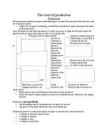
How to produce bioenergy from agricultural resources without harming the environment Jürgen Aosaar Jaak-Albert Metsoja Ahto Oja BOVA cource on biogas from biomass March 3-7 2008 Tartu Deciduous tree species on abandoned agricultural land Current situation • The long term development plan of the Estonian energy industry foresees a reduction in the use of fossil fuels and an increase in the share of biofuels: by the year 2010 renewable energy must account for 5.1% of total energy consumption Current situation (2) • In Estonia we have abandoned arable land about 400 000 ha, part of it is overgrowing naturally, and another part has been afforested • For short-rotation forestry in Estonia, ecologically and economically the most suitable tree is probably grey alder, which is a highly productive and soil improving species Grey alder...
Pay back- to punish or reward Pay for- to make payment pay for- to suffer or be punished pay off- to pay a full amount (a debt) pay off- produce a profitable or successful result pay off- to get revenge pay off- to birbe (pistist maksma) pay out-a sum of money to sb (large amount) pay out- to let out (a line or rope) by slackening (lõdvaks laskma) pay up- to give over the full monetary amount demanded carry off- to die of a disease carry on- to continue carry on- have an affair carry on- behave badly carry out- to perform a task carry out- to follow or obey carry out- complete or accomplish st
internationally, an investment of £1.5 million was proposed. We can help Valentino Company earn more profit by using this new investment plan. When consumers eat our chocolate, they will feel satisfied and happy. Other than that, we can distribute our chocolate to countries around the world. Moreover, our chocolate is harmless to people who have sickness because our chocolate contains sugar free and low fat products. Besides that , we hope that our company can produce more creative , delicious and healthy chocolate in the future in order to let our customer enjoy our chocolate . In the future , our company are going to have a new way of promotion .We are going to let the consumers to test the chocolate sample to get feedback before these chocalate enters the market . In addition , our biggest aim is to become the most well known chocolate industry around the world . Options and benefits The Board of Directors has agreed the following investment plan.
The positive and negative sides of consumption Nowadays people produce many things and they do it more and more, because people consume them. Actually they do not need those things, but they want to try something new. Before that people produced and consumed less, they bought only that what they needed. Firstly, it is positive that I can buy what I want. I can buy all necessary and pointless things in shops. It is good that people make different things because people, who go to the shop, can choose exactly that thing what he wants and he can choose price too
Nuclear Power: A Burden or a Blessing? Today, when the pollution of Earth is an important matter, people are trying to find economic solutions to produce power. This is where the necessity of nuclear power plants comes in question. Nuclear power plants are a cheap way to generate electricity but it also brings a lot of pollution that is much more radioactive and toxic than, for example, coal waste. But if we are looking at the facts, burning coal pollutes the Earth much more than nuclear power plants because more waste is generated. CO2, which is released from burning coal, is the main cause of global warming
in some parts of the Earth. In the past people did not have showers or baths, toilets with water, dishwashers. These and many other things use more water, than people used to. Secondly we are producing a lot more, than we maybe should. It seems like the most meaningful thing nowadays is money. Maybe because of that we are over producing. If we look at the landfills we can see how full they are. I think it is that way because we produce too much and use too much packages. We should produce only as much we really need or in the future a really big part of earth would be covered with trash and air full of smog and acid rain. Also we should think some reusable way for packaging. Thirdly we are not thinking what we do with our everyday behaviour to the future. Almost a week ago we took a test, which showed how many planets is your ecological footprint. Mine was 3,22. It shocked me and after that I have started to think more about easy things we can do often. Like
Karol Pakkas What is solar power? Solar power is energy that comes from the sun. The sunlight gives off energy as heat. Solar power is a renewable source of energy. How does solar power work? Solar panels are used to collect sunlight. Solar panels are made up of photovoltaic cells that convert the sunlight into energy. Why do we need it? How does it lead to better health? Solar power is source of clean energy. It does not produce pollution or greenhouse gases or carbon compounds. Solar power would be a lot safer for the environment and a lot better for the health of people. What would happen if we don't use solar power? If we don't start using solar power, we would use oil and coal. They produce pollution and will cause millions of people to suffer from respiratory related problems. The oil and coal will run out and people will have to resort to other ways of power. Solar energy
Karol Pakkas What is solar power? Solar power is energy that comes from the sun. The sunlight gives off energy as heat. Solar power is a renewable source of energy. How does solar power work? Solar panels are used to collect sunlight. Solar panels are made up of photovoltaic cells that convert the sunlight into energy. Why do we need it? How does it lead to better health? Solar power is source of clean energy. It does not produce pollution or greenhouse gases or carbon compounds. Solar power would be a lot safer for the environment and a lot better for the health of people. What would happen if we don't use solar power? If we don't start using solar power, we would use oil and coal. They produce pollution and will cause millions of people to suffer from respiratory related problems. The oil and coal will run out and people will have to resort to other ways of power. Solar energy
Solar radiation, wind and hydroelectricity, are perpetual resources that are in no danger of a lack of long-term availability. Some natural renewable resources such as geothermal power, fresh water, timber, and biomass must be carefully managed to avoid exceeding the worlds capability to displace them. Solar energy is the energy derived directly from the Sun. Along with nuclear energy, it is the most important source of energy on Earth. People usually use solar energy to produce electricity and heat. Wind power is the conversion of wind energy into a useful form of energy, such as electricity, using wind turbines. These wind turbines are popular in counties, where the average speed of the wind is at least 6 meters per second for example in Germany, Denmark, USA and India. Hydropower is energy derived from the movement of water in rivers and oceans,it can be used to generate electricity using turbines, or can be used mechanically to do useful work.
INTRODUCTION · Our everyday life is going to be more and more related to technology · We don't know how our life is going to change · Instead teachers are robots, flying cars etc NEGATIVE THINGS NOWADAYS · People are more and more antisocial, because they are stuck in their smartphones · They are not physically active · A lot of low-skill people are losing their jobs because of automatisation (replacing people with robots) · Because of growing the human population we need to produce more and more technical items (phones, computers, home appliances etc) · Air pollution (factories) · Most people doesn't know how to use these technical items · Children nowadays POSITIVE THINGS NOWADAYS · Medicine can develope · More opportunities to explore things in our life · Simple learning opportunities (e-school etc) · Sustainable methods to produce energy · Faster service (for example McDonald's in Tallinn's oldtown) · Easy to speak with people in other countries
19th centuries, was a period during which predominantly agrarian, rural societies in Europe and America became industrial and urban. By mid-century, many people worked for small businesses or on farms, laboring in fields that would yield barely enough food to feed the family. New inventions and technology began to change that, however. Larger factories opened and produced new farm equipment, such as the steel plow and the tractor, which allowed farmers to cultivate bigger fields and produce more food that cost much less. Developments in the iron industry also played a central role in the Industrial Revolution. In the early 18th century, Englishman Abraham Darby (1678-1717) discovered a cheaper, easier method to produce cast iron, using a coke-fueled (as opposed to charcoal-fired) furnace. In the 1850s, British engineer Henry Bessemer (1813-1898) developed the first inexpensive process for mass-producing steel. Both iron and steel became essential
Tarantula are a group of hairy and often very large spiders belonging to the family Theraphosidae, of which approximately 900 species have been identified. Some genera of the tarantulas hunt prey primarily in trees and other genera hunt on or near the ground. All tarantulas can produce silk; while arboreal species will typically reside in a silken "tube tent", terrestrial species will line their burrows with silk to stabilize the burrow wall and facilitate climbing up and down. Tarantulas mainly eat insects and other arthropods, using ambush as their primary method of prey capture. The biggest tarantulas can kill animals as large as lizards, mice, and birds. Tarantulas are found in tropical and desert regions around the world.
Oclusivas son consonantes que se caracterizan por una interrupción en el paso del aire, motivada por el cierre completo de dos órganos articulatorios (la oclusión). El cierre dura milésimas de segundo y suele deshacerse mediante una pequeña explosión. [p] oclusiva bilabial sorda [b] oclusiva bilabial sonora [t] oclusiva dental sorda [d] oclusiva dental sonora [k] oclusiva velar sorda [g] oclusiva velar sonora Fricativas - Durante su emisión se produce un estrechamiento del canal bucal sin que se llegue nunca al cierre completo de los órganos articulatorios. [β] fricativa bilabial sonora [ð] fricativa interdental sonora [γ] fricativa velar sonora [f] fricativa labiodental sorda [θ] fricativa interdental sorda [s] fricativa alveolar sorda [ss] fricativa alveolar sonorizada [ǰ] fricativa palatal sonora [x] fricativa velar sorda Africada - En su articulación intervienen un momento oclusivo seguido de otro momento fricativo
they have created. 2. Against exploitation of workers which basically means that workers labour is resold at a higher price than he gets paid for it. 3. Classless society which means that everyone is equal in a basic sense as a member of the tribe and the different functional assignments of the primitive mode of production, howsoever rigid and stratified they might be, did not and could not, simply because of the numbers, produce a class society as such. Why to be against Marxism? 1. Marxism removes incentive, with the slogan “From each according to his ability, to each according to his need” which implies that you should only get what you need, regardless of productivity or skill, which discourages people from working hard, forces production to fall, which reduces wealth, and ultimately societal wellbeing. 2. Equality of outcome would stop productive people from being able to produce as much as
Profits may be either an objective or constraint. As an objective, a producer may seek - to maximize profits or - minimize cost per unit As a constraint the agent may desire - to maximize "efficiency," - market share, - rate of growth or - some other objective constrained by some "acceptable level of profits. In the long run, a private producer will probably find it necessary to produce an output that can be sold for more than it costs to produce. · The costs of production (Total Cost, TC) must be less than the revenues (Total Revenue,TR). Production and Cost Production is a technical relationship between a set of inputs or resources and a set of outputs or goods. · QX = f( inputs [land, labor, capital], technology, . . . ) · Legal and social/cultural institutions influence the production function.
labor and materials. 2 ways to determine maximum profit and minimum loss output level Total-revenue-total-cost approach Marginal-revenue-marginal-cost approach Both apply to pure competition, pure monopoly, monopolistic competition, oligopoly Short Run Profit Maximization · Profits (p) = TR - TC. - p are often the objective or goal of firm. · The firm will choose to produce and offer for sale all additional units of output that they can produce for a cost (MC) that is less than the additional revenue (MR) that they collect. · Maximum profits (or minimum loses) for a firm occur when MR = MC. Ideally, the market will "signal" the costs of sellers and benefits to buyers with the market price; P = MR = MC Total-revenue-total-cost approach Should we produce this product? Profit Yes; Loss No
emissions nor toxic waste is also in favour of wind energy. Power from oil shale In the time when many world countries close factories that use fossil fuels, Estonia is starting to build new factories that work with oil shale. Taxpayers pay subsidy for oil shale in every year unconditionally the amount electricity produced and also when it is known that this source of energy has no perspective. Also it is not economically useful to produce electricity from oil shale. It would be more beneficial to use oil shale for producing oil shale oil. In present price of black oil, producing electricity from oil shale is causing 21 EUR loss per ton of oil shale. Conclusion To sum it all up, it seems to me that using wind energy would be more reasonable, because it is cheaper and environmental friendly. Oil shale should be used to produce more valuable products than electricity
Incorporated in 1925, the Chrysler Corporation of Canada gained complete control of a Maxwell-Chalmers plant that had been used to manufacture some Chrysler models in the previous year. Initially called Chrysler Canada, Ltd, the name of the company changed to DaimlerChrysler Canada Inc following the merger of the two parent companies. In August 2007, the company was renamed Chrysler Canada Incorporated when Cerberus Capital Management purchased 80.1% of its parent company Chrysler LLC. They produce certain models of Chrysler, Jeep and Dodge. Chrysler Canada has three vehicle assembly plants in operation in Canada, and built 535,878 cars and trucks in 2002. They produce certain models of Chrysler, Jeep and Dodge. Husky Energy Inc. Husky Energy Inc. is a large Canadian integrated energy company based in Calgary, Alberta. Focusing on petroleum and natural gas exploration, production, refining and retail sales, the company primarily conducts operations in Canada, the United States,
everlasting enterprise. Primitive and modern economies A simple economy In this economy there is no money and therefore there are two choices open to the household sector upon receipt of the goods and services: consumption or investment. For instance: a worker takes payment in the form of a plough so that in the future years when he enters the business sector he can produce more food per acre. The introduction of money In order to simplify the exchange of goods and services between different households, a tool is needed, into which all products can be converted. That tool should be small and portable, it would have to hold its value over a long period of time and have general acceptability. The introduction of money into the system creates monetary as well as real flows of goods and services.
Environmental issues in Estonia The Earth is considered to be the most beatiful planets in the Universe. But our planet is threaten by environmental problems. Even a small country like Estonia can make difference. Our capital city is fighting against air pollution. But people produce much refuse and ways of recycling are getting old. Water pollution is also a problem in Estonia. We have factories that let their waste run into rivers. One of the biggest problems in Estonia is air pollution. Our air is polluted by exhaust fumes, because today we have a lot of cars, buses and other machines. In 2009 we had 407 cars to thousand inhabitants, which is lower than European Union average, but this number is still high. Because cars produce gases that contain carbon dioxide
another meaning, therefore that sound must be a phoneme. There are small shades of sounds that don't distinguish meaning phones. The different phones that are the realisations of the same phoneme are called allophones. Allophones - are the actual pronunciations of phonemes in different environments. Complementary distribution phonetic units that never occur in the same environment are said to be in complementary distribution. For example, clear/l/ and dark/l/. NB! The sounds we produce and hear are continuous: we move our organs of speech continuously and produce a continuous signal still it is possible to divide speech into units, which is called segmentation. The sounds of languages can be produced by: pushing air out of the lungs through the vocal tract (pulmonic, egressive) sucking the air into the mouth (ingressive) NB! Without air we cannot produce sound. There are two classes of sounds: consonants vowels
..........................................................................................20 7.1 The science of electricity............................................................................................21 7.2 Static electricity..........................................................................................................22 7.3 Magnets and electricity...............................................................................................22 7.4 Batteries produce electricity....................................................................................... 23 7.5 Electricity travels in circuits.......................................................................................24 7.6 How electricity is generated....................................................................................... 24 7.7 The transformer - moving electricity..........................................................................27 7
Acid rain can travel thousands of miles, so pollution in one country can become acid rain for another country. So how to avoid the worst? Lets talk about cars, which are the main means of transport in our everyday life, they are useful and take us to the place, where we want to go. But lets be honest, they have also negative aspects. Like heavy traffic in the morning, while you are going to work and in the evening, when you are about to go home. Cars also, like factories, produce poisoned gas in the air. So instead of cars, we should use public transport or a bike, in the name of our enviroment. And what about the factories? Well, we can't remove them from the planet, but they should be built in places, where is less forest and no cities near. Water pollution Secondly, water pollution is also a main issue. Many peole throw rubbish in rivers and lakes
A harsh tasting bitter brew will result. Freshness Coffee is best enjoyed as soon as it has been brewed. Oxygen in the atmosphere causes the taste to rapidly deteriorate and the beverage loses its aromatic oils and may soon become sour, flat and lifeless. Freshly brewed coffee should be consumed within 30 minutes if left on a hotplate and should never be reheated. The quality of the brewed coffee beverage will depend on several factors, all of which are important to produce the perfect cup of coffee: 1) Grind size of the coffee 2) Quantity of coffee used 3) Water quality 4) Water temperature 5) Contact (infusion) time 6) Type of brewing method used 7) Hygiene and cleaning practices * Grind size: Over-extraction can occur if the grind is too fine for a particular brewing method and under- extraction can occur if the grind is too large. The important thing here is the brewing method used,
Go Green We`re produce more waste Keep our environment clean Put garbage into different recycling bins Save electricity and water Protect our natural resources
Why Don't We Use More Renewable Energy? In the past, renewable energy has generally been more expensive to use than fossil fuels. Plus, renewable resources are often located remote areas and it is expensive to build powerlines to the cities where they are needed. The use of renewable sources is also limited by the fact that they are not always available (for example, cloudy days reduce solar energy, calm days mean no wind blows to drive wind turbines, droughts reduce water availability to produce hydroelectricity). The production and use of renewable fuels has grown more quickly in recent years due to higher prices for oil and natural gas, and a number of State and Federal Government incentives, including the Energy Policy Acts of 2002 and 2005. The use of renewable fuels is expected to continue to grow over the next 30 years, although we will still rely on non-renewable fuels to meet most of our energy needs. trends Consumption
India and China have both invested extensively in creative biogas technology to provide fuel for their citizens and there are a number of interesting applications for this gas which appeal to people who are interested in sustainable energy and the health of the environment. The basis for biogas is organic material such as food scraps and feces which are held in an anaerobic area, which can range from a storage tank which is not ventilated to a device which is specifically designed to produce gases. The conditions attract anaerobic bacteria, which start to break down the organic material, producing methane and carbon dioxide as a by-product. Another type of biogas which includes hydrogen, nitrogen, and carbon monoxide can be obtained through the gasification of biomass such as wood or rice husks, a technique which is used to manufacture gas industrially. The gases produced through anaerobic fermentation or gasification are
the firm may be induced to spend money (increase costs) to protect its economic profit (rent seeking and is usually political in nature) Monopolistic Competition and the Welfare of Society There is the normal deadweight loss of monopoly pricing in monopolistic competition caused by the markup of price over marginal cost. However, the administrative burden of regulating the pricing of all firms that produce differentiated products would be overwhelming. Another way in which monopolistic competition may be socially inefficient: - The number of firms in the market may not be the "ideal" one. · There may be too much or too little entry. The product-variety externality: · Because consumers get some consumer surplus from the introduction of a new product, entry of a new firm conveys a positive externality on consumers. The business-stealing externality:
On November 15, 1904, patent was granted to King C. Gillette for a safety 'razor'. In 1895, after several years of considering and rejecting possible inventions, Gillette suddenly had a brilliant idea while shaving one morning. It was an entirely new razor and blade that flashed in his mind --a razor with a safe, inexpensive, and disposable blade. It took six years for Gillette's idea to evolve. During that time, technical experts told Gillette that it would be impossible to produce steel that was hard, thin, and inexpensive enough for commercial development of the disposable razor blade. Then in 1901, MIT graduate William Nickerson agreed to try. By 1903, he had succeeded.
I'm going to write about soft reflector (cat's eye). The woman who invented it was Estonian girl Karoli Hindriks. She invented soft reflector when she was 16 year old and studied in school. She got the idea to make soft reflector when she noticed little hairy toy hanging in her school bag. She thought that it would be great when these toy could sparkle. She also thougt that regular plastic reflectors were very boring. In 1999 created Karoli Hindriks student company to produce soft reflectors. I think that it is very good to have soft and beautiful reflectors because then people like to wear reflectors more and car drivers can see them better.
drinking. They have a long narrow tube in their mouth. They usually set on top of a flower and drink the nectar. Why are they important for the environment? Butterflies are important for pollination and natural pest control. Butterflies are an important element of the food chain and are prey for birds, bats and other animals. Butterflies&bees Butterflies and bees suffering from enviromental pressures like drought and habitat loss How can we protect butterflies? Buy organic produce and avoid genetically engineered foods Create butterfly habitat Species in Estonia There is 2388 registered butterfly species in Estonia. https://www.globalguardianproject.com/blogs/globalguardianpr oject/5-easy-ways-you-can-protect-butterflies https://et.wikipedia.org/wiki/Eesti_liblikaliste_nimestik http://www.thebutterflysite.com/what-butterflies-eat.shtml
the deciduous trees, these herbs bloom and grow quickly while they are getting a lot of sunlight. The 5th layer: mosses and lichens that grow on tree trunks. Lianas such as wild grape, poison ivy, and Virginia creeper climb the trees to flower and fruit high in the forest canopy. Plant adaptations: The plants have adapted so that they can survive in this biome. The leaves of deciduous trees are broad and quite light. This gives the leaves a bigger surface to capture sunlight to help produce food for the plant. This is called photosynthesis. When the weather gets cold, broad leaves are not good for the plant, as they lose too much moisture and get damaged. So the trees cut off the water supply to the leaves and seal off the leaf stems where they join onto the tree trunks. The leaves are not able to produce the chlorophyll that makes them green. The leaves become yellow, red or gold before they dry up and fall off the trees. Animals:
Degree in Management Studies 1990-1994 Manchester University BA (Honours) in Management Studies 1882-1990 Broadfield School A levels in French (A), History(B), Geography(A), Mathematics(A) Professional Experience: 2000- Office Manager, RRT Ltd. Responsible for running a 35 staff, to produce as many Peugeot motorparts as possible in a short time. Also responsible for the well-being of the whole RRT Ltd. company. Skills: IT HTML, C+, C++, Office 2000, Office 2007, Excel, Internet, Powerpoint Languages Fluent in English, French, Germany and proficient in Estonian Additional Driving licence (car, motorcycle, airplane, bus) Activities: Cross-country running, bicycling, scuba-diving Ski instructor (grade III) References: Kate Glad CEO RRT Ltd.
Neljas tase Gamma rays can only be reduced by much more Viies tase substantial mass, such as a very thick layer of lead. Discovery In 1896 Henri Becquerel was trying to get naturally fluorescent materials to produce xrays by being left in the sun. Muutke teksti laade His experiments failed due to cloudy weather and Teine tase he left all of his materials in a drawer Kolmas tase He returned one week later and noticed the Neljas tase
..- The use of nuclear energy is growing all over the world Nuclear Energy Pros and Cons Pros: · Less carbon dioxide and other greenhouse gases are released into the atmosphere when nuclear energy is used, so it has lower impact on the environment (Buzz, 2009) · Relatively low operating costs (Buzz, 2009) · Developed technology is ready for market and doesn't take much time to start producing (Buzz, 2009) · Can produce large amounts of power and is able to "feed" industrial and city needs. It can create power for heavy manufacturing (Buzz, 2009) · Nuclear wastes can be reduced through waste recycling and reprocessing (Buzz, 2009) NUCLEAR ENERGY · Can be produced in very small amount of volume and that makes it easy to transport ("Pros of nuclear," ) · Nuclear power plants have a big income, it helps to create more jobs and the countries to
Pure starch is a white, tasteless and odorless powder that is insoluble in cold water or alcohol. It consists of two types of molecules: the linear and helical amylose and the branched amylopectin. Depending on the plant, starch generally contains 20 to 25% amylose and 75 to 80% amylopectin by weight. Glycogen, the glucose store of animals, is a more highly branched version of amylopectin. In industry, starch is converted into sugars, for example by malting, and fermented to produce ethanol in the manufacture of beer, whisky and biofuel. It is processed to produce many of the sugars used in processed foods. The biggest industrial non-food use of starch is as an adhesive in the papermaking process. Starch can be applied to parts of some garments before ironing, to stiffen them. Mixing most starches in warm water produces a paste, such as wheatpaste, which can be used as a thickening, stiffening or gluing agent. Slide 3
1781 the first cookbook RUSSIAN CUISINE Dumplings Solyanka Rassolnik Borscht Beef stroganof Chicken Kiev Cottage cheese patty/donut Pasha THE BIRTH OF ESTONIAN CUISINE 1918 Republic of Estonia Estonian-style restaurant culture Estonian entrepreneur High-quality Estonian cuisine SOVIET-ERA CUISINE Stall and retardation Kvass High in salt and fat NEW ESTONIAN CUISINE Old traditions and constant evolution/change Dish's appearance Clean and domestic produce Dimitri Demjanov CHANGES THAT ARE HAPPENING OR HAVE HAPPENED Healthy food New recipes Diferent trends THANK YOU FOR YOUR ATTENTION
4/14/2019 Nimetu dokument - Google'i dokumendid Essay In todays society there`s a huge problem with waste and global warming. Many oh those problems come from us not thinking about what our actions do to the environment. Hazardous waste comes from factories that produce stuff that we really don`t need. We use private cars just to go to the supermarket but we could just take the buss or walk wich is much more environment friendly. The one that we do the most is leaving rubbish around that doesn`t turn into compost. We should save energy by just turning off the electic appliances when we don`t use them. When going to the store we should bring our own canvas bags or just reuse old plastic bags.
Everybody can walk and bicycle instead of driving cars. Vehicles emit a lot of harmful gases into the air. Every family member does not need his or her own car. One car for the whole family would minimise the number of cars in cities and air pollution levels will come down. Secondly, people have to recycle. It would help reduce factories work. It will emit less harmful gases into the air. Finally, we should plant more trees in cities and also create more national parks. They produce oxygen. In conclusion, there are many ways to make cities better places to live. We all need to do something, even a little thing can help. Start with youself recycle, use the public transport and plant at least one tree in your life.
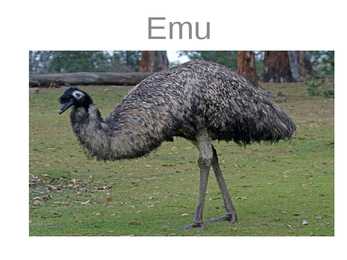
They have long legs and they can sprint at 50 km/h. They feed on a variety of plants and insects and they drink seldom,and they may travel long distances to find food. They are endowed with good eyesight and hearing. Interesting facts Emus ingest stones to grind food in the digestive system. Females can mate several times and lay several batches of eggs in one season People growns emus on farm to get emus meat, feathers and emu oil. Emu fat is rendered to produce oil for cosmetics, dietary supplements, and therapeutic products. A baby Emu Klõpsake juhtslaidi teksti laadide redigeerimiseks Teine tase Kolmas tase Neljas tase Viies tase This is the green Emu egg Klõpsake juhtslaidi teksti laadide redigeerimiseks Teine tase Kolmas tase Neljas tase
5. Flooding Climate changes cause excessive raining, Polar icecaps melting (makes sea levels rise) People lose their homes, Loss of animals, Loss of land 6. Drought Lack of rain due climate changes All vegetation, animals and people die 7. Holes in the ozone layer Fumes and chemicals Sunrays become dangerous (skin cancer risk) 8. Overpopulation Lack of opportunities to get contraceptives, Lack of education, Traditions We need to produce more food (but it puts pressure on our planet) 9. Epidemics Lack of hygene Reduces population 10. Earthquakes Planet is tired, Natural phenomena Mud slides (maa lihked) 11. Forest fires Drought, Too dry Animals die, People lose their homes
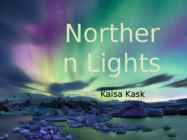
• neon lights: helium – pink/white neon - red/orange argon - lavender krypton - gray/green The colors of auroras • Determined by gases in the Earth’s atmosphere • Solar particles collide with different gases • Oxygen (300km) – a rare red aurora • Oxygen (100-300km) – yellow-to-green aurora Do the Northern Lights emit sound? • Subject of discussion • Proven that people can hear natural auroral sounds • Energetic particles produce strange „clapping“ noise • Do not occur every northern lights outburst • Usually brief and faint • https://www.youtube.com/watch?v=eHvdZdsIZxg Conclusion • How the Northern Lights appear • Why the Northern Lights have different colors • About the sound they emit Thank you for your attention! sources • http:// www.athropolis.com/arctic-facts/fact- nlights-color.htm • http:// www.space.com/16498-northern-lights
Do factories affect us unfavourbly or can they also be positive? On the one hand, there are some advantages of building new factories. Firstly, unemployed people get new job. Secondly, country gets huge income from successful company. Next, if factories uses recyclable material, it would save earths resources and also slow down global warming. On the other hand, there are some throwbacks as well. Firstly, companies which do not have experience with factories might produce an enormous amount of air pollution. Secondly, sophisticated combinations need highly educated experts, otherwise failure might cause chemical fires, which may lead to catastrophic disasters. What is more, new factories tend to start with cheap products which are produced with toxic chemicals and usually end up polluting our groundwater. In conclusion, there are clearly both marvelous and terrible sides to building new factories.
penalty. Other definitions of drug abuse fall into four main categories: public health definitions, mass communication and vernacular usage, medical definitions, and political and criminal justice definitions. Depending on the actual compound, drug misuse including alcohol may lead to health and social problems: such as injuries, unprotected sex, violence, deaths, vehicle accidents, homo and suicides and mortality. Drug abuse makes central nervous system effects, which produce changes in mood, levels of awareness or perceptions and sensations. Some drugs appear to be more likely to lead to uncontrolled use than others. Bans Most governments have designed legislation to criminalise certain types of drug use. These drugs are often called "illegal drugs" but generally what is illegal is their unlicensed production, distribution, and possession. These drugs are also called "controlled substances". Even for simple possession, legal punishment can be quite severe
Tourism has become a popular global leisure activity. It is the fastest growing industry in this world. But it can be negative as well. So should countries encourage tourism? Tourism has many advantages and disadvantages. The advantages are that countries have more money so they can improve its infrastructure which is a benefit for the local people. For example, roads and communication links built. Tourism provides indirect employment in terms of workers who help to produce goods and services in the economy to meet the increasing demands of the population and the tourists. Tourists also take with them, souvenirs which can be produced by people. In spite of the advantages of tourism, there can be many disadvantages too, as there are always two sides of everything. First of all, tourists cause pollution. Increased pollution disturbs local residents and also it may discourage tourists from further entering the country.
cars, people do not pay enough attention to it. When the levels of pollution are too high, it may cause some serious diseases. The second aspect is that people fell quite a lot of trees, but that is not so big problem. In Estonia there are a lot of forests and groves. Also, people are planting new trees all the time and know abot the importance of green. Lastly, one of the issues is that people consume too much and therefore produce a lot of garbage. Most of the people recycle things like plastic, bottles and paper, but some do not know or care what kind of damage growing landfills can make. In conclusion it can be said, that in Estonia there are some environmental problems, but the things are not very bad and fortunately people are thinking about these more every day.
Organic Future: The Case of Organic Farming by Adrian Myer Words: 1. Horticulture (aiandus)- the cultivation of a garden, orchard, or nursery; the cultivation offlowers, fruits, vegetables, or ornamental plants. 2. Caveat (hoiatus)- a warning or caution; admonition 3. Husbandry (põllundus)- the cultivation and production of edible crops or of animals for food; agriculture; farming. 4. Yield (tootma)- to give forth or produce by a natural process or in return for cultivation 5. Intuitive (vaistlik)- perceived by, resulting from, or involving intuition 6. Cognition (tunnetus)- the act or process of knowing; perception 7. Silt (setted)- earthy matter, fine sand, or the like carried by moving or running water and deposited as a sediment. 8. Unequivocally (ühemõtteliselt)- in a way that is clear and unambiguous 9
consideration of environmental impact, inhabited by people dedicated to minimization of required inputs of energy, water and food, and waste output of heat, air pollution - CO2, methane, and water pollution. • It should meet the needs A sustainable city should be able to... • feed itself with minimal reliance on the surrounding countryside, and power itself with renewable sources of energy. • create the smallest possible ecological footprint • produce the lowest quantity of pollution possible • efficiently use land • compost used materials - Practical Achievement • Different agricultural systems - agricultural plots within the city – reduces distance. • Renewable energy sources - wind turbines, solar panels, or bio-gas created from sewage. • Methods to reduce air conditioning - planting trees and lightening surface colors, etc Practical Achievement • Transportation planning- Improved
Our ambition was and is to offer our guests high quality food and service in a pleasant environment, in surroundings in which we are confident. Entering the restaurant, you are welcomed by an open and light atrium. Moving down to the floor below, you will find yourself in a more elegant and conservative setting that also offers a private area for up to 12 people. The menu of Ribe is characterised by fresh, seasonal and definitely domestic raw produce. Naturally, we also add the tastes and techniques of European cuisines. The wine list, with approximately 120 wines, is based on the wines of the Old World. Coffee lovers are welcome to visit the master of the house, sought after barista Urmet Laht. At present, restaurant Ribe has been voted among the top 50 Estonian restaurants three times, twice over the past two years earning the notable second position. Ave Toomjõe, aasta kelner 2009
Slowly rotating blades can kill birds and bats. Wind is variable: if it's not blowing , there's no electricity generated. Wind turbines are expensive. Hydroelectric power Hydropower is electricity generated using the energy of moving water. Hydropower is the cheapest way to generate electricity today. It's a clean fuel source that is renewable yearly by snow and rainfall. Hydropower is readily available; engineers can control the flow of water through the turbines to produce electricity on demand. In addition, reservoirs may offer recreational opportunities, such as swimming and boating. A typical hydro plant is a system with three parts: an electric plant where the electricity is produced; a dam that can be opened or closed to control water flow; and a reservoir where water can be stored. Hydroelectric power provides almost onefifth of the world's electricity. China, Canada, Brazil, the United States, and Russia were the five
 annaabi.ee