 10 punkti
Autor soovib selle materjali allalaadimise eest saada 10 punkti.
10 punkti
Autor soovib selle materjali allalaadimise eest saada 10 punkti.
 ~ 1 leht
Lehekülgede arv dokumendis
~ 1 leht
Lehekülgede arv dokumendis
 2012-03-11
Kuupäev, millal dokument üles laeti
2012-03-11
Kuupäev, millal dokument üles laeti
 4 laadimist
Kokku alla laetud
4 laadimist
Kokku alla laetud
 0 arvamust
Teiste kasutajate poolt lisatud kommentaarid
0 arvamust
Teiste kasutajate poolt lisatud kommentaarid
 Ketka
Õppematerjali autor
Ketka
Õppematerjali autor
17. N.S.A. 18. Heterogeneous Impulses 19. Ciphers in the Past Tense 20. The Anatomy of Cryptology Suggestions for Further Reading Index A Note on the Abridged Version MANY PEOPLE have urged me to put out a paperback edition of The Codebreakers. Here it is. It comprises about a third of the original. This was as big as the publishers and I could make it and still keep the price within reason. In cutting the book, I retained mainly stories about how codebreaking has affected history, particularly in World War II, and major names and stages in the history of cryptology. I eliminated all source notes and most of the technical matter, as well as material peripheral to strict codebreaking such as biographies, the invention of secondary cipher systems, and miscellaneous uses of various systems. I had no space for new material, but I did correct the errors reported to me and updated a few items. The chapters have been slightly rearranged.
Richard, 14, Tamsin, 9, and Tom, 7, were not enthusiastic, but everyone, except for Emma, agreed to try. (She couldn't stand the thought of being without the telephone and her car, which she had only just learnt to drive, so she refused point-blank to join in.) The other three children were not allowed to use their computers or watch TV. They were banned from opening the freezer to get out fish fingers and oven chips. Malcolm was forbidden to use his electric razor and mobile phone, but allowed to use his car for work. Carol was encouraged to go everywhere on foot or by bicyle (women rarely drove 50 years ago), told to ignore the washing machine and dishwasher, and she was discouraged from using the telephone. How did they cope? The much-dreaded three days got under way! Old-fashioned meals, games, and entertainment were planned for the evenings. After eating together
pieces with long, pale fingers. His mouth was moving very quickly, his perfect lips barely opening. The other three still looked away, and yet I felt he was speaking quietly to them. Strange, unpopular names, I thought. The kinds of names grandparents had. But maybe that was in vogue here -- small town names? I finally remembered that my neighbor was called Jessica, a perfectly common name. There were two girls named Jessica in my History class back home. "They are... very nice-looking." I struggled with the conspicuous understatement. "Yes!" Jessica agreed with another giggle. "They're all together though -- Emmett and Rosalie, and Jasper and Alice, I mean. And they live together." Her voice held all the shock and condemnation of the small town, I thought critically. But, if I was being honest, I had to admit that even in Phoenix, it would cause gossip. "Which ones are the Cullens?" I asked. "They don't look related..."
a Bq is a tiny measure of activity; amounts on the order of TBq (terabecquerel) or GBq (gigabecquerel) are commonly used. Another unit of radioactivity is the curie, Ci, which was originally defined as the activity of one gram of pure radium, isotope Ra-226. At present it is equal, by definition, to the activity of any radionuclide decaying with a disintegration rate of 3.7 × 10¹⁰ Bq. The use of Ci is presently discouraged by the SI. History of nuclear power The basic process of Nuclear Power is an exothermic chemical decomposition reaction that heats water to steam. This steam pushes the steam turbine that is connected to a generator that converts the mechanical energy of the turbine to electrical energy. For this reason, the history of the steam engine and the steam turbine will also be included on this timeline. Also see the comparison page for Combustion, and the general Comparisons page for more information on the underlying
Maturita Solutions Advanced Workbook Key stand bananas and coffee! It's a bit 3 1 to 8 of Unit 1 uncanny really. Is it something she's 2 about 9 century passed on to me genetically, or is it 3 like 10 assumed / 1A Memories page 3 learned behaviour? Who knows? 4 of thought / 1 See exercise 2 2 5 6 any fought
measure of engineering prowess. In terms of engineering, bridges are discussed by design or type (beam, arch, truss, cantilever, suspension, or moveable); length (usually expressed in terms of clear or overall span); and materials (stone, wood, cast and wrought iron, and what we use today - concrete and steel). The purpose of this contextual essay is to provide parameters of value and significance so that we can focus our attention on those bridges - globally - that best illustrate the history of bridge building, and to encourage their preservation. What is a World Heritage bridge? The World Heritage Committee states that to be of World Heritage status a monument or site must be of outstanding universal value. It must illustrate or interpret the heritage of the world in terms of engineering, technology, transportation, communication, industry, history, or culture. World Heritage industrial sites and monuments must meet one or more of the
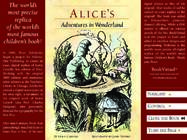
The world’s digital edition to that of the original. After weeks of toil he most precise replica A L I C E ’S created an exact replica of the original! The book was added to VolumeOne’s print-on- of the world’s Adventures in Wonderland demand offering. While a PDF version is offered on various most famous portals of the Net, BookVirtual
The Project Gutenberg EBook of Pride and Prejudice, by Jane Austen This eBook is for the use of anyone anywhere at no cost and with almost no restrictions whatsoever. You may copy it, give it away or re-use it under the terms of the Project Gutenberg License included with this eBook or online at www.gutenberg.org Title: Pride and Prejudice Author: Jane Austen Release Date: August 26, 2008 [EBook #1342] [Last updated: August 11, 2011] Language: English Character set encoding: ASCII *** START OF THIS PROJECT GUTENBERG EBOOK PRIDE AND PREJUDICE *** Produced by Anonymous Volunteers, and David Widger PRIDE AND PREJUDICE By Jane Austen Contents Chapter 1 Chapter 22 Chapter 2 Chapter 23 Chapter 43 Chapter 3 Chapter 24 Chapter 44 Chapter 4 Chapter 25 Chapter 45
 annaabi.ee








Kõik kommentaarid