Leidsid 33 sarnast õppematerjali, mis on seotud failiga "Presentatsioon Corporate Financial Management". Need materjalid aitavad sul teemat sügavamalt mõista.
firm, manager, hold, objective, within, economy, market, there, money, share, sector, goods, services, those, management, introduction, role, clear, purpose, order, tool, value, real, year, able, markets, brief, fundamental, addition, given, both, economies, choices, necessary, survival, enterprise, simple, open, consumption, instance, years, between........................................................ 4 1. UKRAINE ...................................................................................................................... 5 1.1. General information ..................................................................................................... 5 1.1.1. Country Profile ..................................................................................................... 5 1.1.2. Post-Independent Ukraine. Economy and politics ............................................... 6 1.1.3. Key Macroeconomic indicators ......................................................................... 14 1.1.4. Foreign Direct Investments ................................................................................ 16 1.1.5. Demographics and labor force .......................................................................... 17 1.1.6. New emerging industry................................
5. Financial Institutions and Services Objectives and Outcomes To give overview of main players. 5.1. Introduction It is common to distinguish between monetary financial institutions (MFIs) and other financial intermediaries. The distinction is based on the functions of institutions institutions in the first group (MFIs) play important role in the process of money creation in modern economies. European Central Bank (ECB) describes Monetary financial institutions as including national central banks (and also ECB in the euro area), credit institutions and non-credit institutions which receive deposits from general public (individuals and non-MFI firms) and grant credit and/or invest in securities. Major non-credit MFIs in Europe are money market funds. Credit institutions are defined in the directive 1 relating to the taking up and
INTRODUCTION OF SUPPLY CHAIN MANAGEMENT (SCM) A supply chain is a network of facilities and distribution options that performs the functions of procurement of materials, transformation of these materials into intermediate and finished products, and the distribution of these finished products to customers. Supply chains exist in both service and manufacturing organizations, although the complexity of the chain may vary greatly from industry to industry and firm to firm. Supply chain management is typically viewed to lie between fully vertically integrated firms, where the entire material flow is owned by a single firm and those where each channel member operates independently. Therefore coordination between the various players in the chain is key in its effective management. Cooper and Ellram [1993] compare supply chain management to a well-balanced and well-practiced relay team. Such a team is more
structurises the information channels for the future. The course supports the other Traderun courses, especially the course related to EU cooperation with Russia and Eastern Partnership Countries. 3 1. LEGALIZATION OF A COMPANY WITH A FOREIGN OWNER IN RUSSIA Today the investment attractiveness of Russia is very high. In addition to the dynamic pace of development of the economy, Russia offers to foreign investors increasing every year the market of goods and services to consumer and business. Most often, this together with the high rate of return on invested capital is a crucial factor in the decision to enter the Russian market. One possible way to full implementation of business activities on the territory of the Russian Federation - is the creation of a legal entity. An enterprise with foreign capital - is created on the territory of the Russian business-
about the relative amounts of the different inputs to be used. Production is an activity where resources are altered or changed and there is an increase in the ability of these resources to satisfy wants. · Before goods can be distributed or sold, they must be produced. · Within the market model, production and costs of production are reflected in the supply function Production, more specifically, · the technology used in the production of a good (or service) · the prices of the inputs determine the cost of production.
Financial markets interest in sustainability reporting – The financial industry slowly but steadily is embracing sustainability reporting as part its analytical toolkit. Emergence of next-generation accounting – The late 20th century saw worldwide progress in harmonizing financial reporting. 5 Benefits of reporting Effective management in a global economy, where information travels at Internet speed, requires a proactive approach. Today’s strategic and operational complexities require a continua dialogue with investors, customers, advocates, suppliers, and employees. Companies increasingly emphasize the importance of relationships with external parties, ranging from consumers to investors to community groups, as key to their business success.
Schumpeter on economic development: a process of qualitative change, driven by innovation, taking place in historical time – the “entrepreneurial function”: the action of creating new combinations of existing resources. ● Schumpeter Mark I: focusing on individual entrepreneurs ● Schumpeter Mark II: innovation in large firms Innovation diffusion: tendency for innovations to “cluster” in certain industries, areas and time periods à long waves in the world economy (Business Cycles, 1939) Innovation is a continuous improvement process – involving different inventions/innovations Innovation as a moving target The linear model and alternative approaches; innovation research "generations" ● The linear model (Kline and Rosenberg, 1986): Research (science) → development → production → marketing Problems: ● Generalising a chain of causation that only holds for a minority of
As a Ploy, strategy is a means of outsmarting the competition. With strategy as a Pattern, we learn to appreciate that what was successful in the past can lead to success in the future. With Position, strategy is about how the organization relates to its competitive environment, and what it can do to make its products unique in the marketplace. Perspective emphasizes the substantial influence that organizational culture and collective thinking can have on strategic decision making within a company. Understanding and using each element helps you develop a robust, practical and achievable business strategy. *a strategy in a small organization, *learning organization, what is a policy, Õppiv organisatsioon on selline organisatsioon, mis oskab luua, säilitada ja siirdada teadmist ning kohandab vastavalt oma käitumist. Õppiva organisatsiooni põhitegevused: • Lahendab probleeme süsteemselt • Eksperimenteerib • Õpib mineviku kogemustest ja teistelt
Gross Domestic Product (GDP) The gross domestic product (GDP) or gross domestic income (GDI) is a measure of a country's overall economic output. It is the market value of all final goods and services made within the borders of a country in a year. It is often positively correlated with the standard of living, alternative measures to GDP for that purpose. · Gross domestic product comes under the heading of national accounts, which is a subject in macroeconomics. Gross National Product Gross national product (GNP), in economics, a quantitative measure of a nation's total economic activity, generally assessed yearly or quarterly.
Available information-gathering technology. Design of operations. Variable cost changes in total in proportion to changes in the related level of total activity or volume. Fixed cost remains unchanged in total for a given time period, despite wide changes in the related level of total activity or volume. Cost driver is a variable, such as the level of activity or volume, that causally affects costs over a given time span. Relevant range is the band of normal activity level or volume in which there is a specific relationship between the level of activity or volume and the cost. Cost of goods sold: Beginning finished goods inventory Cost of goods manufactured Cost of goods available for sale Deduct: ending finished goods inventory Cost of goods sold Schedule of cost of goods manufactured Direct materials: Beginning inventory Add: purchases of DM = Cost of DM available for use Deduct: ending inventory Direct materials used Direct manufacturing labor
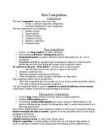
6. Information flow Pure Competition · Involves very large numbers of sellers and buyers. · Firms producing identical or homogeneous products. · Standardized product (a product identical to that of other producers). (ex. corn or cucumbers). · Free Entry and Exit: no significant legal, technological, financial, or other obstacles prohibiting new firms from selling their output in any competitive market No control over the price: "Price Takers" ( the firms have no market power) . The individual firm has very little to no impact on the market. · Demand is perfectly elastic. · Maximizes productive and allocative efficiency. · Perfect competition includes complete information. ex. Agriculture Pure competition markets do not actually exist. · Note: Pure competition does not actually exist in our society, and the agriculture industry
Taking responsibility for every implemented piece in appreciation of the value of long- term relationships Free and creative thinking precedes rules and standards Confidentiality and respect for others Precision is valuable, ethics and care are absolutely necessary 2.3.SWOT Analysis of the Organization Strengths Weaknesses SO1: Good reputation on the local market WO1: Not enough qualified employees to SO2: Extensive and varying customer base support numerous customers SO3: Relations with foreign partners in WO2: Project-orientedness implies a Baltic states, Scandinavia and UK multitude of different code to support SO4: Reliable employee base WO3: Unattractive and obscure web
Investor's Handbook A Legal Guide to Business in Georgia · Start Up · Privatization · Labor Legislation February 2011 1st Edition 1 CYAN MAGENTA YELLOW BLACK 1 This brochure is a publication by the Georgian National Investment Agency (GNIA) and was prepared by Georgian law firm Mgaloblishvili, Kipiani, Dzidziguri (MKD). The Brochure is intended to be a general guidance on start up, privatization and labor relations. It is thus not expected to be a substitute for detailed research or exercise of professional judgment on above mentioned topics. Companies and individuals operating in Georgia or planning to operate, are strongly advised to obtain current and detailed information from experienced professionals. None
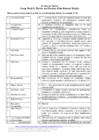
EU Internal Market Group Work I: History and Purpose of the Internal Market Please connect terms (numbers) with correct description (letter), for example 17 M 1 Common Market A ... is characterized by free movement of goods between the participating countries, but autonomous external trade policies in relation to non-participants. 2 Comparative B A top-down approach to integration that can be best
TALLINNA ÜLIKOOL POLITICAL SCIENCE AND GOVERNMENT INSTITUTE ANNELI PALM CRITISIM ABOUT IMF AND WORLD BANK INTERNATIONAL POLITICAL ECONOMY (RIR6032/RIR6004) ESSAY 2014 Contents TALLINNA ÜLIKOOL.............................................................................................. 1 Introduction............................................................................................................ 3 Basic of liberalism.................................................................................................. 4 International Monetary Fund and World Bank............
2 Country Specs 2.1 Finland 2.1.1 Background Finland was a province and then a grand duchy under Sweden from the 12th to the 19th centuries, and an autonomous grand duchy of Russia after 1809. It won its complete independence in 1917. During World War II, it was able to successfully defend its freedom and resist invasions by the Soviet Union albeit with some loss of territory. In the subsequent half century, the Finns made a remarkable transformation from a farm/forest economy to a diversified modern industrial economy; per capita income is now among the highest in Western Europe. A member of the European Union since 1995, Finland was the only Nordic state to join the euro system at its initiation in January 1999. In the 21st century, the key features of Finland's modern welfare state are a high standard of education, equality promotion, and national social security system
services. Interviews, documentary analysis and literature review are used to identify the main stimuli for integration and the issues that help or hinder progress; drawing out lessons for the NHS. ·Towards integrated care in Trafford. A project that looks at the process of change and lessons learned to date in Trafford, where NHS organisations have been working on the development of an integrated care system across the whole health economy. Further details of our integrated care work can be found at: www.nuffieldtrust.org.uk/integratedcare Acknowledgements Our thanks go to Richard Gleave, Diane Gray, George Kissen, Dennis Kodner, Judith Smith and Sarah Smyth for their comments, all of which have helped to shape both the structure and content of this report. 3 What is integrated care? `Integrated care' is a term that reflects a concern to improve patient
Introduction to macroeconomics Macroeconomics Macroeconomics (from Greek prefix "macr(o)-" meaning "large" + "economics") is a branch of economics that deals with · the performance, structure, behavior and decision-making of the entire economy, · be that a national, regional, or the global economy The Economist's Dictionary of Economics defines Macroeconomics as - "The study of whole economic systems aggregating over the functioning of individual economic units. It is primarily concerned with variables which follow systematic and predictable paths of behaviour and can be analysed independently of the decisions of the many agents who determine their level. It is a study of national economies and the determination of national income."
Strategy can be formulated on three different levels: y corporate strategy- corporate level strategy fundamentally is concerned with the selection of businesses in which the company should compete and with the development and coordination of that portfolio of businesses. y business startegy - a strategic business unit may be a division, product line, or other profit center that can be planned independently from the other business units of the firm. At the business unit level, the strategic issues are less about the coordination of operating units and more about developing and sustaining a competitive advantage for the goods and services that are produced. At the business level, the strategy formulation phase deals with: o positioning the business against rivals o anticipating changes in demand and technologies and adjusting the strategy to accommodate them
when the UN Charter had been ratified by a majority of the original 51 Member States. The day is now celebrated each year around the world as United Nations Day. The purpose of the United Nations is to bring all nations of the world together to work for peace and development, based on the principles of justice, human dignity and the well-being of all people. It affords the opportunity for countries to balance global interdependence and national interests when addressing international problems. There are currently 192 Members of the United Nations. The Aims of the United Nations: -To keep peace throughout the world. -To develop friendly relations between nations. -To work together to help people live better lives, to eliminate poverty, disease and illiteracy in the world, to stop environmental destruction and to encourage respect for each other's rights and freedoms. -To be a centre for helping nations achieve these aims. The Principles of the United Nations:
Better focus on tasks goal giver better results on every level. But in many scholars opinion pay-for performance has many negative aspects that may over weight the positive effects. To begin with, as mentioned above pay-for performance idea is to motivate civil servants to perform better through monetary rewards. The problem is that this may reduce intrinsic motivation, the connection with the organisation and with the task is now based on money, not on public interest. Some workers may be concerned about the level of job security (the fear that if they perform badly they will be dismissed). But the irony lies in traditional model of governmental jobs, that was meant to be long term and stable. If motivation lies on monetary incentives it may give base for corruption. Another negative side with pay-for performance is that it causes competition between employees. This in turn, reduces cooperation, unity and solidarity
Within the public sphere, the most important reform movement of the last quarter of a century has been the New Public Management (NPM). It is of particular interest in the post-autistic economics (pae) context because NPM largely rests on the same ideology and epistemology as standard textbook economics (STE) is based (for my take on this, see Drechsler 2000), and it has had, and still has, similar results. Already more on the defensive within public administration (PA) than STE is within economics, NPM also shows that such major paradigm shifts in theory and policy may actually happen. In addition, it occasionally appears that pae-oriented scholars have overlooked the fact that some features in public management reform, state organization, and the economic interpretation of state functions that they advocate from "Good Governance" to "efficiency" as a goal in itself actually belong into the "other camp" and by and large have a disastrous effect on "industrial" and
Monopoly Market Power In pure competition sellers are "price takers." No seller (or buyer) has the ability to influence the market price. In most markets, at least one or more of the conditions required for pure competition are violated. This gives sellers or buyers the ability to influence the market price and allocation of resources Pure competition results in an optimal allocation or resources given the objective of an economic system to allocate resources to their highest valued uses or to allocate relative scarce resource to maximize the satisfaction of (unlimited) wants in a cultural context. Pure competition is the ideal that is be benchmark to evaluate the performance markets. The economic theory of · monopolistic competitive markets, · oligopoly and · monopoly
ManOS Overview Everything below is rooted in my core value of creating selfesteem. My actions today focus on work, girls, travel & having fun. My career is the ultimate leverage point as this creates the money, selfesteem and confidence. The money allows me to travel and the selfesteem & confidence allow me to live the lifestyle that is congruent with drawing in girls. Long term (5+ years), I want my life to offer value to the world by having a beneficial impact on those around me. I am obviously not clear how I will do this, so for now, I am focused on taking the greatest strides possible over the next few years, to better put me in a position to achieve my long term goal. 1. Career Vision I want to earn the rank of manager in my firm within the next 3 years. I want to earn the respect and trust of fellow employees. I�
BOOK REVIEW ("Foreign direct investments in the Estonian economy", University of Tartu, Urmas Varblane) (Pages : 10 20) Prepared: Kadri Tamm, MF-I-5 Tartu 2007 I read book about direct investments in the Estonian economy. The book is issued by University of Tartu and the writers are also scientists from University of Tartu. "Foreign direct investments are relatively new phenomenon for Estonia because during the nearly five decades as part of the Soviet economic system, our economy received virtually none. Such economic isolation from the West lasted until the early 1990s. In consequence of the mid-1990s' radical macroeconomic reforms, foreign direct
and the Dominican Republic are situated. Its indigenous Arawakan-speaking Taíno inhabitants named the island Xaymaca, meaning either the "Land of Springs," or the "Land of Wood and Water". Formerly a Spanish possession known as Santiago, it later became the British West Indies Crown colony of Jamaica. It is the third most populous anglophone country in the Americas, after the United States and Canada. I chosed Jamica because there are many things what I like in this country. Mostly I like Jamaica´s music, culture and climate. Geography Jamaica is the third largest island in the Caribbean, and the most populous English speaking island there. The island of Jamaica is home to the Blue Mountains inland and is surrounded by a narrow coastal plain. Most major towns and both cities are located on the coast. Chief towns include the capital city Kingston, Portmore, Spanish Town, Mandeville, Ocho Rios, Port
Life in Estonia through the eyes of an economics student With a population of 1 313 271 people, Estonia is one of the least populous member states of the European Union. However, according to the IMF, it is a developed country with an advanced and high-income economy. Estonia follows market economy system which ensures the little government intervention and the determination of prices of goods and services in a free price system. Therefore, economic decisions are guided solely by the aggregate interactions of a country's citizens and businesses. In addition to mentioned afore, Estonia tends to perform favourably in measurements of civil liberties, education, and press freedom. Living in Estonia has many of its good sides, for instance it is a secure place from nature
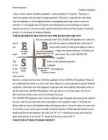
business, who they are and what makes individuals in each quadrant unique. It will help you define where you are in the Quadrant today and help you chart a course for where you want to be in the future as you choose your own path to financial freedom. While financial freedom can be found in all four of the quadrants, the skills of a "B" or "I" will help you reach your financial goals more quickly. A successful "E" should also become a successful "I". WHAT DOES IT TAKE TO MAKE MONEY? Katre Semjonov Cashflow Quadrant Many successful people have left school without receiving a college degree. People such as Thomas Edison, founded of General Electric; Henry Ford, founded of Ford Motor Co; Bill Gates, founded of Microsoft; Ted Turner, founded of CNN; Michael Dell, founded of Dell Computers; Steve Jobs, founded of Apple Computer; and Ralph Lauren, founded of Polo. A
average. It is horrible to admit, but our society cannot assume that all members are capable of being well educated. We have unequal physical, mental and environmental status, and the poorer fringe will always exist. Those of us lucky enough to have a conscience, mature enough to see how things really are, must do what we can to help the less fortunate. Obligation to help. How can a rich person help a poor one? By giving some money? Well, can smart, or educated people give education to those needing it? Sometimes just taking the time to discuss things with troubled people is a great favor and aid. I don't have much surplus money to give to worthy causes, yet donate my time freely. I don't pretend to be able to educate in general -- but do know enough about plant life in Seattle to be valuable teaching that. I suppose I could share my plant knowledge with a single student, or several, and it
Monopolistic Competition Market Power Firms in monopolistic competition or imperfectly competitive markets are more likely to have limited market power because there are many firms with differentiated products (there are substitutes) and there is relative ease of entry and exit into the market Market Power among Sellers · Monopolistic competition - a market with a large number of sellers and relatively free entry; each firm "differentiates" its product. · Oligopoly - a market characterized by significant barriers to entry and "a few "sellers who recognize their interdependence in the market; products may be homogeneous or differentiated. Monopolistic Competition · Large number of sellers · relative ease of exit / entry · products are differentiated
assessed. The subject areas can be as diverse as software engineering, systems engineering, project management, risk management, system acquisition, information technology (IT) services and personnel management. Total Quality Management •Total Quality Management (TQM) is the application of quantitative methods and human resources to improve: 1 –the material and services supplied to an organization 2 –all the processes within an organization 3 –the degree to which the needs of the customer are met, now and in the future Põhimõisted Tarkvaraprotsessi võimekus (software process capability) näitab, millist tulemit võib loota organisatsiooni järgmiselt tarkvaraprojektilt. Tarkvaraprotsessi tulemuslikkus (software process performance) esindatab tegelikku tulemit, mis saadi tarkvaraprotsessi järgides.
countries each day (World of Coca-Cola). As the numbers are so immense and hard to imagine, it is appropriate to mention the reach of Coca-Cola Company. It manages six operating segments in Europe, Middle East, Africa, Latin America, North America and Asia. These segments primarily manufacture and sell beverage concentrates and syrups. The biggest segment is North America, accounting for nearly 30% of revenue (World of Coca-Cola). Role in IPE Coca-Cola's role in international political economy is undoubtedly very great. There are not too many beverage companies that can compete with Coca-Cola and therefore it has the ruling position on international level of beverage companies. Coca-Cola company has a great power to change many factors that are important in the beverage industry. This means that in today's globalized world Coca-Cola has a lot of trailblazing work done and to do. For example the introduction of the new renewable and recyclable plastic bottle in 2009 which made many
Väldime I-vormi, vaid kasutame passive-vormi. Lõhikesi vorme ei kasutata! (don't) 150 sõna Teema "should mery-killing be punished?" HOMEWORK Terms to explain: Nation - a country, especially when thought of as a large group of people living in one area with their own government, language, traditions, etc: Stranger someone whom you do not know Citizen - a person who is a member of a particular country and who has rights and obligations because of being born there or because of being given them Penalty - a punishment for doing something that is against a law Government - the group of people who officially control a country System of courts - a set of connected positions which operate together to ensure ... ? To commit a crime to do sth that is forbidden by law Corruption - illegal, immoral or dishonest behaviour, especially by people in positions of power Fine (trahv) - an amount of money that has to be paid as a punishment for not obeying a rule
 annaabi.ee