Leidsid 33 sarnast õppematerjali, mis on seotud failiga "Plural of nouns". Need materjalid aitavad sul teemat sügavamalt mõista.
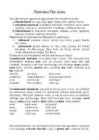
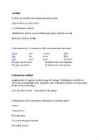
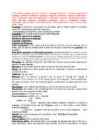
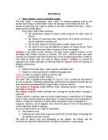
nimisõna, mitmus, sailor, nimisõnad, mitmuses, potato, bush, tomato, disco, piano, hero, photo, radio, roof, chief, child, sheep, deer, plural, nouns, täishäälik, boys, kaashäälik, babies, buses, kilos, bushes, heroes, photos, wolf, thief, knife, wife, half, halves, leaf, leaves, selves, chiefs, children, mouse, mice, geese, woman, women, toothNimisõna.The noun. Oma ülesehituselt jagunevad inglise keele nimisõnad kolme liiki: 1) lihtnimisõnad nt: man, bird, apple, steam, love, pigeon, button 2) tuletatud nimisõnad (sisaldavad sufikseid) nt:teatcher, sailor, artist, building, translation, astonishment, friendship, childhood, lazines 3) liitnimisõnad nt: blackbird, newspaper, seaman, income, appletree, ballpoint, keyhole, rainbow, steamboat Tähenduselt on nimisõnad kas üldnimed või pärisnimed: 1) üldnimed (common nouns) nt:boy, tree, forest, people, family, air, cheese 2) pärisnimed (proper names) nt: Jane, Jack, Estonia, the United Kingdom, the Mississippi, New York, the Savoy (hotel), Oxford Street, Westminster Abbey, The Times Üldnimed on kas loendatavad või loendamatud nimisõnad. Loendatavaid nimisõnu (countables/count nouns) võib kasutada koos umbmäärase artikliga a/an, neil on mitmuse vorm ning neid saab
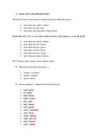
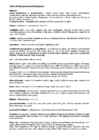
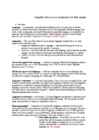
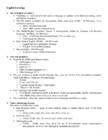
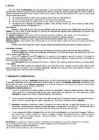
1. Nouns: how is the plural formed? The plural form of most nouns is created simply by adding the letter s: · more than one snake / snakes · more than one ski / skis · more than one Barrymore / Barrymores Words that end in -ch, x, s or s-like sounds, however, will require an -es for the plural: · more than one witch / witches · more than one box / boxes · more than one gas / gases · more than one bus / buses · more than one kiss / kisses · more than one Jones / Joneses BUT! Photos, kilos, pianos, zeros, studios, radios. When the word ends in the letter -y: · country / countries · family / families · story / stories Nouns ending in -f: (should be learned by heart) · calf / calves · elf / elves · half / halves · knife / knives · life / lives · leaf / leave
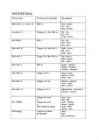
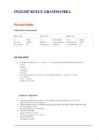
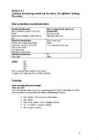
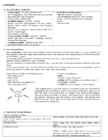
NOUN PLURAL Noun type Forming the plural Examples Ends with -s, -x, -ch or -sh Add -es boss - bosses tax - taxes bush - bushes consonant + y Change y to i then Add -es fly - flies try - tries curry - curries most others Add -s cat - cats face - faces day - days
Inglise keel Nimisõnade mitmus Reeglipärasel mitmusel lisatakse ainsuslikule nimisõnale lõpp s: Näiteks: two dogs three cats. Kui nimisõna lõpus on s, ss, sh, ch või x tuleb sõna lõppu es Näiteks : four glasses four busses Kui nimisõna lõpus on üksik kaashäälik, millele järgneb y, siis muutub y mitmuse vormis ie- ks ja lisandub s. Näiteks: lady ladies story-stories Kui ühesilbilise nimisõna lõpus on täishäälik ja y, siis lisandub ainult s. Näiteks: boy-boys day-days Paljud nimisõnad, mille lõpus on f või e saavad mitmuses lõpu ves Näiteks: shelf-shelves knife-knives On ka mõned erandid Näiteks: roof-roofs, dwarf-dwarfs või dwarves, chef-chefs. o lõpuga nimisõnade puhul ristatakse kaht gruppi : Reeglipärase mitmusega Näiteks: radio-radios piano-pianos ja es lõpulise mitmusega sõnad. Näiteks: potato-potatoes tomata-tomatoes
Artikkel Artikkel on abisõna, mis kuulub nimisõna juurde. Inglise keeles on kaks artiklit: 1) umbmäärane artikkel umbmäärane artikkel on a, täishäälikuga algava nimisõna ees an 2) Määrav artikkel on the Umbmäärase artikli puudumine võib muuta nimisõna tähendust wood puit a wood mets fire tuli a fire lõke iron raud a iron triikraud He gave me the book. Ta andis mulle selle raamatu. He gave me a book. Ta andis mulle ühe raamatu. Umbmääran artikkel a (an) näitab, et tegemist on ühe asjaga või isikuga. Umbmäärane artikkel on tekkinud arvsõnast one (üks)
You aren't going to eat are you going to eat? He/she/it is going to eat He/she/it isn't going to eat is he/she/it going to eat? We are going to eat we aren't going to eat are we going to eat? You are going to eat you aren't going to eat are you going to eat? They are going to eat they aren't going to eat are they going to eat? Plural of nouns nimisõnade mitmus - s a window windows a student students a key keys, a roof roofs -es sõna lõpulisetele ch, sh, s, ss, x, o A watch- watches, a bush- bushes, a bus buses, a class classes, a fox foxes, a potato potatoes, a tomato- tomatoes, a book books, a key keys, a box boxes, miss misses, wash-washes, mix-mixes, go-goes, do-does. -ies consonant +-y a country countries, a diary- diaries, a boy boys, a dictionary dictionaries, try tries, play-plaies
Seda ei saa loendada: 1 vesi, 2 vett. mitmused. Mitmuse moodustamine · Tavaliselt lisatakse sõna lõppu s. a car cars a bird birds a book books a day days · · kui ainsuse lõpus on s, ss, sh, ch, x, siis lisatakse mitmuse lõpp es. a bus buses a class classes a beach beaches a box boxes · · kui ainsuse lõpus on kaashäälik, millele järgneb y , siis mitmuses y muutub i ja lisandub es. a country countries a cry cries a lorry lorries a factory factories · · kui ainsuse lõpus on täishäälik, millele järgneb y, siis mitmuses lisandub s. a boy boys a guy guys a monkey monkeys a key keys · · olõpulistele nimisõnadele lisatakse s. a piano pianos a radio radios a kilo kilos ·
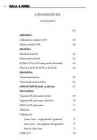
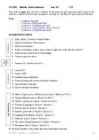
Artikkel the pärisnimedega 10 Artikkel the geograafiliste nimedega 10 Artikkel a, an 10 Muu 11 Otsekõne Direct speech 11 Kaudkõne Reported speech 11 Kaudküsimused Reported questions 12 Passiiv Passive voice 12 Loendatavad nimisõnad Countable nouns 12 Loendamatud nimisõnad Uncountable nouns. 13 Mitmuse moodustamine 13 Siduvad asesõnad 14 Omastav kääne 14 Käskiv kõneviis 15 Omadussõnad 15 Viisimäärsõnad 16 Tingimuslaused 16
.............................................................................................11 Kaudkõne Reported speech........................................................................................11 Kaudküsimused Reported questions..........................................................................12 Passiiv Passive voice .................................................................................................12 Loendatavad nimisõnad Countable nouns.................................................................12 Loendamatud nimisõnad Uncountable nouns............................................................13 Mitmuse moodustamine................................................................................................13 Siduvad asesõnad..........................................................................................................14 Omastav kääne............................
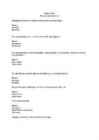
brushes buses watch Word File watches Singular Plural beach beaches branch branches box boxes bush bushes church churches dish dishes dress dresses foxes sandwich sandwiches witch witches fox m ar H am ch
itu:;,,!,:,, lihtminevikus) by Jane (eesslnaline sihitis). ;i.ii:i i Uld-ja kestva vormiga viiljendatud tegevus on samaaegne deldisverbi tegevusega. I heard her pkry the piano. She s glad to be pructicing. Perfeki ja perfekli kestva vormiga miirgitud tegevus eelneb cieldisverbi tegevusele. We're happy to hqve met him- I know him to hqve been living therefor 5 years. Infinitiiv v6ib olla lauses aluseks, sihitiseks, tdiendiks jt. Tb unclerstdncl is to Jbrgive (aus). She likes ro dance (sihitis). Z/rls is a rule to be rememberetl (tdiend) :i:r*;::i:1!;ti
INGLISE KEELE PÕHITÕED C.K 2017 A – AN – SOME Singular: a or an Use some for things you can't count ◦ *a banana *a car *a monkey *a football ◦ *some milk *some water *some coffee ◦ *an egg*an accident *an umbrella *an *some sugar eagle ◦ *some tea *some juice*some money *some butter Plural: some Exercises: 1. http://www.english-4u.de/a_an_some_ex1.htm ◦ *some bananas *some cats *some monkeys *some 2. http://www.english-4u.de/a_an_some_ex3.htm balls ◦ *some eggs*some oranges *some umbrellas *some 3. http://www.english-4u.de/a_an_some_ex6.htm eagles We us the
ARTIKKEL Umbmäärane artikkel A/AN 60 Määrav artikkel THE 60 ASESÕNA Isikulised asesõnad 62 Omastavad asesõnad 62 SOME, ANY ja NO ning nende liitvormid 62 MANY ja MUCH; FEW ja LITTLE 64 NIMISÕNA Nimisõnade mitmus 65 Nimisõnade omastav kääne 66 OMADUSSÕNA kesk- ja ülivõrre 67 TEGUSÕNA Tegusõna BE pööramine (olevik) 69 Tegusõna BE pööramine (minevik) 70 HAVE GOT pööramine 71 Üldolevik 73 Üldminevik
IE pod – podium, 3) nullaste - ø kvantitatiivne ablaut – täishääliku pikkus muutub, nt võivad esineda pikk e ja pikk o afrikaat – häälikud ch, j; vastavad ühele foneemile analüütiline keel – keel, milles sõnadele liitub vähe morfoloogilisi elemente, kasutab liidete asemel spetsiifilisi grammatilisi sõnu või partikleid, et väljendada süntaktilisi suhteid. Sõnajärg lauses range Boy ate soup- vaid 1 võimalus! artikkel – abisõna, mis määrab nimisõna soo või arvu. Skandinaavia keeltes võib olla liikuv artikkel. En bil – üks auto; bilen – konkreetne auto. aspiratsioon – h-häälik, mis tekib vahel helitute sulghäälikute järel assimilatsioon (progressiivne ja regressiivne) – assimilatsioon on nähtus, kus kõrvuti olevad häälikud sarnastuvad täielikult või osaliselt; võib esineda sõna sees või nt sõnu kokku hääldades (handbag, hot
1. Basic Phrases ¡Buenos días! ¡Buenas tardes! ¡Buenas noches! bway-nohs dee-ahs bway-nahs tard-ays bway-nahs noh-chays Hello! / Good morning! Good afternoon! Good evening! / Good night! ¡Hola! / ¡Chao! Adiós. Por favor. oh-lah / chow ah-dee-ohs por fah-bor Hi! / Bye! Good bye. Please. Hasta la vista / Hasta luego. Hasta pronto. Hasta mañana. ah-stah lah vees-tah / ah-stah ah-stah prohn-toh ah-stah mahn-yahn-ah loo-ay-go See you soon. See you tomorrow. See you / See you later. (Muchas) Gracias. De nada. Bienvenidos (moo-chahs) grah-see-ahs day nah-dah
*You have will to go.* *He musted be tired.* There are two types of helping verbs in English: Auxiliary verbs can express tense, modality, voice etc. Is/are, was/were, did, has etc. Modality: John can [auxiliary] play [main verb] the piano. Voice: They were [auxiliary] seen [main verb] outside. Modal verbs are auxiliary verbs that express modality. May, might, could, can, will etc. Modality is a semantic category which allows the speaker to express how committed they are to the truth they are saying.
truth of a proposition He must have arrived. He may have arrived. He may not have arrived. He can't have arrived. Historically, epistemic meanings have developed from deontic meanings. Deontic modality - how we think things should be in the world (how people should behave). You may/can come tomorrow You must come tomorrow. Dynamic modality - concerned with ability and disposition, willingness, intention to perform actions: John can play the piano. (ability) I'll help you. (I'm willing to help you...) Types of main verbs: Intransitive: ache, cry, faint, smile, walk, etc. Transitive verbs: monotransitive: find, lose, read, etc ditranstive: bring, give, tell, etc. complex transitive: call, drive, leave, make, etc. Linking/copular verbs: be, become, feel, keep, look, seem, smell, turn, etc. Stative (be, exist, love, think) vs. dynamic verbs (do, make, run, walk, sleep) 6
THE W R I T E R ' S JOURNEY M Y T H I C STRUCTURE FOR W R I T E R S THIRD EDITION CHRISTOPHER VOGLER S C R E E N W R I T I N G / W R I T I N G Christopher Vogler explores the powerful relationship between mythology and storytelling in his clear, concise style that's made i this book required reading for movie executives, screenwriters, playwrights, fiction and non-fiction writers, scholars, and fans of pop culture all over the world. Discover a set of useful myth-inspired storytelling paradigms like "The Hero's Journey," and step-by-step guidelines to plot and • character development. Based on the work of Joseph Campbell, The Writers Journey is a must for all writers interested
Is there time to buy a newspaper? Were you late this morning? Were you born in Estonia? Was your friend with you last night? Was it cold this morning? Were there many people at the party? Were there any problems? Was there a lot of traffic this morning? Was there anyone you knew? Can you swim? Have you got a car? Have you ever been to Nuustaku? Has it stopped raining yet? Do you come from France? Do you speak English? Do you live in a flat? Does your husband/wife play the piano? Does this pen belong to you? Did you see John yesterday? Did it rain last night? 13 Question words: what when where which who whose why how Match the question words and answers: What ....? Because I wanted to. Who ...? Last night. Where ...? £5. When .
o Armada, flotilla, renegade, comrade, don, vigilante, barricade, grenade, Random o Negro, vanilla, cockroach, embargo, mosquito, cargo, sombrero, siesta, anchovy, bonanza, castanet, salsa, cafeteria, canyon, hurricane, barbecue, tortilla, tango, gringo, tequila, patio, Mediated Native American words o Cigar, cocoa, chocolate, chilli, tomato, cannibal, canoe, maize, potato, avocado, tamale, tobacco 20th century o Burrito, bongo, taco, sangria, sangria, cha-cha, rumba, mambo, fajita, margarita Informal slang o Cojones, el cheapo Adapted o Alligator, barricade, cask, cedilla, galleon, grenade, hoosegow, lariat, ranch, renegade, sherry, stampede, stevedore, vamoose; Direct
FGI 1081 Stilistika (Irina Ladusseva) Kab. 420 2 AP Ends with an exam; lasts only for 1 semester. At the exam you get 2 questions and an exercise (50 sentences: establish the device used, recognize it, and name it). Care about the pronunciation of the terms. Books: - I. Galperin "Stylistics" - I. Ladusseva "Rhythm and Text" - I. Ladusseva "Vocabulary and Style" - I. Ladusseva "Stylistic practice: Book I, Book II" - I. Ladusseva "A Guide to Punctuation" EXAMINATION TOPICS: 1. Style, stylistics, a survey of stylistic studies 2. Inherent connotations. Phonesthe
STYLISTICS 1. Style, stylistics, a survey of stylistic studies The term ,,style" is polysemantic. Latin ,,stilus"--a writing instrument used by the ancients for writing on waxed tablets. Soon, the meaning was extended to denote the manner of expressing one's ideas in written or oral form. Jonathan Swift said: ,, Style is proper words in proper places" Present day--half a dozen meanings: · the characteristic manner in which a writer expresses his ideas (Style of Byron) · the manner of expressing ideas characteristic of a literary movement or period (symbolism, romanticism) · the use of lg. typical of a literary genre (comedy, drama, novel) · the selective use of lg that depends on spheres of human activity. These are called functional styles or registers (fiction, newspaper) Stylistics is the study of style. However, for some r
Maturita Solutions Advanced Workbook Key stand bananas and coffee! It's a bit 3 1 to 8 of Unit 1 uncanny really. Is it something she's 2 about 9 century passed on to me genetically, or is it 3 like 10 assumed / 1A Memories page 3 learned behaviour? Who knows? 4 of thought / 1 See exercise 2 2 5 6 any fought
1. STYLE The term "style" is polysemantic (has many meanings): a Latin word "stilus" originally meant a writing instrument used by ancient people. Already in classical Latin the meaning was extended to denote the manner of expressing one's ideas in written or oral form. Jonathan Swift defined style as "proper words in proper places". In present day English the word "style" is used in about a dozen of principle meanings: 1. the characteristic manner in which a writer expresses his/her ideas (e.g. style of Byron) 2. the manner of expressing ideas, characteristic of a literary movement or period 3. the use of language typical of a literary genre (e.g. the style of a comedy, drama, novel). 4. the selective use of language that depends on spheres / areas of human activity (e.g. style of fiction, scientific prose, newspapers, business correspondence, etc.). STYLISTICS Stylistics is the study of style. The very term "stylistics" came in more com
leisure and cards, chess, the chase, conversation, dice, dance, leisure, recreation, tournament, sport pastimes culinary words veal, beef, mutton, venison,pork, ham, methods of roast, boil, fry preparing food Norman French (ei – veil, leisure) vs Central French (oi) 9. Spanish borrowings Armada, comrade, renegade, flotilla, cockroach, embargo, mosquito, vanilla, cargo, sombrero, siesta, tango, canyon, cigar, tabacco, cafeteria, cocoa, chocolate, chilli, tomato, potato, avocado, tortilla, anchovy, canoe, maze, gringo, tequila, stampede, burrito, bongo, taco, sangria, cha-cha, rumba, ambo, macho, fajita, margarita, cojones 10. Italian borrowings music opera, piano, solo, soprano, baritone, trio, libretto, concert, violin art and architecture, studio, miniature, balcony, dome, sonnet literature fashion and garments umbrella mlitary battalion, squad, colonel, cavalry, infantry,
Ameerika Kirjandus 30.01.13 Naturalism · France, Emile Zola · Put down his theory in 1879: Le Roman Experimental, attempt to explain the development of human society throuch biological laws · Outlook is deterministic, pessimistic, fatalistic (fate or biology) · Man as an animal-clever than other beasts, still explainable within the framework · Man is not a free agent, is govern by something · Unable to determine his own faith · Hereditary · Naturalists tried to apply in fiction the processes of natural sciences · Writers task is to record facts, systems of behaviour, living conditions, never revealing any natural unbiased (completely natural) · Point of view: amoral-outside the category of morality, neither good or bad · Naturalist find it absurd to blame the wicked. These criminals are doing what nature, environment, their unconscious tells them to do. Naturalists do not judge their characters, they sim
Maturita Solutions Upper-Intermediate Workbook Key Unit 1 2 members of the royal family, politicians, reality TV contestants, 4 1 2 had known had been waiting singers and TV presenters 3 had enjoyed/had been enjoying 1A Talking about people
Tests Superstar 1 Luke Prodromou Test 1 Name____________________ Class_______ Use your English 1 Complete these sentences using the correct form (present simple or present continuous) of the verb in brackets. _ 1 She is in a band and she _________________________________ (record) a CD at the moment. _ 2 She is an actress and often _________________________________ (appear) on television. _ 3 At the moment she _________________________________ (have) a rest because she is tired. _ 4 Mike is a doctor and he _________________________________ (live) in Manchester. _ 5 I _________________________________ (start) work at 8.30 every morning. _ 6 He is a good cook but she _________________________________ (prefer) to eat out. _ 7 English tests _________________________________ (get) more and more interesting. _ 8 They _________________________________ (have) a party because it's her birthday. _ 9 I sometimes ____________
;P ulJbijlg lsBN 978-1-8432s-569-7 Illllll]ililil]t llll ||||rl 9 x781843x255697x Conlenls UNI T1 househol d & appl i ances; dw el l i ngs ln Searchof the Perfect My Home is my chores;colours& rooms;home H ome(mul ti pl choi e ce) Castle(pp. 5-19) safety TheCharmingPast:Blarney Castle- Du
;P ulJbijlg lsBN 978-1-8432s-569-7 Illllll]ililil]t llll ||||rl 9 x781843x255697x Conlenls UNI T1 househol d & appl i ances; dw el l i ngs ln Searchof the Perfect My Home is my chores;colours& rooms;home H ome(mul ti pl choi e ce) Castle(pp. 5-19) safety TheCharmingPast:Blarney Castle- Du
;P ulJbijlg lsBN 978-1-8432s-569-7 Illllll]ililil]t llll ||||rl 9 x781843x255697x Conlenls UNI T1 househol d & appl i ances; dw el l i ngs ln Searchof the Perfect My Home is my chores;colours& rooms;home H ome(mul ti pl choi e ce) Castle(pp. 5-19) safety TheCharmingPast:Blarney Castle- Du
;P ulJbijlg lsBN 978-1-8432s-569-7 Illllll]ililil]t llll ||||rl 9 x781843x255697x Conlenls UNI T1 househol d & appl i ances; dw el l i ngs ln Searchof the Perfect My Home is my chores;colours& rooms;home H ome(mul ti pl choi e ce) Castle(pp. 5-19) safety TheCharmingPast:Blarney Castle- Du
More praise for Influence: Science and Practice! "We've known for years that people buy based on emotions and justify their buying decision based on logic. Dr. Cialdini was able, in a lucid and cogent manner, to tell us why this happens." --MARK BLACKBURN, Sr. Vice President, Director of Insurance Operations, State Auto Insurance Companies "Dr. Cialdini's ability to relate his material directly to the specifics of what we do with our customers and how we do it, enabled us to make significant changes. His work has enabled us to gain significant competitive differentiation and advantage" -LAURENCE HOF, Vice President, Relationship Consulting, Advanta Corporation "This will help executives make better decisions and use their influence wisely ... Robert Cialdini has had a greater impact on my thinking on this topic than any other scientist." -CHARLES T. MUNGER, Vice Chairman, Berkshire Hathaway, Inc.
 annaabi.ee