Leidsid 33 sarnast õppematerjali, mis on seotud failiga "Pessimism vs optimism". Need materjalid aitavad sul teemat sügavamalt mõista.
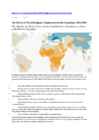
increase, growth, malthus, there, lead, increases, economic, approach, rate, resource, boserup, graph, limit, rise, marriage, technology, production, occur, task, supply, decline, famine, disease, therefore, land, decrease, development, innovation, finite, optimum, stages, industrial, revolution, suggested, available, lower, between, wheat, price, sizehttp://www.pewforum.org/2015/04/02/religious-projections-2010-2050/ APRIL 2, 2015 The Future of World Religions: Population Growth Projections, 2010-2050 Why Muslims Are Rising Fastest and the Unaffiliated Are Shrinking as a Share of the World’s Population The religious profile of the world is rapidly changing, driven primarily by differences in fertility rates and the size of youth populations among the world’s major religions, as well as by people switching faiths. Over the next four decades, Christians will
Human overpopulation Liis Lukk MJ15 What is overpopulation? • Overpopulation is an undesirable condition where the number of existing human population exceeds the carrying capacity of Earth. • Human overpopulation is among the most pressing environmental issues • Overpopulation can result from an increase in births, a decline in mortality rates, an increase in immigration, or an unsustainable biome and depletion of resources • Human population has been rising continuously since the end of the Black Death, around the year 1350 • The most significant increase has been since the 1950s, mainly due to medical advancements and increases in agricultural productivity • The recent rapid increase in human population over the past three centuries has raised concerns that the planet may not be
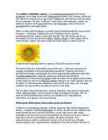
arranged (korraldatud, ettekavatsetud)spirally(spiraalselt). Typically each floret is oriented(suunitlusega) toward(poole) the next by approximately(umbkaudu, ligikaudu) the golden angle(parima nurga alla), producing a pattern(muster, lõikeleht, seaduspärasus) of interconnecting spirals where the number of left spirals and the number of right spirals are successive Fibonacci numbers.(fibonacci arv/ rida) Typically, there are 34 spirals in 1 direction(suund, juhatamine, juhis) and 55 in the other; on a very large sunflower you may see 89 in one direction and 144 in the other. The disc florets mature(täiskasvanud ; valmima, kääritama ) into what are traditionally called "sunflower seeds", but are actually the fruit (an achene) of the plant. The true seeds are encased(ümbritsetud, koorikus) in an inedible husk (söögikõlbmatu, mittesöödav, kest, aganad ; kroovima, koorima)
Preparing for exam. Focus areas Defining innovation ● “An innovation is an idea, practice, or object that is perceived as new by an individual or other unit of adoption.” (Rogers 1952) ● CIS survey: “Product innovations must be new to your enterprise, but they do not need to be new to your market”. ● “Companies achieve competitive advantage through acts of innovation. They approach innovation in its broadest sense, including both new technologies and new ways of doing things” – (Porter 1990) ● “An innovative business is one which lives and breathes “outside the box”. It is not just good ideas, it is a combination of good ideas, motivated staff and an instinctive understanding of what your customer wants” – (Branson 1998) ● “...novel implementation of an invention, discovery, new or existing knowledge in economic process” (Joseph A
2013): 1. Bacteria a) Heterotrophic bacteria, eg. symbiotic and non - symbiotic N2 fixers, ammonifier, cellulose decomposers, denitrifiers b) Autrotrophic bacteria, eg. nitrosomonas, nitrobacter, sulphur oxidizers, etc; 2. Fungus; 3. Viruses 4. Actinomycetes and stretomyces; 5. Algae eg. BGA, yellow gree algae, golden brown algae. The soil microflora largely depends on the type of soil, temperature, moisture, plant growth, nutrients, pH, and many other factors which may vary between locations but also within a single plot and over very small distances (OECD, 2007). Nevertheless of the quantity of microflora, biomass of all microorganisms living in soil play an important role in the functioning of entire soil ecosystems because their enormous biochemical activity (Barabasz et al. 2002). Soil microflora cycles carbon, nitrogen, phosphorus, and sulfur, plays a role in soil structure
when they break through to the industrial scale. 2. The scale of biofuels production 2.1. Drivers of biofuels production Lal (2010) stated that "three inter-connected challenges face humankind in the 21st century": food security, climate change, and energy security. The world population is projected to reach 9 billion in 2050, posing more demands on energy, food, and other natural resources. It has been estimated that the world food production needs to double and meat production increase by 85% by 2050 to fulfill projected demand by population (Karp, 2011). In the recent decades, the food consumption in the most populous counties has shifted from grain-based diets to meat and dairy diets. Meat production requires times more biomass in the form of animal feed and that puts further pressures on natural resources. As food production is very energy intensive, it is closely linked to global energy consumption. Global fuel consumption
[2] 5. 1 mark max for general effect of mutations: mutation may give different, amino acid / primary structure; A ref stop codon some mutations alter, molecular shape / tertiary structure / binding; max 3 for explaining data in Table: - so unable to, accept / transport, HCO3 ; unable to bind ATP; so increase in acidity / decrease in pH; effect on mucus; effect on enzyme(s) /ref pH optimum of enzyme(s); poor digestion of, protein / lipid / starch; AVP; e.g. some mutations, give some transport / have less effect. > 33% (of norm) allows normal digestive function / < 6% [A very low] does not. max 3 [3] 6
Europe entirely). Population: ~ 45 million (declining). Major cities and estimated population (Good news! Not all the business and capital concentrated in the capital): Kyiv (Kiev) 2.8 million, Kharkiv (Kharkov) 1.5 million, Lviv (Lvov) - 1.5 million, Donetsk 1 million, Dnipropetrovsk (Dnepropetrovsk) - 1 million, Odesa (Odessa) 1 million. Zaporizhzhya (Zaporozhye) 0.8 million. 5 GDP growth, %: 1.0 (2013 forecast EBRD downward revision from previously projected 2.5%). Official language: Ukrainian (although Russian is widely used in business communication). Currency: Hryvnya (UAH). Government type: republic. Membership: the United Nations, the International Monetary Fund (IMF), the World Bank, the European Bank for Reconstruction and Development (EBRD), the World Trade Organization (WTO), etc.
and the Dominican Republic are situated. Its indigenous Arawakan-speaking Taíno inhabitants named the island Xaymaca, meaning either the "Land of Springs," or the "Land of Wood and Water". Formerly a Spanish possession known as Santiago, it later became the British West Indies Crown colony of Jamaica. It is the third most populous anglophone country in the Americas, after the United States and Canada. I chosed Jamica because there are many things what I like in this country. Mostly I like Jamaica´s music, culture and climate. Geography Jamaica is the third largest island in the Caribbean, and the most populous English speaking island there. The island of Jamaica is home to the Blue Mountains inland and is surrounded by a narrow coastal plain. Most major towns and both cities are located on the coast. Chief towns include the capital city Kingston, Portmore, Spanish Town, Mandeville, Ocho Rios, Port
Canada 8a Teacher: Merike Sisask Composer: Kärt Kalvet 2010 Canada, Kärt Kalvet 8a Canada General Information Canada is in North America. It's area is 9220970 sq km. Canada's population is 313.612.000 people. Canada is divided into 10 provinces and 3 territories. The capital of Canada is Ottawa. Canada has constitutional monarchy. The head of state in Canada's government is the Queen of England. There are two main languages in Canada: English and French. Canada's curreny is Canadian dollar (1 dollar=100 cents[Can$]). The highest peak of Canada is Mount Logan, 5959 metres. The lowest point is sea level. The longest river is the Mackenzie. The climate and geography of Canada vary greatly from temperate in the south to arctic in the north and from islands and plains in the east to mountains in the west. Location Canada is located in the northern-most region of North America
Friedrich-Karl Lücke Index 561 Preface For centuries, meat and its derived products worldwide meat products such as cooked have constituted some of the most important ham and sausages, bacon, canned products foods consumed in many countries around and pâté, dry-cured ham, mold-ripened sau- the world. Despite this important role, there sages, semidry and dry fermented sausages, are few books dealing with meat and its restructured meats, and functional meat prod- processing technologies. This book provides ucts. The third part presents efficient strate- the reader with an extensive description of gies to control the sensory and safety quality meat processing, giving the latest advances of meat and meat products, including physi-
and Venezuela, rain forests that were once great have been lost. According to some estimates, 50 million acres of rain forest are cut down every year. The United Nations says the figure is closer to 17 million acres. The World Wildlife Fund says that every minute, 25 to 50 acres are cut or burned to the ground. The world's growing population has been a primary cause of rain forest destruction. More people need land to live on and wood products to consume. Limiting population growth may be the first in a series of steps that would limit the destruction of the rain forests. Intensive farming Advantages ✔ One of the major advantages of this farming technique is that the crop yield is high. ✔ It helps the farmer to easily supervise and monitor the land and protect his livestock from being hurt or hounded by dangerous wild animals. ✔ With the introduction of intensive farming, farm produce, such as vegetables, fruits, and poultry products have become less expensive
· Entry to the industry is often blocked by government. It requires patent or licenses. There is total control over price "Price Makers" · ex. local electric utility · Oil, · diamonds Since the monopolist produces a unique product, it makes no effort to differentiate its product. · Imperfect Competition Characteristics and Occurrence · Very large numbers of firms · There is a large number of of independently acting sellers, each offering their products in large national or international markets ex. farm commodities, the stock market, the foreign exchange market Standardized product · The product is standardized because it is either identical to each other, or homogeneous · As long as the price is the same, consumers will be indifferent about which seller to buy the product from
..................................... 2 1.2. Potential future utilization..............................................................................4 1.3. Why Don't We Use More Renewable Energy? ...........................................5 2. Energy Types 2.1. Wind Energy.......................................................................................................6 2.1.1. Annual Generation........................................................................................7 2.1.2. Growth and cost trends................................................................................8 2.1.3. Theoretical potential.....................................................................................9 2.1.4. Benefits of wind energy................................................................................10 2.2. Solar Energy........................................................................................................11 2.2.1 Development, deployment and economics........
Introduction to macroeconomics Macroeconomics Macroeconomics (from Greek prefix "macr(o)-" meaning "large" + "economics") is a branch of economics that deals with · the performance, structure, behavior and decision-making of the entire economy, · be that a national, regional, or the global economy The Economist's Dictionary of Economics defines Macroeconomics as - "The study of whole economic systems aggregating over the functioning of individual economic units. It is primarily concerned with variables which follow systematic and predictable paths of behaviour and can be analysed independently of the decisions of the many agents who determine their level. It is a study of national economies and the determination of national income." Macroeconomics examines the economy as a whole and answers questions · 'What causes the economy to grow over time
modes, for example, starting with mail, switching to telephone, and finishing up with face-to-face interviews. In addition, some surveys are quite simple and inexpensive to do, such as a mail survey of members of a small professional association. Others are incredibly complex, such as a survey of the general public across all countries of the European Union in which the same questions need to be answered in multiple languages by people of all educational levels. In the mid-twentieth century there was a remarkable similarity of survey procedures and methods. Most surveys of significance were done by face-toface interviews in most countries in the world. Self-administered paper surveys, usually done by mail, were the only alternative. Yet, by the 1980s the telephone had replaced face-to-face interviews as the dominate survey mode in the United States, and in the next decade telephone surveys became the major data collection method in many countries
Gross Domestic Product (GDP) The gross domestic product (GDP) or gross domestic income (GDI) is a measure of a country's overall economic output. It is the market value of all final goods and services made within the borders of a country in a year. It is often positively correlated with the standard of living, alternative measures to GDP for that purpose. · Gross domestic product comes under the heading of national accounts, which is a subject in macroeconomics. Gross National Product Gross national product (GNP), in economics, a quantitative measure of a nation's total
Pacific. Spain's loss of these last territories politically ended Spanish colonization in America. Though the Spanish did not impose their language to the extent they did their religion, some indigenous languages of the Americas evolved into replacement with Spanish. 10. Three main groups of Hispanic Americans. Their countries of origin, reasons for their migration to the US. Main regions in the US where they live. Illegal immigration to the US. The economic and social status of the Hispanics; the reasons why Cuban Americans have been more successful than other groups of Hispanics. *Three largest groups of Hispanic Americans = Mexican Americans (in the West), Puerto Rican Americans(in the Northeast), Cuban Americans(in the South) · More likely than non-Hispanic Whites to live inside central cities (inner cities) of metropolitan areas · Family households tend to be larger · Education lower
06.05.2012 Abstract 06.05.2012 Experience and Wellness management Author Group Girli Vasiljev RB1X Title of report Number of pages Economic Country Review: Finland, Estonia 20 and Hungary Teacher Kalevi Torunen The goal of this paper is to compare the economic performance of Finland, Estonia and Hungary. First, a general overview on the countries will be given. After, economic indicators (real GDP growth rate, inflation, unemployment, household consumption, investment, current account, government budget and deficit) of the three countries will be compared to draw a conclusion. Keywords GDP, inflation, unemployment, household consumption, investment, current account, government budget, deficit, surplus Table of contents 1 Introduction
Acid rain can be caused due to burning of fossil fuels or erupting volcanoes or rotting vegetation which release sulphur dioxide and nitrogen oxides into the atmosphere. Acid rain is a known environmental problem that can have serious effect on human health, wildlife and aquatic species. FIND OUT 5 WAYS HOW TO REDUCE OCEAN ACIDIFICATION AND 5 WAYS THAT WOULD HELP TO PREVENT ACID RAIN POLLUTION. 8. Water Pollution: Clean drinking water is becoming a rare commodity. Water is becoming an economic and political issue as the human population fights for this resource. One of the options suggested is using the process of desalinization. Industrial development is filling our rivers, seas and oceans with toxic pollutants which are a major threat to human health. FIND OUT 5 WAYS HOW TO REDUCE WATER POLLUTION. 9. Urban Sprawl: Urban sprawl refers to migration of population from high density urban areas to low density rural areas which results in spreading of city over more and more rural land
...................................................................................................... 10 2 Introduction. Years ago countries didn’t depend so much on imports and also on export. World has so many organizations controlling countries economics like WTO, The European Union, OPEC, NAFTA, ASEAN, APEC, MERCOSUR, CEEAC, IMF, World Bank and so on. Nowadays because of globalization there are large corporations like Apple, Gazprom and Allianz who rules the world and control the economic outcome with big organizations that are roled by influencial countries like China and USA. This essay is about criticism to IMF and World Bank. Critics of the World Bank and the IMF are concerned about the ‘conditionalities’ imposed on borrower countries. Often the conditionalities are attached without due regard for the borrower countries’ individual
Life in Estonia through the eyes of an economics student With a population of 1 313 271 people, Estonia is one of the least populous member states of the European Union. However, according to the IMF, it is a developed country with an advanced and high-income economy. Estonia follows market economy system which ensures the little government intervention and the determination of prices of goods and services in a free price system. Therefore, economic decisions are guided solely by the aggregate interactions of a country's citizens and businesses. In addition to mentioned afore, Estonia tends to perform favourably in measurements of civil liberties, education, and press freedom. Living in Estonia has many of its good sides, for instance it is a secure place from nature disasters and it has a beautiful nature. Although, when not to look only through rose-tinted glasses, there are still some minuses in country’s organization
this process. Only through proper training could one find out if a hunting dog had favourable qualities. But the training did not create those characteristics in the dog's offspring. Lamarckianism was now discredited, and the question of evolution remained a mystery. Many scientists rejected evolution and the Great Chain of Life feeling that its concepts had no place in biological science. The key was produced by the theorist of the "dismal science" of economics, Thomas Malthus. Malthus said that human (and animal) populations increased at a geometric rate, whereas food supply increased only at an arithmetic rate. Therefore population was continually outstripping food supply, and was kept in check only by starvation, or by indirect acts such as war and diseases. Malthusianism raised a very good question which is not easily noticed. Which individuals survived in hard times, and which died? Luck was probably the largest factor, but not the only one,
fire use. The maquis shrub savannas of the Mediterranean region were likewise created and maintained by anthropogenic fire. These fires are usually confined to the herbaceous layer and do little long term damage to mature trees. However, these fires do serve to either kill or suppress tree seedlings, thus preventing the establishment of a continuous tree canopy which would prevent further grass growth. Prior to European settlement aboriginal land use practices, including fire, influenced vegetation and may have maintained and modified savanna flora. It has been suggested by many authors that aboriginal burning created a structurally more open savanna landscape. Aboriginal burning certainly created a habitat mosaic that probably increased biodiversity and changed the structure of woodlands and geographic range of numerous woodland species. It has been
noninvasive and inexpensive. It also has a high diagnostic sensitivity, which means that a negative result strongly indicates that the patient most likely does not have the disease.[1,2] Urinary cortisol excretion can be caused by both pathologic and physiologic processes, however, and the test cannot distinguish between the two. Therefore, the (Crt:Crt)u test is not a confirmatory test as it has poor specificity, which means there are many false positives. If a patient tests positive, additional tests are required to definitively diagnose hyperadrenocorticism. Diagnostic tests Diagnostic tests are often performed to establish a diagnosis or differentiate between two diagnoses in symptomatic patients. Since the goal is to definitively identify a specific disease state, these tests should have good specificity, which means there should be few false positive results
take on this, see Drechsler 2000), and it has had, and still has, similar results. Already more on the defensive within public administration (PA) than STE is within economics, NPM also shows that such major paradigm shifts in theory and policy may actually happen. In addition, it occasionally appears that pae-oriented scholars have overlooked the fact that some features in public management reform, state organization, and the economic interpretation of state functions that they advocate from "Good Governance" to "efficiency" as a goal in itself actually belong into the "other camp" and by and large have a disastrous effect on "industrial" and "developing" countries alike, although the consequences for the latter are much more severe. NPM is the transfer of business and market principles and management techniques from the private into the public sector, symbiotic with and based on a neo-liberal
All about High Tech High tech is technology that is at the cutting edge--the most advanced technology currently available. There is no specific class of technology that is high tech--the definition shifts over time--so products hyped as high tech in the 1960s would now be considered, if not exactly low tech, then at least somewhat obsolete. This fuzzy definition has led to marketing departments describing nearly all new products as high tech. Economy Because the high-tech sector of the economy develops or uses the most advanced technology known, it is often seen as having the most potential for future growth
when the UN Charter had been ratified by a majority of the original 51 Member States. The day is now celebrated each year around the world as United Nations Day. The purpose of the United Nations is to bring all nations of the world together to work for peace and development, based on the principles of justice, human dignity and the well-being of all people. It affords the opportunity for countries to balance global interdependence and national interests when addressing international problems. There are currently 192 Members of the United Nations. The Aims of the United Nations: -To keep peace throughout the world. -To develop friendly relations between nations. -To work together to help people live better lives, to eliminate poverty, disease and illiteracy in the world, to stop environmental destruction and to encourage respect for each other's rights and freedoms. -To be a centre for helping nations achieve these aims. The Principles of the United Nations:
A century ago communication across any distance was dependent upon the telegraph or letters. No jets crossed the ocean, no television pictures enabled us instantly to see events in any part of the world, there were no worldwide telephone networks and no computers. It is just a short lifetime since humanity first travelled into space and discovered how fragile our planet looks. FROM FIREWORKS TO THE MOON At first glance you might think that there couldn't possibly be anything common between a 13 th century festival in China and the Apollo 11 moon landing in 1969. However, there is a link and that is that they both relied on the use of rockets. The Chinese first developed rockets by filling bamboo tubes with an explosive made from saltpetre, charcoal, and sulphur. The sealed tubes would be thrown onto fires during celebrations because it was thought that the loud explosions would protect them
Highly-educated and with good language skills, the share of Baltic Germans in the Russian diplomatic corps was considerable; several became ministers and governors general. 3|Page Population and social structure Systematic pillaging by Russian forces at the time of the Northern War, and the 17101711 plague epidemia, caused a huge demographic catastrophe. It is thought that after the Northern War there left no more than 150 000170 000 Estonians. The early 18th-century post-war crisis marked the lowest ebb in the Estonian population. But due to a high natural population growth and partly also to immigration, the number of Estonians began to rise rapidly. In 1725, the Estonian population was 220 000, in 1765, 400 000 and in 1858, 750 000. Throughout the period, Estonia was mainly an agrarian society. The townspeople formed a modest 5 per cent of the whole population
PSYCHOLOGY PART 1: CORE Biological level of analysis Outline principles that define the biological level of analysis. 1) Behavior can be innate, because it is genetically based. Evolution may play a key role in behavior. 2) Animals may be studied as a means of understanding human behavior. 3) There are biological correlates of behavior. Cognitions, emotions and behaviors are products of the anatomy and physiology of our nervous and endocrine system. Explain how principles of the biological level of analysis may be demonstrated in research. 1) Correlational studies: Study by Buss, who hypothesized that across cultures, men will prefer to marry younger women because of greater reproductive capacity and women will place greater value on a potential mate's earning
Vltava River in the middle of Bohemia that is one of the three historic Czech territories; the others being Moravia and Silesia. The city has seven "Chapter Divisions" or districts. 3 I read one girl blog and she described Prague so beautifuly. She talked about her adventures. When i was reading that it seemed so real, that i was there to. The city's charms can occasionally be obscured by too many tourists, congested traffic and tacky commercialism. Packed in among thousands of other visitors, trying like crazy to see the city in three days and worrying about getting ripped off, it's not surprising, may think the city is overrated. Just relax, take a deep breath. While the city centre is a mélange of stunning architecture, from Gothic, Renaissance and baroque to
Today more and more disputes are caused by the enormous spread of the English language throughout the world. Some scholars claim that it has already become the first global language. And this statement isn't far from truth. But what does it mean to say that a language is a global language? Why is English the language which is usually cited in this connection? How did the situation arise? And could it change? Or is it the case that, once a language becomes a global language, it is there for ever? [1, pg.2] These are fascinating questions to explore, whether your first language is English or not. A global language is a language that is spoken internationally and is learned and spoken by a large number of people as a second language. A global language is characterized not only by the total number of speakers (native and second language speakers), but also by its geographical distribution, as well as use ininternational organizations and diplomatic relations. [4]
 annaabi.ee