Leidsid 33 sarnast õppematerjali, mis on seotud failiga "Ohustatud loomad". Need materjalid aitavad sul teemat sügavamalt mõista.
penguins, krill, warming, colonies, emperor, affect, feed, global, declined, half, years, chain, algae, lack, temperatures, fish, other, marine, animals, necessary, survival, taking, percent, changes, death, changing, broken, areas, result, walk, milesspecies. Lava Cactus: One of the first plants to colonize a new lava field, the Lava Cactus is found on barren black lava flows Iguanas on the Galapagos are either land or marine iguanas. Both are about the same size, growing up to about 1.5m, have stocky heads, a ridge of spiny scales along the neck and backbones. Land iguanas are lighter in color, tan to dark brown, and have shorter scales on the backbone. Land iguanas are inland, lesser in number, and feed on cactus . There are 11 remaining races of the Galapagos Giant Tortoises. They eat grasse, cacti, and other vegetation. They can go for more than a year without drinking or eating. The most famous tortoise from Galapagos is the Lonesome George who was found in 1971 on the island of Pinta. He is the sole survivor of his race. There are four forms of sea turtles living in the Galapagos. Their front legs have modified into flippers for the water
Industry and motor vehicle exhaust are the number one pollutants. Heavy metals, nitrates and plastic are toxins responsible for pollution. While water pollution is caused by oil spill, acid rain, urban runoff; air pollution is caused by various gases and toxins released by industries and factories and burning of fossil fuels; soil pollution is majorly caused by industrial waste that deprives soil from essential nutrients. FIND OUT 5 WAYS HOW TO STOP POLLUTION. 2. Global Warming: Climate changes like global warming is the result of human practices like emission of Greenhouse gases. Global warming leads to rising temperatures of the oceans and the earth surface causing melting of polar ice caps, rise in sea levels and also flash floods, excessive snow or desertification. FIND OUT 5 WAYS HOW TO STOP GLOBAL WARMING. 3. Overpopulation: The population of the planet is reaching unsustainable levels as it faces shortage of resources like water, fuel and food
"no-see-ums" can make the tundra a miserable place to be in the summer. Mosquitoes can keep themselves from freezing by replacing the water in their bodies with a chemical called glycerol. It works like an antifreeze and allows them to survive under the snow during the winter. The marshy tundra is a great place for migratory birds like the harlequin duck, sandpipers and plovers. Polar desert: All the wildlife is connected with sea, because there is very little food on land. Vast colonies of seabirds can be found nesting on the cliffs of this ecoregion. Not many animals spend all year there. Alpine biome: Alpine animals adapt to the cold by hibernating, migrating to lower, warmer areas, or insulating their bodies with layers of fat. Animals will also tend to have shorter legs, tails, and ears, in order to reduce heat loss. Alpine animals also have larger lungs, more blood cells and hemoglobin because of the increase of pressure and lack of oxygen at higher altitudes
GLOBAL WARMING Global warming is the observed century-scale rise in the average temperature of Earth's climate system. Since 1971, 90% of the increased energy has been stored in the oceans, mostly in the 0 to 700m region. Despite the oceans' dominant role in energy storage, the term "global warming" is also used to refer to increases in average temperature of the air and sea at Earth's surface. Since the early 20th century, the global air and sea surface temperature has increased about 0.8 °C (1.4 °F), with about two-thirds of the increase occurring since 1980.Each of the last three decades has been successively warmer at the Earth's surface than any preceding decade since 1850. More than 90% certain that most of global warming was being caused by increasing concentrations of greenhouse gases produced by human activities.In 2010 that finding
Mt Tarawera nearby volcano offers spectacular scenery including superb views inside the rim of the volcano Best area in the country to experience and learn about Maori Culture. Top ten places to visit in New Zealand Bay of Islands Bay of Islands is the finest maritime park in New Zealand. There are about 150 islands. The park has an abundance of marine life, including marlin, whales, penguins and dolphins. Mt Cook National Park Mt Cook and surrounding area is an alpine park within the South Westland World Heritage area. Mt Cook, Mt Tasman and Mt Sefton. This glacier is New Zealand's longest and it has one of longest ski runs in the world. Top ten places to visit in New Zealand Westland National Park Famous for its two glaciers, Franz Josef and Fox glaciers.
Scientists first discovered acid rain in 1852, when the English chemist Robert Agnus invented the term. From then until now, acid rain has been an issue of intense debate among scientists and policy makers. Acid rain, one of the most important environmental problems of all, cannot be seen. The invisible gases that cause acid rain usually come from automobiles or coal-burning power plants. Acid rain moves easily, affecting locations far beyond those that let out the pollution. As a result, this global pollution issue causes great debates between countries that fight over polluting each other's environments. For years, science studied the true causes of acid rain. Some scientists concluded that human production was primarily responsible, while others cited natural causes as well. Recently, more intensive research has been done so that countries have the information they need to prevent acid rain and its dangerous effects. The levels of acid rain vary from region to region
Global Warming One of the biggest issues our planet and its inhabitants are facing nowadays is global warming. Global warming, also often referred to as the greenhouse effect, has not always been a problem. However, over the last centuries, since the Industrial Revolution things have changed. Polar regions are melting, species are dying, climate zones are shifting, migration patterns for animals such as polar bears and birds are being disrupted our world as we know it is changing. Some scientists believe that the climate will reach a tipping point, a point
Rivers The Darling River is the longest river in Australia, flowing 2,739km from northern New South Wales to its confluence with the Murray River at Wentworth, New South Wales. (Some geographers treat the Darling and the lower Murray as a single river, 3,000km long. This is largely a matter of semantics). Today the Darling is in poor health, suffering from overuse of its waters, pollution from pesticide runoff and prolonged drought, possibly the result of manmade global warming. In some years it barely flows at all. The river has a high salt content and declining water quality Deserts Deserts of Australia cover a large portion of the land in Australia. Most of the deserts lie in the central and northwestern part of the country. The Great Victoria Desert is a barren, arid and sparsely populated desert ecoregion in southern Australia. It falls inside the states of South Australia and Western Australia and consists of many small sandhills, grasslands and salt lakes
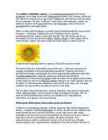
than olive oil), as a carrier oil and to produce biodiesel, for which it is less expensive than the olive product. During the 18th Century, the use of sunflower oil became very popular in Europe, particularly with members of the Russian Orthodox Church because sunflower oil was one of the few oils that was not prohibited during Lent. The cake remaining after the seeds have been processed for oil is used as a livestock feed. Some recently developed cultivars have drooping heads. These cultivars are less attractive to gardeners growing the flowers as ornamental plants, but appeal to farmers, because they reduce bird damage and losses from some plant diseases. There are also new breeds of sunflowers which are transgenic, so that they are resistant to some diseases.[citation needed] Sunflowers also produce latex and are the subject of experiments to
about 8 cm high. Most plants grow in a dense mat of roots that has developed over thousands of years. The soil is very low in nutrients and minerals, except where animal droppings fertilize the soil. Although there isn't a lot of biodiversity, only 48 species of land mammals are found on the tundra, there are a lot of each species. These consist of slightly modified shrews, hares, rodents, wolves, foxes, bears and deer. There are huge herds of reindeer in North America that feed on lichens and plants. There are also smaller herds of musk oxen. Wolves, wolverines, arctic foxes, and polar bears are the predators of the tundra. Smaller mammals are snowshoe rabbits and lemmings. There aren't many different species of insects in the tundra, but black flies, deer flies, mosquitoes and "no-see-ums" (tiny biting midges) can make the tundra a miserable place to be in the summer. Mosquitoes can keep themselves from freezing by
their barbecue grills. Picture 2.3. Types of energy consumed in homes (2005) 2.3 Energy use in different types of homes 6 About 80 percent of residential energy use is consumed in single family homes, while 15 percent is consumed in multi-family dwellings such as apartments, and 5 percent is consumed in mobile homes. Picture 2.4. Energy use in different types of homes More than half of the energy used for heating in single-family homes (either attached or detached) is natural gas, about one-fourth is electricity, and one-tenth is fuel oil (heating oil). Over three-fourths of single-family homes have some type of air conditioning. Most single-family homes have a washing machine and a dryer. Among Single-Family Dwellings: In 2005, for the Main Heating Fuel and Equipment: · 56% use Natural Gas · 26% use Electricity · 7% use Fuel Oil · 6% use LPG
In 1642 Abel Tasman discovered Tasmania. The first english explorer was William Dampier in 1688. he was followed by James Cook. In 1768 captain James Cook left England on a three year expedition to the Pacific that also took him to Australia. Cook landed in Botany Bay on the eastern coast. He charted the region and named it New South Wales. Britain decided to use its new outpost as a penal colony; the first fleet of 11 ships carried about 1500 people half of them convicts. The fleet arrived at Port Jackson, the cite of modern Sydney, on 26 th January, 1788, and on this day every year Australia day is celebrated. In all, about 160 000 en and women were brouth to Australia as convicts. The transportation was ended in 1868. by this time many settlements were established. In 1901 all the separate parts of Australia were united into one country. In 1851 gold was discovered in eastern Australia. This brought along the great gold rush
Their national holiday is on the 26th of January. In 1788 on the 26th of January the first fleet arrived at Botany Bay and established a penal colony near modern-day Sydney. Geographical Position Australia is located in the Southern Hemisphere. It’s the only continent except for Antarctica that is all south of equator. Sometimes Australia is called the island continent. There is a great reason why. It really is an island. It is 2880 km from the mainland of Asia and is almost half way round the world from Europe. More than 9 600 km separates it from America. Australia lies between the Pacific and Indian oceans. The Timor Sea and the Arafura Sea separate Australia from Indonesia. In the north the coast is washed by Great Australian Bight and the Indian Ocean. In the northeast the Coral Sea washes the coasts and in the southeast there is the Tasman Sea which also separates Australia from New Zealand.
cats and dogs, but they lay shelled eggs like snakes and turtles. And they are found only in Australia. Another group of Australian mammals, the marsupials, are less like reptiles than the anteater and the platypus, but they are not highly developed mammals either. The kangaroo and the wombat are marsupials. Their young are born before they are fully developed. The kangaroo is born after being only seven weeks inside it's mother. It is completely blind and only an inch or an inch and a half long. It crawls into its mother's pouch and attaches itself to a nipple there. There it stays for almost three months, when it begins to stick its head out. It is six months old before it is big and strong enough to leave the pouch. Some of the marsupials in Australia look very much like higher animals. The koala, which looks like a live teddy bear, is not really a bear at all but a marsupial. Today Australian marsupials are dying out
I attach a copy of the receipt for your information. I look forward to hearing from you. Yours faithfully, Introduction This report looks at the dietary habits of twenty students in their final year at Freedonian Secondary School. The report is based on the students' responses to the questionnaire administered by the school's doctor. Meals The survey have revealed that the students do not have enough meals. Only eight of those questioned eat before school, and half of them have their midday meal at school. Worryingly, as few as four students have both breakfast and school lunch. Still more disturbing is the fact that an alarming proportion--approximately onethird--of the students have neither. Eating brown bread Interestingly enough, bread, a good source of fiber, enjoys popularity among young people. 75 per cent of the students surveyed
1. Natural conditions (including soil fertility, pH, aeritation, temperature, moisture, organic matter, food and energy supply, microbial association and interactions) 2. Cultural practices These factors play a great role in determining not only the number and type of organism but also their activities. Variations in any one or more of these factors may lead to the changes in the activity of the organisms which ultimately affect the soil fertility level. Natural conditions Extreme environments such as high-altitude and highlatitude ecosystems are very sensitive to environmental changes. Global warming is hypothesised to alter both above- and below ground processes affecting the soil ecosystem (Asher et al. 2012). As an example, Asher et al. (2012) further proved in their research on humus creation that thermal conditions (due to
Prairies are located in Alberta, Saskatchewan and Manitoba. Those regions are called the ,,Bread-basket of Canada" because of the wheat and other grains they get from there. 9. Population Although Canada's population is growing slowly, their growth rate is higher than that in most industrialized countries. Their population growth is concentrated in areas with considerable environmental stresses, particularly around Toronto and Vancouver. Global population growth has global impacts that are felt in Canada, including pressures on the environment and demand for products that we export. The Aboriginal population of Canada is a diverse population with distinct cultures, languages, religious beliefs and political systems. There are many ways of defining the Aboriginal population, which can result in different estimates of its size. There is no single or "correct" definition and the choice of a definition depends on the purpose for which it is to be used.
html Inuit simply means "people." Inuit were earlier known by Europeans as "Eskimos" - a pejorative roughly meaning "eaters of raw meat". They are one of the original groups to inhabit the northern regions of Canada populating small, scattered communities and villages throughout the Arctic from Alaska to eastern Greenland. In 2006 Statistics Canada estimated that 50 485 people, about 4% of the aboriginal population, identified themselves as Inuit . Almost half of the Inuit population in Canada lived in Nunavut (49%), 19% in Quebec, 6% in the Northwest Territories, and 4% in Labrador. Statistics Canada reported that between 1996 and 2006, the First Nations population increased 29% which is 3.5 times the growth rate of 8% for the non- Aboriginal population of Canada. Tribal Groups There are 8 main tribal groups: the LABRADOR, UNGAVA, BAFFIN ISLAND, IGLULIK, CARIBOU, NETSILIK, COPPER and Western Arctic Inuit (who replaced the MACKENZIE INUIT)
Animals shrinking in the heat This article was published in Daily mail, on 17 October 2011. The author of the article is Tamara Cohen. The article discusses about animals who are shrinking due to global warming. Scientist have warned, that animals such as sheep, deer, birds and reptiles are shrinking due to climate change. Researchers say warmer temperatures over the past few years have made some animals adapt to need less body fat to survive while others are struggling for food. In the next few decades, some types of mammals, fish, birds and plants are getting smaller and evolve into miniature versions of what they are today. This could force some creatures, that people eat, to become extinct,
They live for 15 to 20 years and spend most of their time on drifting packs of ice, eating and resting. The bears reach sexual maturity 3 to 5 years after birth. Each year pregnant polar bears dig a den in the snow of southern facing slopes, where they give birth. The females give birth to one or two cubs. Cubs are naked, blind and deaf when they are born. They learn how to hunt with their mothers for about two and a half years. Polar bears live alone, except for mothers who live with their cubs. Polar bears adapt very well to the cold. They have a layer of blubber around 11,4 centimetres thick. That and the hollow shafts of their hair provide them with excellent insulation. Their ears and tail are very short so they don't lose any heat through them. Their necks are longer than other bears to keep their head above the water when they swim. They have
10. After which war did Canada become a British colony? The French and Indian War was the North American conflict that was part of a larger imperial conflict between Great Britain and France known as the Seven Years' War. The French and Indian War began in 1754 and ended with the Treaty of Paris in 1763. The war provided Great Britain enormous territorial gains in North America. With the Peace Treaty of 1763, France gave up all claims to mainland North America, and former French colonies were transferred to Britain aka New France became a British colony. 11. Who were the Loyalists? What is the difference between United Empire Loyalists and Late Loyalists? Loyalists were people who maintained loyalty to the British Crown. After the American Revolutionary War they had to settle in Quebec and modern-day Ontario, because of offer of free land and also because they were repressed
cultures and traditions, and over time has been greatly influenced by American culture. Many forms of American media and entertainment are popular, if not dominant in Canada; conversely, many Canadian cultural products and entertainers are successful in the US and worldwide. Canadian culture is a product of Canada's history and geography. Most of Canada's territory was inhabited and developed later than other European colonies in the Americas, with the result that themes and symbols of pioneers, trappers, and traders were important in the early development of Canadian culture. The British conquest of Quebec in 1759 brought a large francophone population under British rule, creating a need for compromise and accommodation, while the migration of United Empire Loyalists from the Thirteen Colonies brought in strong British and American influences. In parts of Canada,
The leader of the parliamentary army, Oliver Cromwell, became "Lord Protector" of the republic. The monarchy was restored in 1660, after the death of Cromwell. In the 18th.century Britain expanded its empire in America, in Africa and India. Technological inventions led to the Industrial Revolution. Hundreds of thousands of people moved from rural areas into new towns and cities. London became an important business and trading centre. By the 19th century Britain was a powerful empire with its colonies in Canada, France, Australia, New Zealand, India and Africa. Tens of thousands people left Great Britain to settle in these colonies. Government The United Kingdom is a constitutional monarchy with Elizabeth II, Queen of the United Kingdom of Great Britain and Northern Ireland, as the head of state. The monarch of the UK also serves as head of state of fifteen other Commonwealth countries. The UK has a parliamentary government based on strong democratic traditions.
Russian colonization of America. What has preserved from this period to the present? The Russian colonization of the Americas covers the period, from 1732 to 1867, when the Tsarist Imperial Russian Empire laid claim to northern Pacific Coast territories in the Americas. The Russians were primarily interested in the abundance of fur-bearing mammals on Alaska's coast, as stocks had been depleted by overhunting in Siberia. By the middle of the 19th century, profits from Russia's American colonies were in steep decline. Faced with the reality of periodic Indian revolts, the political ramifications of the Crimean War, and unable to fully colonize the Americas to their satisfaction, the Russians concluded that their American colonies were too expensive to retain. after less than a month of negotiations, the United States accepted Emperor Alexander II's offer to sell Alaska. The purchase of Alaska for $7.2 million ended Imperial Russia's colonial presence in the Americas.
world of mammals that both lay eggs and suckle their young. With just a little effort, visitors can also see Australian native animals in the wild. Beyond the cities, in rural and outback Australia, it's not unusual to see mobs of kangaroo grazing in the late afternoon sun and see the flightless emu going about its business. The dingo, brought to Australia by the Aborigines, is considered the country's native dog. You can also see fairy penguins at Phillip Island, Victoria Working Holiday Visa This visa is designed for young travellers looking to experience Australia. It is very convenient as it is usually easy and quick to get, and, as you will see in this article, it suits many situations. To be eligible to apply, you must: Be between 18 and 30 years old (inclusive). Provide proof of financial support for the duration of your travels. Be from one of the following countries : Belgium, Canada, Republic of
productivity • The recent rapid increase in human population over the past three centuries has raised concerns that the planet may not be able to sustain present or future numbers of inhabitants. Loss of Fresh Water • Most of the freshwater resources are either unreachable or too polluted, leaving less than 1% of the world's freshwater, or about 0.003% of all water on Earth, readily accessible for direct human use. • According to the Global Outlook for Water Resources to the Year 2025, it is estimated that by 2025, more than half of the world population will be facing water-based vulnerability and human demand for water will account for 70% of all available freshwater. • Freshwater is the most fundamental finite resource with no substitutes for most uses, yet we are consuming fresh water at least 10 times faster than it is being replenished in regions of northern
descendants of a mutual ancestor that is now extinct. It's not evolution but the theory of natural selection and the evidence he collected to prove to fellow scientists, peers, students, and most importantly the masses of public and the church that were at the heart of Darwin's contribution to biological science. Charles Darwin did not invent the concept of evolution. A number of prominent scientists and other thinkers during the eighteenth century and the first half of the nineteenth century (among them Charles Darwin's grandfather, Erasmus Darwin) had offered detailed theories of evolution (Clark, 1984, pg.24-25). Therefor the idea of evolution went very far back in Western history. At that time this concept was referred to as The Great Chain Of Life and was conceived in the middle ages, based on a mixture of classical and Biblical ideas. The ranking order ranged from the "lowest" forms of life to "higher" living beings (lion),
Mountains in the United States and Canada. Grand Canyon created by Colorado River cutting a channel over millions of years, is about 227 miles long, and attains a depth of more than a mile. Nearly two billion years of Earth's history has been exposed as the Colorado River and its tributaries cut through layer after of sediment as the Colorado Plateaus have uplifted. 5. Climate Due to its large size and wide range of geographic features, the United States contains examples of nearly every global climate. The climate is temperate in most areas, tropical in Hawaii and southern Florida, polar in Alaska, semiarid in the Great Plains west of the 100 th meridian, Mediterranean in coastal California and arid in the Great Basins. Its comparatively generous climate contributed (in part) to the country's rise as a world power, with infrequent severe drought in the major agricultural regions, a general lack of widespread flooding, and a mainly temperate climate that receives adequate precipitation
The world population is projected to reach 9 billion in 2050, posing more demands on energy, food, and other natural resources. It has been estimated that the world food production needs to double and meat production increase by 85% by 2050 to fulfill projected demand by population (Karp, 2011). In the recent decades, the food consumption in the most populous counties has shifted from grain-based diets to meat and dairy diets. Meat production requires times more biomass in the form of animal feed and that puts further pressures on natural resources. As food production is very energy intensive, it is closely linked to global energy consumption. Global fuel consumption has grown 50-fold since the end of the 20th century and it is projected to increase by another 55% by 2030 (Umbach, 2010). That is the reason why new resources for fuel are being sought and biofuels receive subsidies, and investment in development. In addition, transport
This creates demand for increased production and the development of new products, which also means more and better-paying jobs. Also like the United States, advertising has a major impact on Canadian consumer spending. Television is the number-one form of advertising in Canada. The nation's infrastructure is excellent and most of its factories and manufacturing plants are modern. In fact, Canada's transportation network is ranked as the best in the world by the World Economic Forum's Global Competitiveness Report. Canada has a variety of natural resources, including petroleum and natural gas, and a variety of metals and minerals. Over the past decade, Canada has also emerged as one of the leading nations in the high-tech and computer industry. Most of this growth has occurred in central Canada, mainly Ontario and Quebec, and is responsible for the increased migration of people to these areas. Much of the economic growth in Canada today is fueled by small-to mediumsized companies
The Dutch navigator Janszoon was the first to find the South Land. He sighted the coast in 1606. Then Abel Tasman visited an island off the southern coast of Australia in 1642 and the island was named Tasmania after him. In 1770 British sailor James Cook came to Australia and landed in Botany Bay. He declared that Australia was very suitable for settlers. Britain had to send their convicts to the new country after loss in the American War of Independence to replace the North Atlantic colonies. In 1788 the First Fleet with eleven ships, with 1500 people on board were sent to Australia with Captain Phillip. They landed in Port Jackson on January 26th in 1788 and that day is now called Australia Day. It is the biggest day of celebration in the country and in observed as a public holiday in all the states and territories of Australia. During the 1850s, settlement was boosted by gold rushes. Gold was first found at Bayhurst in 1851.
spread of weeds in savannas by the removal or reduction of the plants which would normally compete with potential weeds and hinder establishment. In addition to this cattle and horses are implicated in the spread of the seeds of weed species such as Prickly Acacia and Stylo. These alterations in savanna species composition brought about by grazing can alter ecosystem function, and are exacerbated by overgrazing and poor land management practices. Introduced grazing animals can also affect soil condition through physical compaction and break-up of the soil caused by the hooves of animals and through the erosion effects caused by the removal of protective plant cover. Such effects are most likely to occur on land subjected to repeated and heavy grazing. The effects of overstocking are often worst on soils of low fertility and in low rainfall areas below 500 mm, as most soil nutrients in these areas tend to be concentrated in
discovered Tasmania. Captain James Cook discovered the fertile eastern coast in 1770 and had a more favourable outlook. He explored the coast and named some most important features, such as Botany Bay, for instance. Australia was called Terra Australis Incognita before 1770 and it means `southland'. After the disgraceful loss in the American War of Independence, Britain looked to establish new penal settlements to replace the North Atlantic colonies. The first fleet of 11 ships with 1500 aboard, half of them convicts, arrived at Botany Bay in January 1788. Sydney grew from that first British penal settlement. Transportation of convicts to New South Wales ceased in 1840, but continued to Western Australia in 1868. About 160 000 convicts arrived in over 80 years. The convicts were mostly poor townspeople. Only few of them were from wealthier classes. The building of a new society based on these people was an outrageous challenge
 annaabi.ee