Leidsid 33 sarnast õppematerjali, mis on seotud failiga "My Fair Lady and Cockney English". Need materjalid aitavad sul teemat sügavamalt mõista.
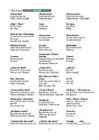
fair, lady, english, eliza, doolittle, accent, grete, carmen, musical, based, shaw, pygmalion, lyrics, lerner, frederick, running, full, songs, spain, street, live, simple, flower, actors, audrey, hepburn, harrison, plays, part, professor, henry, higgins, stanley, alfred, hill, mona, east, still, slang, phrase, wear, during, thanks1) Standard and non-standard varieties of English Standard varieties of English are the varieties of the English language that are considered to be a norm and are spoken and written by the minority (educated people). This is the optimum for educational purposes. The standard varieties of English are: BrEng (British), EngEng (English), NAmEng (North-America), USEng (United States), CanEng (Canada), AusEng (Australia), NZEng (New Zealand). Standard English (British English) is the most widely accepted and understood among native speakers, learned by foreigners. It is used in broadcasting, TV, news etc. It doesn't concern pronounciation (accent), but grammar and vocabulary. It includes formal and informal styles. British Standard English grammar and vocabulary, together with the RP accent should be called English English. RP (Received Pronounciation) is an accent that originates from South-East of England. A
Phonetic SD ("Rhythm And Style") 8. Lexical SD* 9. Syntactic SD* Use lecture notes 10. Graphical means and devices 11. Common literary and common colloquial vocabulary 12. Special literary vocabulary 13. Special colloquial vocabulary 14. Metre in English poetry. Modifications of metre ("Rhythm and Text") 15. Typically English stanzas ("Rhythm and Text") 16. Rhythm in poetry and in prose ("Rhythm and Text") Study independently 17. Varieties of language (I. Galperin "Stylistics") 18. Emotive prose (I. Galperin "Stylistics") 19. Scientific prose style (I. Galperin "Stylistics")
Style The term style is a polysemantic one. The latin word ,,stilus" meant a writing instrument used by the ancients for writing on waxed tablets. Already, in classical latin the meaning of style was extended to denote the manner of expressing one's ideas in written or oral form. One of the abts/the best was given by Jonathan Swift: ,,Proper words in proper places." In present- day english, the world style is used in about half a dozen basic meanings. 1. the characteristic manner in which a writer expresses his ideas. Some speak about the style of Hemingway, Dickens etc. 2. the manner of expressing ideas, characteristic of a literary movement or period. Style of symbolism, romanticism 3. the use of language to pick a literary genre-comedy, novel, drama, O.D (poetic form) etc. 4
1 SYNTACTIC STYLISTIC DEVICES SYNTACTIC STYLISTIC DEVICES are based on a peculiar place of the word or phrase in the utterance (text, sentence, etc).This special place creates emphasis irrespective of the lexical meaning of the words used. Categories: syntactic stylistic devises based on: SDD: based on ABSENCE OF LOGICALLY REQUIRED ELEMENTS OF SPEECH ELLIPSIS ELLIPSIS or ELLIPTICAL SENTENCES means leaving out one or both principle members of the sentence that is the subject or predicate. NT: Where is the man I'm going to marry? - Out in the garden. (no subject) What is he doing out there? - Annoying father. Here, in the dialogue, ellipsis creates the colloquial tone of the utterance. It also renders realistically the way the characters speak
1. STYLE The term "style" is polysemantic (has many meanings): a Latin word "stilus" originally meant a writing instrument used by ancient people. Already in classical Latin the meaning was extended to denote the manner of expressing one's ideas in written or oral form. Jonathan Swift defined style as "proper words in proper places". In present day English the word "style" is used in about a dozen of principle meanings: 1. the characteristic manner in which a writer expresses his/her ideas (e.g. style of Byron) 2. the manner of expressing ideas, characteristic of a literary movement or period 3. the use of language typical of a literary genre (e.g. the style of a comedy, drama, novel). 4. the selective use of language that depends on spheres / areas of human activity (e.g. style of fiction, scientific prose,
Byron) · the manner of expressing ideas characteristic of a literary movement or period (symbolism, romanticism) · the use of lg. typical of a literary genre (comedy, drama, novel) · the selective use of lg that depends on spheres of human activity. These are called functional styles or registers (fiction, newspaper) Stylistics is the study of style. However, for some reason, English stylistics is less developed than French, German or Russian. The term ,,stylistics"came into more common use in English only some 35 years ago. It was recorded much earlier; in 1882 as "the study of literary style, the study of stylistic features" Stylistics is a branch of linguistics that studies principles of selecting different linguistic means for passing on thoughts and emotions. It studies: · Different functional styles, styles of genres, individual styles
LEXICOLOGY 1. Size of English vocabulary 1) Old English – 50,000 to 60,000 words Vocabulary of Shakespeare OE – homogeneous; 1/3 of the vocabulary has survived • 884,647 words of running text About 450 Latin loans (Amosova) • 29,000 different words (incl. work, working, Viking invasions added 2,000 worked, which are counted here as separate 2) Middle English – 100,000 – 125,000 words) English becomes heterogeneous (Norman French, • 21,000 words English, Latin), hybrid of Germanic and Romance languages Norman French influence – about 10,000 words, 75 % are still in use (Baugh) Latin influence continues 3) Early Modern English – 200,000 – 250,000 English becomes a polycentric language; polyglot, cosmopolitan language
Book 1 BASIC ENGLISH BASIC ENGLISH GRAMMAR GRAMMAR BASIC ENGLISH GRAMMAR Book 1 Book 1 Younger students at beginning to intermediate levels will greatly benefit from this step-by-step approach to English grammar basics. This is the ideal supplement to your language arts program whether your students are native
The Project Gutenberg EBook of Pride and Prejudice, by Jane Austen This eBook is for the use of anyone anywhere at no cost and with almost no restrictions whatsoever. You may copy it, give it away or re-use it under the terms of the Project Gutenberg License included with this eBook or online at www.gutenberg.org Title: Pride and Prejudice Author: Jane Austen Release Date: August 26, 2008 [EBook #1342] [Last updated: August 11, 2011] Language: English Character set encoding: ASCII *** START OF THIS PROJECT GUTENBERG EBOOK PRIDE AND PREJUDICE *** Produced by Anonymous Volunteers, and David Widger PRIDE AND PREJUDICE By Jane Austen Contents Chapter 1 Chapter 22 Chapter 2 Chapter 23 Chapter 43 Chapter 3 Chapter 24 Chapter 44
Studium Units 1-4 e-formaat Toimetatud Tartu Emajõe Koolis Toimetaja I. Tars Tartus, 2016 Elektroonilisse vormingusse kohandatud õpikus kasutatud märgised, mis aitavad otsingukäsu kasutamisel navigeerida * Tavakirjas leheküljenumbri ees on kolm järjestikust sidekriipsu, tühik ja vastava lehekülje number, näiteks, --- 5; * peatüki ette on kirjutatud kolm x-i, tühik ja vastava peatüki number, näiteks xxx 5; * visuaalne info on pandud kahekordsete ümarsulgude vahele. I Love English 6 töövihik sobib inglise keele õpetamiseks 8. klassis Töövihik vastab riiklikule õppekavale Retsenseerinud Piret Kärtner, Viive Latt, Ingrit Tera Toimetanud Viiu Menning, Nicola Fyfe, Tiina Helekivi Kujundanud ja küljendanud Eve Kurm Tehniliselt toimetanud Andero Kurm Illustreerinud Ülle Meister Esikaas: Boswell and Dr. Johnson (foto Scanpix). Vaata Unit 20. Autoriõigus: Mare Jõul, Ülle Kurm, 2009 Kirjastus Studium, 2009 Kõik õigused on kaitstud
noticed when I was born! 3 1 Laura was offered a place at much. Personality-wise, I've got a lot of my Manchester University but she dad's traits in me. We're both quite bubbly and friendly (or so people 1C The origins of English turned it down. page 5 2 Whilst some people are in favour say), and we share quite a laid-back of the monarchy, others think we approach to life. When it comes to 1 1 Anglo-Saxon 8 Conquest
'How are you?' Very often people expect you to say something positive. Here's a breakdown of how you can express how you really are without complaining too much. · Fine, thanks. / On top of the world, thanks. · OK, thanks · Not so bad, thanks. / Can't complain, thanks. · So so, thanks. / So and so, thanks. · Not so good, actually 1 The English alphabet Spelling Work with your partner and spell out first your name and then some names of places. Write down each letter as you hear it, and then say the word. The English alphabet on the phone: You might find the following alphabet (used by international airlines) useful when trying to spell a word on the telephone. A Alpha O Oscar Ä Alpha-Echo Ö Oscar-Echo
Hamlet Shakespeare, William Published: 1599 Categorie(s): Fiction, Drama Source: Feedbooks 1 About Shakespeare: William Shakespeare (baptised 26 April 1564 – died 23 April 1616) was an English poet and playwright, widely regarded as the greatest writer in the English language and the world's pre-eminent dramatist. He is often called England's national poet and the "Bard of Avon" (or simply "The Bard"). His surviv- ing works consist of 38 plays, 154 sonnets, two long narrative poems, and several other poems. His plays have been trans- lated into every major living language, and are performed more often than those of any other playwright. Shakespeare was born and raised in Stratford-upon-Avon. At the age of 18
Tests Superstar 1 Luke Prodromou Test 1 Name____________________ Class_______ Use your English 1 Complete these sentences using the correct form (present simple or present continuous) of the verb in brackets. _ 1 She is in a band and she _________________________________ (record) a CD at the moment. _ 2 She is an actress and often _________________________________ (appear) on television. _ 3 At the moment she _________________________________ (have) a rest because she is tired. _ 4 Mike is a doctor and he _________________________________ (live) in Manchester.
wishes/Yours, Mike. 4. Remember that it is not necessary to write addresses in the exam. Style in formal and informal letters Formal letters Greeting: Dear Sir/Madam / Mr bobbins, Informal letters · impersonal style Greeting: Dear Julie, · complex sentence structure - frequent · personal, short, zappy style use of Passive Voice - single word · use of slang or colloquial English use of verbs - non-colloquial English -- formal idioms/phrasal verbs language · pronouns are often omitted · each paragraph develops one specific · chatty, wide use of descriptive adjectives topic · use of short forms · only facts, infrequent use of descriptive Best wishes / Love / Yours / Regards.
Holidays, Festivals, Cultural events TALLINN - If you're looking for entertainment in Estonia this summer, you are really spoiled for choice. Festivals and events dedicated to the consumption of beer are a lot of fun, but if you want to get the true feel of the country, you need something a little more ethnic. Like a town fair. Just as July becomes August, the seaside town of Haapsalu will host a grand spectacle of rural Estonian entertainment. The White Lady Days is a summer celebration filled with amusement for all the family. Held in and around the remains of the Teutonic-knights-era castles, the fair combines enchanting medieval legends with modern countryside charm to create a comprehensive experience of Estonia beyond the big cities. But the legend of the White Lady of Haapsalu, which is at the heart of the festival, is perhaps the most famous tall tale of the many that are so abundant in Estonia's folklore.
consideration, considerate, inconsiderate, inconsiderateness Inflectional affixes: Inflectional affixes may be described as `relational markers' that fit words for use in a sentence (express a syntactic relation). Inflections do not change the grammatical class of a given item or produce new lexemes, just different word forms. Inflection is a general grammatical process that combines words and affixes to produce alternative grammatical forms of words. Inflectional affixes are always suffixes in English. consider, considers, considered Open vs. Closed class words: In linguistics, a closed class (or closed word class) is a word class to which no new items can normally be added, and that usually contains a relatively small number of items. Typical closed classes found in many languages are adpositions (prepositions and postpositions), determiners, conjunctions, and pronouns.[1] Contrastingly, an open class offers possibilities for expansion. Typical open classes such
We had a very enthusiastic 2 d Much as 1 T A 3 F C 5 T D 7 T B science teacher and during one of our 3 e However 2 T B 4 T A 6 F A 8 T D field trips we were taken on a tour 4 b In spite of of a laser lab. I was fascinated and, 5 f whereas Use of English after talking to the head of the lab, I 6 a Nevertheless 1 pride 6 extinction was offered a summer job. I was lucky 2 remarkable 7 contamination to get funding to cover my expenses 2 Students' own notes 3 mountainous 8 illegal and my boss was an inspiring mentor.
obtained a job for his son in Lahore (now in Pakistan), where Lockwood was now Principal of the Mayo College of Art and Curator of the Lahore Museum. Kipling was to be assistant editor of a small local newspaper, the Civil & Military Gazette. He sailed for India on 20 September 1882 and arrived in Bombay on 18 October 1882. This arrival changed Kipling, as he explains, "There were yet three or four days' rail to Lahore, where my people lived. After these, my English years fell away, nor ever, I think, came back in full strength". Travels & First writings During the summer of 1883, Kipling visited Simla (now Shimla), well-known hill station and summer capital of British India. By then it was established practice for the Viceroy of India and the government to move to Simla for six months and the town became a "centre of power as well as pleasure." Kipling's family became yearly visitors to Simla and Lockwood Kipling was asked to serve in the Christ Church
words. (nt, autumn pushed harvest out, harvest tähendas nii sügist kui ka viljalõikust) 4. Motivation. Folk etymology. Motivation reflects some feature of an object in a word (nt, cucoo! Duck ducan (sukelduma)). Types of mot: a)phonetics- called sound imitation (onomatopoeia), (nt, murmur, bang, giggle, whistle). b)morphologial mot- the meaning of a word is motivated by the meaning of morphemes(separate elements), (nt, speak-er, ice-cream, beauty-ful) c)semantic mot is based on the coexistance of the direct and figurative meanings(nt, the nose of the boat) d)faded vs clear mot new words are always motivated. (nt, ööbik-nighttingale, knight ja singer). Time goes, motivation shanges. If motivation is not clear, people try to give their own explanation. Folk etymology-when motivation is not clear, people give their own explanation to a certain extent. It is folk etmymology
They say it's unimaginable, boring, tasteless, it's chips with everything and totally overcooked vegetables. The basic ingredients, when fresh, are so full of flavour that British haven't had to invent sauces to disguise their natural taste. What can compare with fresh pees or new potatoes just boiled and served with butter? Why drown spring lamb in wine or cream and spices, when with just one or two herbs it is absolutely delicious? If you ask foreigners to name some typically English dishes, they will probably say "Fish and chips" then stop. It is disappointing, but true that, there is no tradition in England of eating in restaurants, because the food doesn't lend itself to such preparation. English cooking is found at home. So it is difficult to a good English restaurant with a reasonable prices. In most cities in Britain you'll find Indian, Chinese, French and Italian restaurants. In London you'll also find Indonesian, Mexican, Greek..
Patna incident catches up with him, he abandons his place and moves further east. Nostromo (1904)- Nostromo is set in the South American country of Costaguana (a fictional nation, though its geography as described in the book closely matches real-life Colombia). Costaguana has a long history of tyranny, revolution and warfare, but has recently experienced a period of stability under the dictator Ribiera. Charles Gould is a native Costaguanero of English descent who owns an important silver-mining concession near the key port of Sulaco. He is tired of the political instability in Costaguana and its concomitant corruption, and uses his wealth to support Ribiera's government, which he believes will finally bring stability to the country after years of misrule and tyranny by self-serving dictators. Instead, Gould's refurbished silver mine and the wealth it has generated inspires a new round of
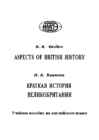
стран мира. 6 INTRODUCTION Aspects of British History presents a brief outline of the most significant milestones in the long and eventful history of Great Britain, such as the five successful invasions of the island, the birth of Parliament and transformation of an absolute monarchy into a constitutional monarchy, the origin of the English language, the rise and fall of the British Empire. The units contain an informative reading text on an important issue, preceded by preparatory discussion questions and followed by notes offering some additional information, and a vocabulary with relevant language notes. The main reading text is accompanied by comprehension, vocabulary and grammar exercises and discussion activities. Some of the units include reading passages.
English lexicology 1. Size of English vocabulary Vocabulary is a sum total of words used in a language by speakers or for dictionary-making. Active and passive vocabulary. The Old English vocabulary was homogenous. There were about 50 000 – 60 000 words, 1/3 of which have survived. o About 450 loans from Latin o About 2000 from the Viking invasions. The Middle-English vocabulary became a heterogeneous hybrid of Germanic and Romanic languages. 100 000 to 125 000 words. o About 10 000 loans from Norman French, 75% are still in use o Continuing Latin influence
Cultured but lusty court. Sexual hints flourished. Stimulated and fostered the stricter disciplines of poetic satire, which fed on contradictions, the ironies and hypocrisies of society. Sharpness of wit, degree of profanity (pühaduseteotus) or ribaldry (nilbus), cultivated laziness, ministerially abetted (õhutatud) twists of laws and distractions of his mistresses. John Wilmot, Earl of Rochester: writer of satirical and bawdy poetry. To a Lady in a Letter, Song, A Song Charles Sackville: The Advice, from the Latin Sir Charles Sedley: Song Dryden: 14. Restoration drama (Dryden, Etheridge, Wycherley, Congreve) Theatres closed in Civil War, resumed in altered society of Restoration, florishing after Puritan regime. Most famous: unsentimental or „hard” comedies of John Dryden, William Wycherley, and George Etheredge. Reflect atmosphere at court, celebrate an aristocratic macho lifestyle of constant sexual intrigue and conquest
In particular, I doubt that any of the objections to any of the theories is fatal; champions of theories are remarkably good at avoiding or refuting objec- tions. The real theorizing begins where this book leaves off. x Preface I have used some notation of formal logic, specifically the predicate calcu- lus, for those who are familiar with it and will find points made clearer by it. But in each case I have also explained the meaning in English. Many of the writings to be discussed in this book can be found in the following anthologies: T. Olshewsky (ed.), Problems in the Philosophy of Language (Austin, TX: Holt, Rinehart and Winston, 1969); J. F. Rosenberg and C. Travis (eds.) Readings in the Philosophy of Language (Englewood Cliffs, NJ: Prentice-Hall, 1971); D. Davidson and G. Harman (eds.), The Logic of Grammar (Encino, CA: Dickenson, 1975); R. M. Harnish (ed.) Basic
Officials were appointed (governors, procurators to collect taxes, look after the estates and mines and se that the gold, silver, iron and lead were exported back to Rome). Introduced schools,a new language Latin, large farms (villas), baths. In AD 410 they had to leave . roman occupation lasted nearly 400 years. They left behind very little. Roman province of Britannia covered most of present-day England and Wales. 4. Latin influence on English *The influence of Latin is noticeable also in the names of European cities: the Latin noun colonia (settlement, colony) may be found in numerous place-names: Lincoln, Colchester, Cologne ; from Latin word castrum (military camp) were derived English affixes -chester and -castle: Manchester, Lancaster, Newcastle; Latin word portus (seaport) in Portsmouth *-tor - person, doer, masculine form. The suffix is attached to the stem: victor (`winner', from the
UNO SOOMERE ESTONIAN SYMPHONIC MUSIC. THE FIRST CENTURY 1896-1996. AN OVERVIEW With a Historical and Cultural Summary IN MEMORY OF THE GREAT ESTONIAN COMPOSERS CONTENTS ESTONIA AND THE ESTONIANS FOREWORD IN THE FOLD OF TSARIST RUSSIA. EMERGENCE AND FIRST STEPS ON THE CLASSICAL-ROMANTIC PATH. HISTORICAL INTRODUCTION I. MUSICAL LIFE IN TARTU AT THE TURN OF THE CENTURY. TRAILBLAZERS: ALEKSANDER LÄTE, RUDOLF TOBIAS, ARTUR KAPP. II. THE FIRST DECADE OF THE 20TH CENTURY. ARTUR LEMBA: THE BEGINNING OF ESTONIAN SYMPHONY AND OPERA. III. NEW DEVELOPMENTS IN CULTURAL AND MUSICAL LIFE: THE END OF THE TSARIST PERIOD. THE INDEPENDENT REPUBLIC OF ESTONIA: THE INTRODUCTION OF INNOVATIONS FROM WESTERN ART AND THE EVOLUTION OF NATIONALLY ORIENTED MUSICAL TRENDS. IV. THE TWENTIES
(teach right from wrong) or ecclesiastical (biblical subject). Middle ages – English becomes a literary language. Geoffrey Chaucer (1343–1400) – Father of English literature, The Canterbury Tales in English, increased the prestige of the language, provided a standardised form. The Canterbury Tales: frame story. Majority in verse, some prose. Intended to contain 124 stories, only finished 24. Story: a pilgrimage to Canterbury Cathedral, where archbishop Thomas Becket had been murdered
It produces much more and much more trustworthy information than spies, and this intelligence exerts great influence upon the policies of governments. Yet it has never had a chronicler. It badly needs one. It has been estimated that cryptanalysis saved a year of war in the Pacific, yet the histories give it but passing mention. Churchill's great history of World War II has been cleaned of every single reference to Allied communications intelligence except one (and that based on the American Pearl Harbor investigation), although Britain thought it vital enough to assign 30,000 people to the work. The intelligence history of World War II has never been written. All this gives a distorted view of why things happened. Furthermore, cryptology itself can benefit, like other spheres of human endeavor, from knowing its major trends, its great men, its errors made and lessons learned. I have tried in this book to write a serious history of cryptology
I am _____ years old. How old are you? (formal) How old are you? (informal) ¿Hablas inglés? ¿Habla usted español? (No) Hablo... ah-blahs een-glehs ah-blah oo-sted eh-spahn-yol noh ah-bloh Do you speak English? Do you speak Spanish? (formal) I (don't) speak... (informal) ¿Entiende usted? / ¿Entiendes? (No) Entiendo. Yo (no lo) se. ehn-tyen-deh oo-sted / ehn-tyen- noh ehn-tyen-doh yoh noh loh seh dehs I (don't) understand. I (don't) know. Do you understand? (formal / informal)
Can find no occupation but a prude's. These pious dames, in their austerity, Must carp at everything, and pardon nothing. They loudly blame their neighbours' way of living, Not for religion's sake, but out of envy, Because they can't endure to see another Enjoy the pleasures age has weaned them from. MADAME PERNELLE (to Elmire) There! That's the kind of rigmarole to please you, Daughter-in-law. One never has a chance To get a word in edgewise, at your house, Because this lady holds the floor all day; But none the less, I mean to have my say, too. I tell you that my son did nothing wiser In all his life, than take this godly man Into his household; heaven sent him here, In your great need, to make you all repent; For your salvation, you must hearken to him; He censures nothing but deserves his censure. These visits, these assemblies, and these balls, Are all inventions of the evil spirit. You never hear a word of godliness At them--but idle cackle, nonsense, flimflam
Australia Fact file: Australia comprises a land area of 7 686 850 square kilometres. Its population is about 21,3 million people. Australia's capital is Canberra. The national language is English. The official name of it is the Commonwealth of Australia. It's divided into six states and two territories: New South Wales, Queensland, South Australia, Western Australia, Tasmania, Victoria, Australian Capital Territory (ACT) and Northern Territory. Symbols: Australia had the British flag as their official flag until 1901, when the Commonwealth of Australia was formed. Over 30 000 entries attracted the official competition
 annaabi.ee