Leidsid 33 sarnast õppematerjali, mis on seotud failiga "Michelangelo". Need materjalid aitavad sul teemat sügavamalt mõista.
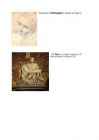
michelangelo, statue, paint, work, first, garden, ceiling, parents, father, wife, went, gardens, works, create, julius, ship, chapel, request, instead, fresco, simoni, italian, painter, poet, nobleirth, raisedrought, stone, carver, child, while, living, step, skills, serve, throughout, told, wanted, took, permitted, further, study, taught, followingin his later years, one of the principal exponents of Mannerism. He was born in 6 March, 1475 in Caprese, the son of the local magistrate, his family returned to Florence soon after his birth. During his life he lived in city's like Florence, Venice and Bologna in Tuscany, nowadays Italy. Later, during the prolonged illness and after the death of his mother, he lived as a stonecutter and his wife and family in the town of Settignano where his father owned a marble quarry and a small farm. Michelangelo once said to the biographer of artists Giorgio Vasari, "What little good I have within me came from the pure air of your native Arezzo and the chisels and hammers." Michelangelo's desire to become an artist was initially opposed by his father. After a period of grammatics studies with the humanist Francesco da Urbino, Michelangelo continued his apprenticeship in painting with Domenico Ghirlandaio and in sculpture with Bertoldo di Giovanni.
Himself His birth name was Michelangelo di Lodovico Buonarroti Simoni, but commonly known as Michelangelo. He was born on March 6th 1475 Caprese near Arezzo, Republic of Florence. Today, Caprese is known as Caprese Michelangelo. A young boy Michelangelo was sent to Florence to school. The young artist showed no interest in his schooling, preferring to copy paintings from churches and seek the company of painters. He was fantastically gifted. He died on February 18th 1564 in Rome, Papal States when he was 88 year-old. Michelangelo was an Italian sculptor, painter, architect and poet and engineer of the High Renaissance. He field sculpture, painting, architecture and poetry. He is the best-documented artist of the 16th century.
Michelangelo Buanarroti Katrin Jermoskin Mustvee Gymnasium Form 11 2010 Michelangelo di Lodovico Buonarroti Simoni 6 March 1475 18 February 1564 Italian Renaissance painter, sculptor, architect, poet, and engineer The second of 5 brothers Mother was Francesca Neri she died young Father was Ludovico di Leonardo di Buonarotti Simoni Childhood in Florence 1488 he got inspiration by painter Domenico Ghirlandaio 1489 he began to study sculpture under the protection of the Lorenzo Magnifico At this time(he was 16) he sculpted the reliefs Madonna of the Steps (14901492) and Battle of the Centaurs (14911492) 14931494 he studied human anatomy In 1496 (21 years old) he went to Rome, and did one
Because of the fact that they were all students they were also very young- the oldest one, Hunt, was 21. They were soon joined by William Rossetti(critic), James Collison(painter), Frederic Stephens (critic), Thomas Woolner(sculptor). The three youthful Pre-Raphaelites deliberately challenged the established view of art, drawing up a manifesto of their intentions and publishing them in the four issues of a periodical called "The Germ". They would paint direct from nature, with objective truthfulness and genuine ideas in sympathy with what was direct and heartfelt in the art of the past. The brotherhoods techniques came from the early Flemish art- especially Van Eyck. To imitate the work of great Italian artists the PRB-s studied the colours in nature. To have the effect of glowing colours they invented a new method called "wet white". It was very difficult and wasn't used a lot (except Hunt)
topics and enjoy culture. The message behind the Horatii impressed many important figures of that time, including Thomas Jefferson, who appreciated the message of patriotism and individual sacrifice on the painting. (Roberts, 1989, p.4, 5) In the Oath of Horatii David used a very popular story from mythology that captured the patriotism of men and at the same time the feeling of abandonment among the women. The legend tells the story of a noble father who gives swords to his three sons, who take an oath to fight for their country. Moreover, at the same time the wives of the three sons are in deep morning and represent the more delicate part of the legend and of the painting. (Roberts, 1989, p.18) The painting represents antiquity and Spartan and Roman heroic essence combined with a political content. (Friedlaender, 1952, p.17) The message of the Horatii was very much favored by the Academy for its heroic and instructive story
Arthur Conan Doyle Life Arthur Conan Doyle was born on 22 May 1859, in Edinburgh, Scotland, to an English father, Charles Altamont Doyle, and an Irish mother, Mary Foley, who had married in 1855.] Although he is now referred to as "Conan Doyle", the origin of this compound surname is uncertain. Conan Doyle's father was an artist, as were his paternal uncles (one of whom was Richard Doyle), and his paternal grandfather John Doyle. Conan Doyle was sent to the Roman Catholic Jesuit preparatory school St. Mary's Hall, Stonyhurst, at the age of eight. He then went on to Stonyhurst College, but by the time he left the school in 1875, he had rejected Christianity to become an agnostic. From 1876 to 1881 he studied medicine at the University of Edinburgh, including a
Lockwood Kipling, a sculptor, an illustrator, museum curator and pottery designer, was the principal and professor of architectural sculpture at the newly- founded Sir Jamsetjee Jeejeebhoy School of Art and Industry in Bombay. Later in life Kipling illustrated many of Rudyard Kipling's books, and other works. Kipling also remained editor of the Journal of Indian Art and Industry, which carried drawing works from the students of the Mayo School. COUPLE named their son after the place they had first met Rudyard Lake. Alice Kipling Fleming - Sister of British author Rudyard Kipling who became a well-known psychic, producing automatic writing under the name "Mrs. Holland." Born June 11, 1868, Alice Kipling was privately educated. She went to India at age 16 and married British army officer John Fleming. While in India she wrote a number of poems, and in 1893 initially experimented with automatic writing. After a
This is the period when monarchies based on nationality were estabilished. The Renaessance started in Italy In the 14th century. Then it spread all over Europe, reached England in 16th century. The struggle for power culminated in a war called The War of Roses. It was a civil war between two dynasties, families. They had different emblems on one side the Yorks (white rose) other Lancasters (red). They couldn't decide who gets the throne. War ended 1485. A new dynasty came to throne, Tudor, the first king in this dynasty was Henry Vll. When he came to throne a period of stability followed because he built a nation based state. He was good at diplomacy.He could avoid quarrels and wars with neigbouring countries. France, Spain - greatest enemies.So he could save much money and thus laid a good economic basis for his state. Besides that he built a merchant fleet (kaubalaevastik) England begun to dominate in international trade. Unfortunately the king got old and died.
Two kinds of football is played in Great Britain. One of them, which is called association football, is played all over Europe. The other kind: rugby football is also very popular in New Zealand, France, and some other European countries. English boys play it at school, and in public parks. When they grow up, they play as members of important amateur teams or as a professional in teams competing in football ,,leagues". Professional football is as much a business as a sport. Rugby football was first played in 1823. In rugby every player is allowed to carry the ball. The ball is oval, not round. Each team contains 15 players. The oldest game of football in England is probably the football match which takes place at Ashburn on Shrove Tuesday every year. The game starts in the centre of the town, and the distance between two goals is two miles. The only rule is not to use motorcycles, cars and lorries in the game. In 1958 one team buried the ball. The other team didn't know and ran after them
"Anna Karenina" Lev Tolstoi Part 1 The novel opens with a scene introducing Prince Stepan Arkadyevitch Oblonsky, "Stiva", a Moscow aristocrat and civil servant who has been unfaithful to his wife Darya Alexandrovna, nicknamed "Dolly". Dolly has discovered his affair - with the family's governess - and the house and family are in turmoil. Stiva's affair and his reaction to his wife's distress shows an amorous personality that he cannot seem to suppress. In the midst of the turmoil, Stiva reminds the household that his married sister, Anna Arkadyevna Karenina is coming to visit from Saint Petersburg. Meanwhile, Stiva's childhood friend
legacy of order. In Spain, everything works well, there is education, cleanliness, respect. We should follow their example." After his remarks caused an outcry in Spain, the Italian sought to distance himself from his comments, explaining that he was not praising totalitarianism. He said: "I just wanted to say that Spain is better that Italy in some respects and provide a political context. I would never dream of praising dictatorships. My father conceived me after having been imprisoned in Nazi concentration camps." Born in 1946 in a village in the northern Italian province of Gorizia, near the border with the then Yugoslavia, Capello insists a hardworking upbringing and the encouragement of his father to pursue his footballing dreams are the roots of his success. His father played for an Italian third division side and an uncle was so good that he played for the national side
õppis École des Beaux-Arts kunstikoolis (18971899). Aastatel 19021904 õppis Pariisis Academie Humbert'is. Georges Braque teenis Esimese maailmasõjas Prantsuse sõjaväes ja sai raskelt haavata. Ta kasutas maalis esimesena kirjatähti, imiteeris puu ja marmori faktuuri ning leiutas kollaazitehnika Robert Delaunay Robert Delaunay (12 April 1885, Paris 25 October 1941) was a French artist who used Orphism, which is similar to abstract art, abstraction and cubism in his work. Delaunay concentrated on Orphism, while his later works were more abstract, reminiscent of Paul Klee. His key influence related to bold use of colour, and a clear love of experimentation of both depth and tone. While he was a child, Delaunay's parents divorced, and he was raised by his uncle, in La Ronchère (near Bourges). He took up painting at an early age and, by 1903, he was producing mature imagery in a confident, impressionistic style.
PRESENTATION PRINCESS DIANA Diana, Princess of Wales was born on the 1st of July in 1961 and died on the 31st of August in 1997. She was a popular member of the British royal family and an international personality of the late 20th century. She was the first wife of Charles, Prince of Wales, whom she married on the 29th of July in 1981. The wedding, which was held at St. Paul's Cathedral, was televised and watched by a global audience of over 750 million people. Diana and Charles had two sons, Princes William and Harry. EARLY LIFE She was born at Park House, Sandringham in Norfolk, England. Her parents were John Spencer and Frances Burke Roche. She had two older sisters Sarah and Jane and a younger brother Charles. When
[1] Marley is best known for his reggae songs, which include the hits "I Shot the Sheriff", "No Woman, No Cry", "Three Little Birds", "Exodus", "Could You Be Loved", "Jammin'", "Redemption Song", and "One Love".[2] His posthumous compilation album Legend (1984) is the best-selling reggae album ever, with sales of more than 12 million copies.[2] Early life and career Marley was born in the small village of Nine Mile in Saint Ann Parish, Jamaica. His father, Norval Sinclair Marley, (born in 1895), was a Jamaican of English descent, with parents from Sussex. Norval was a Marine officer and captain, as well as a plantation overseer, when he married Cedella Booker, a black Jamaican then eighteen years old. Norval provided financial support for his wife and child, but seldom saw them, as he was often away on trips. Marley was ten years old when his father died of a heart attack in 1955 at age 60.
Chapter 17 Chapter 38 Chapter 58 Chapter 18 Chapter 39 Chapter 59 Chapter 19 Chapter 40 Chapter 60 Chapter 20 Chapter 41 Chapter 61 Chapter 21 Chapter 42 Chapter 1 It is a truth universally acknowledged, that a single man in possession of a good fortune, must be in want of a wife. However little known the feelings or views of such a man may be on his first entering a neighbourhood, this truth is so well fixed in the minds of the surrounding families, that he is considered the rightful property of some one or other of their daughters. "My dear Mr. Bennet," said his lady to him one day, "have you heard that Netherfield Park is let at last?" Mr. Bennet replied that he had not. "But it is," returned she; "for Mrs. Long has just been here, and she told me all about it
process. Consequently, they were attracted to the idea of democracy, where the government is "of the people, by the people, for the people," as Lincoln later expressed in his Gettysburg Address. Religious Tolerance: Much impetus for the ideas of religious tolerance came from the rule of King George II, who was a staunch Catholic and did not allow freedom of religion to Protestants in New England. Voltaire was among the first to denounce Christianity and other organized religions as mere ploys to support monarchy. What emerged was Deism, which was more or less a new religion that considered reason its foundation. In Deism, there is no interference by a deity, and man controls his own destiny. These ideas stirred the masses into action, as the people dreamed of carving their own futures. Adopted by the Founding Fathers, Enlightenment
Edward was the oldest son of Ethelred II (Ethelred the Unready http://en.wikipedia.org/wiki/Ethelred_the_Unready) and Emma of Normandy (http://en.wikipedia.org/wiki/Emma_of_Normandy). He wast he penultimate Anglo-Saxon king of England. The family was exiled in Normandy after the Danish invasion of 1013 so Edward spent the first part of his life in Normandy. He grew up in deep religious views and gained the nickname ''Confessor''. As Edward was seperated from his family and grew up in a strange land, it is said that his childhood wasn't a happy one. After Ethelred's death in 1016 the Danes again took control of England. The throne of England passed to Canute the Great. The new king married Emma
Leonardo Da Vinci We are making a presentation about Leonardo da Vinci. He was an Italian polymath and he had a wide range of interests including sculpture, science and painting. He is widely considered one of the greatest and most famous painters of all time. He was born on April 15th 1452 in a town called Vinci, that is also where he got his name from. Very little is known about his early life, but he spent his first five years with his mother and then moved together with his father. Leonardo had 12 half-siblings who were all much younger than him. Leonardo received an informal education in Latin, geometry and mathematics. At the age of 14 he joined a workshop held by an artist known as Verrocchio. There he painted his painting `'Baptism of Christ'', which first gained notoriety. Leonardo Da Vinci died in 1519 at the age of 67. Leonardo was and is primarily known as a painter. Among his other works, `'Mona
Taken at the Flood "There is a Tide" redirects here. "There is a Tide" is also the name of a short story by Larry Niven, set in the Known Space universe. Taken at the Flood is a work of detective fiction by British writer Agatha Christie, first published in the US by Dodd, Mead and Company in March 1948 under the title of There is a Tide...[1] and in the UK by the Collins Crime Club in the November of the same year under Christie's original title.[2] The US edition retailed at $2.50[1] and the UK edition at eight shillings and sixpence (8/6).[2] It features her famous Belgian detective, Hercule Poirot, and is set in 1946. 1 Plot summary In a flashback from late Spring to early Spring, Lynn
He spent his entire life advocating the brotherhood of all humankind. One of his favorite quotations was: "I would unite with anybody to do right and with nobody to do wrong." Life as a slave Frederick Augustus Washington Bailey, who later became known as Frederick Douglass, was born a slave in Talbot County, Maryland near Hillsboro. He was separated from his mother, Harriet Bailey, when he was still an infant. She died when Douglass was about 7. The identity of Douglass' father is obscure; Douglass originally stated that his father was a white man, perhaps his master, Captain Aaron Anthony, but later said he knew nothing of his father's identity. When Anthony died, Douglass was given to Mrs. Lucretia Auld, wife of Captain Thomas Auld. Mrs. Auld then sent Douglass to Baltimore to serve the Captain's brother, Hugh Auld. Early education When Douglass was 12 years old, Hugh Auld's wife, Sophia, broke the law by teaching him some letters of the alphabet
then I would like to get to know about the history of the United States. Area which USA covers. The United States of America is marked with green. 2 Symbols The national flag of the United States of America. The fifty stars on the flag represent the 50 states and the 13 stripes represent the original thirteen colonies that rebelled against the British monarchy and became the first states in the Union. Nicknames for the flag include the Stars and Stripes, Old Glory, and The Star-Spangled Banner. The flag of the United States is one of the nation's most widely recognized symbols. Within the U.S. it is frequently displayed, not only on public buildings, but on private residences. It is also used as a motif on decals for car windows, and clothing ornaments such as badges and lapel pins. Throughout the world it is used in public discourse to refer to the U.S
Frankenstein starts to recover from his exertion; he sees in Walton the same over-ambitiousness and recounts a story of his life's miseries to Walton as a warning. Victor Frankenstein's narrative Victor begins by telling of his childhood. Born into a wealthy family in Geneva, he is encouraged to seek a greater understanding of the world around him through science. He grows up in a safe environment, surrounded by loving family and friends. When he is around 4 years old, his parents adopt Elizabeth Lavenza, an orphan whose mother has just died (she is Victor's biological cousin in the first edition, but an adopted child with no blood relation in the 1831 edition). Victor has a possessive infatuation with Elizabeth. He has two younger brothers: Ernest and William. As a young boy, Victor is obsessed with studying outdated theories of science that focus on achieving natural wonders. He plans to attend the University of Ingolstadt in Germany. Weeks before his
About the profound areas of experience: love (romantic and sexual), man’s relationship with God. Brief but intense meditations, striking use of wit, irony and wordplay. John Donne: passionate feeling and logical argument are mixed, play of intellect, conceits (extended metaphors), wit, huge range of ideas with startling connections between them, analyses love with different moods (cynicism and profound dedication) The First Anniversary. An Anatomy of the World; The Flea; Love’s Alchemy; Elegy XIX To His Mistress Going To Bed; Holy Sonnets (9, X, XIV); Hymn To God My God, in My Sickness. Francis Quarles: emblem poems Canticle George Herbert: courtly urbanity of language, certain neatness and point, his wit „homely” (simple), sometimes queer, conceits in title. The Dawning; The Altar; The Collar; The Pilgrimage
buildings, roads Christianity in Roman Britain Until 4th C christians were persecuted 313 AD Emperor Constantine legalised christianity 380 AD Emperor Theodosius I made it the official religion of the empire Paganism had been eclipsed but continued to pose a political, religious challenge Boudicca Queen of Iceni people of Eastern England, led an uprising against Roman forces Prasutagus(ruler) was first allowed to rule when romans conquered England, after his death, romans decided to rule Iceni and flogged Boudicca and raped her daughters 60-62 AD Iceni rebelled, Boudicca´s warriors defeated Roman Ninth Legion, destroied capital-Colchester Finally Boudicca was defetated, she poisoned herself to avoid capture Hadrian´s wall A defensive barrier builtin 122 AD by Roman emperor Hadrian to guard the northern part of
Aga minu arvates, enne kui me isegi alustada nendele küsimustele vastamist, tuleks küsida palju olulisem küsimus: Mis on teadus? ] Science is no doubt with us today it surrounds our daily lives to such an extent that we now take it as a given. We expect science to be, to exist. Its effects and products touch the statesman and the soldier, the house husband and the grocer. Science has given us nylon, fluoride, latex paint as well as 747s, everfaster microchips and PEZ. But science has also given us fluorocarbons, heroin, nuclear waste, dioxin, sarin gas and the atomic bomb. Science can be a mixed blessing with much that is good comes much that is clearly bad. But, what do we mean by science? Science is faith. And the Gospel of that faith was written by Copernicus, Galileo, Newton, Darwin, Einstein and others. We are certainly not all scientists
between; although the more famous elements came during the Elizabethan period (1558 - 1603). Arguably, however, there was no Renaissance in England as it differed considerably to everywhere else. The dominant art forms of the English Renaissance were literature and music. Visual arts in the English Renaissance were much less significant than in the Italian version and had no real tie with the artistic achievements and aims of the northern Italian artists (Leonardo, Michelangelo, Donatello) who are closely identified with the Renaissance; and these art forms never went away during the medieval period and needed to be "reborn", they just took a step back during the Hundred Years War and the dynastic conflict of the Wars of the Roses. Music Music was an essential part of civic, religious, and courtly life in the Renaissance. The rich interchange of ideas in Europe, as well as political, economic, and religious events in the
tribes. The Celts built a number of hill forts throughout the region. The society was divided into warrior aristocracy, agricultural commons and the priests, the druids. *Caesar in Britain - Britain was very rich in minerals but that wasn't the main reason Caesar wanted to defeat it. He could clearly see that Britain was a threat to his latest and greatest conquest - France. He invaded Britain twice, in 55 and 54 BC. The first invasion was unsuccessful - it gained a beachhead on the coast of Kent but achieved little else. The second was more successful, the Celts asked for truce. However it wasn't a victory he had imagined and Julius Caesar never returned to Britain after that. The island was left undisturbed for nearly a century. *The Roman occupation of Britain 43-410 and its legacy Britain was conquered by Emperor Claudius, the Roman rule in England lasted up to 410. The Romans left behind a
He placed great importance on drawing; even when he had arthritis, he still was able to draw. After the Second World War, Moore's bronzes took on their larger scale, which was particularly suited for public art commissions. As a matter of practicality, he largely abandoned direct carving, and took on several assistants to help produce maquettes. By the end of the 1940s, he produced sculptures increasingly by modelling, working out the shape in clay or plaster before casting the final work in bronze using the lost wax technique. At his home in Much Hadham, Moore built up a collection of natural objects; skulls, driftwood, pebbles, rocks and shells, which he would use to provide inspiration for organic forms. For his largest works, he often produced a half-scale, working model before scaling up for the final moulding and casting at a bronze foundry. Moore often refined the final full plaster shape and added surface marks before casting.
well as a vigorous social campaigner. Considered one of the English language's greatest writers, he was acclaimed for his rich storytelling and memorable characters, and achieved massive worldwide popularity in his lifetime. Charles Dickens was born in Landport, Portsmouth in Hampshire, the second of eight children to John Dickens n 7 February 1812. The 12-year-old Dickens began working ten hour days in a Warren's boot-blacking factory. In May 1827, Dickens began work in the office of Ellis and Blackmore as a law clerk. At the age of seventeen, he became a court stenographer and, in 1830, met his first love, Maria Beadnell. Maria's parents disapproved of the courtship and effectively ended the relationship when they sent her to school in Paris. In 1834, Dickens became a political journalist, reporting on parliamentary debate and traveling across Britain by stagecoach to cover election campaigns for the Morning Chronice.
Noah and Oliver went down to get breakfast with Charlotte. Mr. and Mrs. Sowerberry during their own breakfast decide that because Oliver was such a nice looking, though melancholy, boy, he should be a made a mute. Later in the morning, Mr. Bumble comes with news of a woman who has died and needs a coffin. Mr. Sowerberry takes Oliver to the home of the dead woman, and Oliver sees what the profession that Mr. Sowerberry and the state chose for him was. He attends his first funeral and burial and decides that he does not like it, but Mr. Sowerberry tells him that he will get used to it in time. Chapter 6: Noah took a joy in making Oliver cry, and one day in attempt to do so, asked Oliver about his mother. Since his mother was a very sensitive subject to him, Oliver became upset. Noah continued to taunt him and insult his mother until Oliver snapped and attacked Noah. Noah surprised screamed and called out to Charlotte and Mrs. Sowerberry
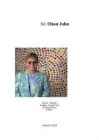
continues to be a champion for LGBT social movements. On 9 April 2008, John held a benefit concert for Hillary Clinton's presidential campaign, raising $2.5 million. In 2008, Billboard magazine released a list on which are present Hot 100's top 100 artists and Elton John reached #3, preceded by Madonna and The Beatles. John was born and raised in Pinner, Middlesex in a council house of his maternal grandparents, with whom his newlywed parents (Sheila Eileen (Harris) and Stanley Dwight) were living. Then they moved to a nearby semi-detached house. He was educated at Pinner Country Grammar School until the age of 15, before pursuing a career in the music industry. When John began to seriously consider a career in music, his father tried to steer him toward a more conventional career such as banking. He has stated that his wild stage costumes and performances were his way of letting go after such a restrictive childhood
American Art Revision Materials Colonial Period Portraiture. The first typically American paintings were illustrated maps but painting remained scarce during C17. There were 4 reasons: settlers came from backgrounds where art was unusual, Protestant attitudes was averse to imagery and painting, the English were not yet distinguished in visual arts and religious art was non-existent. The colonial period is almost entirely limited to portraiture (deemed as `useful' by settlers). These first paintings were made by limners and artisans without formal training and were based on what was popular in England during the Tudors. The paintings are technically unskilled, strongly patterned, flat and linear. Spanish painting in America was mostly religious. In C18, painting was a luxury and necessitated wealth that had by then become available. Portraitures remained at
American Art Revision Materials Colonial Period Portraiture. The first typically American paintings were illustrated maps but painting remained scarce during C17. There were 4 reasons: settlers came from backgrounds where art was unusual, Protestant attitudes was averse to imagery and painting, the English were not yet distinguished in visual arts and religious art was non-existent. The colonial period is almost entirely limited to portraiture (deemed as `useful' by settlers). These first paintings were made by limners and artisans without formal training and were based on what was popular in England during the Tudors. The paintings are technically unskilled, strongly patterned, flat and linear. Spanish painting in America was mostly religious. In C18, painting was a luxury and necessitated wealth that had by then become available. Portraitures remained at
 annaabi.ee