Leidsid 33 sarnast õppematerjali, mis on seotud failiga "Mercy kill as a way out". Need materjalid aitavad sul teemat sügavamalt mõista.
mercy, kill, punished, killing, person, live, other, usual, terminal, usually, choice, prefer, something, might, comes, controversial, could, lead, consequences, others, never, illness, experience, burden, hospital, peace, dignity, simply, freedom, choose, hand, thinking, value, amount, keep, alive, doctors, euthanasia, himself, wants, anotherShould mercy killing be punished? Mercy killing, also known as euthanasia, refers to the practice of intentionally ending a life in order to relieve pain and suffering. This type of killing is legal in some countries, but should it be punished instead? Although, it is still a type of killing, it is for a good cause. There are people who suffer and want to rather die than to endure agonies, euthanasia is an answer for them. Thus, mercy killing is very humane and reasonable thing to do and does not deserve punishment. The negative aspect of euthanasia is that it is still a form of killing. One should not be in judge over others life, even when it is for a good cause. The fact that euthanasia could be misused is not less important. In conclusion, although mercy killing is a form of taking someone’s life, it should not be punishable when it is for greater good.
http://en.wikipedia.org/wiki/United_States_v._Microsoft ) When we retell, we concentrate on the terms, not on the examples etc. NB! Märkmeid võib teha ja TÕLGI KINDLASTI ETTE ÄRA JUBA!!!!!!!!!!!! HOMEWORK - Academic writing Title Introduction Body conclusion Lõikude vahele 1 rida, taandrida ei jäeta! Argumendid millegi poolt, argumendid millegi vastu. Väldime I-vormi, vaid kasutame passive-vormi. Lõhikesi vorme ei kasutata! (don't) 150 sõna Teema "should mery-killing be punished?" HOMEWORK Terms to explain: Nation - a country, especially when thought of as a large group of people living in one area with their own government, language, traditions, etc: Stranger someone whom you do not know Citizen - a person who is a member of a particular country and who has rights and obligations because of being born there or because of being given them Penalty - a punishment for doing something that is against a law
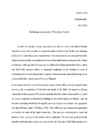
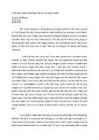
Should mercy-killing be punished? It is argued whether mercy-killing should be punished or not. Every human being deserves the right to life, but is it still so when it is not possible to live a normal life? To start with, it is not life when it is not possible to move or even talk. If a person is in coma and court and his family has given the permission, then mercy-killing should be acceptable. On the other hand, we all make mistakes including doctors. When the doctor says that she or he will never wake up it can never be 100% true. In other words, the doctor should pay his price for taking human life. To sum up, in author’s opinion mercy-killing should not be punished. If it is certified by court, his doctor and family then it is legal and maybe it will be a favor for all of them.
Public International Law is a system of law, different from domestic law. Why is this system unique? Usually law regulates relations between people, people and the state etc, PIL regulates relations between states. Thats why PIL is important for international relation students. PIL influences the life of everybody, it doesn't regulate people directly but indirectly (through the decisions of the states), because it's everywhere. It's like air. E.g. when you want to send a letter to Brazil, you put a stamp from your own country and send it from your post office and the letter gets delivered
Sandra Demitseva Capital punishment The opinions on capital punishment are usually based on justice and moral. There are people who believe that an ideal community should be merciful even to the ones who have not shown mercy, but there are also people who think that violating the rights of fellow members of the community, particularly if it happens consistently, should be punished as severely as the death sentence. Most Christians are firmly against capital punishment, because they believe that there is some good in every person, even if he does not show any regret for what he has done. Not all people are as mature as to have such forgiveness in them. On the other hand this type of forgiveness cannot be a groundsel for the larger community, because it requires that you should really know the person that is in question.
come to play an essential part in the evolution of consciousness of another species. Humans would increasingly be drawn to and fascinated by them. As the consciousness of human beings developed, flowers were most likely the first thing they came to value that had no utilitarian purpose for them, that is to say, was not linked in some way to survival. They provided inspiration to countless artists, poets, and mystics. Jesus tells us to contemplate the flowers and learn from then how to live. The Buddha is said to have given a “silent sermon” once during which he held up a flower and gazed at it. After a while, one of those present, a monk called Mahakasyapa, began to smile. He is said to have been the only one who had understood the sermon. According to legend, that smile (that is to say, realization) was handed down by twenty- eight successive masters and much later became the origin of Zen. Seeing beauty in a flower could awaken humans, however briefly, to
Capital Punishment Should (not) Be Abolished Capital punishment or the death penalty is the killing of the person as the punishment for offence. To get the capital punishment, you need to do a very serious crime, like homicide, or even more serious than that. The pros of a capital punishment are that if the person gets that punishment, he or she will never get a chance to do something that cruel again. Sometimes the criminals, who get a prison sentence, do something illegal again, after that punishment. Second pro is that it's cheaper for the country to kill the person, than to pay for his/her food and clothes for the rest of his/her life in the prison. Although the killing of the person also needs money, it's still way cheaper than to pay for at least 40 years for all the life needs in prison.
for a particular purpose. No warranty may be created or extended by sales representatives or written sales materials. The advice and strategies contained herein may not be suitable for your situation. The publisher is not engaged in rendering professional sevices, and you should consult with a professional where appropriate. Neither the publisher nor author shall be liable for any loss of profit or any other commercial damages, including but not limited to special, incidental, consequential, or other damages. For general information on our other products and services, please contact our Customer Care Department within the United States at (800) 762-2974, outside the United States at (317) 572-3993 or fax (317) 572-4002. Wiley also publishes its books in a variety of electronic formats. Some content that
but he caved under the pressure of the schoolmaster, Kantorek. His ugly, painful death shatters his classmates' trust in the authorities who convinced them to take part in the war. Detering - One of Paul's close friends in the Second Company. Detering is a young man with a wife and a farm at home; he is constantly homesick for his farm and family. Gérard Duval - A French soldier whom Paul kills in No Man's Land. Duval is a printer with a wife and child at home. He is the first person that Paul kills in hand-to-hand combat, one of Paul's most traumatic experiences in the war. Leer - One of Paul's classmates and close friends during the war. Leer serves with Paul in the Second Company. He was the first in Paul's class to lose his virginity. Haie Westhus - One of Paul's friends in the Second Company. A gigantic, burly man, Westhus was a peat-digger before the war. He plans to serve a full term in the army after the war ends, since he finds peat-digging so unpleasant.
sure of, and it is that individuals go against laws because they choose so, as criminal behaviour is a matter of choice. Today, there are many excuses cloaked as reasons for criminal behaviour. The misguided nature of these assertions has a serious impact upon crime control strategies. The classical approach holds people to choose freely among alternatives in behaviour. In this view, the perpetrator plans his or her actions before carrying them out. The social environment in which the person is amidst of, is a key factor in causes of criminal behaviour, with weak or broken bonds to family, school, and religion being the catalyst of criminal behaviour. They may not see the benefits of adhering to conventional social values and believe crime is a way to improve their social conditions. Personal choice weighs over and dominates the reasons of individual actions. Through rational conscious thoughts one may select the temptations of preference. One may think of
skeptical. 64. Abandon your ego to its fate. 65. Be a shit disturber--and don't stop when the shit talks back. 66. Be more tolerant of fools and less tolerant of knaves. 67. Defend your position or admit that you don't know. 68. Do not decide when to laugh. Laughter is a natural impulse; don't interfere with it. Only unfunny jokes are offensive. 69. Do not hoard good will. 70. Don't be in a hurry to "understand" other people's experiences. 71. Don't get involved in a fight unless you're willing to take the trouble to ascertain who's right and wrong. 72. Don't be lazy in classifying files or objects. Make your "miscellaneous" category as small as possible. 73. Don't take offense at being accused unless you're innocent. 74. Eschew mindlessness; embrace endlessness. 2 75
The making of a new nation. The Enlightenment in America. The emergence of the notion of the American Dream. The great Enlighteners: Crèvecoeur, Jefferson, Paine, Franklin. The American Enlightenment is the intellectual thriving period in the United States in the midtolate 18th century (17151789), especially as it relates to American Revolution on the one hand and the European Enlightenment on the other. Influenced by the scientific revolution of the 17th century and the humanist period during the Renaissance, the Enlightenment took scientific reasoning and applied it to human nature, society, and religion. American Enlightenment a gradual but powerful awakening that established the ideals of democracy, liberty, and religious tolerance in the people of America.
do it, enabled us to make significant changes. His work has enabled us to gain significant competitive differentiation and advantage" -LAURENCE HOF, Vice President, Relationship Consulting, Advanta Corporation "This will help executives make better decisions and use their influence wisely ... Robert Cialdini has had a greater impact on my thinking on this topic than any other scientist." -CHARLES T. MUNGER, Vice Chairman, Berkshire Hathaway, Inc. If you're wondering why of Latin America, the Far East, and Central Europe. you should buy this new edition of Influence: o More neuroscience evidence of how the influence process works is inte-
suppress. In the midst of the turmoil, Stiva reminds the household that his married sister, Anna Arkadyevna Karenina is coming to visit from Saint Petersburg. Meanwhile, Stiva's childhood friend Konstantin Dmitrievich Levin ("Kostya") arrives in Moscow with the aim of proposing to Dolly's youngest sister Princess Ekaterina Alexandrovna Shcherbatskaya, "Kitty". Levin is a passionate, restless but shy aristocratic landowner who, unlike his Moscow friends, chooses to live in the country on his large estate. He discovers that Kitty is also being pursued by Count Alexei Kirillovich Vronsky, an army officer. At the railway station to meet Anna, Stiva bumps into Vronsky. Vronsky is there to meet his mother. It surmises that Anna and the Countess Vronskaya have travelled together in the same carriage and talked together. As the family members are reunited, and Vronsky sees Anna for the first time, a railway worker accidentally falls in front of a train and is killed
Unit 4 HEALTH AND CARE 17.conventional medicine n - the usual form of medicine Language Leader Advanced practised in most European and North American countries [= western medicine] tavameditsiin 1. alternative medicine ['meds()n] n - medical 18.cough v - [kf] to suddenly push air out of your throat treatment that is not based on the usual western with a short sound, often repeatedly: Matthew methods: Acupuncture is widely used by practitioners coughed and cleared his throat. köhima of alternative medicine. 19.discharge v - to officially allow someone to leave 2. anonymous ['nnims] adj - unknown by name: Our somewhere, especially the hospital or the army, navy client prefers to remain anonymous
Capital punishment Capital punishment is the killing of a person by judicial process as a punishment for an great offence. It has been used in almost every part of the globe. There is an international organisation called Amnesty International who are fighting for human rights. Thanks for them there are many countries who abolished it. But is it right or should capital punishment exist? Firstly I belive capital punishment should exist because if you gonna take somebody's life it is only fair when you pay for this with your own life
hypothetical situations can hardly relate to real situations. The ticking bomb argument looks at the hypothetical case where a leader of a state is asked to give their permission to torture a captured rebel leader because he (probably) knows the locations of a few explosives that are spread around the city in different apartment buildings. In case they are not found within 24 hours, they will explode and many will be left dead (Walzer, 1973). Is it justified to torture this person to find out where the bomb is? This essay will look in to how it has according to the thinkers in the strand of consequentialism / utilitarianism been labelled justifiable to use torture techniques in combating terrorism and will present the reasons for why this controversial behaviour that democratic governments have been proven to conduct and still are being accused of until the current day is irrational and dangerous. Theoretical justification of torture
5 (possible answers) she was my age and apart from the 1 1 go ahead 5 come to eighties hairstyle we're the spitting 1 Well, you will go to bed late every night. 2 fall through 6 bring about image of each other! Some people 2 Well, you will refuse to wear a 3 tip off 7 go down with say that they can see a strong family coat. 4 mistake for 8 come up with resemblance between my dad and me.
the riche and mighty should not eate upp the poore nor the poore and dispised rise upp against and shake off theire yoake” (Winthrop, 1996). These differences give humans the opportunity to manifest the work of the Spirit within them. The poor are recommended be loyal and honest in their worship to their betters and to authorities. The rich and powerful should honestly and loyally share justice and mercy to the poor. Because of that God’s ignition is to have these different types of people come together as one religious community that serves both God and one another through their different strengths. The element “love” is subjected through the Bible again, referencing to the sin of Adam’s. Another way of defining this element is expressed as following:“might be all knitt more nearly together in the Bonds of brotherly affection.”(Winthrop, 1996) Also, this can be looked
giant of Africa. In the last 32 years, I have watched with horror and outright helplessness as the downward slide of the African race continues to escalate. But rather than address the problems, we resort to blaming the Caucasians, Asians and others for our misfortune. We are not men enough to accept responsibility for our actions. Africans blame either the British, French or little Portuguese/Spanish for their problems. Africans in America blame the Caucasians for all their problems, or any other ethic group they have allowed to take over their neighbours, a frequently recurring phenomena. Africans blame the International Monetary Fund, the World Bank, the Group of 7, the former colonial masters for the abject poverty in our respective countries. We blame the wars ravaging several African sectors on the interference of our former colonial masters on “our internal affairs.” Ha! – some kind of independence!
Only persons whose names are on the medial register can parties as doctors in the NHS. The minimum qualification for registration requires, for a doctor 5 to 7 years' training in the medical school and hospital, for a dentist 4 years at a dental school. 4. Diseases Today many diseases are well known and can be cured. Such diseases are flu, pneumonia, bronchitis, quinsy, measles and many others. But besides falling ill with one of those diseases, you may hurt yourself in many other ways. You may sprain your ankle, break your leg, cut your finger of graze your knee. You may also have a nosebleed or a heart attack Quite a number of diseases are infectious. We can get these diseases from people already ill with the disease or infected food or animals. Most common infectious diseases are such children's diseases as measles, mumps, scarlet fever and chicken pox. Some diseases have become more rare because children and grown-ups can be
beacuse a tired body cannot resist illnesses. Our health also depends on the clothes we wear. In winter, when it is cold, we should wear warm clothes. Then our clothes keep in the body's heat and in summer they should let it escape. Loose clothing is better than tight clothing beacause it allows the wearer to move about more easily and does not interfere with the circulation of the blood. Being clean is also very important. We feel and look better if we are clean. A person should have a shower a day to keep himself clean. Keeping oneself clean includes brushing our teeth. What we eat also affects our health. Our body needs vitamins and minerals, fats, proteins and carbohydrates. Our food should be varied. It is not healty to eat too much sweets. When we eat more food and get more calories than our body uses, we get fat. It is also good for our health to drink a few glasses of fresh water every day.
It is ability to influence others to do something they otherwise would not. Also, others can be affected with threats and force. (Kilp, 2010) Political power includes also right to force the others and to punish them if they disobey. Who should have that kind of power? Actually the political power is quite mysterious by itself. If someone has legitimate political power over me then he or she has a right to force me to do things that they want.(Wolff, 1996) But how can other person have rights to tell me what I have to do? It feels insulting if someone says to me what I have to do especially if he or she thinks that he or she has a right to punish me if I disobey. But of course there is a different view. We need to think about, how will the others behave if they were not held back by laws. If we think about it then there might be a lot to say about the importance of political power. (Wolff, 1996) Nature condition
/ wicce f.) is a practitioner of witchcraft. Historically, it was widely believed that witchcraft involved the use of these powers to inflict harm upon members of a community or their property, and that all witches were in league with the devil. Since the mid 20th century, the term witchcraft has sometimes been used to distinguish between bad witchcraft and good witchcraft, with the latter often involving healing. Human misfortune was often blamed on a supernatural entity or a known person in the community. Reasons for accusations of witchcraft fall into four general categories: · A person was caught in the act of positive or negative sorcery · A well-meaning sorcerer or healer lost their clients' or the authorities' trust · A person did nothing more than gain the enmity of their neighbours · A person was reputed to be a witch and surrounded with an aura of witch-beliefs
Why do we need morality? As an English philosopher Thomas Hobbes (1588-1679) said, all humans are made equal in mental and physical abilities. This does not mean that all of us are equally strong, smart or beautiful, but that everyone has the ability to damage or kill the other. The main goals, we all want to achieve, are having a shelter, security, power, wealth and enough food. This means that people are constantly competing with each other and that makes all of us (who desire the same things) enemies. Hobbes names the insecurity and fear people feel towards each other a "state of nature". In this state there are no moral rules or enforced laws, also no justice or injustice. People, being violent and arbitrary, will only follow their own interest. So without laws and boundaries, people would be in constant war - every man for himself. In this kind of society there is no time for cultural or industrial development.
g. law of gravity Prescriptive law – prescribe how people ought to behave e.g. speed limits In all societies relations between people are regulated by prescriptive law; customs (informal rules of social and moral behaviour); rules we accept if we belong to a particular institution (religion, organization); laws imposed on people by a government Penalties for breaking the rules are different. For not following the customs there may not be a punishment, or a person may be criticized by the society; rules of a social institution tend to carry precise penalties but they are not enforceable by any political authority; however governments use a system of courts backed by the power of the police to enforce the laws they have made. The relations between people are regulated by a combination of all these rules. One of the ways to classify laws is to separate them into prescriprive and descriptive law. Descriptive laws simply describe how people usually behave
_ 5 I _________________________________ (start) work at 8.30 every morning. _ 6 He is a good cook but she _________________________________ (prefer) to eat out. _ 7 English tests _________________________________ (get) more and more interesting. _ 8 They _________________________________ (have) a party because it's her birthday. _ 9 I sometimes _________________________________ (ride) my bicycle to school. 10_ She usually _________________________________ (go) to the gym on Friday evenings. Marks: /10 2 Choose the correct tense (present simple or present continuous) in these sentences. 1 How do you usually start/are you usually starting your day? _____________________________________ 2 What time do you go/are you going to bed at weekends? _____________________________________
I should belie my feelings not to say so. His actions rouse my wrath at every turn; And I foresee that there must come of it An open rupture with this sneaking scoundrel. DORINE Besides, 'tis downright scandalous to see This unknown upstart master of the house-- This vagabond, who hadn't, when he came, Shoes to his feet, or clothing worth six farthings, And who so far forgets his place, as now To censure everything, and rule the roost! MADAME PERNELLE Eh! Mercy sakes alive! Things would go better If all were governed by his pious orders. DORINE He passes for a saint in your opinion. In fact, he's nothing but a hypocrite. MADAME PERNELLE Just listen to her tongue! DORINE I wouldn't trust him, Nor yet his Lawrence, without bonds and surety. MADAME PERNELLE I don't know what the servant's character May be; but I can guarantee the master A holy man. You hate him and reject him Because he tells home truths to all of you.
Ameerika Kirjandus 30.01.13 Naturalism · France, Emile Zola · Put down his theory in 1879: Le Roman Experimental, attempt to explain the development of human society throuch biological laws · Outlook is deterministic, pessimistic, fatalistic (fate or biology) · Man as an animal-clever than other beasts, still explainable within the framework · Man is not a free agent, is govern by something · Unable to determine his own faith · Hereditary · Naturalists tried to apply in fiction the processes of natural sciences · Writers task is to record facts, systems of behaviour, living conditions, never revealing any natural unbiased (completely natural) · Point of view: amoral-outside the category of morality, neither good or bad
Teacher: O'Mahony V.PG 11A 09.03.2009 This written essay here is talking about my thoughts and facts of life, what is around us. First I thought that why is always easier to create something but to destroy is much harder. Exactly there have been so many wars in history. Everybody wanted to own a lot of countries and others had to fight for their created country. Also they started to teach young people to kill and protect their country with killing enemies. Also government tried to keep a low profile, if there were some wars in state. These are my thoughts of creating and keeping something. In the old times were many wars. Some states predominated over other weaker countries or states. Weaker countries had created their own and loved country and they wanted to live like that for a long time. But also stronger countries wanted to broaden their boards and become bigger than other strong states
hüüab mu suu, ära tõota mulle, et armastad mind, kui ei ole valmis ohverdama end. Luba, et printsess jääb printsiga, kuni nad veel siin ilmas elavad. Unustame hetkeks kõik muu me, tunnetame üksteise kiireid südamelööke, kas tunned, kuidas süda jätab lööke vahele, see kõik on midagi uut, meile kahele. · Women are stronger than men, because they can walk in a 12 cm stilettos without showing the pain. · Men would kill to protect women they love. Men were born because of women. Women.. We're special · It doesn't matter where, when, or how did we met. What matters is the fact that we did. · Loving someone so much doesn't always mean they're right one for us. · Wishes are for lazy people who can't get up and make their dreams come true on their own. Make it happen! · It's easy to say something, but it's harder to mean it. · Distance isn't a big factor in a relationship. Communication is
Where do I want to go? What would I most like to be doing right now? Where would I like to be? Who would I most like to be with? What are my dreams for the future? What do I intend to do to achieve these dreams? What will I be doing ten years from now? How does this university fit in my plans for the future? You can also brainstorm using the following questions: What might help the evaluating committee in understanding me better? What distinguishes me from other applicants? What are my career aims? What skills do I possess that would improve your chances for success in this field? What has stimulated my interest in this field of study? Why should an admissions committee be interested in me? Why am I interested in this field? 1 Some other topics are suggested below to stimulate your thinking: The most memorable experiences
Chapter 21 Chapter 42 Chapter 1 It is a truth universally acknowledged, that a single man in possession of a good fortune, must be in want of a wife. However little known the feelings or views of such a man may be on his first entering a neighbourhood, this truth is so well fixed in the minds of the surrounding families, that he is considered the rightful property of some one or other of their daughters. "My dear Mr. Bennet," said his lady to him one day, "have you heard that Netherfield Park is let at last?" Mr. Bennet replied that he had not. "But it is," returned she; "for Mrs. Long has just been here, and she told me all about it." Mr. Bennet made no answer. "Do you not want to know who has taken it?" cried his wife impatiently. "You want to tell me, and I have no objection to hearing it." This was invitation enough. "Why, my dear, you must know, Mrs
 annaabi.ee