Leidsid 33 sarnast õppematerjali, mis on seotud failiga "Mardi Gras". Need materjalid aitavad sul teemat sügavamalt mõista.
mardi, gras, orleans, year, french, tradition, carnival, festival, before, other, alexis, throw, parade, tuesday, days, through, them, king, royal, grand, duke, colors, meaning, spring, important, role, final, season, easter, louisiana, masked, became, throne, later, person, romanov, even, chosen, outs, traditional, something, mister, colours, purpleMardi Gras Ursula 10. kl Mardi Gras A Christian holiday and popular cultural phenomenon, Mardi Gras dates back thousands of years to pagan spring and fertility rites. Mardi Gras can occur on any Tuesday from February 3 through March 9. It is always scheduled 47 days preceding Easter (the 40 days of Lent, plus seven Sundays). Mardi Gras, also known as "Shrove Tuesday", "Pancake Tuesday" or "Fat Tuesday" is celebrated all over the world with fun, games, and a lot of eating. The official colors of Mardi Gras are purple, green and gold. Purple represents justice, green stands for faith, and gold signifies power. There is no general theme for Mardi Gras, but each individual parade depicts a specific subject. Among the more popular subjects have been history, children's stories, legends, geography, famous people and entertainment.
They had mistresses who were Black or mulatto, but they couldn't marry them. Having a mistress was an accepted custom because marriages were usually business arrangements, not for love, and the men expected their wives to be passive and innocent lovers. Men took fencing lessons, went horseback riding, dancing, or played cards. He would fight duels if necessary and preferred to die rather than be dishonored. Girls needed a dowry and had to marry before they were twenty-five years old. They usually had a "coming out" during an evening at the Theatre d'Orleans, which marked the beginning of their search for a husband. The whole family attended the performance and sat in a box. Young men who were interested in the girl stopped by the box to pay their respects. They had intermediaries talk to the father and ask if they would be permitted to call on the girl at home. The first formal visit was brief, with the girl's
hunted animals, birds, fish. Vikings were great traders in town markets. JORVIK typical Viking town 9th c. V. moved to the islands of Shetland, Orkneys, the Hebrides, Ireland Sutton Hoo near Woodbridge, Suffolk, England, is the Anglo-Saxon burial place from the 6th century and early 7th century, which was found in 1939. The wooden ship, which was buried there, contained lots of armour, weapons, jewellery, symbols of power and other treasures, but no bodies were found. 10. Roman conquest In the 1st c. BC the Roman Empire began to make contact with Britain (wine, pottery, small bronze statues) Julius Caesar's first raid was in 55 BC (the troops were afraid of the sea crossing) In the following year he invaded again, this time he marched inland In AD 43 the Emperor Claudius decided the full-scale invasion (army of 40,000 men) The Roman occupation lasted nearly 400 years.
Just as July becomes August, the seaside town of Haapsalu will host a grand spectacle of rural Estonian entertainment. The White Lady Days is a summer celebration filled with amusement for all the family. Held in and around the remains of the Teutonic-knights-era castles, the fair combines enchanting medieval legends with modern countryside charm to create a comprehensive experience of Estonia beyond the big cities. But the legend of the White Lady of Haapsalu, which is at the heart of the festival, is perhaps the most famous tall tale of the many that are so abundant in Estonia's folklore. It is the story of a poor girl who falls in love with the son of the village elder, and disguises herself as a choirboy in order to sneak into the castle. But, alas, the lord of the manor's son discovers the deception. He is overcome by jealous rage and orders his men to seal the girl inside the thick stone walls while still alive. Turned into an incarnation
come to see them. Some of them are even like symbols of England. The most famous ones are: Stonehenge is one of the greatest national icons of Britain. That prehistoric monument is located in the plain of Salisbury, in the county of Wiltshire in the south-west of England. It is built of 150 enormous stones which are set in a purposive circular pattern. Stonehenge was probably built to mark the longest and shortest day of the year because it lies on the line of the midsummer sunrise and the midsummer sunset. That would have enabled people to keep a record of changing of seasons. Although it is still unclear who built it. Hadrian’s Wall is an ancient wall which was built in 2nd century by Hadrian, the emperor of Rome from AD 117 to 138, and it marked the northern border of the Roman Empire in Britain. The wall was 80 Roman miles (117 kilometres) long and it is situated in northern
And the paintings and carvings are increaslibly falling victim to vandalism: they have been painted over, spoilt with knives, even used for target practice. The American Rock Art Research Association protects rock-art sites. 2) THE FAVOURITE SPORT IN BRITAIN The most popular sport is probably football. Two kinds of football is played in Great Britain. One of them, which is called association football, is played all over Europe. The other kind: rugby football is also very popular in New Zealand, France, and some other European countries. English boys play it at school, and in public parks. When they grow up, they play as members of important amateur teams or as a professional in teams competing in football ,,leagues". Professional football is as much a business as a sport. Rugby football was first played in 1823. In rugby every player is allowed to carry the ball. The ball is oval, not round. Each team contains 15 players
Japanese festivals Japanese festivals are traditional festive occasions. Some festivals have their roots in Chinese festivals but have undergone dramatic changes as they mixed with local customs. Some are so different that they do not even remotely resemble the original festival despite sharing the same name and date. There are also various local festivals (e.g. Tobata Gion) that are mostly unknown outside a given prefecture. It is commonly said that you will always find a festival somewhere in Japan. Matsuri is the Japanese word for a festival or holiday. In Japan, festivals are usually sponsored by a local shrine or temple, though they can be secular. There is no specific matsuri days for all of Japan; dates vary from area to area, and even
Antigua and Barbuda, and Saint Kitts and Nevis. In 1947 she married Prince Philip, Duke of Edinburgh, with whom she has four children: Charles, Anne, Andrew, and Edward. In 1992, which Elizabeth termed her annus horribilis ("horrible year"), Charles and Andrew separated from their wives, Anne divorced, and a severe fire damaged part of Windsor Castle. Revelations continued on the state of Charles's marriage to Diana, Princess of Wales, and they divorced in 1996. The following year, Diana died in a Paris car crash, and the media criticised the royal family for remaining in seclusion 4 in the days before her funeral. Elizabeth's personal popularity
or Holland Park Flower Show, or even the Wembley Flower Show had events worked out differently. The first Royal Horticultural Society (RHS) Great Spring Flower Show at Chelsea opened in May 1913, although, confusingly, there was another May flower show the Royal International Horticultural Exhibition held at the Royal Hospital in 1912. This one off event was backed but not run by the RHS, which cancelled its own Great Spring Show for that year. The RHS Great Spring Flower Show had normally been based at the Inner Temple in the hart of London, but in 1913 RHS had idea of moving the Show to Holland Park. They thought that the Show was becoming too big for the Inner Temple site. Anyway it stayed in first place. July 1912 the RHS President Sir Trevor Lawrence had met Major General Crutchley Of the Royal Hospital at Chelsea, and the two began to talk about a 14-day reservation of the gardens and a 14-year agreement
Paterson, New Jersey, selling the traditional Italian sandwiches there. He had brought the recipe from Italy. According to Zuccar, her grandfather first used the term when she was 16 years old at the time, when he went to see the first experimental 14-foot submarine called Holland I, and said: “It looks like the sandwich I sell at my store.” As is known, there are a number of regional words for this type of sandwich. What are they, and where are they used? There are quite a few other terms for the “submarine sandwich”, including: Heros – used in New York Grinder – used in New England Po' Boy and Poor boy – used in St. Louis and Louisiana Rocket – used in various areas Gatsby – used in Cape Town, South Africa Cosmo (Cosmopolitan) – used in North Central Pennsylvania near Williamsport Zepplin or Zep – used in eastern Pennsylvania Italian Sandwich or simply Italians – used in Maine Hoagie – used in Philadelphia Torpedo – used in New York and New Jersey
1. The Queen’s official title. Elizabeth the Second, by the Grace of God, of the United Kingdom of Great Britain and Northern Ireland and of Her other Realms and Territories Queen, Head of the Commonwealth, Defender of the Faith. 2. The Queen’s working day. Starts after breakfast. Reads the newspapers which are prepared by the Press Secretary, and a report on the previous day’s proceedings in the Parliament and the letters she receives. Also phone calls. Once a month she attends the Privy Council in order to give Royal Assent to various items of government legislation.
associated with the coronation of English kings since the time of Edgar. William had gained his throne by accepting the English form of coronation, William emphasised his claim to be legitimate successor to Edward the Confessor. William I was a strong king and a man of immense determination. He was stern to people who opposed his will, but kindly disposed to those who did not. William saw England as an extension of his French domains. He dispossessed nearly all the Anglo-Saxon nobles of their lands, and put Normans in their places. These men discouraged rebellion by building strong castles throughout the country, especially in Wales. In return for their land, William's barons had to perform certain services. They and their bishops had to perform certain services. They and the bishops served as members of William's Council, which replaced the Anglo-Saxon Witan. The barons also had military
members of the Faithful. Priests, deacons and lay ministers cooperate and assist their bishop(s) in shepherding a flock. Vicar/ priest is a representative, deputy or substitute; anyone acting "in the person of" or agent for a superior (compare "vicarious" in the sense of "at second hand"). Linguistically, vicar is cognate with the English prefix "vice", similarly meaning "deputy". Minister In Christianity, a minister is someone who is authorized by a church, or other religious organization, to perform functions such as teaching of beliefs; leading services such as weddings, baptisms or funerals; or otherwise providing spiritual guidance to the community. The term is taken from Latin minister ("servant", "attendant"), which itself was derived from minus ("less").[1] In Catholic churches, the concept of a priesthood is emphasised. In Protestant churches, the title usually refers to a member of the ordained clergy who leads a congregation or participates in a
comparative linguistics, language typology, psycholinguistics, sociolinguistics; applied linguistics including speech and text processing, quantitative linguistics, modern applied linguistics). History of the Department Russian philology was not studied as an independent academic discipline until 1945, yet from the very beginning of the faculty's existence there were courses in Russian studies on offer for students of Slavic studies. In the 1922/1923 academic year, an independent Section of Russian Language and Literature was founded within the School of Slavic Studies. The section was, from its foundation until 1945, headed by Valerij Alexandrovic Pogorielov. In 1945 another member of the post-revolutionary wave of Russian emigrants, Prof. Alexander Vasilievic Isacenko, was appointed Professor in Russian Philology. In 1946 Prof. A. V. Isacenko became the director of the newly established School of Russian, which transformed itself into the
London History The Romans AD 43- AD 410 The Romans finally invaded Britain in AD 43 from Kent. The Romans lead by Julius Caesar attempted to invade Britain twice before that in 55 and 54 BC but the invasions were unsuccessful. They made their way to the river Thames and sailed up it. The Romans knew it was important to control a crossing point at the river Thames, so they decided to build a settlement on the north bank. Although small settlements had been built on the banks of the Thames, the Romans were the ones who built the first city. They called their city Londinium. The Roman engineers noticed that the point where the swampy river narrowed would make an
What is the same and what is different about the way Christmas is celebrated in England and Estonia? In England, there's common to sing Carol's and for children, Christmas means pantomimes plays based on fairy tales which combine comedy, dance and song. A traditional Christmas dinner includes roast turkey with roast potatoes, a range of vegetables, cranberry sauce etc., followed by Christmas pudding and Christmas cake. The pulling of crackers(and the wearing of paper hats) before the meal is quite popular. Afterwards many watch the Queen's traditional Christmas address on TV at 3 pm. Christmas actually contains of 3 days: Christmas Eve, Christmas Day and Boxing Day. The latter is the first day after Christmas or the first Monday after Christmas if Christmas is on Friday or Saturday. 3. What is the same and what is different about the way Easter is celebrated in England and Estonia? Easter lasts for 4 days in Britain: from Good Friday to Eas-ter Monday
Some of the things you will learn in THE CODEBREAKERS • How secret Japanese messages were decoded in Washington hours before Pearl Harbor. • How German codebreakers helped usher in the Russian Revolution. • How John F. Kennedy escaped capture in the Pacific because the Japanese failed to solve a simple cipher. • How codebreaking determined a presidential election, convicted an underworld syndicate head, won the battle of Midway, led to cruel Allied defeats in North Africa, and broke up a vast Nazi spy ring. • How one American became the world's most famous codebreaker, and another became the world's greatest.
He is said to have exclaimed ,,Will no one rid me of this turbulent priest?" 4 knights killed Becket on the altar steps. The murder shocked. The Pope made Becket a saint. Canterbury became a shrine. Henry himself made a pilgrimage to Canterbury, walked barefoot through the town and was flogged by bishops at his request. In the end Henry quarrelled with his beautiful & powerful wife, his sons took Eleanor's side. In 1189 Henry died a broken man, disappointed & defeated by his sons and the French king. He was followed by his rebellious son, Richard. Although he spent little time in England (6 months of his 10-year reign), he was one of England's most popular kings. He was brave, a good soldier, but his nickname ,,lion-heart" shows that his culture was French. He died in 1199. He had no son. His brother John followed. King John is often regarded as the worst king England has ever had (unpopular, greedy). He
Anglia, Essex, Kent, Sussex and Wessex. The period supposedly lasted until the kingdoms began to consolidate into larger units, but the actual events marking this transition are debatable. *St Patric and the Christianization of Ireland was a Christian missionary and is the patron saint of Ireland. Legend says that Patrick tought the Irish about the concept of the Trinity by showing people the shamrock, a 3-leaved clover. The christianization of Ireland began in the fourth century AD, before the arrival of St Patrick, but it was not until Patrick arrived that Christianity was firmly planted. He was a leader of deep piety, humility, simplicity and unselfish devotion. *St Columba and the Irish Christian mission to Iona Columba, who had the potential to become a king in Ireland, instead, chose to give his full service to the mission of God. Columba is credited as being a leading figure in bringing the living in monasteries into life again
The basic ingredients, when fresh, are so full of flavour that British haven't had to invent sauces to disguise their natural taste. What can compare with fresh pees or new potatoes just boiled and served with butter? Why drown spring lamb in wine or cream and spices, when with just one or two herbs it is absolutely delicious? If you ask foreigners to name some typically English dishes, they will probably say "Fish and chips" then stop. It is disappointing, but true that, there is no tradition in England of eating in restaurants, because the food doesn't lend itself to such preparation. English cooking is found at home. So it is difficult to a good English restaurant with a reasonable prices. In most cities in Britain you'll find Indian, Chinese, French and Italian restaurants. In London you'll also find Indonesian, Mexican, Greek... Cynics will say that this is because English have no "cuisine" themselves, but this is not quite the true. Vocabulary: to criticize - tasteless
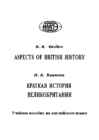
the rise and fall of the British Empire. The units contain an informative reading text on an important issue, preceded by preparatory discussion questions and followed by notes offering some additional information, and a vocabulary with relevant language notes. The main reading text is accompanied by comprehension, vocabulary and grammar exercises and discussion activities. Some of the units include reading passages. The book is intended for university and school students as well as other English learners wishing to acquire more knowledge about the country whose tongue became the world’s leading language, and which is considered as the Mother of Parliaments. 7 UNIT 1 THE ISLAND Pre-reading questions What is the name of the island group Britain belongs to? Where is it situated? What seas surround it? What kind of climate do you think Britain has? What is its surface like?
The natural course of the river flows into the Gulf of California, but the heavy use of the river as an irrigation source for the Imperial Valley has desiccated the lower course of the river in Mexico such that it no longer consistently reaches the sea. The Tennessee River is the largest tributary of the Ohio River. It is approximately 1049 km long and is located in the south-eastern United States in the Tennessee Valley. The river was once popularly known as the Cherokee River, among other names. The river has been dammed numerous times, primarily by Tennessee Valley Authority projects. The Ohio River is the largest tributary by volume of the Mississippi River. It is approximately 1,579 km long and is located in the eastern United States. The river had great significance in the history of the Native Americans. It was a primary transportation route during the westward expansion of the early U.S. It flows through or along the border of six states, and its watershed
western Scotland, until 10 c Mysteriously disappeared Constantly fought with Romans Teir country- Caledonia- Pictland The Scots, Hibernia Raiders, Celts living in Ireland/Hibernia Migrated to Scotland Raided Roman Britain After Kenneth McAlpin united Scotland all inhabitants became Scots The Venerable Bede A monk in the Northumbrian monastery of Jarrow In 731 ,,The Great Ecclesiastical History of the English People"- overshaows all other sources of 7th, early 8th C Well-founded scraps of tradition, first work of history, where AD system is used Angles, Saxons, Jutes. Frisians 430´s onwards, Germans settlers arrived in large numbers. Anglo-Saxon invasions in 499 The Saxons- Saxon country to South and West The Angles- Angulus to East Anglia, Jutes in Kent Same culture as southern Scandinavia, Germany, northern France 600 they had founded their 7 kingdoms The Anglo-Saxon kingdoms
(where people are called the Yupik people). In some areas, Inuit people are called "Eskimos" however many Inuit find this term offensive. The word "Inuit" means "the people" in the Inuktitut language. Inuit Homes In the tundra, where Inuit communities are found, there are not many building materials. No trees grow in the tundra so houses can not be made from wood unless it is transported from elsewhere. However, during a large part of the year, the cold part, there is a lot of snow in the tundra. And it turns out that snow can be a very good construction material. In the winter, Inuit lived in round houses made from blocks of snow called "igloos". In the summer, when the snow melted, Inuit lived in tent-like huts made of animal skins stretched over a frame. Although most Inuit people today live in the same community year-round, and live in homes built of other construction
that the Church of England was beyond reform. Escaping persecution from church leadership and the King, they came to America. Of Plymouth Plantation Of Plymouth Plantation is the single most complete authority for the story of the Pilgrims and the early years of the Colony they founded. Written between 1620 and 1647, the journal describes the story of the Pilgrims from 1608, when they settled in the Netherlands, through the 1620 Mayflower voyage, until the year 1647. The book ends with a list, written in 1650, of Mayflower passengers and what happened to them. The Age of Reason The Age of Reason: Being an Investigation of True and Fabulous Theology , a deistic treatise written by eighteenth-century British radical and American revolutionary Thomas Paine, critiques institutionalized religion and challenges the inerrancy of the Bible. Published in
Margus Maasik G1a SANDRINGHAM HOUSE The Queen and other members of the Royal Family regularly spend Christmas at Sandringham and make it their official base until February each year. When The Queen or members of the Royal Family are not in residence, the house is open to the public. The Estate is run commercially by the Land Agent, on The Queen's behalf. Over half of the Estate is let to farm tenants, the remainder being farmed in hand or used for forestry (the Estate has its own sawmill). There are also two studs, a fruit farm and a country park. These, together with the house's gardens, employ over 100 full-time staff.
It is three kilometers long and 348 metres high. There is another 2000 meters under the ground. Uluru is 600 000 000 years old and it is the largest rock in the world. The Great Barrier Reef. One of the natural wonders of the modern world is the Great Barrier Reef. It is located off the northeast coast of Australia. It is the biggest coral reef in the world extending 2000 kilometers along the coast of Queensland. It consists of more than 600 coral islands. Some of them are true coral islands, other are the tops of submerged mountain ranges covered with lush tropical growth. Most of the islands are inhabited and many of them have been developed as tourist resorts. Scientists estimate that the reef is more than thirty million years old. It had its beginning as a tiny animal known as the polyp. It protects itself by forming an external skeleton of lime. When it dies its shell hardens. It has been growing for thirty million years. There are more
Ameerika Kirjandus 30.01.13 Naturalism · France, Emile Zola · Put down his theory in 1879: Le Roman Experimental, attempt to explain the development of human society throuch biological laws · Outlook is deterministic, pessimistic, fatalistic (fate or biology) · Man as an animal-clever than other beasts, still explainable within the framework · Man is not a free agent, is govern by something · Unable to determine his own faith · Hereditary · Naturalists tried to apply in fiction the processes of natural sciences · Writers task is to record facts, systems of behaviour, living conditions, never revealing any natural unbiased (completely natural) · Point of view: amoral-outside the category of morality, neither good or bad
Valentine's Day is a holiday, which is celebrated on the 14 th February. This holiday is named after a priest Valentine. The holiday is celebrated almost everywhere around the world. It is the traditional day on which lovers express their love for each other, sending cards. On this day people show how much they care about their friends. Usually on this day people gift hand-made cards and roses. Nowadays people can also send e-cards. Modern Valentine symbols include the heart-shaped outline and the figure of the winged Cupid. The traditional Valentine's colours are pink and red. On that day people should were pink and red clothes. In different countries there are different traditions on Valentine's Day. History
wanted to eat. The swagman doesn't want to be punished, so he jumps into a billabong and drowns. The golden wattle was proclaimed the official national floral emblem in 1988. It is a spreading shrub or a small tree, which grows in the under storey of open forest, woodland and open scrub in South Australia, Victoria, New South Wales and the Australian Capital Territory. Green and gold were proclaimed Australia's national colour by the Governor-General in 1984. Before the proclamation, Australia had no official colour, although three colour combinations traditionally had a claim to be Australia's national colours: red, white and blue; blue and gold; and green and gold. Head of State: The Head of State is the Queen of United Kingdom, who is also the Queen of Australia. In practise, Governor-General performs her functions in queen's absence (now, Governor-General is Quentin Pryce and she is the 25th.) Government:
1. Beowulf. The dating of Beowulf is still controversial. The poem is one of the earliest and greatest monuments of the Germanic literatures. The main stories of the poem (the fights of B.) are versions of common folk-tales, but the poet also introduces many incidental stories, some of which belong to the world of ancient Germanic legend. He writes his folk-tales and legends in a web of other events, mainly set in the Baltic Kingdoms. He shows a very rich and leisurely portrayal of this Baltic world, providing many customs like the close relationship between lord and man in the war-band and others. All this encouraged the supposition that the unknown author of the poem was himself a bard of the ancient type portrayed within the poem (a lord's scoop). However, many people propose that the author could be
Northern Ireland * the population is about 60,000,000 people, the population density is 242 people/sq km * its coasts are washed by the Atlantic Ocean, the North Sea, the English Channel, the Celtic Sea, Saint George's Channel, and the Irish Sea. It is linked to France by the Channel Tunnel * the United Kingdom is a constitutional monarchy. The current monarch is Queen Elizabeth II, who is also the Queen and Head of State of fifteen other Commonwealth Realms, such as Canada, Australia, New Zealand and Jamaica. England: * it has 50 cities, the capital city is London * despite of the density of population and the high degree of urbanisation, England has many unspoilt rural and coastal areas which have been placed under protection * the flag is called the Saint George's Cross Scotland: * the biggest cities are Glasgow and Edinburgh (the capital)
They were farming people who preffered to live outside towns. For a while London probably lay in ruins, but it eventually developed again, partly because of its position on the river was good for trading. The Tower of London There is more of London's history in the Tower than anywhere else in London. It is the oldest surviving building in the capital. The Tower of London was begun by William the Conqueror in 1078 as a castle and a palace but even before the site had been used by the Romans and Anglo-Saxons. The tower comprises not one, but 20 towers, the oldest, the White Tower, dates back to the 11 th Century. The Roman stone wall, parts of which can still be seen on the territory of the Tower, may have been a small Roman fort near the river. The White Tower, called so on account of the white Caen stone Brought from Normandy, is the original Norman stronghold. It is the central building of the Tower of London
 annaabi.ee