Leidsid 33 sarnast õppematerjali, mis on seotud failiga "Komad inglise keeles". Need materjalid aitavad sul teemat sügavamalt mõista.
comma, clause, correct, phrase, clauses, phrases, adjective, essential, adjectives, noun, words, exam, still, contrast, here, however, extreme, elements, verb, between, nancy, compound, seem, while, except, pause, sense, other, able, them, even, waved, month, these, before, include, although, eating, door, alarm, clock, broken, late, class, dependentone moment in time, not at how this language came to be the way it is now. Example Estonian in the 21st century. Diachronic approach to language → A focus in language study on how a language has changed over some period of time. In a way it is comparing language to what it was and how it is now. For example comparing 18th century and 19th century Estonian. Linguistic competence → Is a person’s knowledge of how it is correct to speak but he or she is unable to give reasons why this is the right way of speaking. Chomsky says that linguistic competence is an idealized capacity of language. It is the hearers knowledge of his/hers language and it is the ‘mental reality’ which is responsible for all those aspects of language use which can be characterized as ‘linguistic’. Abstract sets of rules that help us to form and understand grammatical sentences.
languages of Southeast Asia and the Philippines, and it is also found in some Native American languages. circumfixes morphemes that are attached to a root or stem morpheme both initially and finally. Morphs: the concrete realisation of a morpheme (`was' be, past, singular) Allomorphs: a/an Types of affixes: Derivational and infelctional Derivational affixes: Derivational affixes may change the grammatical class of the root verbs into nouns, nouns into adjectives (boy, boyish), and so on. Derivation is a lexical process which actually forms a new word out of an existing one by adding affixes to stems or roots. consideration, considerate, inconsiderate, inconsiderateness Inflectional affixes: Inflectional affixes may be described as `relational markers' that fit words for use in a sentence (express a syntactic relation). Inflections do not change the grammatical class of a given item or produce new lexemes, just different word forms.
marker tunnus (mitmuse, oleviku, lihtmineviku, tingiva kõneviisi, käskiva kõneviisi, kaudse kõneviisi, umbisikulise tegumoe, ma- tegevusnime, oleviku kesksõna, mineviku kesksõna) derivational affix liide, tuletusliide, tuletusafiks (e.g. postwar, anti-American, wiser, greenish) parts of speech sõnaliigid English Estonian Definition Example noun (proper, common, nimisõna, Refers to words which denote classes and categories of book, water, sincerity, Mary, concrete, abstract) substantiiv things in the world, including people, animals, Estonia inanimate things, places, events, qualities, and states. Nouns can be divided into proper nouns and common
•He took his boots off. •They called the doctor in. apposition a grammatical construction in which two usually adjacent nouns having the same referent stand in the same syntactical relation to the rest of a sentence (as the poet and Burns in “a biography of the poet Burns”) back-reference In grammatical analysis, the term reference is often used to state a relationship of identity which exists between grammatical units, e.g. a pronoun 'refers' to a noun or noun phrase. When the reference is to an earlier part of the discourse, it may be called a 'back-reference' (or anaphora); collective noun Collective noun is the name we give to a group of nouns to refer to them as one entity. A crew of sailors. A flock of birds. A range of mountains. conjunction any member of a small class of words distinguished in manylanguages by their function as connecto rs between words, phrases,clauses, or sentences, as and, because, but, however. content words
Collective Nouns 34 Masculine and Feminine Nouns 37 9 Adverbs 127 4 Pronouns 44 Personal Pronouns 44 10 Prepositions 132 Reflexive Pronouns 47 Interrogative Pronouns 48 Demonstrative Pronouns 49 11 Conjunctions 135 5 Adjectives 52 12 Interjections 138 Adjective Endings 54 Kinds of Adjectives 58 Comparison of Adjectives 65 13 Sentences 139 What is a Sentence? 139 6 Determiners 71 Kinds of Sentences 140
g. "The Wind laughed his evil laugh." "wind" is combined with typically human aspects). Another case of transposition is zoonymic metaphor. Names of animals, birds, fantastic beings when applied to people become emotionally coloured and often offensive: donkey, duck, mule, snake, wolf, angel, devil, etc. Negative colouring is made stronger by constant epithets and emphatic constructions (e.g. "You filthy swine", "You lazy dog"). Adjectives when used as nouns become colloquial (e.g. "come on, lovely (noun)"). When abstract nouns begin to stand for people they become emotional (metonymy) (e.g. "The little eccentricity." an eccentric child). Possessive case the suffix apostrophe "`s" may be added to a phrase or sentence and the result is humor or colloquial touch. The ending of the plural may be added to the sentence with the same effect. Abstract nouns when used with the plural become very expressive.
· Verbs--hope, wish, and want (clever people everywhere. I wish to goodness we had a few fools left) · Repeated words (German art, G science and G culture) · Character's voice may be specified (hatred, she said with he voice trembling with pleasure) · Words with inherent connotation may change it in context, that is, pos may become negative and vice versa 4. Stylistic morphology: articles, nouns, pronouns, adjectives, verbs, adverbs, numerals Articles: · Article with proper names adds a colloquial touch (The Hardys, a Miss Smith) · The indefinite article (a) with a family name creates an evaluative meaning (a Caruso) · A+names of common, undistinguished names suggests contempt (a Malone, a Smith) · A may convey the meaning of belonging to a famous or aristocratic family (a Tudor) · In enumeration adj
1 SYNTACTIC STYLISTIC DEVICES SYNTACTIC STYLISTIC DEVICES are based on a peculiar place of the word or phrase in the utterance (text, sentence, etc).This special place creates emphasis irrespective of the lexical meaning of the words used. Categories: syntactic stylistic devises based on: SDD: based on ABSENCE OF LOGICALLY REQUIRED ELEMENTS OF SPEECH ELLIPSIS ELLIPSIS or ELLIPTICAL SENTENCES means leaving out one or both principle members of the sentence that is the subject or predicate. NT: Where is the man I'm going to marry? - Out in the garden. (no subject) What is he doing out there?
Ladusseva "Stylistic practice: Book I, Book II" - I. Ladusseva "A Guide to Punctuation" EXAMINATION TOPICS: 1. Style, stylistics, a survey of stylistic studies 2. Inherent connotations. Phonesthemes Use lecture notes 3. Adherent connotations 4. Stylistic morphology: articles, nouns, pronouns, adjectives, verbs, adverbs, number * 5. Expressiveness on the level of word-building 6. Phonetic expressive means Study independen tly 7. Phonetic SD ("Rhythm And Style") 8. Lexical SD* 9. Syntactic SD* Use lecture notes 10. Graphical means and devices 11
Comment on examples (from where the example is taken how it is used explain all). NB! Comments everywhere. You have right to: · Supervisor discusses and specifies the topic with you; · Supervisor gives a tutorial where the supervisor sets general directions for your paper and recommends a book (source) for your study; · Supervisor reads your rough sketch (and if necessary checks faults); BUT! Supervisor does not have to correct your language. The talk at the defense: a kind supervisor gets together with you and makes together your talk. As you start reading literature do not trust every word you see. Often we need a second opinion (usually of your Supervisor or ask a more competent person). Where to get second opinion use our audience, or if writing on literature Maailmakirjanduse õppetool. Bibliography: the sources you have sited in your work: -term paper 10-15 sources (1 page),
Punctuation Vocabulary: colon, semi-colon, dash, hyphen, exclamation mark, comma, quotations marks, inverted commas, full stop/period, slash, apostrophe. 1. Semi-colon. Between two separate thoughts that are linked in meaning. Mel is a nice person; she visits her granny every day. 2. Colon. Before an explanation or a list. John felt nervous: he hated the dark. 3. Dash. Informal. It is sometimes used instead of colon or a semi-colon. I’m having a great time – there’s lots to do here. 4. The rules about commas are not very strict
You will write more confidently and more correctly if you check everything you write. Pay particular attention to the following: · Appropriate Subject Heading Take care to prepare your reader by introducing the subject appropriately in your subject heading. · Carefully Organized Information If a reader needs to be persuaded or convinced, your information will need careful planning and organizing. · Correct Grammar and Spelling Train yourself to check for major grammatical errors, words which are commonly misspelt and sentences which are incomplete. · Suitable Style and Tone The style and tone must match the message and its reader. You cannot, for example, write a memo to a colleague in the same style and tone as you might use when speaking on the telephone to a friend.
complaining. REMEMBER Non-Continuous Verbs/ Mixed Verbs Examples: (All of these sentences can be said while Examples: eating dinner in a restaurant.) · She is loving this chocolate ice cream. Not · I am studying to become a doctor. Correct · I am not studying to become a dentist. · She loves this chocolate ice cream. Correct · I am reading the book Tom Sawyer. Simple Past [VERB+ed] or irregular verbs Examples: Examples: · I lived in Brazil for two years. · You called Debbie. · Shauna studied Japanese for five years. · Did you call Debbie
e.g ,,What attracts me to him is his unique dishonesty. Honest people are so boring." Oscar Wilde Expressive features of separate parts of speech 1 Nouns are based on the unusual use of the number, case, and pronoun substitions. In other words, on a transfer of nouns from one lexico-semantic group to another. This is found in personification. Observing parts in which objects, animals are endowed (given) with human feelings, actions, the ability to think or speech. In this case, the noun that is personified, changes its usual connections with other words. e.g The wind laughed his evil laugh and ran away. Another case of transfer is zoonymic metaphors, that is names of animals, fantastic beings when applied to people become emotional and often offensive. e.g as an animal, donkey, mule, snake, tod, wolf, angel, devil, witch. Connotations vary when names of animals have synonyms. e.g pig (swine), donkey (ass), monkey (ape) these words have some positive yet ironic connotations
Golden Grammar rules 1. Don't use an with own. Sue needs her own room. (NOT Sue needs an own room.) I'd like a phone line of my own. (NOT ... an own phone line.) 2. Use or rather to correct yourself. She's German or rather, Austrian. (NOT She's German or better, Austrian.) I'll see you on Friday or rather, Saturday. 3. Use the simple present play(s), rain(s) etc to talk about habits and repeated actions. I play tennis every Saturday. (NOT I am playing tennis every Saturday.) It usually rains a lot in November. 4. Use will ..., not the present, for offers and promises. I'll cook you supper this evening. (NOT I cook you supper this evening.)
Tests Superstar 1 Luke Prodromou Test 1 Name____________________ Class_______ Use your English 1 Complete these sentences using the correct form (present simple or present continuous) of the verb in brackets. _ 1 She is in a band and she _________________________________ (record) a CD at the moment. _ 2 She is an actress and often _________________________________ (appear) on television. _ 3 At the moment she _________________________________ (have) a rest because she is tired. _ 4 Mike is a doctor and he _________________________________ (live) in Manchester. _ 5 I _________________________________ (start) work at 8
equipment will not be installed for at least three months. Although X, Y. or Y, although X. Although is placed at the beginning of a support idea. There must be a main idea (Y) in the same sentence. 3 The makers have agreed to replace the system free of charge. However, the new equipment will not be installed for at least three months. X. However, Y. The two ideas are placed in separate sentences. However comes at the beginning of the second sentence and is followed by a comma. Some of these connectives are sometimes also used in other positions in the sentence, and you should be prepared to see this when you read reports written by Englishspeaking writers. However, if you follow patterns given here, your writing will improve in fluency. TASK 1 1 Read the following letter of complaint and choose the best connectives to fill each gap from the options given afterwards. On 10 November 1999 we purchased from your company 500 pairs of `Gripfast' safety
· child / children · woman / women · man / men · person / people · goose / geese · mouse / mice · barracks / barracks · deer / deer · tooth / teeth · ox / oxen Nouns: hair is; knowledge is; news is; police are; cattle are; government is/are; means is/are; series is/are; species is/are; scissors are. 2. Nouns: Genitive case: After a singular noun. Use's · girl's cat · mum and dad's house · Paul's and Fred's birthdays · children's playground After a plural noun. Use only the apostrophe'. · witness' (s) car · boys' room · my sisters' husband Time expressions: · Yesterday's news. A ten- minute walk --> ten minutes' walk Of form: · Car door / the door of the car · My friend / a friend of mine
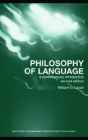
approaches to metaphor. Part IV, new to this edition, examines the four theories of metaphor. Features of Philosophy of Language include: · new chapters on Frege and puzzles, inferentialism, illocutionary theories of meaning, and relevance theory · chapter overviews and summaries · clear supportive examples · study questions · annotated further reading · glossary Praise for the First Edition: "This exceptional text fulfils two essential criteria of a good introduc- tory textbook in the philosophy of language: it covers a broad range of topics well, all of which are the basis of current active research, and does so in an accurate manner accessible to undergraduate students." Mike Harnish, University of Arizona ". . . an excellent textbook for teaching. The examples throughout are delightful and students will love them."
· complex sentence structure - frequent · personal, short, zappy style use of Passive Voice - single word · use of slang or colloquial English use of verbs - non-colloquial English -- formal idioms/phrasal verbs language · pronouns are often omitted · each paragraph develops one specific · chatty, wide use of descriptive adjectives topic · use of short forms · only facts, infrequent use of descriptive Best wishes / Love / Yours / Regards. adjectives · no use of short forms Name: Steve Name: Yours faithfully/Yours sincerely, Steven Hill TASK 2 Put an - for formal and an I for informal language. Give reasons . 1 In reply to your query about ... 2 I trust that this is the information you require ....
original; types: context ("opened roundabout way to (individual); syntactical (aN+of+aN), people ("Shakespeare chap") simple (based on a single phrase, sentence, string; window & heart") name objects ("one's image) sustained (developed). semantically classified: better half" = wife) 2. ALLUSION 2. METONYMY metaphorical ("soft smile") 2. PUN
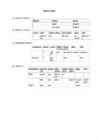
I can speak English. Negative sentences subject verbs Indirect object Direct object place time I will not you the story at Tomorro tell school w. Subordinate Clauses conjunction subject verb(s) Indirec Direct place time t object object I will you the story at school tomorrow. tell because I don´t time now. have Questions
g hey o oh x ah-kees h ah-chay p pay y ee-gree-ay-gah i ee q koo z say-tah The Spanish language academy no longer considers the ch, ll or rr to be separate letters in dictionaries, but they are still separate letters in the alphabet. In Spain, you can say oo-bay for v, but in Latin America most dialects just use bay and an adjective, such as chica (Mexico and Peru) or corta (Argentina and Chile). 4 4. Articles & Demonstratives Masc. Singular Fem. Singular Masc. Plural Fem. Plural the el (ail) la (lah) the los (lohs) las (lahs) a, an un (oon) una (oon-ah) some unos (oon-ohs) unas (oon-ahs)
Conditionals: 0 and I What is a conditional sentence? • Conditional sentences have at least two clauses: IF clauses and THEN clauses • Examples: If I go into town tomorrow, then I will see a movie. If he spoke Chinese, then he would work as a guide in China. If they had been faster, then they would have won the race. IF Clauses (the condition) • IF clauses present the condition. • Examples: If I go into town tomorrow… If he spoke Chinese… If they had been faster… THEN Clauses (the results) • THEN clauses present the results. • Examples: … then I will see a movie. …. then he would work as a guide in China. … then they would have won the race. IF and THEN Clauses • The word “then” is optional, but the clause is still the result of the condition. So it is a “THEN” clause, without the word “then.”
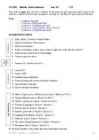
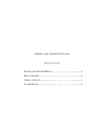
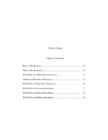
Adverbs and Adverbial Phrases Table of Contents Adverbs and Adverbial Phrases ........................................................... 2 Types of Adverbs ..................................................................................... 2 Position of Adverbs.................................................................................. 4 Yet, still, already ....................................................................................... 6 Adverbs and Adverbial Phrases An adverb describes a verb, an adjective, another adverb or a whole sentence.
sentence by commas!) that show the connection between paragraphs. Make references to other sources (Police officials believe that…) Give examples, not personal thoughts (expressive intake of alcohol can damage liver) if you use statistics, be sure of the source! Avoid clichéd introductions, make it more original (hook) Consistent personal pronoun use (if you use “we” or “you”, do it throughout the essay) Punctuation (NB! When joining 2 simple sentences, use “;”, NO COMMA BEFORE “THAT” Paragraph 1: introduction Hook (question, interesting observation, unique scenario, quote and surprising statistics) to capture the reader’s interest. Connecting information Clear thesis statement (the points/point of view that you will discuss/explain in length in the later paragraphs) In other words, the reader, having read the introduction, should know exactly what to expect in the body of the essay. DO NOT bring in any new thoughts later! Paragraph 5: Conclusion
There was a photograph on top of the chest of drawers. 4 the bike a idea she upon hiring hit of The hit upon an idea of hiring a bike 5 she with were up when filled her tears stood eyes My alarm went off alarm quarter to five. 7 exhibition his of best in ran the hall into friend he front He ranned into his friend in front of the exhibition hall. 8 have your a look take and time around Take your time and have a look around. --- 6 5. Complete the exercise with the adjectives. annoyed delighted easy free important lucky puzzled wise 1 I was lucky to meet Ben's friend, Nina, who had helped him so much at the party. 2 If you need somewhere to stay overnight, surf the Internet. Cheap hostels are easy to find. 3 After the last lesson we were ... to go, but we all stayed to discuss the trip. 4 The children looked annoyed so the teacher repeated the question. 5 If you don't need the gloves immediately, it's ... to wait until the sales start.
Literary (renaissance) o Democratic, juvenile, sophisticated, aberration, enthusiasm, pernicious, imaginary, allusion, anachronism, dexterity Scientific (17.-18. century) o Nucleus, formula, vertebra, corpuscle, atomic, carnivorous, incubate, aqueous, molecule Latin abbreviations o i.e – id est – that is to say Latin adjectives for english nouns o Nasal, oral, solar, paternal, maternal, lithic, lunar, filial Actual inflected Latin verbs used as nouns o Audio, audit, caveat, video. Endings dropped or adapted, often through French o add, addition, additive, agent, agentive, aqueduct, candle, colo(u)r, colossal, consider, contemplate, decide, decision, erupt, eruption, general, generic, hono(u)r, hono(u)rable,
) has a boy-friend (who?). She (who?) likes to read books (what?). The earth (what?) is a planet (what?). Besides, there are: THE ATTRIBUTE (WHAT?/WHAT KIND?) and THE ADVERBIAL (WHEN? - adverbial modifier of time/WHERE? – adverbial modifier of place/ HOW? – adverbial modifier of manner) Attributes modify nouns and stand in front of them. Adverbials modify verbs and usually stand behind them: This girl has a beautiful smile. This girl smiles beautifully. Attributes are usually adjectives but sometimes nouns as well: This is an interesting (adjective) story. The kitchen ( noun) door is locked. 2 Word Order in Affirmative Sentences In English the word order is not as flexible as in many other languages. The basic structure of an affirmative sentence is SUBJECT (Who?/What?) – PREDICATE (Action/State) – OBJECT (What?): Monkeys like bananas. Mary has a little lamb. All the world is a stage. The teacher is explaining the rule
information from and what the advertisement was about. In case newspaper's name is not mentioned in the task, it would be good if you could make one up. P1: General information For example: ,,I am writing to you in response to your advertisement in The Times about a flat to let at Finsbury Park, London." This would be the whole first paragraph and totally acceptable. Usually it is quite well said in the task, which information you have to ask. There are about 6-7 questions. It is essential that you put them in a logical order. Some of the questions (at least 3-4 questions) should be indirect questions. NB! Sentence ,,Could you tell me, when will be the flat available" is NOT an INDIRECT QUESTION, because it is a request. Requests are not good to be used in a formal letter. These questions should be used in one paragraph. It would be good if you could give some extra information about one of the questions, why you have to ask that. The
INGLISE KEELE KORDAMINE TIME CLAUSES Present Simple · Permanent states, facts (Tom works..) · Repeated and habitual actions, routines (She usually goes..) · Laws of nature and general truths (The sun sets in the west) · Timetables and programmes · Sporting commentaries, rewiews (Beckham wins the ball, crosses and Owen scores) · Feelings and emotions (I love Tallinn..) TIME EXPRESSIONS USED WITH PRESENT SIMPLE: usually, often, always, every day/week etc, in the morning/evening
Tegevus, mis mingil kindlaksmääratud momendil toimub (või toimus) ja mille alguse kohta on meil andmeid. · The child has been sleeping for six hours already. It has been raining for hours. Irregular verbs Here is a HUGE table about · irregular verbs · that you have to know by heart. · http://www2.gsu.edu/~wwwesl/egw/verbs.htm Ajamääruslaused (Adverbs of time) can be time expressions such as · `last night'. can be prepositional phrases with `at', `in', or `on'. `For' refers to a period of time in the past, present, or future. `Since' refers to a point in past time. A We use adverbials of time to say when something happens. We often use noun groups called time expressions as adverbials of time. yesterday, today, tomorrow last year, next Saturday, next week the day after tomorrow, last night, · the other day · Do not use the prepositions `at', `in', `on'!!! Prepositional phrases as
allusion, anachronism, dexterity scientific (17th-18th nucleus, formula, vertebra, corpuscle, atomic,carnivorous, incubate, aqueous, centuries) molecule The plurals of nucleus, verterbra, corpus, etc. Latin abbreviations in English i.e. = id est that is to say viz = namely etc = et cetera Latin adjectives for English nouns nose – nasal sun – solar son – filial mother – maternal mouth – oralmoon – lunar daughter – filial father – paternal stone – lithic 5. Greek borrowings The Greek language has contributed 50,000 words to the world. Christianity: New Testament in Greek. Catholic Church – Scclesiastical Latin. Examples: abbot, angel, apostle, bishop; school, cylinder, cycle, criterion, dialogue, cardiac, phonetic, gymnasium,
 annaabi.ee