Leidsid 33 sarnast õppematerjali, mis on seotud failiga "Inglisekeelne lühiessee tuumaelektrijaamade vajalikkusest". Need materjalid aitavad sul teemat sügavamalt mõista.
nuclear, power, solar, plants, coal, waste, find, cheap, generate, than, burning, cause, depend, expensive, years, hopefully, burden, today, important, matter, economic, solutions, comes, electricity, brings, toxic, looking, released, global, warming, hidden, ground, face, however, ending, demand, there, getting, other, hand, producing, quite, technology.........................................................................27 7.8 Measuring electricity..................................................................................................27 SOLAR ENERGY..............................................................................................................27 8.1 Photovoltaic energy...................................................................................................... 28 8.2 Solar thermal heat.......................................................................................................29 8.3 Solar thermal power plants......................................................................................... 30 8.4 Solar energy and the environment..............................................................................30 WIND ENERGY.................................................................................................................31 9
Tartus secondary school of business Nuclear Power Helena Nulk form 11b Tartu 2009 Table of contents Introduction..........................................................................................................................................3 What is nuclear power?....................................................................................................................3 Nuclear life cycle.............................................................................................................................3 What is nuclear energy?...................................................................................................................3 What is nuclear fusion?.................................................................
.........................................6 2.1.1. Annual Generation........................................................................................7 2.1.2. Growth and cost trends................................................................................8 2.1.3. Theoretical potential.....................................................................................9 2.1.4. Benefits of wind energy................................................................................10 2.2. Solar Energy........................................................................................................11 2.2.1 Development, deployment and economics................................................12 2.3. Hydroenergy.......................................................................................................13 2.4. Geothermal Energy............................................................................................14 2.5. Biomass Energy...................................
Renewable energy Meriliin Lend Estonian University of Life Sciences Tartu 2013 Topics Renewable energy Solar energy Wind energy Hydroelectric power Geothermal energy Biomass energy Renewable energy Renewable energy comes from sources that naturally renew, or will not run out in our lifetimes. Includes sunlight, wind, water, geothermal heat and various forms of biomass. Renewable energy cannot be exhausted and is constantly renewed. Does not harm the environment. Saves money. Solar energy Solar energy is the technology used to harness the sun's energy and make it useable. Every hour the sun beams onto Earth
Running head: NUCLEAR ENERGY Nuclear Energy U.S. Government History of Nuclear Energy- Nuclear Energy History of Nuclear Energy · Uranium was discovered in 1789 by Martin Klaproth. He was a German chemist, and named his discovery after the planet Uranus ("Outline history of," 2010) · 1939-1945 Manhattan Project- atomic energy program to develop the first transportable atomic bomb ("Nuclear technologies timeline," ) · 1942- First self-sustaining nuclear chain reaction ("Nuclear technologies timeline," ) · 1945- Hiroshima and Nagasaki- US
and also woods, groundwater, animals and so on, in other words it's everything that human hasn't created. These resources are also used in industry. We get natural resources from the environment. Many of them are essential for our survival while others are used for satisfying our wants. Renewable resources: Some natural resources can be reproduced within a few years or decades. These are called renewable resources. Solar radiation, wind and hydroelectricity, are perpetual resources that are in no danger of a lack of long-term availability. Some natural renewable resources such as geothermal power, fresh water, timber, and biomass must be carefully managed to avoid exceeding the worlds capability to displace them. Solar energy is the energy derived directly from the Sun. Along with nuclear energy, it is the most important source of energy on Earth. People usually use solar energy to produce
require urgent attention. 1. Pollution: Pollution of air, water and soil require millions of years to recoup. Industry and motor vehicle exhaust are the number one pollutants. Heavy metals, nitrates and plastic are toxins responsible for pollution. While water pollution is caused by oil spill, acid rain, urban runoff; air pollution is caused by various gases and toxins released by industries and factories and burning of fossil fuels; soil pollution is majorly caused by industrial waste that deprives soil from essential nutrients. FIND OUT 5 WAYS HOW TO STOP POLLUTION. 2. Global Warming: Climate changes like global warming is the result of human practices like emission of Greenhouse gases. Global warming leads to rising temperatures of the oceans and the earth surface causing melting of polar ice caps, rise in sea levels and also flash floods, excessive snow or desertification. FIND OUT 5 WAYS HOW TO STOP GLOBAL WARMING. 3
Water creates energy Eduard Kamenski 11a form The world uses energy from many different sources, such as: hydroelectric power, nuclear power plants, solar energy, and wind generated power. There are positive and negative aspects of each source, but which source of energy is best? My opinion is that the best source of energy is water and I'll bring up some facts why do I think so. Hydroelectric power is currently the world's largest renewable source of electricity. It accounts for six percent of the worldwide energy supply or about fifteen percent of the world's electricity. Water has been found to be a major source of energy. Water power is utilized at present mainly as hydro-electricity. It is produced from moving water and from falls with the help of turbines and dynamos. Hydro-electricity has acquired great significance as a source of energy in the country in the
eat three or more slices of brown bread per day, with only a quarter of respondents restricting themselves to one or two slices. Eating fat As regards fat consumption, the majority of the students eat margarine. Four students prefer butter, and another four eat neither. Conclusion It is noticeable that the eating habits of students in their final year at Freedonian Secondary School are not very healthy. Moreover, there are no students who have both breakfast and school lunch, eat more than four slices of brown bread per day, and avoid fat. In this essay, I will discuss whether prevention is better than trying to treat people who are ill and whether or not this is possible in all cases. I will divide the subject into illnesses caused by lifestyle, and illnesses caused by other factors such as genetic factors. First of all, a person's lifestyle can be a major factor in their wellbeing, both physical and mental. People who eat too much
It provides a brief review of usage and future prospects of the biogas. I have tried to make this report as understandable as possible. By the end of this report I want to come to a conclusion whether biogas is the best source of future energy or are there any other sources that are better. What is biogas? Typically it refers to the gas produced by the anaerobic digestion or fermentation of organic matter including manure, sewage sludge, municipal solid waste, biodegradable waste. If opportunely refined it can be used for electricity production. Also for space-, water- or process heating. Unintentional production of biogases has been an ongoing issue in many regions of the world, and several nations have also looked to biogas as a potential source of clean energy. India and China have both invested extensively in creative biogas technology to provide fuel for their citizens and there are a number of
http://www.whitehouse.gov/news/releases/2001/06/20010611-2.html *I also call on Congress to work with my administration to achieve the significant emission reductions made possible by implementing the clean energy technologies proposed in our energy plan. Our working group study has made it clear that we need to know a lot more. *The United States has spent $18 billion on climate research since 1990 -- three times as much as any other country, and more than Japan and all 15 nations of the EU combined. http://www.guardian.co.uk/environment/2004/feb/22/usnews.theobserver *Jeremy Symons, a former whistleblower at the Environmental Protection Agency (EPA), said that suppression of the report for four months was a further example of the White House trying to bury the threat of climate change. *Senior climatologists, however, believe that their verdicts could prove the catalyst in forcing Bush to accept climate change as a real and happening phenomenon
Acid Rain Acid rain is any precipitation that is unusually acidic. It possesses elevated levels of hydrogen ions(it has low pH level). Acid rain is caused by emissions of carbon dioxide, sulfur dioxide and nitrogen oxides, which react with water molecules. Distilled water(doesn't contain CO 2), has pH level 7. Liquids with pH level less than 7 are acidic, liquids with pH level greater than 7 are alkaline. Unpolluted rain has a pH level over 5.7, so it is slightly acidic. Affected areas Places significantly impacted by acid rain around the globe include most of eastern Europe from Poland northward into Scandinavia, the eastern third of the United States and southeastern Canada. Other affected areas include the southeastern coast of China and Taiwan Causes · It is caused when sulfur dioxide and nitrogen oxides are released into the air
The environment in realtion to mobility/transport in Europe Air pollution is problem all over the world. Through some pollution comes from these natural sources, most pollution is the result of human activity. The biggest causes are the operation of fossil fuel- burning power plants and automobiles that combust fuel. Combined, these two sources are responsible for about 90% of all air pollution in the United States. All kind of pollutions can lead us to serious health problems. For example, air pollution is increasingly being cited as the main cause of lung conditions such as asthma - twice as many people suffer from asthma today compared to 20 years ago. Every year, 3.2m Europeans are diagnosed with cancer - the most common cause of death after heart disease. Most
Even in Ancient Romepeople complained about smoke put into the atmosphere. The effects of air pollution are diverse and numerous. Air pollution can have serious consequences for the health of human beings, and also severely affects natural ecosystems. Because it is located in the atmosphere, air pollution is able to travel easily. As a result, air pollution is a global problem and has been the subject of global cooperation and conflict. Some areas now suffer more than others from air pollution. Cities with large numbers of automobiles or those that use great quantities of coal often suffer most severely from problems of air pollution. CAUSES There are many different chemical substances that contribute to air pollution. These chemicals come from a variety of sources. Among the many types of air pollutants are nitrogen oxides, carbon monoxides, and organic compounds that can evaporate and enter the atmosphere.
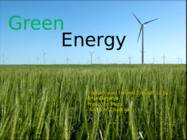
- And Just Chadrick Overview- What is Green Energy? Different Types? What is sustainability? German Green Energy Cost and Efficiency Recycling What is Green Energy? -It is energy resources that are renewable -Can be naturally replenished -Clean, Safe and not harmful to the environment (aka mother earth) Types of Green Energy Green Energy going cute Solar Power · Is produced by using photovoltaic cells, which capture sunlight and turns that into energy. Problems ? -The sun has got to shine -The cost of solar panels and the systems range between $20k-40k -The light from the sun produces a very small amount of energy Wind Power -These giant pinwheels spin from strong winds which spins a turbine of a generator to produce energy. Giant Pin Wheels? Any Studies done? · It is said that wind · Bentek Energy did the
AT-109 Iseseisev töö Electric cars Instructor: Tauris Vijar Tartu 2010 Introduction In this essay i´m write electric cars and this how these cars are built, how easy is built electric car, how much costs electric cars. The problems for electric cars, there are many problems why peoples still can´t use quiet and more green cars. But even the electric car is not all green because the electricity produced for nuclear, coal, oil shale and natural gas. These ways to get electricity pollutes nature, the only difference between lies in the fact that pollution is in the one place. Coal Electric power station Oil shale power station in Narva What is a electric car An electric car is a plug-in battery powered automobile which is propelled by electric motor. Electric cars are a variety of electric vehicle (EV); the term "electric vehicle"
financing costs, like in the UK and Ireland, where DH is not established. There are few multi- family houses with central heating and it is expensive to build DH networks in built areas. Most French DH systems are operated according to long-term concessions by companies that sell electricity and gas. No strong actor provides unbiased DH support. In the Czech Republic, gas offers DH severe competition. Much DH is produced at the expense of electricity that is considered more valuable, and waste incineration is not popular. In Romania, DH consumption was reduced by one-half. Distribution losses are enormous. New less polluting plants are needed. Consortia from established DH countries could offer DH systems from fuel to customer if local policies facilitate DH development. Introduction This paper describes barriers to district heating (DH) in various parts of Europe and to Swedish involvement in district-heating business abroad. The paper is based on a report called "District
It is also possible to be so ultra-sensitive that the result is disadvantageous. I expect no argument in asserting that a normal sensitivity is a healthy, indispensable ingredient for optimal education. Sensitivity can be heightened or blunted by education. It is intertwined with curiosity. An ideal education affords numerous and varied opportunities for students to touch, see, smell, listen, hear; to spark their curiosity. When I was a child the things that pleased me were largely other than the plants which have earned me a living as an adult. For example, I collected postage stamps, played basketball, was fond of listening to music, played all manner of games, but dealt only in a neutral, uninspired fashion with plants. The one thing that was constant and of supreme importance was my love of reading. I don't recall why, but by an early age, say age 9, I was a phenomenal reader of books, a habit that persisted all the way until college. Reading expands one's mind immensely
either from Britain or France. It was especially a poignant time for Africa, as then British Prime Minister Harold McMillan articulated his now famous “winds of change” sweeping Africa. We had high hopes for Africa, for the Black race, that the insidious imposition of foreign rule on us, the looting of Africa’s natural resources by our colonial masters accorded us would be things of history. That is more than forty years ago. Unfortunately, the promise of independence has not been fulfilled. Today, Africa has become more desolate; there is more starvation, diseases and non-provision of essential services than when we got our independence. There are all kinds of wars in Africa than the rest of world put together. The majority of so-called Africans leaders want to stay in power until the day their bodies are put in the grave
4 votes Photocopiable © Oxford University Press 1 Maturita Solutions Upper-Intermediate Workbook Key 1G Magazine article page 10 1 1 Introduction: C 2 Background information: A 3 Main events: D 4 Conclusion: B 2 1 One afternoon, at the time, when I finally reached safety, after that day 2 and fast! The rock was now more than a kilometre out to sea! After that day, I always checked the times of the tides before I went swimming! I'd never been so exhausted in my life! 3 exhausted, fantastic 4 Only when I woke up ... 3 1 Had the distance been twenty metres further, I wouldn't have made it. 2 Never in my life had I been so exhausted. 3 So tired was I that I fell asleep. 45 Students' own answers Photocopiable © Oxford University Press 2
The word "petroleum" comes from Greek: πέτρα (petra) for rock and Greek: ἔλαιον (elaion) for oil. The term was found (in the spelling "petraoleum") in 10th-century Old English sources. It was used in the treatise De Natura Fossilium, published in 1546 by the German mineralogist Georg Bauer, also known as Georgius Agricola. In the 19th century, the term "petroleum" was frequently used to refer to mineral oils produced by distillation from mined organic solids such as cannel coal (and later oil shale), and refined oils produced from them; in the United Kingdom, storage (and later transport) of these oils were regulated by a series of Petroleum Acts, from the Petroleum Act 1862 onwards. Composition In its strictest sense, petroleum includes only crude oil, but in common usage it includes all liquid, gaseous, and solid hydrocarbons. Under surface pressure and temperature conditions, lighter hydrocarbons methane, ethane, propane and butane occur as gases,
The oil spill of the Exxon Valdez showed many around the world just how horrible the effects of water pollution could be. However, even the Exxon Valdez spill barely touched the surface of the problem of water pollution. The ship spilt only 5% of the oil spilt that year, and oil is just one of many pollutants that people dump into the water every year. Every year, 14 billions pounds of sewage, sludge, and garbage are dumped into the world's oceans. 19 trillion gallons of waste also enter the water annually. The problem of ocean pollution affects every nation around the world. This is especially true because water is able to transport pollution from one location to another. For many years, chemicals were dumped into bodies of water without concern. While many countries have now banned such behavior, it continues to go on today. As the world has industrialized and its population has grown, the problem of water pollution has intensified
....................................................147 Addictions..................................................................................................149 Inner Body Awareness...............................................................................150 Inner and Outer Space................................................................................151 Noticing the Gaps.......................................................................................153 Lose yourself to Find Yourself....................................................................153 Stillness.......................................................................................................154 Chapter Nine Your Inner Purpose - 155 Awakening..................................................................................................156 A Dialogue on Inner Purpose.................................................
geothermal heat, which are renewable. Renewable energy uses natural resources that can be replaced or "renewed" without harming the environment and does not contribute to the greenhouse effect and global warming. Non-renewable energy Non-renewable energy comes from sources that can't be replenished in a short period of time. We get most of our energy from nonrenewable energy sources, which include fossil fuels such as oil, natural gas, coal and from nuclear energy. Unfortunately, burning fossil fuels produces greenhouse gases like carbon dioxide and methane which may cause global warming. Wind energy is the world's fastest growing energy technology. Most renewable energy comes either directly or indirectly from the sun. Hydroelectric energy is the oldest and largest source of renewable energy. Renewable energy is also known as "green" energy because, unlike energy created from fossil fuels, it will not run out.
(information technology) 3. The advent of endoscopic surgery has greatly reduced the post-operative recovery time of most patiens. (medical) 4. Supermarkets of the future will make use of scanners to read the contents of your trolley and total up your bill. (electronics) 5. Factories which rely on humans working on assembly lines are becoming a thing of the past. (industrial) 6. You would be quite astounded by the number of satellites orbiting the Earth. (space) 7. Not only would a solar powered vehicle be safe, it would also make use of one of the planet's greatest natural resources. (energy) COMPUTERS 1. I'm terribly sorry I'm late but traffic congestion in and around the city just keeps getting worse. 2. The recent increase in unemployment in the area can be explained by the new automated car plant that has just opened. 3. After little more than forty years, we have seriously polluted the final frontier with space
the advancement in spacecraft related research. The purpose of this essay is to explain what a railgun is and how it works along with a little history and the recent advancements in railgun related science. 3 1. What a railgun basically is A railgun is an electrically powered electromagnetic projectile launcher and a large electric circuit, made up of three parts: a power source, a pair of parallel rails and a moving armature. Along the pair of parallel conducting rails a sliding armature is accelerated by the electromagnetic effects of a current that flows down one rail, into the armature and then back along the other rail. Railguns have long existed as experimental technology but the mass, size and cost of the required power supplies have prevented railguns from becoming practical military weapons.
Just like our bodies, the environment functions best when it's in balance. Unfortunately, we're not quite there. Many of us believe that we lead lives that respect nature but our consumption habits give us away. Many little habits that seem to be sustainable are in fact polluting. Along with pollution, issues like depletion of resources, the rise of consumerism, and the "throw away" culture have led to serious issues. That being said, the fight's not over yet. Fortunately, more people than ever are both aware of and active in the protection of the environment. To protect the environment, waste management and recycling are crucial. When we recycle, used materials are converted into new products, reducing the need to consume natural resources. If used materials are not recycled, new products are made by extracting fresh, raw material from the Earth, through mining and forestry. Recycling helps conserve important raw materials and protects natural habitats for the future
Accessible- easy for anyone to obtain and use Admittedly- used for saying that you admit something is true, especially when this makes your main idea weaker Affordable- cheap enough for ordinary people to afford Agricultural- relating to farming Alcoves- a small area in a room that is created by building part of one wall further back than the rest of the wall Ample- enough, and often more than you need Attic- the room in a house under the roof Bedsit- a room that you rent that is used for both living and sleeping in Brick pillars- Bungalow- a house that is all on one level Caravan- BRITISH a vehicle that people can live and travel in on holiday. Caravans are usually towed (=pulled) by a car. The American word is trailer Carpenter- someone whose job is to make things from wood, or to repair things that are made of wood
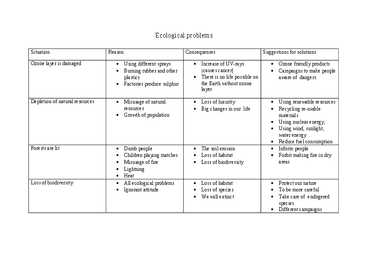
resources · Big changes in our life · Recycling re-usable · Growth of population materials · Using nuclear energy, · Using wind, sunlight, water energy · Reduce fuel consumption
The Crucial Problems of the World There are many problems in the world right at this time. One of the biggest and maybe the one which people talk about the most is the waste and recycling problem. As we all know, humankind is producing more waist than we can handle, reproduce and recycle. Even in here, Estonia, people are thinking of building a nuclear power station, because fossil fuel is soon depleted. The other problem, a little bit connected to the first one, is the greenhouse effect. The light from the Sun reaches us and after that the light reflexes from the Earth's surface back to the space, but thanks to the pollution, it absorbs and reflexes back to us again, causing global warming. The third problem is the fastly growing population. There are now more than 7 milliard people in the world and the number is still getting bigger
The last supernova in our own galaxy exploded in 1604, rivaling Jupiter's brightness in the night sky and deeply impressing Johannes Kepler, the pioneering astronomer. A nearby supernova--within a few light-years--would bathe the Earth in lethal radiation. Yet the legacy of supernovas is as close as our own bodies. The carbon in our cells, the oxygen in the air, the silicon in rocks and computer chips, the iron in our blood and our machines--just about every atom heavier than hydrogen and helium--was forged inside ancient stars and strewn across the universe when they exploded billions of years ago. Eager to understand our origins and, in some cases, simply wild about things that go bang, astronomers have been struggling for decades to understand why stars that shine peacefully for millions of years suddenly blow up. Lately they've had two big breaks. One is a revelation about potent blasts of high-energy gamma rays that come from distant points in the heavens
6 drop me off A. So there you are ... problem solved! 7 to lay off Rosie Yeah, these are good 8 turned up intentions, but not if we end up poisoning people in the long run. I 1F Discussion page 9 don't know, I just find the whole thing unnatural. I don't think we have a right 1 1 laboratory 5 crops to `play God' in this way. 2 controversy 6 harmful Leo I see what you mean. But to be 3 discredited 7 term honest with you, people have been 4 campaign 8 crisis crossing breeds for hundreds of years.
air that we breathe, becomes dangerous to our health. The ozone layer around the Earth, there is a special type of oxygen called ,,ozone". Ozone is important because it stops ultraviolett radiation from the sun. Many aerosol sprays and factories destroy ozone and they have made a very big hole in the ozone layer. This means that too much ultraviolet radiation now enters the Earth. This is very dangerous because it can cause cancer. Poisonous chemicals also cause acid rain, that destroyes plants, rivers, lakes and buildings. Acid rain can travel thousands of miles, so pollution in one country can become acid rain for another country. So how to avoid the worst? Lets talk about cars, which are the main means of transport in our everyday life, they are useful and take us to the place, where we want to go. But lets be honest, they have also negative aspects. Like heavy traffic in the morning, while you are going to work and in the evening, when you are about to go home
 annaabi.ee