 50 punkti
Autor soovib selle materjali allalaadimise eest saada 50 punkti.
50 punkti
Autor soovib selle materjali allalaadimise eest saada 50 punkti.
 ~ 1 leht
Lehekülgede arv dokumendis
~ 1 leht
Lehekülgede arv dokumendis
 2020-10-10
Kuupäev, millal dokument üles laeti
2020-10-10
Kuupäev, millal dokument üles laeti
 1 laadimist
Kokku alla laetud
1 laadimist
Kokku alla laetud
 0 arvamust
Teiste kasutajate poolt lisatud kommentaarid
0 arvamust
Teiste kasutajate poolt lisatud kommentaarid
 lsndrsr
Õppematerjali autor
lsndrsr
Õppematerjali autor
....................................................................................27 8.1 Photovoltaic energy...................................................................................................... 28 8.2 Solar thermal heat.......................................................................................................29 8.3 Solar thermal power plants......................................................................................... 30 8.4 Solar energy and the environment..............................................................................30 WIND ENERGY.................................................................................................................31 9.1 The History of Wind ..................................................................................................31 9.2 How wind machines work..........................................................................................32 9.3 Types of wind machines.............
wrote an article about what was stated. it. · Subsidies (government · Forbes said "no" money) to the wind sector is more than 200 times as great as those given to oil and gas sector. Oh and the wind has to blow. Hydropower Power to the Water · By using earth's · 90% energy water cycles and efficient compared running water used to natural gas threw mostly dams being 50% to provide energy. efficient. · Hydropower is · The only problem about 1/3 the cost is, you need water. of using fossil fuels and about 1/6 the cost of natural gas. Biofuels · Using natural I Love you Plants materials to turn into fuel or forms of combustible energy. · Which is mostly plants and plant products
ENVIRONMENTAL PROBLEMS Our environment is constantly changing. However, as our environment changes, so does the need to become increasingly aware of the problems that surround it. With a massive influx of natural disasters people need to be aware of what types of environmental problems our planet is facing. Current environmental problems make us vulnerable to disasters and tragedies, now and in the future. Unless we address the various issues seriously we are surely doomed for disaster. Current environmental problems require urgent attention. 1
with roughly 30,000 small (20100 watt) solar power systems sold per year. Some renewable energy technologies are criticised for being intermittent or unsightly, yet the market is growing for many forms of renewable energy. Climate change concerns coupled with high oil prices, peak oil and increasing government support are driving increasing renewable energy legislation, incentives and commercialization. New government spending, regulation, and policies should help the industry weather the 2009 economic crisis better than many other sectors. Costs Renewable energy systems encompass a broad, diverse array of technologies, and the current status of these can vary considerably. Some technologies are already mature and economically competitive (e.g. geothermal and hydropower), others need additional development to become competitive without subsidies. This can be helped by improvements to sub-components, such as electric generators.
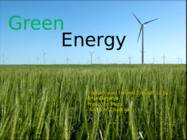
Renewable energy Meriliin Lend Estonian University of Life Sciences Tartu 2013 Topics Renewable energy Solar energy Wind energy Hydroelectric power Geothermal energy Biomass energy Renewable energy Renewable energy comes from sources that naturally renew, or will not run out in our lifetimes. Includes sunlight, wind, water, geothermal heat and various forms of biomass. Renewable energy cannot be exhausted and is constantly renewed. Does not harm the environment. Saves money. Solar energy Solar energy is the technology used to harness the sun's energy and make it useable. Every hour the sun beams onto Earth more than enough energy to satisfy global energy needs for an entire year. Solar energy use has surged at about 20 percent a year over the past 15 years, thanks to rapidly falling prices and gains in efficiency. Solar energy is inexhaustible. Noise free. Does not harm the environment. Click to edit Master text styles Second level
Also for space-, water- or process heating. Unintentional production of biogases has been an ongoing issue in many regions of the world, and several nations have also looked to biogas as a potential source of clean energy. India and China have both invested extensively in creative biogas technology to provide fuel for their citizens and there are a number of interesting applications for this gas which appeal to people who are interested in sustainable energy and the health of the environment. The basis for biogas is organic material such as food scraps and feces which are held in an anaerobic area, which can range from a storage tank which is not ventilated to a device which is specifically designed to produce gases. The conditions attract anaerobic bacteria, which start to break down the organic material, producing methane and carbon dioxide as a by-product. Another type of biogas which includes hydrogen, nitrogen, and carbon monoxide can be obtained
Natural resources-our treasure Natural resources are land or raw materials like minerals, fluids, gases, organic matters and also woods, groundwater, animals and so on, in other words it's everything that human hasn't created. These resources are also used in industry. We get natural resources from the environment. Many of them are essential for our survival while others are used for satisfying our wants. Renewable resources: Some natural resources can be reproduced within a few years or decades. These are called renewable resources. Solar radiation, wind and hydroelectricity, are perpetual resources that are in no danger of a lack of long-term availability. Some natural renewable resources such as geothermal power, fresh water, timber, and biomass must be
Hybrid car Natali Koppel TÖ41 Vo c abulary · Fuel efficient kütusesäästlik · Lightweight kerge · Aerodynamic voolujooneline, aerodünaamiline · Purchase soetama, omandama, ostma · Reduce vähendama Intro duc tio n · Care for the environment? · Want to save the planet? · Then you must think in terms of fuel efficiency, non-polluting, and eco-friendly transport. · The answer doesn't lay completely in purchasing and using a hybrid car. They do make a statement by being compact and fuel efficient, but also carry various issues. Why to purc has e a hybrid c ar? 1. Made of lightweight materials hybrids are small in size. The engine is designed to be fuel efficient. When the car
 annaabi.ee








Kõik kommentaarid