Leidsid 33 sarnast õppematerjali, mis on seotud failiga "INGLISE KEELE TÖÖPLAAN 6. KLASSILE". Need materjalid aitavad sul teemat sügavamalt mõista.
unit, töövihik, english, selgitus, polite, tõlkimine, paaristöö, simple, tunnikontroll, grammar, vocabulary, minevik, summer, names, rühmatöö, õppemäng, questions, activities, round, animal, christmas, ideekaart, tutvumine, õpetamine, kontrolltööks, elementary, vestlus, present, body, going, britain, töölehed, sport, seen, animals, yours'How are you?' Very often people expect you to say something positive. Here's a breakdown of how you can express how you really are without complaining too much. · Fine, thanks. / On top of the world, thanks. · OK, thanks · Not so bad, thanks. / Can't complain, thanks. · So so, thanks. / So and so, thanks. · Not so good, actually 1 The English alphabet Spelling Work with your partner and spell out first your name and then some names of places. Write down each letter as you hear it, and then say the word. The English alphabet on the phone: You might find the following alphabet (used by international airlines) useful when trying to spell a word on the telephone. A Alpha O Oscar Ä Alpha-Echo Ö Oscar-Echo
They say it's unimaginable, boring, tasteless, it's chips with everything and totally overcooked vegetables. The basic ingredients, when fresh, are so full of flavour that British haven't had to invent sauces to disguise their natural taste. What can compare with fresh pees or new potatoes just boiled and served with butter? Why drown spring lamb in wine or cream and spices, when with just one or two herbs it is absolutely delicious? If you ask foreigners to name some typically English dishes, they will probably say "Fish and chips" then stop. It is disappointing, but true that, there is no tradition in England of eating in restaurants, because the food doesn't lend itself to such preparation. English cooking is found at home. So it is difficult to a good English restaurant with a reasonable prices. In most cities in Britain you'll find Indian, Chinese, French and Italian restaurants. In London you'll also find Indonesian, Mexican, Greek..
Book 1 BASIC ENGLISH BASIC ENGLISH GRAMMAR GRAMMAR BASIC ENGLISH GRAMMAR Book 1 Book 1 Younger students at beginning to intermediate levels will greatly benefit from this step-by-step approach to English grammar basics. This is the ideal supplement to your language arts program whether your students are native English speakers or beginning English language learners. Skill-specific lessons make it easy to locate and prescribe
Studium Units 1-4 e-formaat Toimetatud Tartu Emajõe Koolis Toimetaja I. Tars Tartus, 2016 Elektroonilisse vormingusse kohandatud õpikus kasutatud märgised, mis aitavad otsingukäsu kasutamisel navigeerida * Tavakirjas leheküljenumbri ees on kolm järjestikust sidekriipsu, tühik ja vastava lehekülje number, näiteks, --- 5; * peatüki ette on kirjutatud kolm x-i, tühik ja vastava peatüki number, näiteks xxx 5; * visuaalne info on pandud kahekordsete ümarsulgude vahele. I Love English 6 töövihik sobib inglise keele õpetamiseks 8. klassis Töövihik vastab riiklikule õppekavale Retsenseerinud Piret Kärtner, Viive Latt, Ingrit Tera Toimetanud Viiu Menning, Nicola Fyfe, Tiina Helekivi Kujundanud ja küljendanud Eve Kurm Tehniliselt toimetanud Andero Kurm Illustreerinud Ülle Meister Esikaas: Boswell and Dr. Johnson (foto Scanpix). Vaata Unit 20. Autoriõigus: Mare Jõul, Ülle Kurm, 2009 Kirjastus Studium, 2009 Kõik õigused on kaitstud
3 1 was getting, arrived Challenge! 2 It's a mixed class of girls and boys. 2 was preparing, cut Students' own answers 3 It's difficult to tell what kind of 3 discovered, were building 1E Past perfect simple and lesson their in. 4 started, was talking 4 It could be that they're in a maths 5 found, was living continuous page 8 lesson. 4 1 has/had just arrived 1 1 had been having hits since 1992
1. Be ready to explain the terms (lecture 1): language, linguistics, synchronic approach to language, diachronic approach to language, linguistic competence, linguistic performance, what is grammar?, prescriptive grammar vs. descriptive grammar; phonology, phonetics, phone, allophone, phoneme; morphology, morphemes (types of morphemes), morphs, allomorphs, types of affixes, derivational affixes, inflectional affixes; open vs closed class words; syntax. Language: a systematic, conventional use of sounds, signs or written symbols in a human society for communication and self-expression. - human language at all levels is rule- or principle-governed. Linguistics: the scientific study of human natural language
стран мира. 6 INTRODUCTION Aspects of British History presents a brief outline of the most significant milestones in the long and eventful history of Great Britain, such as the five successful invasions of the island, the birth of Parliament and transformation of an absolute monarchy into a constitutional monarchy, the origin of the English language, the rise and fall of the British Empire. The units contain an informative reading text on an important issue, preceded by preparatory discussion questions and followed by notes offering some additional information, and a vocabulary with relevant language notes. The main reading text is accompanied by comprehension, vocabulary and grammar exercises and discussion activities. Some of the units include reading passages.
noticed when I was born! 3 1 Laura was offered a place at much. Personality-wise, I've got a lot of my Manchester University but she dad's traits in me. We're both quite bubbly and friendly (or so people 1C The origins of English turned it down. page 5 2 Whilst some people are in favour say), and we share quite a laid-back of the monarchy, others think we approach to life. When it comes to 1 1 Anglo-Saxon 8 Conquest
1. STYLE The term "style" is polysemantic (has many meanings): a Latin word "stilus" originally meant a writing instrument used by ancient people. Already in classical Latin the meaning was extended to denote the manner of expressing one's ideas in written or oral form. Jonathan Swift defined style as "proper words in proper places". In present day English the word "style" is used in about a dozen of principle meanings: 1. the characteristic manner in which a writer expresses his/her ideas (e.g. style of Byron) 2. the manner of expressing ideas, characteristic of a literary movement or period 3. the use of language typical of a literary genre (e.g. the style of a comedy, drama, novel). 4. the selective use of language that depends on spheres / areas of human activity (e.g. style of fiction, scientific prose,
Phonetic SD ("Rhythm And Style") 8. Lexical SD* 9. Syntactic SD* Use lecture notes 10. Graphical means and devices 11. Common literary and common colloquial vocabulary 12. Special literary vocabulary 13. Special colloquial vocabulary 14. Metre in English poetry. Modifications of metre ("Rhythm and Text") 15. Typically English stanzas ("Rhythm and Text") 16. Rhythm in poetry and in prose ("Rhythm and Text") Study independently 17. Varieties of language (I. Galperin "Stylistics") 18. Emotive prose (I. Galperin "Stylistics") 19. Scientific prose style (I. Galperin "Stylistics")
Tests Superstar 1 Luke Prodromou Test 1 Name____________________ Class_______ Use your English 1 Complete these sentences using the correct form (present simple or present continuous) of the verb in brackets. _ 1 She is in a band and she _________________________________ (record) a CD at the moment. _ 2 She is an actress and often _________________________________ (appear) on television. _ 3 At the moment she _________________________________ (have) a rest because she is tired. _ 4 Mike is a doctor and he _________________________________ (live) in Manchester. _ 5 I _________________________________ (start) work at 8.30 every morning.
wishes/Yours, Mike. 4. Remember that it is not necessary to write addresses in the exam. Style in formal and informal letters Formal letters Greeting: Dear Sir/Madam / Mr bobbins, Informal letters · impersonal style Greeting: Dear Julie, · complex sentence structure - frequent · personal, short, zappy style use of Passive Voice - single word · use of slang or colloquial English use of verbs - non-colloquial English -- formal idioms/phrasal verbs language · pronouns are often omitted · each paragraph develops one specific · chatty, wide use of descriptive adjectives topic · use of short forms · only facts, infrequent use of descriptive Best wishes / Love / Yours / Regards.
The original publisher submitted the manuscript to the Department of Defense on March 4, 1966, which requested three minor deletions—to all of which I acceded—before releasing the manuscript for publication. DAVID KAHN Windsor Gate Great Neck, New York Paris A Few Words EVERY TRADE has its vocabulary. That of cryptology is simple, but even so a familiarity with its terms facilitates understanding. A glossary may also serve as a handy reference. The definitions in this one are informal and ostensive. Exceptions are ignored and the host of minor terms are not defined—the text covers these when they come up. The plaintext is the message that will be put into secret form. Usually the plaintext is in the native tongue of the communicators. The message may be hidden in two basic ways. The methods of
Are they politicians, writers, scientists, musicians? 42. Can you name some Estonian writers who are famous for their humour? Which of their books have you read? 43. What kind of books do you like to read? 44. When did you last read a poem? 45. Do you enjoy reading poems? http://www.abiks.pri.ee 46. Have you ever written a poem? When? What was it about? 47. Can you say a poem in English? 48. What books have you read lately? 49. When did you learn to read? Was it easy or difficult for you? 50. How much time do you spend on reading? Do you think it is enough? 51. Do you have a favourite book? / author? Why? Why not? 52. How do you choose a book to read? 53. Do you prefer to have books of your own or to borrow them from the library? 54. Do you think people will read more or fewer books in 20 years' time? Why?
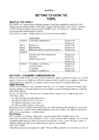
CHAPTER 1 GETTING TO KNOW THE TOEFL WHAT IS THE TOEFL? The TOEFL is a comprehensive English language examination required by more than 3,000 colleges and universities in the United States, Canada, and other parts of the world. In addition, foreign born professionals frequently need a TOEFL score for certification to practice their profession in the United States or Canada. The TOEFL is a timed test that consists of the three sections listed here. THE TOEFL Section 1 Listening Comprehension 50 questions
Officials were appointed (governors, procurators to collect taxes, look after the estates and mines and se that the gold, silver, iron and lead were exported back to Rome). Introduced schools,a new language Latin, large farms (villas), baths. In AD 410 they had to leave . roman occupation lasted nearly 400 years. They left behind very little. Roman province of Britannia covered most of present-day England and Wales. 4. Latin influence on English *The influence of Latin is noticeable also in the names of European cities: the Latin noun colonia (settlement, colony) may be found in numerous place-names: Lincoln, Colchester, Cologne ; from Latin word castrum (military camp) were derived English affixes -chester and -castle: Manchester, Lancaster, Newcastle; Latin word portus (seaport) in Portsmouth *-tor - person, doer, masculine form. The suffix is attached to the stem: victor (`winner', from the
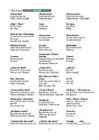
I am _____ years old. How old are you? (formal) How old are you? (informal) ¿Hablas inglés? ¿Habla usted español? (No) Hablo... ah-blahs een-glehs ah-blah oo-sted eh-spahn-yol noh ah-bloh Do you speak English? Do you speak Spanish? (formal) I (don't) speak... (informal) ¿Entiende usted? / ¿Entiendes? (No) Entiendo. Yo (no lo) se. ehn-tyen-deh oo-sted / ehn-tyen- noh ehn-tyen-doh yoh noh loh seh dehs I (don't) understand. I (don't) know. Do you understand? (formal / informal)
Indirect force 168 Summary 170 Questions 171 Further reading 171 Part IV: The dark side 173 14 Metaphor 175 Overview 175 A philosophical bias 175 The issues, and two simple theories 176 Davidson's causal theory 177 The Naive Simile Theory 179 The Figurative Simile Theory 180 The Pragmatic Theory 183 Metaphor as analogical 187 Summary 189 Questions 190 Further reading 190
Switching; Amplification - Base current regulates large amount of collector current. 1948 John Bardeen, Walter Brattain, and William Schockley of Bell Labs file for a patent on the first transistor. The Mathematical Theory of Communication. Claude Shannon's "The Mathematical Theory of Communication"showed engineers how to code data so they could check for accuracy after transmission between computers. Shannon identified the bit as the fundamental unit of data and, coincidentally, the basic unit of computation. Norbert Wiener published "Cybernetics," a major influence on later research into artificial intelligence. He drew on his World War II experiments with anti-aircraft systems that anticipated the course of enemy planes by interpreting radar images. 1949 Maurice Wilkes assembled the EDSAC, the first practical stored-program computer, at Cambridge University. His ideas grew out of the Moore School lectures he had attended three
classroom approach, supplemented by inordinate reading. In only the briefest and least memorable instances did I receive any individual tutoring. Education is commonly thought of as the job of schools. Adults cry "educate our children!" Everyone has opinions about the best way to do the job. It is of urgent importance, and all the numerous factors are much studied, debated, and new (or old) ideas continually tested or retested. Some people say "it's as simple as . . . " and then name their pet peeve or passion. My view is not of an education specialist, but of one who loves sharing what I learn, and owes much to educators. Since I don't have an educational theory neatly worked-out, nor an outline of my perceptions, my intent is to address each educational ingredient that comes to my mind. After I've said what I think about each topic, readers may have a fair comprehension of my philosophy. First comes sensitivity
This is just a small group of Caucasian men coming into our midst and we ran helter-skelter, without any much defence to stop the rape and incarceration of our Kings and Queens. Am I supposed to take delight in telling this story, which we as a people have done nothing to stop from happening again, and which is in fact even happening at greater frightening speed than the 17th century? The Black race is a slave – pure and simple – an economic slave. I am frightened and disgusted at the same time, at a people who produce nothing and consume everything that others produce. We are always ready to make excuses about the inventions and products our people have perfected in long gone eras, but which have been stolen from us, and the ones who stole them have gone on to become very rich. This is nothing but an excuse for our failures. In 1987, David Sun and John Tu, both immigrants,
uurimisküsimust ,,what" või ,,how" (Shrivastava, 1987: 80; in Rossiter, 2003: 87) (Creswell, 2003: 106) Uurimisküsimuste arv Unit of analysis / uurimistasand · 1-2 keskset küsimust on piisav! It is · Isik recommended to ask one or two central · Tiim questions followed by no more than five to · Projekt · Üksus/osakond
Ward Moorehouse. He is the protagonist, he is very modest origin, son of the railway worker, seems to be typical example of american drea, selfmade man. Marries Annabel, but quicly divorces, tries to manipulate people, joins the right clubs, where he can meet other rich persons. Marries again for fortune. Gradually he goes higher and higher, inherits the staples money. The arch enemy of the characters who were middle class. Mac is one of the protagonist here, a simple worker, his youth is filled with misery, poverty, becomes a radical, he and Moorehouse are on the xtreme sides of political spectrum. Janie Willaims,Elena Stoddard wants to rise above the sotred environment of the youth, joind Evelyn Hutchins in the decorating business. Dos passos introduces new professions, the interior decorator business and PR-public relations specialsts. Moorehouse is the famous PR man, and Elena and Evelyn become interior decorators. They are connected to big money
explains why it is that you don’t have to be concerned where your good is going to come from. If you can keep your mind clearly fo- cused on what you want, and refrain from thinking about what you don’t want, you will attract everything you need to achieve your goals, exactly when you are ready. Change your thinking and you change your life. ■ THE ONLY REAL MEASURE Bertrand Russell, the English philosopher, once said, “The very best proof that something can be done is that others have already done it.” In the New Testament, Jesus taught the way to measure the truth of any principle: “By their fruits, ye shall know them.” In other words, the only question you need to ask about any idea is, “Does it work?” Does it bring about the results that you de- sire
SCIENCE AND TECHNOLOGY A century ago communication across any distance was dependent upon the telegraph or letters. No jets crossed the ocean, no television pictures enabled us instantly to see events in any part of the world, there were no worldwide telephone networks and no computers. It is just a short lifetime since humanity first travelled into space and discovered how fragile our planet looks. FROM FIREWORKS TO THE MOON At first glance you might think that there couldn't possibly be anything common between a 13 th century festival in China and the Apollo 11 moon landing in 1969. However, there is a link and that is that they both relied on the use of rockets. The Chinese first developed rockets by filling bamboo tubes with an explosive made from saltpetre, charcoal, and sulphur. The sealed tubes would be thrown onto fires during celebrations because it was thought that the loud explosions would protect them. It wa
benefit from one. Hundreds of men and women have tested the techniques in The 4-Hour Body (4HB) over the last two years, and I've tracked and graphed hundreds of their results (194 people in this book). Many have lost more than 20 pounds of fat in the rst month of experimentation, and for the vast majority, it's the first time they've ever been able to do so. Why do 4HB approaches work where others fail? Because the changes are either small or simple, and often both. There is zero room for misunderstanding, and visible results compel you to continue. If results are fast and misunderstanding, and visible results compel you to continue. If results are fast and measurable,2 self-discipline isn't needed. I can give you every popular diet in four lines. Ready? · Eat more greens. · Eat less saturated fat. · Exercise more and burn more calories. · Eat more omega-3 fatty acids. We won't be covering any of this
suffering, of delusion. They said, “Look how you live. See what you are doing, the suffering you create.” They then pointed to the possibility of awakening from the collective nightmare of “normal” human existence. They showed the way. The world was not yet ready for them, and yet they were a vital and necessary part of human awakening. Inevitably, they were mostly misunderstood by their contemporaries, as well as by subsequent generations. Their teachings, although both simple and powerful, became distorted and misinterpreted, in some cases even as they were recorded in writing by their disciples. Over the centuries, many things were added that had nothing to do with the original teachings, but were reflections of a fundamental misunderstanding. Some of the teachers were ridiculed, reviled, or killed; others came to be worshipped as gods. Teachings that pointed the way beyond the dysfunction o the human mind, the way out of the collective
out thinking first. The evidence suggests that the ever-accelerating pace and infor- mational crush of modern life will make this particular form of unthinking compliance more and more prevalent in the future. It will be increasingly important for the society, therefore, to understand the how and why of automatic influence. 'It is worth noting that I have not included among the six principles the simple rule of material self- interest: that people want to get the most and pay the least for their choices. This omission does not stem from any perception on my part that the desire to maximize benefits and minimize costs is unimportant in driving our decisions. Nor does it come from any evidence that I have that compli- ance professionals ignore the power of this rule. Quite the opposite: in my investigations, 1 frequently
TARTU ÜLIKOOL SOTSIAAL- JA HARIDUSTEADUSKOND ERIPEDAGOOGIKA OSAKOND SIDUSA KÕNE ARENDAMINE SPETSIIFILISE KÕNEARENGUPUUDEGA LAPSEL: TEGEVUSUURING ÜHE LAPSE NÄITEL Magistritöö Koostaja: Diana Pabbo Läbiv pealkiri: tekstiloomeoskuse õpetamine Juhendaja: Marika Padrik (PhD) ….………………… (allkiri ja kuupäev) Kaitsmiskomisjoni esimees: Marika Padrik (PhD) …..………….……. (allkiri ja kuupäev) Osakonnas regi
lunch. She was tiny, several inches shorter than my five feet four inches, but her wildly curly dark hair made up a lot of the difference between our heights. I couldn't remember her name, so I smiled and nodded as she prattled about teachers and classes. I didn't try to keep up. We sat at the end of a full table with several of her friends, who she introduced to me. I forgot all their names as soon as she spoke them. They seemed impressed by her bravery in speaking to me. The boy from English, Eric, waved at me from across the room. It was there, sitting in the lunchroom, trying to make conversation with seven curious strangers, that I first saw them. They were sitting in the corner of the cafeteria, as far away from where I sat as possible in the long room. There were five of them. They weren't talking, and they weren't eating, though they each had a tray of untouched food in front of them. They weren't gawking at me, unlike most of the other students, so it was
SISUKORD 1. Sotsaalpsühholoogia......................................................2 2. Inimsuhete ajalooline areng...........................................7 3. Eneseteadvus..............................................................17 4. Sotsiaalne taju............................................................23 5. Hoiakud......................................................................30 6. Sotsiaalne mõju...........................................................35 7. Inimestevahelised suhted.............................................45 8. Inimsuhete ruumiline mõõde........................................49 9. Grupid ja gruppidevahelised suhted..............................54 9a Zimbardo vanglaeksperiment......................................62 10. Liider grupis..............................................................66 11. Agressiivsus ja prosotsiaalne käitumine......................77 12. Suhtlemine I........................................................
It appears that the contemporary is not “contemporary” at all. In its deepest layers it maintains inseparable connections with the past and makes its way into the future. The requirement for the novel appears as an assertion towards the external search, but is it not evident that the start of the search should be internal, towards the 1 Arnold Schönberg, Ausgewählte Briefe, ed. Erwin Stein (Mainz: B. Schott's Söhne, 1958), 179. English translation: Schoenberg, Arnold, Arnold Schoenberg Letters, ed. Leonard Stein, trans. Eithne Wilkins and Ernst Kaiser (London: Faber and Faber, 1964). 2 See his article “Eesti muusika iseloomlik ilmend” (The characterising expression of Estonian music), in Eesti Kultura II (Tartu: Postimees, 1913). Primary Source. What I mean here is not so much a certain style but the essence of the music we would like to adopt. This is neither old nor new, because it is born from the Absolute
To separate the roles of the legislature and judiciary, it was necessary to make laws clean and comprehensive. Biased - unfairly showing favoritism towards something or someone Judiciary - a person or thing associated with a court of law or judges ____________________________________________________________________ 5. Civil law Civil law concerns disputes among citizens within a country. Main categories of English civil law are: contracts (binding agreements between individuals, companies), torts (wrongs committed against a person, individual's property, or reputation), trusts (arrangement to administer property for another person's benefit), probate (arrangement to deal with property after owner's death), family law. In Estonia civil law categories are usually: law of property, law of obligations, family law, law of succession, commercial law, intellectual property law, private international law.
 annaabi.ee