Leidsid 33 sarnast õppematerjali, mis on seotud failiga "Inglise keele test Unit 13". Need materjalid aitavad sul teemat sügavamalt mõista.
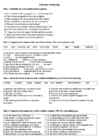
teacher, says, tells, here, late, students, poem, literature, please, come, lovely, tune, tongue, light, nursery, rhyme, poems, dream, following, class, shut, books, mary, garage, door, adds, mike, heart, open, window, before, film, complete, choose, plague, night, strange, travelling, mars, sister, favourite, litter, star, classes, often, someone, bless7 Raekoja plats The Town Hall Square 8 millegagi võrdlema compare sth with sth 2 Write the questions. 1 in / longest / What / Estonia / is / the / river What is the longest river in Estonia? 2 ever / smoke / Have / a / had / sauna / you Have you ever had a smoke sauna? 3 language / of / is / official / What / the / Estonia What is the official language of Estonia? 4 part / is / which / hilly / Estonia / of Which part of Estonia is hilly? 3 Write the sentences in reported speech. 1 The teacher said to the students, "You must work hard to get good results in your tests." The teacher told the students they haf to work hard to get good results in their tests. 2 Tina said, "I can help you with the washing up, Mary." Tina told Mary she could help her with the washing up. 3 Dad said to Jack, "I´ll fix the lock of the garage door in the afternoon." Dad told Jack he would fix the lock of the garage door in the afternoon. 4 Little Mary said, "I can count to ten."
1 BASIC ENGLISH BASIC ENGLISH GRAMMAR GRAMMAR BASIC ENGLISH GRAMMAR Book 1 Book 1 Younger students at beginning to intermediate levels will greatly benefit from this step-by-step approach to English grammar basics. This is the ideal supplement to your language arts program whether your students are native English speakers or beginning English language learners. Skill-specific lessons make it easy to locate and prescribe instant reinforcement or intervention. · Illustrated lessons are tightly focused on core concepts of grammar · Nearly 70 practice exercises are included
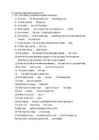
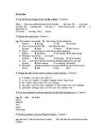
1 How do you usually start/are you usually starting your day? _____________________________________ 2 What time do you go/are you going to bed at weekends? _____________________________________ 3 This Girlzone CD is belonging/belongs to Alan. _____________________________________ 4 I understand/am understanding English, but not Spanish. _____________________________________ 5 Why does she run/is she running? Because she's late for work. __________________________________ 6 She doesn't enjoy/is not enjoying the film. _____________________________________ 7 This milk is tasting/tastes horrible. _____________________________________ 8 The Spice Girls are making/make a new CD at the moment. _____________________________________ 9 I am thinking/think it's a good idea for you to study biology. _____________________________________ 10 We want to go for a walk but it's raining/it rains outside
Töövihik on kooskõlas 2009. a uuendatud õppekomplektiga I Love English 6. Tartu, 2014 ISBN 978-9949-436-59-0 Kirjastus Studium Riia 15b, Tartu 51010 www.studium.ee Trükitud OÜ Greif trükikojas Lohkva, Luunja vald Tartumaa 62207 --- 3 xxx 1. The Big Apple 1. Write the verbs in the present continuous or the past continuous tense. Do you remember? am is are was were verb -ing 1 Sorry. I ... (write) a report at the moment. I can't come with you. 2 When Peter arrived, his friends ... (play) football. 3 I ... (sleep) when the alarm went off in my sister's room. 4 Dad's mobile phone is switched off because he ... (fly) to Paris. He's on the plane at the moment. 5 I ... (read) an interesting book. It's a collection of memories. 6 Leo was late again. He ... (step) out of his father's car when the bell rang. 7 Helen ... (lie) on the sofa when an ambulance stopped in front of the house. 8 I ..
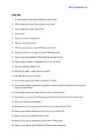
What sports events are popular in Estonia? How many Estonian Olympic gold medalists can you name? 40. Do you think it is necessary for children to play sport? Why? 41. Do you know any Estonian people who are known to everyone and liked by all? Are they politicians, writers, scientists, musicians? 42. Can you name some Estonian writers who are famous for their humour? Which of their books have you read? 43. What kind of books do you like to read? 44. When did you last read a poem? 45. Do you enjoy reading poems? http://www.abiks.pri.ee 46. Have you ever written a poem? When? What was it about? 47. Can you say a poem in English? 48. What books have you read lately? 49. When did you learn to read? Was it easy or difficult for you? 50. How much time do you spend on reading? Do you think it is enough? 51. Do you have a favourite book? / author? Why? Why not? 52
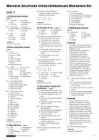
Students' own answers pointing to his sister's ice cream. 5 The thief grabbed my bag and ran The photos are connected with the 1B Past and perfect tenses off. topic of school. Both photos show page 4 6 He dropped a leaf into the water students in class. In the first photo I imagine that 1 1 ate and watched it drift under the they're about 13 years old. 2 have/'ve met bridge.
Education and learning Task 1. Underline the most suitable word or phrase. a) Jack decided to take a course/lesson in hotel management. b) Sheila always got good marks/points in algebra. c) After leaving school, Ann studied/trained as a teacher. d) Peter decided not to go in/enter for the examination. e) My sister learned/taught me how to draw. f) I can't come to the cinema. I have to read/study for a test. g) In history we had to learn a lot of dates by hand/heart. h) I hope your work will improve by the end of course/term. i) Martin failed/missed his maths exam and had to sit it again. j) If you have any questions, raise/rise your hand. Task 2. Complete each sentence with a word from the box. Use each word once only. cheat copy memorise pay revise concentrate divide pass punish underline
We/you/they go We/you/they do not go Do we/you/they go? NB! ERANDID! · Verbidele, mis lõpevad ss, h, ch, tch, x või oga, lisatakse ainsuse kolmdandas pöördes es. he does he goes he misses he watches he mixes · Verbid, mis lõpevad yga, mille ees on konsonant, muudavad y iks enne es lisamist. fly he flies carry he carries Võrdle: say he says Lihtolevik väljendab: · Antud momendil toimuvat tegevust, mis ei väljenda kestvat aega, näiteks see, hear, know. I see that man who you are pointing at. · Üldist, kogu aeg toimuvat või korduvat tegevust, pole oluline, kas tegevus toimub rääkimise hetkel. Teachers teach in schools. He usually goes to gym on Monday. · Tegevust mingil ajal. I go to school at 8 o´clock.
• Modal Verbs express our attitudes, opinions and judgements of events. Who’s that knocking on the door? - It’s James. (This is a fact.) - It could/may/might/should/can’t/’ll be James. (These all express our attitude or opinion.) Expressing permission Can, may and be allowed to are used to express permission. Can is more informal and usually spoken. You can borrow my bike, but you can’t have the car. I need it. May I smoke in here? You can’t come in here in those muddy shoes! You’re allowed to get married when you’re 16. Are we allowed to use Power Point at the exam? Expressing obligation Have to, must and should are used to express obligation. Positive negative and interrogative forms of ‘have to’ I You have to We don’t have to work hard to They pass the exam.
This is an interesting (adjective) story. The kitchen ( noun) door is locked. 2 Word Order in Affirmative Sentences In English the word order is not as flexible as in many other languages. The basic structure of an affirmative sentence is SUBJECT (Who?/What?) – PREDICATE (Action/State) – OBJECT (What?): Monkeys like bananas. Mary has a little lamb. All the world is a stage. The teacher is explaining the rule. Peter is playing the guitar. If we want to say something about the manner of the action ( how does something happen?), we put the adverbial of manner in front of the predicate: She quietly opened the door. If we want to stress the mode of action, we put the adverbial of manner after the object. She opened the door quietly. If we want to show the place where the action takes place we put the adverbial of place after the predicate. Janet lives in Paris.
When we use reported speech, we are usually talking about the past (because obviously the person who spoke originally spoke in the past). The verbs therefore usually have to be in the past too. For example: "I'm going to the cinema". He said he was going to the cinema. Basic tense chart The tenses generally move backwards in this way (the tense on the left changes to the tense on the right): present simple past simple I'm a teacher. He said he was a teacher past continuous. present continuous He said he was having lunch with his I'm having lunch with my parents. parents. past perfect simple present perfect simple
H-Helen, J - Julia 1.Receiving a money order H: - Hello, I would like to cash a money order. J: - Hello! You should present your identity card. H: - But, you know, I'd like to receive money order for my sister. How do I go about it? J: - Your identity card and letter of attorney, please. H: - Here you are. J: - Well...Unfortunately, I can't cash your money order your signature is not witnessed. H: - Ok. Than, please, I'd like to cash my money order. J: - Take this form and fill it in. May I see your passport? H: - Yes. Please. So...Should I write my full name, my passport number and the sum of money that has been sent to me, right? J: - Certainly. How would you like the money? H: - I prefer one hundred rouble notes, if you don't mind. J: - Here is your money. H: - Thank you Getting a post-restante. H: - Hi, Julia! What are you doing here? J: - I'm getting post restante letter from Boris...
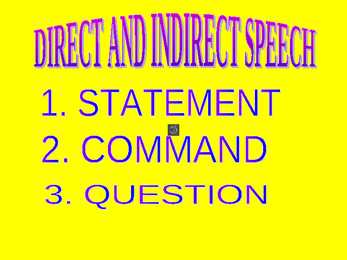
· May · Might · Must · Have/has to · Ought to · Had to CHANGES OF ADVERB OF TIME & PLACE · DIRECT · INDIRECT · NOW · THEN · TOMORROW · THE FOLLOWING DAY · NEXT WEEK · THE FOLLOWING WEEK · TONIGHT · THAT NIGHT · TODAY · THAT DAY · YESTERDAY · THE DAY BEFORE · LAST NIGHT · THE NIGHT BEFORE · LAST WEEK · THE WEEK BEFORE · HERE · THERE · THIS · THAT · THESE · THOSE CHANGES OF TENSES · DIRECT · INDIRECT · SIMPLE PRESENT · SIMPLE PAST · SIMPLE PAST · PAST PERFECT · PRESENT PERFECT · PAST PERFECT · PRESENT · PAST CONTINUOUS CONTINUOUS · PAST PERFECT · PRESENT PERFECT CONT. CONT. · SIMPLE FUTURE · PAST FUTURE 1. STATEMENT HE SAID
Test 2 1 Translate. 1 Küll on kahju, et sa ei saanud tulla. What a pity that you couldn´t came. 2 Mitte keegi ei olnud närvis. Nobody was nervous. 3 Klass oli täis juttu ja naeru. The classroom was full of laughter and talk. 4 Õpilased tervitasid oma õpetajat rõõmsalt. The students greeted their teacher cheerfully. 5 Ma õppisin selle luuletuse pähe. I learned this poem by heart. 6 Lapsed olid enne pidu ootusärevil. The children were excited before the party. 7 osasid vahetama swap the role 8 kahe nädala pärast in two time a week 2 Complete the sentences with the correct verb form 1 Did you meet Ann at the party last night? (meet) 2 Do you think our team will win the football match tomorrow? (win) 3 I can´t go out because I haven´t done my homework yet. (not do) 4 Somebody has broken the lock. I can´t get in. (break)
using direct speech or direct speech reported speech. speech `I'm tired!', Helen said. Helen said (that) she was tired. The main verb of the sentence is usually past ( Tom said that... / I told her that...) and the rest of the sentence is usually past too. Sequence of tenses if the verb in the main sentence is in the past tense the other verbs are usually in one of the past tense too. Present Simple Past Simple I'm a teacher. He said (that) he was a teacher Present Progressive Past Progressive I'm having lunch with my He said (that) he was having parents. lunch with his parents. Past Simple Past Perfect He said (that) he had bought a I bought a new car. new car. Future Simple FutureinthePast
4 While the butter (melt), you (take) three eggs and (break) them into a bowl. 5 Scientists (believe) the weather (change). 6 I (not see) what the problem is. 7 Why (you look) at me like that. 8 Now I (understand) what she (want). 5 3. Exercise: Read what Sharon says about a typical working day and write what she did or didn't do yesterday: I usually get up at 7.30 and have a big breakfast. I walk to work, which takes me about half an hour. I start work at 9. I never have lunch. I finish work at 5 o'clock. I'm always tired when I get home. I usually cook a meal in the evening. I don't usually go out. I go to bed at about 11 o'clock. I always sleep well. 1 She ...................... at 7.30. 2 She ...................... a big breakfast
Tulevikus toimuv tegevus, mis ei sõltu meie tahtest või mille suhtes teeme otsuse kõnelemise momendil. Next week, tomorrow, in two years time, in 2020. will + 1. pv (will not = won't) Maria will be thirteen next year. Maybe I won't go to the party tomorrow, I'm too tired. Will you help me with my homework tonight? Kestev olevik The present continuous Praegu toimuv tegevus. Now, at the present. am / is / are + -ing We are learning English. Is Mark reading or writing? Where is the teacher standing? 3 4 Kestev minevik The past continuous Minevikus teatud hetkel parajasti kestnud tegevus. Yesterday at 6, when she came, this time on Tuesday. was / were + -ing When the teacher came in, the pupils were talking. What were you doing when she opened the door? I was not talking, I was reading a book. Kestev tulevik The future conrinuous Väljendab tegevust, mis hakkab tulevikus toimuma. Lause põhirõhk on suunatud ajale
Tulevikus toimuv tegevus, mis ei sõltu meie tahtest või mille suhtes teeme otsuse kõnelemise momendil. Next week, tomorrow, in two years time, in 2020. will + 1. pv (will not = won't) Maria will be thirteen next year. Maybe I won't go to the party tomorrow, I'm too tired. Will you help me with my homework tonight? Kestev olevik The present continuous Praegu toimuv tegevus. Now, at the present. am / is / are + -ing We are learning English. Is Mark reading or writing? Where is the teacher standing? 3 Kestev minevik The past continuous Minevikus teatud hetkel parajasti kestnud tegevus. Yesterday at 6, when she came, this time on Tuesday. was / were + -ing When the teacher came in, the pupils were talking. What were you doing when she opened the door? I was not talking, I was reading a book. Kestev tulevik The future conrinuous Väljendab tegevust, mis hakkab tulevikus toimuma. Lause põhirõhk on suunatud ajale tulevikus
(NOT This needs to be thought some more.) 6. Don't use a present tense after It's time. It's time you went home. (NOT It's time you go home.) It's time we invited Bill and Sonia. (NOT It's time we invite Bill and Sonia.) 7. Use was/were born to give dates of birth. I was born in 1975. (NOT I am born in 1975.) Shakespeare was born in 1564. 8. Police is a plural noun. The police are looking for him. (NOT The police is looking for him.) I called the police, but they were too busy to come. 9. Don't use the to talk about things in general. Books are expensive. (NOT The books are expensive.) I love music. (NOT I love the music.) 10. Use had better, not have better. I think you'd better see the doctor. (NOT I think you have better see the doctor.) We'd better ask John to help us. 11. Use the present progressive am playing, is raining etc to talk about things that are continuing at the time of speaking. I'm playing very badly today. (NOT I play very badly today.) Look
again to keep the noise down. between Paul and Joe. 1D Sporting origins page 67 2 She recognised him at once. 2 Phobias can be genetically 3 He's working at his father's shop inherited. 1 1 staunchly / resolutely for the time being. 3 When it comes to politics, 2 By and large 4 They'll be here any moment now. Edward and his dad have a lot in 3 swiftly 5 Everybody makes mistakes once common. 4 loosely in a while. 4 Luke is the spitting image of Matt 5 categorically 6 My brother was still a baby at the Damon. 6 widely time
Test 3 1 Translate. 1 Homme samal ajal on meil kirjanduse tund. This time tomorrow we have a literature lesson. 2 Sule silmad ja kujutle, et sa oled rannas. Close your eyes and imagine that you are on the beach. 3 Meie koduklass on teisel korrusel. Our home-classroom is on the first floor. 4 Õpetaja ei karistanud kedagi. The teacher didn't punish anybody. 5 Üldkogunemisel me tavaliselt räägime mõnest päevakohasest probleemist. At an assembly we usually talk about some topical problems. 6 Ta vaatas mulle otsa ja nareatas säravalt. She looked at me and smiled brightly. 7 otsusele jõudma make up your mind 8 ajahätta jääma run out of time 2 Put the verbs in the past simple or the past continuous. 1 Tom was standing by the window when he heard a knock at the door. (stand; hear)
..................................................................... 4 Yet, still, already ....................................................................................... 6 Adverbs and Adverbial Phrases An adverb describes a verb, an adjective, another adverb or a whole sentence. Adverbs can be divided according to the information that they give. Types of Adverbs 1. Some adverbs tell us how somebody does something or how something happens. These are called Adverbs of Manner. Please speak quietly. Tom drove carefully along the narrow road. 2. Some adverbs tell us where. These are called Adverbs of Place: She put the book on the table. 3. Some adverbs tell us when. These are called Adverbs of Time. We met them at five o´clock. 4. Some adverbs tell us how often. These are called Adverbs of Frequency. E.g. always, sometimes, often, never, usually, seldom, hardly ever, and rarely: She never comes on time.
Lamb to the Slaughter by Roald Dahl (1916-1990) The room was warm and clean, the curtains drawn, the two table lamps alight - hers and the one by the empty chair opposite. On the sideboard behind her, two tall glasses, soda water, whiskey. Fresh ice cubes in the Thermos bucket. Mary Maloney was waiting for her husband to come him (correction: home) from work. Now and again she would glance up at the clock, but without anxiety, merely to please herself with the thought that each minute gone by made it nearer the time when he would come. There was a slow smiling air about her, and about everything she did. The drop of a head as she bent over her sewing was curiously tranquil. Her skin - for this was her sixth month with child - had acquired a wonderful translucent quality, the mouth was soft, and the eyes, with their new placid look, seemed larger darker than before
Each tendency was born by the influence of economic and political changes in the society. Those trends are known as the "hippies" the "punks" the "rockers". But certainly there are different traditional youth organizations in Great Britain. Among them -- the Scout Association, the Girl Guides Association, the National Union of Students, the Youth Club. The latter offers, for example, a wide range of sporting and social activities. The National Union of Students was founded in 1922. It operates through local branches in colleges and universities. It promotes the educational, social and general interests of students. But certainly the most numerous is the Scout Association, founded in 1908 for boys and in 1910 for girls by Lord Baden-Powel. The Scout movement is to encourage a sense of adventure and of responsibility for others among young people. The programme of training
do you think so?* ...................................................................................................... ...................................................................................................... ...................................................................................................... ...................................................................................................... 1.3 Use passive. Maya says, "Come here, Ben!" ......Maria tells Ben to go to her.............................................................................. Martin shouted, "Don't go there, Lucy!" ................................................................................................................. "I'll go if Mary comes, too. It'll be better together," said Martina to Angelique. ...............................................
5 samaaegselt at a time 6 humoristlik lugu humorous story 3 Translate. 1 Ema tahab, et ma kastaksin lilli. Mother wants me to water the flowers. 2 Ma tahan, et sa mind matemaatika kodutöös aitad. I want you to help me with my maths homework. 3 Kas sa tahad, et ma aitan sul seda rasket kotti kanda? Do you want me to help you to carry this heavy bag? 4 Õpetaja tahab, et me loeksime Roald Dahl´i Matilda´t. The teacher wants us to read Matilda by Ronald Dahl. 5 Mu väike õde tahab, et ma talle laulan. My little sister wants me to sing to her. 4 Write the sentences in reported speech. 1 Susan said, "I´m waiting for the bus." Susan said that she was waiting for the bus. 2 Mary said, "I have read kadri by SIlvia Rannamaa twice." Mary said she had read kadri by Silvia Rannamaa twice. 3 Tom´s mother said, "Your old shoes are too small for you." Tom´s mother said his old shoes were too small for him.
wide, childlike eyes. How could I leave my loving, erratic, harebrained mother to fend for herself? Of course she had Phil now, so the bills would probably get paid, there would be food in the refrigerator, gas in her car, and someone to call when she got lost, but still... "I want to go," I lied. I'd always been a bad liar, but I'd been saying this lie so frequently lately that it sounded almost convincing now. "Tell Charlie I said hi." "I will." "I'll see you soon," she insisted. "You can come home whenever you want -- I'll come right back as soon as you need me." But I could see the sacrifice in her eyes behind the promise. "Don't worry about me," I urged. "It'll be great. I love you, Mom." She hugged me tightly for a minute, and then I got on the plane, and she was gone. It's a four-hour flight from Phoenix to Seattle, another hour in a small plane up to Port Angeles, and then an hour drive back down to Forks. Flying doesn't bother me; the hour in the car with Charlie, though, I
Exercises 1. Use the Present Simple of the verb be or have. ( 10 points ) Mary........blue eyes and blond hair, but her brother ........dark hair. He ........in his late twenties. He........married and........two sons. I........short, but my sister........tall. We........a dog and a cat. Our uncle........two dogs. They........brown. 2. Choose the correct item. ( 5 points ) e.g. The residents were made...D....their homes by the authorities. A leave B leaving C left D to leave 1) Ann is my best friend! We........each other for years A know B knew C knows D have known
Kaudne kõne 1. Saatelause olevikus (he says that ...) Kõneleja juttu saab edasi anda otseselt (direct) ja kaudselt (reported). Otsene kõne: He says: "I am a man" Kaudne kõne: He says (that) he is a man. Kaudsel kõnel võivad muutuda asesõnad ja ka verbi pöördevormid. She tells me: ,,I like your dress." She tells me (that) she likes my dress. 2. Saatelause minevikus (he said that ...) Kui saatelause on minevikus, siis võivad samuti muutuda asesõnad ja verbi pöördevormid. Pane tähele! Oleviku vorm otseses kõnes muutub mineviku vormiks kaudses kõnes. am/is --- was are -- were do/does --- did want/like/know/go etc --- have/has had
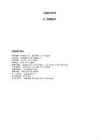
CHARACTERS MADAME PERNELLE, mother of Orgon ORGON, husband of Elmire ELMIRE, wife of Orgon DAMIS, son of Orgon MARIANE, daughter of Orgon, in love with Valere CLEANTE, brother-in-law of Orgon TARTUFFE, a hypocrite DORINE, Mariane's maid M. LOYAL, a bailiff A Police Officer FLIPOTTE, Madame Pernelle's servant The Scene is at Paris ACT I SCENE I MADAME PERNELLE and FLIPOTTE, her servant; ELMIRE, MARIANE, CLEANTE, DAMIS, DORINE MADAME PERNELLE Come, come, Flipotte, and let me get away. ELMIRE You hurry so, I hardly can attend you. MADAME PERNELLE Then don't, my daughter-in law. Stay where you are. I can dispense with your polite attentions. ELMIRE We're only paying what is due you, mother. Why must you go away in such a hurry? MADAME PERNELLE Because I can't endure your carryings-on, And no one takes the slightest pains to please me. I leave your house, I tell you, quite disgusted; You do the opposite of my instructions;
Part II: Fill the gaps below to complete the crossword and the name of the first Harry Potter book, which came out in 1997: Harry Potter and the __________'s Stone 1/9/2013 Page |3 1. Harry Potter is an ____________. 2. J.K. Rowling says the ____________ Harry Potter book will be the last. 3. Some of the characters in the Harry Potter stories are ____________. 4. Not ____________ Harry Potter fans are children or young teenagers. 5. The idea for the first Harry Potter ____________ suddenly came to J.K. Rowling when she was on a train. 6. Harry is a ____________ at Hogwarts. 7. Harry uses a ____________ to play Quidditch. 8. Harry has magical ____________. 9
Näitelaused 1.Mother said to Jane, ,,Take care of your money". Mother warned Jane to take care of her money. 2.The teacher said to the students, ,,It's a good idea to learn these rules by heart." The teacher advised the students to learn these rules by heart. 3.Father said to uncle John, ,,Why don't you have your car servied?" Father advised uncle John to have his car servised. 4.Tom asked his teacher, ,,Is it right that water boils at 100 degrees?" Tom asked his teacher if water boils at 100 degrees. 5.Father said to Dan, ,,Don't put your hands in your pockets." Father warned Dan not to put his hands in his pockets. 6.Tim said to his neighbour, ,,I'm sorry for the noise last night.It won't happen again." Tim apologised to his neighbour for the noise previous night.He promised it wouldn't happen again. 7.Mother said to Bob, ,,Open the door for me, please." Mother asked Bob to open the door for her. 8
ELT Methodology (FLGR.01.041) 27.12.2012 Home Assignments. I Youtube clips: · A vision of K-12 students I personally think that Estonian learners are also digital learners. They spend more time at the computers or laptops or iPads etc. than read books or move outside. And another thing is that teachers are less capable in using technological appliances. But the latter mentioned fact is an advantage for us teachers as well. It gives us an opportunity to provide our students to experience success. They can help and assist us if we need some technological help.
 annaabi.ee