Leidsid 33 sarnast õppematerjali, mis on seotud failiga "Inglise keele reeglid". Need materjalid aitavad sul teemat sügavamalt mõista.
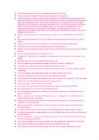
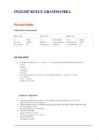
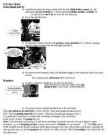
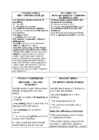
condition, conditional, zero, conditions, first, lihtolevik, laused, lottery, tingimuslaused, possible, talk, fact, heat, insurance, koma, late, alone, happy, laptop, christmas, sentences, types, something, truth, samade, below, real, täitumine, tegusõna, algvorm, cloudy, tomorrow, snow, chance, ticket, winningCONDITIONALS 0 or 1? TYPE 0 ZERO CONDITIONAL In 'zero' conditional sentences, the tense in both parts of the sentence is the simple 'IF' CLAUSE (CONDITION present: ZERO CONDITIONAL (TYPE 0) 'IF' CLAUSE MAIN CLAUSE (CONDITION) (RESULT) If + simple present If + simple present If you heat ice, it melts. If it rains, you get wet TYPE 0 'IF' CLAUSE MAIN CLAUSE (CONDITION) (RESULT) If + simple present If + simple present If plants don't get they die. enough water, If you mix red and blue, you get purple Make sentences (type 0) Heat water/ boil Mix yellow and red/get orange
CONDITIONALS ZERO CONDITIONAL If you don't water flowers, they die. If you have a headache, stop watching TV. If clause: Main clause: PRESENT SIMPLE PRESENT SIMPLE or IMPERATIVE With zero conditional we express a general truth or we give advice. FIRST CONDITIONAL If the weather is nice, we will go for a walk. If you don't apologize, she will never trust you again. If clause: Main clause: PRESENT SIMPLE FUTURE SIMPLE The first conditional refers to the present and future. It expresses a possible condition and its probable result in the future. SECOND CONDITIONAL Jack wants to buy a house but he can't do this because he doesn't have any money. If I had a lo t o f m o ne y,
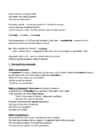
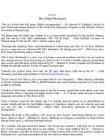
First Conditional: A real possibility in the future A First Conditional sentence is for future actions dependent on the result of another future action or event, where there is a reasonable possibility of the conditions for the action being satisfied. Formation: if + present simple, + will For example: If she gets good grades, she will go to university. We are talking about the future, but we use a present tense for the condition and will for the result. In this case, the person is sure about going to university. We can use other modal verbs in the result part of the sentence. For example: I Condition Result Possibility F she gets good she will go to If the condition is met, then she definitely If grades, university. will go he gets good he may go to
Conditionals Table of Contents Conditionals ......................................................................... 2 A. Real Conditionals ............................................................. 2 B. Unreal Conditionals ......................................................... 3 Linking words used in Conditionals ...................................... 4 Conditionals Conditions deal with imagined situations: some are possible, some are unlikely, some are impossible. A. Real Conditionals Real Conditionals refer to situations that are true, have happened, generally happen or are likely to happen. The First Conditional expresses a possible condition and a probable result: If I have time, I will help you. In the if-clause we use the Present Simple, in the main clause will + the verb. We can also use the Present Continuous or Perfect in the if-clause and a Modal Verb in the main clause.
Conditionals Sentences with if are used to express possibilities. 0 Zero conditional If-clause present (past) simple Main clause present (past) simple Sometimes sentences with if express certainty rather than possibility. The zero conditional is used to talk about sth. that is always true (such as a scientific fact), or that was always true in the past. In this type of conditional we can use when instead of if. E.g., If/When you mix blue and red, you get purple. If/When you don't water flowers, they die. (present simple in both parts of the sentence) If/When I asked her to come with us, she always said no. (past simple in both parts of the sentence) 1 First conditional If-clause present simple; Main clause future tense (or: can, must, may, etc., + bare infinitive) Used to talk about the consequences of a possible action (a real or very probable situation in the
you can express how you really are without complaining too much. · Fine, thanks. / On top of the world, thanks. · OK, thanks · Not so bad, thanks. / Can't complain, thanks. · So so, thanks. / So and so, thanks. · Not so good, actually 1 The English alphabet Spelling Work with your partner and spell out first your name and then some names of places. Write down each letter as you hear it, and then say the word. The English alphabet on the phone: You might find the following alphabet (used by international airlines) useful when trying to spell a word on the telephone. A Alpha O Oscar Ä Alpha-Echo Ö Oscar-Echo B Bravo P Papa
9 Did he reading when he heard the scream? ____________________________________________________________________________________________ 10 Which book did you enjoying most? ____________________________________________________________________________________________ Marks: /10 Words, words, words 4 Write the words which mean the following. The first letter of each word has been provided. 1 Children wear this to school to make them look the same. u______________________ 2 A jacket and trousers made from the same material. s ______________________ 3 A man wears this round his neck and over his shirt to make him look smart. t _______________________ 4 We wear these to protect our clothing
Minevik I'd rather not have gone home I'd rather you had (not) earlier last night. gone home. TÄISMINEVIK: HAVE+III I'd rather we had arrived earlier. ENNEMINEVIK: HAD+III Olevik I'd rather (not) go home. I'd rather you went. I'd Tulevik I'd rather go to the concert rather you didn't go. I'd with you than (go) with Doug. rather John finished earlier LIHTOLEVIK tomorrow. LIHTMINEVIK
All through the centuries, there have been wars. (NOT All along the centuries, there have been wars.) 41. Use can't, not mustn't, to say that something is logically impossible. It can't be the postman at the door. It's only 7 o'clock. (NOT It mustn't be the postman at the door. It's only 7 o'clock.) If A is bigger than B, and B is bigger than C, then C can't be bigger than A. (NOT ... then C mustn't be bigger than A.) 42. Use the present perfect with This is the first time ... etc. This is the first time I've been here. (NOT This is the first time I'm here.) This is the fifth cup of coffee I've drunk today. (NOT This is the fifth cup of coffee I drink today.) 43. Use be, not have, to give people's ages. My sister is 15 (years old). (NOT My sister has 15 years.) 44. Use between, not among, to talk about position in relation to several clearly separate people or things. Switzerland is between France, Austria, Germany and Italy
5 The thief grabbed my bag and ran The photos are connected with the 1B Past and perfect tenses off. topic of school. Both photos show page 4 6 He dropped a leaf into the water students in class. In the first photo I imagine that 1 1 ate and watched it drift under the they're about 13 years old. 2 have/'ve met bridge. It looks like a science lesson 3 have/'ve caught 7 As she got older, her health
everything up. · This world is complicated. People have a hard time finding each other & when they finally do, they're scared to take the risk. · Don't cry because it's over. Smile because it happened. · LUST is when you love what you see. LOVE is when you lust for what's inside. · There are three kinds of bones everyone should have: a funny bone, a backbone and a WISHbone. · I didn't fall in love with you on the first sight; I fall in love with you over and over again on every sight. · Mostly, the person that you hurt the most is the person who loves you the most. · Life is a best friend when you get what you want, and life is a teacher when you don't. · There's always an eye to see each beauty, an ear to hear each truth and a heart to feel each love. · Think before u speak, because once the words are spoken and hit the heart, u CANNOT take them back!
INGLISE KEEL Sisukord Sisukord.................................................................................................................................. 2 Ajavormid Tense vorms.......................................................................................................3 Lihtolevik The present simple..................................................................................... 3 Lihtminevik The past simple....................................................................................... 3 Lihttulevik The future simple...................................................................................... 3 Kestev olevik The present continuous......................................................................... 3
INGLISE KEEL Sisukord Sisukord 2 Ajavormid Tense vorms 3 Lihtolevik The present simple 3 Lihtminevik The past simple 3 Lihttulevik The future simple 3 Kestev olevik The present continuous 3 Kestev minevik The past continuous 4 Kestev tulevik The future conrinuous 4 Täisminevik The present perfect 4 Enneminevik The past perfect 4 Ennetulevik Future perfect 5
NB! ERANDID! · Verbidele, mis lõpevad ss, h, ch, tch, x või oga, lisatakse ainsuse kolmdandas pöördes es. he does he goes he misses he watches he mixes · Verbid, mis lõpevad yga, mille ees on konsonant, muudavad y iks enne es lisamist. fly he flies carry he carries Võrdle: say he says Lihtolevik väljendab: · Antud momendil toimuvat tegevust, mis ei väljenda kestvat aega, näiteks see, hear, know. I see that man who you are pointing at. · Üldist, kogu aeg toimuvat või korduvat tegevust, pole oluline, kas tegevus toimub rääkimise hetkel. Teachers teach in schools. He usually goes to gym on Monday. · Tegevust mingil ajal. I go to school at 8 o´clock. You have to pay taxes once a month.
All rights reserved. No part of this book may be reproduced in any form or by any means, electronic or mechanical, including photocopying, recording, or by any information storage and retrieval system, without the written permission of the publisher. ISBN 1-59905-201-6 Printed in the United States of America 13 12 11 10 09 08 07 9 8 7 6 5 4 3 2 1 Introduction Grammar is a very old field of study. Did you know that the sentence was first divided into subject and verb by Plato, the famed philosopher from ancient Greece? That was about 2,400 years ago! Ever since then, students all over the world have found it worthwhile to study the structure of words and sentences. Why? Because skill in speaking and writing is the hallmark of all educated people. Lesson by lesson, this book provides basic instruction in the eight parts of speech--nouns, pronouns, verbs, adjectives, adverbs, prepositions, conjunctions, and
What time is it? (question) Go away! (command) What is an Inference? An argument has one or more premises and one conclusion. The premises provide evidence, support or reasons to believe the conclusion. The conclusion is said to follow from the premises. The premises are said to imply the conclusions. The reasoning process expressed by an argument is called an Inference. For convenience, when arguments are presented in standard form, we usually list premises first. Then, the conclusion is listed after the premises. Premises → Inference → Conclusion What is logic? Birds have Wings Swans are Birds Therefore, Swans have Wings. This is a good argument, because the conclusion follows from the premises. Logically valid - good argument. Birds are animals Dogs are animals Therefore, dogs are birds. This is a bad argument, because the conclusion does not follow from the premises. Logic is the science of correct reasoning.
Opposes it, and puts my father up To all these wretched shifts. You know, besides, How nearly I'm concerned in it myself; If love unites my sister and Valere, I love his sister too; and if this marriage Were to . . . DORINE He's coming. SCENE V ORGON, CLEANTE, DORINE ORGON Ah! Good morning, brother. CLEANTE I was just going, but am glad to greet you. Things are not far advanced yet, in the country? ORGON Dorine . . . (To Cleante) Just wait a bit, please, brother-in-law. Let me allay my first anxiety By asking news about the family. (To Dorine) Has everything gone well these last two days? What's happening? And how is everybody? DORINE Madam had fever, and a splitting headache Day before yesterday, all day and evening. ORGON And how about Tartuffe? DORINE Tartuffe? He's well; He's mighty well; stout, fat, fair, rosy-lipped. ORGON Poor man! DORINE At evening she had nausea And could't touch a single thing for supper, Her headache still was so severe. ORGON And how
requests, hopes (usually with the verb hope) and offers. d) for actions/events/situations which will definitely happen in the future and which we cannot control. The temperature will reach 40°C tomorrow. Be going to a) for plans, intentions or ambitions we have for the future. Now that they've won the lottery, they are going to buy a big house, (intention/plan) b) For actions we have already decided to do in the near future. They are going to get married in three months. (They have already decided to do it.) BUT: They're getting married next month. (They have decided and arranged to do it.) c) in predictions when there is evidence that something will happen in the near future. Look at the clouds! It's going to rain.
Performing the presentation Introducing yourself and your talk Greeting, name, position, opening formalities Good morning, ladies and gentlemen. Good afternoon, everyone. Good morning. My name's (...). I'm the new Finance Manager. Good morning. Let me start by saying just a few words about my own background. I started out in... Welcome to Standard Electronics. I know I've met some of you, but just for the benefit of those I haven't, my name's (...). It's very nice to see you all here today. I'm very pleased to be here. I'm glad you could all make it. Thanks for inviting me. Thank you (all) for coming. Title/Subject I'd like to talk (to you) today about ... I'm going to present the recent ... explain our position on ... introduce ... brief you on ... inform you about ... describe ... The subject of my
H: - Oh, I've forgotten to ask do you have a system of paying by the minute? J: - Yes, you are right. And don't forget that every subscriber should pay the telephone bill in time. H: - Oh! If you don't put me through to Moscow in 15 minutes, I'll have to cancel my order! J: - Hey! Are you there? The Moscow is on line! H: - Thank you! 3. You are displeased with your room. H: - I'd like to speak to the receptionist on my floor. J: - It's me. Is something wrong? H: - Yes, it is! First, I've booked a double room, and you've accommodated me in a single one. And there are cockroaches in my room!!! J: - I'm very sorry indeed! We'll immediately clean your room! And please go to the receptionist on table, tell him your problem. H: - I've booked a double room, and you've accommodated me in a single one! J: - Oh...Miss Britsyna? Number 223? H: - Yes! And, besides, there are cockroaches in my room!!! J: - We are very, very sorry
I'm looking forward to hearing about how it went. B . Let me know if my advice was of any help. I hope everything turns out fine. C . Should you need any information about courses which will be held next term, I would be happy to assist you. D I look forward to meeting you to discuss the possibility of employment. Please contact me regarding any queries you may have. E . I look forward to receiving the information and would appreciate it if you could send it as soon as possible. F . Thanks again for the gift and please give my regards to your family. G . Anyway, thanks again for the invitation. I'll see you then. H .I am confident that you will carry out your new duties with your usual conscientiousness and dedication. TASK 5 Read the following sentences. Which are formal and which are informal? Which sentences are beginnings and which are endings of a letter? What kind of letter does each sentence belong to? 1
approaches to metaphor. Part IV, new to this edition, examines the four theories of metaphor. Features of Philosophy of Language include: · new chapters on Frege and puzzles, inferentialism, illocutionary theories of meaning, and relevance theory · chapter overviews and summaries · clear supportive examples · study questions · annotated further reading · glossary Praise for the First Edition: "This exceptional text fulfils two essential criteria of a good introduc- tory textbook in the philosophy of language: it covers a broad range of topics well, all of which are the basis of current active research, and does so in an accurate manner accessible to undergraduate students." Mike Harnish, University of Arizona ". . . an excellent textbook for teaching. The examples throughout are
although there are certain similarities fast in the town. 2 fall through 6 go down with in our physical build. I also seem to 4 Well, he would keep misbehaving 3 tip off 7 come to have inherited his big feet, unluckily in class. 4 come up with 8 mistake for for me. It was the first thing my parents 5 Well, you would keep eating too noticed when I was born! 3 1 Laura was offered a place at much. Personality-wise, I've got a lot of my Manchester University but she dad's traits in me. We're both quite bubbly and friendly (or so people
Color-- -1- -2- -3- -4- -5- -6- -7- -8- -9- Text Size-- 10-- 11-- 12-- 13-- 14-- 15-- 16-- 17-- 18-- 19-- 20-- 21-- 22-- 23-- 24 TWILIGHT By Stephenie Meyer Contents PREFACE 1. FIRST SIGHT 2. OPEN BOOK 3. PHENOMENON 4. INVITATIONS 5. BLOOD TYPE 6. SCARY STORIES 7. NIGHTMARE 8. PORT ANGELES 9. THEORY 10. INTERROGATIONS 11. COMPLICATIONS 12. BALANCING 13. CONFESSIONS 14. MIND OVER MATTER 15. THE CULLENS 16. CARLISLE 17. THE GAME 18. THE HUNT 19. GOODBYES 20. IMPATIENCE 21. PHONE CALL 22. HIDE-AND-SEEK 23. THE ANGEL 24. AN IMPASSE EPILOGUE: AN OCCASION twilight STEPHENIE MEYER LITTLE, BROWN AND COMPANY New York Boston Text copyright © 2005 by Stephenie Meyer
travel) to Canada to practise in a training camp. I'm sure sometime in the future she ... (11 win) an Olympic medal. By that time, I ... (12 be) a famous author and she ... (13 ask) me to write a book about her way to the top. That's why I ... (14 start) taking notes of her and my other classmates' results. 3. Complete the exercise with the verbs in the past simple, the past continuous, or the past perfect tense. Do you remember? I went I was / we were going I had gone I couldn't wait for the first day of school to show off the new bike which I ... (1 get) as a birthday present. As I ... --- 5 (2 want) to look cool riding up to the front steps, I ... (3 put) on my new skirt. When I ... (4 reach) the school, I ... (5 make) a big mistake and ... (6 smile) at my friends instead of watching where I was going. While I ... (7 wave) at my best friend, I couldn't brake, and I ... (8 hit) the steps. I ... (9 fail) off my bike and ... (10 tear) my skirt. What a great start to the new year! 4
congealed and low-percented. If these chronicles had been a really scientific study of transition one would have dwelt probably on such factors as the invention of bicycle, motor-car, and flying- machine; the arrival of a cheap Press; the decline of country life and increase of the towns; the birth of the Cinema. Men are, in fact, quite unable to control their own inventions; they at best develop adaptability to the new conditions those inventions create. But this long tale is no scientific study of a period; it is rather an intimate incarnation of the disturbance that Beauty effects in the lives of men. The figure of Irene, never, as the reader may possibly have observed, present, except through the senses of other characters, is a concretion of disturbing Beauty impinging on a possessive world. One has noticed that readers, as they wade on through the salt waters of the Saga, are inclined more
10. Have you got a collection of cassettes, CD´s or LP´s at home? 11. Have you watched a ballet on TV? 12. Which do you prefer ballet, drama or musical? 13. How often do you go to the theatre? 14. Do you prefer going to the theatre or watching TV? Why? 15. Do you prefer buying a cheap ticket and getting a seat at the back or spending more money and sitting in the front? Why? 16. Do you prefer going to the theatre with your family or friends? Why? 17. How old were you when you first went to see a puppet show? Do you remember what it was? 18. Who is your favourite actor/actress? 19. What performance or concert would you like to see if it were possible? Why? 20. Have you got a drama club at your school? Are you a member of it? 21. Have you ever worn a costume? When? Why? 22. Have you ever seen a rehearsal of a show? When? Which show? 23. Have you ever been to a zoo? Which zoo? What animals were there?
Want to extend the fat-burning half-life of ca eine? Naringenin, a useful little molecule in grapefruit juice, does just the trick. Need to increase insulin sensitivity before bingeing once per week? Just add some cinnamon to your pastries on Saturday morning, and you can get the job done. Want to blunt your blood glucose for 60 minutes while you eat a high-carb meal guilt-free? There are a half-dozen options. But 2% bodyfat in two weeks? How can that be possible if many general practitioners claim that it's impossible to lose more than two pounds of fat per week? Here's the sad truth: most of the one-size-fits-all rules, this being one example, haven't been field-tested for exceptions. You can't change your muscle fiber type? Sure you can. Genetics be damned. Calories in and calories out? It's incomplete at best. I've lost fat while grossly overfeeding. Calories in and calories out? It's incomplete at best. I've lost fat while grossly overfeeding
a, an un (oon) una (oon-ah) some unos (oon-ohs) unas (oon-ahs) this este esta these estos estas that ese esa those esos esas that aquel aquella those aquellos aquellas El is also used with feminine nouns beginning with a or ha when the accent is on the first syllable. Words that end in -o and -or are generally masculine, with a few exceptions: la mano (hand), la foto (photo). Words that end in -a are generally feminine, with a few exceptions: el mapa (map), el problema (problem). Other feminine words end in -ción, -tad, -dad, or -tud. Use the ese forms to mean that when what you are talking about is near the person you are addressing. Use the aquel forms when what you are talking about is far from both you and the person you are addressing
FUTURE SIMPLE BE GOING TO Will + infinitive (will go) Am/is/are going to + infinitive (is going to rain) 1.A decision at the moment of 1.Future plans made before the speaking: moment of speaking: A: 'I'm cold'. A: 'We've run out of milk.' B: 'I'll close the window'. B: 'I know, I'm going to buy some.' 2.Prediction based on opinion: 2.Prediction based on present I think the Conservatives will win the evidence: next election. Look at those boys playing football! 3.A future fact: They're going to break the window. He will be ten next year. 4.Promises / requests / refusal / willingness: I'll help you with your homework. Will you give me a hand? 5.In the same way as the future continuous, but with state verbs: I'll be at the
Introduction xiii Chapter 1 Change Your Thinking 1 Chapter 2 Change Your Life 18 Chapter 3 Dream Big Dreams 40 Chapter 4 Decide to Become Rich 52 Chapter 5 Take Charge of Your Life 77 Chapter 6 Commit to Excellence 90 Chapter 7 Put People First 118 Chapter 8 Think Like a Genius 136 Chapter 9 Unleash Your Mental Powers 154 Chapter 10 Supercharge Your Thinking 179 Chapter 11 Create Your Own Future 201 Chapter 12 Live A Great Life 222 Summary and Conclusions 249 ix ccc_tracy_fm_i-xviii.qxd 7/7/03 3:22 PM Page x
Kas sulle meeldivad loomad? (kõik loomad) LISTEN & REPEAT REPEAT 63 I've got some new jazz records. Mul on mõned uued plaadid. She's got big eyes. Tal on suured silmad. SOME, SOMETHING, SOMEBODY some (mõni, mõned) something (mingi, miski) kasutatakse valdavalt jaatavates lausetes somebody (keegi) Jaatavad laused: Here are some apples for you. Siin on sulle mõned õunad. I want something to eat. Ma tahan midagi süüa. Somebody called you. Keegi helistas sulle. Kui küsimus sisaldab palvet või pakkumist, kasutatakse ka asesõna SOME. Could you lend me some money? Kas sa saaksid mulle natuke raha laenata? Would you like some coffee? Kas te sooviksite kohvi? ANY, ANYTHING, ANYBODY any (mõni, mõned)
Kordamine inglise keele eksamiks A 1.1 Read the text and answer the questions below. Dear Mary-Alice, It's been ages since I last wrote to you, isn't it weird? Yes, so it is, but, I do have a certain reason. Do you remember Sir Thom of the Minquettes'? That fine young man with fascinating blue eyes... Oh, my sweet Mary, you will never guess what happened yesterday! It was about seven o'clock in the evening when Lillian called me out for a walk you know I can't say `no' to my little sis. Anyway we went to the forest near the Swan Lake and, believe it or not, got lost! Awful! I was so scared... We walked and walked, not even knowing the direction we were heading to, until we reached a huge mansion. And the garden around it was so extraordinary... That is something you just must see! But neither the trees nor flowers could be as wonderful as the owner himself! Sir Thom treated us tea and sandwiches, not forgetting to show us way back to the village. He was so kind, don't you think?
 annaabi.ee