Leidsid 33 sarnast õppematerjali, mis on seotud failiga "INGLISE KEEL 6. KLASSILE". Need materjalid aitavad sul teemat sügavamalt mõista.
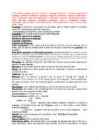
simple, match, words, playing, present, bird, translate, candle, helmet, disc, stick, puppet, travel, crash, complete, sentences, there, silver, middle, marten, best, popular, britain, hurt, wore, necessary, football, friend, piano, cards, violin, difficult, classical, loud, tense, perfect, lion, fish, summer, catch, traditional, british, during, visitpublisher. ISBN 1-59905-201-6 Printed in the United States of America 13 12 11 10 09 08 07 9 8 7 6 5 4 3 2 1 Introduction Grammar is a very old field of study. Did you know that the sentence was first divided into subject and verb by Plato, the famed philosopher from ancient Greece? That was about 2,400 years ago! Ever since then, students all over the world have found it worthwhile to study the structure of words and sentences. Why? Because skill in speaking and writing is the hallmark of all educated people. Lesson by lesson, this book provides basic instruction in the eight parts of speech--nouns, pronouns, verbs, adjectives, adverbs, prepositions, conjunctions, and interjections--as well as the standard patterns of English sentences. All students of English, be they native speakers or those who are studying English as a second language, will profit from the fundamental introduction and review of
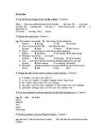
Kõik õigused on kaitstud. Ilma autoriõiguse omaniku eelneva kirjaliku loata pole lubatud ühtki selle töövihiku osa paljundada ei elektroonilisel, mehaanilisel ega muul viisil. Töövihik on kooskõlas 2009. a uuendatud õppekomplektiga I Love English 6. Tartu, 2014 ISBN 978-9949-436-59-0 Kirjastus Studium Riia 15b, Tartu 51010 www.studium.ee Trükitud OÜ Greif trükikojas Lohkva, Luunja vald Tartumaa 62207 --- 3 xxx 1. The Big Apple 1. Write the verbs in the present continuous or the past continuous tense. Do you remember? am is are was were verb -ing 1 Sorry. I ... (write) a report at the moment. I can't come with you. 2 When Peter arrived, his friends ... (play) football. 3 I ... (sleep) when the alarm went off in my sister's room. 4 Dad's mobile phone is switched off because he ... (fly) to Paris. He's on the plane at the moment. 5 I ... (read) an interesting book. It's a collection of memories. 6 Leo was late again. He ..
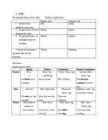
1 KLM 9 ENIRO 2 FARWEK 10 SAUREX 3 TALLEGG 11 MIZDE 4 VESITERM 12 LADA 5 STOW 13 SCHWUNG 6 KALEV 14 MAIASMOKK 7 YAMAHA 15 ISKU 8 ESTRAVEL 2 Affirmative tense Use Signal Words Negative/Questions · action in the present taking always, Present Simple A: He speaks. place once, never or several every ..., N: He does not speak. normally, often, Q: Does he speak? times seldom,
Tests Superstar 1 Luke Prodromou Test 1 Name____________________ Class_______ Use your English 1 Complete these sentences using the correct form (present simple or present continuous) of the verb in brackets. _ 1 She is in a band and she _________________________________ (record) a CD at the moment. _ 2 She is an actress and often _________________________________ (appear) on television. _ 3 At the moment she _________________________________ (have) a rest because she is tired. _ 4 Mike is a doctor and he _________________________________ (live) in Manchester. _ 5 I _________________________________ (start) work at 8.30 every morning.
There are two main types of computers, analog and digital, although the term computer is often used to mean only the digital type, because this type of computer is widely used today. That is why I am going to tell you about digital computers. Everything that a digital computer does is based on one operation: the ability to determine: on or off, high voltage or low voltage or -- in the case of numbers -- 0 or 1 or do-called binary code. The speed at which the computer performs this simple act is called computer speed. Computer speeds are measured in Hertz or cycles per second. A computer with a «clock speed» of 2000 MHz is a fairly representative microcomputer today. It is capable of executing 2000 million discrete operations per second. Nowadays microcomputers can perform from 800 to over 3000 million operations per second and supercomputers used in research and defense applications attain speeds of many billions of cycles per second.
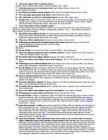
Not at all. 10) I´m sorry, I´ve left my book at home. Have you? Don´t worry, that´s okay? 11) I´m having an exam tomorrow. Good luck! 12) Have a safe journey home Thank you. 13) Have a nice day. You too. The same to you. 14) We won the match! Congratulations. http://www.abiks.pri.ee Well done. 15) It´s Friday Have a nice weekend! See you on Monday! 16) Could you pass me the bread, please? Here you are.
http:// THE PLURAL www.english-4u.de/plural_ex6. htm Singular + s parrot – parrots apple – apples girl – girls Words ending with y if a consonant is written before. ----> ies lolly – lollies story – stories strawberry – strawberries but: boy – boys toy - toys bay - bays Words ending with ch, x, s, sh, o ----> es
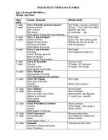
INGLISE KEELE TÖÖPLAAN 6. KLASSILE Aeg: I, II veerand 2003/2004 õ.-a Õpetaja: Age Tamm Õppe- Teemad. Alateemad. Mõisted, faktid nädal 1. nädal Unit 1. What did you do last summer? Past Simple questions, statements 2. nädal Summer activities Did you...? Yes, I did / No, I didn't Alan's summer play ball / the violin My summer go swimming / ...ing Polite English. Saying hello and introducing 3. nädal Unit 2. A trip to England Past Simple 4
1) Ann is my best friend! We........each other for years A know B knew C knows D have known 2) Nicky........to San Francisco when the accident happened. A flies B has flown C was flying D has been flying 3) Why don`t you let her........her story? A finish B to finish C finishing D have finished 4) Tim........in a cafe at present, but he has already applied for a new job A work B have worked C is working D worked 5) My father........already worked for two years before he went to University. A was B had C has D is 3. Change the order of the words to make a correct sentence. ( 5 points ) 1) I wonder / can / you / me / help / if 2) a / my / to / written / I / mother / already / letter / long / have
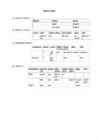
7. Verb: The principal forms of the verbs: Verbil on 4 põhivormi: Regular verb Irregular verb 1. the base form Talk Speak üldoleviku tüvivorm 2. the past form/ -ed form Talked Spoke üldmineviku vorm 3. the past participle (-ed Talked Spoken participle) mineviku kesksõna 4. the present participle (- Talking Speaking ing participle) oleviku kesksõna The tenses: Expressing the future: Simple Perfect Continuous Perfect Continuous Present Base Have / has + to be + base+ ing has/ have been +s + pariticiple base+ -ing
Phone: [p] A phone is actual pronunciation of a phoneme. A phone is represented between brackets Allophone: e.g. pin spin Phoneme: /p/ - /iz/ `houses' /s/ voicless `cats' /z/ `boys' /t/ `learned' /id/ `wanted' A phoneme is the smallest unit of the sound system of a language. If two sounds have the same phoneme, they are treated equally. A phoneme is represented between slashes. Morphology: is the study of word formations and the internal structure of words Morphemes: the smallest units of language that have their own meaning or grammatical function. cat, cat/s, laugh/ed, un/able, sheep Free morphemes: cat, laugh, eat, red Bound morphemes: prefixes: pre- prejudge dis- dislike suffixes: -ist typist infixes attached within another morpheme. Infixation is common in languages of Southeast Asia and the Philippines, and it is also found in some Native American languages.
We are going to the theatre. Pane tähele! Kestvat olevikku kasutatakse tegevusverbides (I am dancing, you are eating etc.). Mõned verbid on mitte tegevusverbid, näiteks ei saa öelda I am liking või you are knowing, vaid I like ja you know. Järgmiseid verbe ei kasutata tavaliselt kestvas olevikus. like love hate want need prefer know realise suppose mean understand believe remember belong contain consist depend seem Past Simple Lihtmineviku moodustamine Jaatav vorm Eitav vorm Küsiv vorm I asked I did not ask Did I ask? He/she/it went He/she/it did not go Did he/she/it go? We/you/they made We/you/they did not make Did we/you/they make?
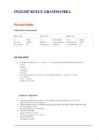
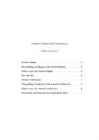
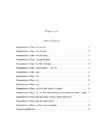
Present Simple and Continuous Table of Contents Present Simple ..................................................................... 2 The spelling of endings in the Present Simple ....................... 2 When to use the Present Simple ........................................... 3 The verb 'be' ......................................................................... 4 Present Continuous.............................................................. 5 The spelling of endings in the Present Continuous................ 5 When to use the Present Continuous.................................... 6 State verbs and event (action or dynamic) verbs ................... 7 Present Simple
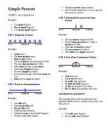
Windows are not made of wood. Simple Present · · New York is a small city. It is not important that this fact is untrue. [VERB] + s/es in third person USE 3 Scheduled Events in the Near Examples: Future · You speak English. · Do you speak English?
PASSIVE VOICE TEST FOR FORM 10 NAME: Task 1. Turn active voice sentences into passive voice. Only keep the agent (by phrase= where absolutely necessary. Please remember that tense form (tegusõna aeg) should remain the same when the sentence is transformed into passive. E.g. Chimps eat bananas (Present Simple Active) Bananas are eaten by chimps. (Present Simple Passive) They were playing the piano. (Past Continuous Active) Piano was being played. (Past Continuous Passive) 1. They will finish the house next month. 2. The house will be finished next month. 3. Susan has completed the essay. 4. The essay has been completed by Susan. 5. People should have left the bird alone. 6. The bird should have been left alone. 7. We cannot repair their car. 8. Their car cannot be repaired. 9. The owners had sent the money to a Swiss bank. 10
Cali 2005 Was Born Traveled to Europe Husband 1978 School graduates @ Oxford 1999 Started Got married School 1983 2008 2 The Six English Verb Tenses Three Simple Tenses Simple continuous Present You walk. You are walking I run. I am running. Past You Walked You were walking. I ran. I was running. Future You will walk. You will be walking. I will run. I will be running. Three Perfect Tenses Perfect continuous Present perfect you have walked
This is an interesting (adjective) story. The kitchen ( noun) door is locked. 2 Word Order in Affirmative Sentences In English the word order is not as flexible as in many other languages. The basic structure of an affirmative sentence is SUBJECT (Who?/What?) – PREDICATE (Action/State) – OBJECT (What?): Monkeys like bananas. Mary has a little lamb. All the world is a stage. The teacher is explaining the rule. Peter is playing the guitar. If we want to say something about the manner of the action ( how does something happen?), we put the adverbial of manner in front of the predicate: She quietly opened the door. If we want to stress the mode of action, we put the adverbial of manner after the object. She opened the door quietly. If we want to show the place where the action takes place we put the adverbial of place after the predicate. Janet lives in Paris. I work in the library.
..............United Kingdom consists of Great Britain and Northern Ireland. 5) ..............Chicago is on...............Lake Michigan. 6) The highest mountain in Africa is.............Kilimanjaro. 7) ...............River Pärnu flows into...........Baltic Sea. 5. Complete the sentences with modal verbs.(10 p) 1) I....................ask you to help me later. 2) I think you...................try to relax more. 3) Tell Mark he...................tidy his room at once. 4) ....................you translate this for me? 5)......................we stay in one place or travel around? 6) I promise I ....................study hard. 7) You ......................wash my jeans after you borrowed them. 8) The phone is ringing. I ......................answer it. 9) He ..................already walk when he was ten months old.10) Clothes....................be very different in the year 2100. 6. Make the sentences negative or interrogative.(10 p) 1) My brother goes to school every day.......................
Golden Grammar rules 1. Don't use an with own. Sue needs her own room. (NOT Sue needs an own room.) I'd like a phone line of my own. (NOT ... an own phone line.) 2. Use or rather to correct yourself. She's German or rather, Austrian. (NOT She's German or better, Austrian.) I'll see you on Friday or rather, Saturday. 3. Use the simple present play(s), rain(s) etc to talk about habits and repeated actions. I play tennis every Saturday. (NOT I am playing tennis every Saturday.) It usually rains a lot in November. 4. Use will ..., not the present, for offers and promises. I'll cook you supper this evening. (NOT I cook you supper this evening.) I promise I'll phone you tomorrow. (NOT I promise I phone you tomorrow.) 5. Don't drop prepositions with passive verbs. I don't like to be shouted at. (NOT I don't like to be shouted.) This needs to be thought about some more. (NOT This needs to be thought some more.) 6
INGLISE KEEL Sisukord Sisukord.................................................................................................................................. 2 Ajavormid Tense vorms.......................................................................................................3 Lihtolevik The present simple..................................................................................... 3 Lihtminevik The past simple....................................................................................... 3 Lihttulevik The future simple...................................................................................... 3 Kestev olevik The present continuous......................................................................... 3 Kestev minevik The past continuous
INGLISE KEEL Sisukord Sisukord 2 Ajavormid Tense vorms 3 Lihtolevik The present simple 3 Lihtminevik The past simple 3 Lihttulevik The future simple 3 Kestev olevik The present continuous 3 Kestev minevik The past continuous 4 Kestev tulevik The future conrinuous 4 Täisminevik The present perfect 4 Enneminevik The past perfect 4 Ennetulevik Future perfect 5 Üldminevik Past tense 5 Üldtulevik Future indefinite 5 Artiklid ja eessõnad 7
Broadly, there are three aspects to the study which are Pragmatics (studies the use of language → interested in the gap between the sentence’s meaning and the speaker’s meaning). Semantics (concerned with the meaning of the language aspects and the way they change, also how objects and language and thinking and language are related). Syntax (concerned with the rules [grammar] and how sentences and words are formed). Synchronic approach to language → A focus in language study on how language exists in one moment in time, not at how this language came to be the way it is now. Example Estonian in the 21st century. Diachronic approach to language → A focus in language study on how a language has changed over some period of time. In a way it is comparing language to what it was and how it is now. For example comparing 18th century and 19th century Estonian.
............................................ 5 Prepositions of Place – at .................................................................................... 5 Prepositions of Place – on ................................................................................... 6 Prepositions of Place - in & at with towns & villages............................................ 6 Prepositions of Place – in, on & at with addresses and names of streets / roads .. 7 Prepositions of Place with the words ‘corner’, ‘front’ and ‘back’ ............................ 7 Prepositions of Place with the word ‘arrive’.......................................................... 7 Prepositions of Place – in & on with travelling ..................................................... 8 Prepositional Phrases ......................................................................................... 8 Prepositions of Time – in, on & at
directly to it) onto movement to the top of something jump onto the table from n the sense of where from A flower from the garden OTHER IMPORTANT: English Usage Example from who gave it a present from Jane of who/what does it belong to a page of the book what does it show the picture of a palace by who made it A book by Mark Twain off leaving a public transport get off the train
What is the approximate population of the 4 constituent countries? 62 million. England- 51,4 million, Scotland- 5,1 , Wales 2,9 m , Northern Ireland 1,8 million. 14. How did the Anglo-Saxons influence Britain? Language, first settlers on British Isles 15. Name some countries where English is used as the first language. -The UK; USA; Australia; New Zealand; South Africa 16. Which languages have influenced English most? Latin (technical and biological words, like butter, wine, sponsor), German (angst, kindergarten), French(cricket, blonde), Greek(crisis, ) 17. Describe England.- England is the biggest country in the UK English is the official language of the UK.. Nearly 84% of the population of the UK lives in England, mainly in the major cities and metropolitan areas. The south of England is mostly low-lying land, with hills and the north of England is mostly covered in moorland and mountains. Flag- Cross of
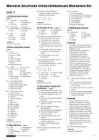
2 broad-minded 5 self-confident 1D Survival at sea page 67 1F Talking about photos 3 naive 6 grumpy 1 1 horrified 4 determination page 9 2 relief 5 resigned 1 1 connected 6 say 3 1 gold 5 lamb 3 obstinate 6 misery 2 show 7 as though 2 bird 6 rake 3 imagine 8 would guess 2 1 Water was pouring into the boat. 3 the hills 7 bee 4 like 9 hard 2 We clambered onto the rocks. 4 a mouse 8 a fox 5 judging
We can report people's words by using direct speech or direct speech reported speech. speech `I'm tired!', Helen said. Helen said (that) she was tired. The main verb of the sentence is usually past ( Tom said that... / I told her that...) and the rest of the sentence is usually past too. Sequence of tenses if the verb in the main sentence is in the past tense the other verbs are usually in one of the past tense too. Present Simple Past Simple I'm a teacher. He said (that) he was a teacher Present Progressive Past Progressive I'm having lunch with my He said (that) he was having parents. lunch with his parents. Past Simple Past Perfect He said (that) he had bought a I bought a new car. new car.
Notice that Spanish has informal and formal ways of speaking. This is because there is more than one meaning to "you" in Spanish (as well as in many other languages.) The informal you is used when talking to close friends, relatives, animals or children. The formal you is used when talking to someone you just met, do not know well, or someone for whom you would like to show respect (a professor, for example.) Encantado, cansado, enfermo, and aburrido are the masculine forms of the words. If the words refer to a woman or are spoken by a woman, then the final o changes to a: encantada, cansada, enferma, and aburrida In Spain, as well as Argentina, Bolivia, Chile, Paraguay, Peru, Uruguay and Venezuela, the Spanish language is called castellano instead of español. 2. Pronunciation Spanish Letter English Sound a ah e ay i ee o oh
Will + infinitive (will go) Am/is/are going to + infinitive (is going to rain) 1.A decision at the moment of 1.Future plans made before the speaking: moment of speaking: A: 'I'm cold'. A: 'We've run out of milk.' B: 'I'll close the window'. B: 'I know, I'm going to buy some.' 2.Prediction based on opinion: 2.Prediction based on present I think the Conservatives will win the evidence: next election. Look at those boys playing football! 3.A future fact: They're going to break the window. He will be ten next year. 4.Promises / requests / refusal / willingness: I'll help you with your homework. Will you give me a hand? 5.In the same way as the future continuous, but with state verbs: I'll be at the station when you arrive. 'Shall' is used mainly in the forms 'shall I
.............................................................. 5 Names that take the Definite Article...................................... 6 No article.............................................................................. 7 Countable and uncountable nouns ....................................... 9 General Rules There are two articles in the English language – the Indefinite Article and the Definite Article. The Indefinite Article has two forms – a and an (a precedes words beginning with a consonant sound and an precedes words beginning with a vowel sound). It comes from the Old English word ãn, which meant one. The Definite Article is the. It comes from the Old English word ţis, which meant this. Thus, in most general terms, a and an cannot be used with countable nouns in the plural and with uncountable nouns. Countable nouns are names of the things you can count (one elephant, two elephants, three elephants, etc).
f) Is his new job easier than the one he had in London? g) How does the writer feel about his new situation? Informal (friendly) letters are normally written to relatives, friends or other people we know very well. A good informal letter should be divided into paragraphs. Each paragraph should deal with one aspect of the subject and start with a topic sentence which gives the main idea of the paragraph. Tenses Present Perfect and Past Simple are often used in letters giving news. The Present Perfect is used to refer to recent activities and the Past Simple to refer to activities which happened at a stated time in the past. TASK 7 Read the following letter and correct the mistakes. Write S for spelling, P for punctuation, WO for word order, G for grammar or WW for wrong word. Dear Jenny , How are you ? I hope that you're very well. I've got so many to tell you that I don't know where to begin
Students' own answers 11 sympathies 2 1 time-consuming 12 verdict 2E Narrative tenses page 16 2 long-lasting 3 light-hearted 2 That he was responsible not only for 1 1 past perfect continuous 4 absent-minded his family but also to wider society. 2 past simple 5 wide-eyed 3 1 set 7 on 3 past continuous 6 fair-skinned 2 tells 8 on 4 future in the past 3 made 9 for 5 past perfect 3 1 well-behaved 6 used to 2 far-reaching 4 during / in 10 that
5 Which invention made the rockets even more powerful and where did it lead to? 6 How did the Germans use rockets in the World War II? 7 Speak about the first steps in conquering the space. 8 How long have people explored the Mars and which invention enhanced the exploration? 9 Find the main points about the Mars One mission. 10 What is the difference between a cosmonaut, astronaut and taikonaut? 11 Explain the difference between the words corps and corpse? How do you pronounce these words? 12 Translate the italicized expressions and bold words in the text. Make sure that your translation is appropriate! 13 Derivation is the process of forming a new word from an existing word, often by adding a prefix or suffix. For example, from the word HAPPY we can derive the following words: happen, happily, happiness, unhappy, unhappiness.
 annaabi.ee