Leidsid 33 sarnast õppematerjali, mis on seotud failiga "For and against capital punishment". Need materjalid aitavad sul teemat sügavamalt mõista.
advantage, criminals, prison, other, disadvantage, death, penalty, person, another, country, there, innocent, them, cause, killing, process, disadvantages, prove, rest, dead, cannot, commit, further, crimes, either, within, escaping, released, minor, costs, words, spend, rather, than, term, however, important, virtual, possible, hell, friends, throughCapital punishment should be abolished Capital punishment is a form of punishment where a person's life is taken. Capital punishment has been abolished in Estonia since the year 1998, but the last man was executed in 1991. One of the reasons for not abolishing capital punishment are that a life long sentence is not as effective as execution, and that the death penalty affirms the right to life by punishing those who violate it in the most serious form. For example: death penalty should exist for serial killers. Another reason is that the criminals who would have been executed are now the country's responsibility and they use taxpayers' money. On the other hand, capital punishment is very inhumane. After the execution new evidence may appear and the criminal might turn out to be innocent but there is nothing to do
Law-makers breaking the law: torture as a justified interrogation technique? 1 Introduction It was Jeremy Bentham who thought of a famous method to give ethics a rational basis. He was fed up with the penal laws where offenders met corporate punishment and together with Cesario Beccaria he stood up to torture, corporal punishment, and the death penalty. He resisted against irrational moral emotions as the instigation for ethical conduct, saying only reasonable grounds could justify the moral decisions of individuals and legislators. And now his theory of is the one that is known for justifying torture (Verplaetse, 2008). Since 9/11 and the following fight against terrorism it became clear that the Bush administration thought of torture as something justifiable while it goes against all possible agreed upon treaties and conventions
Capital Punishment The adherents of the death penalty refer to public safety. Still, even though violent criminals are locked away from the society forever, there is also another possibility for the inmate to escape the full punishment. However proving whether one is guilty or not is a very complicated and time-consuming process. From an ethical perspective, the death penalty is, undoubtedly, a violation of human rights. Most death penalty critics charge that it is particularly barbaric when applied to mentally retarded people and juvenile delinquents. In this case, capital punishment looks like senseless cruelty. A number of states had already passed legislation adopted by the Supreme Court in June 2002 prohibiting such executions to this group of people. As for juvenile delinquents, we should admit their lack of maturity thus they may be less culpable than adults who commit crimes
_Microsoft ) When we retell, we concentrate on the terms, not on the examples etc. NB! Märkmeid võib teha ja TÕLGI KINDLASTI ETTE ÄRA JUBA!!!!!!!!!!!! HOMEWORK - Academic writing Title Introduction Body conclusion Lõikude vahele 1 rida, taandrida ei jäeta! Argumendid millegi poolt, argumendid millegi vastu. Väldime I-vormi, vaid kasutame passive-vormi. Lõhikesi vorme ei kasutata! (don't) 150 sõna Teema "should mery-killing be punished?" HOMEWORK Terms to explain: Nation - a country, especially when thought of as a large group of people living in one area with their own government, language, traditions, etc: Stranger someone whom you do not know Citizen - a person who is a member of a particular country and who has rights and obligations because of being born there or because of being given them Penalty - a punishment for doing something that is against a law Government - the group of people who officially control a country
g. law of gravity Prescriptive law – prescribe how people ought to behave e.g. speed limits In all societies relations between people are regulated by prescriptive law; customs (informal rules of social and moral behaviour); rules we accept if we belong to a particular institution (religion, organization); laws imposed on people by a government Penalties for breaking the rules are different. For not following the customs there may not be a punishment, or a person may be criticized by the society; rules of a social institution tend to carry precise penalties but they are not enforceable by any political authority; however governments use a system of courts backed by the power of the police to enforce the laws they have made. The relations between people are regulated by a combination of all these rules. One of the ways to classify laws is to separate them into prescriprive and descriptive law. Descriptive laws simply describe how people usually behave
sure of, and it is that individuals go against laws because they choose so, as criminal behaviour is a matter of choice. Today, there are many excuses cloaked as reasons for criminal behaviour. The misguided nature of these assertions has a serious impact upon crime control strategies. The classical approach holds people to choose freely among alternatives in behaviour. In this view, the perpetrator plans his or her actions before carrying them out. The social environment in which the person is amidst of, is a key factor in causes of criminal behaviour, with weak or broken bonds to family, school, and religion being the catalyst of criminal behaviour. They may not see the benefits of adhering to conventional social values and believe crime is a way to improve their social conditions. Personal choice weighs over and dominates the reasons of individual actions. Through rational conscious thoughts one may select the temptations of preference. One may think of
descriptive law (kirjeldav õigus) - laws which simply describe how people or even natural phenomenas usually behave nation (riik) - country with its own goverment citizen (kodanik) - person native of a country; realationship between country and a person stranger (välismaalne) - person who is unfamiliar, from another country penalty (karistus) - punishment fixed by law, as for a crime or from any soical groups goverment (valitsus) - organization which controlls a stre or community System of Courts (kohtusüsteem) - organization applying law in the name of states to commit a crime (kuritegu läbi viima) - breaking a law, usually given out by the goverment fine (trahv) - certain sum of money person pays for breaking a law
Why is this system unique? Usually law regulates relations between people, people and the state etc, PIL regulates relations between states. Thats why PIL is important for international relation students. PIL influences the life of everybody, it doesn't regulate people directly but indirectly (through the decisions of the states), because it's everywhere. It's like air. E.g. when you want to send a letter to Brazil, you put a stamp from your own country and send it from your post office and the letter gets delivered. Why is this so easy, because there are certain international conventions that regulate postal services. E.g. traffic signs are almost the same everywhere, why? Because of certain int conventions that require the states to have more or less unified traffic signs. States apply international regulations to national regulations and they have to be in
can compel individuals to conform to behavioural codes and punish those that do not. Various mechanisms are employed to regulate behaviour, including rules codified into laws, policing people to ensure they comply with those laws, and other policies and practices designed to prevent crime. In addition are remedies and sanctions, and collectively these constitute a criminal justice system. Not all breaches of the law, however, are considered crimes, for example, breaches of contract and other civil law offences. The label of "crime" and the accompanying social stigma are normally reserved for those activities that are injurious to the general population or the State, including some that cause serious loss or damage to individuals. The label is intended to assert an hegemony of a dominant population, or to reflect a consensus of condemnation for the identified behavior and to justify a punishment imposed by the State, in
international business. documents and may A notary's main research legal issues. functions are to administer oaths and affirmations, take affidavits and statutory declarations, witness and authenticate the execution of certain classes of documents, take acknowledgments of deeds and other conveyances, protest notes and bills of exchange, provide notice of foreign drafts, prepare marine or ship's protests in cases of damage, provide exemplifications and notarial copies, and perform certain other official acts depending on the jurisdiction
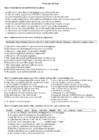
Task 1. Underline the most suitable word or phrase. a) Sally didn't realise that she had broken/countered/denied the law. b) The police have banned/cancelled/refused parking in this street. c) I must remember to get a/an agreement/licence/permission for my television. d) The president admitted that there had been a breakdown of law and crime/government/order. e) Jim's parents wouldn't agree/allow/let him go to the demonstration. f) Jake was arrested because he had entered the country falsely/illegally/wrongly. g) Talking to other students is against the law/orders/rules of the examination. h) The two men were arrested before they could commit/make/perform any more crimes. i) I had to take the company to court/justice/law to get the money they owed me. j) Smoking is compulsory/prohibited/refused near the petrol tanks. Task 2. Match word in the box with a suitable description (a-l).
/ wicce f.) is a practitioner of witchcraft. Historically, it was widely believed that witchcraft involved the use of these powers to inflict harm upon members of a community or their property, and that all witches were in league with the devil. Since the mid 20th century, the term witchcraft has sometimes been used to distinguish between bad witchcraft and good witchcraft, with the latter often involving healing. Human misfortune was often blamed on a supernatural entity or a known person in the community. Reasons for accusations of witchcraft fall into four general categories: · A person was caught in the act of positive or negative sorcery · A well-meaning sorcerer or healer lost their clients' or the authorities' trust · A person did nothing more than gain the enmity of their neighbours · A person was reputed to be a witch and surrounded with an aura of witch-beliefs
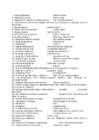
17. seaduse mittetundmine ignorance of law 18. süüd välistav asjaolu defence, preclusion of guilt 19. üldriiklikud seadused national laws 20. kohalikud seadused local laws, by-laws 21. asutuse põhikiri statute 22. ajutine ametist/spordist kõrvaldamine (n,v) suspension, suspend 23. väljaheitmine (n,v) expulsion, expel 24. kahjustatud isik injured person 25. tsiviilhagi kellegi vastu algatama start (a) civil action against 26. vigastuse/kahju eest kompensatsiooni nõudma claim damages for damage caused 27. süüdistuse/karistuse ees seisma face prosecution 28. kriminaalasja algatama vägivallakuriteo tõttu start criminal action against for a crime of violance 29. ühiskonnavastaseks käitumiseks pidama consider anti-social behaviour 30
Ameerika Kirjandus 30.01.13 Naturalism · France, Emile Zola · Put down his theory in 1879: Le Roman Experimental, attempt to explain the development of human society throuch biological laws · Outlook is deterministic, pessimistic, fatalistic (fate or biology) · Man as an animal-clever than other beasts, still explainable within the framework · Man is not a free agent, is govern by something · Unable to determine his own faith · Hereditary · Naturalists tried to apply in fiction the processes of natural sciences · Writers task is to record facts, systems of behaviour, living conditions, never revealing any natural unbiased (completely natural) · Point of view: amoral-outside the category of morality, neither good or bad
[Your Name] [Instructor] [Class] [Date] ABOUT SERIAL KILLERS INTRODUCTION Let's play a quick game of catchphrase - guess the word. My phrase is two words, and describes a person. Charles Manson. Ted Bundy. Jack the Ripper. Serial killer - serial meaning "arranged in a straight line or succession" (1) and killer meaning "one who kills, or any agent used to neutralize the active property of anything." We tend to have a morbid interest in people who commit murder. Today, I'd like to explain what distinguishes serial killing from mass murders, how long serial killing has been around, and highlight some of the psychological traits common to serial killers. BODY I
What is the real meaning of life? Why prefer one thing to another? Can we trust observation? It’s raining outside - how do you know it is? I can see it’s raining. How to convince yourself its raining? A good reason to doubt - 49 other peaople have the same opinion. Falsifiable → possible; not falsified World disappeared in 2012 and got recreated 3 secs later → unfalsifiable - cannot prove it’s true/wrong, cannot provide any tests to prove it. Or - one or another but not both → exclusive - one or another (both) → inclusive (Invited those who are managers or specialists - both) Arguments valid or not - logic is a science where to decide it Different arguments lead to different methods. 1 - Recognizing arguments What is an argument? An argument is a group of statements, so that one or more of them (called the premises) is said to provide support for one of the others (called the conclusion).
Freedom of speech Freedom of speech is a wide speared conception. I can understand it in many different ways. For example in my state, Estonia, the freedom is a very important for every human. At least to me it is seemed to be like that. But at school is a little bit sad story with freedom of speech. Some teachers are not used that student expresses her own strong opinion. When another way some teachers are just waitening it. As well as people can not speak along with state public topics and express their opinion. Therefore freedom of speech is debateable. Already from the old times Estonians have been fighting for their own freedom, because they do not like to allow to another country or state, foreign public and foreign language. Estonian public have been fighting with German, Russian and a lot of other states. Estonians has
Similarly, as not all people share the same meaning, in areas with high cultural and ethnic diversity, meaning can cause conflict. All in all, a shared meaning can be the main basis for social order in smaller and cohesive communities, whereas in larger and more varied habitats this explanation becomes lacklustre. Norms and values For social order to emerge, not only need individuals to understand and share with each other, as foreseen by common meanings, they must also be able to agree on a wider scale. Recognized norms and accepted values serve as a basis for more productive cooperation. Hechter and Horne (Hechter and Horne, 2003) describe norms as our "external criteria for evaluation" and values as our "internal criteria for evaluation". As norms are external, there are sanctions in the society so that the can exist effectively. People obey norms because they receive social encouragement for doing so
Before the war, Himmelstoss was a postman. He is a petty, power-hungry little man who torments Paul and his friends during their training. After he experiences the horrors of trench warfare, however, he tries to make amends with them. Read an in-depth analysis of Corporal Himmelstoss. Franz Kemmerich - One of Paul's classmates and comrades in the war. After suffering a light wound, Kemmerich contracts gangrene, and his leg has to be amputated. His death, in Chapter Two, marks the reader's first encounter with the meaninglessness of death and the cheapness of life in the war. Joseph Behm - The first of Paul's classmates to die in the war. Behm did not want to enlist, but he caved under the pressure of the schoolmaster, Kantorek. His ugly, painful death shatters his classmates' trust in the authorities who convinced them to take part in the war. Detering - One of Paul's close friends in the Second Company. Detering is a young man with
The making of a new nation. The Enlightenment in America. The emergence of the notion of the American Dream. The great Enlighteners: Crèvecoeur, Jefferson, Paine, Franklin. The American Enlightenment is the intellectual thriving period in the United States in the midtolate 18th century (17151789), especially as it relates to American Revolution on the one hand and the European Enlightenment on the other. Influenced by the scientific revolution of the 17th century and the humanist period during the Renaissance, the Enlightenment took scientific reasoning and applied it to human nature, society, and religion. American Enlightenment a gradual but powerful awakening that established the ideals of democracy, liberty, and religious tolerance in the people of America.
giant of Africa. In the last 32 years, I have watched with horror and outright helplessness as the downward slide of the African race continues to escalate. But rather than address the problems, we resort to blaming the Caucasians, Asians and others for our misfortune. We are not men enough to accept responsibility for our actions. Africans blame either the British, French or little Portuguese/Spanish for their problems. Africans in America blame the Caucasians for all their problems, or any other ethic group they have allowed to take over their neighbours, a frequently recurring phenomena. Africans blame the International Monetary Fund, the World Bank, the Group of 7, the former colonial masters for the abject poverty in our respective countries. We blame the wars ravaging several African sectors on the interference of our former colonial masters on “our internal affairs.” Ha! – some kind of independence!
(Weyerhaeuser), mining, beverages (Starbucks, Jones Soda), real estate (John L. Scott, Colliers International, Windermere Real Estate, Kidder Mathews), retail (Nordstrom, Eddie Bauer, Car Toys, Costco, R.E.I.) and tourism (Alaska Airlines, Expedia, Inc). Taxes The state of Washington is one of only seven states that does not levy a personal income tax. The state does not collect a corporate income tax or franchise tax either. However, Washington businesses are responsible for various other state levies, including the business and occupation tax a gross receipts tax which charges varying rates for different types of businesses. Wine Washington ranks second in the United States in the production of wine, behind only California. By 2006, the state had over 130 km2 of vineyards, a harvest of 109,000t of grapes and exports going to over 40 countries around the world from the 600 wineries located in the state. While there are some
I will talk about the different types of identity theft, the most common way they take place and what consequences they might have. I will also talk about some of the examples and point out actions everyone can take to minimize the chance of becoming a victim of an identity theft. What is Identity theft Identity theft is defined as the deliberate use of someone else's identity, usually as a method to gain a financial advantage or obtain credit and other benefits in the other person's name, and perhaps to the other person's disadvantage or loss. The person whose identity has been assumed may suffer adverse consequences if they are held responsible for the perpetrator's actions. Identity theft occurs when someone uses another's personally identifying information, like their name, identifying number, or credit card number, without their permission, to commit fraud or other crimes.[1] Criminals can even use seemingly harmless pieces of information, such as your
When writing an essay, information should not be unnecessarily repeated. The same is true for grammatical patterns and vocabulary: different grammatical patterns and words make the essay more interesting and easily readable. As an essay is a formal piece of writing, contractions (e.g. isn't, aren't, etc.) are not acceptable because they are not formal enough. S/he can be used instead of the cumbersome "he or she" to save space when having in mind a person of either sex, or the also politically correct "they" for the singular. There should be neither slang forms nor colloquialisms. It is important to be as precise and to the point as possible. Hinting at things is not a good idea because essays are not meant to be read by friends who know the writer's point of view anyway, but by mere acquaintances or most often even strangers who should also understand everything the writer is trying to say.
Words that ADD information · also · and · another · besides first, second, third, ... · furthermore · in addition · moreover The little girl put on her yellow shirt and brown overalls. Chris is on the basketball team this semester at Indiana School for the Deaf. In addition, he is on the soccer team. We will be here for one more week so we can finish up our work. Another reason we are staying longer is because we do not want to miss the Deaf Way conference. First of all, pour a half-cup of milk in the bowl; second, add two eggs; and third, stir the mixture. I admire I. King Jordan because he is the first deaf president of Gallaudet. Besides that, I admire him because he is a great long distance runner. Furthermore, he is a dedicated family man. All in all, there ís not much to dislike about the man, except he is too perfect!
4 social actors has provoked a great controversy as it challenges the image of the incompetent child which is overwhelmingly prevalent in the Western society. It has generated a great confusion `about what role young people below the age of majority should play in community and political life`.6 On the one hand, there is a growing recognition with respect to children`s participation in society. On the other hand, children are seen as welfare dependants, needy for care and protection of adults. The goal of this dissertation is to critically explore this hotly debated tension between these two conflicting salient features that have often prevented the recognition of children as active citizens, entitled to respect and participation. With a particular interest in Wales, the following research project analyses the
........................................................................... 45 7. ACCOUNTING ............................................................................................................................ 49 7.1 Levels of the system of accounting regulation in the Russian Federation ................................ 49 7.2. The Federal Law "On Accounting" ............................................................................................ 51 7.3. Chart of accounts and other documents .............................................................................. 52 7.4. Russian tax system ................................................................................................................ 53 7.5. Banking system in Russia....................................................................................................... 53 ABOUT TRADERUN PROGRAMME........................................................................................................
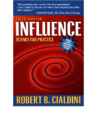
do it, enabled us to make significant changes. His work has enabled us to gain significant competitive differentiation and advantage" -LAURENCE HOF, Vice President, Relationship Consulting, Advanta Corporation "This will help executives make better decisions and use their influence wisely ... Robert Cialdini has had a greater impact on my thinking on this topic than any other scientist." -CHARLES T. MUNGER, Vice Chairman, Berkshire Hathaway, Inc. If you're wondering why of Latin America, the Far East, and Central Europe. you should buy this new edition of Influence: o More neuroscience evidence of how the influence process works is inte-
Tartu 2013 TABLE OF CONTENTS INTRODUCTION ................................................................................................................... 4 1. UKRAINE ...................................................................................................................... 5 1.1. General information ..................................................................................................... 5 1.1.1. Country Profile ..................................................................................................... 5 1.1.2. Post-Independent Ukraine. Economy and politics ............................................... 6 1.1.3. Key Macroeconomic indicators ......................................................................... 14 1.1.4. Foreign Direct Investments ................................................................................ 16 1.1.5
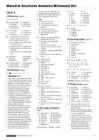
5 (possible answers) she was my age and apart from the 1 1 go ahead 5 come to eighties hairstyle we're the spitting 1 Well, you will go to bed late every night. 2 fall through 6 bring about image of each other! Some people 2 Well, you will refuse to wear a 3 tip off 7 go down with say that they can see a strong family coat. 4 mistake for 8 come up with resemblance between my dad and me.
which court should hear a case 10. burden of proof – obligation to bring evidence 11. standards of proof – the level of reliability of the evidence used in the case 12. adversarial procedure – opposing parties hold a dispute in the procedure 13. inquisitorial procedure – the judge controls and starts investigation in the case 14. damages – monetary compensation which is claimed by the injured person 15. injunction – an order that requires or forbids the defendant to do smth 16. specific performance – to be forced to do smth by the court decision II 1. kahjustatud isik – aggrieved person 2. kahju tekitama – to cause smb damage 3. hagi kohtusse andma – to file a claim with the court 4. seaduslik hüvitus, õiguskaitsevahend - remedy 5. maksujõuetus - insolvency 6. tagaseljaotsus – judgement in default 7
Romeo and Juliet The story concerns two noble families of Verona, the Capulets and the Montagues, that have feuded for generations. The prologue also explains that the lovers' tragic suicides "[bury] their parents' strife." R & J are star-crossed lovers it means, that they can never be happy together and they rather die before they live without each other. The action starts with a street-battle between the two families, started by their servants and put down by the Prince of Verona, Escalus. The Prince declares that the heads of the two families (known simply as "Montague" and "Capulet") will be held personally accountable for any further breach of the peace, and disperses the crowd. Count Paris, a young nobleman, talks to Capulet about marrying his thirteen-year-old daughter, Juliet
Chapter 21 Chapter 42 Chapter 1 It is a truth universally acknowledged, that a single man in possession of a good fortune, must be in want of a wife. However little known the feelings or views of such a man may be on his first entering a neighbourhood, this truth is so well fixed in the minds of the surrounding families, that he is considered the rightful property of some one or other of their daughters. "My dear Mr. Bennet," said his lady to him one day, "have you heard that Netherfield Park is let at last?" Mr. Bennet replied that he had not. "But it is," returned she; "for Mrs. Long has just been here, and she told me all about it." Mr. Bennet made no answer. "Do you not want to know who has taken it?" cried his wife impatiently. "You want to tell me, and I have no objection to hearing it." This was invitation enough. "Why, my dear, you must know, Mrs
 annaabi.ee