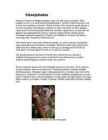
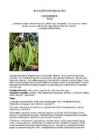
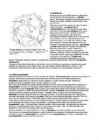
Endangered animal koala bear Though often called the koala "bear," this cuddly animal is not a bear at all, it is a marsupial. Koalas live in eastern Australia, where the eucalyptus trees they love are most plentiful. In fact, they rarely leave these trees. That is why they are usually called "treehuggers". Koalas have thick, grayish fur, with white on their chests, inner arms, and ears. They have large furry ears and leathery noses.The koala has large, sharp claws to assist with climing tree trunks. The koala is one of the few mammals that have fingerprints. Koalas do not live in big groups, they rather prefer to be alone. Koalas consume eucalyptus leaves and
punakas või hõbedane, kõhupoolel heledam.Koala kinnitub puu külge tugevate küünistega, mida ta vajutab puukoore sisse. Küünised on eriti tugevasti arenenud kahel teineteisele vastandataval varbal. Need on piisavalt tugevad, et kanda looma raskust. Tsüsiit, konjuktiviit ja sinusiit on koaalade tavalised haigused. Sinusiit tüsistub sageli, eriti talvel, kopsupõletikuga. Koala toitub ainult mõnede eukalüptiliikide lehtedest. Uus- Lõuna-Walesis on nendeks tavaliselt Eucalyptus maculata ja Eucalyptus tereticornise lehed, mis sisaldavad eriti rikkalikult eukalüptiõli. Victorias on selliseks liigiks mannaeukalüpt (Eucalyptus viminalis). Päevas vajab täiskasvanud loom ligi 1,1 kg eukalüptilehti. Muid taimi ei püüa süüa isegi nälgiv koala. Koalal pole looduslikke vaenlasi. Kiskjad tema liha ei söö. Arvatavasti sellepärast, et see on liiga läbi imbunud eukalüptiõlist. Tal pole vaenlasi peale inimesete. Enne ümberasujate saabumist
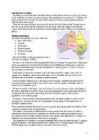
forests (1.) that occupy the space between the Great Dividing Range and the eastern coast. Westward from the Great Dividing Range the wet forests give place to beautiful grasslands with some trees . These grasslands are called the savannas (2.). Farther west the trees disappear and the bushlands (3.) begin. The real desert (4.) occupies the centre of the Western Plateau. In the very southwest there are thin forests of evergreen trees (5.). Most of Australian trees are kinds of eucalyptus trees (or gum trees to Australians) and acacia ( wattle to Australians). Eucalyptus trees are found everywhere in Australia. There are many kinds of them and they greatly differ in size. One kind, the great mountain ash, can grow to 120 metres and it grows in the wet forests in the eastern part of the continent.These strong trees do not die when there are forest fires. Some other kinds are small bushes in the semi-deserts.Eucalyptuses give the local people timber and eucalyptus oil.
that the United States of America, and it is bigger than Western Europe. THE AUSTRALIAN NATIONAL UNIVERSITY • The Australian National University – commonly abbreviated to ANU, is a public teaching and research university located in Canberra. • There are six different states in Australia: Western Australia, Queensland, New South Wales, Victoria, Tasmania and South Australia. NEW SOUTH WALES HAS THE BLUE MOUNTAINS. • They are covered with forest of blue- colored eucalyptus trees. The air above the forest contains millions of microscopic drops of eucalyptus oil. When the sun shines, the air of the Blue Mountains is a real, beautiful blue. NATIONAL SYMBOLS OF AUSTRALIA Golden wattle THE CAPITAL OF AUSTRALIA • The city is the political and administrative capital of Australia. It is also the centre of the nation’s history, learning and research
Täiskasvanud isend sööb ainult eukalüptilehti. Sellega seoses on tal hästi arenenud umbsool, mille pikkus ulatub 2,4 meetrini. Koala ei joo midagi (siit ka Uus-Lõuna-Walesi hõimude nimetus: ei joo), talle piisab lehtede niiskussisaldusest. Koala eelistab eukalüptide värskeid, noori võrseid. Söömiseks peenestab ta lehed ja mälub läbi, kogudes massi põsetaskusse. Koala toitub ainult mõnede eukalüptiliikide lehtedest. Uus-Lõuna-Walesis on nendeks tavaliselt Eucalyptus maculata ja Eucalyptus tereticornise lehed, mis sisaldavad eriti rikkalikult eukalüptiõli. Victorias on selliseks liigiks mannaeukalüpt (Eucalyptus viminalis). Päevas vajab täiskasvanud loom ligi 1,1 kg eukalüptilehti. Muid taimi ei püüa süüa isegi nälgiv koala. Mõned eukalüptilehed sisaldavad sinihapet. Seda on leitud ka noortest võrsetest. On võimalik, et koalade valivus eukalüptiliikide üle on põhjustatud sellest, et nad oskavad mürki ära tunda või siis
The population of 22,7 million is highly urbanised and heavily concentrated in eastern states due to geography and climate. A highly developed country, Australia is the world's 12th largest economy and has the world's fifthhighest per capita income. Enviroment. Although most of Australia is semiarid or desert, it includes a diverse range of habitats from alpine heaths to tropical rainforests. Australian forests are mostly made up of evergreen species, particularly eucalyptus trees in the less arid regions, wattles replace them in drier regions and deserts as the most dominant species. Among wellknown Australian fauna are the monotremes (the platypus and echidna); a host of marsupials, including the kangaroo, koala, and wombat, and birds such as the emu and the kookaburra. The koala and eucalyptus form an iconic australian pair pair. Culture.
Animals Australian animals are very beautiful animals. The kangaroo is a symbol of Australia. There are more than 50 kind of red kangaroos. Adults are often 2.0 meters long. Kangaroos eat grass and leaves. Kangaroos live in group of ,twelve. But there are more interesting animals .Koalas are sleepy and their colour is grey .Koalas' babies ride on mothers back till six months .They live on eucalyptus trees and sleep 18 hours! Koalas eat eucalyptus trees leaves, they don't drink. The word koala means "No water " .In the sea you can find crocodiles that are 5 or 6 metre long. They eat fish, animals and sometimes people.You must be careful .Echidna and platypus babies are born from eggs but drink milk .The echidna eat ants with it catches with it long fast tongue .The platypus has a wide bill like a duck and a wide flat tail .It swims well ,but stays
mürgiste ainetega. Kuna eukalüptilehed pole eriti toitvad, siis peavad koaalad palju puhkama, et energiat kokku hoida. Koaala ei joo midagi (siit ka Uus-Lõuna-Walesi hõimude nimetus: ei joo), talle piisab lehtede niiskussisaldusest. Koaala eelistab eukalüptide värskeid, noori võrseid. Söömiseks peenestab ta lehed ja mälub läbi, kogudes massi põsetaskusse. Koaala toitub ainult mõnede eukalüptiliikide lehtedest. Uus-Lõuna-Walesis on nendeks tavaliselt Eucalyptus maculata ja Eucalyptus tereticornise lehed, mis sisaldavad eriti rikkalikult eukalüptiõli. Victorias on selliseks liigiks mannaeukalüpt (Eucalyptus viminalis). Päevas vajab täiskasvanud loom ligi 1,1 kg eukalüptilehti. Muid taimi ei püüa süüa isegi nälgiv koaala. Mõned eukalüptilehed sisaldavad sinihapet. Seda on leitud ka noortest võrsetest. On võimalik, et koaalade valivus eukalüptiliikide üle on põhjustatud sellest, et nad
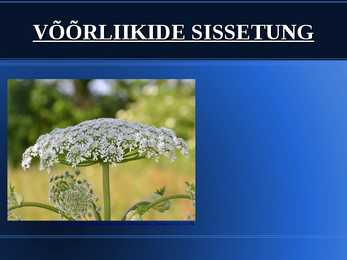
VÕÕRLIIKIDE SISSETUNG http://upload.wikimedia.org/wikipedia/commons/3/30/Heracleum_mantegazzianum_07.JPG Võõrliigid kui probleem Liik tuuakse uude elukeskonda Võõrliik kohaneb kiiresti - siseneb toiduahelasse - konkureerib teiste organismidega Põlisliigid kannatavad Võõrliik võtab võimust (Nõrgem liik sureb välja) Tekkepõhjused Tahtlik sissetoomine: Tahtmatu sissetoomine: - jahiloomad - laevadega - lemmikloomad - ballastiveega - lihaloomad - maismaatranspordiga - turism - viljaseemnetega koos - istandused Tagajärjed Põliste asukate välja tõrjumine Majanduslik kahju Liigilise mitmekesisuse vähenemine Evolutsiooni muutmine Loodusliku tasakaalu ohustatus - hübriidide teke - nõrgemate liikide väljasuremine - liigilise mitmekesisuse vähenemine Signaalvähk ...
Australia has the highest rates of skin cancer in the world, while cigarette smoking is the largest preventable cause of death and disease Age pension is available to men aged 65 Women currently become eligible for the Age pension at 63 years and 6 months the peculiarities Because of the continent's great age, extremely variable weather patterns, and long-term geographic isolation, much of Australia's biota is unique and diverse. Kangaroo, koala, wombat, emu, kookaburra, eucalyptus, dingo Australia is the driest inhabited continent on earth
anti-English jokes to the English, anti-lawyer jokes to the lawyers and anti- mother-in-law jokes to mothers-in-law. Is is true? Did Australians laugh about you? They are very easy-going by nature. They put a high value on their leisure time. I hope that when I go to Australia, I will see kangaroos and koalas. I have seen they only in Zoo, not in nature. Did you see any animals in nature? Do you know that the cutest animal spends 80% of its time asleep in eucalyptus tree? I didn't know it before. Australian most famous landmarks are an ancient rock in the desert, a modern opera house in Sydney harbour and a huge coral reef off the north-east coast. I remember when you talked about your dream you wanted to visit Sydney opera house. Did you made your dream true? I hope you did it! I hope, that you answer me soon. With best wishes, xxx
korral, mille tekitajaks on herpese viirus; samuti ka vöötohatise korral, mille tekitaja vöötohatise viirus tekitab ka tuulerõugeid. Eukalüpt peletab eemale sääski, kärbseid jm. putukaid. Ajalugu ja müüdid: Eukalüpt on mürdiliste sugukonna igihaljas puu. Ta rabab oma võimsuse ja suurepärasusega, olles maailma kõrgeim puu. Eksisteerib üle 700 erineva liigi eukalüpte, millisest hulgast ligi 500 eritavad eeterlikku õli. Enamikku õlist saadakse Eucalyptus globulus´est või Eucalyptus radiat´usest. Eukalüptipuud kasvatatakse Kaukaasias Musta mere ranniku ligidal. Eukalüpti eeterlikku õli kasutati XVIII XIX saj bronhide ja kopsude haiguste korral. Eukalüptipuu toodi Euroopasse Austraaliast. Nimetus ,,eukalüpt" on moodustatud kreekakeelsetest sõnadest ,,eu", mille tähendus on ,,hea" ja ,,kalypto" ,,varjualune". Tõepoolest asuvad tema õite tolmukad lehtede hõlma all ja on hästi varjatud
Australia is a constitutional monarchy with a federal division of powers. CULTURE Australian culture is as broad and varied as the country's landscape. Australia is multicultural and multiracial and this is reflected in the country's food, lifestyle and cultural practices and experience. ENVIRONMENT Australia has the greatest number of reptiles of any country, with 755 species. Australian forests are mostly made up of evergreen species, particularly eucalyptus trees . Well-known Australian animals:kangaroo ,koala and wombat . Well-known Australian birds:emu and kookaburra . LANGUAGE Australia has no official language, English has always been entrenched as the national language . English is the only language spoken in the home for close to 81% of the population . The next most common languages spoken at home are Mandarin (1.7%), Italian (1.5%), rabic(1.4%) . Australia has a sign language known as
· Population in Australia is 22,760,245. They have almost 10,700 beaches in all shapes, sizes and colours. I NTERESTI NG FACTS Ø There are 1500 species of Australian spiders. Ø The Sydney Opera House roof weighs more than 161,000 tons. Ø Australia is considered to have one of the highest degrees of urban concentration in the world. Ø Koalas are furry animals that live only in Australia they live only in certain types of trees, called eucalyptus trees where they can eat the leaves. Koalas are nocturnal, they spend at least 1618 hours a day sleeping. Ø Christmas is the biggest event in the Australian calendar, it is the beginning of summer month. It marks the end of the school examinations and the start of long summer holidays. Ø In 1987, it was calculated that there were about 150 million sheep in Australia, about 10 sheep for every person living in the country. No wonder that Australia
annab energiat, kuid suuremates kogustes on soojendava toimega. Aitab üle väsimusest, turgutab keha ja vaimu. Aitab peavalu ja iivelduse puhul. Leevendab külmetushaigusi. Reguleerib kehatemperatuuri. Suurepärane abivahend peapöörituse korral. Suurendab keskendumisvõimet Heaks abiks astma, bronhiidi, kopsupõletiku ravil. Soodustab seedimist, rahustab närve. Stimuleerib mõtlemise selgust. Raseduse ja imetamise ajal ei soovitata: vähendab rinnapiima teket. Eukalüpt (Eucalyptus Globulas) - Eukalüpti eeterlik õli stimuleerib vereringet, soojendab keha, alandab valu ning palavikku. Toimib antiseptikuna! Aitab tõhusalt astma, villide, bronhiidi, põletuste, külmetuse, haavade, gripi, peavalu, putukahammustuste, vaimse väsimuse, lihasvalu, halva vereringe ja nahapõletiku korral. Tugevdab vastutusvõimet, ravib hingamisteede infektsioonihaigusi, reumahäireid ja lihasevalusid, kõrvavalu ja põskkoopa põletikku. Haavade puhul kiirendab uut kudede moodustumist
Brasiilia metsaseadus ja -poliitika Üldinfo · Pindala 8 515 767 km2 · Populatsioon 193 946 886 · Presidentaalne vabariik · SKT 2396 triljonit dollarit Metsainfo · Metsasus 62,4% (519 522 000 ha) · Põlismetsi sellest 91,7% · 1990-2010 vähenes metsasus keskmiselt 0,48% aastas. Kokku 9,6% (553 17 000 ha) · Peapuuliigid: Eucalyptus, Pinus, Acatia Toode Tulu (eurot) Küttepuu 38 620 590 Ümarpalk 190 811 604 Saeproduktid 148 277 835 Puusüsi 50 382 300 Paber 343 076 915 Metsasus hektarites 580000 570000 560000 550000 540000 530000 520000 510000 500000 490000 1990 1992 1994 1996 1998 2000 2002 2004 2006 2008 2010 600000 500000 400000
So, the rainforests occupy the space between the Great Dividing Range and the eastern coast and also the northern coast. In the west they give place to beautiful grasslands with some trees called the savannas. Further west the trees disappear and the savannas are replaced by the bush lands. The real desert occupies the centre of the Western Plateau and in the very south- west there are thin forests of evergreen trees. Most of the Austrian trees are various kinds of eucalyptus and acacia. Some eucalyptuses are small bushes in the semi deserts, some are the main trees in the savannas, but the biggest eucalyptuses grow as tall as hundred metres. Eucalyptuses give the people timber and eucalyptus oil. Of 600 kinds of acacias, the golden wattle is the best know because it is the national flower of Australia. Of the other trees there are bottle trees in the savannas and tree-ferns in the tropical forests and many others.
Australia is famous for its "outback," the remote lands of the interior. The desert outback covers most of the interior. It is too hot, dry and barren to support many people. Geographic Landmarks Australia also has some mountainous areas and plateaus scattered throughout the country. The Blue Mountains, on the southeastern end of Australia, get their name from the blue haze caused by oil droplets given off from the eucalyptus trees. Geographic Landmarks As an island, Australia also has many beautiful coastal beaches. Over 70% of Australians now live in cities or towns. Most of this population lives in the eastern and southern coasts, and around Perth in the west. Fun Facts About Australian Geography No part of Australia is more than 1000 km from the ocean and a beach. (The point in the world that's the furthest from any ocean
There are five distinguishable natural zones in Australia. In the very east there are wet forests that occupy the space between the Great Dividing Range and the eastern coast. The wet forests give place to beautiful grasslands with some trees called the savannas. Farther west the trees disappear and the bushlands begin. The real desert occupies the centre of the Western Plateau. In the very southwest there are thin forests of evergreen trees. Most of Australian trees are kinds of eucalyptus (or gum tree to Australians) and acacia (wattle of Australians). Eucalyptuses give the people timber and eucalyptus oil. Of 600 kinds of acacias the golden wattle, the national flower of Australia, is the best known. Of other trees there grow bottle trees in the savannas, tree ferns in the tropical forests and many others. Lakes Australia has much underground water. There are only few lakes which are full of water only after it rains. The biggest lake is Lake Eyre which is a salt lake.
Test 19 1 Translate. 1 Hollandi maadeuurijad kaardistasid Austraalia lääneranniku. Dutch explorers mapped the western coast of Australia. 2 Britannia saatis tuhandeid süüdimõistetuid Austraaliasse. Britain sent thousands of convicts to Australia. 3 Eukalüpt ja akaatsia on kõige tavalisemad taimeliigid. The Eucalyptus and the Acacia are the most common types of flora. 4 Känguru saad on umbes saja kilomeetri kaugusel lõunarannikust. Kangaruu Island is about 100km off the southern coast. 5 Austraalia taimestik on värvirikas. The flora of Australia is colorful. 6 Kängurud ja koaalad on kukkurloomad. The kangaroos and koalas are marsupials.
imported there. Marsupials are kangaroos, wombats, koalas, Tasmanian wolfs and Tasmanian devils. The Koala is found all along the eastern coast of Australia from near Adelaide to the southern part of Cape York Peninsula, and as far into the hinterland as there is enough rainfall to support suitable forests. They are the cutest and lovelies animals of Australia. Koala accepts humans but if you really disturb them, they become aggressive. The Koala lives almost entirely on eucalyptus leaves. Koala has very long arms and very well developed paws. It eats about 2 pounds leaves a day. The koalas never drink anything and even their name koala means "no water". They are very sleepy and their moves are slow. The baby koalas ride on their mother's backs.. Koala was a spirit of lost children to the Aborigines. Kangaroos are native to the continent of Australia and are the main symbol of Australia. There are more than 50 different kinds on kangaroos
equipment and so on. Australia's iron and steel industry produces enough of the metals to meet the needs of other industries. The leading manufactured products are food, cars, paper, chemicals, clothing and shoes. Most of the factories are located in and around Sydney ad Melbourne. Forestry and fishing. Forests cover about 6 per cent of Australia. The majority of Australia's trees are eucalyptuses. The wood of eucalyptus is used for making paper, floorboards and furniture. Although Australia is surrounded by water, its fishing resources are limited. They catch shellfish, lobsters, oysters, prawns and scallops, also salmon and tuna. Tourism. Australia has a variety of tourist attractions. They include wildlife sanctuaries, sandy beaches, the Great Barrier Reef, the Australian Alps and much more. Tourism aids the economy. About half of Australia's visitors come from nearby,
liikuvamad eranditult seemnerakud e. spermid e. isased sugurakud (näiteks tolmuterad taimede puhul). Seemnete passiivse levimise korral langeb leviste (diaspooride) tihedus emataimest eemaldumisel monotoonselt või esineb tiheduse maksimum teatud eelistatud levimiskaugusel. Joonis 5.3. illustreerib mõlemat olukorda sama liigi puhul. Joonis 5.3. Seemnevihma tihedus (Y-telg, tuhandeid seemneid hektarile) valitseva eukalüpti (selline imelik liiginimi, Eucalyptus regnans) puhul, sõltuvalt kaugusest seemneallikast (X-telg, meetrid): (a) X-teljel on kaugus eukalüptimetsa servast; (b) X-teljel on kaugus üksikuna kasvavast puust. Levimisvõime pole oluline ainult uute elupaikde ja ressursside hõlvamise seisukohalt. On hästi teada, et sugulise paljunemise maksimaalse edukuse tagab partnerite optimaalne geneetiline distants. Järglast eluvõime on madalam, kui ristuvad geneetiliselt optimaalsest erienevamad või optimaalsest sarnasemad isendid. Seda
The biggest of the fifty diffrent kinds is the red kangaroo. They have big strong back legs and tails, and an adult can measure 2.4 metres high. They can jump more than four metres and travel at seventy kilometres an hour. Kangaroos eat grass and leaves and live in groups about twelve. Everyone loves the sleepy gray koalas. Like kangaroos, they have s pouch on their fronts for their babies. After six months there, baby koalas ride on their mother's back. They live in eucalyptus trees, sleeping for eighteen hours, and eating one kilo of leaves, each day. They drink almost nothing. The word koala means "no water." In the seas and rivers of northern Australia crocodiles can be found. They are five or six metres long. They eat fish, animals, kangaroos - and sometimes people. There are more than 800 kinds of birds in Australia. The emu, which is two metres tall, is the second largest bird in the world. It cannot fly at all, but it can run at fifty kilometres an hour.
It is an independent nation, but it belongs to thee British Commonwealth of Nations. Nature Since Australia separated from the rest of the world nearly 60 million years ago, it has plants and animals that are found nowhere else in the world. The kangaroo is the best known of Australian animals. The biggest of the 50 different kinds is the red kangaroo. They have srong back legs and tails, they can jump more than 4 meters and travel at 70 kilometers an hour. Tke koalas live in eucalyptus trees, sleeping for 18 hours, and eating one kilo of leaves, each day. They drink almost nothing. Like kangaroos, they have a pouch on their front for their babies. Two very strange animals are the echidna and the plantypus. Their babies are born from eggs but drink milk from their mothers. There are more than 800 kinds of birds in Australia. The emu is a flightless bird. It is up to two meters tall and can run very fast. The birds are emu, black swan and cassowary, that are native to Austalia
; The average person in Canada watches 14 hours of television per week.; There are around 11.5 million households in Canada. Of these, 6.6 million (57 percent) are detached houses.; Too Many Men In the 15 to 64 age groups, Canada has 101 males for every 100 females. -au - Australia is the only continent without an active volcano; Australia is the lowest continent in the world, with an average height of just 330m above sea level.; Cate Blanchett, born in Sydney; Hugh Jackman, born in Sydney; Eucalyptus was first used as a medicine by Aborigines, to treat coughs, fevers and asthma.; Tasmania was once part of mainland Australia, before the melting of ice caps 12,000 years ago; The first official world surfing championships were held in Sydney in 1964. -nz - NZ supplies 54% of world exports of sheep meat. NZ was the first western democracy to give women the vote NZer Edmund Hillary was the first person to climb Mt Everest NZ invented bungee jumping.
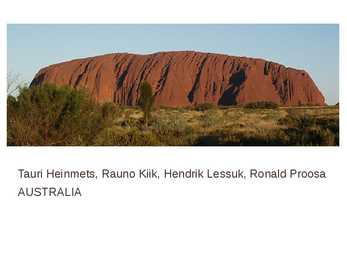
It is three kilometres long and nearly 2.5 kilometres high in total. It is 600 million years old, and it is the largest rock of its kind in the world. Uluru is a sacred place for the Aborigines. Thanks to Australia's isolation, it has plants and animals unlike anywhere else in the world. The kangaroo is the most well-known of them. They have strong back legs and tails, allowing them to travel at high speeds and jump very high and far. The koalas live in eucalyptus trees, sleeping for 18 hours and drinking almost nothing. Both of those animals have pouches for their babies. Two very strange animals are the spiny anteater and the platypus. Their babies are born from eggs but drink milk from their mothers. There are more than 800 kinds of birds in Australia. The emu is a flightless bird. It is up to two metres tall and can run very fast. The first people to inhabit Australia were the ancestors of the Aborigines, who arrived over 40,000 years ago
The network of artesian wells provides cattle with water. Natural zones. The wet forests occupy the narrow coastal region in the east. In the west they give place to grasslands with some trees called savannas. Farther west the trees disappear and the savannas give place to the bushlands. The real desert occupies the centre of the Western Plateau. In the very south-west there are thin forests of evergreen trees. Most of the Australian trees are various kinds of eucalyptus (gum tree) and acacia (wattle). Some eucalyptuses are small bushes in the semideserts, some are the main trees in the savannas but the biggest grow as tall as 100 metres and form forests in the east. Eucalyptuses give the people timber, eucalyptus oil. Of 600 kinds of acacias the golden wattle, the national flower of Australia, is the best known. Of other trees there grow bottle trees in the savannas, tree-ferns in the tropical forests and many others. Animals
Puudest väärib märkimist igihaljas iilekstamm (Quercus ilex), Cunninghami kasuariin (Casuarina cunninghamina) ja suurt kuuske meenutav okaspuu Cunninghami araukaaria (Araucaria cunninghamii). Valgete õitega pakuvad silmailu koolupõõsas (Carissa bispinosa) ja sarik-nõelsoomuk (Rhaphiolepis umbellata). Ebahariliku välimusega paistab silma lintpõõsas (Homalocladium platycladum) ja meeldivalt lõhnavad erinevad eukalüptid (Eucalyptus). Troopika kasvuhoones on eksponeeritud nii liaane kui puid, samuti troopilisi epifüüte -bromeelialisi ja orhideesid. Puudest väärivad märkimist palsamipuud (Myroxylon). 3.3 Sukulendid 12 2006. aasta aprillis avati üks väga omapärase asukohaga taimekollektsioon. Nimelt projekteeriti sukulentsete taimede väljanäitamiseks olemasolevale majale kolmas korrus. Ruum pole suur, pinda umbes 100 m2
(FAO 2005) 7 Joonis 5. Raiete põhjused aastatel 2000-2005 Brasiilias on hakatud viimastel kümnenditel ka metsaistutamisega tegelema. Järgnev tabel toob välja 2009 ja 2010 aastal istutatud puuliike ning istutusalade pindalad. Metsaistutamine on Brasiilias kasvutendentsis. (FAO 2010) Tabel 1. Metsaistutus Brasiilias 2009 ja 2010 aastal Liik 2009 (ha) 2010 (ha) Eucalyptus spp 4 574 700 4 913 800 Pinus spp 1 895 300 1 923 000 Acacia sp 183 037 184 304 Tectona sp 62 807 67 072 Araucaria angustifolia 10 134 8 200 Populus sp 5 777 8 299 Schizolobioum amazonicum 81 208 82 252
the bushlands. The real desert occupies the centre of the Western Plateau. In the very southwest there are thin forests of evergreen trees. Plants A rich variety of plant can be found in the natural landscapes of Australia. A lot of species can be found in wet tropical forests in the north and in temperate rainforests in the south. The biggest family of the native plants is the myrties. They include more than 500 species of eucalyptus, or gum trees. Only the big river red gum is seen everywhere. These can be found beside rivers and dry riverbeds. Some gum trees are valuable timber species and have been cut down for many years. Gum tree leaves are full of oils, which evaporate easily. That why the Blue Mountains are called like that, because the evaporateing eucalypt oils, which make the air blue. Another big family of native plants is acacias. They are also known as wattles
pouch where they stay for several months. The most numerous among marsupials is the 4 kangaroo. There are more that 50 different species of them. Kangaroo is a furry and quite long animal who is known for its jumping. They can jump more than 4 meters and achieve 70 km/h. Kangaroos eat grass and leaves. The koala is one of the best-loved Australian animals. It is a small marsupial that lives in eucalyptus trees and it can sleep for 18 hours straight. The aborigines named it "the animal that does not drink", but it eats leaves and bark. The wombat is a small animal that has short, but strong legs and claws, which it uses for digging burrows. It lives on Tasmania, but also in burrows in grasslands of Australia. They do not see well, but they can hear and smell very well. The platypus is a strange-looking marsupial that lays eggs. It has a strong flat tail what it uses to swim
Capital Territory time is equal to Greenwich Mean Time plus 10 hours. In South Australia, Northern Territory, Broken Hill, NSW time is equal to Greenwich Mean Time plus 9 ½ hours. Plants A rich variety of plants can be found in the natural landscapes of Australia. A lot of species can be found in wet tropical forests in the north and in temperate rainforests in the south. The biggest family of native plants is the myrtles. They include more than 500 species of eucalyptus, or gum trees. Only the big river red gum is seen nearly everywhere. These can be found beside rivers and dry riverbeds. Some gum trees are valuable timber species and have been cut down for many years. Gum tree leaves are full of oils, which evaporate easily. Another big family of native plants is the acacias. They are also known as wattles. There are about 900 wattle species. The golden wattle is Australia’s native flower. Its gold flowers
and seven protected landscapes (Portuguese: Paisagem Protegida), which include the Parque Nacional da Peneda-Gerês, the Parque Natural da Serra da Estrela and the Paul de Arzila. These natural environments are shaped by diverse flora, and include widespread species of pine (especially the Pinus pinaster and Pinus pinea species), the chestnut (Castanea sativa), the cork-oak (Quercus suber), the holm oak (Quercus ilex), the Portuguese oak (Quercus faginea), and eucalyptus (Eucalyptus globulus). All are prized for their economic value. Laurisilva is a unique type of subtropical rainforest found in few areas of Europe and the world: in the Azores, and in particular on the island of Madeira, there are large forests of endemic Laurisilva forests (the latter protected as a natural heritage preserve). There are several species of diverse mammalian fauna, including the fox, badger, Iberian lynx, Iberian Wolf, wild goat (Capra pyrenaica), wild cat (Felis silvestris), hare, weasel,
hävimisel. Need esinevad näiteks ruudiliste (Rutaceae) sugukonna perekonnas tsitrus (Citrus) või kassinaeriliste (Malvaceae) perekonnas puuvill (Gossypium). Skisogeensed sekretoorsed õlimahutid esinevad eukalüptidel (Eucalyptus, sugukond mürdilised, Myrtaceae). Need tekivad ühe epidermiraku järglastest, mis diferentseeruvad epiteeliks ja piirderakkudeks. Edasises arengus kujuneb epiteelirakkude vahele skisogeenne mahuti. Samalaadse tekkega on ka okaspuude vaigukäigud,
Geranium robertianum haisev kurereha Pelargoonid - Pelargonium Selts Myrtales mürdilaadsed 2 suurt sugukonda: (Mõlemas on üle 4000 liigi) sug. mürdilised (Myrtaceae) o Iseloomulik on eeterlikke õlide esinemine Syzygium aromaticum nelgipuu Myrciaria cauliflora brasiilia jabotipuu vili: jabott õied ja viljad arenevad tüvel o P. Eucalyptus o Melaleuca teepuu-melaleuka Sug roodlehelised (Melastomataceae) Sug. kukesabalised (Lythraceae) hennapõõsas (Lawsonia inermis) granaatõunapuu (Punica granatum). Sug. pajulillelised (Onagraceae): o perekonnad pajulill (Epilobium), o kuningakepp (Oenothera), o fuksia (Fuchsia). Puittaimed vastakute tervete lihtlehtedega, adaksiaalne (ksüleemi suhtes seespool asuva) floeem
(seda esineb veel kõrvitsalistel ja emajuurelistel) Õied erksavärvilised, sigimik alumine, ümbritsetud õiepõhjaga (hüpantiumiga) Sugukond mürdilised - Myrtaceae puittaimed, eeterlike õlidega Lehed terved vastakud lihtlehed, läbipaistvate näärmetäppidega Õied neljatised või viietised, aktinomorfsed, lahklehise krooniga Tolmukaid palju, värvilised, sissepoole käändunud Vili on mari või kupar troopiline sugukond, ka Austraalias ja Lõuna-Aafrikas eukalüpt - Eucalyptus guajaavipuu - Psidium nelgipuu – Syzygium aromaticum õienupud on vürtsiks - nelk pimendipuu – Pimenta dioica vili on vürtspipar Sugukond kukesabalised – Lythraceae - henna Lawsonia inermis - granaatõunapuu õieosi kuni 16 õied kiirjad vili: kupar õied kolmesugulised esineb heterostüülia Sugukond pajulillelised - Onagraceae Perekonnad pajulill (Epilobium) kuningakepp (Oenothera) Rohttaimed, parasvöötmes, peamiselt Uues Maailmas
Desert ':1_=__ [20' - 10· tions. Eucalyptus are th e m ost common t rees 111 Australia. D o
" "Yes. I know how to get there." "Well, then, I'll see you very soon." I hung up. I ran from the room, through the door, out into the baking heat. There was no time to look back at my house, and I didn't want to see it as it was now -- empty, a symbol of fear instead of sanctuary. The last person to walk through those familiar rooms was my enemy. From the corner of my eye, I could almost see my mother standing in the shade of the big eucalyptus tree where I'd played as a child. Or kneeling by the little plot of dirt around the mailbox, the cemetery of all the flowers she'd tried to grow. The memories were better than any reality I would see today. But I raced away from them, toward the corner, leaving everything behind me. I felt so slow, like I was running through wet sand -- I couldn't seem to get enough purchase from the concrete. I tripped several times, once falling, catching myself with my hands, scraping them on the
 annaabi.ee