Leidsid 33 sarnast õppematerjali, mis on seotud failiga "Estonian national dish". Need materjalid aitavad sul teemat sügavamalt mõista.
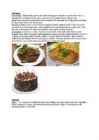
salt, cabbage, lactic, bacteria, barley, boil, place, meat, finely, shredded, including, lactobacillus, shelf, sour, flavor, both, result, forms, therefore, coleslaw, acidic, taste, dish, christmas, really, good, something, slightly, pork, grits, little, washed, stew, until, soft, sliced, bowl, herbs, serveGerman Sauerbraten: Traditionally made with a beef roasting joint (topside or similar) the meat is marinated for 2-3 days in beer, spices such as cloves, juniper berries, allspice and peppercorns, bay leaves and onions and is braised in the marinade for a long period, resulting in very tender melt-in-the-mouth meat. The Black Forest: cake is one of the most popular German national foods. Cake consists of several layers of chocolate cake, with whipped cream and cherries between each layer. Then the cake is decorated with additional whipped cream and chocolate shavings. A Schnitzel in German is a slice of pork or veal haunch. Dish made with boneless meat thinned with a mallet (escalope-style preparation), coated in bread crumbs and fried. Only if it
Traditional Estonian food has its roots firmly in the countryside, relying heavily on pork, potatoes and garden variety vegetables. The main culinary influences were from Germans, who ruled over Estonia for so many centuries. The eating habits of the Estonian population are related to the season, which severely affect the availability of fresh food. The spring and summer are the seasons of fresh food, in this period are used vegetables, berries and herbs, with the warmer climate the Estonians also like to cook meat grilled outdoors. During the
Estonian cuisine The traditional cuisine of Estonia has substantially been based on meat and potatoes, and on fish in coastal and lakeside areas, but is influenced by many other cuisines by now. In the present day it includes a variety of international foods and dishes, with a number of contributions from the traditions of nearby countries. German, Scandinavian, Russian and other influences have played their part. The most typical foods in Estonia have been rye bread, pork, potatoes and dairy products. Estonian eating habits have historically been closely linked to the seasons
Handbook of Meat Processing Handbook of Meat Processing Fidel Toldrá EDITOR A John Wiley & Sons, Inc., Publication Edition first published 2010 © 2010 Blackwell Publishing Blackwell Publishing was acquired by John Wiley & Sons in February 2007. Blackwell’s publishing program has been merged with Wiley’s global Scientific, Technical, and Medical business to form Wiley-Blackwell. Editorial Office 2121 State Avenue, Ames, Iowa 50014-8300, USA
Mozambique. Indigenous cookery traditional South African cuisine In the precolonial period, indigenous cuisine was characterized by the use of a very wide range of fruits, nuts, bulbs, leaves and other products gathered from wild plants and by the hunting of wild game. The domestication of cattle in the region about two thousand years ago by Khoisan groups enabled the use of milk products and the availability of fresh meat. However, during the colonial period the seizure of communal land in South Africa restricted and discouraged traditional agriculture and wild harvesting, and reduced the extent of land available to black people. Decline of indigenous cookery Urbanization from the nineteenth century, coupled with close control over agricultural production, led black South Africans to rely more and more on comparatively expensive, industrially-processed foodstuffs like wheat flour, white rice, mealie
The riches and cultural heritage of Mulgimaa owe to the diligence and tenacity of the local people. Village handicraftsmen and masters have always been honoured. Mulgikapsad (stewed sauerkraut with barley groats), Estonian cheesecakes and kama (a roasted meal-mixture) have not lost their popularity. However, linen growers have now been replaced by cereal grains growers and many farms have specialised on raising sheep or horses. And as the song goes: "Mulgimaa it's a place where life is good. It's a land of vast woods, fertile fields and nature's charms, the home of prosperous Estonian farms..." Tourism and handicraft in Lõuna-Viljandimaa Lõuna- Viljandimaa captivates senses with its beautiful landscapes. Lõuna- Viljandimaa as we know it today stays in the heart of the historic Mulgimaa. Mulgimaa is the home of mountains, deep valleys and lakes, its natural axis is the beautiful old valley of Halliste.
b) It's a very popular restaurant - we should apply for/book/keep a table. c) If you're hungry, why not ask for a large dish/plate/portion? d) Please help/serve/wait yourself to salads from the salad bar. e) Waiter, can I see the catalogue/directory/menu, please? f) This fish is not what I called/commanded/ordered. g) This dish/plate/serving is a speciality of our restaurant. h) Have you tried the crude/raw/undercooked fish at the new Japanese restaurant? i) Paul never eats meat, he's a vegetable/vegetarian/vegetation. j) Have you decided what to have for your main course/food/helping? Task 2. Complete each sentence (a-j) with a suitable ending (1-10). Use each ending once. a) Dinner's nearly ready. Can you lay ...6… 1. up if you dry and put the dishes away. b) There's some meat in the fridge. Just warm 2. it up in the microwave oven for a few minutes. c) Keep an eye on the milk or it might boil 3
more important commitments. It's time for the world to take advantage of this revolution." -- Vivek Kulkarni, CEO of Brickwork India and former IT secretary of Bangalore; credited as the "techno-bureaucrat" who helped make Bangalore an IT destination in India "Tim is the master! I should know. I followed his rags to riches path and watched him transform himself from competitive ghter to entrepreneur. He tears apart conventional assumptions until he nds a better way." --Dan Partland, Emmy Awardwinning producer of American High and Welcome to the Dollhouse "The 4-Hour Workweek is an absolute necessity for those adventurous souls who want to live life to its fullest. Buy it and read it before you sacri ce any more!" --John Lusk, group product manager at Microsoft World Headquarters "If you want to live your dreams now, and not in 20 or 30 years, buy this book!" --Laura
It is the main fish that is caught in the Baltic Sea. The Baltic Herring ... has become the national fish of Estonia. ... is eaten fresh, marinated, smoked and tinned. ... with sauce is traditional fish meal Baltic Sprat A sprat sandwich is a traditional snack on Estonian food table. Sprats are usually salted with all kinds of spices. Typical Estonian black bread with sprat and egg Po r k Pork has been known in the national cuisine of Estonia for a long time. Meat was eaten mostly in autumn and in winter with vegetables and cereals. Beliefs and habits: The pig's snout was given to a child, because people believed that it helped the child to become a writer. Eating the heart gives strength. The kidneys were boiled in soup and were eaten with somebody else to get well along with. In Estonian sült. Jellied meat
Christmas in Australia Christmas in Australia is often very hot. Whereas the northern hemisphere is in the middle of winter, Australians are baking in summer heat. It is not unusual to have Christmas Day well into the mid 30 degrees Celsius, or near 100 degrees Fahrenheit. A traditional meal includes a turkey dinner, with ham, and pork. A flaming Christmas plum pudding is added for dessert. In the Australian gold rushes, Christmas puddings often contained a gold nugget. Today a small favor is baked inside. Whoever finds this knows s/he will enjoy good luck. Another treat is Mince Pies. Some Australians and particularly tourists often have their Christmas dinner at midday on a local beach, Bondi Beach in Sydney's Eastern Suburbs attracts thousands of people on Christmas Day. Other families enjoy their day by having a picnic
History: · Indian society is predominantly agrarian. Diet consists mainly of fruits and vegetables, meat, cereals, dairy products and honey. Also, drinks containing different types of spices. · During the Gupta empire influenced by diet buduism and jainism. Many religious people were vegetarians. Most of the people consumed the chickens, sheep and goat meat. · Muslims also put emphasis on the development of food. Indians brought to the diet of dried fruit and flat bread. India introduced the dietary habits of the Portuguese and Chinese. · Indian diet is mixed with a variety of cultures. Etiquette: · Traditionally, meals were eaten while seated either on the floor or on very low stools or cushions. · Food is most often eaten without cutlery, instead using the right hand. Among the middle
onion, garlic and dill, to name a few — and is often eaten with boiled potatoes, sour cream, chopped chives, hard sharp cheese, sometimes boiled eggs, and of course, crisp bread. Pea soup and pancakes Many Sweden grow up eating pea soup and pancakes (ärtsoppa och pannkakor) on Thursdays. This tradition has been upheld by the Swedish Armed Forces since World War II. While its true origins are widely debated — from Catholics not eating meat on Fridays, this filling up on pea soup on Thursdays, to pea soup being very easy to prepare by maid servants who would work half-days on Thursdays — the tradition has well and truly stuck. Most traditional lunch restaurants serve pea soup and pancakes with lingonberry sauce or any kind of jam (sylt) on Thursdays. Crazy for crawfish Crawfish parties (kräftskivor) are popular in August, when warm summer evenings are spent
80,000 people each year. Õllesummer is located in the Tallinn Song Festival grounds which is located 15 minutes walking time from the center of the city. The program includes Estonian bands and international acts as well featuring over a 100 concerts on more than 10 stages. Õllesummer is a friendly, safe and joyful event that attracts many tourists and visitors of Tallinn. Next Õllesummer festival will take place between 8-12 July 2009 in Tallinn Song Festival Grounds and offers again a huge variety of Estonian and International artists, special projects for the whole family. Beer culture plays a basic role in Õllesummer the festival has its origins in a beer festival and up to this day more than a hundred different beers from around the world can be tasted at Õllesummer.Food is offered at a number of different cuisine restaurants and cafes
Meals and Cooking When we cook, we boil, roast, fry or stew our food. We boil eggs, meat, chicken, fish, milk, water and vegetables. We fry eggs, fish and vegetables. We stew fish, meat, vegetables or fruit. We roast meat or chicken. We put salt, sugar, pepper, vinegar and mustard into our food to make it salted, sweet, sour or simply tasty. Our food may taste good or bad or it may be tasteless. The usual meals in England are breakfast, lunch, tea and dinner or, in simpler houses, breakfast, dinner, tea and supper. For breakfast English people mostly have porridge or cornflakes with milk or cream and sugar, bacon and eggs, marmalade with buttered toast and tea or coffee
Estonian national holidays Christmas Christmas , also referred to as Christmas Day, is an annual holiday celebrated on December 25 or January 7 that commemorates the birth of Jesus of Nazareth. Modern customs of the holiday include gift-giving, Church celebrations, and the display of various decorations--including the Christmas tree, lights, mistletoe, nativity scenes, and holly. In many countries there are many different types of decorations used depending on the traditions and available resources. However , in Estonia people bring Christmas tree in and decorate it with straw ,glass balls and candles. Estonians eat sauerkraut and black pudding. On the 24th December people leave work early, families gather, Santa Clouse comes , everybody gives gifts. People are very calm at Christmas time and they support each other. New Year's Eve New Year's Eve is on December 31, the final day of the Gregorian year, and the da
Estonia Topic Tallinn 2007 2 List of Contents page Facts and figures 3 Geography 3 Climate 3 Nature 4 History 5 Economy 6 Culture 6 Biggest towns 7 Language 8 3 Facts and figures The Republic of Estonia is a small country. Covering only 45, 228 sq km it is slightly bigger than Denmark, Belgium or Switzerland. Estonia's population is under 1.4 million. The official language is Estonian but since very many Russians live here Russian is also wide spread. The capital of Estonia is Tallinn. The currency used in Estonia is Eesti kroon. The Estonian national flag is blue-black-white. It was originally the flag of the Estonian Students' Society. The flag was first consecrated in Otepää Church in 1884. For a while,
composition of microflora, hence some of the natural and cultural factors will be looked into a little more in detail. Definition, composition and importance of microflora Saunders Comprehensive Veterinary Dictionary (2007) cited by the online medical dictionary (2013) defines living microorganisms as that small that they can be seen only with a microscope and that maintain a more or less constant presence in a particular area that includes bacteria, viruses, protozoa and fungi. Soil microflora more specifically, consists the following microorganisms (Bhatt et al. 2013): 1. Bacteria a) Heterotrophic bacteria, eg. symbiotic and non - symbiotic N2 fixers, ammonifier, cellulose decomposers, denitrifiers b) Autrotrophic bacteria, eg. nitrosomonas, nitrobacter, sulphur oxidizers, etc; 2. Fungus; 3. Viruses 4. Actinomycetes and stretomyces; 5. Algae eg
Montagu, the 4th Earl of Sandwich. Legend sais, that Montagu had a gambling problem that led him to spend hours at the card table. During a very long game, he instructed a cook to prepare his food in such way that it would not interfere with his game. the cook presented him with sliced meat between two pieces of toast. This meal could be eaten with one hand, leaving the other free to continue the game. . Montagu enjoyed his meat and bread so much that he ate it constantly, and sandwiches grew popular in Londo. it also took on the Earl’s name. By the Revolutionary War, the sandwich was well established in England. By the 19th Century the sandwich had become popular all over Europe, especially in England because of the industrial revolution. People needed easytomake, easyto carry lunches that would fill them up for a long day of work at the office TYPES OF SANDWICHES
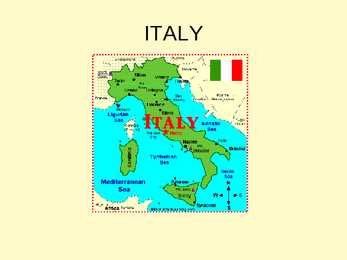
ITALY Pizza When we think of Italian cuisine, the first thought that comes to mind is Pizza. Yes, Italian Pizza is renowned the world over. 1 tsp yeast (fresh or dried) 6 tbsp lukewarm water ½ tsp sugar 1 tbsp olive oil 1 cup plain flour 1 tsp salt Mix together the yeast, water and sugar in a clean and dry bowl. If you are using dried yeast, sprinkle over the water and sugar solution and mix till dissolved. Leave this bowl in a warm place until a froth forms on the top. Then stir in the olive oil. In the meanwhile, sift together the flour and salt in a large bowl, mix these two dry ingredients well. Now, if your yeast mix is ready, make a well in the centre of the flour salt mix and pour the mixture in. Preferably with the hands, mix together and knead to make smooth dough. Remember to knead for at least five minutes, or until the dough is elastic and smooth to touch.
With culinary traditions from Rome and Athens, a cuisine developed in Sicily that some consider the first real Italian cuisine. Muslims invaded Sicily in the 9th century. The Arabs introduced spinach, almonds, rice and perhaps spaghetti. During the 12th century, a Norman king surveyed Sicily and saw people making long strings made from flour and water called atriya, which eventually became trii, a term still used for spaghetti in southern Italy. Normans also introduced casseroles, salt cod (baccalà) and stockfish which remain popular. 4 Early modern era The courts of Florence, Rome, Venice and Ferrara were central to the cuisine. Christoforo Messisbugo, steward to Ippolito d'Este, published Banchetti Composizioni di Vivande in 1549. Messisbugo gives recipes for pies and tarts (containing 124 recipes with various fillings). The work
walking about on his feet all day long." He didn't answer, so she bent her head again and went on with her sewing; bet each time he lifted the drink to his lips, she heard the ice cubes clinking against the side of the glass. "Darling," she said. "Would you like me to get you some cheese? I haven't made any supper because it's Thursday." "No," he said. "If you're too tired to eat out," she went on, "it's still not too late. There's plenty of meat and stuff in the freezer, and you can have it right here and not even move out of the chair." Her eyes waited on him for an answer, a smile, a little nod, but he made no sign. "Anyway," she went on, "I'll get you some cheese and crackers first." "I don't want it," he said. She moved uneasily in her chair, the large eyes still watching his face. "But you must eat! I'll fix it anyway, and then you can have it or not, as you like." She stood up and placed her sewing on the table by the lamp.
religion column, transept. grades of baron, count, countess, duke, duchess, page, marquise, prinke aristocracy Normans ‘adopted’ king, queen, lord, lady leisure and cards, chess, the chase, conversation, dice, dance, leisure, recreation, tournament, sport pastimes culinary words veal, beef, mutton, venison,pork, ham, methods of roast, boil, fry preparing food Norman French (ei – veil, leisure) vs Central French (oi) 9. Spanish borrowings Armada, comrade, renegade, flotilla, cockroach, embargo, mosquito, vanilla, cargo, sombrero, siesta, tango, canyon, cigar, tabacco, cafeteria, cocoa, chocolate, chilli, tomato, potato, avocado, tortilla, anchovy, canoe, maze, gringo, tequila, stampede, burrito, bongo, taco, sangria, cha-cha, rumba, ambo, macho, fajita, margarita, cojones 10. Italian borrowings
Mixing most starches in warm water produces a paste, such as wheatpaste, which can be used as a thickening, stiffening or gluing agent. Slide 3 Starch is the major component of natural food, sometimes taking about 70% of the mass. Therefore it is important to know how starch content and its characteristics like size, cell thickness change starch digestion in gastrointestinal tract. Slide 4 In mammals starch is hydrolysed by enzymes into glucose through several steps. The first step takes place in the mouth were the salivary alfa-amylase reacts, but its efficiency degrades when it reaches the stomach. In the stomach different digestive fluids, which contain starch degrading enzymes, do the hydrolysis. The third step and the majority of starch hydrolysis takes place in small intestine where pancreatic alfa-amylase break the most bonds and creates new products. The fourth and last stepi s hydrolysing the remaining oligosaccharides by the brunch border enzymes of the intestine
For a change you can have sausages, tomatoes, mushrooms, cold ham or perhaps fish. But nowadays in spite of the fact that the English strictly keep to their meals many people just have cereal with milk and sugar or toast with jam or honey. The two substantial meals of the day are lunch and dinner. Lunch is usually taken at one o'clock. For many people lunch is a quick meal. Office workers usually go to a cafe at this time. They take fish, poultry or cold meat (beef, mutton, veal and ham), boiled or fried potatoes and all sorts of salad. They may have a mutton chop or steak and chips, followed by biscuits and a cup of coffee. Some people like a glass of light beer with lunch. Pubs also serve good, cheap food. School children can have a hot meal at school. Some of them just bring a snack from home. Tea is very popular among the English; it may almost be called their national drink. Tea is welcome in the morning, in the afternoon and in the evening
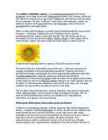
If you look closely at the center of a sunflower you can see that the disk flowers grow in a mesmerizing pattern of two opposite spirals. This is most easily seen either before the disk flowers open up or after the seed has set and all the accessory flower parts have fallen off. This is one of the more interesting patterns in nature. The rough-hairy quality of the Common Sunflower is characteristic of many members of its family. These little bristles probably serve two functions: to discourage plant- eating animals and to conserve water in the plant by limiting evaporation. Members of the sunflower family are popular with butterflies because the wide flower head makes a good "landing platform" and the numerous individual flowers make for a high probability of finding nectar. Monarch butterflies are commonly seen nectaring on sunflowers during their fall migration.
But even if you take over diet it may leads to... · Weight gain · Insulin resistance · Diabetes · Obesity · Heart conditions · Many other diet related diseases · And death. Healthy Eating Pyramid Fruit and vegetables: take 5 portions a day from this group Carbohydrates: take most food from this group (rice, pasta, bread, potatoes) Healthy Eating Pyramid Meat, fish and dairy: take something from this group Fruit and vegetables: take 5 portions a day from this group Carbohydrates: take most food from this group (rice, pasta, bread, potatoes) Healthy Eating Pyramid Foods high in fats and sugars: take only small amounts from this group Meat, fish and dairy: take something from
5 STOW 13 SCHWUNG 6 KALEV 14 MAIASMOKK 7 YAMAHA 15 ISKU 8 ESTRAVEL 2 Affirmative tense Use Signal Words Negative/Questions · action in the present taking always, Present Simple A: He speaks. place once, never or several every ..., N: He does not speak. normally, often, Q: Does he speak? times seldom, · facts sometimes, · action set by a timetable or usually
of mankind on earth.You have absolutely amazing untapped talents and abilities that, when properly unleashed and applied, can bring you everything you could ever want in life. You are living at the greatest time in all of human history. You are surrounded by abundant opportunities that you can take advan- tage of to realize your dreams. The only real limits on what you can be, do, or have are the limits you place on yourself by your own thinking.Your future is virtually unlimited. ■ GET REAL! How did you react to the preceding three paragraphs? You probably had two responses. First, you liked what they said, and your fondest wish was for them to be true for you. But your second response was probably one of skepticism and disbelief. Even though you deeply
The seas and oceans that wash the coasts of Australia are warm. The Coral Sea is the warmest that is why many corals live in the seas. The skeletons of these tiny organisms have formed a great belt of coral- called the Great Barrier Reef. Its is 2000 km long and 2-150 km wide. There are five distinguishable natural zones in Australia. In the very east there are wet forests that occupy the space between the Great Dividing Range and the eastern coast. The wet forests give place to beautiful grasslands with some trees called the savannas. Farther west the trees disappear and the bushlands begin. The real desert occupies the centre of the Western Plateau. In the very southwest there are thin forests of evergreen trees. Most of Australian trees are kinds of eucalyptus (or gum tree to Australians) and acacia (wattle of Australians). Eucalyptuses give the people timber and eucalyptus oil.
There is an inner opening, however slight, into the realm of spirit. This is why these three “en-lightened” life-forms have played such an important part in the evolution of human consciousness since ancient times; why, for example, the jewel in the lotus flower is a central symbol of Buddhism and a white bird, the dove, signifies the Holy Spirit in Christianity. They have been preparing the ground for a more profound shift in planetary consciousness that is destined to take place in the human species. This is the spiritual awakening that we are beginning to witness now. THE PURPOSE OF THIS BOOK Is humanity ready for a transformation of consciousness, an inner flowering so radical and profound that compared to it the flowering of plants, no matter how beautiful, is only a pale reflection? Can human beings lose the density of their conditioned mind structures and become like crystals or precious stones, so to speak, transparent to the light of consciousness
The Present Perfect Tense 96 Apostrophe 153 1 What is Grammar? Here's an old children's rhyme about the eight parts of speech of English grammar. It gives you an idea of what grammar is about. Read and remember it. Every name is called a noun, Pronoun As field and fountain, street and town. Noun In place of noun the pronoun stands, As he and she can clap their hands. The adjective describes a thing, As magic wand or bridal ring. Adjective Most verbs mean action, something done, Verb To read and write, to jump and run. How things are done the adverbs tell,
limits. For humans to live sustainably, the Earth's natural resources must be used at a rate at which they can be replenished. Concerns for the environment have prompted the formation of green parties, political parties that seek to address environmental issues. Initially these were formed in Australia, New Zealand and Germany but are now present in many other countries. By raising awareness about these issues, we can help contribute to a more environmentally conscious and friendly place for us to live. ADDITIONAL TASKS 1. Translate the italicized prepositional expressions and bold words in the text. Make sure that your translation is appropriate! 2. Make derivations from the following words, using prefixes and suffixes and translate each word: DERIVE, POLLUTE, CONSUME, DESTROY, CREATE. 3. Bring out some facts about the Estonian Green Party. PLASTIC POLLUTION
9, I was a phenomenal reader of books, a habit that persisted all the way until college. Reading expands one's mind immensely. It fires the imagination, demonstrates grammar, teaches vocabulary, informs, challenges, helps one relax. In some cases it forces the mind to concentrate, as to understand. It can help build a moral or ethical framework, and help oneself form an individual worldview. Even an untraveled child, sitting at home, can be transported by a book into any place or time. Fantasy and facts weave together, but the result is almost an unmitigated improvement. If a bookworm grows up to be antisocial or worse, it is not because of too much reading, but because something else was lacking in the education or caregiving. Hands-on learning is another factor difficult to overrate. Imagine trying to learn to draw from listening to a lecture. You must draw, draw, draw, and with time and tutoring, will improve
 annaabi.ee