 50 punkti
Autor soovib selle materjali allalaadimise eest saada 50 punkti.
50 punkti
Autor soovib selle materjali allalaadimise eest saada 50 punkti.
 ~ 3 lehte
Lehekülgede arv dokumendis
~ 3 lehte
Lehekülgede arv dokumendis
 2012-01-31
Kuupäev, millal dokument üles laeti
2012-01-31
Kuupäev, millal dokument üles laeti
 7 laadimist
Kokku alla laetud
7 laadimist
Kokku alla laetud
 0 arvamust
Teiste kasutajate poolt lisatud kommentaarid
0 arvamust
Teiste kasutajate poolt lisatud kommentaarid
 logitech25
Õppematerjali autor
logitech25
Õppematerjali autor
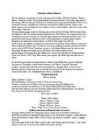
HISTORY The history of rail transport in Estonia starts in 1870 when a line was opened connecting Paldiski, Tallinn, Tapa and Narva; the line extending all the way to St. Petersburg in Russia. The first railway line to be built in Estonia was the Paldiski Tallinn Narva Gatchina line constructed in 1870; Baltic German nobility provided the impetus for the construction of the line, though because of the Russian influence the line was built to 1524mm gauge to connect with the line from St. Petersburg to Warsaw . The construction project was controlled by the Russian Ministry of Roads. The port of Paldiski was chosen because its southerly position made it ice free all the year round. Soon after both Paldiski and
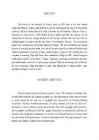
My Town I live in Tallinn. It's the capital and main seaport of Estonia. Tallinn is a very beautiful city that lies on the Baltic Sea. It covers 158 square kilometres. The Mayor of Tallinn is Jüri Ratas. The population of our capital is about 400000 people. About 55% of them are Estonian, 37% Russians and the other 8% are from different nations. The people here are mostly engaged in industry- mainly the food industry (23%), trade (16%) and transport and communication (14%). History. Tallinn has a great history. It was first marked on a map of the world
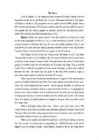
Tallinn English College English Sergo Vainumäe 9A TALLINN Report Supervisor: Inge Välja Tallinn 2006 Order of contents: 1.Introduction 2.Toompea 3.Lower Town 4.Kadriorg and Pirita 5.Museums 1. Introduction Tallinn, the capital of Estonia, lies on the Baltic Sea. It is on almost the same latitude east St. Petersburg in Russia, Stockholm in Sweden and Stavanger in Norway, and covers 158 sq km. Tallinn was first marked on a map of the world by the Arab geographer al-Idrisi in 1154, its name then being Kolyvan (probably derived from the name Kalev). In the 13th-century Chronicle of Henricus de Lettis the town was called Lyndanise. Later came Reval (presumably after the old county
.................................................................. 18 References............................................................................................................................ 19 2|Page 17101850 The century and a half following the Great Northern War, which ended with the Peace of Uusikaupunki, was a relatively static period in Estonian history with few momentous events. This was the time of the crystallization and the culmination of serfdom, when various socio- political and cultural undercurrents were also active, preparing the ground for the industrial society and the national-democratic movement in the second half of the 19th century. The 1710 of the corporations of knights and towns, until Alexander II (18551881), established the relationships between Estonia, Livonia and the Russian Empire. The Baltic
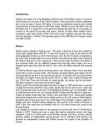
Introduction Tallinn, the capital city of the Republic of Estonia and of the Harju county, is a town in North Estonia on the coast of the Gulf of Finland. It has nearly half a million inhabitants and covers an area of almost 160 sqkm. It is also an important economic and cultural centre and one of the main ports in the Baltic States. Tallinn is one of the oldest cities on the Baltic Sea. It is unique for its well-preserved architecture from the 13-15 centuries. In contrast to the ancient town-walls and towers, Tallinn of today offers modern hotels, restaurants, sport and cultural centres
Tartu Ülikool Filosoofiateaduskond Ajaloo ja arheoloogia instituut Vahur Ilumets MUUTUSED VALGA LINNAS PÄRAST EESTILÄTI PIIRI MÄÄRAMIST Bakalaureusetöö Juhendaja: dotsent Ago Pajur Valga 2011 Sisukord Sissejuhatus 3 Valga linna jagamine 6 Piirivalvest ja piiriületusest 11 Liiklemine ja transport 18 Majandusolud 23 Kokkuvõtte 28 Changes in Valga after determination of the Estonian-Latvian bor
measure of engineering prowess. In terms of engineering, bridges are discussed by design or type (beam, arch, truss, cantilever, suspension, or moveable); length (usually expressed in terms of clear or overall span); and materials (stone, wood, cast and wrought iron, and what we use today - concrete and steel). The purpose of this contextual essay is to provide parameters of value and significance so that we can focus our attention on those bridges - globally - that best illustrate the history of bridge building, and to encourage their preservation. What is a World Heritage bridge? The World Heritage Committee states that to be of World Heritage status a monument or site must be of outstanding universal value. It must illustrate or interpret the heritage of the world in terms of engineering, technology, transportation, communication, industry, history, or culture. World Heritage industrial sites and monuments must meet one or more of the
During the Victorian era the British Empire became powerful and rich. During the reign of Victoria, London expanded enormously as industry came to Britain and railways were built linking much of Britain to the capital. In 1834 the Houses of Parliament at Westminster Palace burned down. They were gradually replaced by nowadays Houses of Parliament designed by Charles Barry. The early part of the 19th century was the golden age of steam. The first railway in London was built from London Bridge to Greenwich in 1836, and a great railway boom followed. Major stations were built in London. During the Victorian time, a large part of the city was ventilated through the sewers. Sewage was dumped right into the Thames. When tunnels and pipes were built to direct the sewage outside the city, outbreaks of diseases were drastically reduced. By the 1840's gas lights were being used to light streets all over London.
 annaabi.ee











Kõik kommentaarid