Leidsid 33 sarnast õppematerjali, mis on seotud failiga "English download B2 workbook lk 8 harjutus 1 vastused-Grammar 2". Need materjalid aitavad sul teemat sügavamalt mõista.
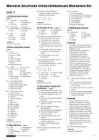
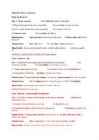
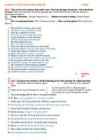
english, workbook, grammar, finished, bitingEnglish download B2 workbook lk 9 harjutus 1 vastused ( Use your english 2) 1. Have been doing 2. Plenty of 3. Are you aware 4. Have you stopped 5. Have been calling you 6. Was alone 7. Has a huge amount 8. Beware of the
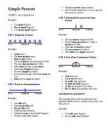
Simple Present · · New York is a small city. It is not important that this fact is untrue. [VERB] + s/es in third person USE 3 Scheduled Events in the Near Examples: Future · You speak English. · Do you speak English? · You do not speak English. USE 1 Repeated Actions Examples: · The train leaves tonight at 6 PM. · The bus does not arrive at 11 AM, it arrives at 11 PM. · When do we board the plane?
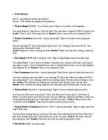
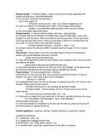
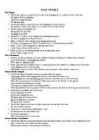
1. Active/Passive Active - the professor teaches the students. Passive - The students are taught by the professor 2. Present Simple [VERB] + s/es in third person. Tegevus on korduv või tavapärane. You speak English. I play tennis. Cats like milk. The train leaves tonight at 6 PM. I am here now. Active= Once a week, Tom cleans the car. Passive= Once a week, the car is cleaned by Tom. 3. Present Continuous [am/is/are + present participle]. Tegevus toimub/ei toimu praegusel hetkel. You are watching TV. You are learning English now. I am studying to become a doctor. I am meeting some friends after work. Active= Right now, Tom is writing the letter. Passive= Right now, the letter is being written by Tom. 4
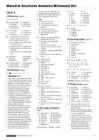
It looks like a science lesson 3 have/'ve caught 7 As she got older, her health and judging by the students' 4 lived deteriorated. expressions, I'd say that they are 5 haven't finished enjoying their lesson. They look 3 She was unlucky because she was 6 have/'ve known interested and it looks as though shipwrecked three times. 7 walked they are working hard. Most of
working Progressive sth. at a infinitive + ing I was going certain time he was (in the past) going you don't know whether it was finished or not you say that sth. has happened or Yet is finished in have/has + Never the past and ever it has a past already connection I've worked particip
There's going to be a storm!; 3)Present continuous N: I am meeting my girlfriend tonight. 4)Present simple The bus leaves at 8 a.m. I'll meet you as soon as the class finishes. 5)Future continuous: will/may/might + be + ing N: I'll be lying on a beach this time tomorrow. In 50 years' ,ppl will be living on the moon. 6) Future perfect: will/may/might + have + past participle / will/may/might+have been + ing N: I will have finished my homework by 6o'clock. By the time our plane arrives,we will have ben waiting for exactly five hours. Indirect questions : (could you tell me; I wonder (whether); I would like to know) Conditional sentences : I If `' I põhivorm'', will + I pv. N: If I study hard, I will get a good mark. II If II pv I (did + I pv eitav lause), would + I pv. N: If I studied hard, I would get a good mark( kui ma õpiks, ma saaks) III If had + IIIpv,would+ have + IIIpv
English download B2 workbook lk 16 harjutus 1 vastused (Listening) 1. Is being examined by modern scientists 2. Success in relationships 3. Generally speaking, it covers four different areas 4. People need to understand their own feelings 5. By communicating in different ways 6. May have been important to the survival of the species 7. Learn to develop their social intelligence
noticed when I was born! 3 1 Laura was offered a place at much. Personality-wise, I've got a lot of my Manchester University but she dad's traits in me. We're both quite bubbly and friendly (or so people 1C The origins of English turned it down. page 5 2 Whilst some people are in favour say), and we share quite a laid-back of the monarchy, others think we approach to life. When it comes to 1 1 Anglo-Saxon 8 Conquest
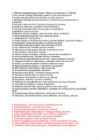
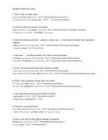
118. vaba, mahajäetud ja saastatud maa - vacant, derelict and contaminated land 119. tasakaaluhind - clearing price 120. laiaulatuslik väljaehitamine - large-scale building 121. alternatiivkulu/loobumiskulu - opportunity cost 122. taastuvenergia allikad - renewable energy sources 123. tarbjakulutuste järk kasv - gradual growth of consumer costs Passive 1.Sein kaeti värviga The wall is being painted 2.See töö on kella viieks lõpetatud This work will have been finished by five o´clock 3.Meie teste parandatakse ikka veel Our tests are being checked on 4.Liiklusmärki ei olnud märgatud The traffic sign was not taken notice of 5.Sõnaraamatut otsiti parajasti The dictionary is being looked for 6.Selle probleemiga tegeletakse hiljem This problem will be dealt with later 7.Anne tänaval ehitati parajasti uut maja A new house is being built in Anne street 8.Oodatakse kirjakandjat The postman is being waited for 9.Seda olukorda kasutati ära
Enneminevik before they came. before another action in the past. trip. lady before that? She won't have How long will To express what will have We'll have lived Future Perfect finished her you have lived in happened or how long some-thing here for twenty homework by the France by the end will have happened up to a certain years by 2005. time we arrive. of next year? point in the future.
Has he/she/it been working? 3 When to use the Present Perfect Continuous Present Perfect Continuous (Progressive) can refer to a range of meanings, depending on the time expression used and the context. • A state which lasts up to the present moment I've been waiting for you for three hours! • An incomplete activity I've been cleaning the house but I still haven't finished. • To emphasise duration I've been writing letters all morning. • A recently finished activity I've been running. That's why I look hot. • A repeated activity I've been taking French lessons this year. Contrasts with Present Perfect Simple There may be little contrast when some state verbs are used. How long have you lived here? How long have you been living here?
Tests Superstar 1 Luke Prodromou Test 1 Name____________________ Class_______ Use your English 1 Complete these sentences using the correct form (present simple or present continuous) of the verb in brackets. _ 1 She is in a band and she _________________________________ (record) a CD at the moment. _ 2 She is an actress and often _________________________________ (appear) on television. _ 3 At the moment she _________________________________ (have) a rest because she is tired. _ 4 Mike is a doctor and he _________________________________ (live) in Manchester.
– No, not yet. 6 In a positive statement, still and already usually go in mid position, like adverbs of degree and frequency. I sent her an e-mail a week ago, and am still waiting for a reply. You don’t have to tell me that horrible news, I already know. Still can be used in a negative statement, where it goes before haven’t, can’t, etc. It’s nearly bed-time, and you still haven’t finished your homework. (Hurry up!) Alison is fifteen and she still can’t swim. (High time to learn!) Still is more emotional than yet. It usually expresses surprise or anger at the fact that something is taking longer than expected. Rita hasn’t booked our holiday yet. (neutral – it’s OK; there’s still plenty of time) Rita still hasn’t booked our holiday. (emotional – soon it may be too late!) In a question still and already usually go after the subject.
PRESENT PERFECT CONTINUOUS (kestev täisminevik) Form: have/has + been + ing Use: 1. An activity that has recently or just stopped (the result is visible in the present). I am out of breath, because I have been running. 2. An activity that started in the past and is still happening. It has been raining for two hours. 3. Actions repeated over a period of time. She has been playing tennis since she was eight. 4. We are interested in the activity. It does not matter whether something has been finished or not I have been painting the ceiling. Negative form: I haven't (have not) been learning Spanish very long. He hasn't (has not) been eating properly. Question form: Has it been snowing recently? How long have you been working on the computer? Signal words: for 2 hours, since..., all day, etc. PAST SIMPLE (lihtminevik) Form: 2nd form (-ed) Use: 1. A finished time in the past. We can ask when? I visited John yesterday. 2. Finished actions taking place one after another
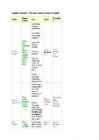
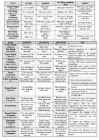
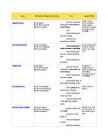
englisch-hilfen.de LEARNING ENGLISH ONLINE Examples Examples Examples Tense Signal words Use Form affirmative negative interrogative every day something happens repeatedly sometimes
Style The term style is a polysemantic one. The latin word ,,stilus" meant a writing instrument used by the ancients for writing on waxed tablets. Already, in classical latin the meaning of style was extended to denote the manner of expressing one's ideas in written or oral form. One of the abts/the best was given by Jonathan Swift: ,,Proper words in proper places." In present- day english, the world style is used in about half a dozen basic meanings. 1. the characteristic manner in which a writer expresses his ideas. Some speak about the style of Hemingway, Dickens etc. 2. the manner of expressing ideas, characteristic of a literary movement or period. Style of symbolism, romanticism 3. the use of language to pick a literary genre-comedy, novel, drama, O.D (poetic form) etc. 4
Kordamine inglise keele eksamiks II 1.1 Fill in the missing prepositions where necessary. 1) Mary sat ..... the window and read ..... interesting book. 2) Su was cooking ..... the garden. 3) Alice went ..... see Mr Thompson. 4) While waiting ..... the hospital, one nurse offered us ..... coffee. 5) Keith smiled ..... his idea it was total nonsense. 6) She looked ..... Charlie searching ..... something more than nothingness that echoed ..... his dark eyes. 7) It was too dark we could see nothing as we crossed .... field. 8) A kitten was playing ..... the tree. 9) She was knitting ..... total silence. 10) She jumped ..... the wooden table and walked slowly ..... the room. 11) After he had bent and taken a glance of the darkness, Tom whispered ..... Mark that no one was there; the thieves had escaped. 12) Sheila stood still as the wind was blowing ..... her silky hair in a pleasant way. 13) Ken shut ..... door and sat ..... dusty fl
) We'd better ask John to help us. 11. Use the present progressive am playing, is raining etc to talk about things that are continuing at the time of speaking. I'm playing very badly today. (NOT I play very badly today.) Look! It's raining! (NOT Look! It rains!) 12. Use for with a period of time. Use since with the beginning of the period. for the last two hours = since 9 o'clock for three days = since Monday for five years = since I left school I've been learning English for five years. (NOT I've been learning English since three years.) We've been waiting for ages, since eight o'clock. 13. Don't separate the verb from the object. VERB OBJECT She speaks English very well . (NOT She speaks very well English.) Andy likes skiing very much. (NOT Andy likes very much skiing.) 14. Don't use the present perfect have/has seen, have/has gone etc with words that name a finished time. I saw him yesterday. (NOT I have seen him yesterday.)
........................................................5 Word Order in Negative Sentences......................................................6 Word Order in General Questions.........................................................7 Word Order in Special Questions ..........................................................8 Word Order in Subject Questions ..........................................................9 Types of Sentences There are four basic types of sentences in English. AFFIRMATIVE and NEGATIVE sentences both end with a full stop ( ) : . I live in Tallinn. I do not live in Tallinn. I never watch soap operas. INTERROGATIVE sentences end with a question mark ( ? ) : Do you live in Tallinn? Why do you never watch soap operas? EXCLAMATORY and IMPERATIVE sentences end with an exclamation mark ( ! ) : What a beautiful day! Do your homework at once! Parts of the Sentence The basic parts of the sentence are: THE SUBJECT (WHO? WHAT?) ,
If you go, could you buy me some potatoes? 5. It can also be used to refer to fixed arrangements and plans. The band will be performing live in Paris this summer. 5 Future Perfect In the Future Perfect Simple we use will have + a Past Participle I/you/he/she/we/they will have completed I’/you’/he’/she’/we’/they’ll have completed Negative I/you/he/she/we/they will not have finished I/you/he/she/we/they won’t have finished Question Will he have cooked? In the Future Perfect Continuous we use will have been + an ing-form I/you/he/she/we/they will have been reading I’/you’/he’/she’/we’/they’ll have been reading I/you/he/she/we/they will not have been studying I/you/he/she/we/they won’t have been studying Will he have been working?
kindlam! teinud. Will have worked. Present I think Jason is in the garden. He is building(build) a shed. Steve jogs (jog) around the lake every evening. In northwest Scotland summer temperatures rarely rise(rise) above 16C. I'm meeting (meet) Mr. Houghton at six o'clock. His flight takes off(take off) at 11.45. You always complain. Tourism has increased/is increasing in this area. He has just finished work on his new book. I have been to America twice. Her eyes are red because she has been crying. She has been studying non-stop for eight hours. Jade and Tom are having a car boot sale next Saturday. Past By the time I arrived at the university, the lecture had already started. Dean (run) in the park at 7 o'clock yesterday morning. Sharon went to the funfair Sunday. Suki had been waiting (wait) outside the reastaurant for twenty minutes before her friends arrived.
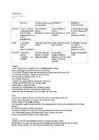
the result far, till now, up to action that is still now going on action that stopped recently finished action that has an influence on the present action that has taken place once, never or several times before the moment of speaking
Only keep the agent (by phrase= where absolutely necessary. Please remember that tense form (tegusõna aeg) should remain the same when the sentence is transformed into passive. E.g. Chimps eat bananas (Present Simple Active) Bananas are eaten by chimps. (Present Simple Passive) They were playing the piano. (Past Continuous Active) Piano was being played. (Past Continuous Passive) 1. They will finish the house next month. 2. The house will be finished next month. 3. Susan has completed the essay. 4. The essay has been completed by Susan. 5. People should have left the bird alone. 6. The bird should have been left alone. 7. We cannot repair their car. 8. Their car cannot be repaired. 9. The owners had sent the money to a Swiss bank. 10. The money had been sent to a Swiss bank by the owners. 11. People speak English and French in Canada. 12. English and French are spoken in Canada. 13
Past Continuous Used to say that somebody was in the middle of doing something at a certain time in the past. At 10:30 yesterday, I was preparing lessons. What were you doing at 6:30? Often used with Past Simple to show a continuing action interrupted by a sudden action in the past. I was studying when the phone rang. (Remember: there are some verbs that have no continuous know, believe, heat, etc.) Present Perfect Simple Used to talk about finished actions in an unfinished time period. I have eaten three cookies today (the cookies are finished but today isn't). I have cleaned my room this morning (the cleaning is finished, but it's still morning). Often the time period isn't mentioned. That means that it's the lifetime of the speaker. I have travelled to Europe (in my life). If the person is dead we can't use Present Perfect. Hitler has killed killed many people
Past Simple (lihtminevik) -ed / II pv. Kasutus: Ago, yesterday, last. ?/- Did Tegevus: 1. Toimus minevikus ja on lõppenud. ,,I met him yesterday" 2. Used To, mineviku harjumused. ,,I used to play tennis." Past Continius (kestev minevik) was/were + ing Kasutus: When, while, as Tegevus: 1. ajutised sündmused. 2. 2 või enam tegevust ,,While i was reading, he was garding." 3. minevikus katkestatud tegevus ,,I was having a shower, when the phone rang." 4. konktreetne kellaaeg minevikus ,, I was watching TV yesterday at 5!" Present Perfect (täisminevik,olevikuaeg) have/has + III pv. Kasutus: Never, ever, already, yet, before, since, for. Tegevus: 1. tegevused alg. Minevik -> now ,,I have been a teacher for 5 years." 2. mineviku situatsiooni resultaat olevikus ,,I have lost my purse." 3. kogemused ,,Have you
Have you ever had any embarrassing incidents in a shop? _______________________________________________________________ UNIT 8: Töövihikust harjutus 9. 1 See tõesti ärritab mind, kui inimesed ei lülita oma mobiile teatris välja. It really annoys me when people don´t switch off their mobile phones in the theatre. 2 Ma tahaksin oma telefonihelinat muuta. I´d like to change the ringtone of my mobile phone. 3 Tema teadmised inglise keelest on väga head. His knowledge of English is very good. 4 Ma surfasin eile kaks tundi internetis, aga ma ei leidnud vajalikku informatsiooni. Yesterday I surfed the Internet two hours but i didn´t found neccessary information. 5 Halloo, mina olen Kai. Palun kas ma saaksin rääkida Lizziega? - Ma kuulen. Hello, this is Kai. Could I speak to Lizzie please? - Speaking. 6 Vabandust, ma pean nüüd lõpetama. Ma helistan hiljem tagasi. Sorry, I have to finish now. I will call you back later. 7 Kus Maria on
INGLISE KEELE PÕHITÕED C.K 2017 A – AN – SOME Singular: a or an Use some for things you can't count ◦ *a banana *a car *a monkey *a football ◦ *some milk *some water *some coffee ◦ *an egg*an accident *an umbrella *an *some sugar eagle ◦ *some tea *some juice*some money *some butter Plural: some Exercises: 1. http://www.english-4u.de/a_an_some_ex1.htm ◦ *some bananas *some cats *some monkeys *some 2. http://www.english-4u.de/a_an_some_ex3.htm balls ◦ *some eggs*some oranges *some umbrellas *some 3. http://www.english-4u.de/a_an_some_ex6.htm eagles We us the
Moved to Cali 2005 Was Born Traveled to Europe Husband 1978 School graduates @ Oxford 1999 Started Got married School 1983 2008 2 The Six English Verb Tenses Three Simple Tenses Simple continuous Present You walk. You are walking I run. I am running. Past You Walked You were walking. I ran. I was running. Future You will walk. You will be walking. I will run. I will be running. Three Perfect Tenses Perfect continuous
Book 1 BASIC ENGLISH BASIC ENGLISH GRAMMAR GRAMMAR BASIC ENGLISH GRAMMAR Book 1 Book 1 Younger students at beginning to intermediate levels will greatly benefit from this step-by-step approach to English grammar basics. This is the ideal supplement to your language arts program whether your students are native English speakers or beginning English language learners. Skill-specific lessons make it easy to locate and prescribe
'How are you?' Very often people expect you to say something positive. Here's a breakdown of how you can express how you really are without complaining too much. · Fine, thanks. / On top of the world, thanks. · OK, thanks · Not so bad, thanks. / Can't complain, thanks. · So so, thanks. / So and so, thanks. · Not so good, actually 1 The English alphabet Spelling Work with your partner and spell out first your name and then some names of places. Write down each letter as you hear it, and then say the word. The English alphabet on the phone: You might find the following alphabet (used by international airlines) useful when trying to spell a word on the telephone. A Alpha O Oscar Ä Alpha-Echo Ö Oscar-Echo
I have asked I have not asked Have I asked? He/she/it has gone He/she/it has not gone Has he/she/it gone? We/you/they have made We/you/they have not made Have we/you/they made? Täismineviku väljendab: · Tegevust, mis toimus enne kõnemomenti, kuid mille tagajärg on kõnelejale tähtis. John has arrived. I have finished writing a letter. Oh God! I have cut my finger. · Tegevust, mis algas enne kõnemomenti, kestab selleni või jätkub edasi. Tegevus võib olla määratletud sõnadega since, for. They have lived here for two years. · Tegevust, mis lõpeb enne mingit tegevust või muutust tulevikus, näiteks ajamääruslausetes, kus kasutatakse sidesõnu when, until, till, before jt.
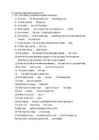
A leave B leaving C left D to leave 1) Ann is my best friend! We........each other for years A know B knew C knows D have known 2) Nicky........to San Francisco when the accident happened. A flies B has flown C was flying D has been flying 3) Why don`t you let her........her story? A finish B to finish C finishing D have finished 4) Tim........in a cafe at present, but he has already applied for a new job A work B have worked C is working D worked 5) My father........already worked for two years before he went to University. A was B had C has D is 3. Change the order of the words to make a correct sentence. ( 5 points ) 1) I wonder / can / you / me / help / if
You will be contacted as soon as its exact whereabouts has been discovered. EX 31 1 with, by 2 with 3 in 4 from 5 with 6 from 7 in EX 32 1 I resent my efforts being laughed at. 2 The editor's advice should be listened to. 3 In the `50s, interactive TV hadn't even been dreamt of. 4 The details must be taken care of. 5 Is the radio going to be paid for? EX 33 (your sentences may be different in content, but please make sure that you use the causative form in them; for details see Grammar Reference page 263) 2 He'll have to have it looked at/treated by a specialist. 3 Why don't you have it done by an accountant? 4 So who did he have his work checked by? 5 No wonder you had it stolen. 6 He has to have his ironing done for him. 7 You'll need to have the stains removed at the drycleaner's. 8 You should have had it cut by a hairdresser. EX 34 1 ...order to avoid being recognised/recognition ... 2 ... had her house broken into ... 3 ... don't allow fox hunting ... 4 ..
 annaabi.ee