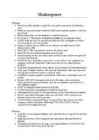
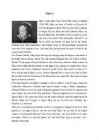
· From 1585 to 1592, a period some scholars call ,,the lost years" · From 1592 the recors about Shakespeare are much fuller. · Sometime during the lost years Shakespeare moved to London and became part of the city's busy theatrical life · By 1594 he was a shareholder, or part owner, in one London's most popular acting companies, the Lord Chamberlain's Men, and at least six of his plays had been produced · In 1599 the company built the Globe Theatre, the most famous of Elizabethan theatres · After Queen Elizabeth's death in 1603, the Lord Chamberlain's Men were sponsored by King James and became known as the King's Men · In 1608 the company acquired a second theatre in Blackfairs, a fashionable district of London · Between 1608-1613 Shakespeare wrote his last five plays; while writing these, Shakespeare lived mostly in Stratford, where he was regarded as one of the town's most important citizens
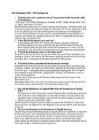
those of the New World. The commercial ventures of the Virginia Company in North America and of the East India Company in the Orient were aspects of this expansion. Riches also came from ventures like those of the pirate-patriot Sir Francis Drake, whom Elizabeth commissioned to intercept Spanish treasure ships on the high seas and relieve them of the heavy burden of gold they had stolen from the Indians of South America. 11. The development of poetry during the Elizabethan time. The queen loved music and dancing and her court entertainments were notable. Elizabeth was not only a master politician but also a poet of no mean ability. Most famous of the courtier poets were the Earl of Essex, Sir Walter Raleigh, and Sir Philip Sidney. Edmund Spenser, unsuccessfully seeking court preferment, wrote the Faerie Queene, a long allegorical epic in which Gloriana, the Faerie Queene, represented Elizabeth. The
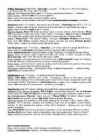
Lord Chamberlain's Men, King's Men, The Globe Early life: John Shakespeare, Mary Arden, 2 sis', 3 bros; married Anne Hathaway 3 children Life in London: 1599 built Globe, 1623 first compilation Forms: classical & history plays, comedies+tragedies, poetry Style: metaphors, rhetorical phrases, free flow of words, unrhymed iambic pentameter; deviations Renaissance (end of 14th century) Italy, reaches rest of Europe Elizabethan era (16th II h - 17th I h) Theatre: combined medieval theatre, morality plays & Roman drama to create Elizabethan tragedy Poetry: Italian influences, sonnet (English: cddc ee) Rulers of England: Henry VII (brings prosperity, repairs economic situation; made alliances); Henry VIII (beginning of English reformation; killed "traitors"; 6 marriages); Mary I (Catholic); Elizabeth I (The Virgin Queen restores order; Religious Settlement; cautious measures in foreign affairs)
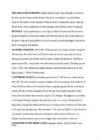
Elizabeth's reign was a period of unprecedented prosperity, and both the court and the emerging middle class dedicated a lot of time to art and literature. W. Shakespeare wrote 154 sonnets, E. Spencer 88. . Spenser's belief that poetry should deal with subjects far removed from everyday life and should be written in refined language unlike that which was used by common people became the basic principle for poetry throughout much of the Elizabethan period. CHRISTOPHER MARLOWE 1564-1593, born in Canterbury, was working for the government. Also wrote plays where he was successful. In the end got stabbed to death. SHAKESPEARE (1564-1616) he was an actor, poet, playwright and the best dramatist in writing. 37 plays, he used many sources for his plays including the classical Greek and Latin writings. Shakespeare did not publish his plays, two former actors and friends of him did, after he died
WOMEN's IDEALS OF BEAUTY THROUGH THE AGES Renaissance 15th century High forehead In the warmer climate hair in plaits, jeweled turbans or caps Using bleach A few extra pounds of weight. Used white lead powder Elizabethan 16th century Queen Elizabeth Naturally pale complexion Red hair Healthy glow to cheeks 18th Century Women had trim Crimped or curled heads Powdered Decorated with garlands(vanikud) Wire cages Three feet in the air Feathers Ribbons Jewels Even ships, gardens Victorian Natural beauty Without makeup Used cosmetics less Hygiene and health 1840s heads were sleek, demure Heavy knot of curls Plaits in back 1920s "Bobbed" Waved or shingled hairstyles Louise Brooks Clara Bow Powder
1488) Henry VIII - 1534 the Breach with the papacy Act of Supremacy made The formation of the Anglican the crown the spiritual church head of the nation The Elizabethan period (1558- Fourfold growth in London 1603)- A golden age population Timber buildings Stuart dynasty The Civil War Oliver Cromwell Execution of Charles I - 1649 Puritan Republic (1653-60) Charles II took the throne 1660 The Great Plague and the Great Fire
Revision questions for the test on Victorian literature 1. How would you in general terms characterise the period of Queen Victoria's reign? What were the major changes in technology, education, government, social areas, etc and how did they change the mindset of the British people? 2. Why is the Victorian period often compared to the Elizabethan period? In terms of size how would you describe the British Empire? Why was such an enormity needed at all? 3. Why did the Victorian's develop a doubt in religious matters? What were the new discoveries that triggered the questioning in religious faith? Who were David Livingston and Charles Darwin? What were their ideas like? 4. Describe the main social issues of Victorian Britain? How were they depicted in literature
Breakdown of the Feudal system Dissolution of the Monasteries Decline invalues and moral -feed the hungry -give drink to the thirsty -welcome the stranger -clothe the naked -visit the sick -visit the prisoner -bury the dead Land enclosure Poor harvest and population increase Land enclosure means The wool trade became increasingly popular during the Elizabethan age. Land which had been farmed by peasants was now dedicated to rearing sheep. The traditional open field system ended in favor of creating larger and more profitable farming units which required fewer people to work on them. This created a landless working class. Duty of overseers were to Work out how much money would be needed for the felief of the poor and set the poor rate accordingly Collect the poor rate from property owners
2. Never take food from your neighbours plate. 3. It is impolite to have your elbows on the table while you are eating. 4. It is ok to put milk and sugar in your tea and coffee or to drink them both without either. 5. If you've accidentally taken too much food and you cannot possibly eat it all you should say :"I'm sorry, but it seems that 'my eyes are bigger than my stomach." English literature Old English Renaissance literature Elizabethan Era Jacobean literature Caroline and Cromwellian literature Restoration literature Augustan literature Romanticism Sports Football is the national sport in England and plays a significant role in English culture. The modern global game of Football was first codified in 1863 in London . England is the joint oldest national team in the world, along with the Scotland national football team.
took the British throne as William I. He built the White Tower, granted a city charter laying down the rights of its citizens and separated the secular from the ecclesiastical courts. 12) The 14th century was a turbulent period due to the beginning of the 100 Years War, the Black Death, the Peasants’ Revolt and Wars of the Roses. 13) Henry VIII, the son of Henry Tudor, made the crown the spiritual head of the nation and formed the Anglican church. 14) The Elizabethan period is considered a golden age in British history due to a fourfold growth in London’s population and timber building. 15) The leader of the Civil War was Charles I, who was executed during the war. The leader of the Puritan Republic was Oliver Cromwell. 16) London’s greatest disaster is considered the Great Fire, which happened in 1666 and destroyed some 13 000 houses over an area of almost 400 acres.
English Literature ,Victoria Age 1) Overview of the Victorian age · Periodization During the reign of Queen Victoria (1837-1901) · Why is the Victorian Age compared to the Elizabethan Age? Both are associated with the reign of a very popular queen; Victorian age idealised the Elizabethan Age; many changes in different fields- economy, religion etc.; focusing more on people's attitudes, political developments etc; Victorian age was inspired by Elizabethan era; Britain became an empire · What were the most important changes in politics, religion and social life that occurred during the Victorian age? Politics: 1848 Chartist movement (voting right for the working class); women's suffrage movements; feminist outburst (wanted to have business openly; own property, voting etc.); world dominion (British empire); Economy: Industrialization; urbanization (people moved to towns no agriculture & food); laissez-
1558. Elizabeth chose not to marry, and declined to settle the succession. Her reign was punctuated by clashes with Parliament over the succession, and her reluctance to deal with Mary, Queen of Scots. Within two decades of Elizabeth's death, the Elizabethan period had come to be known as a "golden age", a period of great literary achievements, the age of William Shakespeare, Sir Philip Sidney, and Edmund Spenser, but, at the time, the regime often felt beleaguered at home and abroad. Internally, Elizabethan England was marked by religious divisions, as "official" Protestantism was consolidated in
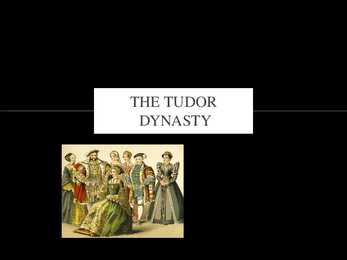
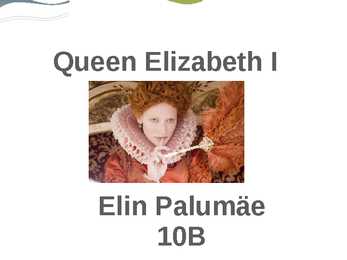
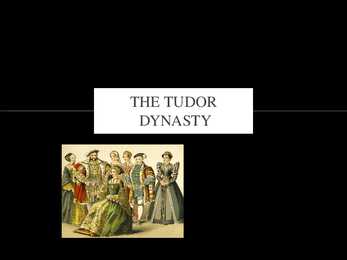
of a lustful, egotistical, harsh, and insecure king. He died 28 January 1547. THE TUDOR DYNASTY ELIZABETH I Elizabeth I was queen regnant of England and Ireland from 17 November 1558 until her death. Sometimes called The Virgin Queen, Gloriana, or Good Queen Bess, Elizabeth was the fifth and last monarch of the Tudor dynasty. THE TUDOR DYNASTY ELIZABETH I Elizabeth's reign is known as the Elizabethan era, famous above all for the flourishing of English drama. After the short reigns of Elizabeth's brother and sister, her 44 years on the throne provided welcome stability for the kingdom and helped forge a sense of national identity. THE TUDOR DYNASTY ELIZABETH I The Queen's health remained fair until the autumn of 1602, when a series of deaths among
It was between two branches of the Royal house York and Lancaster. It was ended by Henry Tudor in 1485. (lancaster) Henry Tudor started with a great act of piety: The building of a beautiful fan roofed chapel in Westminster Abbey. It was completed by his son. His son Henry the VIII made the crown the spiritual head of nation. A huge amount of property which had previously been owned by Roman Catholic Church was sold or given away and the houses stood empty. The Elizabethan period is often considered to be the golden age. Elizabeth was succeeded by her closest relative James VI of Scotland. The unhappy Stuart Dynasty witnessed the Civil war and the execution of Charles I. In 1660 the throne was taken by Charles II. Unfortunately in 1665 the great Plague was responsible for the deaths of 100,000 Londoners and in 1666 The Great Fire destroyed amost 400 acres. The fire raged for three days and burned down many churches, St. Paul's Cathedral and so on
others which had never been given much attention. English Renaissance Like most of northern Europe, England saw little of these developments until more than a century later. The beginning of the English Renaissance is often taken, as a convenience, to be 1485, when the Battle of Bosworth Field ended the Wars of the Roses and inaugurated the Tudor Dynasty. Renaissance style and ideas, however, were slow in invading England, and the Elizabethan era in the second half of the 16th century is usually regarded as the height of the English Renaissance. If you're looking for what is sometimes referred to as the English Renaissance then it would cover the reigns of both Henry VIII and Elizabeth I, with Edward VI and Mary I coming in between; although the more famous elements came during the Elizabethan period (1558 - 1603). Arguably, however, there was no Renaissance in England as it differed considerably to everywhere else
with the Catholics to retake the his circumnavigation of the globe port. Elizabeth's intention had been to exchange Le Havre for Calais, from 1577 to 1580, and he won lost to France in January 1558. fame for his raids on Spanish Only through the activities of her ports and fleets. An element of fleets did Elizabeth pursue an piracy and self-enrichment drove aggressive policy. Elizabethan seafarers, over which the queen had little control. Later years The period after the defeat of During this time, repression of the Spanish Armada in 1588 Catholics intensified, and brought new difficulties for Elizabeth authorised Elizabeth that lasted the fifteen commissions in 1591 to years until the end of her interrogate and monitor reign. Catholic householders.
1. The Jacobean masque Elizabethan one nation culture, now cultural polarisation between the new courtly culture and the rest of the country. Court in cultural isolation. Ben Jonson. King and courtiers were close to universally recognised ideal types (conflict with the reality). Mysticism. Emergence of perspective view, stage machinery, artificial light, revolution. The stage cast the monarch in the focal point (the lines of perspective of the stage met there. Inigo Jones. Masque an educative vehicle, towards classical antiquity and architecture. Tide towards absolute monarchy. Masque – linked poetry and moral philosophy into art. Music, dance, poetry, lavish illusionistic scenic display to express the doctrines of divine kingship. Great impact. Like gods come down to earth. 2. The Caroline masque Charles decided on subject matter, and acted and danced in masques. Now the regal divinity even more obvious. Ben Jonson. Divine m...
twin towers, the high-level walkways and the Victorian engine rooms You visited The Tower, now crossed the Tower Bridge. Do you have to turn left or right to reach the Globe Theatre? right Destination 8: The Globe Theatre Why is this particular theatre that important? Shakespear's home teather, Shakespeare globe When was it built? 1599 Why was it closed already in 1642? closed down by the Puritans in 1642 - puhtusevennad The term "box office" (kassa) is said to originate from the Elizabethan theatre. What did it mean and look like at that time? See http://www.globe-theatre.org.uk/globe-theatre-box-office.htm for help. Congratulations! You are now leaving London to explore England even further. Your last stop will be at Greenwich Observatory You can stand on Longitude 0° in the Observatory. What is it? Prime meridian The Royal Observatory is also the home to the common abbreviation GMT. What does it stand for? Greenwich mean time Is Estonia GMT +2 or GMT +1? Gmt +2
olulised näidendi lavale toomises (Rutter 2008: 336). Varase draama käsitluses ei ole repertuaariuuringute suund uus. Üks varasemaid käsitlusi on Robert Boies Sherpe'i "Teatrite tõeline sõda" ("The Real War of the Theaters", 1935), mis arutab näidendi kaupa teatreid "Admiral" ja "Chamberlaini mehed" (Chamberlain's Men). Lisaks võiks välja ka tuua George F. Reynoldsi "Elisabethi aegsete näidendite lavastused Red Bulli teatris" ("The Staging of Elizabethan Plays at the Red Bull theatre", 1940), kus on samuti käsitletud eelmainitud teatrite repertuaari (Rutter, 2008: 336). On ka palju teoseid, mis otseselt ei tegele repertuaariuuringutega, kuid mida saab siiski antud juhul arvesse võtta, sest neis on tihti viidatud repertuaariuuringutega seotud materjalidele nagu näiteks lavastuste personal ja selle suurus ning teatrihooned. Viimasel kahel dekaadil on aga järjest enam raamatuid keskendunud puhtalt repertuaariuuringutele ja teatritele endile.
of a lustful, egotistical, harsh, and insecure king. He died 28 January 1547. THE TUDOR DYNASTY ELIZABETH I Elizabeth I was queen regnant of England and Ireland from 17 November 1558 until her death. Sometimes called The Virgin Queen, Gloriana, or Good Queen Bess, Elizabeth was the fifth and last monarch of the Tudor dynasty. THE TUDOR DYNASTY ELIZABETH I Elizabeth's reign is known as the Elizabethan era, famous above all for the flourishing of English drama. After the short reigns of Elizabeth's brother and sister, her 44 years on the throne provided welcome stability for the kingdom and helped forge a sense of national identity. THE TUDOR DYNASTY ELIZABETH I The Queen's health remained fair until the autumn of 1602, when a series of deaths among
Admiral Nelson o Commander of the British fleet o Defeated Napoleon's French fleet in the Battle of trafalgar o Nelson's Column in Trafalgar Square in London commemorates the national hero who died during the battle Winston Churchill o politcian and statesman known for his leadership of the United Kingdom during the Second World War o PM 2 times Sir Francis Drake o an English sea captain, privateer, navigator, slaver, a renowned pirate, and a politician of the Elizabethan era. o He was second-in-command of the English fleet against the Spanish Armada in 1588. Dates 1066- Battle of Hastings 1455-1485- Wars of the Roses(Lancastrians-Yorkists) 1649-1660- England was a republic for the 1st and only time and was called "the Commonwealth" 1837-1901- the Victorian period 1707- The Act of Union(the Scottish parliament was dissolved and the former 2 kingdoms became one `United Kingdom of Great Britain'
the greatest English poet of the Middle Ages An author, philosopher, alchemist and astronomer, diplomat Wrote The Book of the Duchess, the House of Fame, the Legend of Good Women and Troilus and Criseyde Best known today for "The Canterbury Tales" Crucial figure in developing the legitimacy of the vernacular, Middle English, at a time when the dominant literary languages in England were French Modern English William Shakespeare 26 April 1564 23 April 1616 The Elizabethan Era English poet and playwright, widely regarded as the greatest writer in the English language and the world's most important dramatist ,,England's national poet" Early plays in 1590's were mostly comedies (The Taming of the Shrew, The Merchant of Venice..) Began to focus on tragedy/drama in early 1600's (Romeo and Juliet, Hamlet, Macbeth, Othello..) In 1608 tragedy is replaced with romance Wrote historical plays too (Richard III, Julius Caesar..) Used allegory and methaphores
Anglo-Saxon prose was produced a century later by the monks Wulfstan and Ælric, who left a large number of writings devoted to the exposition of Christian faith. That includes homilies and Saint's Lives. It is now believed that these monks were responsible for developing the form of written English known as Late West Saxon. Ælric was a grammarian, he wrote the first Latin grammar in English. One of the main characteristics is immediacy. 4. The medieval and eliz. world picture. The Elizabethan age was the age of the renaissance, but the Elizabethans were much closer to a medieval way of thinking. Above all earthly and cosmic laws or orders there is Law in general. The divine reason is beyond our understanding, yet we know it's there. God's law is eternal. St. Paul's scheme of sin and salvation: the revolt of the bad angels under Lucifer because of their pride, the creation, the temptation and fall of man, the incarnation, the atonement, the regeneration through Christ
Diamond Jubilee is being celebrated during 2012. Cultural Life in Great Britain Artistic and cultural life in Britain is rather rich, like in most of the European countries. It has passed several main stages in its evelopment. The Saxon King Alfred encouraged the arts and culture. The chief debt owed to him by English literature is for his translations of and commentaries on Latin works. Art, culture and literature flourished during the Elizabethan age, during the reign of Elizabeth I; it was the period of English domination of the oceans and colonies, and, due to the strong political and economic position of the country, there were few obstacles in the way of the cultural development. This time is also famous for the fact that William Shakespeare lived and worked then. The empire, which was very powerful under Queen Victoria, saw another cultural and artistic
There are 5 collections: botany, entomology, mineralogy, palaeontology and zoology. There are the huge dinosaur skeletons and also there is the Giant Squid. The Museum of London It was built in 1976. It is part of Barbican Estate. There can see the fragments of the Roman Wall. There was also the exhibition of the Great Fire in London. Sherlock Holmes Museum It is located on the Baker Street. It is a privately run museum in London. Theatres During the Elizabethan era the theatre was very important. The Shakespeare's Globe was built. There are very many well-known theatres in the West End near Leicester Square. The United Kingdom's Royal Ballet, English National Ballet, Royal Opera and English National Opera are based in London and performed at the Royal Opera House. Parks Most of the parks in London are Royal Parks and they are owned by monarchy. Hyde Park It is the biggest park in Central London. Hyde Park has two entrance gates. Those gates are
chaise lounge: The French expression chaise longue means “long chair.” To many unobservant readers the word longue computes to lounge. Hey, that makes sense. One lounges in a chair that lets you put your feet up. Now many lawn furniture departments advertise “chaise lounges.” 16. Archaisms A word or phrase (or a particular meaning of a word or phrase) that is considered extremely old fashioned and long out of common use. 19th-Century Archaisms "We do not have to go back as far as Elizabethan English or the Middle Ages to encounter archaisms. Here are some from the Victorian and Edwardian eras: beastly (as in 'so beastly critical') blest, deuced (if I know) guv’nor luncheon spiffing 20th-Century Archaisms "Among the technological archaisms I've had to explain to the Tuned In children--what a 'record' is, why they call it 'dialing' a phone, the fact that, once, you couldn't rewind TV shows--is the fact that, a long time ago, musicians used to
worldwide Anglican Communion. The Church of England understands itself to be both Catholic and Reformed. 19. The Elizabeth Age - was a time associated with Queen Elizabeth I's reign (15581603) and is often considered to be the golden age in English history. It was the height of the English Renaissance and saw the flowering of English poetry, music and literature. This was also the time during which Elizabethan theatre flourished, and William Shakespeare and many others composed plays that broke free of England's past style of plays and theatre. It was an age of exploration and expansion abroad, while back at home, the Protestant Reformation became more acceptable to the people, most certainly after the Spanish Armada was repulsed. It was also the end of the period when England was a separate realm before its royal union with Scotland.
Although Edward reigned for only six years, his reign made a lasting contribution to the English Reformation and the structure of the Church of England. Edward's reign saw radical progress in the Reformation. In those six years, the Church transferred from an essentially Roman Catholic structure to Protestant. Edward himself fully approved these changes. The English Reformation resumed its course, and most of the reforms established during Edward's reign were reestablished in the Elizabethan Religious Settlement. *Lady Jane Grey was a claimant to the Kingdom of England and Kingdom of Ireland. She was a grand-niece of Henry VIII. Edward VI of England gave the crown to Jane. When Edward VI died, Jane was proclaimed Queen. However, Mary Tudor managed to find sufficient support for her claim to the throne, Parliament declared Mary the rightful Queen and revoked Jane's proclamation. Mary imprisoned Jane and her husband at the Tower of London
Irving lavastas ka ise, reziitöö oli täpne, tegi keskpärastest teostest suured lavasündmused, lavastuse elemendid pidid olema kooskõlas, oluline oli terviklikkus. 1895 aasta paiku kriitikud ülistasid inglise teatrielu, seda tänu Irvingule. Teater muutus taas aristokraatia ja kodanluse seltskondlikuks kohtumispaigaks. Esimene näitleja, kes löödi rüütliks 1895 ja sai nime sir. Naisena sai selle 30 aastat hiljem Ellen Terry. 27) William Poel 1895 Elizabethan Stage Society seltsis tegeleti Shakespeare teoste välja toomisega võimalikult autentselt. Katsetas järgmise kümne aasta jooksul vahetpidamata erinevate laadide ja vahenditega, et taasluua Shakespeare'i enda lähenemisnurka. Seltsi juhtivamaks isikuks oli näitleja, lavastaja, Shakespeare'i uurija William Poel. Oluline märksõna autentsus, rekonstruktsioon. Lavastuste tunnuseks oli igasuguse dekoratsiooni puudumine. Säilitas teksti
He was autocratic, never allowing his staff to disagree with him, but otherwise not unpleasant so long as employees recognized that he was boss. A cardinal article of faith with him was that a well-executed sales campaign could put across almost anything. Friedman did some genetics work for him, but, because he was handy with a camera, he helped the cryptologists who were looking for Bacon's cipher signatures in Shakespeare by making photographic enlargements of the Elizabethan printing that figured in the work. The Department of Ciphers of the Riverbank Laboratories consisted of 14 or 15 high-school and college graduates who assigned the individual letters in these Elizabethan texts to one or the other of two fonts of type as part of the Baconian search. Fabyan gave them their living plus a salary of about $50 a month. The staff was fed and housed in Engledew and Hoover Cottages, the cipher laboratories taking up the first floor of Engledew.
 annaabi.ee