Leidsid 33 sarnast õppematerjali, mis on seotud failiga "Edgar Allen Poe kirjandus". Need materjalid aitavad sul teemat sügavamalt mõista.
allen, dark, here, fiction, themes, dead, work, poem, darkness, there, dream, spirit, image, known, works, tales, balloon, specific, effect, literary, raven, came, door, nothing, token, upon, best, gothic, death, physical, effects, concerns, burial, romanticism, genre, wrote, horror, humor, ludicrous, first, science, emerging, technologies, such, balloonsrelates to American Revolution on the one hand and the European Enlightenment on the other. Influenced by the scientific revolution of the 17th century and the humanist period during the Renaissance, the Enlightenment took scientific reasoning and applied it to human nature, society, and religion. American Enlightenment a gradual but powerful awakening that established the ideals of democracy, liberty, and religious tolerance in the people of America. If there were just one development that directly caused the American Revolution and uplifted the intellectual culture of the continent while it was only a British colony, it would be the American Enlightenment. Broadly, the Enlightenment was an intellectual movement that changed the fundamental perspective of the masses, urging them to foster skepticism and apply scientific principles in matters of religion and morality. Its chief values were: Liberty, Democracy, Republicanism, Religious Tolerance
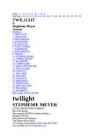
21. PHONE CALL 22. HIDE-AND-SEEK 23. THE ANGEL 24. AN IMPASSE EPILOGUE: AN OCCASION twilight STEPHENIE MEYER LITTLE, BROWN AND COMPANY New York Boston Text copyright © 2005 by Stephenie Meyer All rights reserved. Little, Brown and Company Time Warner Book Group 1271 Avenue of the Americas, New York, NY 10020 Visit our Web site at www.lb-teens.com First Edition: September 2005 The characters and events portrayed in this book are fictitious. Any similarity to real persons, living or dead, is coincidental and not intended by the author. Library of Congress Cataloging-in-Publication Data Meyer, Stephanie, 1973-- Twilight : a novel / by Stephanie Meyer. -- 1st ed. p. cm. Summary: When seventeen-year-old Bella leaves Phoenix to live with her father in Forks, Washington, she meets an exquisitely handsome boy at school for whom she feels an overwhelming attraction and who she comes to realize is not wholly human. ISBN 0-316-16017-2 [1. Vampires -- Fiction. 2. High schools -- Fiction
Freudian ideas have provided subject matter for authors and artists. Critics often analyze art and literature in Freudian terms. 2. Literary Modernism and its sub-movements. The influence of Structuralism and psychoanalysis. Main characteristic features of Modernism. Denial of conventions, traditional structure, plot and presentation of character. The stream of consciousness. Allusiveness. Virginia Woolf's Modern Fiction as a theoretical platform for Modernism. Criticism of Realist literary method. Literary modernism: end of the 19th century-1920 (reached its height) and ended 1940s. A self- conscious break with traditional aesthetic forms. Rejecting the sentiment and discursiveness typical of Romanticism and Victorian literature for poetry that instead favored precision (täppis) of imagery and clear, sharp language. Modernist writers embraced the unconscious fears of a darker humanity.
Christopher Columbus (1451-1506) was an Italian explorer who sailed across the Atlantic Ocean in 1492, hoping to find a route to India (in order to trade for spices). He made a total of four trips to the Caribbean and South America during the years 1492-1504. He discovered America in 1492. I Indian sun, they pray for fan. J we hate Jews, they are fools. K Bush is okey, because he is not gay. L Americans are large, they eat much. M Mc`Donalds is good, there is a lot of food. N is for Nigga who pulled the trigger. O is for Osama who wears pyjamas. P is for Pamela who likes camera. Puritans The Puritans were a group of people who grew discontent in the Church of England and worked towards religious, moral and societal reforms. The writings and ideas of John Calvin, a leader in the Reformation, gave rise to Protestantism and were pivotal to the Christian revolt
Philip Larkin’s Poetry: Themes, Form, Style, Imagery and Symbolism Author: Sandra Olivares González Tutor: Jesús Marín Calvarro Degree in English Studies, English Department, Faculty of Philosophy and Letters, University of Extremadura Cáceres, 29th January 2016 Philip Larkin’s Poetry: Themes, Form, Style, Imagery and Symbolism The aim of this work is to obtain some characteristics of the poetry of Philip Larkin, such us the origin of his themes, the way in which he writes his poems and the symbolism he uses (which is a very controversial topic because some assume that he does use it, while some others say that he uses it in an ironic way). In this work we tried to make a revision on the vision of Larkin through the studies that had been made on him, and on the basis of it we can say, that the voice of Larkin still clearly contemporary
Hamlet Shakespeare, William Published: 1599 Categorie(s): Fiction, Drama Source: Feedbooks 1 About Shakespeare: William Shakespeare (baptised 26 April 1564 – died 23 April 1616) was an English poet and playwright, widely regarded as the greatest writer in the English language and the world's pre-eminent dramatist. He is often called England's national poet and the "Bard of Avon" (or simply "The Bard"). His surviv- ing works consist of 38 plays, 154 sonnets, two long narrative poems, and several other poems
Their writings were matter-of-fact accounts of life in America, which explained colonisation to Englishmen back in the homeland. An example of this form of writing is John Smith's A True Relation of Virginia, which is widely recognized to be the first example of Am lit. The early years of colonisation produced a mass of utilitarian writings including biographies, accounts of voyages, diaries, sermons, pamphlets. Much of the material addressed the problems of Church and State. There were few examples of fiction, poetry or drama. Anne Bradstreet of Massachusetts published some lyrical poems of high literary quality (1650) and Edward Taylor, who was born in England but lived in Boston, wrote some poetry in the style of John Donne and the metaphysical poets. All 17 th cent Am writings were, both in content and form, similar to English lit of the same period. The great literary figures of the 18th cent were Benjamin Franklin (1706-1790),
I'd urgently entreat you not to come Within our doors. You preach a way of living That decent people cannot tolerate. I'm rather frank with you; but that's my way-- I don't mince matters, when I mean a thing. DAMIS Mr. Tartuffe, your friend, is mighty lucky . . . MADAME PERNELLE He is a holy man, and must be heeded; I can't endure, with any show of patience, To hear a scatterbrains like you attack him. DAMIS What! Shall I let a bigot criticaster Come and usurp a tyrant's power here? And shall we never dare amuse ourselves Till this fine gentleman deigns to consent? DORINE If we must hark to him, and heed his maxims, There's not a thing we do but what's a crime; He censures everything, this zealous carper. MADAME PERNELLE And all he censures is well censured, too. He wants to guide you on the way to heaven; My son should train you all to love him well. DAMIS No, madam, look you, nothing--not my father Nor anything--can make me tolerate him.
must be in want of a wife. However little known the feelings or views of such a man may be on his first entering a neighbourhood, this truth is so well fixed in the minds of the surrounding families, that he is considered the rightful property of some one or other of their daughters. "My dear Mr. Bennet," said his lady to him one day, "have you heard that Netherfield Park is let at last?" Mr. Bennet replied that he had not. "But it is," returned she; "for Mrs. Long has just been here, and she told me all about it." Mr. Bennet made no answer. "Do you not want to know who has taken it?" cried his wife impatiently. "You want to tell me, and I have no objection to hearing it." This was invitation enough. "Why, my dear, you must know, Mrs. Long says that Netherfield is taken by a young man of large fortune from the north of England; that he came down on Monday in a chaise and four to see the place, and was so much delighted with it, that he agreed with Mr. Morris
1. the characteristic manner in which a writer expresses his/her ideas (e.g. style of Byron). 2. the manner of expressing ideas, characteristic of a literary movement or period (e.g. symbolism, romanticism, renaissance). 3. the use of language typical of a literary genre (e.g. the style of a comedy, drama, novel). 4. the selective use of language that depends on spheres / areas of human activity (e.g. style of fiction, scientific prose, newspapers, business correspondence, etc.). These are called functional styles or registers. Stylistics is the study of style. In spite of the variety of styles English Stylistics has not been discussed on the same scale as French or German stylistics; it has not been discussed thoroughly. The very term "stylistics" came in more common use in English only some 45 years ago.
in 1848. Idealised classical art, especially Raphael. Initially seven members but many more associated with the group. Highly romantic, sometimes didactic (intended to teach or instruct) and moralistic (teach morals/call to morality); subjects: romantic and tragic love, medieval and literary themes, conscious of social evils, controversial themes: Victorian woman, forced immigration, prostitution, etc. Rossetti family was at the heart of the Pre-‐Raphaelite Brotherhood; Christina Rossetti. Writes about the limiting and limited choices of Victorian women; strict Anglican but
elegant use of language by developing and polishing stylistic devices. In the 18th century, an individualistic-psychological view on style and stylistics emerges. The late 19th and and early 20th centuries witnessed a utilitarian approach to stylistics. The tendency to regard stylistics as an applied science has been particularly marked in english- 1 speaking countries. It was believed here that the main aim of stylistics is to improve the style of the writer and of a textbook, that is to show how better to express one's thoughts. Of foreign linguists, it is the french Ch.Balley, G.Marduzeon who in the 20th century made a definite contribution. This happened because of the centuries-old tradition in France of interest in style. The classical works on english stylistics are those by the german scholars: Ph.Aronstein, M.Deutschbein, I.Galperin
logic, mathematical theory of grammar) and linguistics (the theory of language structure, comparative linguistics, language typology, psycholinguistics, sociolinguistics; applied linguistics including speech and text processing, quantitative linguistics, modern applied linguistics). History of the Department Russian philology was not studied as an independent academic discipline until 1945, yet from the very beginning of the faculty's existence there were courses in Russian studies on offer for students of Slavic studies. In the 1922/1923 academic year, an independent Section of Russian Language and Literature was founded within the School of Slavic Studies. The section was, from its foundation until 1945, headed by Valerij Alexandrovic Pogorielov. In 1945 another member of the post-revolutionary wave of Russian emigrants, Prof. Alexander Vasilievic Isacenko, was appointed Professor in Russian Philology. In 1946 Prof. A. V. Isacenko became
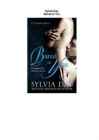
Sylvia Day Bared to You Sylvia Day Bared to You The first book in the Crossfire series, 2012 This one is for Dr. David Allen Goodwin. My love and gratitude are boundless. Thank you, Dave. You saved my life. Acknowledgments My deepest gratitude to my editor, Hilary Sares, who really dug into this story and made me work for it. Basically, she kicked my ass. By not pulling her punches or letting me shortchange the details, she made me work harder and because of that, this story is a much, much better book.
8. Room 40 9. A War of Intercepts 10. Two Americans 11. Secrecy for Sale 12. Duel in the Ether: I 13. Duel in the Ether: II 14. Censors, Scramblers, and Spies 15. The Scrutable Orientals 16. PYCCKAJI Kranrojioras 17. N.S.A. 18. Heterogeneous Impulses 19. Ciphers in the Past Tense 20. The Anatomy of Cryptology Suggestions for Further Reading Index A Note on the Abridged Version MANY PEOPLE have urged me to put out a paperback edition of The Codebreakers. Here it is. It comprises about a third of the original. This was as big as the publishers and I could make it and still keep the price within reason. In cutting the book, I retained mainly stories about how codebreaking has affected history, particularly in World War II, and major names and stages in the history of cryptology. I eliminated all source notes and most of the technical matter, as well as material peripheral to strict codebreaking such as biographies, the
In present day English the word "style" is used in about a dozen of principle meanings: 1. the characteristic manner in which a writer expresses his/her ideas (e.g. style of Byron) 2. the manner of expressing ideas, characteristic of a literary movement or period 3. the use of language typical of a literary genre (e.g. the style of a comedy, drama, novel). 4. the selective use of language that depends on spheres / areas of human activity (e.g. style of fiction, scientific prose, newspapers, business correspondence, etc.). STYLISTICS Stylistics is the study of style. The very term "stylistics" came in more common use in English only some 45 years ago. Stylistics is a part of style; it studies principles of selecting and using different linguistic means (grammatical and phonetic) that serve to render shades of meaning.
The stylistics of language studies different styles, including registers, stylistic devices and shades of meaning. The stylistics of speech studies individual text, viewing the way the author's message is expressed. Literary stylistics--analyzes means of artistic expressiveness, characteristics of a literary work, a writer, a literary trend or a whole epoch. It is part of literary criticism and poetics. Poetics--studies the structure of a literary work and aesthetic means employed in it. Linguistic stylistics--views linguistic facts from the point of view of their ability to convey additional shades of meaning. Any act of speech passes on 2 types of information: · The content as such · Additional inf. which finds expression in all kinds of extra shades of meaning that are attached to the main content The form of speech may vary depending on the speaker, the listener and the
University of North Carolina. He is the author of over 150 articles as well as seven books. Routledge Contemporary Introductions to Philosophy Series Editor: Paul K. Moser Loyola University of Chicago This innovative, well-structured series is for students who have already done an introductory course in philosophy. Each book introduces a core general subject in contemporary philosophy and offers students an accessible but substantial transition from introductory to higher-level college work in that subject. The series is accessible to non-specialists and each book clearly motivates and expounds the problems and positions introduced. An orientating chapter briefly introduces its topic and reminds readers of any crucial material they need to have retained from a typical introductory course. Considerable attention is given to explaining the central philosophical problems of a subject and the main competing solutions and arguments for those solutions. The primary aim is to
diferente. Sin embargo, creo que gran parte del estilo, muy sexual, alusiones a través del libro. Por ejemplo, cuando Celestina es alentador de preliminares (foreplay) de Sempronio y Pármepno con sus mujeres en la casa durante la cena (Finch 128). The first translation of the tragicomedia that is interesting for me is by James Mabbe and Dorothy Severin. It is one of the most well-known translations of La Celestina. Mabbe translated the work while Severin edited it and added the introduction and notes. The original translation by Mabbe was in 1631 in London, and uses English from that period. This is actually his second translation of the same work; the first was completed in 1598. In 1972 the Tamesis Press published an edition of the 1598 (almost exactly 100 years after the original writing by Rojas) work by Guadalupe Lacalle, who "concluded that the printed edition of 1631, is a complete, but
Viktoria Gumennaja 2018 INTRODUCTION "The city's the best gallery I could imagine." — JR I choose the topic for writing an essay - street art. Why did I choose this genre? Because for me it is something magical and special, not at all similar to those works that are in museums, at exhibitions and so on. Think for yourself, because street art began with the graffiti, and now we can see on the streets of our city just a work of art. I think graffiti, by the way, is also a great and invaluable work. Trends are changing. Now, young artists are moving from an endless unthinking tagging to a more conceptual and rich sense, abstract and volumetric work. Street art has become popular among the general public, because it is more accessible to him both in content and in location: for art, now you do not need to go to a museum or gallery, and the meaning of the work is often clear at a glance
01.13 Naturalism · France, Emile Zola · Put down his theory in 1879: Le Roman Experimental, attempt to explain the development of human society throuch biological laws · Outlook is deterministic, pessimistic, fatalistic (fate or biology) · Man as an animal-clever than other beasts, still explainable within the framework · Man is not a free agent, is govern by something · Unable to determine his own faith · Hereditary · Naturalists tried to apply in fiction the processes of natural sciences · Writers task is to record facts, systems of behaviour, living conditions, never revealing any natural unbiased (completely natural) · Point of view: amoral-outside the category of morality, neither good or bad · Naturalist find it absurd to blame the wicked. These criminals are doing what nature, environment, their unconscious tells them to do. Naturalists do not judge their characters, they simply report
and Lake Peipsi. The country is populated by Estonians who belong to the Western Finnish group of nations, a branch of the Finno-Ugric stem, and speak the Estonian language. Estonia is the northernmost of the Baltic States. From west to east the length of the country is 360 kilometres and the width, from north to south, is 255 kilometres. The area is 45,227 square kilometres of which more than 4,000 square kilometres are made up by islands and islets (over 1,000); there are more than 1,400 lakes that form nearly 5% of the total area. More than 40% of the entire area is woodland. The country is flat; the average elevation is 50 metres above sea level. The highest peak, Suur Munamägi rises to only 317 metres. High limestone features characterise the north of the country, while the south has a drumlin terrain. The maritime climate is temperate, summers are warm and winters mildly cold, the average
follow me!" 2 The Capital Letter The capital letter is also called a big letter or upper- case letter, or sometimes just a capital. A B C D E F G H I J K L M N O P Q R S T U V W X Y Z When do you use a capital letter? 4Use a capital letter for the first letter in a sentence: The dog is barking. Come here! 4Always use a capital letter for the word I : I am eight years old. Tom and I are good friends. 4Use a capital letter for the names of people: Alice, Tom, James, Kim, Snow White 4Use a capital letter for the names of places: National Museum, Bronx Zoo, London, Sacramento 4Use a capital letter for festivals, holidays, days of the week, months of the year: New Year's Day, Christmas, Labor Day, Mother's Day, Sunday, Monday, Friday, January, May, July, October
Prior to this momentous event that heralds an evolutionary transformation in the life of plants, the planet had already been covered in vegetation for millions of years. The first flower probably did not survive for long, and flowers must have remained rare and isolated phenomena, since conditions were most likely not yet favorable for a widespread flowering to occur. One day, however, a critical threshold was reached, and suddenly there would have been an explosion of color and scent all over the planet – if a perceiving consciousness had been there to witness it. Much later, those delicate and fragrant beings we call flowers would come to play an essential part in the evolution of consciousness of another species. Humans would increasingly be drawn to and fascinated by them. As the consciousness of human beings developed, flowers were most likely the
1. The Jacobean masque Elizabethan one nation culture, now cultural polarisation between the new courtly culture and the rest of the country. Court in cultural isolation. Ben Jonson. King and courtiers were close to universally recognised ideal types (conflict with the reality). Mysticism. Emergence of perspective view, stage machinery, artificial light, revolution. The stage cast the monarch in the focal point (the lines of perspective of the stage met there. Inigo Jones. Masque an educative vehicle, towards classical antiquity and architecture. Tide towards absolute monarchy. Masque – linked poetry and moral philosophy into art. Music, dance, poetry, lavish illusionistic scenic display to express the doctrines of divine kingship. Great impact. Like gods come down to earth. 2. The Caroline masque Charles decided on subject matter, and acted and danced in masques. Now the regal divinity even more obvious. Ben Jonson
again to keep the noise down. between Paul and Joe. 1D Sporting origins page 67 2 She recognised him at once. 2 Phobias can be genetically 3 He's working at his father's shop inherited. 1 1 staunchly / resolutely for the time being. 3 When it comes to politics, 2 By and large 4 They'll be here any moment now. Edward and his dad have a lot in 3 swiftly 5 Everybody makes mistakes once common. 4 loosely in a while. 4 Luke is the spitting image of Matt 5 categorically 6 My brother was still a baby at the Damon. 6 widely time
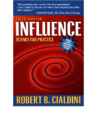
"We've known for years that people buy based on emotions and justify their buying decision based on logic. Dr. Cialdini was able, in a lucid and cogent manner, to tell us why this happens." --MARK BLACKBURN, Sr. Vice President, Director of Insurance Operations, State Auto Insurance Companies "Dr. Cialdini's ability to relate his material directly to the specifics of what we do with our customers and how we do it, enabled us to make significant changes. His work has enabled us to gain significant competitive differentiation and advantage" -LAURENCE HOF, Vice President, Relationship Consulting, Advanta Corporation "This will help executives make better decisions and use their influence wisely ... Robert Cialdini has had a greater impact on my thinking on this topic than any other scientist." -CHARLES T. MUNGER, Vice Chairman, Berkshire Hathaway, Inc.
M Y T H I C STRUCTURE FOR W R I T E R S THIRD EDITION CHRISTOPHER VOGLER S C R E E N W R I T I N G / W R I T I N G Christopher Vogler explores the powerful relationship between mythology and storytelling in his clear, concise style that's made i this book required reading for movie executives, screenwriters, playwrights, fiction and non-fiction writers, scholars, and fans of pop culture all over the world. Discover a set of useful myth-inspired storytelling paradigms like "The Hero's Journey," and step-by-step guidelines to plot and • character development. Based on the work of Joseph Campbell, The
and the atomic bomb. Science can be a mixed blessing with much that is good comes much that is clearly bad. But, what do we mean by science? Science is faith. And the Gospel of that faith was written by Copernicus, Galileo, Newton, Darwin, Einstein and others. We are certainly not all scientists. I know I'm not a scientist. But yet, I'm sure that scientists are busy at work solving problems, the solution to which will help me in some way. Perhaps scientists can improve our situation here on earth, just as the Gospels perhaps did almost two millennia ago. A scientist is an expert and for some reason we have grown to trust experts. The scientists, the technicians, the experts they must know the answers to our questions. We are surrounded by science whether we recognize it or not. Just about everything we see, touch, smell
Konstantin Dmitrievich Levin ("Kostya") arrives in Moscow with the aim of proposing to Dolly's youngest sister Princess Ekaterina Alexandrovna Shcherbatskaya, "Kitty". Levin is a passionate, restless but shy aristocratic landowner who, unlike his Moscow friends, chooses to live in the country on his large estate. He discovers that Kitty is also being pursued by Count Alexei Kirillovich Vronsky, an army officer. At the railway station to meet Anna, Stiva bumps into Vronsky. Vronsky is there to meet his mother. It surmises that Anna and the Countess Vronskaya have travelled together in the same carriage and talked together. As the family members are reunited, and Vronsky sees Anna for the first time, a railway worker accidentally falls in front of a train and is killed. Anna interprets this as an "evil omen." Vronsky is infatuated with Anna. Anna, who is uneasy about leaving her young son, Seryozha, alone for
Harold McMillan articulated his now famous “winds of change” sweeping Africa. We had high hopes for Africa, for the Black race, that the insidious imposition of foreign rule on us, the looting of Africa’s natural resources by our colonial masters accorded us would be things of history. That is more than forty years ago. Unfortunately, the promise of independence has not been fulfilled. Today, Africa has become more desolate; there is more starvation, diseases and non-provision of essential services than when we got our independence. There are all kinds of wars in Africa than the rest of world put together. The majority of so-called Africans leaders want to stay in power until the day their bodies are put in the grave. Through buffoonery, utter mismanagement and downright stealing of the wealth of the masses, these leaders have so impoverished Africa that we are now nothing but a beggar continent. We beg for
results, you have the right road map in your hands.You have before you the DNA of your future. All you need to create a wonderful fu- ture for yourself is to read this book, decide how you are going to apply it to your own life, write out a plan, and then go forth with en- thusiasm and make it happen. I have a confession to make. I am one of Brian’s raving fans. I have studied him, his brilliant work, and the extraordinary results he has achieved. I am also one of his close colleagues and friends. We have worked together on many platforms, and met and talked with each other on numerous occasions. Brian is one of the finest thinkers and writers on inner develop- ment and personal success in the world. I know; I have sold over 82 million books aimed at helping people get the most out of themselves.
Highly recommended." --Dr. Stewart D. Friedman, adviser to Jack Welch and former director of the Work/Life Integration Program at the Wharton School, University of Pennsylvania "It's about time this book was written. It is a long-overdue manifesto for the mobile lifestyle, and Tim Ferriss is the ideal ambassador. This will be huge." --Jack Can eld, cocreator of Chicken Soup for the Soul®, 100+ million copies sold "Stunning and amazing. From mini-retirements to outsourcing your life, it's all here. Whether you're a wage slave or a Fortune 500 CEO, this book will change your life!" --Phil Town, New York Times bestselling author of Rule #1 "The 4-Hour Workweek is a new way of solving a very old problem: just how can we work to live and prevent our lives from being all about work? A world of in nite options awaits those who would read this book and be inspired by it!" --Michael E. Gerber, founder and chairman of E-Myth Worldwide and the world's #1 small business guru
 annaabi.ee