Leidsid 33 sarnast õppematerjali, mis on seotud failiga "Conditional sentences-Tingimuslaused". Need materjalid aitavad sul teemat sügavamalt mõista.
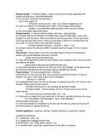
verb, phone, olevikus, could, tingimuslause, answer, tingimuslaused, done, ebareaalne, might, bird, away, husband, kõrvallause, pealause, doing, phones, there, myself, going, keep, given, marry, flown..), siis jäetakse by- fraas ära. Aktiivlause muutmine passiivlauseks: 1. Leiame sihitise ja muudame ta aluseks. 2. Määrame öeldise ajavormi ja asendame ta passiivi vastava ajaga 3. Leiame aluse ja muudame ta eessõna by abil sihitiseks. Example: Jane baked a cake.-active sentence A cake was baked by Jane.-passive sentence Exampple: My bike was stolen. Tence Subject Verb Object Simple Present Active: Rita writes a letter Passiv: A Letter is written by Rita Simple Past Active: Rita wrote a letter Passiv: a letter was written by Rita Present perfect Active: Rita has written a letter
Mona is always crying. · Varsti toimuvat tegevust, mis on enne kokku lepitud, ette kavatsetud. We are meeting tonight. We are going to the theatre. Pane tähele! Kestvat olevikku kasutatakse tegevusverbides (I am dancing, you are eating etc.). Mõned verbid on mitte tegevusverbid, näiteks ei saa öelda I am liking või you are knowing, vaid I like ja you know. Järgmiseid verbe ei kasutata tavaliselt kestvas olevikus. like love hate want need prefer know realise suppose mean understand believe remember belong contain consist depend seem Past Simple Lihtmineviku moodustamine Jaatav vorm Eitav vorm Küsiv vorm I asked I did not ask Did I ask?
!!! David can´t go out tonight, can he? She can spell, can´t she? Jane has finished her homework, hasn´t she? You haven´t got a car, have you? Bill and Tom don´t work very hard, do they? You like chocolate, don´t you? They don´t like us, do they? Tim doesn´t look well today, does he? Mary will be here soon, won´t she? There was a lot of traffic, wasn´t there? Jim should pass the exam, shouldn´t he? Mary wont´t be late, will she? You couldn´t do me a favour, could you? 3 Let´s go for a walk, shall we? LET`S !!! Open the door, will you? PALVE !!! Don´t be late, will you? PALVE !!! 4
..................................... 4 Conditionals Conditions deal with imagined situations: some are possible, some are unlikely, some are impossible. A. Real Conditionals Real Conditionals refer to situations that are true, have happened, generally happen or are likely to happen. The First Conditional expresses a possible condition and a probable result: If I have time, I will help you. In the if-clause we use the Present Simple, in the main clause will + the verb. We can also use the Present Continuous or Perfect in the if-clause and a Modal Verb in the main clause. If we are having a party tomorrow, we shouldn’t go out tonight. If you have finished with the computer, you should turn it off. It can also be used in offers and suggestions, or warnings and threats. If you need a ticket, I can get you one. If you don’t study harder, you won’t pass the exam. The if-clause usually comes first, but it can come after the main clause
If He is not sure about going to university. grades, university. she gets good she should go to The speaker is expressing his or her If grades, university. opinion, giving advice. he gets good he can go to If This means that it is possible. grades, university. she gets good she could go to This means that it is possible, but not that If grades, university. likely. he gets good he might go to This means that it is possible, but not that If grades, university. likely. We can also use different present forms in the condition part of the sentence like: present simple, present progressive, present perfect, etc Second Conditional: Imaginary Present or Unlikely Future
Active= Many tourists have visited that castle. Passive= That castle has been visited by many tourists. 7. Present Perfect Continuous [has/have + been + present participle]. Tegevus algas minevikus ning kestab siiani. You have been waiting here for two hours. They have been talking for the last hour. Recently, I have been feeling really tired. Sam has had his car for two years. Active= Recently, John has been doing the work. Passive= Recently, the work has been being done by John. 8. Past Perfect [had + past participle] You had studied English before you moved to New York. I had never seen such a beautiful beach before I went to Kauai. We had had that car for ten years before it broke down. Active= George had repaired many cars before he received his mechanic's license. Passive= Many cars had been repaired by George before he received his mechanic's license. 9. Past Perfect Continuous [had been + present participle]
All rights reserved. No part of this book may be reproduced in any form or by any means, electronic or mechanical, including photocopying, recording, or by any information storage and retrieval system, without the written permission of the publisher. ISBN 1-59905-201-6 Printed in the United States of America 13 12 11 10 09 08 07 9 8 7 6 5 4 3 2 1 Introduction Grammar is a very old field of study. Did you know that the sentence was first divided into subject and verb by Plato, the famed philosopher from ancient Greece? That was about 2,400 years ago! Ever since then, students all over the world have found it worthwhile to study the structure of words and sentences. Why? Because skill in speaking and writing is the hallmark of all educated people. Lesson by lesson, this book provides basic instruction in the eight parts of speech--nouns, pronouns, verbs, adjectives, adverbs, prepositions, conjunctions, and
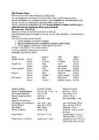
7. Verb: The principal forms of the verbs: Verbil on 4 põhivormi: Regular verb Irregular verb 1. the base form Talk Speak üldoleviku tüvivorm 2. the past form/ -ed form Talked Spoke üldmineviku vorm 3. the past participle (-ed Talked Spoken participle) mineviku kesksõna 4. the present participle (- Talking Speaking ing participle) oleviku kesksõna The tenses: Expressing the future:
· Not so bad, thanks. / Can't complain, thanks. · So so, thanks. / So and so, thanks. · Not so good, actually 1 The English alphabet Spelling Work with your partner and spell out first your name and then some names of places. Write down each letter as you hear it, and then say the word. The English alphabet on the phone: You might find the following alphabet (used by international airlines) useful when trying to spell a word on the telephone. A Alpha O Oscar Ä Alpha-Echo Ö Oscar-Echo B Bravo P Papa C Charlie Q Quebec D Delta R Romeo E Echo S Sierra
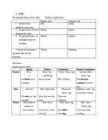
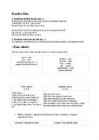
Moved to Cali 2005 Was Born Traveled to Europe Husband 1978 School graduates @ Oxford 1999 Started Got married School 1983 2008 2 The Six English Verb Tenses Three Simple Tenses Simple continuous Present You walk. You are walking I run. I am running. Past You Walked You were walking. I ran. I was running. Future You will walk. You will be walking. I will run. I will be running. Three Perfect Tenses Perfect continuous
We can report people's words by using direct speech or direct speech reported speech. speech `I'm tired!', Helen said. Helen said (that) she was tired. The main verb of the sentence is usually past ( Tom said that... / I told her that...) and the rest of the sentence is usually past too. Sequence of tenses if the verb in the main sentence is in the past tense the other verbs are usually in one of the past tense too. Present Simple Past Simple I'm a teacher. He said (that) he was a teacher Present Progressive Past Progressive I'm having lunch with my He said (that) he was having parents. lunch with his parents. Past Simple Past Perfect
Present tenses : 1) Present simple regular actions and routines especially with frequency(kordumine ) adverbs(määrsõna) N: Do you go to school by car every day ? I don't often watch TV. 2)Present continuousbe + verb + ing. Actions happening now N; Look! It's snowing. I'm meeting Jane tonight. You're always losing things. 3)keep + ingto describe habitual actions which may be irritating. N: my uncle keeps making silly jokes. Present perfect: 1) Present perfect simple: have/has + past participle. N: I've been here for ten minutes .The phone has rung ten times today. Look at this cheque,'I've won first prize. They have made a new star wars film. I've just got home.
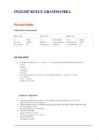
Tests Superstar 1 Luke Prodromou Test 1 Name____________________ Class_______ Use your English 1 Complete these sentences using the correct form (present simple or present continuous) of the verb in brackets. _ 1 She is in a band and she _________________________________ (record) a CD at the moment. _ 2 She is an actress and often _________________________________ (appear) on television. _ 3 At the moment she _________________________________ (have) a rest because she is tired. _ 4 Mike is a doctor and he _________________________________ (live) in Manchester. _ 5 I _________________________________ (start) work at 8.30 every morning.
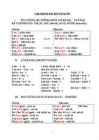
Ajavormid Present simple (The earth goes round the sun) Reeglid, absoluutsed tõed Rutiin ja harjumused Püsivad situatsioonid või olukorrad Tabelid, ajagraafikud Present continuous (She is driving to work) Käsil olev tegevus Ajutine tegevus; pooleli olev Ettekorraldatud tegevus tulevikus Ärritus Present perfect (He has lost his key) Sündmus minevikus, tagajärg olevikus Üksik või korduv tegevus, mille aeg ei ole oluline (I have been in the USA) Sündmus minevikus, mis kestab Present perfect continuous (What have you been doing?) Olen olnud tegemas Tegevus on lõppenud, tagajärg on alles Past simple (Where did you go?) Lõpetatud aeg Past continuous (This time last year I was living in Tartu) Tegevus minevikus, mis kestis mingil kindlal ajal (I was making dinner, when the phone rang)
Golden Grammar rules 1. Don't use an with own. Sue needs her own room. (NOT Sue needs an own room.) I'd like a phone line of my own. (NOT ... an own phone line.) 2. Use or rather to correct yourself. She's German or rather, Austrian. (NOT She's German or better, Austrian.) I'll see you on Friday or rather, Saturday. 3. Use the simple present play(s), rain(s) etc to talk about habits and repeated actions. I play tennis every Saturday. (NOT I am playing tennis every Saturday.) It usually rains a lot in November. 4. Use will ..., not the present, for offers and promises. I'll cook you supper this evening
1.- Choose the most suitable verb form in each sentence. a) If only Peter doesn't live / didn't live / wouldn't live so far away from the town centre. We'll have to take a taxi. b) I feel rather cold. I wish I brought / had brought my pullover with me. c) What a pity. I wish we don't have to / didn't have to / wouldn't have to leave. d) If only you tell / told / had told me about the test. I haven't done any revision. e) I wish the people next door hadn't made / wouldn't make / couldn't make so much noise. I can't hear myself think! f) Darling, I love you so much! I wish we are / had been / would be / could be together always! g) I'm sorry I missed your birthday party. I really wish I come / came / had come / would come. h) I like my new boss but I wish she gave / would give / could give me some more responsibility. i) Having a lovely time in Brighton
Pane tähele! Oleviku vorm otseses kõnes muutub mineviku vormiks kaudses kõnes. am/is --- was are -- were do/does --- did want/like/know/go etc --- have/has had wanted/liked/knew/went etc will --- would can --- could wanted/liked --- had wanted/had liked Direct speech Reported speech Jo says: Jo said: ,,I like tennis." (that) she liked tennis. ,,John is going to learn it too."
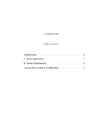
.............................. 3 Making offers........................................................................ 5 Making requests ................................................................... 6 Expressing possibility/probability......................................... 7 Asking about possibilities ..................................................... 7 Infinitives ............................................................................. 8 Introduction Modal Verbs are can, could, may, might, must, will, would, shall, should, ought to. They are known as modal auxiliary verbs because they ‘help’ another verb, i.e. they are always used with another verb in its base form. e.g. I can swim. Do you think I should go? Characteristics of Modal Verbs • There is no -s in the third person singular: She can ski. He must be tired. It might rain. • They are used to form questions and negatives: Shall we go for a walk? What should I do?
I live in Tallinn. I do not live in Tallinn. I never watch soap operas. INTERROGATIVE sentences end with a question mark ( ? ) : Do you live in Tallinn? Why do you never watch soap operas? EXCLAMATORY and IMPERATIVE sentences end with an exclamation mark ( ! ) : What a beautiful day! Do your homework at once! Parts of the Sentence The basic parts of the sentence are: THE SUBJECT (WHO? WHAT?) , THE PREDICATE (does, is doing, has done, etc – action/statement), THE OBJECT (WHO/WHAT is the action/statement directed at?) : Marion (who?) has a boy-friend (who?). She (who?) likes to read books (what?). The earth (what?) is a planet (what?). Besides, there are: THE ATTRIBUTE (WHAT?/WHAT KIND?) and THE ADVERBIAL (WHEN? - adverbial modifier of time/WHERE? – adverbial modifier of place/ HOW? – adverbial modifier of manner) Attributes modify nouns and stand in front of them. Adverbials modify verbs and
It was raining earlier. He said it had been raining earlier. past perfect past perfect The play had started when I arrived. NO CHANGE POSSIBLE past perfect continuous past perfect continuous I'd already been living in London for five NO CHANGE POSSIBLE years. Other verb forms Other verb forms also sometimes change: will would I'll come and see you soon. He said he would come and see me soon. can could I can swim under water for two He said he could swim under water for two minutes. minutes. had to must
e.g. tall taller the tallest lucky difficult soft good interesting 5. Put these sentences into the Reported Speech. ( 5 points ) e.g. She said:"I will call you from London." She said that she would call me from London. 1) Eric said:"Jack has gone out." 2) Frank said:"The car is waiting at the front door." 3) Tommy asked:"Is there anybody at home?" 4) I asked my friend:"Why do you come so late?" 5) Jane said:"Think before you answer!" 6. Use the correct Prepositions. ( 20 points ) 1) Jane started learning English two years........ 2) ........Monday Steve asked me to dine with him 3) Mary was born........the second of May........1964. 4) We worked........ ten hours without stopping. 5) They left........seven o`clock........the evening. 6) The castle was built........the 16th century. 7) I think Ronald is ill. He wasn`t........work today. 8) We had to go........foot. 9) Yesterday we met Bob.......
neighbourhood, this truth is so well fixed in the minds of the surrounding families, that he is considered the rightful property of some one or other of their daughters. "My dear Mr. Bennet," said his lady to him one day, "have you heard that Netherfield Park is let at last?" Mr. Bennet replied that he had not. "But it is," returned she; "for Mrs. Long has just been here, and she told me all about it." Mr. Bennet made no answer. "Do you not want to know who has taken it?" cried his wife impatiently. "You want to tell me, and I have no objection to hearing it." This was invitation enough. "Why, my dear, you must know, Mrs. Long says that Netherfield is taken by a young man of large fortune from the north of England; that he came down on Monday in a chaise and four to see the place, and was so much delighted with it, that he agreed with Mr. Morris
(present simple in both parts of the sentence) If/When I asked her to come with us, she always said no. (past simple in both parts of the sentence) 1 First conditional If-clause present simple; Main clause future tense (or: can, must, may, etc., + bare infinitive) Used to talk about the consequences of a possible action (a real or very probable situation in the present or future). E.g., If I write my essay this afternoon, I will have time to go out tonight. (or: I might go out tonight). (It is still morning, and it is quite possible that I will do this.) NOTE: With type 1 conditionals we can use unless + affirmative verb (= if + negative verb). E.g., I will not be able to come unless Joe gives me a lift. (= If Joe does not give me a lift, ...) Provided that/providing that are synonyms for if that can be used with type 1 conditionals. 2 Second conditional (unreal present) If-clause past simple/past continuous;
2 been meaning 9 came 2 A 4 B 6 E old-fashioned-looking uniform, so 3 got 10 grew 5 1 at first hand 5 maiden voyage I would guess that it's a private 4 fell 11 were chatting 2 tuberculosis 6 mine school, but it could be a state 5 seen 12 walked school. It's hard to say. 6 were waiting 13 didn't admit 3 stewardess 7 retirement 7 was looking 4 wonderful 2 1 I reckon they are about 17 years old.
Nende lausete puhul on võimalik kasutada sõna 'if' asemel sõna 'when.' If-clause main clause If /When + present simple, present simple If/ When you drop an egg, it breaks. Kui sa pillad muna maha, läheb see katki. If my sister eats too much, she gets fat. (See juhtub alati.) Kui mu õde sööb liiga palju, läheb ta paksuks. Type 1 (the first conditional, the will-condition) Kasutatakse selleks, et rääkida tõelisest või väga tõenäolisest olukorrast olevikus või tulevikus. If-cl main cl If + present simple, future simple, imperative, can/must/may etc + bare infinitive (verb) If my sister eats too much, she will get fat. (See on võimalik). Kui mu õde sööb liiga palju, läheb ta paksuks. · If + eitav verb / unless + jaatav verb: If Jack doesn't give me a lift, I won't be able to come. Kui Jack mind auto peale ei võta, ei saa ma tulla. I will not be able to come unless Jack gives me a lift.
Prescriptive grammar: a set of rules and examples dealing with the syntax and word structures of a language, usually intended as an aid to the learning of that language. Prescriptive grammar refers to the structure of a language as certain people think itshould be used. Phonology: the subfield of linguistics that studies the structure and systematic patterning of sounds in human language. Phonetics: of the acoustic detail of speech sounds and how they are articulated. Phone: [p] A phone is actual pronunciation of a phoneme. A phone is represented between brackets Allophone: e.g. pin spin Phoneme: /p/ - /iz/ `houses' /s/ voicless `cats' /z/ `boys' /t/ `learned' /id/ `wanted' A phoneme is the smallest unit of the sound system of a language. If two sounds have the same phoneme, they are treated equally. A phoneme is represented between slashes. Morphology: is the study of word formations and the internal structure of words
Passiiv Passive voice 12 Loendatavad nimisõnad Countable nouns 12 Loendamatud nimisõnad Uncountable nouns. 13 Mitmuse moodustamine 13 Siduvad asesõnad 14 Omastav kääne 14 Käskiv kõneviis 15 Omadussõnad 15 Viisimäärsõnad 16 Tingimuslaused 16 2 Ajavormid Tense vorms Lihtolevik The present simple Korduv, harjumuspärane tegevus. Every day, twice a week, usually, sometimes, often, always. 1. pv (-s) do/does + 1. pv I get up at 7 every day. He always works hard. What time do you go to school? Lihtminevik The past simple Minevikus toimunud tegevus. Yesterday, last week, two das ago, last year, in 1999. 2
............................................................................................14 Käskiv kõneviis.............................................................................................................15 Omadussõnad................................................................................................................15 Viisimäärsõnad............................................................................................................. 16 Tingimuslaused.............................................................................................................16 2 Ajavormid Tense vorms Lihtolevik The present simple Korduv, harjumuspärane tegevus. Every day, twice a week, usually, sometimes, often, always. 1. pv (-s) do/does + 1. pv I get up at 7 every day. He always works hard. What time do you go to school?
· You called Debbie. · Shauna studied Japanese for five years. · Did you call Debbie? · They sat at the beach all day. · You did not call Debbie. · They did not stay at the party the entire time. USE 1 Completed Action in the Past · We talked on the phone for thirty minutes. · A: How long did you wait for them? B: We waited for one hour. USE 4 Habits in the Past Examples: · I saw a movie yesterday. · I didn't see a play yesterday. · Last year, I traveled to Japan. Examples: · Last year, I didn't travel to Korea.
QUESTIONS 1.) If there is the verb be or modal verb in a sentence, then a question is formed by changing the word order. * We're going to be late. - Are we going to be late? * He can sing - Can he sing? 2.) Present and past simple questions are usually formed with the auxiliary verb do/did/done. The main verb is the infinitive. * They live in Paris - Do they live in Paris? * He saw her today - Did he see her today? 3.) A question can also begin with a question word. Notice that the word order changes * She is dancing. - What is she dancing? NB! Who did Peter phone? (Subject is Peter) Kellele Peeter helistas? Who phoned Peter? (Subject is who) Kes helistas Peetrile? REPORTED QUESTIONS When we ask for information, we often say Do you know...?/ Could you tell me?. If you
Rosie Well, I won't be eating it. 4 disapprove of Leo Why not? What's the big fuss 5 long run about GM food? 6 to disagree Rosie It's unknown territory. We don't know enough about what effects it may have on the human body. You 4 know, they talk about how GM food 1 h 2 e 3 d 4 a could affect our digestion, cause 5 b 6 c 7 f 8 g allergies, that sort of thing. 5 1 unfriendly Leo There's a lot of controversy around it, but no actual evidence to 2 incorrect prove that GM food does us any harm. 3 completely Rosie I don't agree with that 4 totally argument, I'm afraid. There may be no 5 perfectly
The turmoil that attends your sort of people, Their carriages forever at the door, And all their noisy footmen, flocked together, Annoy the neighbourhood, and raise a scandal. I'd gladly think there's nothing really wrong; But it makes talk; and that's not as it should be. CLEANTE Eh! madam, can you hope to keep folk's tongues From wagging? It would be a grievous thing If, for the fear of idle talk about us, We had to sacrifice our friends. No, no; Even if we could bring ourselves to do it, Think you that everyone would then be silenced? Against backbiting there is no defence So let us try to live in innocence, To silly tattle pay no heed at all, And leave the gossips free to vent their gall. DORINE Our neighbour Daphne, and her little husband, Must be the ones who slander us, I'm thinking. Those whose own conduct's most ridiculous, Are always quickest to speak ill of others; They never fail to seize at once upon The slightest hint of any love affair,
Adverbs and Adverbial Phrases ........................................................... 2 Types of Adverbs ..................................................................................... 2 Position of Adverbs.................................................................................. 4 Yet, still, already ....................................................................................... 6 Adverbs and Adverbial Phrases An adverb describes a verb, an adjective, another adverb or a whole sentence. Adverbs can be divided according to the information that they give. Types of Adverbs 1. Some adverbs tell us how somebody does something or how something happens. These are called Adverbs of Manner. Please speak quietly. Tom drove carefully along the narrow road. 2. Some adverbs tell us where. These are called Adverbs of Place: She put the book on the table. 3. Some adverbs tell us when
 annaabi.ee