Leidsid 33 sarnast õppematerjali, mis on seotud failiga "Comparison of Estonian and British State system". Need materjalid aitavad sul teemat sügavamalt mõista.
here, parliament, there, talk, years, british, both, current, least, differences, first, president, monarch, members, prime, other, these, comparison, regime, democratic, republic, queen, elizabeth, rules, country, till, dies, course, special, four, five, means, quite, minor, going, mention, longer, than, them, talked, theresa, taavi, rõivas, matchA free church also does not seek or receive government endorsements or funding to carry out its work. Maintained schools funded by the state. Schools maintained by the local education authority (LEA, or, in Northern Ireland, by Education Authority). Some of those schools are voluntary schools (also known as religious schools or faith schools) where the land and buildings are owned by a charity, often a religious organisation such as a church, but the school is at least partly funded by the local education authority. In all state schools, students must follow the National Curriculum. Independent schools independent fee-charging schools. Schools that are independent of local or central government control; private schools • financed by fees and endowments financially independent Public schools = now a somewhat archaic term for the oldest, most exclusive and expensive of the boys' independent secondary boarding schools (some are now at least partly co-
British Parliament Structure and Functioning of the British Parliament today Britain is a parliamentary monarchy . The British Parliament is a bicameral parliament , that is to say that it is made up of two chambers, or two "Houses"; above the two Houses, but in an essentially formal role , there is the Sovereign - king or queen - also known as "the crown." Role of the Sovereign The British monarch has all authority, but no power. The Sovereign appoints the Prime Minister, and every year opens the sessions of parliament, in a historical and ritual ceremony called the State Opening of Parliament . Historically, this ceremony used to take place in the Autumn; but since 2012, it has been brought forward to May. This is the only regular time when the members of both Houses come together. During the ceremony, the Sovereign reads out the government's intended programme
1. Ancient Britain: the Celtic tribes. 2000 years ago there was an Iron Age Celtic culture throughout the Br Isles. It seems that the Celts, who had been arriving from Europe from the 8th cent BC onward, intermingled with the peoples who were already there. The Celts were extremely talented people, creative and artistic. More than 1 Celtic tribe invaded Br. The descendants of ancient Celts live in Wales, Scotland, Cornwall and Ireland. They lived in primitive society. Druids priests, more powerful than chiefs. Acted like prophets. 2. Stonehenge From prehistoric period. Was built on Salisbury plain between 2500 and 1500 bc. One of the most famous and mysterious archaeological sites in the world
It is about the men (and women) who lost their lives fighting in the World Wars. It's celebrated then, because that's the day WWI was ended with a treaty. 4. Which powers does the Queen of the UK have? The Queen has to sign all the bills for them to pass. She is the one who opens the Parliament every fall for the next session. She is however more of a representative than an actual decision maker these days. 5. What is the British Parliament made up of? What are their roles? It's made of 3 parts: the monarch, the House of Commons and the House of Lords. The House of Lords can ask the House of Commons to rewrite parts of the bill. The bill needs the Queen's signature to pass. The House of Commons writes the bills. 6. What do you know about the Wars of the Roses? It was a war between two families, one had a red rose as their symbol and the other had a white rose as their symbol
THE U.K Different Parts The United Kingdom is a short way of saying the United Kingdom of Great Britain and Northern Ireland. The UK is the political name for those countries which share a parliament in London. All of them were at one time independent kingdoms with their own monarch. Now they are all part of the same kingdom and share the same monarch. The UK consists of Northern Ireland, Scotland, England and Wales. The peoples of these countries are British subjects; they hold British passports and therefore their nationality is British. The british Isles is the geographical name for all the islands off the west coast of Europe.
Report of SCOTLAND Maiki Joakit 10. klass 2008 Etymology Scotland is from the Latin Scoti, the term applied to Gaels. The Late Latin word Scotia (land of the Gaels) was initially used to refer to Ireland. By the 11th century at the latest, Scotia was being used to refer to (Gaelic-speaking) Scotland north of the river Forth, alongside Albania or Albany, both derived from the Gaelic Alba. The use of the words Scots and Scotland to encompass all of what is now Scotland became common in the Late Middle Ages. History Repeated glaciations, which covered the entire land-mass of modern Scotland, have destroyed any traces of human habitation that may have existed before the Mesolithic period. It is believed that the first post-glacial groups of hunter-gatherers arrived in Scotland around 12,800 years ago, as the ice sheet retreated after the last
1. The Queen’s official title. Elizabeth the Second, by the Grace of God, of the United Kingdom of Great Britain and Northern Ireland and of Her other Realms and Territories Queen, Head of the Commonwealth, Defender of the Faith. 2. The Queen’s working day. Starts after breakfast. Reads the newspapers which are prepared by the Press Secretary, and a report on the previous day’s proceedings in the Parliament and the letters she receives. Also phone calls. Once a month she attends the Privy Council in order to give Royal Assent to various items of government legislation. Discusses domestic matters with the Master of the Household. Towards the end of the day, there is always another pile of official papers and reports waiting to be read or acted upon. The business on constitutional monarchy never ends. 3. Who is the present heir to the throne
bring cold and dry weather. The distribution of rainfall is influenced by the Atlantic Stream. The mountainous areas of the north and west have more rain than the lowlands of the south and east. Wales is located on a peninsula in central-west Britain. The entire area of Wales is about 20,779 km². Wales borders by England to the east and by sea in the other three directions: the Welsh Channel to the south, St George's Channel to the west, and the Irish Sea to the north. There are many bays, peninsulas, cliffs and beaches, together Wales has almost 2000 km of coastline. There are several islands off the Welsh mainland, the largest being Anglesey in the northwest. About 3 million people live in Wales. The main population and industrial areas are in South Wales, consisting of the cities of Cardiff (also the capital), Swansea and Newport and surrounding areas. Much of Wales' beautiful and diverse landscape is mountainous. It has two
ESTONIAN BUSINESS ENVIRONMENT Estonia is a country with the population of just a little over 1.3 million people. It has been estimated though, that by the year of 2040 the number will have decreased by 125,000 people. It means that the population of Estonia is decreasing. As young Estonians often like to go study or live abroad, the population is aging as well – young people move away, while older stay there. Many different nationalities live there: besides Estonians there are Russians, Ukrainians, Belarussians, Finnish, Tatars, Latvians, Poles, Lithuanians, Jews, Germans and others. Due to this fact, the most popular languages spoken as a mother language are Estonian, Russian and Ukrainian. Nevertheless, there is still just one official language of Estonia, which is Estonian. Most of the people, approximately 900,000 live in the cities, such as Tallinn, Tartu, Narva. The most common sector that people work in is the service sector.
Occupying most of the northern portion of North America, Canada is the world's second largest country in total area. The highest point in Canada is Mount Logan 6,050 m, which is in the Yukon. The two principal river systems are the Mackenzie and the St. Lawrence. The St. Lawrence, with its tributaries, is navigable for over 3,058 km. The largest lake situated entirely in Canada is Great Bear Lake at 31,328 km2 in the Northwest Territories. The largest lake which is at least partly in Canadian territory is Lake Superior Climate Canada's climate is as diverse as its landscape. Generally, Canadians enjoy four very distinct seasons, particularly in the more populated regions along the US border. Daytime summer temperatures can rise to 35°C and higher, while lows of -25°C are not uncommon in winter. More moderate temperatures are the norm in spring and fall. Summers can be hot and dry on the prairies, humid in central Canada, and milder on the coasts
................................................................................................................10 References..........................................................................................................................11 3 Introduction English is considered to be one of most important languages in the world. It is one of the official languages of the United Nations. According to research by the British Council, around 375 million people in the world speak English as their native language and English has official or special status in at least seventy-five countries. The British Council has also noted that English is the main language of newspapers, airports and air-traffic control, international business and academic conferences, science, technology, diplomacy and sport. Perhaps even more important contributor to the dominant role of the English language in the world
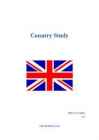
Country Study Mari-Liis Luukas 11c The British Isles Administrative / d'mnstrtv / haldus- Self-governing / self'gvn / isemajandav, iseseisev Legislative assembly/ 'ledsltv 'sembl/ seadusandlik kogu
g. law of gravity Prescriptive law – prescribe how people ought to behave e.g. speed limits In all societies relations between people are regulated by prescriptive law; customs (informal rules of social and moral behaviour); rules we accept if we belong to a particular institution (religion, organization); laws imposed on people by a government Penalties for breaking the rules are different. For not following the customs there may not be a punishment, or a person may be criticized by the society; rules of a social institution tend to carry precise penalties but they are not enforceable by any political authority; however governments use a system of courts backed by the power of the police to enforce the laws they have made. The relations between people are regulated by a combination of all these rules. One of the ways to classify laws is to separate them into prescriprive and descriptive law.
History exam *Stonehenge - is a monument located in England. It is one of the most famous prehistoric sites in the world and is composed of earthworks surrounding a circular setting of large standing stones. The surrounding circular, earth bank and ditch, have been dated to about 3100 BC. Stonehenge was produced by a culture with no written language. Many aspects of Stonehenge remain subject to debate. There is little or no direct evidence for the construction techniques used by the Stonehenge builders. *The Celts in Britain and their legacy The Cets lived in Britain in The Iron Age. They were warring tribes who were battleful amongst themselves as well as inter-tribal war. They were not centrally governed. The Celts brought iron working, iron ploughs and metal swords, horses, wheels and chariots - all these things gave them an instant superiority over the native tribes
4. How many people approximately speak English? Approximately 600 million 5. Who (which tribes) gave the base of the English language?Germanic tribes- Anglo-Saxons. 6. Describe Wales.- Wales is a mountainous country on the western side of Great Britain. The national game of Wales is Rugby. Flag- Red dragon on a green and white field. They have their own language Cymraeg ( Welsh) . Anthem- Land Of My Fathers. Official animal- Dragon. There used to be a lot of coalmines. 7. What are the symbols of the 4 constituent countries? England- The three national symbols of England are St.George's cross; The red Rose and the Three Lions Crest; The oak is national tree; Northen Ireland- Shamrock; St.Patrick ;Scotland-thistle, St.Andrew 's cross . ; Wales-daffodil, leek, Prince of Wales's feathers; St.David, red dragon 8. How did the Romans influence Britain? The Romans built the first bridge(in London), the capital(London) is a
island situated to the northwest of Continental Europe. It is the ninth largest island in the world, the largest European island, and the largest of the British Isles. With a population of about 60.0 million people in mid-2009, it is the third most populous island in the world, after Java and Honsh. Great Britain is surrounded by over 1,000 smaller islands and islets. The island of Ireland lies to its west. Politically, Great Britain may also refer to the island itself together with a number of
Canada is the second largest country in the world. Situated to the north of the United States, in North America, it has both English and French as its official languages. Even though its area is bigger than that of the United States, its population is only about 11% of that of the USA some 35 million. Because of that, Canada has one of the lowest population densities in the world. The capital of Canada is Ottawa the name of whose comes from the old Algonquin language, with the original word meaning `to trade'. Due to the country's huge size and position, it is very diverse. It is bordered by the Pacific
called Russia at that time, but it was working its way of becoming an empire. During the 9th century the Scandinavian people who were called the Varangians crossed the Baltic Sea and went to the Eastern Europe. They settled in the city of Novgorod. They also gained control over Kiev, which is in modern day Ukraine. This city became a big trading centre between Scandinavia and the big Russian empire. The empire became very well-known and popular.Over the next couple hundred years the Varangians conquer more areas and the empire grows fast. The ruler of the empire, Vladimir, decided that the main religion is going to be Greek Orthodoxy. The next ruler Yaroslav started making basic laws for the empire ( " H i s t o r y a n d c u l t u r e , " ) . Over the next few hundred years, new invaders- Mongols settled in on the Russian territories. They made big improvements in the empire. For the first time the city Moscow became an important centre
1) · Monarch: a ruler of a state, such as a king or queen, who has a right to rule by birth, and does not have to be elected. · Monarchy: the system by which a state is ruled by a king or queen. Also a state ruled by a king or queen. Monarchy is the oldest form of government in the United Kingdom. · There are many monarchy contries like Canada , denmark , norway, Sweden, United kingdom, Thailand, and so one 2) · The British monarchy is known as a constitutional monarchy. This means that, while The Sovereign is Head of State, the ability to make and pass legislation resides with an elected Parliament. · The monarch, at present Queen Elizabeth II, is the Head of State (the official ruler of the country). she has reigned since 6 February 1952. 3) · The British Sovereign can be seen as having two roles: Head of State, and 'Head of the Nation'.
Kingdom of Great Britain and Ireland Late history • After the defeat of France at the end of the Revolutionary and Napoleonic Wars (1792–1815), the UK emerged as the principal naval and imperial power of the 19th century • UK had the industrial monopoly World War I • The UK fought with France, Russia and (after 1917) the US, against Germany and its allies in World War I • The British Empire reached its greatest extent, covering a fifth of the world's land surface and a quarter of its population • However, the UK had suffered 2.5 million casualties and finished the war with a huge national debt World War II • The UK entered World War II by declaring war on Germany in 1939, after the Nazis had invaded Poland and Czechoslovakia • In 1940, Winston Churchill became prime minister and head of a coalition government
House of Winsdor. Their influence on modern society, key personalities. People all over the world are obsessed with the British royal family. Most fans know all the royal names and faces, the line of succession to the throne, and even the family's rarely- used last name. But let's start from the beginning. The House of Windsor is the reigning royal house of the United Kingdom and the other Commonwealth realms. The dynasty is of German paternal descent and was originally a branch of the House of Saxe-Coburg and Gotha, itself derived from the House of Wettin, which succeeded the House of Hanover to the British monarchy
The official name of the country is the United Kingdom. The United Kingdom is an island country. It consists of the island of Great Britain and Northern Ireland. Great Britain can be divided into three parts England, Wales and Scotland. Each of them has their own capital city. Glasgow in Scotland, Cardiff in Wales and London in England. The country is situated in the north-western Europe. The territory of the United Kingdom is about 244,000 square kilometres and about 60 million people live there. The UK contains a number of small islands. The largest islands that belong to the United Kingdom are the Isle of Man in the Irish Sea and the Isle of Wight which lies off of England's southern coast. The largest groups of islands are the Shetland Islands, the Orkney Islands and the Hebrides. Geographical Position The UK is situated in the Northern Hemisphere. The United Kingdom is bordered by the Atlantic Ocean in the west, the North
3. Relief Australia is the smallest continent in the world It is often called the island continent because is too big for an island but rather small for a continent. Australia is 1,800 miles from the mainland of Asia and almost half way round the world from Europe. More than 6,000 miles of ocean separate in from the America. Australia is the only continent except for Antarctica that lies all south of the equator. The natural zones of Australia are very various. There are deserts, semi deserts, grasslands, savannas, bushlands and rainforests. The wet forests occupy the narrow region in the east. Most of the animals, birds and insects live in that region, because there is enough food. The savannas which are grasslands with some trees are mostly in the west. Farther west are the bushlands. The real deserts occupy the centre of the Western Plateau. In the very south west there are thin forests of evergreens trees.
The total population of Estonia is 1 313 271 according to Statistics Estonia, of which 69.1% are Estonians, 25.1% Russians, 4.9% of which are of different nationalities for example Ukrainians, Belarusians and Finns. Rest are of unknown nationality. 68.5% of population speaks Estonian as a mother language, 29.6% speaks Russian as a mother language and 0.6% Ukrainian. Estonia has only one official language which is Estonian. According to information by the Institute of the Estonian Language there are about 75% of Estonian people who speak Estonian. The most common foreign languages learned by Estonian students are English, Russian, German and French. Other popular languages include Finnish, Spanish and Swedish. Tallinn is the capital and largest city of Estonia. In Estonia there are 47 cities/towns. More than 70% of the population lives in towns. The largest cities are Tallinn, Tartu, Narva, Pärnu. According to the information from tallinn
10 million square kilometres, but is one of the most sparsely populated, with only about 34 million inhabitants. The majority of them live within 300 kilometres of Canada's southern border. Much of the rest of Canada is uninhabited or thinly populated, because the country has a rugged terrain and severe climate. Canada extends across the continent of North America, from Newfoundland on the Atlantic coast to British Columbia on the Pacific coast and northward into the Arctic Ocean. Canada shares land borders with the United States to the south and north-west. Canada is a land of great variety. Towering mountains, crystal-clear lakes, and lush, green forests make Canada's far west a beautiful region. Farther inland, fields of wheat and other grains cover Canada's vast prairies. Thes fertile farmlands contrast vividly with the Arctic wastelands to the north
Great Britain 2007 1. Introduction The official name of Great Britain is `the United Kingdom of Great Britain and Northern Ireland (or short United Kingdom)' The population is about 60.4 million. The capital is London. Other biggest cities include Birmingham, Bristol, Portsmouth, Glasgow and Swansea. English is the main language of Great Britain, but Welsh is officially recognized in Wales and Gaelic in Scotland. 2. Geographical position The British Isles is the geographical term for a group of about 5000 islands off the coast of mainland Europe. The largest island is Great Britain, which is also the largest island in Europe. It consists of England, Wales and Scotland. The next largest island is Ireland, which is made up of Northern Ireland and the Irish Republic. Britain and Northern Island together form the United Kingdom. When referring to Britain or Great Britain in everyday life, the names are used to mean the United Kingdom.
Geography The name Australia means ,,southland". It is both a country and a continent, with an area of 7,617,930 square kilometres and it is also an island, separated from Asia by the Arafura and Timor seas. But Australia is also surrounded by the Indian and Pacific oceans. The Great Barrier Reef is the world's largest coral reef. It lies off the north-eastern coast and extends for over 2000 kilometres. The famous mountain range in the eastern part of Australia is the Great Diving Range and it's highest peak is Mount Kasciusco's 2230m
· Oral thing. · 90% you have to attend · Have to prepare for class and take part of it etc What we learn: Terms Expressions / collocations (nt obey/abide by the law) Explaining AWOL absence without a leave Legal English can be divided into 3 levels. We learn the first one, which is needed for the other two! You have to know the vocabulary etc. Second level has to do with legal contracts... The third level both 1 and 2 and explaining... We learn the vocabulary + explaining. Process of law-making draft law/bill (seaduseelnõu) is developed draft is sent to the parliament readings(amendments made to the law (seadusemuudatused)pass/ adopt the lawpass on to the presidentproclame (väljakuulutama) or veto or sent to supreme court (riigikohus) (may declare it un-constitutional)it has to be published in the state gazette (riigiteataja) Vald rural municipality Kihelkond - parish
Describe the British Parliament Works in a large building called the Palace of Westminster aka The Houses of Parliament. There are offices, committee rooms, restaurants, bars, libraries and even some places of residence. Two large rooms: The House of Lords meet in one and the House of Commons in the other. The British Parliament is divided into two houses, but the House of Commons is obviously more important and only they are considered to be the MPs. In the House of Commons there are just two rows of benches facing each other. On the left sit the members of the governing party and on the right sit the opposition. The Speaker sits between them and controls the action. The arrangement of the benches encourages confrontation between the government and the opposition. There is no place for somebody who isn't neither in the opposition nor in the government side. Usually peeps like this sit in the opposition furthest from the Speaker. || There are no tables for the MPs
SOCIETY AND CULTURE OF ENGLISH-SPEAKING COUNTRIES Introduction 1. Nowadays, English is so widely spoken that it can hardly be considered "a one nation's" language. The main countries where English is spoken are: the U.K, the U.S, Canada, Australia, the Republic of Ireland, New Zealand, West Indies 2. There are approx. 300-400 million speakers of English in the world. English occupies the 3rd place by its number of speakers; it is right behind Mandarin and Spanish. 3. ESL (English as a Second Language) used in your own country (e.g. India) EFL (English as a Foreign Language) used in a foreign country ESP (English for Specific Purposes) used in business, airlines, hotels etc. 4
Country study test # 3 1. Why was it often said that ,,the sun never sets on the British Empire"? ... is used to describe an empire of such a large extent that, at any one time, at least part of its territory is in daylight. This was a saying refering to the fact that Britian had colonies all around the world. 2. What is the Commonwealth? The Commonwealth is an association of sovereign nations that support each other and work together towards international goals. 3. When was it founded? 1931 4. Who were the founder members? Great Britain, the Irish Free State (now the
The best- known smalles islands are Naissaar, Aegna, Ruhnu, Kihnu, Väike-Pakri, Suur-Pakri etc. 3. Relief Lying in the north-western part of the East-European Plain, Estonia is mostly flat with an average elevation of about 50 metres above sea level. South-eastern and eastern parts of Estonia are higher than the western parts. The relief of the present-day landscape was shaped during the Ice Age. Ice sheet has carried large boulders and limestone blocks here, not to mention that the hilly terrain in Estonia was also shaped by the continental ice and the melting water. The land is rising 25 cm every one hundred years. In folklore, many features of the relief are explained by the activities of giants such as the legendary national hero Kalevipoeg. The Haanja and Otepää Uplands are particularly rich in Hills. It is here that You find Big Egg Hill, the highest point in the Baltic states with 318 metres above sea level. 4. Land regions
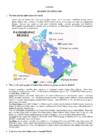
REVISION QUESTIONS 2010 1. The main physiographic regions of Canada. Canada may be divided into seven physiographic regions: Arctic Lowlands, Cordilleran Region, Interior Plains, Hudson Bay Lowlands, Canadian Shield (Forest Lands), St Lawrence Lowlands and Appalachian Region. Divisions are based on each area's relatively similar physical geography and landforms. Physiographic regionalization is defined here as the process by which regions with relatively homogeneous physical geography are determined 2. Who are the native people of Canada? Into which three groups can they be divided? Canada's constitution specifies three categories of aboriginal peoples: Indian (First Nations), Métis, Inuit. According to Canadian census 2011, 1.4 mln people of Aboriginal origin (4.3%): 852,000 First Nations persons, 452,000 Métis, 59,000 Inuit.
 annaabi.ee