Leidsid 33 sarnast õppematerjali, mis on seotud failiga "Coachella Valley Music and Arts Festival". Need materjalid aitavad sul teemat sügavamalt mõista.
festival, tent, recycling, valley, empire, held, year, stages, passes, arts, polo, club, california, inland, fourth, weekend, april, outdoor, theatre, gobi, mojave, sahara, founded, perfect, circle, band, there, extended, days, 2016, 2017, access, special, foods, beverage, facilities, shaded, relaxation, extra, other, unique, store, merch, thanksTALLINN - If you're looking for entertainment in Estonia this summer, you are really spoiled for choice. Festivals and events dedicated to the consumption of beer are a lot of fun, but if you want to get the true feel of the country, you need something a little more ethnic. Like a town fair. Just as July becomes August, the seaside town of Haapsalu will host a grand spectacle of rural Estonian entertainment. The White Lady Days is a summer celebration filled with amusement for all the family. Held in and around the remains of the Teutonic-knights-era castles, the fair combines enchanting medieval legends with modern countryside charm to create a comprehensive experience of Estonia beyond the big cities. But the legend of the White Lady of Haapsalu, which is at the heart of the festival, is perhaps the most famous tall tale of the many that are so abundant in Estonia's folklore.
Japanese festivals Japanese festivals are traditional festive occasions. Some festivals have their roots in Chinese festivals but have undergone dramatic changes as they mixed with local customs. Some are so different that they do not even remotely resemble the original festival despite sharing the same name and date. There are also various local festivals (e.g. Tobata Gion) that are mostly unknown outside a given prefecture. It is commonly said that you will always find a festival somewhere in Japan. Matsuri is the Japanese word for a festival or holiday. In Japan, festivals are usually sponsored by a local shrine or temple, though they can be secular. There is no specific matsuri days for all of Japan; dates vary from area to area, and even
The Chelsea Flower Show came about practically by accident, as have many great traditions. The world's most famous flower show might have been the Inner Temple or Holland Park Flower Show, or even the Wembley Flower Show had events worked out differently. The first Royal Horticultural Society (RHS) Great Spring Flower Show at Chelsea opened in May 1913, although, confusingly, there was another May flower show the Royal International Horticultural Exhibition held at the Royal Hospital in 1912. This one off event was backed but not run by the RHS, which cancelled its own Great Spring Show for that year. The RHS Great Spring Flower Show had normally been based at the Inner Temple in the hart of London, but in 1913 RHS had idea of moving the Show to Holland Park. They thought that the Show was becoming too big for the Inner Temple site. Anyway it stayed in first place. July 1912 the RHS President Sir Trevor Lawrence had met Major General Crutchley
He had unhappy childhood (parents divorced when he was little), mother left them, met Victoria at age 17, they were introduced by Uncle Leopold, they fell in love. They got married and got 9 children, 40 grandchildren. At first he was unpopular, after he made many great changes he became popular. He was the president of the Royal Society of Arts for 18 years. After his death Victoria built many memorials and Royal Albert Hall in 1871, there are more than 350 performances every year. The Albert medal, the Prince Consort´s Library. Lisanna: "Yoko Ono" She was born in 1933 in Tokyo, Japan in a wealthy family. In 1953 she moved to the USA, she was an excellent student and studied music and philosophy. She has studied in 4 schools, her art is influenced by avant-garde. She has won many awards. She has been married 3 times. In 1975 she got a son Sean. She has released 26 albums, 7 of them with John. Son Sean is a singer, songwriter and an actor. Danek: "Manchester"
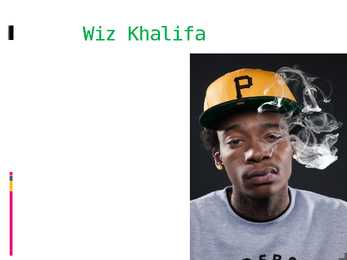
attracted his interest.When Grinberg finally met the 16-year-old artist, he immediately decided he wanted to work with him, later telling HitQuarters: "Even though he wasn't all the way developed you could just tell that he was a diamond in the rough, and that with some polishing, guidance and backing he could become something special."Khalifa signed to the label shortly after and began a seven year period of artist development. Khalifa released his first mixtape, Prince of the City: Welcome to Pistolvania, in 2005. The mixtape paved the way for his first full length album entitled Show and Prove in 2006. Khalifa was declared an "artist to watch" that year in Rolling Stone magazine. In 2007, Khalifa signed to Warner Bros. Records and released two mixtapes through Rostrum Records: Grow Season, hosted by DJ Green Lantern and released on
century and early 7th century, which was found in 1939. The wooden ship, which was buried there, contained lots of armour, weapons, jewellery, symbols of power and other treasures, but no bodies were found. 10. Roman conquest In the 1st c. BC the Roman Empire began to make contact with Britain (wine, pottery, small bronze statues) Julius Caesar's first raid was in 55 BC (the troops were afraid of the sea crossing) In the following year he invaded again, this time he marched inland In AD 43 the Emperor Claudius decided the full-scale invasion (army of 40,000 men) The Roman occupation lasted nearly 400 years. They couldnt conquer Scotland or as they called it caledonia, and so they built a strong wall along the northern border, named after the Emperor Hadrian who planned it. (70 miles or 117km long) The army established Roman Rule in the South and SW of the country.
to Czar Peter I. After Peter's death he helped the czar's widow, Catherine I, to the throne and became the actual ruler of Russia for a couple of years until he was defeated in the power struggle and banished into exile. 23 Lai Street The buildings at Lai 19-23 belong to the City Theatre. It has a couple of small halls as well as some rehearsal rooms, and is planning to build a large auditorium in the present courtyard. All together the theatre has eight stages on which it performs, both indoor and outdoor, including towers and mills along the Old Town walls and Salme Cultural Centre in the nearby suburb of Kalamaja. The theatre performs both world classics and modern drama. It often shines the spotlight on new Estonian productions. Performances are given in different venues, and there is an outdoor stage for summer plays. Lai 23 is a typical merchant`s house in the Late Gothic style. It is a two-room building, the so-
http://www.abiks.pri.ee FREE TIME 1. Is music popular in your family? What music do you like? 2. What musical instruments have you got in your home? 3. Can you play any musical instruments? 4. Do you sing? 5. Have you sung at a song festival? 6. Has your school got a choir? 7. When do you last go to a concert? What concert was it? 8. Have you ever been to an openair concert? What was it like? 9. Do you sing at family parties? Where else Estonians like to sing? 10. Have you got a collection of cassettes, CD´s or LP´s at home? 11. Have you watched a ballet on TV? 12. Which do you prefer ballet, drama or musical? 13. How often do you go to the theatre? 14. Do you prefer going to the theatre or watching TV? Why?
the Confessor. He built a wooden palace at Westminster, were the parliament met later. This is why Westminster became the seat of government not the city of London itself. Edward the Confessor also built Westminster Abbey. He ruled until his death in 1065, after which King Harold was crowned. Norman period( Medieval London) 1066 In 1066 in the Battle of Hastings the Normans were victorious and William was crowned King. William granted the citizens of London special privileges, but he also built a castle in the southeast corner of the city to keep them under control. This castle was expanded by later kings until it became the complex we now call the Tower of London. The Tower acted as royal residence, and it was not until later that it became famous as a prison. In 1176 the first stone London Bridge was built. This bridge was to remain the only one in London until 1739. Because the passage across this one bridge was narrow and clogged with
When they grow up, they play as members of important amateur teams or as a professional in teams competing in football ,,leagues". Professional football is as much a business as a sport. Rugby football was first played in 1823. In rugby every player is allowed to carry the ball. The ball is oval, not round. Each team contains 15 players. The oldest game of football in England is probably the football match which takes place at Ashburn on Shrove Tuesday every year. The game starts in the centre of the town, and the distance between two goals is two miles. The only rule is not to use motorcycles, cars and lorries in the game. In 1958 one team buried the ball. The other team didn't know and ran after them. Later first team took the ball and won. 3) JAMES WATT He was born in the small port of Greenock on the river Clyde in Scotland in 1736. His father was a mathematical-instrument maker and also kept a shop to supply ships with goods for their voyages
Antigua and Barbuda, and Saint Kitts and Nevis. In 1947 she married Prince Philip, Duke of Edinburgh, with whom she has four children: Charles, Anne, Andrew, and Edward. In 1992, which Elizabeth termed her annus horribilis ("horrible year"), Charles and Andrew separated from their wives, Anne divorced, and a severe fire damaged part of Windsor Castle. Revelations continued on the state of Charles's marriage to Diana, Princess of Wales, and they divorced in 1996. The following year, Diana died in a Paris car crash, and the media criticised the royal family for remaining in seclusion 4 in the days before her funeral. Elizabeth's personal popularity
Topic Sports Tallinn English College 8b form 2007 1. Introduction For some people sport plays a very important part in their lives. And to some, it is even a way of life. There are different kinds of sports. For instance, there are sports meant for playing indoors, some can be practised only at a certain time of year. There are winter and summer sports also. Skiing, figure-skating, sledding and snowboarding these four most popular are practised during winter. Good examples of summer sports are: swimming, badminton, roller skating and golf. 2. The ancient Olympic Games The first recorded Olympic Games took place in 776. B.C. at Olympia but the city may have functioned as a meeting place for worship and other political practices many years earlier. The city is located in western Greece
it got its first permanent building the Kadriorg Palace, built in the 18th century. In 1929 the palace was expropriated from the Art Museum in order to rebuild it as the residence of the President of Estonia. The Art Museum of Estonia was housed in several different temporary spaces, until it moved back to the palace in 1946. In September, 1991 the Kadriorg Palace was closed, because it had totally deteriorated by then. At the end of the year the Supreme Council of the Republic of Estonia decided to guarantee the construction of a new building for the Art Museum of Estonia in Kadriorg. Untill then the Knighthood House at Toompea Hill served as the temporary main building of the Art Museum of Estonia. The exhibition there was opened on April 1, 1993. Art Museum of Estonia premanently closed down the exhibitions in that building in October 2005.
From the 13th century onwards the ancient Estonians had to continually fight for their freedom, against the Danes, Germans, Swedes, Poles and Russians. The Russians annexed the Estonian territory from Sweden after the Great Northern War in 1721 by the Treaty of Nystad. After the fall of Tsarist Russia in 1917, Estonians fought for their independence, and in 1918 the Republic of Estonia was established and endured until 1940. In the summer of that year the Soviet Union occupied all three Baltic states. As a result of the deep inner crisis within the Soviet Empire it became possible to re-establish the Estonian Republic in August 1991. A month later Estonia joined the United Nations. In 1997 the population reached 1.462 million; from this Estonians total 65% (950,124) and other nationalities 35%. The capital Tallinn, mentioned for the first time in 1154, has a population of 434,800 (1995). Other important towns are Tartu,
time in Tartu in May 1988. 24 February 1989, Estonia, still part of the Soviet Union, hoisted its tricolor on the tower of Pikk Hermann in Tallinn. Since then the flag has always been hoisted with ceremony on that day, which is the national holiday the anniversary of the republic. According to the Estonian tradition, the national flag is hoisted at sunrise and lowered at sunset except on June 23, Victory Day, when it is left out for the shortest night of the year, followed by another public holiday, Midsummer Day. The Estonian national anthem - entitled My Native Land, My Pride and Joy, was composed in 1848 by Friedrich Pacius, a Finn of German descent. The Estonian- language words were written by Johann Voldemar Jannsen. In 1869 it was performed at the first all-Estonian Song Festival in Tartu and gained popularity during the period of the national movement. After World War I the melody became the national anthem of Estonia and Finland
The Scout movement is to encourage a sense of adventure and of responsibility for others among young people. The programme of training is planned to develop intelligence and practical skills, to promote health and a sense of service. Scout training is complementary to the ordinary education. Scouts train in mapping, signalling, first aid and all the skills that arise from camping and similar outdoor activities. British scouts take part in international scout meetings, which are held approximately every four years. The membership in this or that youth organization is not compulsory in Great Britain. But everyone can find the activity he likes most. Climate in Great Britain The British Isles which are surrounded by the ocean have an insular climate. There are 3 things that chiefly determine the climate of the United Kingdom: the position of the islands in the temperate belt; the fact that the prevailing winds blow from
Food and beverage processing, glassware manufacturing, computer software and data processing, printing and publishing, insurance underwriting, music and recording, and advanced education activities can be found in the larger urban areas. The Jamaican construction industry is entirely self-sufficient, with professional technical standards and guidance. Since the first quarter of 2006, the economy of Jamaica has undergone a period of staunch growth. With inflation for the 2006 calendar year down to 6.0% and unemployment down to 8.9%, the nominal GDP grew by an unprecedented 2.9%. An investment programme in island transportation and utility infrastructure and gains in the tourism, mining, and service sectors all contributed this figure. All projections for 2007 show an even higher potential for economic growth with all estimates over 3.0% and hampered only by urban crime and public policies. In 2006, Jamaica became part of the CARICOM Single Market and Economy (CSME) as one
Other doctors specialize in a particular field of medicine. Neurologists specialize in disorders of the nervous system, psychiatrists treat mental illnesses, oncologists specialize in treatment of tumors in the body etc. Doctors help promote health and prevent disease in various ways. For example, they vaccinate people against such diseases as polio, hepatitis, tuberculosis, measles and others. Doctors can prevent many diseases from becoming serious by diagnosing them in early stages. For this reason, regular checkups with the doctor are necessary. People must also eat a balanced diet and get enough rest and exercise. Screening programs help diagnose diseases that carry a high risk of death. For example cancer. 7. Doctors Doctors are people who practice some type of human biological medicine. Doctors are usually considered to be members of a learned profession because of the extensive
Light bulbs are measured in watts. Air conditioners and hot water heaters are measured in BTUs, while energy used by cars is measured in gallons of fuel. They used a spreadsheet to figure out how much energy they consumed for each of their activities. Each of the lights, car miles, games, and other appliances was converted to a common unit of power consumption called kilowatt-hours. The spreadsheet was used to determine how many kilowatt-hours were used during each day, each week, and each year for each energy consumption activity. The spreadsheet converted their energy consumption to show them the amount of money it costs for each energy consumption activity. In the end, they were shocked to see how much money Jules' energy using habits cost compared to Les' habits. USES OF ENERGY The United States is a highly developed and industrialized society. We use a lot of energy - in our homes, in businesses, inindustry, and for traveling between all these different places.
do it) 4. Extension of 3rd person ending ,,s" to 1st and 2nd person forms ,,I/You wants" (used by the working class) 5. Regularisation of ,,be" ,,Me/You/They was" 6. Regularisation of some irregular verbs draw/drawed/have drawed; go/went/have went 7. Optional ,,-ly" ending on adverbs ,,He writes real quick." 8. Unmarked plurality on amounts of measurement after numerals 10 pound, 20 year 9. Different forms of the relative pronoun ,,The man what lives there."/ ,,The man as lives there." 10. Regularisation of reflexive pronouns myself; herself; hisself; theirselves 11. Distinction between main and auxiliary verb ,,do" ,,You done it, did you?" 2) The spread of English. The Inner / Outer / Expanding Circle THE SPREAD OF ENGLISH · 16-18th century the spread took place.
It extends about 2000 km along the coast of Queensland. Made of coral, it is the world’s largest structure created by living organism. . 4 Climate & Time Zones Australia is the driest continent in the world except Antarctica. It has low average rainfalls. About 70 per cent of the country is arid or semi arid and cannot support agriculture. The north part of the country gets about 300 mm of rain a year. Much of the rain soaks into the ground and does not form any rivers or lakes. Monsoon winds bring moist air during summer. This is the time of high rainfall. It’s known as “the wet “season. High temperature also means hat a lot of moisture evaporates or is used by plants. In the southern two thirds of the country the climate is temperate to cool. Winter temperatures can be low but not freezing. There are four seasons. The seasons are the opposite of our seasons. When we
They are found throughout the mainland of Australia, close to a source of water. The Dingo is a medium sized dog, with a bushy tail, and red to yellow coat. Dingos do not bark, but they do howl. They are meat eaters, and try to feed mainly on this. If unavailable, dingos have been known to eat reptiles, and any food source it can find. When food is scarce, dingos group together to feed on larger animals such as kangaroos. Dingos usually stay and hunt in family groups.Dingos mate once a year, and the female dingo gives birth to up to eight puppies. Population The big country is far from crowded. It is about the size of the UK but its some 16 million population is less than four time as big as Chicago's. There are about 50 000 aborigines. More than half of all the people od Australia live in its eight biggest cities. Sydney and Melbourne are two largest. Each one has about 3 000 000 people. Australia is multicultural diverse society. The languages most commonly spoken in Australia
GRAMMAR GRAMMAR BASIC ENGLISH GRAMMAR Book 1 Book 1 Younger students at beginning to intermediate levels will greatly benefit from this step-by-step approach to English grammar basics. This is the ideal supplement to your language arts program whether your students are native English speakers or beginning English language learners. Skill-specific lessons make it easy to locate and prescribe instant reinforcement or intervention. · Illustrated lessons are tightly focused on core concepts of grammar · Nearly 70 practice exercises are included for ready reinforcement · A wealth of examples are provided on every topic · Concise explanations are bolstered by extra grammar tips and useful language notes
Stovzatá Praha ("City of a Hundred Spires") in Czech or Zlaté msto/Goldene Stadt ("Golden City") in Czech/German. Situated on the Vltava River in central Bohemia, Prague has been the political, cultural and economic centre of the Czech state for more than 1100 years. For many decades during the Gothic and Renaissance eras, Prague was the permanent seat of two Holy Roman Emperors and thus was also the capital of the Holy Roman Empire. 4 Today, the city proper is home to about 1.3 million people, while its metropolitan area is estimated to have a population of over 1.9 million. Since 1992, the extensive historic centre of Prague has been included in the UNESCO list of World Heritage Sites, making the city one of the most popular tourist destinations in Europe, receiving more than 4
since prehistoric times. In the 8th century most of the Iberian Peninsula was conquered by Moorish invaders professing Islam, who were later expelled by the Knights Templar. During the Christian Reconquista, Portugal established itself as an independent kingdom from León in 1139, claiming to be the oldest European nation-state. In the 15th and 16th centuries, as the result of pioneering the Age of Discovery, Portugal expanded western influence and established the first global empire, becoming one of the world's major economic, political and military powers. In addition, the Portuguese Empire was the longest-lived of the modern European colonial empires, spanning almost 600 years, from the capture of Ceuta in 1415 to the handover of Macau in 1999 and grant of sovereignty to East Timor in 2002. The empire spread throughout a vast number of territories that are now part of 53 different sovereign states
act) were intended to encourage a 'free market' by allowing parents to choose schools based on their measured ability to teach the National Curriculum. Whilst only certain subjects were included at first, in subsequent years the curriculum grew to fill the entire teaching time of most state schools. The requirement for state schools to teach Religious Education predates the National Curriculum as this was introduced in the Education Act (1944). Key stages 1.)Pre-school education – Starting at the age of 3 or 4 at a nursery school or in the nursery class at a primary school 2.)Primary education – England and Wales: from age 5 to age 11 – Scotland: from age 5 to age 12 – Northern Ireland: from age 4 to age 11 3.)Secondary education: up to age 16 4.) Further education (FE) – education and training that takes place after the schoolleaving age of 16 (vocational, academic, social, physical and recreational courses) 5
-groups of islands: the Canary Islands, the Bahamas, the British Isles -mountain ranges: the Andes, the Alps, the Rocky Mountains • most of the names of buildings: -hotels, restaurants, pubs: the Hilton (Hotel), the Olde Hansa (restaurant), the Hell Hunt (pub) -theatres, cinemas: the Palace Theatre, the Coca-Cola Plaza -museums, galleries: the National History Museum, the Tate Gallery -other buildings: the White House, the Empire State Building -names of newspapers: the Birmingham Post, the Daily Mirror -names of organisations: the European Union, the British Broadcasting Company (the BBC) • names including 'of'-phrases: the Bank of England, the Tower of London, the Great Wall of China No article is used with • some times of the day and night: at midday, night, midnight, noon I’ll call you at midnight. • meals: to have breakfast/lunch/dinner
N: He had not been speaking. · sometimes interchangeable Q: Had he been with past perfect simple speaking? · putting emphasis on the duration or course of an action Future Simple A: He will speak. · action in the future that in a year, N: He will not speak. cannot be influenced next ..., Q: Will he speak? tomorrow · spontaneous decision assumption: I · assumption with regard to the think, probably, future perhaps A: He will be speaking
The group came to be perceived as the embodiment of progressive ideals, seeing their influence extend into the social and cultural revolutions of the 1960s. With an early five-piece line-up of Lennon, McCartney, Harrison, Stuart Sutcliffe (bass) and Pete Best (drums), The Beatles built their reputation in Liverpool and Hamburg clubs over a three-year period from 1960. Sutcliffe left the group in 1961, and Best was replaced by Starr the following year. Moulded into a professional outfit by music store owner Brian Epstein after he offered to act as the group's manager, and with their musical potential enhanced by the hands-on creativity of producer George Martin, The Beatles achieved UK mainstream success in late 1962 with their first single, "Love Me Do". Gaining international popularity over the course of the next year, they toured extensively until 1966, then retreated to the recording studio until their breakup in 1970
Its name means the Father of Waters in the Red Indian. Together with its tributaries it forms 20,000 km of navigable waterways. The Colorado River is a river in the south-western United States, approximately 1450 miles long, draining a part of the arid regions on the western slope of the Rocky Mountains. The natural course of the river flows into the Gulf of California, but the heavy use of the river as an irrigation source for the Imperial Valley has desiccated the lower course of the river in Mexico such that it no longer consistently reaches the sea. The Tennessee River is the largest tributary of the Ohio River. It is approximately 1049 km long and is located in the south-eastern United States in the Tennessee Valley. The river was once popularly known as the Cherokee River, among other names. The river has been dammed numerous times, primarily by Tennessee Valley Authority projects.
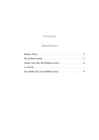
Mentor: W i s e O l d M a n or W o m a n 39 Threshold Guardian 49 Herald 55 Shapeshifter 59 Shadow 65 Ally 71 Trickster 77 BOOK T W O : Stages of the Journey 81 Ordinary W o r l d 83 Call to Adventure 99 Refusal of the Call 107 Meeting with the M e n t o r 117 Crossing the First Threshold 127 Tests, Allies, Enemies 135
he nds a better way." --Dan Partland, Emmy Awardwinning producer of American High and Welcome to the Dollhouse "The 4-Hour Workweek is an absolute necessity for those adventurous souls who want to live life to its fullest. Buy it and read it before you sacri ce any more!" --John Lusk, group product manager at Microsoft World Headquarters "If you want to live your dreams now, and not in 20 or 30 years, buy this book!" --Laura Roden, chairman of the Silicon Valley Association of Startup Entrepreneurs and a lecturer in Corporate Finance at San Jose State University "With this kind of time management and focus on the important things in life, people should be able to get 15 times as much done in a normal workweek." --Tim Draper, founder of Draper Fisher Jurvetson, financiers to innovators including Hotmail, Skype, and Overture.com "Tim has done what most people only dream of doing. I can't believe he is going to let his secrets out of the bag
predominantly viewed with some hostility in the UK, where Article 12 in particular has created considerable resentment as children are predominantly stereotyped as being innocent/vulnerable or `aggressive, demanding and badly behaving adolescents out of control of their parents and teachers and lacking the willingness or capacity to accept the responsibilities that should accompany with the granting of rights`. 24 There is a clear tension between the commonly held assumptions of children on the one hand, as welfare dependants, needy for protection and care of adults, and on the other hand, as young citizens entitled to respect and recognition, and the right to participate in the matters that affect their daily lives25. However, the very fact of how childhood is perceived within society has a profound impact upon whether children`s rights are upheld or not. The commonly held assumption that 22 Children`s Rights and Early Education, p.5.
 annaabi.ee