Leidsid 33 sarnast õppematerjali, mis on seotud failiga "Capital Punishment Should be Abolished". Need materjalid aitavad sul teemat sügavamalt mõista.
death, there, innocent, kill, person, crime, instance, evidence, penalty, deter, crimes, cruel, cold, later, found, wrong, survival, present, states, look, forward, follow, murder, first, comes, someone, difference, between, criminal, killing, another, individual, furthermore, necessary, solution, instead, putting, could, simply, them, behind, barsg. law of gravity Prescriptive law – prescribe how people ought to behave e.g. speed limits In all societies relations between people are regulated by prescriptive law; customs (informal rules of social and moral behaviour); rules we accept if we belong to a particular institution (religion, organization); laws imposed on people by a government Penalties for breaking the rules are different. For not following the customs there may not be a punishment, or a person may be criticized by the society; rules of a social institution tend to carry precise penalties but they are not enforceable by any political authority; however governments use a system of courts backed by the power of the police to enforce the laws they have made. The relations between people are regulated by a combination of all these rules. One of the ways to classify laws is to separate them into prescriprive and descriptive law. Descriptive laws simply describe how people usually behave
Law-makers breaking the law: torture as a justified interrogation technique? 1 Introduction It was Jeremy Bentham who thought of a famous method to give ethics a rational basis. He was fed up with the penal laws where offenders met corporate punishment and together with Cesario Beccaria he stood up to torture, corporal punishment, and the death penalty. He resisted against irrational moral emotions as the instigation for ethical conduct, saying only reasonable grounds could justify the moral decisions of individuals and legislators. And now his theory of is the one that is known for justifying torture (Verplaetse, 2008). Since 9/11 and the following fight against terrorism it became clear that the Bush administration thought of torture as something justifiable while it goes against all possible agreed upon treaties and conventions
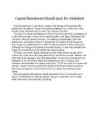
Capital Punishment Should (not) Be Abolished Capital punishment or the death penalty is the killing of the person as the punishment for offence. To get the capital punishment, you need to do a very serious crime, like homicide, or even more serious than that. The pros of a capital punishment are that if the person gets that punishment, he or she will never get a chance to do something that cruel again. Sometimes the criminals, who get a prison sentence, do something illegal again, after that punishment. Second pro is that it's cheaper for the country to kill the person, than to pay for his/her food and clothes for the rest of his/her life in the prison. Although the killing of the person also needs money, it's still way cheaper than to pay for at least 40 years for all the life needs in prison.
Introduction Body conclusion Lõikude vahele 1 rida, taandrida ei jäeta! Argumendid millegi poolt, argumendid millegi vastu. Väldime I-vormi, vaid kasutame passive-vormi. Lõhikesi vorme ei kasutata! (don't) 150 sõna Teema "should mery-killing be punished?" HOMEWORK Terms to explain: Nation - a country, especially when thought of as a large group of people living in one area with their own government, language, traditions, etc: Stranger someone whom you do not know Citizen - a person who is a member of a particular country and who has rights and obligations because of being born there or because of being given them Penalty - a punishment for doing something that is against a law Government - the group of people who officially control a country System of courts - a set of connected positions which operate together to ensure ... ? To commit a crime to do sth that is forbidden by law Corruption - illegal, immoral or dishonest behaviour, especially by people in positions of
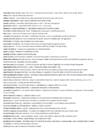
descriptive law (kirjeldav õigus) - laws which simply describe how people or even natural phenomenas usually behave nation (riik) - country with its own goverment citizen (kodanik) - person native of a country; realationship between country and a person stranger (välismaalne) - person who is unfamiliar, from another country penalty (karistus) - punishment fixed by law, as for a crime or from any soical groups goverment (valitsus) - organization which controlls a stre or community System of Courts (kohtusüsteem) - organization applying law in the name of states to commit a crime (kuritegu läbi viima) - breaking a law, usually given out by the goverment fine (trahv) - certain sum of money person pays for breaking a law corruption (korruptsioon) - dishonest or unethincal conduct by a person entrusted with a position of authority
PIL regulates relations between states. Thats why PIL is important for international relation students. PIL influences the life of everybody, it doesn't regulate people directly but indirectly (through the decisions of the states), because it's everywhere. It's like air. E.g. when you want to send a letter to Brazil, you put a stamp from your own country and send it from your post office and the letter gets delivered. Why is this so easy, because there are certain international conventions that regulate postal services. E.g. traffic signs are almost the same everywhere, why? Because of certain int conventions that require the states to have more or less unified traffic signs. States apply international regulations to national regulations and they have to be in accordance with each other, the states can always specify these regulations. Therefore, PIL regulates people indirectly.
Capital punishment Capital punishment is the killing of a person by judicial process as a punishment for an great offence. It has been used in almost every part of the globe. There is an international organisation called Amnesty International who are fighting for human rights. Thanks for them there are many countries who abolished it. But is it right or should capital punishment exist? Firstly I belive capital punishment should exist because if you gonna take somebody's life it is only fair when you pay for this with your own life. Many people are thinking how cruel it is for a criminal but we should also think of the families that are broken apart because of the merciless acts of these criminals. Secondly it is too expensive to hold prisoners who have lifelong punishment
For and against capital punishment If one commits a murder or more, robbes a bank in addition or does something more terrible than human kind could possibly put up, then one is sentenced to death. But everyone can put up a legal murder of a convict. Do people agree with killing a killer, which is nothing more than a publik murder itself? Death penalty is justified if one causes pain for many people. Pain is a strong feeling, something you will never forget if experienced. Haunting nightmeres from the depths from the worst memories will probably never leave from victims dreams. In that case a capital punishment is and should be the right thing to do, to make the others feel safe again. Death of a culprit may decrease the pain, but will never make it go away? It is always
Crime & Punishment The fight between good and evil is as old as the humankind itself. Even in society there are always black sheep and these people are called 'criminals'. Although we are part of the EU and tend to be as humane as possible, we have to deal with the problem of growing numbers of people admitted to penitentiaries. One in all we have to dwelve into the mind of a criminal and find out what makes a felon tick. What forces an individual to commit crimes against others? Are we too humane and lenient? When looking for the reasons why people commit crimes I can only say what I believe to be
Social Problems Crime In the sociological field, crime is the breach of a rule or law for which some governing authority or force may ultimately prescribe a punishment. The word crime originates from the Latin crimen. When society deems informal relationships and sanctions insufficient to create and maintain a desired social order, there may result more formalized systems of social control imposed by a government, or more broadly, by a State. With the institutional and legal machinery at their disposal, agents of the State can compel individuals to conform to behavioural codes and punish those that do not. Various mechanisms are employed to regulate behaviour, including rules codified into laws, policing people to ensure they comply with those laws, and other policies and practices designed to prevent crime
relates to American Revolution on the one hand and the European Enlightenment on the other. Influenced by the scientific revolution of the 17th century and the humanist period during the Renaissance, the Enlightenment took scientific reasoning and applied it to human nature, society, and religion. American Enlightenment a gradual but powerful awakening that established the ideals of democracy, liberty, and religious tolerance in the people of America. If there were just one development that directly caused the American Revolution and uplifted the intellectual culture of the continent while it was only a British colony, it would be the American Enlightenment. Broadly, the Enlightenment was an intellectual movement that changed the fundamental perspective of the masses, urging them to foster skepticism and apply scientific principles in matters of religion and morality. Its chief values were: Liberty, Democracy, Republicanism, Religious Tolerance
It is a truly modernist level in any sense, tries to imitate devices used by cinema. Late 1920's the cinema was already very popular and two great directiors-Griffith and Eisenstein. The greatest innovators of the cinema and they used the devices of montage and collage. He also uses a lot of fragmentation and rapid cutting. The novel is dominated by the high rise city, by the crowds, by the masses of people, passing by the skyscrapers, mechanisation and destructiveness. There is a multitude of characters. Two characters, ellen Thatcher-beatiful and talented Broadway actress and Jimmy Horf-newspaper reporter with and ambition to become a writer. Ellen is a success as an actress, while Jimmys main success in life is his marriage to Helen-their marriage is doomed, he fails as a writer. Ellen becomes the writer in the family, because he is succesful writer of womens magazine. Anti human values of the city. Sacco and Vanzetti-two Americans of
. . " and then name their pet peeve or passion. My view is not of an education specialist, but of one who loves sharing what I learn, and owes much to educators. Since I don't have an educational theory neatly worked-out, nor an outline of my perceptions, my intent is to address each educational ingredient that comes to my mind. After I've said what I think about each topic, readers may have a fair comprehension of my philosophy. First comes sensitivity. If a person be insensitive, be it from numbing cold, exhaustion, drugs, genetic makeup, or upbringing, then the process of education is bogged down, and results come only after great efforts. Sensitivity in my integrated meaning is broad, covering literally the senses, so that deaf and blind people are less sensitive, as well as people whose senses work perfectly, but whose receptivity or thought processes are blunted for whatever reason
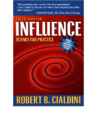
.. Robert Cialdini has had a greater impact on my thinking on this topic than any other scientist." -CHARLES T. MUNGER, Vice Chairman, Berkshire Hathaway, Inc. If you're wondering why of Latin America, the Far East, and Central Europe. you should buy this new edition of Influence: o More neuroscience evidence of how the influence process works is inte- Science and Practice, gra ted throughout. For instance, brain imaging research is presented, showing here are 5 good reasons! how the "Expensive = Good" heuristic o Updated coverage of social influence leads people to perceive more costly
Harold McMillan articulated his now famous “winds of change” sweeping Africa. We had high hopes for Africa, for the Black race, that the insidious imposition of foreign rule on us, the looting of Africa’s natural resources by our colonial masters accorded us would be things of history. That is more than forty years ago. Unfortunately, the promise of independence has not been fulfilled. Today, Africa has become more desolate; there is more starvation, diseases and non-provision of essential services than when we got our independence. There are all kinds of wars in Africa than the rest of world put together. The majority of so-called Africans leaders want to stay in power until the day their bodies are put in the grave. Through buffoonery, utter mismanagement and downright stealing of the wealth of the masses, these leaders have so impoverished Africa that we are now nothing but a beggar continent. We beg for
Why do we need morality? As an English philosopher Thomas Hobbes (1588-1679) said, all humans are made equal in mental and physical abilities. This does not mean that all of us are equally strong, smart or beautiful, but that everyone has the ability to damage or kill the other. The main goals, we all want to achieve, are having a shelter, security, power, wealth and enough food. This means that people are constantly competing with each other and that makes all of us (who desire the same things) enemies. Hobbes names the insecurity and fear people feel towards each other a "state of nature". In this state there are no moral rules or enforced laws, also no justice or injustice. People, being violent and arbitrary, will only follow their own interest
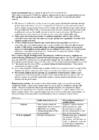
ATTORNEY-AT- LAW WHAT DO THEY A notary public of the A judge presides over The prosecutor has Attorney at law or DO? common law is a a courtroom, hearing three main tasks: attorney-at-law, public officer evidence, making usually abbreviated in constituted by law to decisions on motions. to investigate everyday speech to serve the public in The judge is crimes, attorney, is the non-contentious responsible for to decide whether preferred term for a
Crime and the Law Task 1. Underline the most suitable word or phrase. a) Sally didn't realise that she had broken/countered/denied the law. b) The police have banned/cancelled/refused parking in this street. c) I must remember to get a/an agreement/licence/permission for my television. d) The president admitted that there had been a breakdown of law and crime/government/order. e) Jim's parents wouldn't agree/allow/let him go to the demonstration. f) Jake was arrested because he had entered the country falsely/illegally/wrongly. g) Talking to other students is against the law/orders/rules of the examination. h) The two men were arrested before they could commit/make/perform any more crimes. i) I had to take the company to court/justice/law to get the money they owed me.
/ wicce f.) is a practitioner of witchcraft. Historically, it was widely believed that witchcraft involved the use of these powers to inflict harm upon members of a community or their property, and that all witches were in league with the devil. Since the mid 20th century, the term witchcraft has sometimes been used to distinguish between bad witchcraft and good witchcraft, with the latter often involving healing. Human misfortune was often blamed on a supernatural entity or a known person in the community. Reasons for accusations of witchcraft fall into four general categories: · A person was caught in the act of positive or negative sorcery · A well-meaning sorcerer or healer lost their clients' or the authorities' trust · A person did nothing more than gain the enmity of their neighbours · A person was reputed to be a witch and surrounded with an aura of witch-beliefs
Prior to this momentous event that heralds an evolutionary transformation in the life of plants, the planet had already been covered in vegetation for millions of years. The first flower probably did not survive for long, and flowers must have remained rare and isolated phenomena, since conditions were most likely not yet favorable for a widespread flowering to occur. One day, however, a critical threshold was reached, and suddenly there would have been an explosion of color and scent all over the planet – if a perceiving consciousness had been there to witness it. Much later, those delicate and fragrant beings we call flowers would come to play an essential part in the evolution of consciousness of another species. Humans would increasingly be drawn to and fascinated by them. As the consciousness of human beings developed, flowers were most likely the
53. To one destined for purgatory, God says, "You try again." To one destined for hell, He says, "I'll try again." 54. Unless he's more intelligent than himself, there's no hope for a man. 55. Wants should subsidize needs. 56. We need to expand our sense of the possible and contract our sense of the probable. 57. What good is it to be able to read someone else's mind if you can't read your own? 58. When a moron meets a lesson, they annihilate one another. 59. While there is only one human race, there are lots of human losers. 60. Willingness to volunteer and suitability for the job to be done are two completely different things. 61. You can remember that you are only if you forget who you are. 62. You can't answer someone who asks you to shoulder your burden of proof by asking him to prove something else. 63. Your thought must become more rigorous; otherwise you won't be able to be sufficiently skeptical. 64. Abandon your ego to its fate. 65
worthy individuals with rights of their own. 3 The UNCRC has been considered as one of the most innovative international treaties ever ratified. It laid the foundation for the potential change of attitude and perception of children as primarily objects of the adult world. The recognition of children by the UNCRC as respected individuals with rights of their own has given impetus to a significant field of academic study. Since then, there has been increasing sociological interest in children which has provided a new perspective around the idea of children as social actors, and that childhood is not a natural phenomenon but a social 4 construct. It is now recognised that childhood is a culturally constructed phenomenon arising from human interaction.5 However, the new knowledge of children as competent 1 Mark Drankeford and Jonathan Scourfield and Sally Holland, `Welsh Children`s Views on
Not many people know that, in 1931, Adolf Hitler made a visit to the United States, in the course of which he did some sightseeing, had a brief affair with a lady named Maxine in Keokuk, Iowa, tried peyote (which caused him to hal- lucinate hordes of frogs and toads wearing little boots and singing the Horst Wessel Lied), infiltrated a munitions plant near Detroit, met secretly with Vice-President Curtis regarding sealskin futures, and invented the electric can opener. There is a good reason why not many people know all that: none of it is true. But the remarkable thing is that just now, as you read through my opening sentence--let us call it sentence (1)--you understood it perfectly, whether or not you were ready to accept it, and you did so without the slight- est conscious effort. Remarkable, I said. It probably does not strike you as remarkable or sur- prising, even now that you have noticed it. You are entirely used to reading
say that they can see a strong family coat. 4 mistake for 8 come up with resemblance between my dad and me. I can't see it myself, not facially anyway 3 Well, she would keep driving too 2 1 bring about 5 go ahead although there are certain similarities fast in the town. 2 fall through 6 go down with in our physical build. I also seem to 4 Well, he would keep misbehaving 3 tip off 7 come to have inherited his big feet, unluckily in class. 4 come up with 8 mistake for for me. It was the first thing my parents 5 Well, you would keep eating too noticed when I was born
of the writer and of a textbook, that is to show how better to express one's thoughts. Of foreign linguists, it is the french Ch.Balley, G.Marduzeon who in the 20th century made a definite contribution. This happened because of the centuries-old tradition in France of interest in style. The classical works on english stylistics are those by the german scholars: Ph.Aronstein, M.Deutschbein, I.Galperin. In the 50's and 60's of the previous century there was a rapid growth of interest in stylistics throughout the word. In the 70's and 80's, the methods of structural linguistics were very popular in stylistics. Present stylistic studies have become quite systematic. Computer-assisted stylistic analysis appears to be quite promising, e.g the study of cases of disputed authorship (I may claim I have written Othello) which may study the influence of one author to another. Although still somewhat chaotic stylistic is a
The Example 4 Solution and Problems 5 The Main Economical Problem 6-8 Free riding Problem on Public Transport 9 References 10 2 The Political Problem A common example of a free rider problem is defense spending: no one person can be excluded from being defended by a state's military forces, and thoes free riders may refuse or avoid paying for being defended, even though they are still as well guarded as those who contribute to the state's efforts. Therefore, it is usual for governments to avoid relying on volunteer donations, using taxes and, in some countries, conscription instead. In the case of defense spending, alternative perspectives of the free rider problem also exist
Jane had the boyfriend in collage and they soon got married after graduated. At first, they had a happy life, but one year later, Jane's husband had extramarital relations and divorced with Jane. In a summary, what will life be in the future? Future is not to see. Just the facts: Reporter was Lisa's first job and now she was going to write an article about Gary who killed a judgment in town and Gary was sentenced to death. However, Gary said he didn't kill that man. All of Lisa's associates thought prisoners always emphasized they were innocent, so Lisa's boss just wanted her to write an article about how bad Gary was. Actually, Gary wasn't the murder; the real killer was the judgment's daughter. It's too late...Gary had been sentenced to death...... How power can do everything, even execute an innocent man. It's all our faults. We could no longer recognize the truth, and even didn't speak out. We let power to do everything.
I don't know what the word means. Look it up in a dictionary. 10 ____________________________________________________________________________________________ No, I don't like the Spice Girls. Marks: /10 Words, words, words 4 Complete these sentences using the correct form of the words below. There is one extra word which you do not need to use. aggressive nervous dull funny easy-going ambitious expensive usual experienced successful practical 1 She told a very ________________________ joke and everyone laughed. 2 She's a very ________________________ person. She will do anything to become famous. 3 They didn't give him the job because he was ________________________. He had never done anything like that before.
Many people have contributed to my thinking and have been invisible guides as these chapters came to- gether. I would like to first thank my friend Mark Victor Hansen, who introduced me many years ago to Emmet Fox, perhaps the finest spiritual thinker of the twentieth century. Ernest Holmes, founder of Science of Mind, opened my eyes and heart to the incredible universe of potential contained within each person when they changed their thinking and changed their lives. Great spiritual teachers such as Charles Fillmore, Neville, Eric Butterworth, Wayne Dyer, and Roberto Assagioli have had a profound influence on my thinking. I would also like to thank those great practical thinkers on suc- cess who have had such a wonderful influence on me—and on the world—such as Napoleon Hill, Maxwell Maltz, Claude Bristol,
and positivism. Opposition to abstract, untested theories &ideologies. Friedrich Nietzsche ,,God is dead"-through explaining and putting forward theories had killed Christian god. The essence of Freudian theory: the process in the human psyche Superego-society, conscience, morals, traditions, religion, a moral censor Ego-rational behavior, motivation, self-identification, conscious decisions Id-instincts, natural responses, the pleasure principle, aggressive instincts, the death wish Influence: In art and literature, Freud's theories influenced surrealism . Like psychoanalysis, surrealistic painting and writing explores the inner depths of the unconscious mind. Freudian ideas have provided subject matter for authors and artists. Critics often analyze art and literature in Freudian terms. 2. Literary Modernism and its sub-movements. The influence of Structuralism and psychoanalysis. Main characteristic features of Modernism. Denial of
[Your Name] [Instructor] [Class] [Date] ABOUT SERIAL KILLERS INTRODUCTION Let's play a quick game of catchphrase - guess the word. My phrase is two words, and describes a person. Charles Manson. Ted Bundy. Jack the Ripper. Serial killer - serial meaning "arranged in a straight line or succession" (1) and killer meaning "one who kills, or any agent used to neutralize the active property of anything." We tend to have a morbid interest in people who commit murder. Today, I'd like to explain what distinguishes serial killing from mass murders, how long serial killing has been around, and highlight some of the psychological traits common to serial killers. BODY I
PSYCHOLOGY PART 1: CORE Biological level of analysis Outline principles that define the biological level of analysis. 1) Behavior can be innate, because it is genetically based. Evolution may play a key role in behavior. 2) Animals may be studied as a means of understanding human behavior. 3) There are biological correlates of behavior. Cognitions, emotions and behaviors are products of the anatomy and physiology of our nervous and endocrine system. Explain how principles of the biological level of analysis may be demonstrated in research. 1) Correlational studies: Study by Buss, who hypothesized that across cultures, men will prefer to marry younger women because of greater reproductive capacity and women will place greater value on a potential mate's earning
The basic ingredients, when fresh, are so full of flavour that British haven't had to invent sauces to disguise their natural taste. What can compare with fresh pees or new potatoes just boiled and served with butter? Why drown spring lamb in wine or cream and spices, when with just one or two herbs it is absolutely delicious? If you ask foreigners to name some typically English dishes, they will probably say "Fish and chips" then stop. It is disappointing, but true that, there is no tradition in England of eating in restaurants, because the food doesn't lend itself to such preparation. English cooking is found at home. So it is difficult to a good English restaurant with a reasonable prices. In most cities in Britain you'll find Indian, Chinese, French and Italian restaurants. In London you'll also find Indonesian, Mexican, Greek... Cynics will say that this is because English have no "cuisine" themselves, but this is not quite the true. Vocabulary:
 annaabi.ee