documents in 1422, but by some accounts, it may be older still. The town councilgoverned pharmacy sold many other goods besides medicine. Over the centuries, it has changed slightly, but it still retains the flavour of bygone days, while it sells modern medicines. Medieval medicinal ingredients like bat powder and snakeskin are no longer available, but you can still try the fine spiced claret, renowned already in the Middle Ages. The House of the Brotherhood of Blackheads is nearly the only preserved Renaissance building in Tallinn. The Brotherhood of Blackheads emerged in 1399. The Brotherhood united the young, single merchants before they could be accepted into the Great Guild, as well as foreign merchants who were residing in Tallinn for longer periods but not permanently. The name of the Brotherhood is associated with their patron, the black St. Mauritius, an early Christian martyr who died in Switzerland around 280300 A.D
sympathy with what was direct and heartfelt in the art of the past. The brotherhoods techniques came from the early Flemish art- especially Van Eyck. To imitate the work of great Italian artists the PRB-s studied the colours in nature. To have the effect of glowing colours they invented a new method called "wet white". It was very difficult and wasn't used a lot (except Hunt). The technique was to apply colour on a wet brilliant white ground. For inspiration the brotherhood turned to the bible because they wanted to portray significant themes. They applied much original thought to their subjects, and this made them excellent illustrators. Only Hunt stayed true to the ideals of the PRB. Other two soon replaced the biblical inspiration with the medieval world- the plays of Shakespeare. Their paintings were very realistic which drew a lot of negative attention on them from various critics, for example Charles Dickens
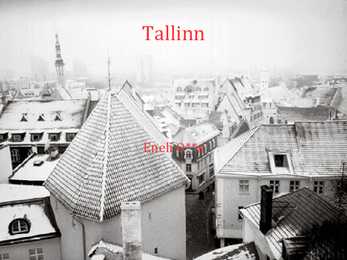
It has three parts: Lower Town, Upper Town + Town Wall, Towers and the Gates Lower Town/Upper Town Town Hall Square Toompea Castle & Tall Tallinn Town Hall Hermann's Tower Town Hall Pharmacy Cathedral of Saint Mary the Virgin Great Guild Hall Danish King's Garden House of the Brotherhood of Black Heads Other Attractions Kadriorg Palace The Kadriorg Art Museum Alexander Nevsky Cathedral Russalka Soviet Legacy KGB Headquarters Soviet Legacy Tallinn TV Tower - Closed from November 26th 2007 Open Air Attractions Estonian Open Air Museum Open Air Attractions Tallinn Zoo -Established in 1939 Open Air Attractions Tallinn Botanic
5. What ideas and reforms were behind the 'woman question'? Describe the three types of the Victorian women, their roles and development throughout time? 6. Self-help books and the ideology behind them? 7. What is literary realism (definition, development)? Who were the writers whose style is best characterised by this term? 8. Victorian poetry: the dilemmas between aesthetics and morality. Tennyson and Browning, the Pre-Raphaelite brotherhood: main subjects and ways of writing poetry 9. The Development and role of the novel. Social novels: themes, ideas. 10. Charles Dickens: general characteristics of his life. Note that these are just general questions for revision, in the test you might get a more detailed question. There is a fair possibility of a poetry analysis type of a question.
Scots Musical Museum". The gathered many old scotish tunes and songs that could have been lost otherwise. Even Haydn and Beethoven got inspiration from the songs he had put down. Burns is the author of the version of the Scots song Auld Lang Syne, which is generally sung at Hogmanay and other New Year celebrations around the English speaking world. Burns got ispiration from nature and beauty around, he wrote about love, universal brotherhood and the human condition. His poetry came straight from the heart and, to this day, his words are considered timeless. Burns Night A Burns Supper is a celebration of the life and poetry of the poet Robert Burns. The suppers are normally held on or near the poet's birthday, January 25, sometimes known as Burns Night, although they may in principle be held at any time of the year. Burns suppers are most common in Scotland (and also in Russia, where nationally
Estonian dialects Kui k'äzi k'äüles? Kuiss käbäre käivä? Kuidas käsi käib? Traditionally, the Estonian dialects are categorized to three as follows: 1) Northestonian dialects : Insular, Western, Central and Eastern dialect 2) Southern Estonian dialect Group : Mulgi, Tartu and Võru dialect 3) Northeastern coastal dialect S-Saartemurre/insular dialect L-Läänemurre/western dialect K-Keskmurre/central dialect M-Mulgimurre/Mulgi dialect T-Tartumurre/Tartu dialect V-Võrumurre/Võru dialect I-Idamurre/eastern dialect R-(Kirde)rannikumurre/ northeastern coastal dialect Dialect Speakers % 1. Northen Estonian dialect 26 986 3,0 · Eastern dialect 1 270 0,1 · Central dialect 210 0,0 · Western dialect 777 0,1 · insular dialect 24 520 2,8 2. Southern Estonian dialect 101 851 11,5 Group · Mulgi dialec...
Believed to have been built in the 12th century and to have been the centre for old Tallinn's Scandinavian community prior to the conquest of Tallinn by Denmark in 1219. A legend tells that the builder of the church, named Olaf, upon its completion, fell to his death from atop the tower. It is said that when his body hit the ground, a snake and a toad crawled out of his mouth. 5. Blackhead's house Pikk tn 26 - Reneissance, 14. cent. It is the house of the brotherhood. It used to unite single young and foreign merchants. 6. Kanuti Gild - 13.cent. It is a union of german craftsmen in Tallinn. Its was at it's best 16 cent. Above the door is the founder of the union, king Knut 7. Suurgildi hoone - gothics. Belonged to Tallinn's Suurgildile, where were the town's most powerful and richest merchants. Hoone Ehitus kestis 14071410, siseviimistlus lõpetati 1417. 8. Holy ghost church - 14. Century
Samuti oli probleemiks inimeste matmine. Surnuid oli päevas ligi 300-400 ning sellega kaasnes kohutav lehk. Inimesed, kes tegelesid surnutega nõudsid selle eest raha. Surm oli liiga igapäevaseks muutunud. Rahvas kuulis, et kõrval külas/linnas oli pool elanikkonnast surnud ning nad teadsid, et see jõuab ka nendeni. Põgeneda polnud kuskile ega ka abi polnud kuskilt loota. Lapsed nägid oma vanemaid suremas ning vanemad oma lapsi, inimesed leppisid sellega, et nad olid võimetud. Brotherhood of flagellants Kuna katku siiski peeti Jumala karistuseks, hakkasid tekkima enesepiitsutajate rühmad(brotherhood of flagellants), kes käisid läbi külade ennast piitsutades ja Jumalalt andeks paludes. Nad karistasid ennast ning niimoodi lootsid pääseda Jumala vihast. Lihtrahva seas olid nad populaarsed, nad võeti omaks. Paavst nägi selles ohtu kirikule, kuid algselt ei teinud midagi. Enesepiitsutajaid nähti kui kangelasi ning paavst uskus, et peagi
Different sources tell different stories but here are 2 of them. Orange stands for Irish Protestants, green for Irish Catholics and the white stripe for the hope that peace might eventually be reached between them. Another story tells that the green stands for the ancient Irish ancestry , orange stands for the new elements that joined them later in the history and white symbolizes the union of all in brotherhood and common nationality. The statistics say that about 90 % of the Republic's populace is Roman Catholic, 3% identify themselves as Protestants, and the remainder claim no religious beliefs, or belong to the small communities of believers such as Muslims, Jews and Jehovah's Witnesses The St. Paul's cathedral was dedicated to St. Patrick, the patron saint of Ireland. natural resources The primary Natural resources of Ireland, include natural gas, petroleum, peat(turvas), copper,
In the novel, she is one of the major players who attempt to crack her grandfather's code. She is also a descendent of Jesus and Mary Magdalene. Read an in-depth analysis of Sophie Neveu. Jacques Saunière - The curator at the Louvre, and Sophie's grandfather. His murder sets off the chain of events that takes place in the novel. Saunière's scholarly passions include Leonardo Da Vinci, goddess iconography, and puzzles. He is also secretly the head of the Priory of Sion, the secret brotherhood charged with protecting the Grail, and a descendent of Jesus and Mary Magdalene. Silas - A monk of Opus Dei, and the murderer of Jacques Saunière. Silas, an albino, is motivated by the rejection and horror he has faced since he was young. When he falls into the orbit of Bishop Aringarosa, he finds religion and devotes himself to the strict Catholic ways of Opus Dei. He is obsessed with self-punishment and celibacy, and his goal in life is to aid the Bishop and Opus Dei.
vandalism and our unimaginativeness. We can extend the help that we give to one another until we have built, unwrittingly, a better society. The most fruitful central idea for future is to be found in the main doctrine of the British Labour Party. Author is convinced that the faith of the Party in a moderate and democratic form of Socialism is a natural outcome of our slowly growing faith in human liberty, equality and brotherhood and represents the next step in our social emancipation. The main evil from which we suffer and the main barrier to social progress is the disgraceful inequality in the distribution of income and property that we still tolerate. We can only remove this evil by abolishing property as a main source of income for anyone. To do this, it will be necessary to modify the right of inheritance so that it is only possible to pass
It is also the oldest commercial enterprise and the oldest medical establishment in Tallinn. Johann Burchart family longest ran it 60 years. Unicorn powder, burnt hedgehogs, worms. Also were a weighing house, well, pillory- Magistracy - consisted of 24 burghermaster and something, selected from the members of the great guild Guilds The Great Guild - the association of hansaetic merchants, married persons, Brotherhood of blackheads - association of local unmarried blackheads, when married went into the great guild. active from the 14th century til 1930. founded a military organisation, but became social one. Estonians were never accepted into guilds. Town Wall Fat margaret and great coastal gate They were built not only to defend the city from the seaward side of town, but also to impress any visitors arriving via the harbour.The Great Coastal Gate, along with the Viru Gates, are the
¡Viva España! Long live Spain! Cantemos todos juntos Let's sing together, con distinta voz with different voices, y un solo corazón and only one heart. ¡Viva España! Long live Spain! desde los verdes valles From the green valleys, al inmenso mar, to the immense sea, un himno de hermandad a hymn of brotherhood. Ama a la patria Love the Fatherland, pues sabe abrazar, which knows how to embrace, bajo su cielo azul, below its blue sky, pueblos en libertad people in freedom. Gloria a los hijos Glory to the sons que a la Historia dan who have given to history justice justicia y grandeza and greatness, democracia y paz
(est: VAIBAMEISTER): how were they dressed? What has been said about their wives? Listed together, the five Guildsmen appear as a unit. English guilds were a combination of labor unions and social fraternities: craftsmen of similar occupations joined together to increase their bargaining power and live communally. All five Guildsmen are clad in the livery of their brotherhood. T he Cook (est: KOKK): Describe his skills? What could affect the quality of his food? The Cook works for the Guildsmen. Chaucer gives little detail about him, although he mentions a crusty sore on the Cook's leg. The Wife of Bath ( est: EMAND BATHIST): Describe her in terms of looks and character. What was her occupation? What kind of knowledge did she have?
lovers of all ages. Collection The collection that consists of 55 823 titles is displayed in the following branches: · the permanent exhibition of classics of Estonian art (18th century II World War), the permanent exhibition of Estonian art from 1945-1991 and contemporary art at Kumu Art Museum; · ecclesiastical Medieval and Baroque art from the period between 13th 18th century, silverware of guilds, craft corporations, Brotherhood of the Black Heads and churches at Niguliste Museum; · European and Russian art from the period between 16th 20th century in the Kadriorg Palace, and a valuable collection of the 16th 20th c. art from Western Europe, Russia and China, donated to the museum by Johannes Mikkel, at Mikkel Museum at Kadriorg Art Museum; · Art of Adamson-Eric (19021968), one of the most outstanding Estonian painters of
· Nad hülgasid akadeemilised traditsioonid, pöördusid renessansi-eelse ja keskaegse kunsti poole. · Nende liidrid olid Dante Gabriel Rossetti, John Everett Millais, Ford Madox Brown. · 1848 rajas Dante Gabriel Rossetti (1828 1882) koos kahe teise Kuningliku Kunstiakadeemia tudengiga, William Holman Hunti (1827 1910) ja John Everett Millais`ga (1829 1896), prerafaeliitide vennaskonna (Pre-Raphaelite Brotherhood PRB). · Prerafaeliite, nagu juba nimigi seda vihjab, inspireeris kunst, mis eelnes Raffaelile (1483 1520). · Nad hülgasid akadeemilised traditsioonid ning pöördusid kõrgrenessansi-eelse ja keskaegse maali poole. Prerafaeliidid · Nende maale iseloomustavad säravad värvid, teravalt toonitatud kontuurid ja piinlikult täpne tähelepanu detailidele. · 1850-ndate aastate alguses tiirles prerafaeliitide teemadering keskaegsete legendide fantaasia maailmas,
[ The Organization of the Islamic Conference, consisting of Muslim countries, was formally established in September 1969 after the burning of the Al-Aqsa Mosque in Jerusalem. The 20th century saw the Islamic world increasingly exposed to outside cultural influences, bringing potential changes to Muslim societies. In response, new Islamic "revivalist" movements were initiated as a counter movement to non-Islamic ideas. Groups such as Jamaat-e-Islami in Pakistan and the Muslim Brotherhood in Egypt advocate a totalistic and theocratic alternative to secular political ideologies. In countries like Iran, revolutionary movement replaced secular regime with an Islamic state. Sometimes called Islamist, they see Western cultural values as a threat, and promote Islam as a comprehensive solution to every public and private question of importance. Some Muslim organizations began using the media to promote the message of Islam. The first
abolitionist, editor, orator, author, statesman and reformer. Called "The Sage of Anacostia" and "The Lion of Anacostia," Douglass was one of the most prominent figures of African American history during the 1800s, and one of the most influential lecturers and authors in American history. Douglass was a firm believer in the equality of all people, whether black, female, American Indian, or recent immigrant. He spent his entire life advocating the brotherhood of all humankind. One of his favorite quotations was: "I would unite with anybody to do right and with nobody to do wrong." Life as a slave Frederick Augustus Washington Bailey, who later became known as Frederick Douglass, was born a slave in Talbot County, Maryland near Hillsboro. He was separated from his mother, Harriet Bailey, when he was still an infant. She died when Douglass was about 7. The identity of Douglass' father is obscure; Douglass originally stated that his father was
Revolutionary ideas was Jacques-Louis David, who, with his paintings, perpetuated The French Revolution from the Republican point of view. His art was mostly tightly connected to the main figures, events and ideas of the French Revolution. David had more than 5 pieces of art that captured the essence of the Revolution. His paintings represented political ethics, current ideals and foundations. Furthermore, the wider public was enthralled with his ability to represent brotherhood and patriotism while using the neoclassicistic style. (Friedlaender, 1952, p.16) Jacques-Louis David was born in Paris in 1748 as the son of an ironmonger. The leader of the French classical movement studied with the artist Joseph-Marie Vien. Although, he attained his real art education in Rome, where he was surrounded by ancient ruins and the masterpieces of great Italian painters. After returning to Paris in 1789 David started to shape
It is folk etmymology. It happenes to borrowed words most often (nt, french etiquette quite the ticket, meaning proper, polite). To understand the mot of a word, we must know its history . 5. Morphemes, allomorphs. Types of morphemic segnetability. Morphemes are the smallest lexical units (can not divide). They make up words. Morphemes have a certain meaning. (nt, pre preplain, preview; less waterless; hood brotherhood). Some morphemes have diff sounds(nt, please, pleasure, pleasant). They are variants of the same morpheme or allomorph. Types: segmentable those we can divide into morphemes (nt, hero- ic; happy ness). Non- segmentable- cannot divide any further (nt, luck, hand, smile). Types of morphemic segmantability: a)complete segm occurs in words with transparent structure (läbinähtav), (nt, south- ern; mis-manage)
concentrated on meditations on nature and the fate of the world. Artists became the elite. An escape from the everyday and contemporary – history, feelings, myth, fairy-‐tale, medieval idealism. Lord Alfred Tennyson, Elizabeth Barrett Browning, and Lewis Morris. Pre-‐Raphaelite Brotherhood – a group of English painters, poets and critics was founded in 1848. Idealised classical art, especially Raphael. Initially seven members but many more associated with the group. Highly romantic, sometimes didactic (intended to teach
At the beginning of the 13th cent. 2 schools of higher education were established Oxford & Cambridge. Law schools appeared, producing lawyers who could advise juries. The number of religious houses grew enormously. Many men & women wanted to be monks & nuns. The reason was economic difficulties. At the end of the 12th cent. there had been sharp rise in prices. Monasteries became centres of wealth & learning. Priests couldn't be married any longer. A new movement, the ,,brotherhood" of friars, wandering preachers, appeared. They were not interested in church power, but in the souls of ordinary people. Dealing with the Celts. William I had allowed his lords to win land in Wales. These Normans built castles, mixed with the Welsh. It was a new class, mixture of Norman & Welsh rulers who spoke Norman French & Welsh but not English. They became vassals of the English king. The Welsh who lived around Snowdon were free from English rule. They were led by Llywelyn ap Gruffyd,
placed great emphasis on the importance of spiritual living. Man's relationship to God was a personal matter and was to be established directly by the individual himself (Unitarianism) rather than through the intermediation of the ritualistic church. They held firmly that man was divine in his own right, an opinion opposed to the doctrines held by the Puritan Calvinists in New England, and they urged strongly the essential divinity of man and one great brotherhood. Self-trust and self-reliance were to be practiced at all times and on all occasions, since to trust self was really to trust the voice of God speaking intuitively within us (Emerson). The transcendentalists felt called upon to resist the "vulgar prosperity of the barbarian"; believed firmly in democracy, and insisted on an intense individualism. Some of the extremists in their number went so far as to evolve
altar depict the life of Saint Nicholas, the central part and the unfolded wings expose over thirty wooden sculptures forming the so-called gallery of saints. The exposition contains also the Altar of St. Mary from 1500; the Altar of the Holy Kin from about 1490, made at Jan Borman's workshop in Brussels; The Altar of Christ's Passion was made at the beginning of the 16th century by the Brugge master Adrian Isenbrandt at the order of the powerful Brotherhood of the Blackheads Guild. The High Altar References: · P o r g a s s a a r, Kristina; A l j a s, Eva-Grete; K u u s k e m a a, Jüri. Tallinn: Medieval capital. Tallinn: PhotoTour · S t. N i c h o l a s' C h u r c h. http://en.wikipedia.org/wiki/St._Nicholas%27_Church,_Tallinn · R e i d l a, Jana. 2006. Tallinn in legends. Tallinn: PhotoTour · T ä h e p õ l d, Kadri. 2005. Giidi käsiraamat: Vanalinn
Modern times (1918present) After World War I losses, the remnants of the empire were parceled out as European protectorates or spheres of influence. Since then most Muslim societies have become independent nations, and new issues such as oil wealth and relations with the State of Israel have assumed prominence. The 20th century saw the creation of many new Islamic "revivalist" movements. Groups such as the Muslim Brotherhood in Egypt and JamaateIslami in Pakistan advocate a totalistic and theocratic alternative to secular political ideologies. Sometimes called Islamist, they see Western cultural values as a threat, and promote Islam as a comprehensive solution to every public and private question of importance. In countries like Iran and Afghanistan (under the Taliban), revolutionary movements replaced secular regimes with Islamist states, while
Alkoholisõltuvus Kaassõltuvus algab oma tunnete kaitsmiseks kujunenud käitumise põhjal. Loeng 3 1.oktoober 2017 Õed ja vennad- nende vaheline seotus ja selle arenguline perspektiiv Ema ja isa õed-vennad jätavad ka mingi mälestuse lapsele, mis mõjutab tema arvamust sellest teemast Õde, vend-bioloogilised samade vanemate lapsed Poolõde, poolvend- üks ühine bioloogiline vanem Kasuõde, kasuvend- lapsendatud, vanemad pole ühised Brotherhood- 1. Vendlus ( bioloogiline) 2. Vennalik ühtekuuluvustunne (võib olla ka sõprade vahel vms) Mõlemad on Aafrika maailmavaates sagedases kasutuses, hõlmates suurt hulka lähedasi sidemes. Puudub poolõe ja poolvenna mõiste. Venekeelses kultuuris on tädi- ja onulapsed lähedasemas– dvajuradnõi/dvajuradnaja Õdede-vendade teema uurimisküsimusena Teooria eelnes empiir listele uuringutele selles vallas, polnud konkreetseid mudeleid
peasant faces" are the enemy. Nothing about them suggests that he is fundamentally different from them or that he should have any reason to want to kill them. Many of the Russians are slowly starving, and they are stricken with dysentery in large numbers. Their soft voices bring images of warm, cozy homes to Paul's mind. But most people simply ignore the prisoners' begging, and a few even kick them. The spirit of brotherhood among the prisoners touches Paul deeply. They live in such miserable circumstances that there is no longer any reason for them to fight among themselves. Paul cannot relate to them as individual men because he knows nothing of their lives; he only sees the animal suffering in them. People he has never met, people in positions of influence and power, said the word that made these men his enemy. Because of other men, he and they are required to shoot, maim, imprison, and kill one another
slaves. It was an example of what became a large body of abolitionist literature. Historians and literary critics find the roots of English nineteenth century abolitionist literature in the preceding century. Eighteenthcentury Enlightenment ideals such as compassionate humanitarianism and a new concept of liberty, combined with a growing religious zeal which stressed the perfectibility of mankind and the brotherhood of all races, caused profound changes in how the English thought and wrote about slavery. A great deal of scholarship has devoted itself to tracing the growth of antislavery sentiment in English poetry and literature from the eighteenth century, especially in that century's romantic idealization of the "noble savage." However halting and sporadic these changes in racial attitudes expressed in literature were, most critics agree that by the end of the
The british presence in Egypt and Sudan Britain and France controlled the Suez canal and Egypt Britain became the sole occupier Sudan was controlled for 13 years by mahdi followers but was reconquered and jointly governed by Egypt and Britain until 1956 General Gordon and Khartoum 1885 British general, the hero of Crimean and Chiense wars In 1881 Muhammad Ahmad, Mahdi, a Muslim leader and founder of the Mahdiya brotherhood in Islam, proclaimed holy war to purify Islam and overran Sudan General Gordon went to Sudan to ecacute Egyptian force, was revolted and died martyr´s death The British Expansion in East Africa In 19 C the Sultan of Zanzibar received a strip of ten miels broad along the coast which British east Africa Company leased Zanzibar (an island) was annexed and recoginsed as British protectorate. In following years protectorate was established over Uganda
States peered into the most confidential thoughts and plans of its possible enemies by shredding the coded wrappings of their dispatches. Room 1649 housed OP-20-GY, the cryptanalytic section of the Navy's cryptologic organization, OP-20-G. The page-printer stood beside the desk of the GY watch officer. It rapped out the intercept in an original and a carbon copy on yellow and pink teletype paper just like news on a city room wireservice ticker. The watch officer, Lieutenant (j.g.) Francis M. Brotherhood, U.S.N.R., a curly-haired, brown-eyed six-footer, saw immediately from indicators that the message bore for the guidance of Japanese code clerks that it was in the top Japanese cryptographic system. This was an extremely complicated machine cipher which American cryptanalysts called PURPLE. Led by William F. Friedman, Chief Cryptanalyst of the Army Signal Corps, a team of codebreakers had solved Japan's enciphered dispatches, deduced the nature of the
kultuuride vahel ei pruugi olla kuigi adekvaatne lääneühiskonnas võib agressiivsus olla taunitud, ent teisest küljest vaadatakse positiivselt terrorismi vastasele võitlusele (Iraak, Afganistan). Pigem tasub agressiivsust võrrelda kultuuride sees. Nt USAs on täheldatud suuremat agressiivsust lõunaosariikides. Ka mõnede vähemusgruppide puhul võib olla erinevusi agressioonis (nt vanglad, mahvia). Jõugud - Organiseeritud kuritegevus maffia, gängid - Vanglasüsteem (The Arian Brotherhood) - Kinnipidamisasutused Pidurdamatus (disinhibition) Sotsiaalsete normatiivide ignoreerimine, mis võib põhjustada agressiivset käitumist. Selle põhjusteks võivad olla deindividualiseerimine ja dehumaniseerimine. Deindividualiseerimine inimesed näevad end pigem osana grupist ja väheneb individuaalne vastutus tegude eest. Sotsiaalseid norme, mis taunivad agressiivsust, ei võeta enam nii tõsiselt, käitutakse kooskõlas grupiga. Kriitika: esile kerkiva normi
 annaabi.ee