Leidsid 33 sarnast õppematerjali, mis on seotud failiga "Biogas – The source of future energy". Need materjalid aitavad sul teemat sügavamalt mõista.
biogas, other, than, wastelantroduction, carbon, cause, report, areas, usage, animal, conditions, rate, year, heat, sources, improve, thererovide, wood, celsius, degree, call, cent, reduce, electric, vehicle, economic, cook, benefitsossible, anaerobic, organic, technology, material, hydrogen, through, stand, dust, ratio, saferoject, developHow to produce bioenergy from agricultural resources without harming the environment Jürgen Aosaar Jaak-Albert Metsoja Ahto Oja BOVA cource on biogas from biomass March 3-7 2008 Tartu Deciduous tree species on abandoned agricultural land Current situation • The long term development plan of the Estonian energy industry foresees a reduction in the use of fossil fuels and an increase in the share of biofuels: by the year 2010 renewable energy must account for 5.1% of total energy consumption Current situation (2) • In Estonia we have abandoned arable land about 400 000 ha, part of it is
............................................................................ 46 13.7 Geothermal energy and the environment..................................................................46 BIOMASS............................................................................................................................46 14.1 Wood and wood waste..............................................................................................47 14.2 Municipal solid waste, landfill gas, and biogas........................................................48 14.3 Biofuels - ethanol and biodiesel............................................................................... 48 2 14.4 Biomass and the environment...................................................................................49 COAL.......................................................................................................................
Hydroelectricity was the next largest renewable source, providing 3% (15% of global electricity generation),followed by solar hot water/heating, which contributed 1.3%. Modern technologies, such as geothermal energy, wind power, solar power, and ocean energy together provided some 0.8% of final energy consumption. While there are many large-scale renewable energy projects and production, renewable technologies are also suited to small off-grid applications, sometimes in rural and remote areas, where energy is often crucial in human development.Kenya has the world's highest household solar ownership rate with roughly 30,000 small (20100 watt) solar power systems sold per year. Some renewable energy technologies are criticised for being intermittent or unsightly, yet the market is growing for many forms of renewable energy. Climate change concerns coupled with high oil prices, peak oil and increasing government support are driving increasing renewable energy
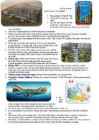
the world, that would rely on the renewable energy sources. 6 square kilometers, home for 50,000 people and 1,500 businesses. · Habitat 2020 is a future example of biomimetic architecture that fuses high-tech ideas with basic cellular functions to create `living' structures that operate like natural organisms. The exterior has been designed as a living skin. The surface would allow the entry of light, air and water into the housing. The garbage would be converted into biogas energy. · Wind powered rotating skyscraper. 59 levels with wind turbines, on a concrete core. · Lylypad by Vincent Callebaut. Floating city, covered with plants. For 50 000 people, will be ready around the year 2100. · By 2010 parts
Tallinn 2013 Ott Speek Subject: English Geodesy Study group: GI-21b PETROLEUM PRESENTATION Petroleum (L. petroleum, from Greek: Πέτρα (rock) + Latin: oleum (oil) is a naturally occurring flammable liquid consisting of a complex mixture of hydrocarbons of various molecular weights and other liquid organic compounds, that are found in geologic formations beneath the Earth's surface. The name Petroleum covers both naturally occurring unprocessed crude oils and petroleum products that are made up of refined crude oil. A fossil fuel, it is formed when large quantities of dead organisms, usually zooplankton and algae, are buried underneath sedimentary rock and undergo intense heat and pressure. Petroleum is recovered mostly through oil drilling. This comes after the studies of
produce steam, which is then converted into mechanical work for the purpose of generating electricity or propulsion. In 2007, 14% of the world's electricity came from nuclear power. More than 150 nuclear-powered naval vessels have been built, and a few radioisotope rockets have been produced. Nuclear life cycle The Nuclear Fuel Cycle begins when uranium is mined, enriched, and manufactured into nuclear fuel, which is delivered to a nuclear power plant. After usage in the power plant, the spent fuel is delivered to a reprocessing plant or to a final repository for geological disposition. In reprocessing 95% of spent fuel can be recycled to be returned to usage in a power plant. What is nuclear energy? Nuclear energy was first discovered by French physicist Henri Becquerel in 1896, when he found that photographic plates stored in the dark near uranium were blackened like X-ray plates, which had been just recently discovered at the time 1895
DH systems require large investments, have negative initial cash flow and long payback time, which obstructs financing. One actor should control DH from source to consumption. If the value chain is fragmented, contracts are required between the links. It increases risks and financing costs, like in the UK and Ireland, where DH is not established. There are few multi- family houses with central heating and it is expensive to build DH networks in built areas. Most French DH systems are operated according to long-term concessions by companies that sell electricity and gas. No strong actor provides unbiased DH support. In the Czech Republic, gas offers DH severe competition. Much DH is produced at the expense of electricity that is considered more valuable, and waste incineration is not popular. In Romania, DH consumption was reduced by one-half. Distribution losses are enormous. New less polluting plants are needed.
Margit Tepner k0848752 Sustainability aspects of biofuels 1. Introduction The literature review will discuss the sustainability aspects of biofuels. Food production will be the main concern as it is the most debated issue, but other aspects, such as land use change and water consumption will be also considered as they are essential aspects in the biofuels sustainability criteria. The review will discuss the viability of biofuels based on the current technologies. Second-generation biofuels are not yet commercially viable and therefore will not be discussed; although they could significantly improve the sustainability of biofuels when they break through to the industrial scale. 2. The scale of biofuels production 2
Estonian University of Life Sciences Report on Soil Microflora By Katrin Vares Tartu 2013 Introduction The purpose of this report is to define soil microflora and establish the importance of it. Since the microorganisms clearly play an important role in preserving the balance of life, the next objective is to look into factors that influence this balance. Natural conditions and cultural impact could be considered as the variables that correlate the most with the activity and composition of microflora, hence some of the natural and cultural factors will be looked into a little more in detail.
Geothermal energy Biomass energy Renewable energy Renewable energy comes from sources that naturally renew, or will not run out in our lifetimes. Includes sunlight, wind, water, geothermal heat and various forms of biomass. Renewable energy cannot be exhausted and is constantly renewed. Does not harm the environment. Saves money. Solar energy Solar energy is the technology used to harness the sun's energy and make it useable. Every hour the sun beams onto Earth more than enough energy to satisfy global energy needs for an entire year. Solar energy use has surged at about 20 percent a year over the past 15 years, thanks to rapidly falling prices and gains in efficiency. Solar energy is inexhaustible. Noise free. Does not harm the environment. Click to edit Master text styles Second level Third level Fourth level Fifth level
Acid Rain Acid rain is any precipitation that is unusually acidic. It possesses elevated levels of hydrogen ions(it has low pH level). Acid rain is caused by emissions of carbon dioxide, sulfur dioxide and nitrogen oxides, which react with water molecules. Distilled water(doesn't contain CO 2), has pH level 7. Liquids with pH level less than 7 are acidic, liquids with pH level greater than 7 are alkaline. Unpolluted rain has a pH level over 5.7, so it is slightly acidic. Affected areas Places significantly impacted by acid rain around the globe include most of eastern Europe from Poland northward into Scandinavia, the eastern third of the United States and southeastern Canada. Other affected areas include the southeastern coast of China and Taiwan Causes · It is caused when sulfur dioxide and nitrogen oxides are released into the air
Even in Ancient Romepeople complained about smoke put into the atmosphere. The effects of air pollution are diverse and numerous. Air pollution can have serious consequences for the health of human beings, and also severely affects natural ecosystems. Because it is located in the atmosphere, air pollution is able to travel easily. As a result, air pollution is a global problem and has been the subject of global cooperation and conflict. Some areas now suffer more than others from air pollution. Cities with large numbers of automobiles or those that use great quantities of coal often suffer most severely from problems of air pollution. CAUSES There are many different chemical substances that contribute to air pollution. These chemicals come from a variety of sources. Among the many types of air pollutants are nitrogen oxides, carbon monoxides, and organic compounds that can evaporate and enter the atmosphere.
andma) to all plants of the genus(perekond, sugu) Helianthus, many of which are perennial(alaline, aastaringne) plants. What is usually called the flower is actually a head (formally(ametlikult) composite(liit-, komposiit- ; korvõieline, komposiit) flower) of numerous flowers (florets) crowded(täistuubitud, tunglev, rahvarohke) together. The outer flowers are the ray florets(pähik (õisiku osa) and can be yellow, maroon, orange, or other colors, and are sterile(steriilne, viljatu). The florets inside the circular head are called disc florets. Sunflower head displaying florets in spirals of 34 and 55 around the outside The florets within this cluster(kobar, kimp, klaster, parv ; kobarasse kogunema) are arranged (korraldatud, ettekavatsetud)spirally(spiraalselt). Typically each floret is oriented(suunitlusega) toward(poole) the next by approximately(umbkaudu, ligikaudu)
-These giant pinwheels spin from strong winds which spins a turbine of a generator to produce energy. Giant Pin Wheels? Any Studies done? · It is said that wind · Bentek Energy did the energy is suppose to Study and used about bring down costs and 1/3 of the US population reduce the in the air. for 2 years. · Well Forbes found a · The claims of cutting CO emissions were study on this and actually less than half of wrote an article about what was stated. it. · Subsidies (government · Forbes said "no" money) to the wind sector is more than 200 times as great as those given to oil and gas sector. Oh and the wind has to blow. Hydropower Power to the Water · By using earth's · 90% energy
3 1. What a railgun basically is A railgun is an electrically powered electromagnetic projectile launcher and a large electric circuit, made up of three parts: a power source, a pair of parallel rails and a moving armature. Along the pair of parallel conducting rails a sliding armature is accelerated by the electromagnetic effects of a current that flows down one rail, into the armature and then back along the other rail. Railguns have long existed as experimental technology but the mass, size and cost of the required power supplies have prevented railguns from becoming practical military weapons. However, in recent years, significant efforts have been made towards their development as feasible military technology. For example, in the late 2000s, the U.S. Navy tested a railgun that accelerates a 3.2 kg projectile to hypersonic velocities of approximately 2.4 kilometres per second, which is about Mach 7.
It's geographical position in co- ordinates is 83°N north, 42°N south, 53°W east, 141°W west. Canada borders with United States of America by land; Pacific Ocean, Arctic Ocean and Atlantic Ocean by coastline. Canada is one of the largest countries in the world, second only to Russia in territorial size. It has a total area of 9.9 million square kilometers. This includes 755,170 square kilometers of water. Toronto is the largest city in Canada with a population of 4.3 million. Other major cities include Montreal (3.3 million people), Vancouver (1.8 million people). Located in the southeast corner of the nation, Ottawa is the nation's capital. Relief Canada is a vast country comprised of a multitude of very different landscapes: Atlantic provinces, the Appalachians, St. Lawrence and Great Lakes lowlands, Canadian Shield, The Prairies, mountain ranges and high plateaus of the Canadian Cordillera, and northern Canada. Climate
Formaldehyde Formaldehyde is a colorless, flammable gas at room temperature. It has a pungent, distinct odor and may cause a burning sensation to the eyes, nose, and lungs at high concentrations. Formaldehyde is also known as methanal, methylene oxide, oxymethylene, methylaldehyde, and oxomethane. Formaldehyde can react with many other chemicals, and it will break down into methanol (wood alcohol) and carbon monoxide at very high temperatures. Formaldehyde is naturally produced in very small amounts in our bodies as a part of our normal, everyday metabolism and causes us no harm. It can also be found in the air that we breathe at home and at work, in the food we eat, and in some products that we put on our skin. A major source of formaldehyde that we breathe every day is found in smog in the lower atmosphere. Automobile
Water Pollution: Clean drinking water is becoming a rare commodity. Water is becoming an economic and political issue as the human population fights for this resource. One of the options suggested is using the process of desalinization. Industrial development is filling our rivers, seas and oceans with toxic pollutants which are a major threat to human health. FIND OUT 5 WAYS HOW TO REDUCE WATER POLLUTION. 9. Urban Sprawl: Urban sprawl refers to migration of population from high density urban areas to low density rural areas which results in spreading of city over more and more rural land. Urban sprawl results in land degradation, increased traffic, environmental issues and health issues. FIND OUT 5 WAYS HOW TO FIX URBAN SPRAWL. 10. Genetic Engineering: Genetic modification of food using biotechnology is called genetic engineering. Genetic modification of food results in increased toxins and diseases as genes from an allergic plant can transfer to target plant
Air pollution is problem all over the world. Through some pollution comes from these natural sources, most pollution is the result of human activity. The biggest causes are the operation of fossil fuel- burning power plants and automobiles that combust fuel. Combined, these two sources are responsible for about 90% of all air pollution in the United States. All kind of pollutions can lead us to serious health problems. For example, air pollution is increasingly being cited as the main cause of lung conditions such as asthma - twice as many people suffer from asthma today compared to 20 years ago. Every year, 3.2m Europeans are diagnosed with cancer - the most common cause of death after heart disease. Most widespread are cancers of the lungs, breast and colon. Diseases such as bronchitis, lung cancer and heart diseases may all eventually appear in people exposed to air pollution. When the wind blows, then it carries the pollution with him. Futhermore, the rain reduces the
the oceans, mostly in the 0 to 700m region. Despite the oceans' dominant role in energy storage, the term "global warming" is also used to refer to increases in average temperature of the air and sea at Earth's surface. Since the early 20th century, the global air and sea surface temperature has increased about 0.8 °C (1.4 °F), with about two-thirds of the increase occurring since 1980.Each of the last three decades has been successively warmer at the Earth's surface than any preceding decade since 1850. More than 90% certain that most of global warming was being caused by increasing concentrations of greenhouse gases produced by human activities.In 2010 that finding was recognized by the national science academies of all major industrialized nations. Affirming these findings in 2013, the IPCC stated that the largest driver of global warming is carbon dioxide (CO2) emissions from fossil fuel combustion, cement
r w gametes C , C ; F1 genotypes and phenotypes 1 mark: r w F1 genotypes (all) C C F1 phenotypes (all) pink; F2 genotypes and phenotypes 1 mark: r w r w gametes C , C C , C ; r r r w r w w w F2 genotypes C C C C C C C C F2 phenotypes red pink (pink) white; F2 ratio 1:2:1; accept other symbols if key given. accept r and w as symbols without key. 6 (c) (i) 65; 130; 65; 3 (ii) 0.138 + 0.007 + 0.061; (or other suitable working) 0.206 – 0.208; 2 marks for correct value if no working shown ecf for both marks but calculated value must be to three decimal
All brand names and product names used in this book are trade names, service marks, trademarks or registered trademarks of their respective owners. The publisher is not associated with any product or vendor men- tioned in this book. This publication is designed to provide accurate and authoritative information in regard to the subject matter covered. It is sold on the understanding that the publisher is not engaged in rendering professional services. If professional advice or other expert assistance is required, the services of a competent professional should be sought. Library of Congress Cataloging-in-Publication Data Handbook of meat processing / edited by Fidel Toldrá. p. cm. Includes bibliographical references and index. ISBN 978-0-8138-2182-5 (hardback : alk. paper) 1. Meat—Handbooks, manuals, etc. 2. Meat industry and trade—Handbooks, manuals, etc. I. Toldrá, Fidel. TS1960.H36 2010 664′.9—dc22
Acid rain The term acid rain refers to what scientists call acid deposition. It is caused by airborne acidic pollutants and has highly destructive results. Scientists first discovered acid rain in 1852, when the English chemist Robert Agnus invented the term. From then until now, acid rain has been an issue of intense debate among scientists and policy makers. Acid rain, one of the most important environmental problems of all, cannot be seen. The invisible gases that cause acid rain usually come from automobiles or coal-burning power plants. Acid rain moves easily, affecting locations far beyond those that let out the pollution. As a result, this global pollution issue causes great debates between countries that fight over polluting each other's environments. For years, science studied the true causes of acid rain. Some scientists concluded that human production was primarily responsible, while others cited natural causes as well. Recently, more
Global energy use has risen by 70% since 1971 and continues to increase at the rate of 2% per year. There are many scenarios for future demand. One solution would be to use more hydropower. In 2005, renewable energy represented one-fifth of total power generation. Hydropower is the most advanced of the renewable and represents 87% of this production. 160 countries all over the world are using hydropower. Five countries make up more than half of the world's hydropower production. Those countries are: Brazil,Canada, China, Russia and the USA. (Production) *Most of the energy comes from the potential energy of dammed water driving a water turbine and generator. In this case the energy extracted from the water depends on the volume and on the difference in height between the source and the water's outflow. *Pumped storage hydroelectricity produces electricity to supply high peak demands by moving water
In this presentation I'd like to give a brief overview of clay bricks. I'll speak about 15min to allow time for questions at the end. Firstly clay bricks are known for centuries as one of the most solid and reliable structural elements is set to play a role in reducing global warming. Apart form the many benefits obtained from using clay bricks in construction, such as their durability, insulation properties and aesthetic qualities, recent findings show that they also produce less carbon emissions than any other masonry material. History (slide 3) In more detail the earliest bricks were dried bricks, meaning they were formed from clay- bearing earth or mud and dried usually in the sun until they were strong enough for use. The oldest discovered bricks, originally made from shaped mud and dating before 10000 BC, were found in Mesopotamia related to the first known cities. Ceramic or fired bricks were first introduced by the Romans. These were mainly flat, broad
It is also possible to be so ultra-sensitive that the result is disadvantageous. I expect no argument in asserting that a normal sensitivity is a healthy, indispensable ingredient for optimal education. Sensitivity can be heightened or blunted by education. It is intertwined with curiosity. An ideal education affords numerous and varied opportunities for students to touch, see, smell, listen, hear; to spark their curiosity. When I was a child the things that pleased me were largely other than the plants which have earned me a living as an adult. For example, I collected postage stamps, played basketball, was fond of listening to music, played all manner of games, but dealt only in a neutral, uninspired fashion with plants. The one thing that was constant and of supreme importance was my love of reading. I don't recall why, but by an early age, say age 9, I was a phenomenal reader of books, a habit that persisted all the way until college. Reading expands one's mind immensely
(http://academic.mintel.com A) Since 1998 more and more households are owing 2 cars. The percentage has been raised 6,4 per cent from 1998 to 2004. Although the overall percentage of car owning have went down by 0,7 per cent at the same period. The survey taken in 2004 december shows that people who are using car to go to work is 29 per cent and 25 per cent use car to take out their family. 26 per cent have a household at size 4 and to take family out they will propably use a bigger car than mini because it will not be so comfortable to squeeze four people in to a mini. (http://academic.mintel.com B) Recently people are started to think more about the environment where we all are living. Most people take in consideration if the product they buy and consume is recycable and also how it will affect on climate change wether it is environment friendly or not. Car manufacturers have made their results out of that and are producing cars more environment-friendly. They are
1 Wave energy Introduction to wave energy There are several possibilities to harvest different forms of energy from the sea. One of these options is the usage of waves for the generation of electricity. The devices needed to perform this task are called wave energy converters. Wave energy is indirect solar energy in twice. At first there is the wind, which is caused by variations in atmospheric pressure due to a differential solar heating of earth's surface by the sun. Different regions of pressure drives a force which rises a movement of atmospheric air masses that causes the earths wind system.
EU structural support and regional implementing agencies, that are available for a businessman to apply for a fund. A successful student will be aware of and understand the EU fundraising possibilities in the frames of cooperation with Russian and Eastern Partnership countries, and able to define the financing criteria and priorities. The current reading material summarises the main aspects covered by lectures and structurises the information channels for the future. The course supports the other Traderun courses, especially the course related to EU cooperation with Russia and Eastern Partnership Countries. 4 1. UKRAINE 1.1. General information 1.1.1. Country Profile Capital: Kyiv. Total area: 603,550 sq. km (the largest country in Europe by area that is physically within Europe entirely). Population: ~ 45 million (declining). Major cities and estimated population (Good news! Not all the business and capital
include the battery, and the space in the box for the charger was empty. I am now in Wondercity, and I am not returning to Freetown, so I need to get the missing parts here. I would be grateful if you could arrange for the parts to be sent to me. I attach a copy of the receipt for your information. I look forward to hearing from you. Yours faithfully, Introduction This report looks at the dietary habits of twenty students in their final year at Freedonian Secondary School. The report is based on the students' responses to the questionnaire administered by the school's doctor. Meals The survey have revealed that the students do not have enough meals. Only eight of those questioned eat before school, and half of them have their midday meal at school. Worryingly, as few as four students have both breakfast and school lunch. Still more disturbing is the fact that an alarming proportion--approximately onethird--of the students have neither. Eating brown bread
The Cataclysmic Death of Stars Republished from the pages of National Geographic magazine Written by Ron Cowen March 2007 Ever since he was a teenager, Stan Woosley has had a love for chemical elements and a fondness for blowing things up. Growing up in the late 1950s in Texas, "I did everything you could do with potassium nitrate, perchlorate, and permanganate, mixed with a lot of other things," he says. "If you mixed potassium nitrate with sulfur and charcoal, you got gunpowder. If you mixed it with sugar, you got a lot of smoke and a nice pink fire." He tested his explosive concoctions on a Fort Worth golf course: "I screwed the jar down tight and ran like hell." "kaboomWoosley", now an astronomer at the University of California at Santa Cruz, has graduated to bigger explosions--much bigger. Woosley studies some of the most powerful
To increase the safety and damage survivability of a vessel, the machinery necessary for operations may be segregated into various spaces. The engine room is one of these spaces, and is generally the largest physical compartment of the machinery space. The engine room houses the vessel's prime mover, usually some variations of a heat engine - diesel engine, gas or steam turbine. On some ships, the machinery space may comprise more than one engine room, such as forward and aft, or port or starboard engine rooms, or may be simply numbered. 1.1)Main engine The engine room of a motor vessel typically contains several engines for different purposes. Main, or propulsion engines are used to turn the ship's propeller and move the ship through the water. They typically burn diesel oil or heavy fuel oil, and may be able to switch between the two. There are many propulsion arrangements for motor vessels, some including multiple
letter gets delivered. Why is this so easy, because there are certain international conventions that regulate postal services. E.g. traffic signs are almost the same everywhere, why? Because of certain int conventions that require the states to have more or less unified traffic signs. States apply international regulations to national regulations and they have to be in accordance with each other, the states can always specify these regulations. Therefore, PIL regulates people indirectly. Another unique feature: domestic law sources have a clear pyramid (top to bottom: constitution, laws, individual contracts, they cannot contradict each other) and all sources are written. In PIL there is no such hierarchy, but there are primary sources (all are equally important) and secondary sources and all are not written. Primary sources: written documents
 annaabi.ee