Leidsid 33 sarnast õppematerjali, mis on seotud failiga "Barcelona". Need materjalid aitavad sul teemat sügavamalt mõista.
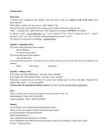
objectRenessansiajastu muusika Mis on renessanss? Mõiste `'renessanss" tuleneb sõnast `'taassünd'' See sõna võeti kasutusele Itaalias, 16. sajandil Renessanss tähistas tagasipöördumist See ajastu hõlmab ajavahemikku 14.- 16. sajand Ilmalik muusika Ilmalik muusika esines keskajal peamiselt rahvalauluna Jäi palju kauemaks ajaks suuliseks kui kirikumuusika Esimeste ilmalike laulude kirjapanijateks olid vagandid Nende luule oli ladinakeelne ja üsna siivutu sisuga Keskaja ja renessansi muusika võrdlus Keskaeg Renessanss muusika seletamine teost saab seostada kindla matemaatika abil, sest see, mis autoriga on õige, on ka ilus ilmalikud zanrid määravad anonüümne looming kunstmuusika stiili kirikumuusika kooskõladeks tertsid ja sekstid kooskõladeks on kvindid, partiid komponeeritakse kvardid, oktavid korraga partiid komponeeritakse hää
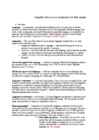
sensations of tension and relaxation you are feeling. Repeat with all of your muscle groups: arms, shoulders, chest, abdomen, back, hips, thighs, lower legs and feet. At first, it may take about 20 minutes altogether. Contract and relax one muscle group at a time for a few minutes each throughout the day. With practice, you'll be able to do all groups in about five minutes. 3. Resting Eye Muscles: 1) This will reduce strain caused by looking constantly at the same object [E.g. computer terminal]. Give your eyes a rest from your surroundings by looking away for a few moments. Looking out the window or away from your computer and/or normal surroundings can ease & relax strained eyes. 2) Palming is an activity you can do to relax your eyes periodically throughout the day. 1. Cover your closed eyes with your hands, so that the palms are over (but not touching) your eyelids. Your fingers should overlap above your nose on your forehead; 2
Morning Afternoon Evening 1 Sunday Arrivals Arrivals 19.00 First meeting 6 July Making name plates Some meeting games 2 Monday 9.00 Breakfast 12.30 Dinner 18.00.Free time 7 July 10.30. Talking 13.00 Making groups and finding out 19.00 Supper about rules and the youth's expectations 19.30. Filling the feedback then playing 14.45. Making a project logo sheets after the first day some games 15.30 City tour 20.15 Cultural 11.30 Short 16.30 Guest from police station who evening(LIIS LISA SIIA presetation is going to talk about school violence RIIGI/RIIK
DRUGS-your enemy! Drugs-What are they? · Banned by law · Really dangerous and unhealthy · People use them to get high or feel better · Affect our behavior and senses completely · There are natural and chemical drugs What is a drug addiction? · Constant need to have it again and again · Physical addiction · Mental addiction Main reasons to start · Your friends use it · Curiosity-new and interesting · Symbol of independents,rebellious and being an adult · The feeling of being high · Easy to get · Symbol of money and fame What is what? · Ecstasy · Methadone · Meth · Cocaine · Heroin · Crack · Amphetamine · GHB · LSD · Nervines · Cannabis · Glues and varnishes · White Chinese The risky part · Pure or not? · What's in it? · The level of strongness · Making a coctail · Unpredictable · Cool diseases
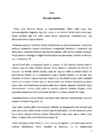
Tabasalu Ühisgümnaasium FOSFOR Referaat Koostaja: Vivian Ruumet 11. A klass Juhendaja: Evelin Maalmeister Tabasalu 2016 Sisukord Sissejuhatus............................................................................................................................................................... 3 Füüsikalised omadused ....................................................................................................................................... 3 Valge fosfor ........................................................................................................................................................... 3 Punane fosfor ...................................................................................................................................................... 4 Must fosfor ...............................
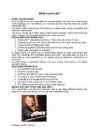
What`s your job? HOTEL RECEPTIONIST Hotel receptionists are responsible for making guests feel welcome, dealing with room bookings and cancellation, and handling general requests made by guests during their stay. You would spend most of your time behind a reception desk, using a computer and telephone switchboard. You would usually work shifts, which could include evenings, nights, weekends and public holidays. Part-time and seasonal work often available. DUTIES AND RESPONSIBILITIES: · Dealing with reservations by phone, e-mail, letter, fax or face-to-face. · Checking guests info and of the hotel, allocating rooms and handing out keys. · Preparing bills and taking payments. · Answering questions about the hotel and the surrounding area. · Dealing with complaints or problems. In larger hotels, you would use a computerised system to make reservations and keep room bookings and availability datails up-to-date. You would work as part a
Juhiabi III 2010 Overview Values Services Market Corporate structure Products Our mission Main competitors About ... Designs products and sales access and security systems. Offers solutions for large and sophisticated systems, as well as for smaller and simpler ones; History of company OÜ ...started its activities in the field of manufacturing and installing of access and security systems in the year 1994. By now ... has developed into a company that is able to offer most different solutions for access and security systems, starting from preparing the initial task to the installation of the equipment. Values Customer Focus Flexible Technical support Quality Profesional emloyees Skills Innovation Services Technical support 24H Security system installation Security system sales Security system production Security system design Market Estonia Latvia Lithuania Russia Main competitors Alarmtec AS Hotronic OÜ Pristis AS Products
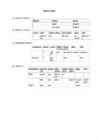
Word order: positive sentences subjects verb(s) object I speak English. I can speak English. Negative sentences subject verbs Indirect object Direct object place time I will not you the story at Tomorro tell school w. Subordinate Clauses conjunction subject verb(s) Indirec Direct place time t object object
Voyage Planning Voyage Planning The key elements of the Voyage Plan are: Appraising all relevant information Planning the intended voyage Executing the plan taking account of prevailing conditions Monitoring the vessel’s progress against the plan continuously Planning The detailed voyage or passage plan should include the following factors: 1) the plotting of the intended route or track of the voyage or passage on appropriate scale charts: the true direction of the planned route or track should be indicated, as well as all areas of danger, existing ships' routeing and reporting systems, vessel traffic services, and any areas where marine environmental protection considerations apply; 2) the main elements to ensure safety of life at sea, safety and efficiency of navigation, and protection of the marine environment during the intended voyage or passage; such elements should include, but not be limited
Estonian University of Life Sciences Institute of Economics and Social Sciences Economic Accounting and Financial Management Report Estate Planning Basics By Attorney Denis Clifford Complied by: Tartu 2010 This book explains, what most people need to know about estate planning. It will give the legal knowledge, what you need to know preparing your estate plan. ,,Estate Planning" essentially means two things. First, it means deciding who gets your property after you die and choosing the wisest legal transfer methods for leaving your property to those you want to receive it. Second, it means makeing some important personal decisions, such as who will provide care for your young children, if you have any, if anything happens to you and the children´s other parent, and who should make medical and financial decisions for you if you someday become incapacitiated and u
TMT0040 Ergonoomika Stretches and exercises in office Ruslan Karpovits 050829 IATM Breaks Why? We're not designed to stay in one position all day long. Taking regular breaks to stretch major muscle groups can help reduce injury, muscular tension and stiffness. When? At least once per hour, but more frequently if possible. If you are doing data entry, you should take a 5minute break for every 30 continuous data entry minutes spent on the computer. Benefits of stretching Stretching increases flexibility. Flexible muscles can improve your daily performance. Tasks such as lifting packages, bending to tie your shoes or hurrying to catch a bus become easier and less tiring. Stretching improves range of motion of your joints. Good range of motion keeps you in better balance, which will help keep you mobile and less prone to injury from falls --
Basic idea around this framework: Extensible - people can build on it Overview 1. Utilities - {static constructors,functional - {predicates, transform}} 2. Objects {equal, coalesce, ComparisonChain} 3. Immutable - {why, how, collections} Utilities - static constructors Create a list of 2 elements Utilities - functional - predicates Apply predicates on collections/iterables Functional language equivalent Utilities - functional - transform Create a transformed view of a collection Object - {equals, coalesce} Equals (null safe) Coalesce Objects.firstNonNull(obj, default) Object - ComparisonChain CompareTo method: Immutable - why Why? · + Your life is easy (no trust problems) · + Free thread safety · + Can be used as a constant · + Uses less memory · - Rejects null values Compared to Collections.unmodifiable? · - overhead · - unsafe · - verbose Immutable - how Create a set of elements ImmutableSet.of("a", "b", "c", "a", "d", "b") Using a builder
Pronouns By: Anneli Võikar Pronouns are small words that take the place of a noun. We can use a pronoun instead of a noun. Pronouns are words like: he, you, ours, themselves, some, each... If we didn't have pronouns, we would have to repeat a lot of nouns. Types of pronouns Personal pronouns Reflexive pronouns Demonstrative pronouns Interrogative pronouns Indefinite pronouns Relative pronouns Possesive pronouns Reciprocal pronouns Pronoun case Personal pronouns Personal pronouns represent specific people or things. We use them depending on: number person gender Case Singular: subject- I, you, he, she, it ; object-me, you, him, her, it. Plural: subject-we, you, they ; object-us, you, them. Examples: 1) Do you like coffee? (subject) 2) John loves you. (object) Reflexive pronouns We use a reflexive pronoun when we want to refer back to the subject of the sentence or clause. Reflexive pronouns end in "-self" (singular) or "- selves" (plural). singular : myself
PRONOUNS Object form Possessive Subject form Possessive Reflexive Pronouns Osastav asesõna Omastav Nimetav asesõna Omastav Enesekohased asesõnad Keda? Asesõna + nimisõna Kes? Nimisõna + verb+asesõna Mida? Kelle? Mis
finish, forgive, give up, imagine (ette kujutama), involve (sisaldama), mention (mainima), mind, miss, postpone (edasi lükkama), practise, put off, recall, resent, risk, suggest, understand 7.2 Verbs and phrases followed by the infinitive without ´to´ You must answer all the questions. Here are some common verbs/phrases which are followed by the infinitive without to: Can, could, may, might, must, need, must, need, had better, would rather 7.3 Verbs followed by an object + the infinitive without ´to´ She made me do it. ( sundima ) Here are some common verbs which are followed by an object and the infinitive without to: Let, make, know, hear, feel, help. Mum won´t let me go to the beach today. I have never known him be so rude (jäme). I heard her sing in New York. Can you feel his heart beat? Would you help me put my bag in the overhead locker? 7.4 Common verbs followed by an infinitive with ´to´ I can´t afford to buy a new overcoat.
BUSINESS PLAN MP CANNED FOOD LIMITED 2018 Business and owner details Business name MP CANNED FOOD LIMITED Owner(s) name MARTIN PÕLD Business address and postcode 12 CARLISLE STREET LEICESTER LE3 6AF Business telephone number +447726779223 Business email address [email protected] Home address and postcode (if different from the above) Executive summary 1.1 Business summary: My business idea is simple: MP CANNED FOOD LIMITED is importing canned food (meat products and ready meals) from Estonia to the United Kingdom. Unique products like "Wild Boar In Its Own Juice", "Elk In Its Own Juice" and "Venison In Its Own Juice" are hard to find in the United Kingdom. We are selling Rannarootsi and Frank Pott brands and sell them online, http://www.mpwildgame.co.uk Future plans are to start trading also in Leicester Market in November/December as a Market Stall, supplying deli shops (including North European and International), wholesalers and supermarkets (including Tesc
Ohtlike ainete omadused võivad põhjustada, kas iseseisvalt või reageerides teiste ainetega kahjustusi inimestele, keskkonnale või varale. Seetõttu on nende veol väga tähtis vältida vigu. Väike eksimus võib maksta terve varanduse kui näiteks laev koos kaubaga põhja läheb. Selleks, et ohtu minimaliseerida on loodud erinevad nõuded ja seadused, mida järgides on võimalik ohtlikke kaupu vedada väiksema riskiga. IMDG koodeks on rahvusvaheline eeskiri, mis paneb paika ohtlike kaupade või materjalide ohutu veo meritsi. Seda peavad järgima kõik riigid, kes on liitunud konventsiooniga SOLAS (Safety of Life at Sea), mis on rahvusvaheline kokkulepe inimelude ohutusest merel. Samuti on see kohustuslik MARPOL (Prevention of Pollution from Ships) 73/78 liitujatele, mis on 1973. aasta rahvusvaheline konventsioon merereostuse vältimisest, mis on põhjustatud laevade poolt ja selle 1978. aasta protokoll. [1], [2] Rahvusvahelist ohtlike kaupade mereveo eeskirja uuendatakse iga kahe
I live in Tallinn. I do not live in Tallinn. I never watch soap operas. INTERROGATIVE sentences end with a question mark ( ? ) : Do you live in Tallinn? Why do you never watch soap operas? EXCLAMATORY and IMPERATIVE sentences end with an exclamation mark ( ! ) : What a beautiful day! Do your homework at once! Parts of the Sentence The basic parts of the sentence are: THE SUBJECT (WHO? WHAT?) , THE PREDICATE (does, is doing, has done, etc – action/statement), THE OBJECT (WHO/WHAT is the action/statement directed at?) : Marion (who?) has a boy-friend (who?). She (who?) likes to read books (what?). The earth (what?) is a planet (what?). Besides, there are: THE ATTRIBUTE (WHAT?/WHAT KIND?) and THE ADVERBIAL (WHEN? - adverbial modifier of time/WHERE? – adverbial modifier of place/ HOW? – adverbial modifier of manner) Attributes modify nouns and stand in front of them. Adverbials modify verbs and usually stand behind them:
devices than in studying. · Sundial · Educated at The King's School, Grantham. · In June 1661, he was admitted to Trinity College, Cambridge As a students, we know him because.. · He was the first person who invent the 3 laws of motion · Theory of gravitation · Newtonian fluid, nonNewtonian fluid · Newton's theory of color · He invented the early telescope in 1671 Newtons laws in latin Newton's First Law · An object at rest tends to stay at rest and an object in motion tends to stay in motion unless acted upon by an unbalanced force. Newton's First Law · Newton's First Law is a reason why we have to wear seatbelt http://teachertech.rice.edu/Participants/louviere/ Newton/carandwall.gif Newton's Second Law · Force equals mass times acceleration. F = ma Newton's Second Law · Something very massive (high mass) that's changing
ELT Methodology (FLGR.01.041) 27.12.2012 Home Assignments. I Youtube clips: · A vision of K-12 students I personally think that Estonian learners are also digital learners. They spend more time at the computers or laptops or iPads etc. than read books or move outside. And another thing is that teachers are less capable in using technological appliances. But the latter mentioned fact is an advantage for us teachers as well. It gives us an opportunity to provide our students to experience success. They can help and assist us if we need some technological help. Another thing is that in schools, in classes generally students are not allowed to use their appliances, so it means they have to communicate verbally as well. I think that teachers should be creative to blend so-called digital le
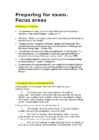
Preparing for exam. Focus areas Defining innovation ● “An innovation is an idea, practice, or object that is perceived as new by an individual or other unit of adoption.” (Rogers 1952) ● CIS survey: “Product innovations must be new to your enterprise, but they do not need to be new to your market”. ● “Companies achieve competitive advantage through acts of innovation. They approach innovation in its broadest sense, including both new technologies and new ways of doing things” – (Porter 1990)
The subject is the starting point of the sentence, the thing we are talking about. The new information about the subject comes at the end of the sentence. When the subject is the person or thing doing the action, then we use an active verb: Bell invented the telephone. When the subject is not doing the action, but something is happening or being done to it, or the action is directed at it, then we use a passive verb. The telephone was invented by Bell. NB! The object of an active sentence becomes the subject of a passive sentence. The doer of the action is indicated by a by phrase. When the doer of the action is not important, the ’by phrase’ is omitted: Active: Someone locks the office every evening. Passive: The office is locked every evening. Tenses in the Passive Voice A passive verb is the verb be in the right tense + a Past Participle (PP) • Present Simple: am/are/is + PP
adjective + preposition omadussõna + eessõna proud of, good at, married to adverb particle Some verbs are followed by adverb particles. Examples are: put on, take off, give away, bring up, call in. Sometimes the particle is detached from the verb and put after the object. •He took his boots off. •They called the doctor in. apposition a grammatical construction in which two usually adjacent nouns having the same referent stand in the same syntactical relation to the rest of a sentence (as the poet and Burns in “a biography of the poet Burns”) back-reference In grammatical analysis, the term reference is often used to state a relationship of identity which exists between grammatical units, e.g. a pronoun 'refers' to a noun or noun phrase
As we age, our metabolism decreases, and so we need extra physical activity just to maintain our weight. This is why most people put on weight as they age, even when they stick to the same diet that they have always had. Build and Tone Muscles: Exercise helps to build strong muscles and bones through both cardiovascular and strength training. Strength training is any form of exercise that requires muscle resistance, so whether you're using your own body weight or an external object, if your involving your body in motion that requires some resistance (e.g. push-ups), you are strength training. Why do we need to develop muscles anyway? Muscles help to build metabolism, and as you grow older, you'll really need an increased metabolic rate to maintain your weight. Also, muscles help to prevent diseases, and improve balance. Ladies, don't think building muscles means you have to look like a body builder. You can maintain a healthy amount of muscle mass.
2. Ask Jack. He'll raining. tell you what to do. 5) Try to and try -ing (also just 5) want, ask, help, would like, try) Example: 1. I was very tired. expect, beg, mean, would prefer. I tried to keep my eyed open, but (verb + to or verb + object + to) I couldn't. 2. Try pressing the Example: 1. We expected to be late. green button. 3. These cakes are 2. We expected Dan to be late. delicious. You should try one. 6) tell, remind, force, encourage, 6) Need to, need -ing Example: teach, enable, order, warn, invite,
Adjective Endings 54 Kinds of Adjectives 58 Comparison of Adjectives 65 13 Sentences 139 What is a Sentence? 139 6 Determiners 71 Kinds of Sentences 140 The Imperative 141 The Articles 71 The Subject and the Object 143 Demonstrative Determiners 73 Direct and Indirect Objects 144 Interrogative Determiners 74 Positive and Negative Sentences146 Possessive Determiners 75 Questions 147 7 Verbs and Tenses 79 14 Punctuation 150 The Simple Present Tense 80 Period 150 Am, Is and Are 83 Comma 151
Writing letters Main rules !!!Always write something on the "Subject" line (university emails: e.g. name or code of the course, then issue, topic etc) If the matter is urgent, you may write so on the "Subject" line Start and end your email properly (also making sure the other person knows who you are) "you" is spelled with a capital letter only at the beginning of a sentence, NEVER in the middle In official emails do not abbreviate (e.g., "I am" instead of "I'm", "do not" instead of "don't", "cannot" instead of "can't" etc). Also, do not use colloquial expressions such as "fyi" etc. Pay attention to punctuation and spelling use spell check. Specifics beginning a letter If you don't know the name of the recipient: Dear Sir/Madam, To whom it may concern, If you know the name of the recipient: Dear Mr/Ms Jones, If you know the name and it's informal (or you have been writing emails to each other back and forth quite a lot already):
It’s a reasonably cheap restaurant and the food is extremely good. I’m terribly sorry. I didn’t want to hurt you. Maria learns languages incredibly quickly. 3. before a Past Participle (injured/organised/written etc.): Two people were seriously injured in the accident. The meeting was very badly organised. Adverbs of Place (where?) 1. Usually the verb and the adverb of place go together: go home live in a city If the verb has an object, the adverb of place comes after the verb + object: take somebody home meet a friend in the street 4 Adverbs of Time (when? /how often? /how long?) normally go after adverbs of place: place time Tom walks to work every morning. She has been in Canada since April. We arrived at the airport early.
Essee Humanitaarlogistika Teema, mida käsitlema hakkan, on humanitaarlogistika. Valisin antud teema, kuna humanitaarlogistikast räägitakse väga vähe, samas on see valdkond ülimalt olulise tähendusega. Samuti sooviksin infot selle kohta, kuidas toimub humanitaarabi kohaletoimetamine ning planeerimine katastroofipiirkondadesse. Humanitaarlogistika all mõeldakse hädaabi kohaletoimetamise planeerimisprotsessi, teostusvõime haldamist, abisaadetiste voogude kuluefektiivset transportimist, käsitlemist ja hoiustamist ning informatsiooni otstarbekat levitamist algallikast abivajajateni, mille abil leevendatakse abivajajate valu ja kannatusi. Eesmärgiks on tagada katastroofipiirkonnas planeerimine, valmidus, varustamine, veod ja ladustamine. [1] Jarrod Goetzel ütleb, et humanismi aluseks on arusaam, et kõik inimesed väärivad austust ja väärikust ning neid tuleks sellistena k
(I love this place). A verb expresses an action, process or a state. (I love this place). An adjective describes a noun. (This place is lovely). 2) Distribution test → Takes the context in which the word occurs in, into consideration. Also the whereabouts of the word in a sentence For example: Kim is an engine driver. → Engine could mean either happy or a mechanical object. Kim seems engine 3) A formal test → With nouns we can test if it contains morphemes which makes word a noun. For example: Noun can have a plural ending s Noun can have a possessive form. Boys’ Nouns usually go with determiners: an apple, a ball, the red car We can determine an adjective if it has a degree of comparison. For
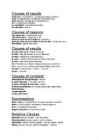
In spite of/despite + nimisõna/-ing vorm In spite of/despite the fact that + clause However/nevertheless (koma kasutatakse alati peale sõna) While/whereas Yet (formal)/still On the other hand Exclamations What + a/an (+ omadussõna) + ainsuses loendatav nimisõna What (+ omadussõna) + loendamatu nimisõna/mitmus How + omadussõna/määrsõna Negative question (+ exclamation mark) Relative Clauses Who/what (people) subject - can't be omitted Who/whom/that (people) object - can be omitted Which/that (objects, animals) subject - can't be, object - can be Whose (people, animals, objects) possession - can't be Clauses of manner If/as though (räägime, kuidas keegi näeb välja, käitub jne) If/as though + past tense (ebareaalne situatsioon) Linking words Positive additions - and, both .. and, beside (this/that), too, moreover, what is more, in addition (to), also, as well as (this/that), Furthermore etc. Negative additions - neither .. nor, nor, neither, either
Kristofer Seppel et al. International Conference on Traffic & Transport Psychology. Tartu, University of Life Sciences, Language Centre, 2015. The articles were about person's driving reflexes, based on research of driver reaction time. The main object of this game was to find out your reflexes on the road to reaveal how 'old' you are between 18 and 90 years old. While the basic principles generalize to estimating other reaction times, the exact numbers do not. Each type of reaction time has its own pecularities that must be examined. For example, reaction time for a shooter who is tracking a target might be 0.4 second, but even this would be a function of trigger pull weight.
What is expected of a graduate of the 21st century and how does the university play a role in contributing to a succesful outcome? Kaisa Kamenik In Mike Nichols 1967 cult film „The Graduate“, Dustin Hoffman character Benjamin Braddock, who has just graduated from college, is facing basically same questions as posed in the title of this essay. Everyone is asking what is he going to do with his life now, but he is very uncomfortable aswering them and at that point he doesn’t care as well. Being a third year history student in University of Tartu, I am wondering over the same questions and find myself often thinking what is expected of me after graduating and how has university played a role in my development for almost three years now. When asked what is the main purpose of university, most people would say that it is preparing students for different proffessions, which would later be the driving force of the country.
 annaabi.ee