Leidsid 33 sarnast õppematerjali, mis on seotud failiga "Artikli THE kasutamine". Need materjalid aitavad sul teemat sügavamalt mõista.
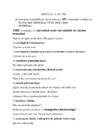
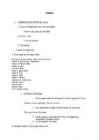
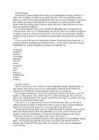
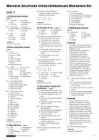
month, artiklit, apple, children, father, night, noon, foot, year, mainitud, there, yellow, ilmakaartest, west, kindlast, older, sister, plays, omadussõna, tenth, interesting, lesson, merede, thames, baltic, teatrite, kinode, hotellide, palace, mitmuses, perekonnanimed, greens, invented, telephone, morning, evening, afternoon, country, left, cinemaARTICLES- A, AN, THE. A- kasutatakse kaashäälikuga algava sõna ees. AN- kasutatakse reeglina siis, kui sõna algab täishäälikuga või kui hääldus algab täishäälikuga. THE- kasutatakse 1) kui antud eset või olendit on varem mainitud There is an apple on the table. The apple is yellow. 2) kui räägitakse ilmakaartest Haapsalu is in the west. 3) kui räägitakse kindlast ja teadaolevast olendist, esemest või kohast Children are in the park. 4) muusikainstrumentide puhul My older sister plays the quitar. 5) järgarvude ning omadussõna ülivõrde puhul October is the tenth month. What is the most interesting lesson for you? 6) mõnede pärisnimedega jõgede, merede ja ookeanide nimed- the Thames, the Baltic Sea teatrite, kinode ja hotellide nimed- the Palace
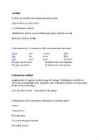
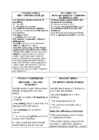
Artikkel Artikkel on abisõna, mis kuulub nimisõna juurde. Inglise keeles on kaks artiklit: 1) umbmäärane artikkel umbmäärane artikkel on a, täishäälikuga algava nimisõna ees an 2) Määrav artikkel on the Umbmäärase artikli puudumine võib muuta nimisõna tähendust wood puit a wood mets fire tuli a fire lõke iron raud a iron triikraud He gave me the book. Ta andis mulle selle raamatu. He gave me a book
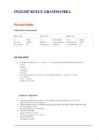
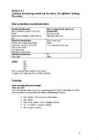
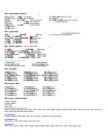
Tingimuslaused 16 2 Ajavormid Tense vorms Lihtolevik The present simple Korduv, harjumuspärane tegevus. Every day, twice a week, usually, sometimes, often, always. 1. pv (-s) do/does + 1. pv I get up at 7 every day. He always works hard. What time do you go to school? Lihtminevik The past simple Minevikus toimunud tegevus. Yesterday, last week, two das ago, last year, in 1999. 2. pv / -ed did + 1. pv I got up at nine last Saturday. Yesterday he worked much. What time did you go to school yesterday? Lihttulevik The future simple Tulevikus toimuv tegevus, mis ei sõltu meie tahtest või mille suhtes teeme otsuse kõnelemise momendil. Next week, tomorrow, in two years time, in 2020. will + 1. pv (will not = won't) Maria will be thirteen next year. Maybe I won't go to the party tomorrow, I'm too tired. Will you help me with my homework tonight?
..........................16 2 Ajavormid Tense vorms Lihtolevik The present simple Korduv, harjumuspärane tegevus. Every day, twice a week, usually, sometimes, often, always. 1. pv (-s) do/does + 1. pv I get up at 7 every day. He always works hard. What time do you go to school? Lihtminevik The past simple Minevikus toimunud tegevus. Yesterday, last week, two das ago, last year, in 1999. 2. pv / -ed did + 1. pv I got up at nine last Saturday. Yesterday he worked much. What time did you go to school yesterday? Lihttulevik The future simple Tulevikus toimuv tegevus, mis ei sõltu meie tahtest või mille suhtes teeme otsuse kõnelemise momendil. Next week, tomorrow, in two years time, in 2020. will + 1. pv (will not = won't) Maria will be thirteen next year. Maybe I won't go to the party tomorrow, I'm too tired. Will you help me with my homework tonight?
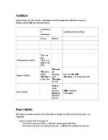
Lihtolevik väljendab: · Antud momendil toimuvat tegevust, mis ei väljenda kestvat aega, näiteks see, hear, know. I see that man who you are pointing at. · Üldist, kogu aeg toimuvat või korduvat tegevust, pole oluline, kas tegevus toimub rääkimise hetkel. Teachers teach in schools. He usually goes to gym on Monday. · Tegevust mingil ajal. I go to school at 8 o´clock. You have to pay taxes once a month. · Kõigile tuntud fakte. Life passes by quickly. Present Continuous Kestva oleviku moodustamine Jaatav vorm Eitav vorm Küsiv vorm I am speaking I am not speaking Am I speaking? He/she/it is going He/she/it is not going Is he/she/it going?
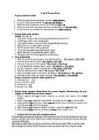
Pane tähele! Me saame kasutada mitmuses oleva loendatava sõnaga ka artikli asemel sõna some, mis väljendab: some=a number of/a few/a pair of I have seen some good films. Ma olen näinud paari head filmi. Some friends of yours are asking about you. Mõned sinu sõbrad küsivad sinu järgi. some=mõned, mitte kõik Some teachers are children`s favorite. Mõned õpetajad on laste lemmikud. 1. Umbmäärase artikli kasutamine · Umbmäärast artiklit kasutatakse asja või olendi esmakordsel mainimisel. Tihti kasutatakse sel juhul vorme there is, this is. There is a dog in our garden. Meie aias on (üks) koer. This is a lion. See on lõvi. · Umbmäärane artikkel näitab eset või olendit teiste seas. Give me a paper! Anna mulle (üks) paber!(ükskõik missugune paber) · Umbmäärase artikliga saab ka üldistada. A lion is dangerous. (Iga) Lõvi on ohtlik.
Artikkel · UMBMÄÄRANE ARTIKKEL A/AN: 1. Asja või olendi mainimine esmakordselt There is an apple on the table 2. A/AN -> one Give me a book 3. Üldistades A tiger is dangerous 4. Elukutsete ja rahvuste puhul Mrs black is an actress. She is an American. I have A sore throat / headache I have A temperature I have A cold Go for A walk Have A good time Have A look Take A bath Take A picture Speak in A loud voice Half AN hour One A year What A pity! As A matter of fact o MÄÄRAV ARTIKKEL 1
Tower, the Simpsons A – AN - THE Time Expressions • we don't use an article: at night, at noon, every We don't usually use an article week, every day, every night, last morning, last • to talk about things in general. • before the names of countries, cities, towns and villages. week, all night, all day, tomorrow, yesterday,... • with plural nouns and uncountable nouns when talking about them • use the with in the morning, in the afternoon, generally
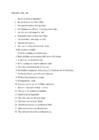
Fill in IN, ON, AT: 1. Dave was born in September. 2. He was born on the 16th of May 3. We agreed to meet at half past four. 4. On Christmas we all went to see our grandmother. 5. Jennifer came to England in 1992. 6. It started to snow on New Year's Day. 7. The First World War ended in 1918. 8. She arrived in spring. 9. We met on Sunday afternoon last week. 10. Do you drive at night? 11. It's Bruce's birthday next Wednesday. 12. Dick and Mary got married in 1993 on the 10th of July. 13. At midnight we heard footsteps. 14. In the morning we went to school as usual. 15. This castle was built in the 15th century. 16. My brother is taking his driving test at 2 o'clock on the 4th of October. 17. Mr Froster doesn't go to office on Saturdays. 18. We'll see Ken tomorrow evening. 19. It happened last week. 20. Can you come to see me on Friday morning?
2. On your birthdayyours friends can give you the bumps . 3. When you give somebody a present, you need to wrap it up. 4. When you put bowls,cups, forks and knives on the table, you lay the table . 5. Of you want to say something to many people, you make a speech. 2. Kirjuta lünka sobiv eessõna. Vali siit : in / on / at 1. Why didn´t we go to the swimming pool on Tuesday afternoon ? 2. Little Peggy didn´t sleep well at night. 3. The pupils of class 6 went on a class trip on Monday morning. 4. Please come to my place in the evening. 5. All the animals had a meeting at noon. 6. They had a big garden party on Saturday night . 7. In the afternoon the headmaster made a speech. 8. My parents left for Helsinki on Thursday afternoon . 3. Vasta küsimustele. 1. Will you invite all your friends to yuor birthday party ? No, I won´t / Yes, I will 2. Did you sleep well last night
In London you'll also find Indonesian, Mexican, Greek... Cynics will say that this is because English have no "cuisine" themselves, but this is not quite the true. Vocabulary: to criticize - tasteless overcooked - ingredient - to invent - sauces - to disguise - spice herb - delicious - disappointing - to lend cuisine British Youth (2) Most 18 and 19 year-olds in Britain are quite independent people. English people say that children grow up more quickly now. Relationships within the British family are different now. Children have more freedom to make their own decisions. For example, children aged 13 may be employed part time in Great Britain. Age 15 is legally a "young person" not a "child". Age 16 is a school leaving age. They can leave home, drive a moped, marry with "parents' consent" buy beer. Age 17 can drive a car. Age 18 can vote, get married, drink in pubs.
4Use a capital letter for the first letter in a sentence: The dog is barking. Come here! 4Always use a capital letter for the word I : I am eight years old. Tom and I are good friends. 4Use a capital letter for the names of people: Alice, Tom, James, Kim, Snow White 4Use a capital letter for the names of places: National Museum, Bronx Zoo, London, Sacramento 4Use a capital letter for festivals, holidays, days of the week, months of the year: New Year's Day, Christmas, Labor Day, Mother's Day, Sunday, Monday, Friday, January, May, July, October Exercise 1 Circle the letters that should be CAPITALS. Then write the correct letter in the space above them. 1 peter and i are good friends. we are going to chicago during our summer 2 vacation. 3 there is an interesting football game on sunday. 4 jason lives on thomson avenue.
gave me a piece of advice". Some nouns can be both countable and uncountable. For example, we say "coffee" meaning the product, but we say "a coffee" when asking for one cup of coffee. 3. Rule:You can use 'the' to make general things specific. You can use 'the' with any type of noun - plural or singular, countable or uncountable. "Please pass me a pen" - any pen. "Please pass me the pen" - the one that we can both see. "Children grow up quickly" - children in general. "The children I know grow up quickly" - not all children, just the ones I know. "Poetry can be beautiful"- poetry in general. "The poetry of Hopkins is beautiful" - I'm only talking about the poetry Hopkins wrote. 4. Rule:Rivers, mountain ranges, seas, oceans and geographic areas all use 'the'. For example, "The Thames", "The Alps", "The Atlantic Ocean", "The Middle East". Unique things have 'the'. For example, "the sun", "the moon".
at the bottom of the page on my right in a coffee bar at the end of the street on my way to college in the middle of the room at my left side in the corner of the room 1 KUHU? WHERE TO? KUS? WHERE? KUST? WHERE FROM? When do you go to work? Father is at work now. He was dismissed from work. They went to the theatre. I met them at the theatre. I met them on my way from the cinema. She returned to London. She lives in London. She returned from Oxford. Tom dived into the water. Tom is in the water. Tom climbed out of the water. It fell on (to) the floor
Thus, in most general terms, a and an cannot be used with countable nouns in the plural and with uncountable nouns. Countable nouns are names of the things you can count (one elephant, two elephants, three elephants, etc). Uncountable nouns are names of the things you cannot normally count (love, air, philosophy, etc). The can usually be used when we mean this. The Indefinite Article – a/an (= one!) can only be used with singular countable nouns. a child, a book, an elephant, an apple On the other hand, singular countable nouns cannot be used without any determiner. Determiners are both articles (a/an and the) and different pronouns (e.g., one, another, each, every, this, that; personal pronouns: my, your, his, her, its, our, their). Only one determiner can be used at a time: My house was deserted. Or: The house was deserted. Another problem is the pollution that the factory causes to the environment
N: He had not been speaking. · sometimes interchangeable Q: Had he been with past perfect simple speaking? · putting emphasis on the duration or course of an action Future Simple A: He will speak. · action in the future that in a year, N: He will not speak. cannot be influenced next ..., Q: Will he speak? tomorrow · spontaneous decision assumption: I · assumption with regard to the think, probably, future perhaps A: He will be speaking
his uniform. ______________________________ 2 She took her dog because it needed/was needing a walk. ______________________________ 3 She wore her sunglasses because the sun was shining/shone. ______________________________ 4 I failed/was failing my exam twice last year. ______________________________ 5 They watched/were watching TV when they heard a crash. ______________________________ 6 Last year we went/were going camping and we had a great time. ______________________________ 7 My mum was taking/took a picture when she dropped the camera. ______________________________ 8 Hippies lived/were living in the 1960s and 1970s
.................................................... 8 Prepositional Phrases ......................................................................................... 8 Prepositions of Time – in, on & at • in is used with centuries, decades, years, seasons and months, parts of the day, periods of time • on is used with dates, special days, days of week, day of week + part of day, day + of ... • at is used with holidays, exact time, meals and with night in on at • the 20th century • the 29th of November • Christmas / Easter • the Middle ages /August the first • six o’clock / 7.30 • the 1980s • Christmas Day / New • midday / noon / • 2006 Year’s Eve / Easter midnight • winter / summer Sunday • the weekend /
Mare Jõul, Ülle Kurm, 2009 Kirjastus Studium, 2009 Kõik õigused on kaitstud. Ilma autoriõiguse omaniku eelneva kirjaliku loata pole lubatud ühtki selle töövihiku osa paljundada ei elektroonilisel, mehaanilisel ega muul viisil. Töövihik on kooskõlas 2009. a uuendatud õppekomplektiga I Love English 6. Tartu, 2014 ISBN 978-9949-436-59-0 Kirjastus Studium Riia 15b, Tartu 51010 www.studium.ee Trükitud OÜ Greif trükikojas Lohkva, Luunja vald Tartumaa 62207 --- 3 xxx 1. The Big Apple 1. Write the verbs in the present continuous or the past continuous tense. Do you remember? am is are was were verb -ing 1 Sorry. I ... (write) a report at the moment. I can't come with you. 2 When Peter arrived, his friends ... (play) football. 3 I ... (sleep) when the alarm went off in my sister's room. 4 Dad's mobile phone is switched off because he ... (fly) to Paris. He's on the plane at the moment. 5 I ... (read) an interesting book. It's a collection of memories. 6 Leo was late again
A: 'I'm cold'. A: 'We've run out of milk.' B: 'I'll close the window'. B: 'I know, I'm going to buy some.' 2.Prediction based on opinion: 2.Prediction based on present I think the Conservatives will win the evidence: next election. Look at those boys playing football! 3.A future fact: They're going to break the window. He will be ten next year. 4.Promises / requests / refusal / willingness: I'll help you with your homework. Will you give me a hand? 5.In the same way as the future continuous, but with state verbs: I'll be at the station when you arrive. 'Shall' is used mainly in the forms 'shall I ?' and 'shall we?' in British English. These forms are used when you want to get someone's opinion, especially for offers and suggestions: •Shall I open the window? (=do you want me to open the window). •Where shall we go tonight
misses, wash-washes, mix-mixes, go-goes, do-does. -ies consonant +-y a country countries, a diary- diaries, a boy boys, a dictionary dictionaries, try tries, play-plaies. -ves lõpulistele f, -fe a leaf leaves , a wolf wolves, a knife knives, a life lives Irregular nouns a man men, a woman women, a child children, a person people, a sheep sheep, a tooth feet, a mouse mice, a goose geese Pronouns Personal : Possessive possessive Object adjective: pronouns: pronouns: I my mine I me wait for me You your yours you-you I love you
14. There are a lot of clouds! It ............................................................................ soon.(RAIN) 15. The car ...................................................................................... by Sam.(REPAIR) 16. I ...................................................................................... for my girlfriend for two hours. (WAIT) 17. Since 2003 they ................................................................................ their son every year. (VISIT) 18. The first fast food restaurants ................................................................. in the USA in 1916.(OPEN) 19. The party ...........................................................................................................(START) 20. The grapes ............................................................................................. in California. (GROW) 3.Reported Speech 1. Andrew: "Clean the blue bike!" Andrew ............................................
(NOT We'll start as soon as Mary will arrive.) 32. Before most abstract nouns, we use great, not big. I have great respect for her ideas. (NOT I have big respect for her ideas.) We had great difficulty in understanding him. (NOT We had big difficulty in understanding him.) 33. Don't use the with a superlative when you are not comparing one person or thing with another. Compare: She's the nicest of the three teachers. She's nicest when she's working with small children. This is the best wine I've got. This wine is best when it's three or four years old. 34. Put enough after, not before, adjectives. This soup isn't hot enough. (NOT This soup isn't enough hot.) She's old enough to walk to school by herself. 35. Don't use a structure with that ... after want or would like. My parents want me to go to university. (NOT My parents want that I go to university.) I'd like everybody to leave. (NOT I'd like that everybody leaves.) 36
IT IS 92 THERE IS / ARE 92 EESSÕNA Ajamäärused: eessõnaga ja ilma eessõnata 93 Eessõnad kohamäärustes 94 ARVSÕNA Põhiarvsõnad 95 Järgarvsõnad 95 60 KUUL UULAA & KORD KORDA ORDA ARTIKKEL Inglise keeles on 2 artiklit: 1) umbmäärane artikkel - A või AN 2) määrav artikkel - THE Umbmäärane artikkel - A / AN Esemete või olendite esmamainimisel kasutatakse tavaliselt artiklit A või AN. A kasutatakse kaashäälikuga algava sõna ees. AN kasutatakse reeglina siis, kui sõna algab täishäälikuga või kui hääldus algab täishäälikuga: an apple (üks) õun
34. Are sports days held at your school? 35. What sports events do you watch on TV? 36. Do you read the sports page in a paper? Do you watch/listen to sports news? Could you tell us the latest sports news? 37. Who is the best athlete in your class? 38. Who is your favourite athlete? What do you know about him? 39. What sports events are popular in Estonia? How many Estonian Olympic gold medalists can you name? 40. Do you think it is necessary for children to play sport? Why? 41. Do you know any Estonian people who are known to everyone and liked by all? Are they politicians, writers, scientists, musicians? 42. Can you name some Estonian writers who are famous for their humour? Which of their books have you read? 43. What kind of books do you like to read? 44. When did you last read a poem? 45. Do you enjoy reading poems? http://www.abiks.pri.ee 46
VIISIMRUSES ESINEVAD EESSNAD KUIDAS? by bus (bussiga) by train (rongiga) by plane (lennukiga) on foot (jalgsi) in English (inglise keeles) in a loud voice (valju hlega) in a whisper (sosinal) with difficulty (suure vaevaga) with care (hoolikalt) with his key (vtmega) without delay (viivitamata) AJAMRUSES ESINEVAD EESSNAD MILLAL? IN 1. Pikad ajajrgud (sajandid, aastad, aastaajad, kuud) *in June (juunis) *in spring (kevadel) *in 1991 (1991. aastal) 2. Pevaperioodid (v.a. sel- at night) *in the morning (hommikul) *in the afternoon (prastlunal) *in the evening (htul) AT 1
When they grow up, they play as members of important amateur teams or as a professional in teams competing in football ,,leagues". Professional football is as much a business as a sport. Rugby football was first played in 1823. In rugby every player is allowed to carry the ball. The ball is oval, not round. Each team contains 15 players. The oldest game of football in England is probably the football match which takes place at Ashburn on Shrove Tuesday every year. The game starts in the centre of the town, and the distance between two goals is two miles. The only rule is not to use motorcycles, cars and lorries in the game. In 1958 one team buried the ball. The other team didn't know and ran after them. Later first team took the ball and won. 3) JAMES WATT He was born in the small port of Greenock on the river Clyde in Scotland in 1736. His father was a mathematical-instrument maker and also kept a shop to supply ships with goods for their voyages
Alice Kipling Fleming - Sister of British author Rudyard Kipling who became a well-known psychic, producing automatic writing under the name "Mrs. Holland." Born June 11, 1868, Alice Kipling was privately educated. She went to India at age 16 and married British army officer John Fleming. While in India she wrote a number of poems, and in 1893 initially experimented with automatic writing. After a long illness she returned to England in 1902 and in the following year read the classic study Human Personality and Its Survival of Bodily Death, by F. W. H. Myers. As a result she contacted the secretary of the Society for Psychical Research (SPR), London, regarding her own automatic writing. She was one of the seven principal mediums involved in the famous cross-correspondences cases. Fleming continued to do automatic writing until 1910, when she suffered a nervous breakdown. Early Life
" "I desire you will do no such thing. Lizzy is not a bit better than the others; and I am sure she is not half so handsome as Jane, nor half so good-humoured as Lydia. But you are always giving her the preference." "They have none of them much to recommend them," replied he; "they are all silly and ignorant like other girls; but Lizzy has something more of quickness than her sisters." "Mr. Bennet, how can you abuse your own children in such a way? You take delight in vexing me. You have no compassion for my poor nerves." "You mistake me, my dear. I have a high respect for your nerves. They are my old friends. I have heard you mention them with consideration these last twenty years at least." "Ah, you do not know what I suffer." "But I hope you will get over it, and live to see many young men of four thousand a year come into the neighbourhood."
3 a to have b criticising 2A Value and price page 11 4 It didn't rain on either Tuesday or 4 a playing b to teach 1 1 priceless 6 economic Wednesday. 5 a taking b to take 2 pricey 7 profitable 5 None of the shops are open. 3 worthy 8 valuable 3 1 I advised Mike to get an early night. 6 The food was neither cheap nor 4 financial 9 worthless 2 I agreed to give Jenny a lift into good. 5 costly 10 economical town. 7 There are no easy answers.
Norma Jeane Baker by Aimee Semple McPherson.[1] Although she took a stagename of Marilyn Monroe in 1946, she did not legally change her name until February 23, 1956.[11] Her mother was Gladys Pearl (Monroe) Baker.[12] Her family is believed to have been Anglo-Spanish originally; and possibly related to the Sepulvedas. [13] For many years it was believed Gladys' second husband Martin Edward Mortenson (18971981) was Monroe's father. His name was listed on her birth certificate. [14] Foster homes Mentally unstable and unable to care for Monroe, Gladys placed her with foster parents Albert and Ida Bolender of Hawthorne, California, where she lived until she was seven.[15] In her autobiography My Story, Monroe states she believed Albert was a woman. One day, Gladys announced she bought a house. A few months after they had moved in, Gladys suffered a breakdown
WO for word order, G for grammar or WW for wrong word. Dear Jenny , How are you ? I hope that you're very well. I've got so many to tell you that I don't know where to begin! Visiting Kenya was fantastic so far! The beaches are absolutely wonderfully. The sea is like glass and the white sand is as soft like powder. I've collected loads of shells already and yesterday I have ridden on an elephant. The local people also are very friendly and almost every night we had the opportunity to watch traditional dancing. You'd love africa. The most excited part of the holiday was hot-air baloon safari last week. It was amazing ! we floated quietly above all these teams of wild animals. The scenery absolutely was breathtaking. I've never seen nothing like it before. As soon as I will get back, I'll phone you and tell you all about it. Till then, take care. Love, Fiona TASK 8 Put the verbs in brackets into the Past Simple or the Present Perfect . 1.We ..
of the many that are so abundant in Estonia's folklore. It is the story of a poor girl who falls in love with the son of the village elder, and disguises herself as a choirboy in order to sneak into the castle. But, alas, the lord of the manor's son discovers the deception. He is overcome by jealous rage and orders his men to seal the girl inside the thick stone walls while still alive. Turned into an incarnation of undying love, the White Lady now appears every August, on the night of the full moon, in the Dome Church chapel window. Haapsalu is seven-and-a- quarter centuries old this year, and the townsfolk intend to make it a celebration to remember. The annual dance and light show dedicated to the Lady alone involves over 100 performers - and you'll have several chances to catch it over the four days of the event. Musical shows, dances and contests of strength and skill will be held all over town.
 annaabi.ee