Leidsid 33 sarnast õppematerjali, mis on seotud failiga "Arctic wolf". Need materjalid aitavad sul teemat sügavamalt mõista.
arctic, wolf, than, ears, grey, habitat, north, years, threat, change, polar, weight, fast, prey, mainly, animals, such, retain, body, heat, canadian, islands, alaska, northern, greenland, rarely, encounter, humans, greatest, extreme, weather, recent, difficult, find, caused, decline, numbers, listening, speciesTundra animals Reindeer Reindeer were first domesticated in Norway and northern Asia. When it was seen how valuable they were, they were brought to Alaska in 1887 and later to parts of Canada. These North American reindeer became known as caribou. Although they are called by different names, they are both considered to be a single species. Unlike deer, both the male and female have antlers. The antlers of the male are long, branched and massive, and they are a little flattened at the ends. The antlers of the female are much shorter, simpler and more slender and irregular. Their large, spreading hooves support the animal in snow in the winter and marshy tundra in the
Tundra Tundra is the world's youngest biome. It was formed 10 000 years ago. Located at latitudes 55° to 70° North. Almost all tundras are located in the Northern Hemisphere, encircling arctic desert and extending south to the coniferous forests of the taiga. The ecotone (ecological boundary region) between the tundra and the forest is known as the tree line or timberline. Tundra comes from the Finnish word tunturi, meaning treeless plain. It is noted for its frost-moulded landscapes, extremely low temperatures, little precipitation, poor nutrients, and short growing seasons. Dead organic material functions as a nutrient pool. The two major nutrients are nitrogen and phosphorus
Topic Canada Tallinn English College 2006 1. Introduction If you had to use two words to describe Canada, they might be large and diverse. Canada is the second largest country in the world with a territory of about 10 million square kilometers and it is bordered by three oceans: the Arctic, the Pacific and the Atlantic Oceans. The population of Canada is about 31 million people. About 77% of the people live in cities which lie in a band about 100 miles wide above the border of the United States. The capital of Canada is Ottawa. Other large cities are Montreal, Toronto, Vancouver, Winnipeg and Quebec. 2. Geographical position Canada is a huge country in the continent of North America. It is bordered with the Atlantic
Tallinna Inglise Kolledz Canada. The land of diversity. Tallinn 2006 Canada. If you had to use two words to describe Canada, they might be large and diverse. Canada is the second largest country in the world with a territory of about 10 million square kilometers and it is bordered by three oceans: the Arctic, the Pacific and the Atlantic Oceans. The population of Canada is about 31 million people. About 77% of the people live in cities which lie in a band about 100 miles wide above the border of the United States. The capital of Canada is Ottawa. Other large cities are Montreal, Toronto, Vancouver, Winnipeg and Quebec. Canada has two official languages English and French. It's interesting to know that about 61% of Canadians name English and 24% French their mother tongue
Inuit Culture, Traditions, and History Traditional Inuit way of life was influenced by the harsh climate and stark landscapes of the Arctic tundra from beliefs inspired by stories of the aurora to practicalities like homes made of snow. Inuit invented tools, gear, and methods to help them survive in this environment. Read on to learn more about traditional Inuit ways of life, and how Inuit culture has been changed over the past century. Geography Inuit communities are found in the Arctic, in the Northwest Territories, Labrador and Quebec in Canada, above tree line in Alaska (where people are called the Inupiat and Yupik), and in Russia (where people are called the Yupik people). In some areas, Inuit people are called "Eskimos" however many Inuit find this term offensive. The word "Inuit" means "the people" in the Inuktitut language. Inuit Homes In the tundra, where Inuit communities are found, there are not many building materials. No trees
The tundra is the world's coldest and driest biomes. The average annual temperature is -28° C. Nights can last for weeks when the sun barely rises during some months in the winter, and the temperature can drop to -70° C. During the summer the sun shines almost 24 hours a day. Summer are usually warm. Average summer temperatures range from 3° to 16°C. TaigaTaiga is the Russian word for forest and is the largest biome in the world. It stretches over Eurasia and North America. The taiga is located near the top of the world, just below the tundra biome. The winters in the taiga are very cold with only snowfall. The summers are warm, rainy, and humid. Some of the animals in the taiga hibernate in the winter, some fly south if they can, while some just cooperate with the environment. GrasslandsGrassland biomes can be found in the middle latitudes. They can have either moist continental climates or dry subtropical climates. There
6. Towns, economy, agriculture 7. Climate 8. Animals, plantlife 9. Population 10. Sports 11. Culture 12. History 13. Political system, symbols 14. Conclusion 15. Materials 1. Introduction If you had to use two words to describe Canada, they might be large and diverse. Canada is the second largest country in the world, bordered by three oceans, and across the country, Canadians experience many different landscapes from rolling plains and mountains to the cold tundra of the north. Despite Canada's great size, it is one of the world's most sparsely populated countries. This fact, coupled with the grandeur of the landscape, has been central to the sense of Canadian national identity. 2. Geographical position Canada is the second largest country in the world after Russia. In the Arctic, Canada reaches almost as far north as Greenland. To the south it extends to the same latitude as southern France. The distance from Canada's west coast, the Pacific Ocean, to its
malai karu e. biruang) 3. ASIATIC BLACK BEAR (kaeluskaru) 4. SLOTH BEAR (huulkaru) 5. ANDEAN BEAR (prillkaru) 6. POLAR BEAR 7. BROWN BEAR 8. THE AMERICAN BLACK BEAR (baribal) 1. GIANT PANDA • The giant panda remains the world's most threatened bear species. • A very high risk of extinction (väljasuremine) in the wild. • Despite "the establishment of nearly 60 panda reserves, a ban on logging (metsaraie keeld), and widespread reforestation programmes," habitat destruction and degradation are still the panda's greatest enemies. 2. SUN BEAR • The world's smallest bear species. • We estimate that sun bears have declined by at least 30 percent over the past 30 years and continue to decline at this rate. • Sun bears live mostly in the tropical forests of mainland Southeast Asia. • The two major threats to the species are habitat loss and commercial hunting. 3. ASIATIC BLACK BEAR • Found in forests in every country in
CANADA Canada is a vast country, second largest country of the world after Russia. It stretches from the Atlantic Ocean in the east to the Pacific Ocean in the west and to the Arctic Ocean in the North. Canada Covers most of the northern part of North America and its geography is very diverse. Canada's area is about 10 million square kilometers and its population is 31 000 000. Its capital is Ottowa and other main cities are Toronto, Montreal and Vancouver. Almost 75 % of canadians lives within 300 kilometer of the USA border, because the climate is softer in the South. 89 % of Canada is almost unhabited. Its official languages are English and French, but many other languages are spoken too
written in 1814 by Francis Scott Key. There are 6 time zones. From east to west they are: Eastern Standard Time, which is 5 hours behind Greenwich Time, Central Standard Time, Mountain Standard Time, which is 7 hours behind Greenwich Time, Pacific Standard Time. Alaska and Hawaii have their own time zones: Alaska Standard Time and Hawaii Standard Time. Geographical Position The USA lies in the Northern Hemisphere in North America. It covers a big part of the continent and is also the third largest country in the world. The country consists of 50 states, but two of them lie separately. One of them is Alaska, which is near the Arctic Circle. And the other state is Hawaii, which is a group of island is the Pacific Ocean. The USA shares the border with Canada in the north and Mexico in the south. In the east the coast is washed by the Atlantic Ocean and in the west by the Pacific Ocean
Canada. Canada is a very big country in the continent of North America. It is about 10 million square kilometres and that makes it the second largest country in the world after Russia. Quebec (the province) is six times as big as the UK. Canada borders the Atlantic Ocean, the Pacific Ocean, the Arctic Ocean and the USA. The capital of Canada is Ottawa and other main cities are Toronto, Montreal and Vancouver. It is a very developed country. Montreal is the largest city and it is called the Paris of North America because most of the people there speak French. The population of Canada is 28 million people. It is a very multicultural country. People from many different countries have come to live there. The natives are Eskimos and Indians
....7 10. History..........................................................................................................8 11. Conclusion....................................................................................................9 12. References....................................................................................................10 Introduction I chose finland because there are friendly people and beautiful nature. Finland is bigger than Estonia. There lives over 5 milj. people. Finland capital is Helsingi and there lives about 2 milj. people. Highest top is 1328m. Finland is bordersed with Sweden to the west, Russia to the east and Norway to the north. It is the eight largest city in Europe. Most Finns speak Finnish. The second language is Swedish. Finland is rated the sixth most peaceful country in the World. In Finland there are more than 60000 lakes. Capital: Helsinki
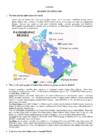
CANADA REVISION QUESTIONS 2010 1. The main physiographic regions of Canada. Canada may be divided into seven physiographic regions: Arctic Lowlands, Cordilleran Region, Interior Plains, Hudson Bay Lowlands, Canadian Shield (Forest Lands), St Lawrence Lowlands and Appalachian Region. Divisions are based on each area's relatively similar physical geography and landforms. Physiographic regionalization is defined here as the process by which regions with relatively homogeneous physical geography are determined 2. Who are the native people of Canada? Into which three groups can they be divided?
Tundra swans Tundra swans ● Whooper swan, Bewick´s swan and mute swan (laululuik, väikeluik, kühmnokk-luik) Whooper swan ● Large white swan (bigger than bewick) ● Lenght – 140 to 165 cm ● Deep honking call and powerfull fliers ● Require large areas to live in ● Adult birds – feathers entirely white, black feet, mostly black bill ● Pens (females) – slightly smaller than cobs (males) ● Immatures – white mixed with some dull grey feathering; bills – black, large dirty-pink patch ● In Estonia first nesting - 1979 Whooper swan Behaviour of whooper swan ● Pair for life, cygnets stay with them all the winter ● Breffered breeding habitat – wetlands ● Both build the nest ● Male will stand guard over the nest while female incubates ● 4 to 7 eggs Influence of whooper swan ● Much admired in Europe
The Inuits came to Canada from Asia crossing the Bering land bridge. The earliest discoveries in Canada were made by the Vikings. In AD 985 Vikings sailing from Iceland to Greenland were blown westward off their course and the Vikings sighted the coast of Labrador peninsula. The report of forested areas encouraged further exploration because the colonies in Greenland which belonged to the Vikings lacked lumber. In AD 1000 Leif Ericson became the first European to land in North America. The first colony was established what was described as Vinland by the Vikings. It was located on the northernmost tip of todays Newfoundland. There has also been a theory that the Vikings penetrated Hudson Bay and reached the Great Lakes region but recent investigations have cast serious doubt on it. The Greenland colony died out during the 15th century and the Viking adventures in Canada must have come to an end long before that time. The Colony of New France
The Mountain Lion cougar (Puma concolor), also puma, cougar, or panther, is a member of the Felidae family, native to the Americas. This large, solitary cat has the greatest range of any wild land mammal in the Western Hemisphere, extending from Yukon in Canada to the southern Andes of South America. An adaptable species, the cougar is found in every major North American habitat. The Mountain lions of Yellowstone region were significantly reduced by predator control measures during the early 1900s. It is reported that 121 lions were removed from the park between the years 1904 and 1925. Then, the remaining population was estimated to be 12 individuals. Mountain lions apparently existed at very low numbers between 1925 and 1940. They maintain a secretive profile in the Yellowstone region. Although the cougar population
Tallinn English College Report of Canada 8a Teacher: Merike Sisask Composer: Kärt Kalvet 2010 Canada, Kärt Kalvet 8a Canada General Information Canada is in North America. It's area is 9220970 sq km. Canada's population is 313.612.000 people. Canada is divided into 10 provinces and 3 territories. The capital of Canada is Ottawa. Canada has constitutional monarchy. The head of state in Canada's government is the Queen of England. There are two main languages in Canada: English and French. Canada's curreny is Canadian dollar (1 dollar=100 cents[Can$]). The highest peak of Canada is Mount Logan, 5959 metres. The lowest point is sea level
Geography Canada is the world's second largest country in total area after Russia , since it covers nearly 10 million square kilometres, but is one of the most sparsely populated, with only about 34 million inhabitants. The majority of them live within 300 kilometres of Canada's southern border. Much of the rest of Canada is uninhabited or thinly populated, because the country has a rugged terrain and severe climate. Canada extends across the continent of North America, from Newfoundland on the Atlantic coast to British Columbia on the Pacific coast and northward into the Arctic Ocean. Canada shares land borders with the United States to the south and north-west. Canada is a land of great variety. Towering mountains, crystal-clear lakes, and lush, green forests make Canada's far west a beautiful region. Farther inland, fields of wheat and other grains cover Canada's vast prairies
2. Where is prairie, pampas, steppe, and veldt situated? EurasiaSteppe, North America-Prairie, South AmericaPampa, South AfricaVeldt 3. Using the climate diagram describe the climate of the region. Temperate deciduous forest -Well-defined seasons with a distinct winter characterize this forest biome. Moderate climate and a growing season of 140-200 days during 4-6 frost-free months distinguish temperate forests. Temperature varies from -15° C to 25° C. Precipitation (750-1500 mm) is distributed evenly throughout the year
The Iberians brought their metal working skills and the first real civilization to Britain in the 3rd millennium B.C. And were then overrun by the various Celtic tribes that begun in the 8th century B.C. The Celts introduced the tribal organization and an early form of agriculture before they were forced westwards to Cornwall, where the Celtic language still exists in different forms, by the Roman invasion begun in 43. AD. The Romans ruled Britain for over two hundred years and left behind three things of importance: their roads, the sights of important cities notably London, and the seeds of Christianity. The Latin way of life villas, arts, language and political organization all vanished, however after the invasions from Northern Europe by the Anglo-Saxons and Jutes from the 5th century onwards. These pagan peoples' were easily converted to Christianity and the preachers from Rome brought with them learning and civilization.
Canada is the second largest country in the world. Situated to the north of the United States, in North America, it has both English and French as its official languages. Even though its area is bigger than that of the United States, its population is only about 11% of that of the USA some 35 million. Because of that, Canada has one of the lowest population densities in the world. The capital of Canada is Ottawa the name of whose comes from the old Algonquin language, with the original word meaning `to trade'. Due to the country's huge size and position, it is very diverse. It is bordered by the Pacific Ocean to the west, the Atlantic to the east, and the Arctic to the north
Territory). The Australian people are culturally the same as the Anglo Americans. There also live aborigines. Aborigines are the ancestors of the people. Like the US and Canada, Australia was an English speaking colony of Great Britain. Today Australia is a modern developed country with a diversified economy. Australia is an island continent of 7.7 million square kilometres, which makes it a little smaller than the USA. Located in south of Asia, between The Pacific and Indian Oceans, Australia is the World's driest continent. Although large areas of the centre are desert, Australia has a wide range of climate from tropical in the north to temperate in the south east, where it frequently snows in winter. Geographical position The coasts of Australia are surrounded by the Pacific Ocean, the Indian Ocean and the Southern Ocean.
It was built in the early 1900s just to be the capital. The official language is English and the official name of Australia is the Commonwealth of Australia. Australia is located on the Southern Hemisphere (because of that Australia is also called "A land down under"). 2 . Geographical position Australia is an island continent and it is located between the Indian and South Pacific oceans south east of Asia. From the north it is bordered by the Timor Sea and the Torres Strait. From the east by the Coral Sea and the Tasman Sea. Australia's coastline is about 37,000 km long. The Great Australian Bight washes the southern coast. The Gulf of Carpenteria and the Cape York Peninsula surround it in the south. 3. Relief Australia is the smallest continent in the world It is often called the island continent because is too big for an island but rather small for a continent
......................9 Vital waterways for people and wildlife..............................................................................................10 2 Introduction If you were asked to show on a world map the regions with the most biodiversity, your finger would probably end up pointing at the Amazon, the Congo Basin or the island of Borneo. But I chose New Guinea, an island that represents no more than 1% of the world's landmass, an array of extraordinary animals and plants have also flourished, such as tree kangaroos and birds of paradise. Close to 10% of the world's vertebrates are concentrated here, while 7% of the world's higher (vascular) plants grow on the island's productive soils. 3 Geography Papua New Guinea consists of over 600 islands and lies in the middle of the long chain of islands stretching from mainland South-East Asia
o Animal products - Most valuable animal products of the cold forests and mountains are animal pelts for clothing and beaver for hats. o Grazing & agriculture - Upland forests are often cleared for grazing and lowland forests for agriculture. o Habitation Population is not dense, but many people live there. Temperate forests Temperate forests can be found on both hemispheres on latitude approximately 25 to 50 in regions of northeastern Asia, North America, western and central Europe. They can be categorized as deciduous as well as evergreen. These forests are include: o Temperate deciduous forest o Temperate broadleaf and mixed forests o Temperate coniferous forest o Temperate rainforest They have all four seasons - summer, spring, winter and fall. Soil of these forests is fertile and enrich. Canopy in tropical forests is multilayered and continuous, allowing little light
The UK contains a number of small islands. The largest islands that belong to the United Kingdom are the Isle of Man in the Irish Sea and the Isle of Wight which lies off of England's southern coast. The largest groups of islands are the Shetland Islands, the Orkney Islands and the Hebrides. Geographical Position The UK is situated in the Northern Hemisphere. The United Kingdom is bordered by the Atlantic Ocean in the west, the North Sea in the east, the Norwegian Sea in the north, and the English Channel, also known as La Manche, in the south and it also separates the country from the continent of Europe. The neighbours of the United Kingdom are Iceland in the north-west, Norway in the east and France in the south. Britain also has many dependant territories which are scattered throughout the world and are the remains of the huge former British Empire. Today Britain assists them, but they may become independent whenever they wish
the Black Death, around the year 1350 • The most significant increase has been since the 1950s, mainly due to medical advancements and increases in agricultural productivity • The recent rapid increase in human population over the past three centuries has raised concerns that the planet may not be able to sustain present or future numbers of inhabitants. Loss of Fresh Water • Most of the freshwater resources are either unreachable or too polluted, leaving less than 1% of the world's freshwater, or about 0.003% of all water on Earth, readily accessible for direct human use. • According to the Global Outlook for Water Resources to the Year 2025, it is estimated that by 2025, more than half of the world population will be facing water-based vulnerability and human demand for water will account for 70% of all available freshwater. • Freshwater is the most fundamental finite resource with no
Population: 2009 estimate 306,108,000 people Area: Total 9,826,630 km2 (by CIA World Factbook) Currency: United States dollar ($) Motto: In God We Trust Anthem: "The Star-Spangled Banner" Flag Names: The Stars and Stripes, Old Glory, The Starry Banner Seal: Great Seal of the United States Flag Seal Geography America consists of 50 states. 48 of them are on North American continent and 2 of them (Alaska and Hawaii) are separated. Alaska is separated by Canada and Hawaii lies in the Pacific Ocean. America shares borders with Canada, Mexico and Russia. According to different sources American landmass is from 9,522,055 km2 to 9,826,630 km2 which makes it the third or fourth largest country in the world. America is surrounded by three oceans Pacific Ocean, Atlantic Ocean and Arctic Ocean. It's also bounded with Gulf of Mexico and Bering Strait
Tallinn English College Topic The United States of America Form Tallinn 2005 Introduction The United States of America is a very big country. Its territory is about 9.4 million square kilometres and its population is more than 260 million people, 12% of them are the Afro-Americans. It is the world's third-largest country by size and by population. The population density is about 27 people per square kilometre. Most of the people live in towns. There are 50 states in America. The biggest of the state is Texas, next by size are California, Alaska and Montana. Six states - Maine, Vermont, New Hampshire, Connecticut ,Rhode Island and Massachusetts are called New England. They are all small states in the U.S
Tallinn 2008 1. Introduction Estonia is a small country about the size of Switzerland, or New Hampshire and Massachussetts combined. Estonia is named after the people called "Ests" who lived in the region in the 1 st century AD. The Republic of Estonia is one of the three countries commonly known as the "Baltic States". The other Baltic States are Latvia and Lithuania. 2. Geographical position Estonia is situated in northeastern Europe. Estonia is bounded on the north by the Gulf of Finland, on the east by Russia, on the south by Latvia and on the west by the Baltic Sea. In the north it borders on Finland. The coastline of the Baltic Sea in Estonia is characterized by numerous gulfs and bays, the biggest of them being the Gulf of Finland, the Gulf of Riga and the Gulf of Pärnu. Bays include the Narva Bay, Matsalu Bay, Kolga Bay, Kunda Bay, Tallinn Bay etc. Estonia has over 1500 islands, the largest being Saaremaa and Hiiumaa, Muhu and Vormsi.
Estonia. Estonia, officially the Republic of Estonia is a country in Northern Europe. It is the smallest of the three Baltic countries. Estonia has land borders with Latvia (339 km) to the south and Russia (229 km) to the east. It is separated from Finland in the north by the narrow Gulf of Finland and from Sweden in the west by the Baltic Sea. Estonia has been a member of the European Union since May 1, 2004 and of the NATO since March 29, 2004. The area of Estonia is about 45000 square kilometres and the population is about 1.4 million people. The capital of Estonia is Tallinn and the official language is Estonian. The currency is Eesti kroon. The main religion is Lutheran. Anniversary of the republic is celebrated on February 20
Australia is a country and also a continent. If someone wants to make clear, that he is speaking of the country, he may call it by its full name of Commonwealth of Australia. Australia's name means "southland."It is south of the equator. Sometimes it is also called the island continent because it is an island. There are about twenty million people in Australia.It is 1,800 miles from the mainland of Asia and almost half way round the world from Europe. More than 600 miles of ocean separate it from Americas. Since Australia is south of the equator, its seasons are just the opposite of ours. It has summer while we have winter, and the other way round. States and Territories. Australia consists of six states, two territories and eight external territories. The six states are: Western Australia (capital Perth), South Australia (capital Adelaide), Queenslnd (capital Brisbane), New South Wales (capital Sydney), Victoria (capital
Tallinn English College Topic The United States of America Tallinn 2007 1. Introduction The United States of America's territory is over 3.7 million square miles (over 9.6 million km²) and population more than 300 million people. The capital city is Washington D.C. Although the United States has no official language at the federal level, English is the de facto national language. English is the most common language for daily interaction among both native and non-native speakers. Spanish is the second language. The largest city is the New York City. The Government is Federal constitutional republic and the president is George W. Bush. 2. Geographical position
 annaabi.ee