Leidsid 33 sarnast õppematerjali, mis on seotud failiga "Ameerika kirjandus alates I maailmasõjast kuni tänapäevani.". Need materjalid aitavad sul teemat sügavamalt mõista.
novel, here, other, character, come, thing, there, real, cause, characters, south, call, sent, comes, these, them, even, present, postmodern, came, lack, modernism, star, idea, writer, king, live, mean, black, part, myth, important, work, first, move, literature, period, rest, another, able, action, late, slave, social, wants, became, doesn, drama, cultThe making of a new nation. The Enlightenment in America. The emergence of the notion of the American Dream. The great Enlighteners: Crèvecoeur, Jefferson, Paine, Franklin. The American Enlightenment is the intellectual thriving period in the United States in the midtolate 18th century (17151789), especially as it relates to American Revolution on the one hand and the European Enlightenment on the other. Influenced by the scientific revolution of the 17th century and the humanist period during the Renaissance, the Enlightenment took scientific reasoning and applied it to human nature, society, and religion. American Enlightenment a gradual but powerful awakening that established the ideals of democracy, liberty, and religious tolerance in the people of America.
Like psychoanalysis, surrealistic painting and writing explores the inner depths of the unconscious mind. Freudian ideas have provided subject matter for authors and artists. Critics often analyze art and literature in Freudian terms. 2. Literary Modernism and its sub-movements. The influence of Structuralism and psychoanalysis. Main characteristic features of Modernism. Denial of conventions, traditional structure, plot and presentation of character. The stream of consciousness. Allusiveness. Virginia Woolf's Modern Fiction as a theoretical platform for Modernism. Criticism of Realist literary method. Literary modernism: end of the 19th century-1920 (reached its height) and ended 1940s. A self- conscious break with traditional aesthetic forms. Rejecting the sentiment and discursiveness typical of Romanticism and Victorian literature for poetry that instead favored precision (täppis) of imagery and clear, sharp language
To her, the ideal marriage is based on rational love, mutual understanding and respect. The Bronte sisters, Ann, Emily and Charlotte, wrote a few decades later. Although often viewed collectively, their literary output differs greatly from each other. Wrote under male pen names – difficult to get published as a woman. At the time they wrote, their works were considered blasphemous (dealt with sexuality and death). Emily Bronte – Wuthering Heights, critics presumed was written by a woman. Not understood by her contemporaries
Konstantin Dmitrievich Levin ("Kostya") arrives in Moscow with the aim of proposing to Dolly's youngest sister Princess Ekaterina Alexandrovna Shcherbatskaya, "Kitty". Levin is a passionate, restless but shy aristocratic landowner who, unlike his Moscow friends, chooses to live in the country on his large estate. He discovers that Kitty is also being pursued by Count Alexei Kirillovich Vronsky, an army officer. At the railway station to meet Anna, Stiva bumps into Vronsky. Vronsky is there to meet his mother. It surmises that Anna and the Countess Vronskaya have travelled together in the same carriage and talked together. As the family members are reunited, and Vronsky sees Anna for the first time, a railway worker accidentally falls in front of a train and is killed. Anna interprets this as an "evil omen." Vronsky is infatuated with Anna. Anna, who is uneasy about leaving her young son, Seryozha, alone for
Christopher Columbus (1451-1506) was an Italian explorer who sailed across the Atlantic Ocean in 1492, hoping to find a route to India (in order to trade for spices). He made a total of four trips to the Caribbean and South America during the years 1492-1504. He discovered America in 1492. I Indian sun, they pray for fan. J we hate Jews, they are fools. K Bush is okey, because he is not gay. L Americans are large, they eat much. M Mc`Donalds is good, there is a lot of food. N is for Nigga who pulled the trigger. O is for Osama who wears pyjamas. P is for Pamela who likes camera. Puritans The Puritans were a group of people who grew discontent in the Church of England and worked towards religious, moral and societal reforms. The writings and ideas of John Calvin, a leader in the Reformation, gave rise to Protestantism and were pivotal to the Christian revolt
All Quiet on the Western Front Erich Maria Remarque Character List Paul Bäumer - A young German soldier fighting in the trenches during World War I. Paul is the protagonist and narrator of the novel. He is, at heart, a kind, compas-sionate, and sensitive young man, but the brutal expe-rience of warfare teaches him to detach himself from his feelings. His account of the war is a bitter invective against sentimental, romantic ideals of warfare. Read an in-depth analysis of Paul Bäumer. Stanislaus Katczinsky - A soldier belonging to Paul's company and Paul's best friend in the army. Kat, as he is known, is forty years old at the beginning of the novel and has a family at home
seem tragically absurd. As a Jew and a nonveteran, Cohn is a convenient target for the cruel and petty antagonism of Jake and his friends. Read an in-depth analysis of Robert Cohn. Bill Gorton - Like Jake, a heavy-drinking war veteran, though not an expatriate. Bill uses humor to deal with the emotional and psychological fallout of World War I. He and Jake, as American veterans, share a strong bond, and their friendship is one of the few genuine emotional connections in the novel. However, Bill is not immune to the petty cruelty that characterizes Jake and Jake's circle of friends. Mike Campbell - A constantly drunk, bankrupt Scottish war veteran. Mike has a terrible temper, which most often manifests itself during his extremely frequent bouts of drunkenness. He has a great deal of trouble coping with Brett's sexual promiscuity, which provokes outbreaks of self-pity and anger in him, and seems insecure about her infidelity as well as his lack of money.
By Taavo Allik March 23, 2009 Book Report on "Ender's Game".................................................................................................. Orson Scott Card....................................................................................................................... The Setting................................................................................................................................ Main Characters........................................................................................................................ Ender..................................................................................................................................... Valentine............................................................................................................................... Peter.......................................................................................
); world dominion (British empire); Economy: Industrialization; urbanization (people moved to towns no agriculture & food); laissez- faire economy new type, where government has no control over economy; booming economy- needed new markets and endless supply of raw materials; 1845- potato famine in Ireland, 1846- Corn Laws (import of cheap corn to feed hungry people); Social life: religious doubts (Darwin's The Origin of Species 1859)- question raised: is there a God at all?; sexual liberation- changed people thoughts about sex (before men & women had different bedrooms); problems: alcoholism, prostitution, child workforce, primitive technology. · How did the class structure change? Highest class was aristocracy (the Church and the nobility); the middle class/the bourgeoisie (shopkeepers, merchants, lawyers, businessmen etc.) was the biggest class; and the lowest class "the working class" and
During this period a new class called bourgeoeisie came into being. This is the period when monarchies based on nationality were estabilished. The Renaessance started in Italy In the 14th century. Then it spread all over Europe, reached England in 16th century. The struggle for power culminated in a war called The War of Roses. It was a civil war between two dynasties, families. They had different emblems on one side the Yorks (white rose) other Lancasters (red). They couldn't decide who gets the throne. War ended 1485. A new dynasty came to throne, Tudor, the first king in this dynasty was Henry Vll. When he came to throne a period of stability followed because he built a nation based state. He was good at diplomacy.He could avoid quarrels and wars with neigbouring countries. France, Spain - greatest enemies.So he could save much money and thus laid a good economic basis for his state. Besides that he built a
Harold McMillan articulated his now famous “winds of change” sweeping Africa. We had high hopes for Africa, for the Black race, that the insidious imposition of foreign rule on us, the looting of Africa’s natural resources by our colonial masters accorded us would be things of history. That is more than forty years ago. Unfortunately, the promise of independence has not been fulfilled. Today, Africa has become more desolate; there is more starvation, diseases and non-provision of essential services than when we got our independence. There are all kinds of wars in Africa than the rest of world put together. The majority of so-called Africans leaders want to stay in power until the day their bodies are put in the grave. Through buffoonery, utter mismanagement and downright stealing of the wealth of the masses, these leaders have so impoverished Africa that we are now nothing but a beggar continent. We beg for
Their writings were matter-of-fact accounts of life in America, which explained colonisation to Englishmen back in the homeland. An example of this form of writing is John Smith's A True Relation of Virginia, which is widely recognized to be the first example of Am lit. The early years of colonisation produced a mass of utilitarian writings including biographies, accounts of voyages, diaries, sermons, pamphlets. Much of the material addressed the problems of Church and State. There were few examples of fiction, poetry or drama. Anne Bradstreet of Massachusetts published some lyrical poems of high literary quality (1650) and Edward Taylor, who was born in England but lived in Boston, wrote some poetry in the style of John Donne and the metaphysical poets. All 17 th cent Am writings were, both in content and form, similar to English lit of the same period. The great literary figures of the 18th cent were Benjamin Franklin (1706-1790),
And the paintings and carvings are increaslibly falling victim to vandalism: they have been painted over, spoilt with knives, even used for target practice. The American Rock Art Research Association protects rock-art sites. 2) THE FAVOURITE SPORT IN BRITAIN The most popular sport is probably football. Two kinds of football is played in Great Britain. One of them, which is called association football, is played all over Europe. The other kind: rugby football is also very popular in New Zealand, France, and some other European countries. English boys play it at school, and in public parks. When they grow up, they play as members of important amateur teams or as a professional in teams competing in football ,,leagues". Professional football is as much a business as a sport. Rugby football was first played in 1823. In rugby every player is allowed to carry the ball. The ball is oval, not round. Each team contains 15 players
of any medium is always .another medium. The content of writing is speech, just as the written word is the content of print, and print is the content of the telegraph. If it is asked, "What is the content of speech?," it is necessary to say, "It is an actual process of thought, which is in itself nonverbal." An abstract painting represents direct manifestation of creative thought processes as they might appear in computer designs. What we are considering here, however, are the psychic and social consequences of the designs or patterns as they amplify or accelerate existing processes. For the "message" of any medium or technology is the change of scale or pace or pattern that it introduces into human affairs. The railway did not introduce movement or transportation or wheel or road into human society, but it accelerated and enlarged the scale of previous human functions, creating totally new kinds of cities and new kinds of work and leisure
as books the way we understand the word today. Centuries went before paper replaced parchment and papyri. In the 15 th century Johann Gutenberg invented a mechanical process of duplicating texts, which we today call book printing. The first book was printed between 1444 and 1446, so these years can be considered as the beginning years of book printing. His most important preserved printings are the 40 copies of the Bible. By the end of the 15 th century there were about 1000 print-shops in Europe already. The oldest Estonian book dates back to 1535. Libraries form a vital part of education. They make available-through books, films, recordings and other media- knowledge that has been accumulated through the ages. People in all walks of life use libraries to get information for their work. Libraries also play an important role in preserving people's cultural heritage.
Beowulf is an epic or a long poem describing the adventures of an hero. It belongs to the Anglo-Saxon period, when they were still living on the mainland and then brought to Greta Britain . It was made up in the 3rd or 4th century. I was spread orally until it was written down in the 10th century. The author is unknown and the manuscript is kept in the British Museum (near Trafalgar Square). The story is very important as it allows us to lear about the way of life in the 4th century. The characters can be divided into two groups fictitious and historical. The epic deploys many metaphors - e.g. the sea = the swan's road, body = a house for bones and alliteration. It is structured as two parts. In the first part King Hroghtgar, king of Danes built a palace Hereot near a lake. He disturbed the lake monsters sleep with his racuous parties. Grendel then goes to the castle every night and kidnaps a man. This went on for 12 years. Beowulf,
BOOK REPORT Title & author of the book: 'Anita and Me' by Meera Syal The setting of the book? The story resolves around Meena Syal, the daughter of the only Punjabi family in the Midlands' mining village of Tollington. The novel provides a vision of British childhood in the 1960s, a childhood caught between two cultures, each on the brink of enormous change. Meena is desperate to fit in with the other children in her neighbourhood while forever feeling like an outsider because she is "different". Eventhough the Punjabi family is well respected by the locals, there are still sutations when they have to deal with racism. Plot summary (NB! Use the present tenses) Anita and Me by Meera Syal is the story of a young Punjabi girl growing up in the fictional English village of Tollington in the Midlands in the 1960s. The book follows Meena during her pre-teen years
vivacious woman about whom a future Viceroy of India would say, "Dullness and Mrs. Kipling cannot exist in the same room."[3] Father - John Lockwood Kipling. Lockwood Kipling, a sculptor, an illustrator, museum curator and pottery designer, was the principal and professor of architectural sculpture at the newly- founded Sir Jamsetjee Jeejeebhoy School of Art and Industry in Bombay. Later in life Kipling illustrated many of Rudyard Kipling's books, and other works. Kipling also remained editor of the Journal of Indian Art and Industry, which carried drawing works from the students of the Mayo School. COUPLE named their son after the place they had first met Rudyard Lake. Alice Kipling Fleming - Sister of British author Rudyard Kipling who became a well-known psychic, producing automatic writing under the name "Mrs. Holland." Born June 11, 1868, Alice Kipling was privately educated
1. Beowulf. The dating of Beowulf is still controversial. The poem is one of the earliest and greatest monuments of the Germanic literatures. The main stories of the poem (the fights of B.) are versions of common folk-tales, but the poet also introduces many incidental stories, some of which belong to the world of ancient Germanic legend. He writes his folk-tales and legends in a web of other events, mainly set in the Baltic Kingdoms. He shows a very rich and leisurely portrayal of this Baltic world, providing many customs like the close relationship between lord and man in the war-band and others. All this encouraged the supposition that the unknown author of the poem was himself a bard of the ancient type portrayed within the poem (a lord's scoop). However, many people propose that the author could be
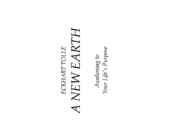
Prior to this momentous event that heralds an evolutionary transformation in the life of plants, the planet had already been covered in vegetation for millions of years. The first flower probably did not survive for long, and flowers must have remained rare and isolated phenomena, since conditions were most likely not yet favorable for a widespread flowering to occur. One day, however, a critical threshold was reached, and suddenly there would have been an explosion of color and scent all over the planet – if a perceiving consciousness had been there to witness it. Much later, those delicate and fragrant beings we call flowers would come to play an essential part in the evolution of consciousness of another species. Humans would increasingly be drawn to and fascinated by them. As the consciousness of human beings developed, flowers were most likely the
end of the 19 century, bored. Stanfrod talks friends about horses: problem: question is, what happens with the hooves while its moving, running. Bet, with eyes, can't settle this. Cannot ever see if the hooves touch the ground. Stanford has enough money, hires most famous photographer. Eadwerd muybridge, comes to usa. Tells him to settle this with photography. That time with photography you cannot get any informatio either. Started to install boxes, in each box, there was a camera. Does the hooves touch the ground or not? Fast shutter, can freeze the moment. Makes fast shutters, to record this. Finds solution, hooves are touching. The prerequisites for cinema: camera(edison and dickson), film stock that is flexible and stable to run through camera(kodak, celluloid film), projector, can show the image on a screen(1895-max skladanowsky, lumiere brothers) The lumiere brothers and cinematographe Father was a wealthy factory owner
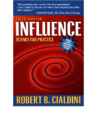
do it, enabled us to make significant changes. His work has enabled us to gain significant competitive differentiation and advantage" -LAURENCE HOF, Vice President, Relationship Consulting, Advanta Corporation "This will help executives make better decisions and use their influence wisely ... Robert Cialdini has had a greater impact on my thinking on this topic than any other scientist." -CHARLES T. MUNGER, Vice Chairman, Berkshire Hathaway, Inc. If you're wondering why of Latin America, the Far East, and Central Europe. you should buy this new edition of Influence: o More neuroscience evidence of how the influence process works is inte-
poet whose works I read. I think that his poems are interesting. They reveal much about Larkin's life and about the social issues in the 20th century. Larkin is also considered to be one of the greatest English poets in the 20th century. I think that Larkin was quite interested in politics. For example his poem ´´Talking in Bed´´ begins with the lines /Talking in bed ought to be easiest, Lying together there goes back so far/. At first it gives the reader an idea that he is talking about two lovers, but actually he is talking about England and USA. He describes the darkness that is creeping up. In my opinion he is talking about USA, which is beginning to creep up on England or on Europe. And because of that England is becoming a less dominant and more isolated place. He is saying that intimacy is dying and that may represent the globalization. Another political poem I
8. Room 40 9. A War of Intercepts 10. Two Americans 11. Secrecy for Sale 12. Duel in the Ether: I 13. Duel in the Ether: II 14. Censors, Scramblers, and Spies 15. The Scrutable Orientals 16. PYCCKAJI Kranrojioras 17. N.S.A. 18. Heterogeneous Impulses 19. Ciphers in the Past Tense 20. The Anatomy of Cryptology Suggestions for Further Reading Index A Note on the Abridged Version MANY PEOPLE have urged me to put out a paperback edition of The Codebreakers. Here it is. It comprises about a third of the original. This was as big as the publishers and I could make it and still keep the price within reason. In cutting the book, I retained mainly stories about how codebreaking has affected history, particularly in World War II, and major names and stages in the history of cryptology. I eliminated all source notes and most of the technical matter, as well as material peripheral to strict codebreaking such as biographies, the
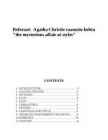
''the mysterious affair at styles'' CONTENTS 1. INTRODUCTION................................................... 3 2. AGATHA CHRISTIE............................................. 4 3. PICTURES.............................................................. 5 4. PLOT....................................................................... 6 5. PLOT....................................................................... 7 6. CHARACTERS...................................................... 8 7. SETTING................................................................ 9 8. LANGUAGE AND STYLE................................... 9 9. WHOM DO I RECCOMEND THIS NOVEL........ 9 10. SUMMARY........................................................... 10 11. SOURCES.............................................................. 11 INTRODUCTION
Themes, Motifs, and Symbols Themes Themes are the fundamental and often universal ideas explored in a literary work. The Grim Reality of War - As the title of the novel makes clear, A Farewell to Arms concerns itself primarily with war, namely the process by which Frederic Henry removes himself from it and leaves it behind. The few characters in the novel who actually support the effort--Ettore Moretti and Gino--come across as a dull braggart and a naïve youth, respectively. The majority of the characters remain ambivalent about the war, resentful of the terrible destruction it causes, doubtful of the glory it supposedly brings. The novel offers masterful descriptions of the conflict's senseless brutality and violent chaos: the scene of the Italian army's retreat remains one of the most profound evocations of war in American literature
When he first arrived in Paris, he experienced a cultural shock and got inspired by it. He started to keep a diary of his experiences and decided to publish it as a novel when the Anglo-French relationships were at their worst during the Iraq War spring 2003. Therefore his novels (he has written three in this series) have become enormously popular all around the world, especially because they are partly true. Stephen Clarke himself still lives in Paris with his French girlfriend. This novel is considered to be seriously funny and a comedy with a message. "Merde Actually" has one main character whose name is Paul West, but there are also many other significant characters, that come from the previous book "A Year in the Merde". I can say that it would be better to read the first book of this series first, other wise some jokes and thoughts might stay incomprehensible. This novel starts with a description of how and where Paul West is going with his girlfriend Florence
Early plays in 1590's were mostly comedies (The Taming of the Shrew, The Merchant of Venice..) Began to focus on tragedy/drama in early 1600's (Romeo and Juliet, Hamlet, Macbeth, Othello..) In 1608 tragedy is replaced with romance Wrote historical plays too (Richard III, Julius Caesar..) Used allegory and methaphores Brought over 1700 words into the English language ,,A fool thinks himself to be wise, but a wise man knows himself to be a fool. " ,,Hell is empty and all the devils are here. " ,,Expectation is the root of all heartache." ,,It is not in the stars to hold our destiny but in ourselves." ,,Words without thoughts never to heaven go." Sir Walter Scott 1771 1832 Suffered polio, which left him with a permanent limp Studied law and history Became interested in Scotland's rural habitants, collected folklore A writer and a poet, a born storyteller and master of dialogue, one of the greatest historical novelists, who especially loved to write about Scotland
a number of Italian dialects to create a new national language. In 1310 he writes De Monarchia presenting Dante's case for a one-ruler world order. Among his works, his reputation rests on his last work, The Divine Comedy. He began writing it somewhere between 1307-1314 and finished it only a short while before his death in 1321, while in exile. In this work, Dante introduces his invention of the terza rima, or three-line stanza as well as himself as a character. The Inferno is the first of three parts of Dante's epic poem, The Divine Comedy, which depicts an imaginary journey through Hell, Purgatory, and Paradise. Dante is the hero, who loses his way in the "dark woods" and journeys to nine regions arranged around the wall of a huge funnel in nine concentric circles representing Hell. He is led by the ghost of Virgil, the Roman poet, who has come to rescue Dante from the dark forest and lead him through the realms of the afterlife. The
logic, mathematical theory of grammar) and linguistics (the theory of language structure, comparative linguistics, language typology, psycholinguistics, sociolinguistics; applied linguistics including speech and text processing, quantitative linguistics, modern applied linguistics). History of the Department Russian philology was not studied as an independent academic discipline until 1945, yet from the very beginning of the faculty's existence there were courses in Russian studies on offer for students of Slavic studies. In the 1922/1923 academic year, an independent Section of Russian Language and Literature was founded within the School of Slavic Studies. The section was, from its foundation until 1945, headed by Valerij Alexandrovic Pogorielov. In 1945 another member of the post-revolutionary wave of Russian emigrants, Prof. Alexander Vasilievic Isacenko, was appointed Professor in Russian Philology. In 1946 Prof. A. V. Isacenko became
again to keep the noise down. between Paul and Joe. 1D Sporting origins page 67 2 She recognised him at once. 2 Phobias can be genetically 3 He's working at his father's shop inherited. 1 1 staunchly / resolutely for the time being. 3 When it comes to politics, 2 By and large 4 They'll be here any moment now. Edward and his dad have a lot in 3 swiftly 5 Everybody makes mistakes once common. 4 loosely in a while. 4 Luke is the spitting image of Matt 5 categorically 6 My brother was still a baby at the Damon. 6 widely time
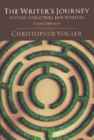
playwrights, fiction and non-fiction writers, scholars, and fans of pop culture all over the world. Discover a set of useful myth-inspired storytelling paradigms like "The Hero's Journey," and step-by-step guidelines to plot and • character development. Based on the work of Joseph Campbell, The Writers Journey is a must for all writers interested in further developing their craft. This updated and revised Third Edition provides new insights and observations from Vogler's ongoing work on mythology's influence on stories, movies, and man himself. In revealing new material, he explores key principles like polarity and catharsis, plus:
John Galsworthy The Man of Property PREFACE "The Forsyte Saga" was the title originally destined for that part of it which is called "The Man of Property"; and to adopt it for the collected chronicles of the Forsyte family has indulged the Forsytean tenacity that is in all of us. The word Saga might be objected to on the ground that it connotes the heroic and that there is little heroism in these pages. But it is used with a suitable irony; and, after all, this long tale, though it may deal with folk in frock coats, furbelows, and a gilt- edged period, is not devoid of the essential heat of conflict. Discounting for the gigantic stature and blood-thirstiness of old days, as they have come down to us in fairy-tale and legend, the folk of the old Sagas were Forsytes, assuredly, in their possessive instincts, and as little proof against the
 annaabi.ee