Leidsid 33 sarnast õppematerjali, mis on seotud failiga "Ajamääruste tabel". Need materjalid aitavad sul teemat sügavamalt mõista.
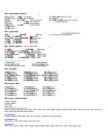
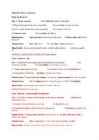
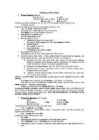
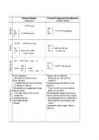
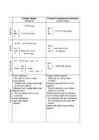
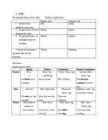
going, wait, eitus, listen, work, know, wasn, aren, eating, sleep, drink, come, draw, waiting, live, leave, present, simple, continuous, weren, reading, working, drinking, living, drawing, running, wrote, listening, worked, slept, drank, coming, draws, drewShe is marta we aren't are we German? you aren't, they aren't. It is a school. you aren't are you German? We are students they aren't are they German? You are in class 12 They are teachers Unit 2 / present simple + - ? yes- I do, you do, he/she/it does. I work I don't work Do I work no I don't, you don't, he/she/it doesn't You work you don't work do you work? He/she it works he/she/it doesn't works does he/she/it work We work we don't work do we work You work you don't work do you work? They work they don't work do they work? Unit 6 / Present Continuous be- verb-ing / kestev olevik
Copyright ©2007 by Saddleback Educational Publishing. All rights reserved. No part of this book may be reproduced in any form or by any means, electronic or mechanical, including photocopying, recording, or by any information storage and retrieval system, without the written permission of the publisher. ISBN 1-59905-201-6 Printed in the United States of America 13 12 11 10 09 08 07 9 8 7 6 5 4 3 2 1 Introduction Grammar is a very old field of study. Did you know that the sentence was first divided into subject and verb by Plato, the famed philosopher from ancient Greece? That was about 2,400 years ago! Ever since then, students all over the world have found it worthwhile to study the structure of words and sentences. Why? Because skill in speaking and writing is the hallmark of all educated people. Lesson by lesson, this book provides basic instruction in the eight parts of speech--nouns, pronouns, verbs,
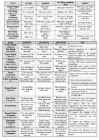
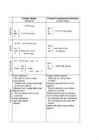
Future Simple Will + be + Will + have/get sth + Tomarrow, soon, next Will + I pv Lihttulevik III pv III pv week, year TENSE POSITIVE NEGATIVE QUESTION USE Present Simple I play tennis on They don't work in Does she know Habitual activities Lihtolevik Mondays. New York. him? Past Simple She went to Paris They didn't drive to Where did she get Actions happening at a defined Lihtminevik last week. work. that hat? moment in the past.
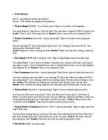
2. Present Simple [VERB] + s/es in third person. Tegevus on korduv või tavapärane. You speak English. I play tennis. Cats like milk. The train leaves tonight at 6 PM. I am here now. Active= Once a week, Tom cleans the car. Passive= Once a week, the car is cleaned by Tom. 3. Present Continuous [am/is/are + present participle]. Tegevus toimub/ei toimu praegusel hetkel. You are watching TV. You are learning English now. I am studying to become a doctor. I am meeting some friends after work. Active= Right now, Tom is writing the letter. Passive= Right now, the letter is being written by Tom. 4. Past Simple [VERB+ed] or irregular verbs. Tegevus algas/lõppes minevikus täpsel ajal. . You called Debbie. I saw a movie yesterday. I finished work, walked to the beach, and found a nice place to swim. I lived in Brazil for two years. I studied French when I was a child. Active = Tom repaired the car. Passive= The car was repaired by Tom. 5
· California is not in the United Kingdom. · You only speak English. · Windows are made of glass. · Do you only speak English? I am not reading any books right now. Present Continuous · · Are you working on any special projects at work? [am/is/are + present participle] · Aren't you teaching at the university now? Examples: USE 3 Near Future · You are watching TV. · Are you watching TV? · You are not watching TV. USE 1 Now Examples: · I am meeting some friends after work.
N: my brother had gone to bed by the time I got home. By midnight, all the guests had left. We were tired because we had been playing volleyball all morning. Future tenses: 1)Future simplewill/shall + infinitive. N:Ppl will live on the moon one day. Are you having a party?I will come! I'll ring you tonight if you want. I'll be really angry if youre late again. 2)Going to + infinitive N:I've decided what to get Tom for his birthday, I'm going to buy him a CD. Listen to the thunder! There's going to be a storm!; 3)Present continuous N: I am meeting my girlfriend tonight. 4)Present simple The bus leaves at 8 a.m. I'll meet you as soon as the class finishes. 5)Future continuous: will/may/might + be + ing N: I'll be lying on a beach this time tomorrow. In 50 years' ,ppl will be living on the moon. 6) Future perfect: will/may/might + have + past participle /
he does he goes he misses he watches he mixes · Verbid, mis lõpevad yga, mille ees on konsonant, muudavad y iks enne es lisamist. fly he flies carry he carries Võrdle: say he says Lihtolevik väljendab: · Antud momendil toimuvat tegevust, mis ei väljenda kestvat aega, näiteks see, hear, know. I see that man who you are pointing at. · Üldist, kogu aeg toimuvat või korduvat tegevust, pole oluline, kas tegevus toimub rääkimise hetkel. Teachers teach in schools. He usually goes to gym on Monday. · Tegevust mingil ajal. I go to school at 8 o´clock. You have to pay taxes once a month. · Kõigile tuntud fakte. Life passes by quickly. Present Continuous Kestva oleviku moodustamine
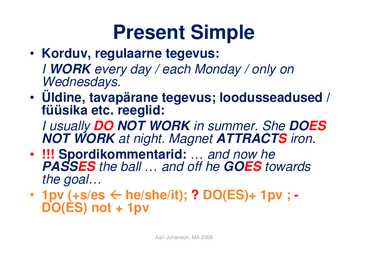
Present Simple · Korduv, regulaarne tegevus: I WORK every day / each Monday / only on Wednesdays. · Üldine, tavapärane tegevus; loodusseadused / füüsika etc. reeglid: I usually DO NOT WORK in summer. She DOES NOT WORK at night. Magnet ATTRACTS iron. · !!! Spordikommentarid: ... and now he PASSES the ball ... and off he GOES towards the goal... · 1pv (+s/es Å he/she/it); ? DO(ES)+ 1pv ; - DO(ES) not + 1pv Aari Juhanson, MA 2008 Present Progressive · Hetkel toimuv, pooleliolev tegevus: S/he IS TALKing on the phone now. I AM READing an interesting book. · Ajutine, regulaarsele ja tavapärasele vastanduv tegevus (tulevikku viitav): This summer they ARE not GROWing
UNTIL FROM - TO We use until/till to say how long a situation continues We use from - to + beginning and end of a period Let's wait until it stops raining. I stayed in bed until half past Last evening we watched TV from 5 to 8 o' clock. nine. QUESTIONS WORDS Exercises: 1. http:// www
Here's a breakdown of how you can express how you really are without complaining too much. · Fine, thanks. / On top of the world, thanks. · OK, thanks · Not so bad, thanks. / Can't complain, thanks. · So so, thanks. / So and so, thanks. · Not so good, actually 1 The English alphabet Spelling Work with your partner and spell out first your name and then some names of places. Write down each letter as you hear it, and then say the word. The English alphabet on the phone: You might find the following alphabet (used by international airlines) useful when trying to spell a word on the telephone. A Alpha O Oscar Ä Alpha-Echo Ö Oscar-Echo B Bravo P Papa
50 p.m. Negative form: I don't (do not) normally eat my lunch here. He doesn't (does not) like this film at all. Question form: Do you live here? How often does it rain around here? Signal words: always, every day/month, never, normally, often, seldom, sometimes, usually etc. PRESENT CONTINUOUS/PROGRESSIVE (kestev olevik) Form: am/is/are + ing Use: 1. Unfinished actions happening at or around the time of speaking. Listen! Somebody is crying. They are building a new bridge in our town. 2. Changes happening around now. The population of the world is increasing fast. 3. Arrangements for the future. I am flying to Toronto next Friday. Negative form: We aren't (are not) working at the moment. I am not enjoying this show very much. Question form: Are they playing football in the park right now?Why is she laughing? Signal words: at the moment, now, right now, Listen!, Look
in brackets. _ 1 She is in a band and she _________________________________ (record) a CD at the moment. _ 2 She is an actress and often _________________________________ (appear) on television. _ 3 At the moment she _________________________________ (have) a rest because she is tired. _ 4 Mike is a doctor and he _________________________________ (live) in Manchester. _ 5 I _________________________________ (start) work at 8.30 every morning. _ 6 He is a good cook but she _________________________________ (prefer) to eat out. _ 7 English tests _________________________________ (get) more and more interesting. _ 8 They _________________________________ (have) a party because it's her birthday. _ 9 I sometimes _________________________________ (ride) my bicycle to school. 10_ She usually _________________________________ (go) to the gym on Friday evenings.
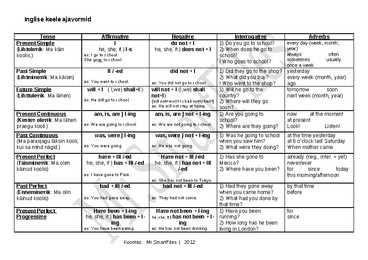
(Lihttulevik: Ma lähen) not+I) country? next week (month, year) ex: He will go to school. [will not=won't / shall not=shan't] 2) Where will they go ex: He will not stay at home. soon? Present Continuous am, is, are } I-ing am, is, are } not + I-ing 1) Are you going to now at the moment (Kestev olevik: Ma lähen school? at present praegu kooli.) ex: We are going to school. ex: We are not going to school. 2) Where are they going? Look! Listen! Past Continuous was, were } I-ing was, were } not + I-ing 1) Was he going to school at the time yesterday
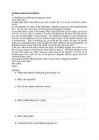
Kordamine inglise keele eksamiks A 1.1 Read the text and answer the questions below. Dear Mary-Alice, It's been ages since I last wrote to you, isn't it weird? Yes, so it is, but, I do have a certain reason. Do you remember Sir Thom of the Minquettes'? That fine young man with fascinating blue eyes... Oh, my sweet Mary, you will never guess what happened yesterday! It was about seven o'clock in the evening when Lillian called me out for a walk you know I can't say `no' to my little sis. Anyway we went to the forest near the Swan Lake and, believe it or not, got lost! Awful! I was so scared... We walked and walked, not even knowing the direction we were heading to, until we reached a huge mansion. And the garden around it was so extraordinary... That is something you just must see! But neither the trees nor flowers could be as wonderful as the owner himself! Sir Thom treated us tea and sandwiches, not
Don't use the present perfect have/has seen, have/has gone etc with words that name a finished time. I saw him yesterday. (NOT I have seen him yesterday.) They went to Greece last summer. (NOT They have gone ... last summer.) 15. English (the language) normally has no article. You speak very good English. (NOT You speak a very good English.) 16. After look forward to, we use ing, not an infinitive. I look forward to seeing you. (NOT I look forward to see you.) We're looking forward to going on holiday. (NOT ... to go on holiday.) 17. Information is an uncountable noun. Can you give me some information? (NOT Can you give me an information?) I got a lot of information from the Internet. (NOT I got a lot of informations from the Internet.) 18. Use ing forms after prepositions. I drove there without stopping. (NOT I drove there without to stop.) Wash your hands before eating. (NOT Wash your hands before to eat.) 19. Use this, not that, for things that are close.
TENSES. ACTIVE VOICE. 1. Present Simple (üldolevik) I (he, she, it s) he works Eitav,küsiv do (I, you, we, they) he does not work does (he, she, it) does he work? Verbidele, mis lõpevad infinitiivis ss, -sh, -ch, -x või o, lisatakse ainsuse 3. pöördes es he touches, she goes Verbidel, mis lõpevad y-ga, mille ees on konsonant, muutub y->ies carry - he carries Vrdl: play he plays 1. Harjumuspärane, korduv tegevus või seisund olevikus. Tom drinks tea every day. He lives in Brussels. 2. Üldtuntud tõed, loodusseadused The earth goes round the sun. 3. Tulevikus toimuv tegevus
It's a four-hour flight from Phoenix to Seattle, another hour in a small plane up to Port Angeles, and then an hour drive back down to Forks. Flying doesn't bother me; the hour in the car with Charlie, though, I was a little worried about. Charlie had really been fairly nice about the whole thing. He seemed genuinely pleased that I was coming to live with him for the first time with any degree of permanence. He'd already gotten me registered for high school and was going to help me get a car. But it was sure to be awkward with Charlie. Neither of us was what anyone would call verbose, and I didn't know what there was to say regardless. I knew he was more than a little confused by my decision -- like my mother before me, I hadn't made a secret of my distaste for Forks. When I landed in Port Angeles, it was raining. I didn't see it as an omen -- just unavoidable. I'd already said my goodbyes to the sun. Charlie was waiting for me with the cruiser
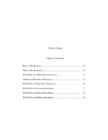
Ways of expressing the Future Table of Contents Future Simple ...................................................................... 2 Be going to ........................................................................... 3 Present Continuous .............................................................. 3 Present Simple ..................................................................... 4 Future Continuous ............................................................... 4 Future Perfect....................................................................... 6 Other ways of referring to the future .................................
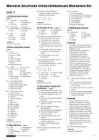
14 didn't want 4 She had planned a route to the students aren't wearing uniform. It 15 insisted looks as if one of them is asleep. summit. It's clear that the girl in the front Challenge! 5 She hadn't got to know the other desk isn't interested in the lesson Students' own answers climbers in the group. or perhaps she doesn't understand 6 She had spent a week at high
month. At six o'clock they were having Minevikus üksteise järel toimunud dinner. tegevused: Kaks või enam pikka samaaegset First she paid the driver, then she tegevust minevikus: got out the taxi. She was talking on her mobile Praeguseks lõppenud mineviku phone while she was driving to harjumused ja olukorrad: work. Kitchens were very different a Kestev tegevus minevikus, kui hundred years ago. teine tegevus tuli sisse: Laused, milles on järgmisi sõnu: He was walking down the street yesterday, then, when, How long when he ran into an old friend. ago ...?, last night/week/month/ /year, Tuesday, three days/years P.S. ago, in 1999. now .
month. At six o'clock they were having Minevikus üksteise järel toimunud dinner. tegevused: Kaks või enam pikka samaaegset First she paid the driver, then she tegevust minevikus: got out the taxi. She was talking on her mobile Praeguseks lõppenud mineviku phone while she was driving to harjumused ja olukorrad: work. Kitchens were very different a Kestev tegevus minevikus, kui hundred years ago. teine tegevus tuli sisse: Laused, milles on järgmisi sõnu: He was walking down the street yesterday, then, when, How long when he ran into an old friend. ago ...?, last night/week/month/ /year, Tuesday, three days/years P.S. ago, in 1999. now .
month. At six o'clock they were having Minevikus üksteise järel toimunud dinner. tegevused: Kaks või enam pikka samaaegset First she paid the driver, then she tegevust minevikus: got out the taxi. She was talking on her mobile Praeguseks lõppenud mineviku phone while she was driving to harjumused ja olukorrad: work. Kitchens were very different a Kestev tegevus minevikus, kui hundred years ago. teine tegevus tuli sisse: Laused, milles on järgmisi sõnu: He was walking down the street yesterday, then, when, How long when he ran into an old friend. ago ...?, last night/week/month/ /year, Tuesday, three days/years P.S. ago, in 1999. now .
HAVE GOT pööramine 71 Üldolevik 73 Üldminevik Jaatav lause - reeglipärased tegusõnad 74 Jaatav lause - ebareeglipärased tegusõnad 75 Eitav ja küsiv lause 77 USED TO 78 LISTEN & REPEAT REPEAT 59 Lk. Üldtulevik 78 Kestev olevik 80 Kestev minevik 82 Täisminevik 83 Käskiv kõneviis 85 Tingimuslaused 85 CAN / COULD 86
.................... 3 The verb 'be' ......................................................................... 4 Present Continuous.............................................................. 5 The spelling of endings in the Present Continuous................ 5 When to use the Present Continuous.................................... 6 State verbs and event (action or dynamic) verbs ................... 7 Present Simple In the Present Simple we use the verb without an ending. I work you live we think they dance NB! In the third person singular (he, she, it, Mary, my friend, etc.) the verb ends in -s or -es. he sings she sleeps it catches Negative I/you/we/they do not work I/you/we/they don't work he/she/it does not sleep he/she/it doesn't sleep Question Do I/you/we/they study? Does he/she/it work? The spelling of endings in the Present Simple
although there are certain similarities fast in the town. 2 fall through 6 go down with in our physical build. I also seem to 4 Well, he would keep misbehaving 3 tip off 7 come to have inherited his big feet, unluckily in class. 4 come up with 8 mistake for for me. It was the first thing my parents 5 Well, you would keep eating too noticed when I was born! 3 1 Laura was offered a place at much. Personality-wise, I've got a lot of my Manchester University but she dad's traits in me. We're both quite bubbly and friendly (or so people
Present Simple I Make Do not make Do I make? (lihtolevik) He/she/it Speaks Does not speak Does they go? We/you/they Do not go Do not go Present Continuous I am speaking Am not speaking Am I speaking? (kestev olevik) He/she/it is going Is not going Is he going? We/you/they are making Are not making Are you making? Present Perfect I Have asked Have not asked Have I asked? (täisminevik) He/she/it Has gone Has not gone Has she gone? We/you/they Have made Have not made Have they made? Present Perfect I have been asking Have not been asking Have I been asking?
Lamb to the Slaughter by Roald Dahl (1916-1990) The room was warm and clean, the curtains drawn, the two table lamps alight - hers and the one by the empty chair opposite. On the sideboard behind her, two tall glasses, soda water, whiskey. Fresh ice cubes in the Thermos bucket. Mary Maloney was waiting for her husband to come him (correction: home) from work. Now and again she would glance up at the clock, but without anxiety, merely to please herself with the thought that each minute gone by made it nearer the time when he would come. There was a slow smiling air about her, and about everything she did. The drop of a head as she bent over her sewing was curiously tranquil. Her skin - for this was her sixth month with child - had acquired a wonderful translucent quality, the mouth was soft, and the eyes, with their new placid look, seemed
Tenses Present Simple When? Every day, every morning, always, often, sometimes, usually. Affirmative Negative I/You know this song. I/You do not know this song. He/She/It knows this song. He/She/It does not know this song. We/You/They know this song. We/You/They do not know this song. Interrogative Do I/You know this song? Näited Does He/She/It know this song? Do I listen these songs every day? Do We/You/They know this song? Sometimes I listen these songs. Present Continuous When? Now, at the present moment. Affirmative Negative I am reading. I am not reading. You are reading. You are not reading. He/She/It is reading
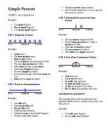
FUTURE SIMPLE BE GOING TO Will + infinitive (will go) Am/is/are going to + infinitive (is going to rain) 1.A decision at the moment of 1.Future plans made before the speaking: moment of speaking: A: 'I'm cold'. A: 'We've run out of milk.' B: 'I'll close the window'. B: 'I know, I'm going to buy some.' 2.Prediction based on opinion: 2.Prediction based on present I think the Conservatives will win the evidence: next election. Look at those boys playing football! 3.A future fact: They're going to break the window. He will be ten next year. 4.Promises / requests / refusal / willingness: I'll help you with your homework. Will you give me a hand? 5.In the same way as the future
Future Will infinitive Will + have Will+ base+ ing Will + have without to.. + been+ ing He will leave.. I will have a word You will be I will have been with you. watching working Present Future going to-future will-future Simple Present Progressive Progressive infinitive to be (am, are, is) to be (am, are, is) will + be + 3rd person singular + going to + will + infinitive
Last year she ... (10 travel) to Canada to practise in a training camp. I'm sure sometime in the future she ... (11 win) an Olympic medal. By that time, I ... (12 be) a famous author and she ... (13 ask) me to write a book about her way to the top. That's why I ... (14 start) taking notes of her and my other classmates' results. 3. Complete the exercise with the verbs in the past simple, the past continuous, or the past perfect tense. Do you remember? I went I was / we were going I had gone I couldn't wait for the first day of school to show off the new bike which I ... (1 get) as a birthday present. As I ... --- 5 (2 want) to look cool riding up to the front steps, I ... (3 put) on my new skirt. When I ... (4 reach) the school, I ... (5 make) a big mistake and ... (6 smile) at my friends instead of watching where I was going. While I ... (7 wave) at my best friend, I couldn't brake, and I ... (8 hit) the steps. I ... (9 fail) off my bike and ... (10 tear) my skirt
This one is for Dr. David Allen Goodwin. My love and gratitude are boundless. Thank you, Dave. You saved my life. Acknowledgments My deepest gratitude to my editor, Hilary Sares, who really dug into this story and made me work for it. Basically, she kicked my ass. By not pulling her punches or letting me shortchange the details, she made me work harder and because of that, this story is a much, much better book. BARED TO YOU wouldn't be what it is without you, Hilary. Thank you so much! To Martha Trachtenberg, copy editor extraordinaire. This book is an important one for me and she treated it that way. Thank you, Martha! To Victoria Colotta, for all her hard work on the interior design and typesetting. She took my plain text and made it gorgeous. Thank you, Victoria!
Peter is playing the guitar. If we want to say something about the manner of the action ( how does something happen?), we put the adverbial of manner in front of the predicate: She quietly opened the door. If we want to stress the mode of action, we put the adverbial of manner after the object. She opened the door quietly. If we want to show the place where the action takes place we put the adverbial of place after the predicate. Janet lives in Paris. I work in the library. If we want to say when or how long something happens, we put the adverbial of time at the end of the sentence: 3 I saw Peter last week. I have not seen Jane for a long time. If we want to stress the time factor, we put the adverbial of time at the beginning of the sentence: Last week, when I saw Peter, I forgot to tell him that his rent was overdue. For a long time Jane did not want to talk to me.
 annaabi.ee