Leidsid 33 sarnast õppematerjali, mis on seotud failiga "Acid rains üldine kokkuvõte". Need materjalid aitavad sul teemat sügavamalt mõista.
effectffectsmissions, sulfur, industrial, other, acidic, deposition, areas, plant, plants, since, 1970s, reduce, 1852, first, though, result, generate, local, spreadcosystems, lakes, precipitation, animals, through, process, caused, ammonium, carbon, react, acids, production, positive, results, revolution, angus, relationship, between, manchesterAcid rains Stefani Nimtsuk What is acid rain? Rain or any other form of precipitation that is unusually acidic It can have harmful effects on plants, aquatic animals, and infrastructure through the process of wet deposition Acid rain is caused by emissions of compounds of ammonium, carbon, nitrogen, and sulfur which react with the water molecules in the atmosphere to produce acids History Since the Industrial Revolution, emissions of sulfur dioxide and nitrogen oxides to the atmosphere have increased In 1852, Robert Angus Smith was the first to show the relationship between acid rain and atmospheric pollution in Manchester, England Though acidic rain was discovered in 1852, it was not until the late 1960s that scientists began widely observing and studying the phenomenon The term "acid rain" was generated in 1972 Canadian Harold Harvey was among the first to research a "dead" lake Public awareness of acid rain in the U
Miina Härma Gymnasium Acid Rain Report Compiler: Teisi Timma 8a Teacher: Esther Linask Tartu 2009 Acid Rain Acid rain is rain consisting of water droplets that are unusually acidic because of atmospheric pollution - most notably the excessive amounts of sulfur and nitrogen released by cars and industrial processes. Acid rain is also called acid deposition because this term includes other forms of acidic precipitation such as snow. Acidic deposition occurs in two ways: wet and dry. Wet deposition is any form of precipitation that removes acids from the atmosphere and deposits them on the Earth's surface. Dry deposition polluting particles and gases stick to the ground via dust and smoke in the absence of precipitation. This form of deposition is dangerous however because precipitation can eventually wash pollutants into streams, lakes, and rivers.
Acid Rain Acid rain is any precipitation that is unusually acidic. It possesses elevated levels of hydrogen ions(it has low pH level). Acid rain is caused by emissions of carbon dioxide, sulfur dioxide and nitrogen oxides, which react with water molecules. Distilled water(doesn't contain CO 2), has pH level 7. Liquids with pH level less than 7 are acidic, liquids with pH level greater than 7 are alkaline. Unpolluted rain has a pH level over 5.7, so it is slightly acidic. Affected areas Places significantly impacted by acid rain around the globe include most of eastern Europe from Poland northward into Scandinavia, the eastern third of the United States and southeastern Canada. Other affected areas include the southeastern coast of China and Taiwan Causes
As the world has industrialized and its population has grown, the problem of water pollution has intensified. The simple fact that millions of people live along coastlines and near rivers means that these bodies of water are likely candidates for heavy and destructive pollution. It is hard to know now what our oceans will look like in the future. Just how damaged they will be by pollution is uncertain. Acid rain The term acid rain refers to what scientists call acid deposition. It is caused by airborne acidic pollutants and has highly destructive results. Scientists first discovered acid rain in 1852, when the English chemist Robert Agnus invented the term. From then until now, acid rain has been an issue of intense debate among scientists and policy makers. Acid rain, one of the most important environmental problems of all, cannot be seen. The invisible gases that cause acid rain usually come from automobiles or coal-burning power plants.
require urgent attention. 1. Pollution: Pollution of air, water and soil require millions of years to recoup. Industry and motor vehicle exhaust are the number one pollutants. Heavy metals, nitrates and plastic are toxins responsible for pollution. While water pollution is caused by oil spill, acid rain, urban runoff; air pollution is caused by various gases and toxins released by industries and factories and burning of fossil fuels; soil pollution is majorly caused by industrial waste that deprives soil from essential nutrients. FIND OUT 5 WAYS HOW TO STOP POLLUTION. 2. Global Warming: Climate changes like global warming is the result of human practices like emission of Greenhouse gases. Global warming leads to rising temperatures of the oceans and the earth surface causing melting of polar ice caps, rise in sea levels and also flash floods, excessive snow or desertification. FIND OUT 5 WAYS HOW TO STOP GLOBAL WARMING. 3
1 Uses of energy in homes...............................................................................................5 2.2 Types of energy used in homes.................................................................................... 6 2.3 Energy use in different types of homes........................................................................ 6 2.4 Commercial Energy Use...............................................................................................9 2.5 Industrial and Manufacturing Energy Use..................................................................11 2.6 Transportation Energy Use.........................................................................................12 RENEWABLE ENERGY..................................................................................................14 3.1 What Role Does Renewable Energy Play in the United States?................................ 14 3.2 Why Don't We Use More Renewable Energy?...............
Hydroelectricity was the next largest renewable source, providing 3% (15% of global electricity generation),followed by solar hot water/heating, which contributed 1.3%. Modern technologies, such as geothermal energy, wind power, solar power, and ocean energy together provided some 0.8% of final energy consumption. While there are many large-scale renewable energy projects and production, renewable technologies are also suited to small off-grid applications, sometimes in rural and remote areas, where energy is often crucial in human development.Kenya has the world's highest household solar ownership rate with roughly 30,000 small (20100 watt) solar power systems sold per year. Some renewable energy technologies are criticised for being intermittent or unsightly, yet the market is growing for many forms of renewable energy. Climate change concerns coupled with high oil prices, peak oil and increasing government support are driving increasing renewable energy
air that we breathe, becomes dangerous to our health. The ozone layer around the Earth, there is a special type of oxygen called ,,ozone". Ozone is important because it stops ultraviolett radiation from the sun. Many aerosol sprays and factories destroy ozone and they have made a very big hole in the ozone layer. This means that too much ultraviolet radiation now enters the Earth. This is very dangerous because it can cause cancer. Poisonous chemicals also cause acid rain, that destroyes plants, rivers, lakes and buildings. Acid rain can travel thousands of miles, so pollution in one country can become acid rain for another country. So how to avoid the worst? Lets talk about cars, which are the main means of transport in our everyday life, they are useful and take us to the place, where we want to go. But lets be honest, they have also negative aspects. Like heavy traffic in the morning, while you are going to work and in the evening, when you are about to go home
Estonian University of Life Sciences Report on Soil Microflora By Katrin Vares Tartu 2013 Introduction The purpose of this report is to define soil microflora and establish the importance of it. Since the microorganisms clearly play an important role in preserving the balance of life, the next objective is to look into factors that influence this balance. Natural conditions and cultural impact could be considered as the variables that correlate the most with the activity and composition of microflora, hence some of the natural and cultural factors will be looked into a little more in detail. Definition, composition and importance of microflora
All utility-scale reactors heat water to produce steam, which is then converted into mechanical work for the purpose of generating electricity or propulsion. In 2007, 14% of the world's electricity came from nuclear power. More than 150 nuclear-powered naval vessels have been built, and a few radioisotope rockets have been produced. Nuclear life cycle The Nuclear Fuel Cycle begins when uranium is mined, enriched, and manufactured into nuclear fuel, which is delivered to a nuclear power plant. After usage in the power plant, the spent fuel is delivered to a reprocessing plant or to a final repository for geological disposition. In reprocessing 95% of spent fuel can be recycled to be returned to usage in a power plant. What is nuclear energy? Nuclear energy was first discovered by French physicist Henri Becquerel in 1896, when he found that photographic plates stored in the dark near uranium were blackened like X-ray plates, which
The environment in realtion to mobility/transport in Europe Air pollution is problem all over the world. Through some pollution comes from these natural sources, most pollution is the result of human activity. The biggest causes are the operation of fossil fuel- burning power plants and automobiles that combust fuel. Combined, these two sources are responsible for about 90% of all air pollution in the United States. All kind of pollutions can lead us to serious health problems. For example, air pollution is increasingly being cited as the main cause of lung conditions such as asthma - twice as many people suffer from asthma today compared to 20 years ago. Every year, 3.2m Europeans are diagnosed with cancer - the most common cause of death after heart disease. Most
Even in Ancient Romepeople complained about smoke put into the atmosphere. The effects of air pollution are diverse and numerous. Air pollution can have serious consequences for the health of human beings, and also severely affects natural ecosystems. Because it is located in the atmosphere, air pollution is able to travel easily. As a result, air pollution is a global problem and has been the subject of global cooperation and conflict. Some areas now suffer more than others from air pollution. Cities with large numbers of automobiles or those that use great quantities of coal often suffer most severely from problems of air pollution. CAUSES There are many different chemical substances that contribute to air pollution. These chemicals come from a variety of sources. Among the many types of air pollutants are nitrogen oxides, carbon monoxides, and organic compounds that can evaporate and enter the atmosphere.
Tallinn 2013 Ott Speek Subject: English Geodesy Study group: GI-21b PETROLEUM PRESENTATION Petroleum (L. petroleum, from Greek: Πέτρα (rock) + Latin: oleum (oil) is a naturally occurring flammable liquid consisting of a complex mixture of hydrocarbons of various molecular weights and other liquid organic compounds, that are found in geologic formations beneath the Earth's surface. The name Petroleum covers both naturally occurring unprocessed crude oils and petroleum products that are made up of refined crude oil. A fossil fuel, it is formed when large quantities of dead organisms, usually zooplankton and algae, are buried underneath sedimentary rock and undergo intense heat and pressure. Petroleum is recovered mostly through oil drilling. This comes after the studies of
All brand names and product names used in this book are trade names, service marks, trademarks or registered trademarks of their respective owners. The publisher is not associated with any product or vendor men- tioned in this book. This publication is designed to provide accurate and authoritative information in regard to the subject matter covered. It is sold on the understanding that the publisher is not engaged in rendering professional services. If professional advice or other expert assistance is required, the services of a competent professional should be sought. Library of Congress Cataloging-in-Publication Data Handbook of meat processing / edited by Fidel Toldrá. p. cm. Includes bibliographical references and index. ISBN 978-0-8138-2182-5 (hardback : alk. paper) 1. Meat—Handbooks, manuals, etc. 2. Meat industry and trade—Handbooks, manuals, etc. I. Toldrá, Fidel. TS1960.H36 2010 664′.9—dc22
blow. Hydropower Power to the Water · By using earth's · 90% energy water cycles and efficient compared running water used to natural gas threw mostly dams being 50% to provide energy. efficient. · Hydropower is · The only problem about 1/3 the cost is, you need water. of using fossil fuels and about 1/6 the cost of natural gas. Biofuels · Using natural I Love you Plants materials to turn into fuel or forms of combustible energy. · Which is mostly plants and plant products Cost Efficient? · A study done by OSU So much for the love.... · Going to biofuels would be like adding a new gas tax. About 25 cents. · And it is not proven to reduce green house gases and may even produce more of them. Geothermal Energy -By using heat from the earth's crust in forms of hot water and steam to power generators for electricity
r w gametes C , C ; F1 genotypes and phenotypes 1 mark: r w F1 genotypes (all) C C F1 phenotypes (all) pink; F2 genotypes and phenotypes 1 mark: r w r w gametes C , C C , C ; r r r w r w w w F2 genotypes C C C C C C C C F2 phenotypes red pink (pink) white; F2 ratio 1:2:1; accept other symbols if key given. accept r and w as symbols without key. 6 (c) (i) 65; 130; 65; 3 (ii) 0.138 + 0.007 + 0.061; (or other suitable working) 0.206 – 0.208; 2 marks for correct value if no working shown ecf for both marks but calculated value must be to three decimal
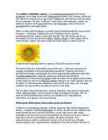
The sunflower (Helianthus annuus) is an annual(iga aastane) plant in the family Asteraceae, with a large flower head (inflorescence(õiekobar, õisik, õitseaeg, õidumine)). The stem(tüvi) of the flower can grow up to 3 metres tall, with the flower head reaching 30 cm in diameter. The term "sunflower" is also used to refer(nimetama, viitama, üle andma) to all plants of the genus(perekond, sugu) Helianthus, many of which are perennial(alaline, aastaringne) plants. What is usually called the flower is actually a head (formally(ametlikult) composite(liit-, komposiit- ; korvõieline, komposiit) flower) of numerous flowers (florets) crowded(täistuubitud, tunglev, rahvarohke) together. The outer flowers are the ray florets(pähik (õisiku osa) and can be yellow, maroon, orange, or other colors, and are sterile(steriilne, viljatu). The florets inside the circular head are called disc florets.
Switzerland Liisi Nigul Turundus II Sociological factors: Religions: Main religion is Roman Catholic 41,8%, then comes Protestants with 35,3% and on the third place are so called non-believers (people with no religion) 11,1%. (Other: muslin, orthodox, other Christian and so on). Birth rates: Switzerland has a birthrate of 9, 51 births to 1000 people, it's in the 199 place in the world's birth rate comparison. Leisure activities: Leisure activities range from taking part in grueling sports to relaxing with family and friends. Many people also devote part of their leisure time to the public service. Life expectancy at birth: total average is 81 years but if you look at genders separately it's: male 78 years and female 84 years.
It is impossible to capture on film, to describe in words, or to explain to those who have never had the awe-inspiring experience of standing in the heart of a primary rainforest. Rainforests have evolved over millions of years to turn into the incredibly complex environments they are today. Rainforests represent a store of living and breathing renewable natural resources that for eons, by virtue of their richness in both animal and plant species, have contributed a wealth of resources for the survival and well-being of humankind. These resources have included basic food supplies, clothing, shelter, fuel, spices, industrial raw materials, and medicine for all those who have lived in the majesty of the forest. However, the inner dynamics of a tropical rainforest is an intricate and fragile system. Everything is so interdependent that upsetting one part can lead to unknown damage or even destruction of the whole
Introduction......................................................................................................... What is biogas?................................................................................................... Producing process............................................................................................... Nowadays............................................................................................................ Areas where biogas is used in............................................................................. Biogas as replacement of fuel.......................................................................... Other benefits..................................................................................................... Health.............................................................................................................. Economical...................
2.1 Finland 2.1.1 Background Finland was a province and then a grand duchy under Sweden from the 12th to the 19th centuries, and an autonomous grand duchy of Russia after 1809. It won its complete independence in 1917. During World War II, it was able to successfully defend its freedom and resist invasions by the Soviet Union albeit with some loss of territory. In the subsequent half century, the Finns made a remarkable transformation from a farm/forest economy to a diversified modern industrial economy; per capita income is now among the highest in Western Europe. A member of the European Union since 1995, Finland was the only Nordic state to join the euro system at its initiation in January 1999. In the 21st century, the key features of Finland's modern welfare state are a high standard of education, equality promotion, and national social security system currently challenged by an aging population and the fluctuations of an exportdriven economy
Tallinn 2012 1. Introduction Aniline (also known as phenylamine or aminobenzene) is an organic compound with the formula C6H5NH2. Consisting of a phenyl group attached to an amino group, aniline is the prototypical aromatic amine. The largest application of aniline is for the preparation of methylene diphenyl diisocyanate. The majority of aniline serves this market. Other uses include rubber processing chemicals (9%), herbicides (2%), and dyes and pigments (2%). Illustrative of the drugs prepared from aniline is paracetamol. The principal use of aniline in the dye industry is as a precursor to indigo, the blue of blue jeans. Like most volatile amines, it possesses the unpleasant smell of rotten fish. 2. Physico-chemical properties Name: Alinine CAS number: 62-53-3 IUPAC name: Phenylamine Molecular formula: C6H5NH2 Physical properties:
It's geographical position in co- ordinates is 83°N north, 42°N south, 53°W east, 141°W west. Canada borders with United States of America by land; Pacific Ocean, Arctic Ocean and Atlantic Ocean by coastline. Canada is one of the largest countries in the world, second only to Russia in territorial size. It has a total area of 9.9 million square kilometers. This includes 755,170 square kilometers of water. Toronto is the largest city in Canada with a population of 4.3 million. Other major cities include Montreal (3.3 million people), Vancouver (1.8 million people). Located in the southeast corner of the nation, Ottawa is the nation's capital. Relief Canada is a vast country comprised of a multitude of very different landscapes: Atlantic provinces, the Appalachians, St. Lawrence and Great Lakes lowlands, Canadian Shield, The Prairies, mountain ranges and high plateaus of the Canadian Cordillera, and northern Canada. Climate
The animals adapt to the climate by hibernating in the winter and living off the land in the other three seasons. DesertDeserts cover about one fifth of the Earth's land surface. Deserts temperature ranges from 20 to 25° C. The extreme maximum temperature ranges from 43.5 to 49°. Hot and Dry Deserts usually have very little rainfall and concentrated rainfall in short periods between long rainless periods. Most Hot and Dry Deserts don't have very many plants. The only animals they have that can survive have the ability to burrow under ground. They only come out in the night when it is a little cooler. SavannaA savanna is a rolling grassland scattered with shrubs and isolated trees, which can be found between a tropical rainforest and desert biome. Savannas are also known as tropical grasslands. Savannas have warm temperature year round. There are two very different seasons in a savanna; a very long dry season(winter) and a very wet season
middle latitudes typically have between 25 cm and 50 cm of precipitation a year. Much of this falls as snow, serving as reservoir of moisture for the beginning of the growing season. Warm to hot summers are experienced, depending on latitude. In the winter, grassland temperatures can be as low as -40° C, and in the summer it can be as high 20° C. There are two real seasons: a growing season and a dormant season. The growing season is when there is no frost and plants can grow (which lasts from 100 to 175 days). During the dormant (not growing) season nothing can grow because it's too cold. Taiga- Long, cold winters, and short, mild, wet summers are typical of this region. In the winter, chilly winds from the arctic cause bitterly cold weather in the taiga. The length of day also varies with the seasons in the taiga. Winter days are short, while summer days are long. The average temperature is below freezing for six months out of the year
Formaldehyde Formaldehyde is a colorless, flammable gas at room temperature. It has a pungent, distinct odor and may cause a burning sensation to the eyes, nose, and lungs at high concentrations. Formaldehyde is also known as methanal, methylene oxide, oxymethylene, methylaldehyde, and oxomethane. Formaldehyde can react with many other chemicals, and it will break down into methanol (wood alcohol) and carbon monoxide at very high temperatures. Formaldehyde is naturally produced in very small amounts in our bodies as a part of our normal, everyday metabolism and causes us no harm. It can also be found in the air that we breathe at home and at work, in the food we eat, and in some products that we put on our skin. A major source of formaldehyde that we breathe every day is found in smog in the lower atmosphere. Automobile
activation of the sympathetic nervous system. It is implicated in stress response. AFFERENT – Carrying information towards a particular group of neurones (compare efferent*). AGONIST – A neurotransmitter or a drug which binds to a receptor and triggers a cascade of intracellular signalling leading to changes in the membrane potential. AMINO ACID – A chemical made of carbon, oxygen, hydrogen and nitrogen, which is a building unit of all proteins* and other biologically important substances. AMINO ACID NEUROTRANSMITTERS – A group of fast acting neurotransmitters* which includes glutamate (excitatory) and GABA (gamma-amino butyric acid, inhibitory). AMNESIA – Loss of memory. AMYGDALA – A structure in the forebrain which is a component of the limbic* system. It is implicated in control of emotions. ANTAGONIST – A chemical which blocks receptors* and stops (inhibits) the effects of agonists*. ANTERIOR – Towards the front, e.g
I'll speak about 15min to allow time for questions at the end. Firstly clay bricks are known for centuries as one of the most solid and reliable structural elements is set to play a role in reducing global warming. Apart form the many benefits obtained from using clay bricks in construction, such as their durability, insulation properties and aesthetic qualities, recent findings show that they also produce less carbon emissions than any other masonry material. History (slide 3) In more detail the earliest bricks were dried bricks, meaning they were formed from clay- bearing earth or mud and dried usually in the sun until they were strong enough for use. The oldest discovered bricks, originally made from shaped mud and dating before 10000 BC, were found in Mesopotamia related to the first known cities. Ceramic or fired bricks were first introduced by the Romans. These were mainly flat, broad
GLOBAL WARMING Global warming is the observed century-scale rise in the average temperature of Earth's climate system. Since 1971, 90% of the increased energy has been stored in the oceans, mostly in the 0 to 700m region. Despite the oceans' dominant role in energy storage, the term "global warming" is also used to refer to increases in average temperature of the air and sea at Earth's surface. Since the early 20th century, the global air and sea surface temperature has increased about 0.8 °C (1.4 °F), with about two-thirds of the increase occurring since 1980
ja Saksamaal. Eesti maardlas on põlevkivi kaevandamise tingimused võrreldes teiste leiukohtadega lihtsad - väike sügavus, rõhtne lasuvus, kihindi püsiv paksus. Teadlaste arvates on Eesti põlevkivi ehk kukersiidi tekkimisel olnud lähteaineks sinivetikad (tsüanobakterid). Huumus Humiinained Huumus Nonliving, finely divided organic matter in soil, derived from microbial decomposition of plant and animal substances. Humus, which ranges in colour from brown to black, consists of about 60 percent carbon, 6 percent nitrogen, and smaller amounts of phosphorus and sulfur. As humus decomposes, its components are changed into forms usable by plants. Humus is classified into mor, mull, or moder formations according to the degree of its incorporation into the mineral soil, the types of organisms involved in its decomposition, and the vegetation from which it is derived.
Tallinn University Natural and exact sciences Molecular Biochemistry and Ecology Maria Gnidenko Capillary electrophoresis Essay Supervisor: Kert Martma Tallinn 2015 Table of contents Acronyms and symbols used Introduction History and development Physical basis and principle of separation Elektrophoresis Electroosmotic flow Separation process Electrodispersion Various methods of separation Capillary zone�
Margit Tepner k0848752 Sustainability aspects of biofuels 1. Introduction The literature review will discuss the sustainability aspects of biofuels. Food production will be the main concern as it is the most debated issue, but other aspects, such as land use change and water consumption will be also considered as they are essential aspects in the biofuels sustainability criteria. The review will discuss the viability of biofuels based on the current technologies. Second-generation biofuels are not yet commercially viable and therefore will not be discussed; although they could significantly improve the sustainability of biofuels when they break through to the industrial scale. 2. The scale of biofuels production 2
Although Australia is a low continent, there are a few mountain rangers there, too. The biggest is the Great Dividing Range. It stretches more than 3500 km from the north-eastern tip of Queensland, running the entire length of the eastern coastline through New South Wales, then into Victoria and turning west, before finally fading into the central plain at the Grampians in western Victoria. It consists of a complex of mountain ranges, plateaus, upland areas and escarpments. One part of the Great Dividing Range is the Australian Alps. It's highest point is Mount Kosciuszko, which is 2,228 metres high. The Snowy Mountains in New South Wales are also part of the Alps. The most famous land mark of Australia is the Uluru. It's a large sandstone rock formation in the southern part of the Northern Territory. It lies 335 km south west of the nearest large town, Alice Springs; 450 km by road. Kata Tjuta (The Olgas) and Uluru are the
 annaabi.ee