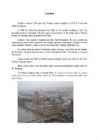
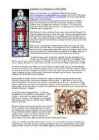
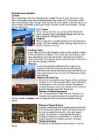
THE HOUSES OF PARLIAMENT a.k.a thePalace of Westminster IN GENERAL... The last monarch to live there, Henry VIII, moved out in 1512 Parliament has met in the Palace of Westminster since around 1550 there has been a royal palace on this site for nearly 1,000 years in the 19th Century a fire destroyed most of the earlier medieval buildings HISTORY Was originally laid out for Edward the Confessor more than 1,000 years ago in 1066, became the home of William the Conqueror in 1834, everything except Westminster Hall was burnt in the great fire the present building was designed specifically to house parliament and was laid out in Gothic style by Sir Charles Barry, completed in the 1840's THE BUILDING Nearly 1,200 rooms 100 staircases over 3 kilometres (two miles) ofcorridors located next to the River Thames in London TOWERS Includes several towers: Victoria Tow...
The Houses of Parliament The Houses of Parliament also known as The Palace of Westminister or Westminister Palace was built in 11th century by man called Charles Barry .It is located on the north back of the River Thames. In 1834 most of it burned, so in 1840 The Palace of Westminister was rebuilt. It is the meeting place of the two houses of the Parliament of the United Kingdom - the House of Lords and the House of Commons. The Houses of Parliament is composed of 1100 rooms, 100 staircases and three miles of corridors. Parliament takes breaks during Christmas, Easter and over the summer. The Palace of Westminster features three main towers The Central Tower, The Victoria Tower and The Clock Tower, also known as Big Ben. The Central Tower stands over the middle of the building, immediately above the Central Lobby. This tower is proof that after the fire in 1834, the palace can still look good. The...
Neti Kukk London London is the capital of England and the United Kingdom . London Eye The EDF Energy London Eye is a giant 135metre tall Fer r is wheel situated on the banks of the River Thames in the Br itish capital. The Tower of London Tower of London, is a histor ic castle on the north bank of the River Thames in central London, England. St Paul's Cathedral St Paul's Cathedral is an Anglican cathedral dedicated to Paul the Apostle. It sits at the top of Ludgate Hill, the highest point in the City of London, and is the seat of the Bishop of London. Shakespeare's Globe Shakespeare's Globe is a reconstr uction of the Globe Theatre which was destroyed by f ire in 1613. The theatre was opened to the public in 1997. Westminster Abbey Westminster Abbey is a large, mainly Gothic church in Westminst...
Houses of Parliament Harrod's Nelson's column tower bridge NIMI .... Houses of Parliament The Houses of Parliament, otherwise known as The Palace of Westminster, stands on the site where Edward the Confessor had the original palace built in the first half of the 11th century. In 1547 the royal residence was moved to Whitehall Palace, but the Lords continued to meet at Westminster, while the commons met in St. Stephen's Chapel. Ever since these early times, the Palace of Westminster has been home to the English Parliament. Harrod's One of the world's most famous department stores, established in 1849 as a humble grocery store employing two assistants. Today, it offers everything from food to fashion, furniture to sportswear plus 20 instore restaurants serving every kind of cuisine imaginable from pizza to sushi. Services range from piano tuning to fitting saddles. Mustsee sights include the Food Halls, the Egyptian Hall ...
London London is the capital of Great Britain. It is situated on the river Thames. The Thames is a river flowing through southern England and connecting London with the sea. The Thames has a length of 346 kilometres (215 miles). The first bridge was the tower bridge, built in the 12th century. The second bridge was built in the year 1750. .The river Thames divides London into the northern and the southern part. The port of London is one of the greatest trade centres in the world. The river Thames is certainly the most famous water body in London. London is also the seat of the government of Great Britain. It is one of the largest cities in the world with its population of about seven million. Before the great fire in 1666 there were many wooden houses and narrow crooked streets in the town but after the fire it became a well-planned city with wide streets, beautiful squares and parks. It star...
British Parliament Structure and Functioning of the British Parliament today Britain is a parliamentary monarchy . The British Parliament is a bicameral parliament , that is to say that it is made up of two chambers, or two "Houses"; above the two Houses, but in an essentially formal role , there is the Sovereign - king or queen - also known as "the crown." Role of the Sovereign The British monarch has all authority, but no power. The Sovereign appoints the Prime Minister, and every year opens the sessions of parliament, in a historical and ritual ceremony called the State Opening of Parliament . Historically, this ceremony used to take place in the Autumn; but since 2012, it has been brought forward to May. This is the only regular time when the members of both Houses come together. During the ceremony, the Sovereign reads out the government's intended programme. The "Queen 's Speech" is a summary of the programme "his" or "her" ...
Describe the British Parliament Works in a large building called the Palace of Westminster aka The Houses of Parliament. There are offices, committee rooms, restaurants, bars, libraries and even some places of residence. Two large rooms: The House of Lords meet in one and the House of Commons in the other. The British Parliament is divided into two houses, but the House of Commons is obviously more important and only they are considered to be the MPs. In the House of Commons there are just two rows of benches facing each other. On the left sit the members of the governing party and on the right sit the opposition. The Speaker sits between them and controls the action. The arrangement of the benches encourages confrontation between the government and the opposition. There is no place for somebody who isn't neither in the opposition nor in the government side. Usually peeps like this sit in the opposition furthest from the Speaker. || The...
How well do you know London? Form 10, February 2012 Welcome back to the tour of London! This is your second day (lesson) that you spend exploring the famous landmarks of the city. Again - follow the map so that you would not get lost and try to get streetwise in London. It is also wise to use Google Maps Street View simultaneously it gives you the wonderful feeling of strolling the streets and landmarks. Take the following questions with you, find answers to them and put them down for yourself in this MSWord document. Don't forget to "take" photos - you are supposed to recognise the landmarks later on! At the end of the tour send the worksheet to yourself so that you could use it again. Good luck with exploring the city! DAY 2. The route: Westminster Abbey The Houses of Parliament London Eye 10 Downing Street St Paul's Cathedral The Tower of London Tower Bridge Globe Theatre Greenwich Ob...
London London is one of the world's great cities. Located in the southeast of England, on the River Thames, it is the capital of the United Kingdom and has been the heart of its political, cultural and business life for centuries. London has always been the centre of the world. The origin of the city may be dated around the beginning of the 1st century when a Celtic tribe settled near the Thames. The Romans founded London about 50 AD. Its name is derived from the Celtic word Londinios, which means `the place of the bold one'. The Romans brought with them forts, roads and the rule of law. Then in 61 AD Queen Boudicca led a rebellion against the Romans. Her army marched on London. No attempt was made to defend London. Boudicca burned London but after her rebellion was crushed it was rebuilt. By the end of the 2nd century, a 6metre stone wall was ...
London London is almost 2,000 years old. Romans came to England in 43 AD. It was first called Londinium. In 1666 the Great Fire destroyed four fifths of the wooden buildings in the City including St Paul`s Cathedral. The fire began in the kitchen of the King`s baker Thomas Farriner in Pudding Lane and lasted for five days. London is the capital of England and the United Kingdom. By now London has swallowed up many of the small towns and villages that once surrounded it. London is on the same latitude as Warsaw. London is a city were more than 7 million inhabitants live. In London there are famous Telephone booths and taxis. Also there are red double- decker buses. The quick and easy way is use the underground trains. The cheapest is to buy a Travelcard. London hosted the 1908 and 1948 Summer Olympic Games and will host the 2012 Summer Olympic Games. ...
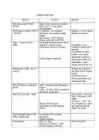
LONDON HISTORY PERIOD EVENTS PEOPLE The Celtic period (400 BC Name: Celtic words (Llyn (a lake) + AD 43) Dun (a fort or strong place) ) Not important The Roman occupation (AD 43 Londinium not important Boadicea a revolt against - AD 410) politically. An important trading the Roman conquest centre. Devastation AD 61. Rebuilt. Roman walls built in AD 200. Anglo Saxons (AD 400 Destroyed the Roman towns. Many 1066) kingdoms. London in ruins. King Egbert one Flourishing. Attacks by Vikings. kingdom England (the 9th ...
Westminster Today For centuries, Westminster was the political and religious center, but today Westminster is the center of government. Westminster Hall was built in 1099 by the son of William the Conqueror and is one of the largest medieval halls. It was part of the Westminster Palace, which was destroyed by a fire in 1834. The Houses of Parliament that we see today were rebuilt in the 19th century after the fire. The Big Ben clock tower is the largest four-sided ringing clock in the world and it is also one of the London's most famous symbols. Some think that Big Ben is the name of the clock on the tower, but actually it is the name of the big 13-ton bell that rings every fifteen minutes. The most historic religious building in Britain is Westminster Abbey, a beautiful church across the street from the Houses of Parliament. It was begun between 1042 and 1065 when the English king Edward the Confessor built a churc...
HOUSES OF PARLIAMENT Houses of Parliament also known as the Palace of Westminster is one of the most attractive buildings in London. It stands on the site where Edward the Confessor had the original palace built in the first half of the eleventh century . In 1547 the royal residence was moved to Whitehall Palace, but the Lords continued to meet at Westminster, while the commons met in St. Stephen's Chapel. Ever since these early times, the Palace of Westminster has been home to the English Parliament. In 1834 there was a huge fire that destroyed much of the old palace. All that remained was the chapel crypt, The Jewel Tower and Westminster Hall. It was Lord Melbourne, the Prime Minister, who saved the great hall by arranging for the fire engines to be brought right into the hall and personally supervising the fire fighting operation. The magnificent Gothic Revival masterpiece you see ...
LONDON KRISTINA KASEMÄGI CONTENTS • GENERAL • HISTORY • CLIMATE • THINGS TO SEE • THINGS TO DO GENERAL o London is the capital city of England and the United Kingdom. o It’s situated in the South East of England with population of 14 million people. HISTORY oLondon is one of the oldest cities in the world, and it was founded by the Romans in 40 A.D. and called Londinium. CLIMATE • London has a temperate marine climate like much of the British Isles, so the city rarely sees extremely high or low temperatures. THINGS TO SEE o THE TOWER OF LONDON o THE LONDON EYE o TOWER BRIDGE o BIG BEN o THE HOUSES OF PARLIAMENT 1 o ST JAMES’S PARK THE TOWER OF LONDON THE LONDON EYE TOWER BRIDGE BIG BEN, THE HOUSE PARLIAMENT 1 AND FAMOUS RED DOUBLE DECKER BUS ST JAMES’S PARK THINGS TO DO IN LONDON You can: o Cross the Thames in a cable car o See a world-class classi...
LANDMARCS HYDE PARK: Hyde Park is one of the largest parks in central London, England and one of the Royal Parks of London, famous for its Speakers' Corner. The park is divided in two by the Serpentine. The park is contiguous with Kensington Gardens; although often still assumed to be part of Hyde Park, Kensington Gardens has been technically separate since 1728, when Queen Caroline made a division between the two. THE TOWER OF LONDON: Her Majesty's Royal Palace and Fortress, more commonly known as the Tower of London (and historically as The Tower), is a historic fortress and scheduled monument in central London, England, on the north bank of the River Thames. It is located within the London Borough of Tower Hamlets and is separated from the eastern edge of the City of London by the open space known as Tower Hill. It is the oldest building used by the British government. [1] TOWER BRIDGE: Tower Br...
Established church The Church of England is the established church, which means that: 1.)the Monarch is the Supreme Governor of the church, 2.)the Church performs a number of official functions, 3.)Church and State are linked. To disestablish Disestablishmentarianism refers to campaigns to sever links between church and state, particularly in relation to the Church of England as an established church. It was initially a movement in the United Kingdom in the 18th century. The established churches in Wales and Ireland could not count on even nominal adherence by a majority of the population of those countries. In Ireland, the predominantly Roman Catholic population campaigned against the position of the established Anglican Church of Ireland - eventually disestablished in Ireland from 1 January 1871. A broad church The Church of England is a broad church, representing a wide spectrum of theological thought and practice ...
HISTORY TEST 5 invasions to Britain until 1066 1) The Celts o Gaels in 600BC; Cymry(Britons) in 300BC o From present-day Austria, Switzerland o The Celtic language survives in the names of many places in England- Dover, Kent, Thames o The Celts are best known for their art- many bronze objects with elaborate designs; brooches; pins; mirrors; Celtic stone crosses o The Celts had 3 social orders: warriors, druids(priests) ordinary people 2) The Romans o (55 BC-Caesar) 43 AD- 410 AD- Claudius o From present-day Italy o Southern Britain became Britannia and was ruled by a roman governor o The Romans built over 20 towns: Colchester, Londinium, Winchester etc. They were good engineers and built roads and villas that had central heating, glass windows and mosaic floors ...
London History The Romans AD 43- AD 410 The Romans finally invaded Britain in AD 43 from Kent. The Romans lead by Julius Caesar attempted to invade Britain twice before that in 55 and 54 BC but the invasions were unsuccessful. They made their way to the river Thames and sailed up it. The Romans knew it was important to control a crossing point at the river Thames, so they decided to build a settlement on the north bank. Although small settlements had been built on the banks of the Thames, the Romans were the ones who built the first city. They called their city Londinium. The Roman engineers noticed that the point where the swampy river narrowed would make an ideal crossing point, they built London Bridge. Less than 20 years later the native Iceni tribe, led by Queen Boudicca, rose up against the Romans in revenge for mistreatment and burnt Londinium to the ground. The well disciplined Roman army defeated her forces and Londinium was r...
Contents Introduction...................................................3 London's early history.....................................45 The people of London......................................6 Buildings and bridges......................................7 Intruduction London is the capital of the united kingdom (UK), which is made up of Great Britain(England, Scotland, Wales) and Northern Ireland. The city lies in the southeast of England and covers an area of about 1,578 square kilometres on either side of the River Thames. With population of seven million, London is by far the largest city in the UK. Birmingham, the second largest, has just over one million inhabitants. Cultural life London is the worldclass centre. It has more than40 theatres, where audiences enjoy everything from musicals to William Shakespeare's plays. The city also ...
1. Ancient Britain: the Celtic tribes. 2000 years ago there was an Iron Age Celtic culture throughout the Br Isles. It seems that the Celts, who had been arriving from Europe from the 8th cent BC onward, intermingled with the peoples who were already there. The Celts were extremely talented people, creative and artistic. More than 1 Celtic tribe invaded Br. The descendants of ancient Celts live in Wales, Scotland, Cornwall and Ireland. They lived in primitive society. Druids priests, more powerful than chiefs. Acted like prophets. 2. Stonehenge From prehistoric period. Was built on Salisbury plain between 2500 and 1500 bc. One of the most famous and mysterious archaeological sites in the world. One of the mysteries is how it was built at all with the technology of the time. Another is its purpose. It appears to function as a kind on astronomical clock and we know it was used by the Druids for ceremonies marking the passing ...
Old Tallinn Old Town, a medieval walled city filled with old buildings and fortifications. The sheltered bay and the easily defended Toompea Hill made it a natural place to settle. Sometime about 1050 A.D. a fortress was built atop the hill, the first of many. In 1219 the Danes showed up as part of the Northern Crusade to subjugate the Baltics and convert the local pagans to Christianity whether they wanted to or not. The Danes improved the fortifications and expanded the town, which became part of the Hanseatic League, a trading organization of a hundred northern cities. The Danes sold Tallinn to the Livonan Order, a branch of the Teutonic Knights, in 1346. The Swedes came next in 1561. Tallinn weathered plague and the Great Northern War and became part of Russia in 1710. In 1918, Estonia declared independence from Russia and fought a bitter war against Bolshevik Russia. Independence didn’t last long, ...
1. What were the two institutions that Henry VII establised? Explain. Henry VII established the Court of Star Chamber to make the barons give up their private armies and overall restored finances by collecting taxes. Also Henry VII extended royal control over local government through the local magistrates called justice of peace. 2. What was the idea of the Act of supremacy? With passing the Act of Supremacy, Henry VIII was made the head of the Church of England and he was now free to divorce Catherine and marry Anne Boleyn. 3. Why did Henry VIII get the title Fidei Defensor? The title was given to him by the pope because Henry VIII was against Protestantism and other religious reforms by J. Calvin and M. Luther. For that, the pope named Henry VIII the Fidei Defensor, meaning Defender of the Faith 4. Why did Mary I get the nickname Bloody Mary? Because during her reign, England became official...
The history of London There were some people living on the banks of the Thames when the Romans came to England in 43 AD. The Romans built houses, a port and a bridge over the river and named the place Londinium. The bridge which was built by the Romans was later known as London Bridge and it was built in stone in 1176. It was London's only bridge until 1729. Now there are about twenty bridges crossing the river within London. London soon became the largest city in England and by the time of the Norman Conquest in 1066 it had become the most important city in Britain. It grew in area and population until September 1666, when the Great Fire destroyed four fifths of the wooden buildings in the City including ST Paul's Cathedral. The fire lasted for five days. By now London has swallowed up many of the small towns and villages that surrounded it. It is a city of seven million pepole covering 1,606 square mile...
Topic Canada Canada is the second largest country in the world, only Russia has a greater land area. It covers nearly 4 million square kilometers. Canada is a country that is occupying most of northern America and it shares land borders with the United States to the south and northwest. Canada has the longest coast line and has about one fourth of all the fresh water available in the world. Canada has six time zones and it consists of ten provinces and three territories. Canada's birthday is on the first of July and its motto is: "From sea to sea". The first inhabitants were the ancestors of the Aborigines. Today Canada is the home of over a million Aboriginal people. They came to Canada about 25 000 years ago. First Europeans came to Canada about 1000 years ago. The first Europeans in Canada were the Vikings. The population of Canada is about...
Westminster Abbey Facts The Collegiate Church of St Peter at Westminster Owned directly by the royal family Dedicated to St Peter Located next to the Houses of Parliament UNESCO World Heritage Site History 616, a shrine was founded 10451050, Edward the Confessor Consecrated on December 28, 1065 Romaneque style, to house Benetictine munks Rebuilt 12451517 in Gothic style by Henry III History 2 Henry VII Lady Chapel in 1503 Dissolution of the Monasteries in 1534 Attacked by Puritans in 1640s Oliver Cromwell's funeral in 1658 Western towers were built between 1722 and 1745 Coronations The coronations of King Harold and William the Conqueror in 1066 All English and British monarchs have been crowned there Except Edward V, Edward VIII and Lady Jane Gray King Edward's Chair since 1308 More about Abbey Poets' Corner Tomb of The Unknown Warrior Statue of Martin Luther King Chapter Hou...
Changing the Guard · Perhaps the epitome of London's surviving pageantry can be found in the ceremonial Changing of the Guard. · A hugely popular spectacle, the Changing of the Guard takes place at a range of royal locations in and around · London daily during the summer and on alternate days for the rest of the year. · There is no ticketing, so make sure you get there early. · Ever since 1660 Household Troops have guarded the Sovereign Palaces. · The Palace of Whitehall was the main residence until 1689 and was guarded by the Household Cavalry. · The court moved to St James's Palace in 1689 and when Queen Victoria moved into Buckingham Palace the Queen's Guard remained at St James's Palace and a detachment guarded Buckingham Place, as it does today. Trooping the Colour · Often cited as the ceremonial event of the year, the Troopi...
Tallinn Old Town It was built up from the 13th to 16th centuries, when Tallinn was a thriving member of the Hanseatic trade league. It is built on a big hill and is surrounded with big walls. There is a lot of medieval style houses and inns, courtyards, churches and museums and a lot more. Many have described Tallinn Old Town as mystic and addictive. Unlike other capital cities in Europe, Tallinn has managed to preserve the completeness and structure of it's medieval and Hanseatic origin. Even after 7 centuries, Town Hall Square still remains as the social heart of the city and is hosting many concerts and fairs. Town Hall on Town Hall square is the only intact Gothic town hall in Northern Europe, now operates as a museum and concert hall.On top of the Town Hall tower, you will see a beloved guard of Tallinn Old Town Vana Toomas.One of the most impressive churches in Old Town is 15th and 16th century, St. Olaf's Church (Oleviste) wit...
The Republic of Ireland General overview Territory: 27,097 sq miles Population: 4 million Capital: Dublin Patron Saint: St Patrick The second largest of the British Isles 60 million people outside Ireland claim Irish ancestry Landscape and climate Ireland is low in the middle and high at its edges. Not very high mountains; highest is Carrantuohill (1,040 m) in the southwest At Moher, you can look 200m straight down into the sea Green fields, full of flowers, wide and empty beaches All landscape types are represented Climate is damp Ireland is one of the wettest countries in Europe History St Patrick converted the Irish to Christianity In mid16th century Henry VIII declared himself King of Ireland and broke away from the Roman Catholic Church In 1601, Queen Elizabeth I defeated the Irish army at the battle of Kinsale and the land was dominated by Protestants The Act of Union in 1801 made England and Ireland one country w...
The United Kingdom The United Kingdom consists of England, Scotland, Wales and North Ireland and it is situated in the Atlantic Ocean near the mainland of Europe. The population of the UK is 58.6 million and area is 244,110 sq km. Britain has a temperate humid climate. Its characteristic features are mild winters, warm summer, no temperature extremes, abundant rain all year round and frequent changes of weather. The mild climate is partly due to the warm Gulf Stream and partly to the south westerly winds. Occasional winds from the east in winter may bring cold and dry weather. The distribution of rainfall is influenced by the Atlantic Stream. The mountainous areas of the north and west have more rain than the lowlands of the south and east. Wales is located on a peninsula in central-west Britain. The entire area of Wales is about 20,779 km². Wales borders by England to the e...
London Your name! Some facts In 1870 there were more Irish living in London than there were in Dublin. (At the time, there were also more Catholics living in London than there were in Rome.) The Great Fire of London in 1666 created substantial damage across the city and raged for days, causing parts of London to be rebuilt. However, only around eight lives were lost in the catastrophe About 25% of people today living in London were born in another country. Her Majesty the Queen is not allowed to go into the House of Commons because she is not a commoner. London's underground system, commonly called "the tube", was the first to be built anywhere, and it is one of the largest. Now, however, it is one of the most unreliable and costliest There are over 100 theatres in London Parks and gardens Royal Parks of Hyde Park Kensington Gardens ...
The United Kingdom and London United Kingdom is a political name of the United Kingdom of Great Britain and Northern Ireland. These political names include the countries of England, Scotland and Wales. Every country has its own capital and language. The capital of England is London, the people there are english and the language spoken is English. In scotland live the scots, capital is Edingburg and the languages spoken are English and Scottish. The capital of Wales is Cardiff, the people tehre are welsh and the languages spoken are welsh and English. N. Ireland is the home for the Irish, the capital is Belfast and the language is Irish. The first inhabitants were Iberians and Celts who settled on the land and were often at war with each other. In AD 43 Britain was made a Roman province. The romans stayed there for three hundred years. After the romans left came the Angles, Saxons and Jutes...
Oxford street 24 London, UK March 30, 2014 Dear Katy, How are you? I am sorry that I havent written to you in ages. I would love to visit you but I don't have any time. Last week I went to London. It was so fun. I wished that you could be there. In London we went sightseeing. I saw the The houses of Parliament and Big Ben. From there across the river Thames we saw a giant Ferris wheel London eye. London eye is 135 metres tall. It is the tallest ferris Wheel in Europe. We also saw the Bukcingham palace. The royal family lives there. We visited a lot of parks. The first park we visited was Hyde park. It is one of the kargest parks in west London. It is famous for its Speakers Corner. We also visited St james's park and Regent's park. St James's park is the...
Topic London Tallinn English College Tallinn 2007 1. Introduction London is the capital city of the United Kingdom and the largest urban area in England. The ancient City of London, to which the name originally belonged, still maintains its medieval boundaries, but the name "London" has long applied more to the whole metropolis that has grown up around it. London has been an important settlement for over two millenniums. It is also one of the world's leading business, financial and cultural centres and its influence in politics, education, entertainment and even fashion contribute to its status as a major global city. London is a major tourist attraction with four world heritage sites, several royal parks and numerous iconic landmarks such as the Houses of Parliament, Towe Bridge, the Tower of London, Westminster Abbey and the London Eye. 2. History Although there is some evidence of a permanent settle...
London There were some people living on the banks of the Thames when the Romans came to England in 43 AD. But we don't know much about them. London first called Londinium . In 200 they built a wall around their city, a part of which can still be seen near the Museum of London . London Bridge was built in stone in 1176. It was London's only bridge until 1729. Now there are about twenty bridges . London soon became the largest city in England and by the time of the Norman Conquest in 1066 it had become the most important city in Britain. It grew in are and population until September 1666, when the Great Fire destroyed four fifths of the wooden buildings in the City including St Paul's Cathedral. The fire began in the kitchen of King's baker in Pudding Lane and lasted for five days. London is an exciting city which attracts people from all over the world. It is popular place to live because there is something new to see and do every day. M...
Names with and without the. A/ We do not use 'the' with names of most streets/roads/squares/parks etc.: Union Street (not 'the...') / Fifth Avenue/ Piccadilly Circus/ Hyde Park Blackrock Road/ Broadway/ Times Square/ Waterloo Bridge Many names (especially names of important buildings and institutions) are two words: Kennedy Airport/ Cambridge University The first word is usually the name of a person ('Kennedy') or a place ('Cambridge'). We do not usually use 'the' with names like these. Some more examples: Victoria Station (not 'the...') / Edinburgh Castle/ London Zoo/ Westminster Abbey/ Buckingham Palace/ Canterbury Cathedral But we say 'the White House', 'the Royal Palace', because 'white' and 'royal' are not names like 'Kennedy' and 'Cambridge'. This is only a general rule and there are exceptions. B/ Most other names (of places, buildings etc.) have names with the: These places usually have names w...
1. The Queen’s official title. Elizabeth the Second, by the Grace of God, of the United Kingdom of Great Britain and Northern Ireland and of Her other Realms and Territories Queen, Head of the Commonwealth, Defender of the Faith. 2. The Queen’s working day. Starts after breakfast. Reads the newspapers which are prepared by the Press Secretary, and a report on the previous day’s proceedings in the Parliament and the letters she receives. Also phone calls. Once a month she attends the Privy Council in order to give Royal Assent to various items of government legislation. Discusses domestic matters with the Master of the Household. Towards the end of the day, there is always another pile of official papers and reports waiting to be read or acted upon. The business on constitutional monarchy never ends. 3. Who is the present heir to the throne? Speak about his education. Wh...
Britain History Pre-Norman Britain The Iberians brought their metal-working skills and the first real civilization to Britain in the third millennium B.C and were overrun by various Celtic invasions that began in the 8th century. The Celts introduced their tribal organization and an early form of agriculture before they were forced westward by the Roman invasion. Forms of Celtic language are still spoken in Britain. Romans (with Julius Caesar in the head of them) first tried to occupy Britain in 55 B.C., but there was a rebellion in Gaul so they had to leave to fight against it. Next time they came in 43 A.D. and their leader was Emperor Claudius. Romans brought a lot with them. Their brought paved roads, the sites of important cities, the seeds of Christianity, the Roman law, Roman baths, language and advanced civilization. They also built Hadrian's Wall in 122 A.D. Romans occupied...
Trindidad and Tobago 14Meh Kaur Ülejõe Official name of the country • Official name of the country is Republic of Trinidad and Tobago Motto • "Together we aspire, Together we achieve" National anthem • "Forged from the Love of Liberty" https://www.youtube.com/watch?v=7au6DJfG7zY Independence day • 1 August 1976 Polity/ Government/Head of state • Trinidad and Tobago is a republic with a two-party system and a bicameral parliamentary system based on the Westminster System. The head of state of Trinidad and Tobago is the President, currently Anthony Carmona. The head of government is the Prime Minister, currently Keith Rowley. The President is elected by an Electoral college consisting of the full membership of both houses of Parliament. Capital city • Port of Spain Largest city • Chaguanas Official language • Official language is English Top10 non-English languages spoken • Trinidadian Creole 1m...
London important sights guide Roman period 20th century · Big Ben is the nickname for the great bell of the clock at the north end of the Palace of Westminster in London and is often extended to refer to the clock or the clock tower as well. It is the largest four-faced chiming clock and the third-tallest free-standing clock tower in the world. The clock first ticked on 31 May 1859. The pendulum is installed within an enclosed windproof box sunk beneath the clockroom. It is 3.9m long, weighs 300 kg and beats every 2 seconds. The clockwork mechanism in a room below weighs 5 tons. · Buckingham Palace is the official London residence of the British monarch. Originally known as, the building which forms the core of today's palace was a large townhouse built for the Duke of ...
London Topic Tallinn 2008 2 General information London is the capital of the United Kingdom. It covers the area of about 1000 square kilometres and its population is about 7 million. London is located on the river Thames. It is divided into 32 boroughs and the City. Currency used in London is British Pound. London is one of the most popular tourist destination in the world. It is also world's leading business, financial and cultural centre. Subway is commonly used to move around in London. Climate London has a temperate marine climate. It has daily high temperatures during summer. The warmest month is July. The coolest month is January. Winders are seldom below freezing. Rainfall is regular, but most often in the form of drizzle occurring throughout the year. Snow occurs sometimes in winter but rarely settles more than a few millimetres deep. History The origin of London may be dated around the beginning of the...
Dear Madam, I wish to rent a 3 bedroom apartment in Võru city. I would like apartment to be situated near the city centre, bigger stores, kindergarten and school. It needs to be with all the comforts and in new or renovated condition. Kitchen should be big and spacious plus bathroom and toilet needs to be separate. Apartments with balcony or terrace, large windows and separate rooms are more appealing for me. I prefer to rent for a longer period of time with reasonable price. Range should not be over 400 which includes public utility bills. It is important that apartment has full kitchen furniture, cellar and garage for car. Neighbourhood needs to be peaceful, with nice neighbours and good public transport access. Do you have a webpage, where I could see latest apartment ads with pictures and your other offers? I look forward to hearing from you. Best regards, Maris Springtime vacation in London In ...
Great Plague of London. The Great Fire of London. Samuel Pepys's diary . The Great Plague of London (1665-1666) The Great Plague was a massive outbreak of disease in England that killed an estimated 100,000 people The plague arrived with a merchant carrying a parcel of cloth sent from London, although this is a disputed fact It was the last major outbreak of the plague in England The English outbreak is thought to have originated from the Netherlands By July 1665, plague was in the city of London itself Though concentrated in London, the outbreak affected other areas of the country A bill of mortality for the plague People at the plague King Charles II of England, his family and his court left the city for Oxfordshire The aldermen and the the majority of the other city authorities opted to stay at their posts - The Lord Mayor of the city, Sir John Lawrence quarantined himself in a ...
Trip 01.07-07.07.2015 1st day 01.07 In the morning at 8:25 to take a plane to Helsinki, then on to London's Heathrow Airport 16:00 Arrive 17:10. The ticket price of € 192.83 round-trip The airport bus departs at 18:03 and arrives at 18:39 the hotel in advance. No 10 bus bus ticket / train cost £ 26-35€ a week Chek-in 19:00 Stop at the Royal Garden Hotel ***** 6 nights € 1,832 (Breakfast included) 2st day 02.07 9.00 breakfast 12.00 British Museum Free 15.00 Covent Garden Free 17.00 London Eye 19.35£- 26,4€ 20.00 Dinner at The Orangery 27£-36,8€ 3st day 03.07 9.00 breakfast 11.00 Buckinghami Palace 20£-27€ 13.00 Houses of Parliament Free 15.00 Westminister Abbey Free 20.00 Dinner at Cellarium Cafe 21£-28€ 4st day 04.07 9.00 breakfast 12.00 St. Paul´s Cathedral 15£-20€ 14.00 Shakespeare´s Globe Theatre 13£-17€ 17.00 Tower Bridge 9£-12€ 18.00 Tower of London 22£-30€ 20.00 Dinner at Strada 23£-31€ 5st say 05.07 9.00 bre...
Edward the Confessor (1003-1066) Edward was the oldest son of Ethelred II (Ethelred the Unready http://en.wikipedia.org/wiki/Ethelred_the_Unready) and Emma of Normandy (http://en.wikipedia.org/wiki/Emma_of_Normandy). He wast he penultimate Anglo-Saxon king of England. The family was exiled in Normandy after the Danish invasion of 1013 so Edward spent the first part of his life in Normandy. He grew up in deep religious views and gained the nickname ''Confessor''. As Edward was seperated from his family and grew up in a strange land, it is said that his childhood wasn't a happy one. After Ethelred's death in 1016 the Danes again took control of England. The ...
The Middle Ages The Middle Ages are one of the most turbulent periods in English history. The Middle Ages are so called as the middle period between the decline of the Roman Empire and the Renaissance. The Middle Ages started in 1066. with the Battle of Hastings and the Norman Conquest. William the Conqueror took all the lands from the Saxon English and gave these to French nobles. Normans were known as great builders. This is assured by the fact that many great castles and other buildings, including the Tower of London, were built during the Norman Conquest. In 1086. Domesday Book was compiled. It is a detailed survey of England ordered by William the Conqueror. The reign of King William Rufus who was the son of William started in 1087 and lasted until 1100. Next king was Henry I who was the brother of William Rufus. His reign was from 1100-1135. In 1135 Henry I nephew Stephen got to the throne of Engla...
ENGLAND England is a country that is part of the United Kingdom. It shares land borders with Scotland to the north and Wales to the west; it is surrounded by the Irish Sea, the Celtic Sea, the North Sea and the English Channel, it's linked to Frane by the Channel Tunnel. The total area of the country is more than 130000 sq km. Most of England is lowland, but there are upland regions in the north, south and south west. The climate is temperate, subject to frequent changes, with plentiful rainfall all year round, although the seasons are quite variable in temperature, it rarely falls below -5 or rises above +30 degrees. The longest river, the Severn, flows for 354km. England's capital London, is the largest metropolitan area in the United Kingdom, drawing from a wide range of people, cultures and religions, speaking over 300 different languages, mixing their culture, tr...
2 Towns (Upper & Lower Town) Tallinn used to be divided into 2 parts - Upper Town where lived the aristocracy, gentry and the clergy; and Lower Town with traders, craftsmen and merchants. Legend says the Toompea Hill is actually the tumulus mound of the great Kalev. Linda carried rocks to his grave. It is a naturally- formed limestone hill. Lower Town was a merchantile centre, Tallinn also belonged to the Hansaetic League (1285). It is often referred to as the town of citizens. Any grown-up, married and economically independent person, born in a legal marriage between two free people and having lived in the town for at least 3 months, could apply to the Magistracy for citizenship. Serfs could escape from serdom after having successfully hidden in town for a year and a day. Two parts remained separated until the end of the 19th century. Four Names Lyndanise - mentioned by Henricus de Lettis in his Chronicle; derives from the name Lind...
Brussels entertainment Cinemas Fancy something a little more relaxing in the evening? Or want to catch the latest art film that's only playing in one timeslot and one theatre in the whole city? Then Brussels will be able to satisfy both of these cravings. There are over 30 movie theatres in Brussels region; just a few of these will be able to satisfy your needs. The prices of films are affordable around 10 per adult ticket. UGC Cinema These cinemas are where you will find all the blockbuster movies, popular French and English language films that are released regularly throughout Europe. Kinepolis This is a large movie complex located next to the Atomium at Heyzel. There are multiple cinemas showing similar m...
Report of SCOTLAND Maiki Joakit 10. klass 2008 Etymology Scotland is from the Latin Scoti, the term applied to Gaels. The Late Latin word Scotia (land of the Gaels) was initially used to refer to Ireland. By the 11th century at the latest, Scotia was being used to refer to (Gaelic-speaking) Scotland north of the river Forth, alongside Albania or Albany, both derived from the Gaelic Alba. The use of the words Scots and Scotland to encompass all of what is now Scotland became common in the Late Middle Ages. History Repeated glaciations, which covered the entire land-mass of modern Scotland, have destroyed any traces of human habitation that may have existed before the Mesolithic period. It is believed that the first post-glacial groups of hunter-gatherers arrived in Scotland around 12,800 years ago, as the ice sheet retreated after the last glaciation. Groups of settlers began building the first known permanen...
Artikkel Artikkel puudub Määrav artikkel Isikunimed: Perekonnanimed mitmuses: Veiko the Tamms Tom Smith the Talvistes Riiginimed, kontinendid: Riigi või piirkonna nimed, mis on mitmuses Estonia või kus on täiendina pärisnimi, kingdom, France state või republic: Asia the United Kingdom = the UK Europe the United States of America = the USA = the US the Republic of Estonia the Estonian Republic the United Arab Emirates ...
 annaabi.ee