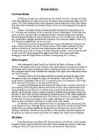
S C O T L A N D GENERAL OVERVIEW Territory: 31, 510 sq miles Highest peak: Ben Nevis 1343m Population: 5, 055, 000 National emblem: the thistle Capital: Edinburgh National flower: the bluebell Islands: About 790 National instrument: bagpipes Lakes: the best- known is Loch Ness, famous for National dish: haggis Nessie, its mythical monster Scotland is also famous for: whisky, kilts and sheep · One of the four constituent nations which form the UK · They have their own money, system of law, history, stamps, deep- rooted customs, traditions and ancient language- Gaelic · Most people speak the Scottish dialect becoming endangered language · Weather unpredictable · Breat...
Scotland Overview Flag-Saltire Royal Standard of Scotland Edinburgh, Glasgow First Minister Alex Salmond 78,387km² 5,222,100 St Andrew History Picts (Celtic tribe) Romans named scotland Caledonia The Scots Queen Mary was forced to abdicate the Scottish throne in 1567. National Symbols Thistle Declaration of Arbroath Tartan Bagpipes Kilt Honours of Scotland Crown, Sword and sceptre are from late fifteenth and early sixteenth century. Crown was made in 1540. Pope Julius II presented the sword to King James IV in 1507. The sceptre was made in 1494 and was presented to King James IV by Pope Alexander VI Honours of Scotland Language Have spoken Pictish, Scottish Gaelic similar Norse, Norman- to Irish, it is French and Brythonic recognised a...
British kings and queens Kings King Henry VIII King Henry VIII is arguably the most well-known king of England. Famous for beheading his wives, of which he had six, King Henry VIII also had several children. King James I King James I was already King of Scotland when he got the English crown. King James I was the first ruler to call himself King of Great Britain, as he ruled England, Scotland and Wales. King James was the first King of Great Britain. King William I, the Conqueror King William I, otherwise known as William the Conqueror was born in France on 1028. He became friendly with the current English King, Edward the Confessor. He invaded and attacked England on Edward's death, as he was promised the English crown, but then denied it by the Saxon Harold. King George VI King George VI did not expect to become king, he was the shy brother of Edward VIII who only took the thrown when Edward...
King Charles l Jaanika, Annabel Life • In 1604 to England • 1625 spoused • Reigned from 1625-1641 • 1628 he prorouged English Parliament • 1630 child Charles • 1649 executed Family • Father- James VI of Scotland and I of England • Mother- Anne of Denmark • Got married in 1589 • Brother Henry Important things during his lifetime •Born in Scotland •Brothers death •Coronation •Wife •War with Scots •Death
King William I When William died his lands were divided between his eldest two sons. Robert inherited Normandy, while William became king of England. Died from injuries EDWARD V He and his brother Richard were murdered in the Tower of London Alfred the Great - King of Wessex (part of England). All British modern British monarchs trace from the Wessex line. William I, the Conqueror. Founder of the modern British state. Henry II - added Ireland the British possessions John I - signed Magna Carta, the beginigs of the British constitution Edward I - conquered Wales Edward III - started 100 years war Henry V - Last great warrior king Henry VIII - Broke England away from Catholic church. Elizabeth I - laid the seeds of the British Empire, and tons of other stuff James I - Was King James VI of Scotland, inherited throne from Elizabeth I, united England and Scotland Charles I - Overthrown by Parliament and executed. Replaced by a re...
Stonehenge One of the best known ancient wonders of the world, 5000 years old Megalith monument, built by western mediterraneans during 3000-1600 BC Circular structure, large standing stones, aligned with rising sun at teh solstice Attlers and bones were sued to dig pits that hold the stones The Celts in Britain and their legacy 700-200 BC celts invade Britain Gaels or Goehls(Ireland and Scotland),Cymri(Wales) and Brythons(gave name to Brittany) Fierce fighters,superb horsemen.Most of them farmers, lived in thatched houses Good at art, craftmanship, used iron Divided into tribes, ruled by kings, only in face of danger would they choose a single leader Legacy- hill-forts, farms, churches, field system, woodland, pasture, weapons, iron objects, langugae, culture Caesar in Britain The great Roman Emperor Firts came 55 BC to gather information, celts ...
SCOTLAND 1. What is the capital of Scotland? The capital of Scotland is Edinburgh. 2. What is the population of Scotland? 2008 estimate is 5, 168, 500. 3. Why isn't S an independent country? Because it's part of the United Kingdom. 4. Did the Romans conquer Scotland? No, the Romans never conquered Scotland. 5. Why did they build Hadrian's wall? They built it to protect thei Empire south of the Scottish border. 6. When were S and England united? Why? Because there were many wars between them and in 1603 the Scottish kind James VI, became King of England and a century later they were united because of that. 7. Who's Robert Burns?' He's the national poet of Scotland. 8. When and how do Scottish celebrate Burns Night? (What do they do on that day?) They celebrate it on his birthday on the 25th of January every year. They have a ...
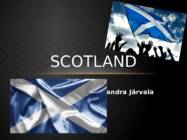
SCOTLAND Sandra Järvala GEOGRAPHY & POPULATION · Scotland is a country that is part of the United Kingdom and coers the northern third of the Island of Great Britain. · The Scotland capital city is Edinburgh. MAJOR CITIES · The largest city is Glasgow. Glasgow has a population of 598,830. The city has an area of 175.5 km ². · Aberdeen, Dundee, Paisley, East Kilbride and Livingston are are also large cities. · There is a Glasgow bus tours for tourists SCOTLAND FLAG · The Flag of Scotland, also known as Saint Andrew's Cross or the Saltire, is the national flag of Scotland. · Scottish flag is blue · On the flag is a white X-shaped cross. NATIONAL SYMBOLS · The national flower of Scotland is the thistle. · Scotland's national animal is the unicorn. · The Scots Pine is the national tree of Scotland. · Scotland's national bird is the golden eagle. HERALDRY · The Royal Arms of Scotland is a coat of arms symbolising S...
KING CHARLES I (sinu nimi) Life The second son of King James VI and Annie of Denmark, Charles was born in Dunfermline palace, on 19. November 1600. Charles was a weak and sick child. Charles I liked to collect art He started English Civil War at 1642 He died on 30. January 1649 Family Mama and Papa: James I (19 June 1566 27 March 1625) Anne of Denmark (12 December 1574 2 March 1619) Family Children: Charles James (13 May 1629) Charles II (29 May 1630 6 February 1685) Mary of England (4 November 1631 24 December 1660) James II (14 October 1633 - 6 September 1701) Princess Elizabeth (28 December 1635 8 September 1650) Family Princess Anne (17 March 1637 - 5 November 1640) Princess Catherine (29 June 1639) Henry, Duke of Gloucester (8 July 1640 - 13 September 1660) Princess Henrietta (16 June 1644 - 30 June 1670) Events during his lifetime 1610-Galileo sees the moons of Jupiter from his telescope 1612-Cha...
History of Great Britain Prehistory (55BC) no written records 6th 3rd c. BC the Celts came to British isles hill figures, hill forts, stone circles ( Stonehenge ) RomanBritain (55BC 400AD) Julius Caesar, named the country Albion Hadrian's Wall, villas, roads, the town of Bath The AngloSaxon, Danish and Norman invasions Germanic tribes settled and stayed Anglia Christianity was brought, religion became important, churches were built 8th century = raids by the Vikings and the Danes 1016 1042 : Under Danish rule ( York was the capital ) 1042 : local AngloSaxons regain their rule 1066 : Normans arrive ( the Norman conquest ) Medieval Britain (106615th c.) the Battle of Hastings William the Conqueror a new AngloNorman state the feudal system introduced the rule of the king and church strengthened centralised country, military rule Scotland, Wales and Ire...
Aggregation of Scotland with England Tartu Veeriku School 7a Koit Krusberg 25 March 2015 Edward I Lived in 17 June 1239 – 7 July 1307 Nicknames Edward Longshawk, Hammer of the Scottchs 15 children, 10 girls and 5 boys Next king Edward II Edward II Edward II (25 April 1284 – 21 September 1327 Son of Edward I By the Grace of God, King of England, Lord of Ireland and Duke of Aquitaine James VI and I Lived 19 June 1566 – 27 March 1625 Was crowned in 1603 Son of King Henry and Queen Mary Stuart Next king was Charles I of UK Charles I Lived in 19 November 1600 – 30 January 164 King of UK until his execution in 1649 Absolutism Next king was Charles II Charles I References http://et.wikipedia.org/wiki/Inglise_kodus %C3%B5da http://en.wikipedia.org/wiki/Edward_I_of_En gland http://en.wikipedia.org/w...
16th century (Tudors) 1. Henry VII - avoided wars, careful with money, didnt have expensive parties, was a rather shadowy figure 2. Henry VIII- brilliant scholar, excellent knight, good-looking, ambitious, self- centered, loved expensive clothes and parties. Wasted his fathers money very quickly and had 6 wives. His first wife couldnt give birth to a baby boy and they only had a daughter. His next wife only gave birth to a girl too. His next wife gave birth to a boy but died after the labor. He didnt like his 4th wife so he sent her back. His fifth wife was young and beautiful but had many lovers and Henry didnt like it so she was sent to the Tower and was beheaded. HIs 6th wife survived. 3. Edward- was sickly and ruled only for a few years and then he died 4. Mary Tudor/Bloody Mary- was catholic and killed many protesntants. Ruled only f...
United Kingdom AT115 Martin Pillai Early history • In 1066, the Normans invaded England from France • In 1603, the kingdoms of England, Scotland and Ireland were united in a personal union when James VI, King of Scots, inherited the crowns of England and Ireland and moved his court from Edinburgh to London • In the mid-17th century, all three kingdoms were involved in a series of connected wars, which led to the temporary overthrow of the monarchy and the establishment of the short-lived unitary republic of the Commonwealth of England, Scotland and Ireland. Acts of Union • On 1 May 1707, the united Kingdom of Great Britain came into being, the result of Acts of Union being passed by the parliaments of England and Scotland to ratify the 1706 Treaty of Union and so unite the two kingdoms • The term "United Kingdom" became officia...
Report of SCOTLAND Maiki Joakit 10. klass 2008 Etymology Scotland is from the Latin Scoti, the term applied to Gaels. The Late Latin word Scotia (land of the Gaels) was initially used to refer to Ireland. By the 11th century at the latest, Scotia was being used to refer to (Gaelic-speaking) Scotland north of the river Forth, alongside Albania or Albany, both derived from the Gaelic Alba. The use of the words Scots and Scotland to encompass all of what is now Scotland became common in the Late Middle Ages. History Repeated glaciations, which covered the entire land-mass of modern Scotland, have destroyed any traces of human habitation that may have existed before the Mesolithic period. It is believed that the first post-glacial groups of hunter-gatherers arrived in Scotland around 12,800 years ago, as the ice sheet retreated after the last glaciation. Groups of settlers began building the first known permanen...
Years 1154-1485 Henry I was the first unquestioned ruler. One of the most important kings in the Middle Ages. He had lands in Britain & France. Then the government was the monarch, a person, not a place. He had more land than any pervious king. After his marriage to Eleanor of Aquitaine, he also ruled the lands south of Anjou. His empire stretched from the Scottish border to the Pyrenees. England provided most of its wealth, but the heart was Anjou. Henry II began to regain royal control. During the war some barons had become very powerful. He pulled down some of their castles. He tried to restore law & order. He wanted the same kind of justice to be used everywhere. He appointed his own judges to travel around the country. They dealt with crimes & disagreements over poverty. Serious offences were tried in the king's court. At first they had no special knowledge or training. They were trusted to use common se...
These two chapters highlight the kinds of commentary Swift makes throughout the novel. By describing a society that chooses its highest officials with silly competitions like seeing who can jump the highest on a tightrope, Swift is poking fun at the way officials are chosen in England. He is also commenting on the disturbing trend of politicians who are willing to do whatever it takes to gain favour in the courtincluding humiliating themselves. The danger of ambition is also figured here; jumping badly can lead to death. Having Gulliver stand with his legs apart so that the Lilliputian armies can walk through is also a ridiculous idea. It is a comment on the pomp and circumstance of English armies. To Swift it seems that armies are often more concerned with looking impressive than with being impressive. This scene might also be an allusion to the Colossus of Rhodes, described in Julius Caesar by Shakespeare as a largerthanlife ...
Britain History Pre-Norman Britain The Iberians brought their metal-working skills and the first real civilization to Britain in the third millennium B.C and were overrun by various Celtic invasions that began in the 8th century. The Celts introduced their tribal organization and an early form of agriculture before they were forced westward by the Roman invasion. Forms of Celtic language are still spoken in Britain. Romans (with Julius Caesar in the head of them) first tried to occupy Britain in 55 B.C., but there was a rebellion in Gaul so they had to leave to fight against it. Next time they came in 43 A.D. and their leader was Emperor Claudius. Romans brought a lot with them. Their brought paved roads, the sites of important cities, the seeds of Christianity, the Roman law, Roman baths, language and advanced civilization. They also built Hadrian's Wall in 122 A.D. Romans occupied...
1) General facts The UK: * the United Kingdom of Great Britain and Northern Ireland was formed in 1801 * it covers 243,610 sq km * everybody from the UK is called British * the capital city is London * is made up of four constituent countries: England, Scotland, Wales and Northern Ireland which in turn are divided into counties * the flag is called the Union Jack which is a combination of the flags of England, Scotland and Northern Ireland * the population is about 60,000,000 people, the population density is 242 people/sq km * its coasts are washed by the Atlantic Ocean, the North Sea, the English Channel, the Celtic Sea, Saint George's Channel, and the Irish Sea. It is linked to France by the Channel Tunnel * the United Kingdom is a constitutional monarchy. The current monarch is Queen Elizabeth II, who is also the Queen and Head of State of fifteen other Commonwealth Realms, such as Can...
1: When was London founded, and by whom? London, England was founded in A.D. 43 by the Romans 2: What was its original name? Londinium 3: What happened to London in 61 AD? 61 AD Boadicea, the queen of a tribe of Britons, led a rebellion against the Romans 4: What was the population of London in the second century AD? Around 60,000 5: What happened in 851 AD? 6: What did Alfred the Great do? He defended Anglo-Saxon England from Viking raids, formulated a code of laws, and fostered a rebirth of religious and scholarly activity. His reign exhibits military skill and innovation, sound governance and the ability to inspire men and plan for the future, piety and a practical commitment to the support of religion, personal scholarship and the promotion of education. 7: What did Ethelred do at London Bridge? King Ethelred burnt down the bridge to split apart the invading forces of the Dane Svein Haraldsson 8: Who controlled London from 101...
LONDON HISTORY PERIOD EVENTS PEOPLE The Celtic period (400 BC Name: Celtic words (Llyn (a lake) + AD 43) Dun (a fort or strong place) ) Not important The Roman occupation (AD 43 Londinium not important Boadicea a revolt against - AD 410) politically. An important trading the Roman conquest centre. Devastation AD 61. Rebuilt. Roman walls built in AD 200. Anglo Saxons (AD 400 Destroyed the Roman towns. Many 1066) kingdoms. London in ruins. King Egbert one Flourishing. Attacks by Vikings. kingdom England (the 9th ...
LONDON The history of the town is very closely linked with the history of the country itself. The name probably comes from the celtic words Llyn, which means a lake, and Dun, which means a fort or a strong place. Although the site was not important during the Celtic period (400 BC 43 AD) During the Roman occupation Londinium, as it was called then, was not influential politically, but was, however an important crossing point for the romans over the river Thames. Londinium was at a very good place, so it soon became a trading centre. In AD 61 the city was devastated by Boudicca, who led a revolt againt the Roman conquest of Britain. The city was burned down and its inhabitants massacred. London was rapidly rebuilt, becoming the capital of the province Britannia. AD 122 Roman walls were built around it as a Around AD 400 the Anglo-Saxons invaded Britain. They destroyed the roman towns and formed many kingdoms that were hostile to one a...
History exam *Stonehenge - is a monument located in England. It is one of the most famous prehistoric sites in the world and is composed of earthworks surrounding a circular setting of large standing stones. The surrounding circular, earth bank and ditch, have been dated to about 3100 BC. Stonehenge was produced by a culture with no written language. Many aspects of Stonehenge remain subject to debate. There is little or no direct evidence for the construction techniques used by the Stonehenge builders. *The Celts in Britain and their legacy The Cets lived in Britain in The Iron Age. They were warring tribes who were battleful amongst themselves as well as inter-tribal war. They were not centrally governed. The Celts brought iron working, iron ploughs and metal swords, horses, wheels and chariots - all these things gave them an instant superiority over the native tribes. The Celts built a number ...
BRITISH NATIONAL SYMBOLS Research work CONTENTS CONTENTS.....................................................................................................................................2 INTRODUCTION............................................................................................................................3 1. BRITISH NATIONAL SYMBOLS..............................................................................................5 1.1 Great Britain and British story................................................................................................5 1.2 National Symbols and Nation Building..................................................................................5 1.3 The Use of Flags throughout History.....................................................................................6 1.4 The Early Modern Flags. United Kindom: Union Jack.........................................
The Renaissance In the history the Middle Ages were followed by the Renassance period. During this period a new class called bourgeoeisie came into being. This is the period when monarchies based on nationality were estabilished. The Renaessance started in Italy In the 14th century. Then it spread all over Europe, reached England in 16th century. The struggle for power culminated in a war called The War of Roses. It was a civil war between two dynasties, families. They had different emblems on one side the Yorks (white rose) other Lancasters (red). They couldn't decide who gets the throne. War ended 1485. A new dynasty came to throne, Tudor, the first king in this dynasty was Henry Vll. When he came to throne a period of stability followed because he built a nation based state. He was good at diplomacy.He could avoid quarrels and wars with neigbouring countries. France, Spain - greatest enemies.So he ...
Great Britain Pärnu 2012 Contents Great Britain Great Britain or Britain is an island situated to the northwest of Continental Europe. It is the ninth largest island in the world, the largest European island, and the largest of the British Isles. With a population of about 60.0 million people in mid-2009, it is the third most populous isla...
Avinurme Gümnaasium Referaat Suurbritannia Andres Oja Juhendaja: Ene Lüüs Avinurme 2010 Lipp ja vapp Suurbritannia lipp ehk Union Jack on Suurbritannia riigilipp ja endise Briti impeeriumi lipp. Lipu praegune kujundus pärineb 1801. aastast. Lipp on saadud Inglismaa, Sotimaa ja Põhja-Iirimaa lippude kombineerimisel. Suurbritannia vapil on esindatud Ühendkuningriigi erinevad osad. Vapikilbi esimesel ja neljandal väljal asuvad Inglismaa kolm leopardi. Teisel väljal on Soti lõvi ja kolmandal väljal Iirimaa harf. Vasakult toetab vapikilpi krooniga inglise lõvi ja paremalt soti ükssarvik. Teks...
Topic London Tallinn English College Tallinn 2007 1. Introduction London is the capital city of the United Kingdom and the largest urban area in England. The ancient City of London, to which the name originally belonged, still maintains its medieval boundaries, but the name "London" has long applied more to the whole metropolis that has grown up around it. London has been an important settlement for over two millenniums. It is also one of the world's leading business, financial and cultural centres and its influence in politics, education, entertainment and even fashion contribute to its status as a major global city. London is a major tourist attraction with four world heritage sites, several royal parks and numerous iconic landmarks such as the Houses of Parliament, Towe Bridge, the Tower of London, Westminster Abbey and the London Eye. 2. History Although there is some evidence of a permanent settle...
N. A. Vavilov ASPECTS OF BRITISH HISTORY Н. А. Вавилов КРАТКАЯ ИСТОРИЯ ВЕЛИКОБРИТАНИИ Учебное пособие на английском языке Москва Институт международного права и экономики имени А. С. Грибоедова 2008 2 УТВЕРЖДЕНО кафедрой лингвистики и переводоведения Вавилов Н.А. Краткая история Великобритании: Учебное пособие на английском языке. – 2-е изд., пересмотр. и испр. – М.: ИМПЭ им. А.С. Грибоедова, 2008. – 88 с. Пособие содержит краткий очерк важнейших событий в истории Великобритании – от первых документально засвидетельствованных вторжений на остров (кельтов, римлян и англосаксов) до создания и распада Британск...
1Peatkk Hommikul tundi pevas 1889 , Sherlock Holmes ja dr Watson rkvel avastada , etklaline oli oma korter eelmisel htul , kuid lahkusid enne ninud kas mees . Kuid ta maha jttisjalutuskepp . Jalutuskepp kannab mrget : " James Mortimer , MRCS , tema sbradCCH " See vimaldab kahe alustada tehes mned mahaarvamisi tema iseloomu ja elukutse kasutades Holmes meetodeid ( philiselt valides vlja ksikasjadobjekti ja teha tenoliselt asjaoluna seda). Watson kirjeldabsmpaatne vana maa-arst , kes saidstick kohalikust hunt ,teooria , et Holmes on mitmeid vastuviteid . Ta vidab selle asemel , et tegemist on noore praktik esitatakse koosstick , kui ta lahkus Londoni Charing Cross haigla ( CCH ) liikuda riigis. Watson kontrolli mned ksikasjad ja vlimuslokkis spanjel kelle hambajljed jljendsuhkruroo jrgnevad peagi tema omanik , James Mortimer , lejnud mahaarvamised on vimalik uurida. Nagu selgub , Holmes on vaid veidi vlja, nagu Mortimer antiroo kui ta o...
ISIKSUSEPSÜHHOLOOGIA I eksam 22.mai kell 16.15-17.30, M-22 eksam II eksam 4.juuni III aeg sügissemestri vahenädalal. I LOENG I TEOORIA Teooria komponendid: ühik, postulaadid, ennustused, hüpoteesid. Teooria headus: koherentsus, relevantsus, piisavus, ökonoomsus, lihtsus. Metateooria. – teooriate teooriad. Ühikuga alustatakse mudeli loomist. Selleks on käitumine või püsijoon (ajas muutumatu). Postulaadid – „mis siis tuleb kui..“ Teooria headus: llihtne, ei sisalda kõiksust, mittevastuoluline, teeb mõõdetavaid ennustusi. 2. ISIKSUSE TEOORIAD. Filosoofilised eeldused: - Determinism. - Pärilikkus. Keskkond muudab pärilikkuse poolt determineeritud skeeme. - Unikaalsus. - Proaktiivsus. Isiksus on aktiivne. - Teaduslikkuse printsiip. 3. ISIKSUSE KIRJELDAMINE: Nomoteetiline lähenemine – samad isiksuse jooned, erinevus vaid joonte väljenduses. Saavutame võimalus...
Challenges of children`s “participation”: A Case Study of active citizenship in Cadle Primary School Gerli Orumaa – 662974 9th of May 2014 Word Count: 8,800 `Submitted in partial fulfilment of the requirements for the degree of B.A. International Relations` Table of Contents Abstract 3 Introduction 4 Chapter 1: Citizenship, Children`s Rights and Participation: from the UN to the UK 6 Chapter 2: Citizenship Education in Wales………………………………………………14 Active Citizenship in Cadle Primary School: A Case Study 20 Conclusion 29 Bibliography 32 Appendices Appendix 1: The United Convention of the Rights of the Child Appendix 2: Interview with Jamie Richards, the Head Teacher of Cadle Primary School 2 Abstract: Children inhe...
Some of the things you will learn in THE CODEBREAKERS • How secret Japanese messages were decoded in Washington hours before Pearl Harbor. • How German codebreakers helped usher in the Russian Revolution. • How John F. Kennedy escaped capture in the Pacific because the Japanese failed to solve a simple cipher. • How codebreaking determined a presidential election, convicted an underworld syndicate head, won the battle of Midway, led to cruel Allied defeats in North Africa, and broke up a vast Nazi spy ring. • How one American became the world's most famous codebreaker, and another became the world's greatest. • How codes and codebreakers operate today within the secret agencies of the U.S. and Russia. • And incredibly much more. "For many evenings of gripping reading, no better choice can be made than this book." —Christian Science Monitor THE ...
Philosophy of Language Philosophy of Language: a Contemporary Introduction introduces the student to the main issues and theories in twentieth and twenty-first-century phi- losophy of language, focusing specifically on linguistic phenomena. Topics are structured in four parts in the book. Part I, Reference and Referring, includes topics such as Russell's Theory of Descriptions, Donnellan's distinction, problems of anaphora, the description theory of proper names, Searle's cluster theory, and the causalhistorical theory. Part II, Theories of Meaning, surveys the competing theories of linguistic mean- ing and compares their various advantages and liabilities. Part III, Pragmatics and Speech Acts, introduces the basic concepts of linguistic pragmatics, includes a detailed discussion of the problem of indirect force and surveys approaches to metaphor. Part IV, new to this edition, examines the four theories of metaphor. Features...
Handbook of Meat Processing Handbook of Meat Processing Fidel Toldrá EDITOR A John Wiley & Sons, Inc., Publication Edition first published 2010 © 2010 Blackwell Publishing Blackwell Publishing was acquired by John Wiley & Sons in February 2007. Blackwell’s publishing program has been merged with Wiley’s global Scientific, Technical, and Medical business to form Wiley-Blackwell. Editorial Office 2121 State Avenue, Ames, Iowa 50014-8300, USA For details of our global editorial offices, for customer services, and for information about how to apply for permission to reuse the copyright material in this book, please see our website at www.wiley.com/ wiley-blackwell. Authorization to photocopy items for internal or personal use, or the internal or personal use of specific clients, is granted by Blackwell Publishing, provided that the base fee is paid directly to the Copyright Clearance Cent...
 annaabi.ee