Leidsid 33 sarnast õppematerjali, mis on seotud failiga "12 principles of language teaching". Need materjalid aitavad sul teemat sügavamalt mõista.
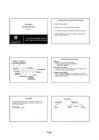
language, teach, student, students, learning, application, cognitive, learner, teacher, native, mean, linguistic, rewardrrors, practice, move, strategic, control, success, requires, connecting, toward, rules, term, knowledge, motivation, perform, dependent, goodncourage, accuracy, connectionffect, means, come, target, absorb, there, types, mentalELT Methodology (FLGR.01.041) 27.12.2012 Home Assignments. I Youtube clips: · A vision of K-12 students I personally think that Estonian learners are also digital learners. They spend more time at the computers or laptops or iPads etc. than read books or move outside. And another thing is that teachers are less capable in using technological appliances. But the latter mentioned fact is an advantage for us teachers as well. It gives us an opportunity to provide our students to experience success. They can help and assist us if we need some technological help.
UNIVERSITY OF TARTU DEPARTMENT OF ENGLISH Using Blogs as a Platform in the Teaching of English as a Foreign Language Research paper Tartu 2010 ABSTRACT This work analyses the usefulness of blogging in teaching English as a foreign language. The definition of the term `blog' is provided along with the advantages and disadvantages of blogs' usage in practice. The analysis of language skills developed by students throughout the use of blogs for learning purposes is given in the paper with possible limitations that blogs have. Author of this paper also shares personal comments about the experience in the field. In this paper it is also described which research methods are planned to be employed for the conduction of research project. 2 ABSTRACT..............................
and education. In 1973, the late Ellis Page and colleagues at the University of Connecticut programmed the first successful automated essay scoring engine, "Project Essay Grade (PEG)" (1973). The technology was foretold some six years earlier in a landmark Phi Delta Kappan article entitled, "The Imminence of Grading Essays by Computer" (Page, 1966). At the time the article was provocative and a bit outrageous, though in hindsight, it can only be deemed prophetic. As a former high school English teacher , Page was convinced that students would benefit greatly by having access to technology that would provide quick feedback on their writing. He also realized that the greatest hindrance to having secondary students write more was the requirement that, ultimately, a teacher had to review stacks of papers. While PEG produced impressive results, the technology of the time was too primitive to make it a practical application. Text had to be typed on IBM
Tallinna Mustamäe Humanitargümnaasium Valeria Jefremenkova ENGLISH AS A GLOBAL LANGUAGE INGLISE KEEL KUI ÜLEMAAILMNE KEEL Research work Supervisor: Jevgenija Kozlova Tallinn 2016 1 Table of Contents СONTENT…………………………………………………………………………………...2 INTRODUCTION…………………………………………………………………………...3
to have hallucinations, often about their ancestors. The researchers took blood samples from the monks before the ceremony and immediately after the monks reported seeing hallucinations. They found that serotonin levels had increased in their brains. Serotonin activated the hypothalamus and the frontal cortex resulting in hallucinations. They concluded from this study that sensory deprivation triggered the release of serotonin, which actually altered the way the monks experienced the world. The application of such research has improved the lives of many people, because drugs have been developed stimulating or blocking certain neurotransmitters. Psychologists however, consider the role of neurotransmitters on behavior, but do not solely rely on it to explain behavior. Brain technology has developed rapidly during the past century and is now used extensively in neuropsychology because it provides an opportunity to study the active brain
Psychology · Personality extra reading Differential Developmental Funder, D.C. (2010). The Personality Puzzle (5th edition). New York: Norton. (Earlier editions are fine.) Perception Biological · Intelligence extra reading Cognitive Deary, I.J. (2013). Intelligence. Current Biology, 23, 673-676. (Memory) Social Deary, I.J. (2001). Intelligence: A Very Short Introduction. Oxford: Methodology Cognitive Oxford University Press. (Language and thinking) Personality
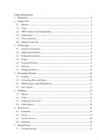
Table of Contents Abstract 3 Introduction 4 Chapter 1: Citizenship, Children`s Rights and Participation: from the UN to the UK 6 Chapter 2: Citizenship Education in Wales………………………………………………14 Active Citizenship in Cadle Primary School: A Case Study 20 Conclusion 29 Bibliography 32 Appendices Appendix 1: The United Convention of the Rights of the Child Appendix 2: Interview with Jamie Richards, the Head Teacher of Cadle Primary School 2 Abstract: Children inherently have had a rather tenuous relationship with citizenship. Similarly to how women were once viewed, children have not been considered as subjects of rights due to their perceived incompetence and irrationality. Currently, children are not considered as being rational and capable of exercising responsibility until the age of majority, the age of 18.
....................................................16 2.1 The questionnaire 1...............................................................................................................16 2.2 Analysis of the questionnaire 1.............................................................................................18 2.3 Results of the questionnaire 1...............................................................................................23 During the first questionnaire 30 students of the 9th and 10th class of Gymnasium were questioned about the British national symbols...........................................................................23 Surprisingly, according to the results, more than 50 percent of students are aware of the national flags of Great Britain, Scotland, Northern Ireland and Wales. As can be seen, quite a lot of children also know the name of the Great Britain flag. However, almost all of the
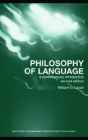
Philosophy of Language Philosophy of Language: a Contemporary Introduction introduces the student to the main issues and theories in twentieth and twenty-first-century phi- losophy of language, focusing specifically on linguistic phenomena. Topics are structured in four parts in the book. Part I, Reference and Referring, includes topics such as Russell's Theory of Descriptions, Donnellan's distinction, problems of anaphora, the description theory of proper names, Searle's cluster theory, and the causalhistorical theory. Part II, Theories of Meaning, surveys the competing theories of linguistic mean- ing and compares their various advantages and liabilities. Part III, Pragmatics
My languages I love different languages. I mean, I really, really love different languages. I also believe and have been told that I pick them up rather easily. That might be true, although I did not pick any Greek up in Greece but that might have been because they spoke so damn fast that I could not tell if it was a word or an entire sentence. The first foreign language I learned was Russian. Considering I was ten when Estonia became a Republic, it makes sense. We began studying Russian in first grade, though it was simplified – "koška" instead of "kot", "medvešonok" instead of "medved", "saichik" etc. Did not make much sense and we mostly played some games in Russian (Tare-tareke etc). Learned as much playing outside, since we had Estonian-Russian kids around as well. Not that we played with them. It's sad
He and queen living incarnations of ideals. Visual style of his reign more classical than James’s. Thomas Carew „Coelum Britannicum”. King’s policy of peace (peace in every courtly celebration). Benefits to the isle by the union of divine couple. Henrietta Maria Love and Beauty and Charles – Heroic Virtue, together a great force. Masques centre of court life. Stuart divinity + now queen as a Platonic love goddess. Maria – from French court amnners and highly artificial language of adoration – fashion. Idealised love wiped away all stains. Through their harmony, Charles could make his heavenly ascent and bring great benefits to their obedient subjects. Very costy. Closed court, believed in masques. 3. 17th century „metaphysical” poetry (Donne, Quarles, Herbert, Crashaw, Vaughan, Marvell) Religious poetry, books of emblems (allegorical pictures, verses explaining their moral), unconventional or
Estonians from becoming Germans. Considering their relatively small number, the beneficiaries of the Landesstaat were additionally protected by their disproportionally large representation amongst the Russian elite during the following two centuries. Many noblemen of the Baltic provinces had remarkable military careers, the most brilliant being Michael Barclay de Tolly who excelled in the war against Napoleon. Highly-educated and with good language skills, the share of Baltic Germans in the Russian diplomatic corps was considerable; several became ministers and governors general. 3|Page Population and social structure Systematic pillaging by Russian forces at the time of the Northern War, and the 17101711 plague epidemia, caused a huge demographic catastrophe. It is thought that after the Northern War there left no more than 150 000170 000 Estonians
Ergo Pikas Integration of Lean Construction and Building Information Modelling DISSERTATION Tallinn 2010 2 UNIVERSITY OF APPLIED SCIENCES Author: Ergo Pikas- Civil Engineering student, Faculty of Construction, Tallinn University of Applied Sciences Supervisor: Rafael Sacks- Associate Professor, Faculty of Civil and Env. Engineering, Technion Israel Institute of Technology Consultant: Roode Liias- Professor and Dean, Faculty of Civil Engineering, Tallinn University of Technology Title: Integration of Lean Construction and Building Information Modelling
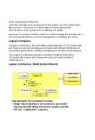
Applications Architecture The Applications Architecture refers to how useful applications are structured, procured and life cycle managed. Applications Architecture User Systems Architecture Covers all architecture aspects of Information, Technical and Applications Architecture. 3 Modelviewcontroller (MVC) is an architectural pattern used in software engineering. Successful use of the pattern isolates business logic from user interface considerations, resulting in an application where it is easier to modify either the visual appearance of the application or the underlying business rules without affecting the other. In MVC, the model represents the information (the data) of the application; the view corresponds to elements of the user interface such as text, checkbox items, and so forth; and the controller manages the communication of data and the business rules used to manipulate the data to and from the model. 4. design pattern
journalists and publishers, writers and poets. Russian philologis are highly demanded in various spheres of scholarly research and education, in the mass media, in civil service at the Ministry of Foreign Affairs, in archives, libraries, museums, in travel agencies, as well as Russian and international companies. Curriculum within in philological faculty includes courses of Russian and European languages and literature, courses of Linguistics and Theory of Literature for students to familiarize themselves with various schools and trends of Russian and foreign philology. The core curriculum also includes a number of Liberal Arts courses (Philosophy, History, Psychology, Pedagogy), as well as courses of basic mathematics and computer studies, and optional courses of science and the Humanities. The Department of Theory of Literature and the Department of General and Comparative
reason. A person can be insensitive in one way, such as blind, and extraordinarily sensitive in another way, such as in hearing. It is also possible to be so ultra-sensitive that the result is disadvantageous. I expect no argument in asserting that a normal sensitivity is a healthy, indispensable ingredient for optimal education. Sensitivity can be heightened or blunted by education. It is intertwined with curiosity. An ideal education affords numerous and varied opportunities for students to touch, see, smell, listen, hear; to spark their curiosity. When I was a child the things that pleased me were largely other than the plants which have earned me a living as an adult. For example, I collected postage stamps, played basketball, was fond of listening to music, played all manner of games, but dealt only in a neutral, uninspired fashion with plants. The one thing that was constant and of supreme importance was my love of reading. I don't recall why, but by an early age, say age
2) Middle English – 100,000 – 125,000 words) English becomes heterogeneous (Norman French, • 21,000 words English, Latin), hybrid of Germanic and Romance languages Norman French influence – about 10,000 words, 75 % are still in use (Baugh) Latin influence continues 3) Early Modern English – 200,000 – 250,000 English becomes a polycentric language; polyglot, cosmopolitan language 4) Modern English – 500,000 words (OED) At present at least 1 billion lexical units 2. Core and periphery Core vocabulary – often short (monosyllabic) words of Germanic and Old Norse origin = ie core vocabulary of most frequent words, and vague fuzzy peripherial words. Core meaning is the meaning which is at the centre of the word.periphery – vague. Formal usage (often polysyllabic words) from Norman French (rank, courtliness,refinement).
inscribe the writers as narrators/characters in their texts. Thus, the authors not only `translate' the foreign/Romanian culture for `home', but, in so doing, they also practice intercultural communication in their texts, by interacting with the native characters, who take active part in processes of intercultural mediation. Perspectives: Studies in Translatology 315 1. Preliminary stereotypes: selection of travel destination and border crossings
Object-oriented Paradigm •Everything is an object •A program is a bunch of objects telling each other what to do by sending messages •Each object has its own memory made up of other objects •Every object has a type •All objects of a particular type can receive the same messages Domain Model •A domain model does not represent the entire domain as it is in the real world. It includes only the concepts that are needed to support the application. Object •Is a partitioned area of memory where object code is stored •The area of memory is protected •This code can function relatively independently of other objects •Can be used by many parts of one program or by parts of many programs Message Passing •The mechanism by which objects communicate •The object can accept or reject the message •From outside the object it appears to be active data
· salutation · Paragraph 1 reasons for writing · Paragraphs 2, 3 development · Final paragraph closing remarks · Name · Letters are divided into two categories, formal and informal. There are various types of formal and informal letters . · It is important to think about the person who you are writing to before you begin writing a letter. If the wrong style is used, the letter will look impolite, silly or odd. For example, if you used formal language to write to a close friend, the letter would look odd, or if you used informal language to write a letter to a company, the letter would look impolite. · There are certain characteristics which allow us to distinguish between formal and informal letters. These are: ~ The salutation (e.g. Dear Sir/Madam, Dear Bill) ~ The style or language (e.g. use of formal language for formal letters, or the use of slang and idioms for informal letters) ~ The closing remarks (e.g
ancient people. Already in classical Latin the meaning was extended to denote the manner of expressing one's ideas in written or oral form. Jonathan Swift defined style as "proper words in proper places". In present day English the word "style" is used in about a dozen of principle meanings: 1. the characteristic manner in which a writer expresses his/her ideas (e.g. style of Byron) 2. the manner of expressing ideas, characteristic of a literary movement or period 3. the use of language typical of a literary genre (e.g. the style of a comedy, drama, novel). 4. the selective use of language that depends on spheres / areas of human activity (e.g. style of fiction, scientific prose, newspapers, business correspondence, etc.). STYLISTICS Stylistics is the study of style. The very term "stylistics" came in more common use in English only some 45 years ago.
English structure revision for the exam 1. Terms Language → A systematic, conventional (tavakohane) use of sounds, signs or written symbols in a human society for communication and self-expression. Human language at all levels is rule- or principle- governed (valitsema) meaning that language corresponds to the grammar. Natural language is usually spoken, while language can also be encoded into symbols (such as letters, morse etc) For example: Estonian, English. Linguistics → The scientific study of human natural language. Broadly, there are three aspects to the study which are Pragmatics (studies the use of language → interested in the gap between the sentence’s meaning and the speaker’s meaning). Semantics (concerned with the meaning of the language aspects and the way they
1. Be ready to explain the terms (lecture 1): language, linguistics, synchronic approach to language, diachronic approach to language, linguistic competence, linguistic performance, what is grammar?, prescriptive grammar vs. descriptive grammar; phonology, phonetics, phone, allophone, phoneme; morphology, morphemes (types of morphemes), morphs, allomorphs, types of affixes, derivational affixes, inflectional affixes; open vs closed class words; syntax. Language: a systematic, conventional use of sounds, signs or written symbols in a human society for communication and self-expression.
The stream of consciousness. Allusiveness. Virginia Woolf's Modern Fiction as a theoretical platform for Modernism. Criticism of Realist literary method. Literary modernism: end of the 19th century-1920 (reached its height) and ended 1940s. A self- conscious break with traditional aesthetic forms. Rejecting the sentiment and discursiveness typical of Romanticism and Victorian literature for poetry that instead favored precision (täppis) of imagery and clear, sharp language. Modernist writers embraced the unconscious fears of a darker humanity. Sub movements: surrealism, formalism, avant-garde, symbolism, imagism Structuralism: Writers used myth and music as a part of the books structure. J. Joyce "Ulysses". Deep structure is the same as in "odyssey" and T.S. Elliot "the fisher king"-more complicated experiment. Aldous Huxley ,,point counter point"-builds his chapters on principles of music. R. Aldington ,,death of a hero"-a jazz novel. Polyphony-harmony
Communication (telephone, internet) Server capacity from Amazon Hardware maintenance 3.6.Structure As the scale of the company is really miniature there is no defined structure per se. The head of the IT department who is also the product owner and, effectively, the head of the company and a chairman on board of directors presides over vast majority of large-scale IT projects the company is involved in. All other employees of IT department report to him. Interning students, if present, get attached to one of the two programmers and do their bidding and operate under their guidance and tutelage. The programmers generally have certain long-standing projects attached to them and deal with further developments and user support in their respective areas of responsibility. All the IT personnel are involved in advancing the WebMountain platform. People from other departments of the company, if bidden to perform some tasks from the realm
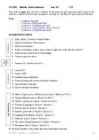
12. Special literary vocabulary 13. Special colloquial vocabulary 14. Metre in English poetry. Modifications of metre ("Rhythm and Text") 15. Typically English stanzas ("Rhythm and Text") 16. Rhythm in poetry and in prose ("Rhythm and Text") Study independently 17. Varieties of language (I. Galperin "Stylistics") 18. Emotive prose (I. Galperin "Stylistics") 19. Scientific prose style (I. Galperin "Stylistics") 20. Language of the drama (I. Galperin "Stylistics") 21. Publicistic style (I. Galperin "Stylistics") 22. The style of official documents (I. Galperin "Stylistics") 23. Newspaper style (I
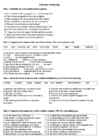
Education and learning Task 1. Underline the most suitable word or phrase. a) Jack decided to take a course/lesson in hotel management. b) Sheila always got good marks/points in algebra. c) After leaving school, Ann studied/trained as a teacher. d) Peter decided not to go in/enter for the examination. e) My sister learned/taught me how to draw. f) I can't come to the cinema. I have to read/study for a test. g) In history we had to learn a lot of dates by hand/heart. h) I hope your work will improve by the end of course/term. i) Martin failed/missed his maths exam and had to sit it again. j) If you have any questions, raise/rise your hand. Task 2. Complete each sentence with a word from the box. Use each word once only.
the fabliau (a comic, often anonymous tale that is characterised by an excess of sexual and other types of obscenity) and (3) literature on religious topics – either moralistic (teach right from wrong) or ecclesiastical (biblical subject). Middle ages – English becomes a literary language. Geoffrey Chaucer (1343–1400) – Father of English literature, The Canterbury Tales in English, increased the prestige of the language, provided a standardised form. The Canterbury Tales: frame story. Majority in verse, some prose. Intended to contain 124 stories, only finished 24
The symbols made by H. sapiens are clearly more advanced. We had also been around for 100,000 years before symbolic objects appeared so what happened? We had the capacity for art early in our history (Credit: SPL) We had the capacity for art early in our history (Credit: SPL) Somehow, our language-learning abilities were gradually "switched on", Tattersall argues. In the same way that early birds developed feathers before they could fly, we had the mental tools for complex language before we developed it. We started with language-like symbols as a way to represent the world around us, he says. For example, before you say a word, your brain first has to have a symbolic representation of what it means. These mental symbols eventually led to language in all its complexity and the ability to process information is the main reason we are the only hominin still alive, Tattersall argues. It's not clear exactly when speech evolved, or how. But it seems likely that it
One of the abts/the best was given by Jonathan Swift: ,,Proper words in proper places." In present- day english, the world style is used in about half a dozen basic meanings. 1. the characteristic manner in which a writer expresses his ideas. Some speak about the style of Hemingway, Dickens etc. 2. the manner of expressing ideas, characteristic of a literary movement or period. Style of symbolism, romanticism 3. the use of language to pick a literary genre-comedy, novel, drama, O.D (poetic form) etc. 4. the selective use of language that depends on spheres of human activity fiction, scientific prose, newspapers, official documents, business correspondenc etc. Style bears the stamp of indivual usage, that is every writer has a unique pattern/habit and abilities that form his style. This approach is best illustrated in the well-known victum of the french poet Georges-Louis
Intercultural communication What is business English? Loosely defined, BE refers to the Engl lg used in international trade or business. Loosely defined, BE refers to the Engl lg used in international trade or business. It is a specialized area of the Engl lg learning and teaching largely attributed to non-native English speakers Aim to enhance their chances of doing business with companies from English speaking countries. BE can refer to the study of business Engl voc used in the fields of trade, business, finance, or international relations. If the study focuses on techniques on business presentations, negotiations, correspondence, writing and other skills needed for business
in which there is limited private freedom but the economy remains highly controlled by the government. Syria is a member of the Council of Arab Economic Unity (CAEU). Two-thirds of Syria is desert; the other third is part of the Fertile Crescent along the Mediterranean coast. About 80 percent of the population lives in that fertile region. The total population of Syria is a little over 13 million. Half the people live in cities, 4 million in Damascus alone. Arabic is the official language of the Syrian Arab Republic and the language is spoken by nearly all Syrians. French is the second-most- common language. However, it has started to be rivaled by English. The majority religion in Syria is Islam: 85 percent of the population is Muslim. Other groups include Christians, Druze, Jews, Baha'is, and others. Syria is not a wealthy country; most people have a mediocre standard of living at best. City dwellers live in apartments. Those who are
AAC Advanced Audio Coding AACS Advanced Access Control System AAL Asynchronous Transfer Mode Adaption Layer AAM Automatic Acoustic Management AAP Applications Access Point [DEC] AARP AppleTalk Address Resolution Protocol AAS All-to-All Scatter AASP ASCII Asynchronous Support Package AAT Average Access Time AATP Authorized Academic Training Program [Microsoft] .ABA Address Book Archive (file name extension) [Palm] ABAP Advanced Business Application Programming [SAP] ABC * Atanasoff-Berry Computer (First digital calculating machine that used vacuum tubes) ABEND Abnormal End ABI Application Binary Interface ABIOS Advanced BIOS ABIST Automatic Built-In Self-Test [IBM] ABLE Adaptive Battery Life Extender + Agent Building and Learning Environment [IBM] ABM Asynchronous Balanced Mode ABR Available Bit Rate ABRD Automatic Baud Rate Detection ABRS Automated Book Request System [British Library]
 annaabi.ee