Leidsid 33 sarnast õppematerjali, mis on seotud failiga "Werb tenses". Need materjalid aitavad sul teemat sügavamalt mõista.
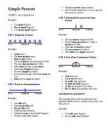
action, playing, actions, basketball, skiing, irritation, around, specific, clock, classroom, present, longer, skier, near, drums, song, lyrics, came, yesterday, parallel, walked, busy, doing, talking, complaining, something, singing, leaves, tonight, eating, tomorrow, studying, walking, arrive, going, redo, tests· New York is a small city. It is not important that this fact is untrue. [VERB] + s/es in third person USE 3 Scheduled Events in the Near Examples: Future · You speak English. · Do you speak English? · You do not speak English. USE 1 Repeated Actions Examples: · The train leaves tonight at 6 PM. · The bus does not arrive at 11 AM, it arrives at 11 PM. · When do we board the plane? Examples: · The party starts at 8 o'clock.
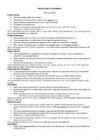
INGLISE KEELE KORDAMINE TIME CLAUSES Present Simple · Permanent states, facts (Tom works..) · Repeated and habitual actions, routines (She usually goes..) · Laws of nature and general truths (The sun sets in the west) · Timetables and programmes · Sporting commentaries, rewiews (Beckham wins the ball, crosses and Owen scores) · Feelings and emotions (I love Tallinn..) TIME EXPRESSIONS USED WITH PRESENT SIMPLE: usually, often, always, every day/week etc, in the morning/evening etc, at night/the weekend, on Fridays etc. Present Continuous
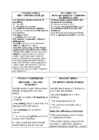
1.A decision at the moment of 1.Future plans made before the speaking: moment of speaking: A: 'I'm cold'. A: 'We've run out of milk.' B: 'I'll close the window'. B: 'I know, I'm going to buy some.' 2.Prediction based on opinion: 2.Prediction based on present I think the Conservatives will win the evidence: next election. Look at those boys playing football! 3.A future fact: They're going to break the window. He will be ten next year. 4.Promises / requests / refusal / willingness: I'll help you with your homework. Will you give me a hand? 5.In the same way as the future continuous, but with state verbs: I'll be at the station when you arrive. 'Shall' is used mainly in the forms 'shall I ?' and 'shall we?' in British English. These forms are used when you want to get someone's opinion,
Present perfect you have walked. You have been walking. I have run. I have been running. Past Perfect You had walked. You had been walking. I had run. I had been running. Future Perfect You will have walked You will have been walking. I will have run. I will have been running. The Simple Present Tense Expresses a habit or often repeated action. Adverbs of frequency such as, often, seldom, sometimes, never, etc. are used with this tense. She goes to work everyday. They always eat lunch together. On your handout, write one sentence that reflects SIMPLE PRESENT: something you do often, sometimes, never, seldom The Simple Present Tense This tense also expresses general truths or facts that are timeless. Snow falls in the December in Minnesota.
TENSE POSITIVE NEGATIVE QUESTION USE Present Simple I play tennis on They don't work in Does she know Habitual activities Lihtolevik Mondays. New York. him? Past Simple She went to Paris They didn't drive to Where did she get Actions happening at a defined Lihtminevik last week. work. that hat? moment in the past. Decisions made at the moment Future Simple I'll meet you at the He won't be able to Will they visit us about the future, fut. predictions,
FOR SINCE We use for + a period of time expressing duration We use since + a starting point, a specific time for six years - for two hours - for a week since April - since 1992 - since 8 o' clock I've lived in this house for six years. They have been watching It has been raining since one o' clock. They've known each other TV for two hours
Golden Grammar rules 1. Don't use an with own. Sue needs her own room. (NOT Sue needs an own room.) I'd like a phone line of my own. (NOT ... an own phone line.) 2. Use or rather to correct yourself. She's German or rather, Austrian. (NOT She's German or better, Austrian.) I'll see you on Friday or rather, Saturday. 3. Use the simple present play(s), rain(s) etc to talk about habits and repeated actions. I play tennis every Saturday. (NOT I am playing tennis every Saturday.) It usually rains a lot in November. 4. Use will ..., not the present, for offers and promises. I'll cook you supper this evening. (NOT I cook you supper this evening.) I promise I'll phone you tomorrow. (NOT I promise I phone you tomorrow.) 5. Don't drop prepositions with passive verbs. I don't like to be shouted at. (NOT I don't like to be shouted.) This needs to be thought about some more. (NOT This needs to be thought some more.) 6
It gives you an idea of what grammar is about. Read and remember it. Every name is called a noun, Pronoun As field and fountain, street and town. Noun In place of noun the pronoun stands, As he and she can clap their hands. The adjective describes a thing, As magic wand or bridal ring. Adjective Most verbs mean action, something done, Verb To read and write, to jump and run. How things are done the adverbs tell, As quickly, slowly, badly, well. ition Adverb Prepos The preposition shows relation, As in the street or at the station.
3 TALLEGG 11 MIZDE 4 VESITERM 12 LADA 5 STOW 13 SCHWUNG 6 KALEV 14 MAIASMOKK 7 YAMAHA 15 ISKU 8 ESTRAVEL 2 Affirmative tense Use Signal Words Negative/Questions · action in the present taking always, Present Simple A: He speaks. place once, never or several every ..., N: He does not speak. normally, often, Q: Does he speak? times seldom, · facts sometimes,
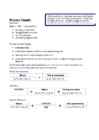
2. Things that happen all the time or repeatedly. She usually goes away at weekends. 3. Laws of nature (things that are true in general). The sun rises in the east. 4. Timetable events. The train leaves at 6.50 p.m. Negative form: I don't (do not) normally eat my lunch here. He doesn't (does not) like this film at all. Question form: Do you live here? How often does it rain around here? Signal words: always, every day/month, never, normally, often, seldom, sometimes, usually etc. PRESENT CONTINUOUS/PROGRESSIVE (kestev olevik) Form: am/is/are + ing Use: 1. Unfinished actions happening at or around the time of speaking. Listen! Somebody is crying. They are building a new bridge in our town. 2. Changes happening around now. The population of the world is increasing fast. 3. Arrangements for the future
______________________________ 7 My mum was taking/took a picture when she dropped the camera. ______________________________ 8 Hippies lived/were living in the 1960s and 1970s. ______________________________ 9 The plane arrived/was arriving in Madrid on time. ______________________________ 10 I played/was playing football when I broke my leg. ______________________________ Marks: /10 3 Rewrite these questions correcting the mistakes. 1 What clothes she wore at the party? ____________________________________________________________________________________________ 2 What time it started to rain?
· Mary (subject doing action) · washes (verb) · the dishes ( object receiving action). The tenses of the verb 1.Present (olevik) 2.Past (minevik) 3.Future (tulevik) 4.Future in the past (kaudne tulevik) Iga aeg võib esineda neljas eri rühmas 1.IndefiniteTenses (üldajad) 2.Continious Tenses (kestvad ajad) 3.Perfect Tenses (perfekti ajad) 4.Perfect Continious Tenses (perfekti kestvad ajad) Indefinite Tenses (üldajad) used to describe actions but do not state whether the action is completed or on- going märgivad tegevuse sooritamise fakti Peter visits us every day. Peter visited us yesterday. Peter will visit us tomorrow. Continuous Tenses (kestvad ajad) are used when talking about a particular point in time · We were sleeping when the storm began. What were you doing at five o'clock? When I came, the children were sleeping. Perfect Tenses are used when an action or situation in
PRESENT CONTINUOUS Klaarika Kaljula 9a Use 1.Present actions 2.Temporary actions 3.Longer actions in progress 4.Future (personal) arrangements and plans 5.Trends 6.Irritation 1.Present Actions Happening at the moment of speaking Most often, we use the Present Continuous tense to talk about actions happening at the moment of speaking. Ex. He is eating a dinner. Mary is talking with her friends. They are swimming in the pool. Stative Verbs There is a certain group of verbs that usually does not appear in the Continuous form. They are called Stative Verbs, and if used in the Continuous form, they have a different meaning. Ex. I think you look pretty today. Meaning: Opinion I'm thinking of moving to San Francisco. Meaning: Act of thinking 2
Subject + IS/ARE + Verb +ing (continuous verb) moment of speaking. The Present Continuous also describes activities generally in progress (not at He is sleeping. the moment). Another use of the tense is to talk I am visiting grandpa in the afternoon. about temporary actions or future plans. You are always coming late for the meetings! Use the Present Continuous: Present Actions: to talk about actions happening at the moment of speaking. (most often) Temporary Actions: for activities continuing only for a limited period of time. Longer Actions in Progress: when we are in the middle of doing something time-consuming (i.e. something that takes time to complete
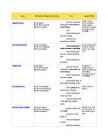
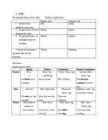
Tense Form Use Hints Example + I pv ((e)+s) Present Simple 1. daily routines, habits or repeated actions Every hour/day/week etc , I always play football in -? do/does not+I pv 2. permanent states usually, always, in the the evenings morning/evening/night, at night Present Am/is/are+Iing 1
tense Affirmative/Negative/Question Use Signal Words always, every ..., action in the present Simple Present A: He speaks. never, normally, N: He does not speak. taking place once, never or often, seldom, Q: Does he speak? several times sometimes, usually if sentences type I
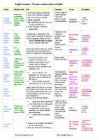
English Grammar - The most common tenses in English Tense Signal words Use Estonian Form Examples · something happens repeatedly *korduv tegevus every day · how often something happens *püsiv olukord sometimes, *tulevikus · one action follows another I work Present twice a week toimuv, seotud · things in general infinitive he works Simple always, often sõiduplaanidega · after the following verbs (to love, he/she/it + s I go
4 1.The Future Continuous describes an event which will be happening at a future point. Come round in the morning. I’ll be painting the kitchen. 2. It can also describe events which are going to happen anyway, rather than events which we choose to make happen. I won't bother to fix a time to see you, because I’ll be staying in the office all day long anyway. You can come at any time. 3. The Future Continuous is also used for actions that are going on now and which we think will progress into the future. They’ll be working on this project till next spring. 4. In some contexts Future Continuous also sounds more polite than will. Using the Future Continuous is a polite way to ask other people about their intentions without trying to influence them. Will you be needing any more help with this, or can I go home now? Will you be seeing Michael next week? If so, could you give him this?
they speak they are speaking Signal words: always, every, often, normally, usually, Signal words: at the moment, at this moment, today, sometimes, seldom, never, first, then now, right now, Listen!, Look! Rules · in general (regularly, often, never) · right now ex. Colin plays football every Tuesday. ex. Look! Colin is playing football now. · present actions happening one after another · also for several actions happening at the same ex. First Colin plays football, then he watches TV. time · action set by a timetable or schedule ex. Colin is playing football and Anne is watching. · arrangement for the near future ex. The film starts at 8 pm. ex
consonant. beg begged plan planned We also double the consonant in words of more than one syllable, if the last syllable is stressed. permit permitted prefer preferred In British English l is usually doubled, even if the syllable is unstressed. travel travelled When to use the Past Simple Past Simple generally refers to: • Completed or finished actions I got up, switched off the radio, and sat down again. • Habits Every day I went to the park. • States In those days, I didn't like reading. 3 Past Continuous The Past Continuous is the past tense of be + an -ing-form. I/he/she/it was playing you/we/they were playing Negative I/he/she/it was not playing/wasn’t playing
4 travelled years 5 has she changed 4 had been studying psychology for Transcript 6 went five years The second photo also shows 7 hasn't had 5 had been running his own record students in a classroom. I reckon 8 Did she meet label since 2004 they are about 17 years old. It's a 9 was travelling 2 1 She had completed a physical mixed class of boys and girls. It's 10 was working training regime. difficult to tell what kind of lesson 11 started 2 She hadn't studied basic Nepalese. they're in
English Grammar - The most common tenses in English Signal Example Tense Use Form words s something happens repeatedly how often something happens every one action day follows sometim another es I work always infinitive Present things in he/she/it he works often Simple general + s I go usually he goes seldom
PAST TENSES Past Simple Used to talk about a completed past action which happened at a completed time in the past. We went to Tallinn yesterday. I saw him a long time ago. We met last week. Used to talk about a series of events that happened one after another. He walked to school, took off his coat, went to class and fell asleep. Used to report what people said. He said that he was tired. He asked to go home. Used after "It's time" (even though we're talking about now)
affirmative negative interrogative every day something happens repeatedly sometimes how often something happens always I work. I don't work. Do I work? one action follows another often Infinitive He works. He doesn't work. Does he work? Simple Present things in general usually he/she/it + -s I go. I don't go. Do I go? after the following verbs (to love, seldom to hate, to think, etc
The Chinese first developed rockets by filling bamboo tubes with an explosive made from saltpetre, charcoal, and sulphur. The sealed tubes would be thrown onto fires during celebrations because it was thought that the loud explosions would protect them. It was not long before the ancient Chinese realised the military potential of these devices and primitive rockets were used to repel a Mongol invasion in 1232 AD. Word of these new amazing weapons quickly spread around the world and soon rockets were being used in military operations in North Africa and Europe. During the 15 th and 16th centuries they were widely used in naval battles to set fire on enemy ships. Around this time they also started being used for more peaceful purposes again. In the 16th and 17th century Europe fireworks displays using rockets became a very popular form of public entertainment.
This is an interesting (adjective) story. The kitchen ( noun) door is locked. 2 Word Order in Affirmative Sentences In English the word order is not as flexible as in many other languages. The basic structure of an affirmative sentence is SUBJECT (Who?/What?) – PREDICATE (Action/State) – OBJECT (What?): Monkeys like bananas. Mary has a little lamb. All the world is a stage. The teacher is explaining the rule. Peter is playing the guitar. If we want to say something about the manner of the action ( how does something happen?), we put the adverbial of manner in front of the predicate: She quietly opened the door. If we want to stress the mode of action, we put the adverbial of manner after the object. She opened the door quietly. If we want to show the place where the action takes place we put the adverbial of place after the predicate. Janet lives in Paris. I work in the library.
3 When a verb ends in a consonant + y, the y changes to -ies. I hurry he hurries I copy she copies 2 Whe do not change y after a vowel. I stay he stays I enjoy he enjoys When to use the Present Simple The Present simple generally refers to: · Facts that are always true Water boils at 100 degrees Celsius. · Habits and repeated actions British people drink a lot of tea. I get up at seven, have breakfast and go to university. · States, thoughts and feelings I don't like gangster films. The Present Simple is also used in · Making declarations Verbs describing opinions and feelings tend to be state verbs. I hope you'll come to my party. I bet you don't know the answer! · Headlines
Unreal Conditionals refer to situations that are untrue or imagined, have not happened or are only remotely likely to happen. The Second Conditional expresses a hypothetical condition and its probable result: If I had time, I would help you. (=but I don’t have time, so I cannot do it) In the if-clause we use the Past Simple, in the main clause would + the verb. We can also use the Past Continuous in the if-clause and could or might in the main clause: If Jim was playing his guitar, we could not enjoy the silence. Sometimes were is used instead of was, especially in the clause if I were you: If I were you, I wouldn’t eat so much. 1) Impossible conditions: If I were a bird, I could fly. If John was taller, he could become a policeman. 2) Possible in theory, but improbable in practice : If I were the President of Estonia, I would make a lot of changes. If I had a lot of money, I would go to the Amazon Jungle.
+ infinitive + -ing infinitive + -ing (he, she, it) infinitive infinitive + -s We are going to They will be I am going to a He will carry this The train leaves at fly to Leeds in playing football on party tonight. bag for you. 6.45. summer. Sunday afternoon. 8. Modal verbs: Write all the modals: (be) able to can can't could don't have to may as well/might as
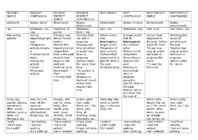
täisminevik enneminevik I pv Am/is/are, I pv, Has/have, III Has/have, II pv, -ed Was/were, -ing Had, III pv Had, been, -ing -ing pv/-ed been, -ing *Recurring *Action *(Giving new *Actions that *Short action *Longer action *Action that *Showing the actions happening right about) recent are still in that that is happened in cause of now events progress interrupts a interrupted the past, before something in *Temporary *Action that *Saying how longer action by a shorter a specific time the past
1. Active/Passive Active - the professor teaches the students. Passive - The students are taught by the professor 2. Present Simple [VERB] + s/es in third person. Tegevus on korduv või tavapärane. You speak English. I play tennis. Cats like milk. The train leaves tonight at 6 PM. I am here now. Active= Once a week, Tom cleans the car. Passive= Once a week, the car is cleaned by Tom. 3. Present Continuous [am/is/are + present participle]. Tegevus toimub/ei toimu praegusel hetkel. You are watching TV. You are learning English now. I am studying to become a doctor. I am meeting some friends after work. Active= Right now, Tom is writing the letter. Passive= Right now, the letter is being written by Tom. 4. Past Simple [VERB+ed] or irregular verbs. Tegevus algas/lõppes minevikus täpsel ajal. . You called Debbie. I saw a movie yesterday. I finished work, walked to the beach, and found a nice place to swim. I lived in Brazil for two years. I studied French when I was a child. Active
"I will help him carry the suitcase." · on-the-spot decision (hetkeotsused) Future Simple "Will you help me if I forget my moves?" "Don't worry! I will take care of everything." · requests, promises (palved, lubadused) Future Simple "Don't move yourself! I will hurt you if you do." · threats, warnings (ähvardused, hoiatused) Future Simple "Somebody will win Eurovision next year as well." · future facts - actions, situations, events which will definitely happen and which we cannot control (tulevikus toimuv, mille üle kõnelejal puudub kontroll) Be going to · "We are going to buy a lot of food." · plans, intentions (isiklikud plaanid, kavatsused) Be going to · "I am going to become a professional basketball player." · Ambitions (ambitsioonid) Be going to "Look! The cat is going to yawn!" · prediction based on
pressed. They can make you popular or unpopular, confident or insecure, positive or negative. Your thoughts can make you feel powerful or powerless, a victim or a victor, a hero or a coward. In your material life, your thoughts can make you a success or a failure, prosperous or poverty-stricken, respected or ignored. Your thoughts, and the actions that they trigger, determine your whole life. And the best news of all is that they are completely under your own control. ■ THOUGHTS, FEELINGS, AND DESIRES You are a complex bundle of thoughts, feelings, attitudes, desires, images, fears, hopes, doubts, opinions, and ambitions, each of them constantly changing, sometimes from second to second. Each of
 annaabi.ee