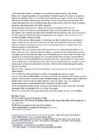
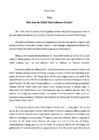
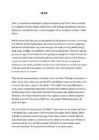
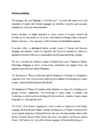
Bible or KJV. English translation of Christian Bible. Translation began by the church of england in 1604 and completed in 1611. It was the third official translation into english. The first was the great bible which was made during the reign of kind henry VIII and the second was bishops bible. They started making the new version in 1604 because the puritans(a factino within the church of england) perceived (detected)problems with earlier translations. 2.The translation was done by 47 scholars, all of who were members of the Church of England. The New Testament was translated from Greek, the Old Testament was translated from Hebrew text, while the Apocrypha were translated from the Greek and Latin. Over the course of the 18th century, the Authorized Version supplanted the Latin Vulgate as the standard version of scripture for English speaking scholars. Person on the picture is william tyndale
However, through the analysis of two such accounts on Romania, Dervla Murphy's Transylvania and Beyond (1992) and Eva Hoffman's (ample chapter on Romania in) Exit into History (1999) this paper aims to show that such translations, if undertaken, may turn into complex exercises of intercultural communication in our global world, confronted with problems of identity and representation. The first section analyses in detail the cultural translations of
Stephenie Meyer Stephenie Meyer is an American author, known for her vampire romance series Twilight. The Twilight novels have sold over 42 million copies worldwide, with translations into 37 different languages around the globe. A film adaptation of Twilight was released domestically on November 21, 2008. Meyer is also the author of the adult science-fiction novel The Host. Meyer was named USA Today's "Author of the Year" in 2008. She was also the biggest selling author of the year, having sold over 22 million books in 2008 alone, with Twilight being the best selling book of the year. She was born in Hartford, Connecticut, to Stephen and Candy Morgan. She
Hacker(1878-1948) -> moved to Kutšino, Moskva suburb Dagmar (1902-1994) Hedda (1905-1988) Hedda’s godfather- painter Ants Laikmaa 2nd august 1904 - “Postimees” published M. Under’s first poem “How … happened” (pseudonym Mutti) 1906 -> Tallinn 1913 Artur Adson -> Marie’s editor 1924 divorced from Carl Hacker; married to Adson 1917 was the first collection of Marie Under’s poems published during ‘20s Marie also published essays, other writings and translations from the german language Her early work was quite sensual topics: love and nature “Sonnets” (1917), “Pre-bloom”/“Eelõitseng” (1918) “Blue sail”(1918) Her work later on was more socially ortiented, especially those inspired by the war “We are waiting” is concidered to be the national anthem of the Estonian emigrants the poem ends with words “We are waiting. We keep on believing. We do not bend.” “A wish” Let me never serve with half a mouth
[Ostreococcus virus OsV5] Score = 32.7 bits (73), Expect = 5.8, Identities = 16/46 (34%) 2. BLAST programmi kasutamine valgumotiivide otsimisel. a. Valida sobiv programm sarnasuste leidmiseks motiivile VEHINKTIAPALVSK ning valida otsimiseks andmebaas, mis sisaldab kõik GenBank CDS translatsioone + PDB + SwissProt + PIR + PRF. Sooritada otsing standardparameetritega, joondamiste arv 500. Database: All non-redundant GenBank CDS translations+PDB+SwissProt+PIR+PRF excluding environmental samples from WGS projects Posted date: Mar 25, 2008 5:58 PM Number of letters in database: -2,129,407,321 Number of sequences in database: 6,344,481 Lambda K H 0.343 0.282 1.59 Gapped Lambda K H 0.294 0.110 0.610 Matrix: PAM30 Gap Penalties: Existence: 9, Extension: 1 Number of Sequences: 6344481 Number of Hits to DB: 12186341 Number of extensions: 227775 Number of successful extensions: 10959
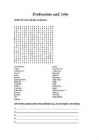
Professions and Jobs 1)Find the words and give translations. A D R E T S A M D A E H N U R A X Y M R T R R E E M R Y C Q B R A S E P N G G E S M T Y I E B C P Z U E N Y N D T X H G A H Q I G H O A B P S P N L A E Z U G N N V O A S U S A R Q I E Y R E M R A F I S O N P N T F A T K N E C T L E D O M S
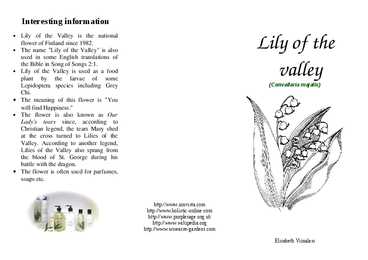
Interesting information Lily of the · Lily of the Valley is the national flower of Finland since 1982. · The name "Lily of the Valley" is also valley used in some English translations of the Bible in Song of Songs 2:1. · Lily of the Valley is used as a food plant by the larvae of some Lepidoptera species including Grey (Convallaria majalis) Chi. · The meaning of this flower is "You will find Happiness." · The flower is also known as Our Lady's tears since, according to Christian legend, the tears Mary shed at the cross turned to Lilies of the Valley. According to another legend,
Lo que hace un punto interesante: esperaría que los estilos de escritura a ser dramáticamente diferente. Sin embargo, creo que gran parte del estilo, muy sexual, alusiones a través del libro. Por ejemplo, cuando Celestina es alentador de preliminares (foreplay) de Sempronio y Pármepno con sus mujeres en la casa durante la cena (Finch 128). The first translation of the tragicomedia that is interesting for me is by James Mabbe and Dorothy Severin. It is one of the most well-known translations of La Celestina. Mabbe translated the work while Severin edited it and added the introduction and notes. The original translation by Mabbe was in 1631 in London, and uses English from that period. This is actually his second translation of the same work; the first was completed in 1598. In 1972 the Tamesis Press published an edition of the 1598 (almost exactly 100 years after the original writing by Rojas)
Zácek · Betti Alver. Selected poems, Toronto 1989, tõlkinud Taimi Ene Moks, Willis Barnstone, Felix Oinas, Billy Collins, Mardi Valgemäe, Elmar Maripuu, Talvi Laev, Ivar Ivask, Bernard Lionel Einbond · Das Leben ist noch neu: zehn estnische Autoren: eine Anthologie, Karlsruhe 1992 (kümne eesti luuletaja antoloogia Gisbert Jänicke tõlkes) · Kuus eesti luuletajat: Ants Orase tõlkes = Six Estonian poets in translations of Ants Oras: Gustav Suits, Marie Under, Heiti Talvik, Betti Alver, Uku Masing, Aleksis Rannit, Tallinn 2002 Proosa · Tuulearmuke, Tartu 1927 (romaan) · Invaliidid, Tartu 1930 (romaan) · Kirjandusnädala album: "Vabaharidustöö" kirjandusnädala erinumber: II-III, Tallinn 1930 (koguteos) · Viletsuse komöödia, Tartu 1935 (proosapoeem; 2. trükk Tallinn 1990) · Teosed, 2
Some say that it is only natural that every language changes, picking up bits and pieces of other languages. I believe both "parties" are correct, but I also believe that we must be careful, unless instead a normal development of our language we get overrun by another language, thereby mutating Estonian into Estonglish. Everything even remotely tourist/abroad aimed is labelled firstly in English and in very small letters in Estonian. I do believe in broadcasting ourselves. I believe in translations. But I believe that going about in, say, Tallinn, and reading the pub and shop signs, I should still be reading Estonian and not have a constant question "am I still in Estonia?". Estonia is without a doubt influenced by American mass culture, which has changed the way the youth of today look at life. Daily we listen to American pop music (well, I don't, but that is an active choice, if I turned on radio or picked what Youtube is proposing, then most likely I'd get US
Perhaps the best known piece of Anglo-Saxon art is the Bayeux Tapestry which was commissioned by a Norman patron from English artists working in the traditional Anglo-Saxon style. The most common example of Anglo-Saxon art is coins, with thousands of examples extant. Anglo-Saxon artists also worked in fresco, ivory, stone carving, metalwork and enamel, but few of these pieces had survived. Literature Anglo-Saxon literary works include genres such as epic poetry, hagiography, sermons, Bible translations, legal works, chronicles, riddles, and others. The most famous works from this period include the poem Beowulf, which has achieved national epic status in Britain. The Anglo-Saxon Chronicle is a collection of important early English history. Cædmon's Hymn from the 7th century is the oldest surviving written text in English. In all there are about 400 surviving manuscripts from the period. Religion The indigenous pre-Christian belief system of the Anglo-Saxons was a form of Germanic
And you shouldn't judge him for being weaker than it; undaunted° love conquers all things. And know that, if you don't know already, that two conclusions are true. The first, that a man is forced to love a woman and the woman love a man. The second, that he that truly loves must be bothered by the sweetness of natural delight, which the Maker of things put onto us, for the lineage of men to continue, without which it would perish°. ( ° Denotes translations taken from Finch) 2 Literary Translation (that I would write in a book which keeps the spirit of Rojas) It's easy to see, Parmeno, that Calisto is lovesick. You shouldn't blame him for succumbing to such a strong force; true love conquers all. And you should, know, if you don't already, that there are two universal truths about love. First, is that it is in
ways. I have chosen to analyse the closing sequence of ``The Black Dahlia``, directed by Brian de Palma, and I will focus on macro features in this essay. Brian de Palma is well known director, who is focused on noir area through his career (he was once considered as a Hitchcock imitator) ``The Black Dahlia" can be classified as Film Noir. The genre is called Film Noir due to the `serie noir` books, which were publised in France (bethween 1940s and 1950s). These books were translations of American novels by authors like Dashiel Hammet, Raimond Chandler and James M. Cain. The novels usually talked about a strong, violent hero (anti-hero?) who moves through a corrupt dangerous world. ``The Black Dahlia`` is based on a novel by James Ellroy and not on a true Black Dahlia (murder) case. The theme of murder/crime/violence is one of the most important themes in Film Noir. In Film Noir morality is less clear (than
the finest literary work in the Arabic language. The Koran is divided into 114 suras(chapters), which contain 6236 verse. The chronologically earlier suras, revealed at Mecca, are primarily concerned with ethical and spiritual topics. The later Medinan suras mostly discuss social and moral issues relevant to the Muslim community. Muslims are usually viewing the Koran as the original scripture as revealed in Arabic and that any translations are necessarily deficient, which are regarded only as commentaries on the Koran. Muslims identify the prophets of Islam as those humans chosen by God to be his messengers. According to the Koran, the prophets were instructed by God to bring the ,,will of God" to the peoples of the nations. Muslims believe that prophets are human and not divine, though some are able to perform miracles to prove their claim. The Koran mentions the names of numerous
difference in status between communicators, and the level of fondness a person has for the other communicator. Posture is understood through such indicators as direction of lean, body orientation, arm position, and body openness. A gesture is a non-vocal bodily movement intended to express meaning. They may be articulated with the hands, arms or body, and also include movements of the head, face and eyes, such as winking, nodding, or rolling one's eyes. Emblems are gestures with direct verbal translations, such as a goodbye wave; Illustrators are gestures that depict what is said verbally, such as turning an imaginary steering wheel while talking about driving; an affect display is a gesture that conveys emotions, like a smile; regulators are gestures that control interaction; an adaptor is a gesture that facilitates the release of bodily tension, such as quickly moving one's leg. Speech-independent gestures are dependent upon culturally accepted interpretation and have
" Her not crossing over to using ty with Gurov suggests her need to maintain some distance between herself and him, thereby preserving a degree of self-respect. Th roughout their conversation in this passage, even when Gurov treats her with gentleness and compassion -- the kind that he might off er a pet dog -- Anna addresses him only as vy. Th e interplay of the two pronouns here clearly reveals a degree of tension and distance between the two characters that is entirely missing in English translations. Yet another dimension of the asymmetrical usage of second-person pronouns here is the attention that it calls to the couple's asymmetrical age relationship and social status: Gurov is twice Anna's age. He is in his forty's while she is only twenty-two. Moreover, Gurov is from Moscow, the former capital of Russia and still a center of power and culture, and occupies a high social position through his marriage whereas Anna has fallen socially, having moved -- because of her marriage -- from St
But by contrast, the earliest monuments of English prose represent the true beginning of a tradition of written prose. But indeed the only work of prose which can claim a foothold of English literature is `Mandeville's Travels' and it's translated from the French. With the religious works bulk much larger and important writers are Thomas More, Jeremy Taylor, etc. The main tradition of vernacular prose began in England in late 800s with the Anglo-Saxon chronicle and with the group of translations made or inspired by the king himself. However, the best of Anglo-Saxon prose was produced a century later by the monks Wulfstan and Ælric, who left a large number of writings devoted to the exposition of Christian faith. That includes homilies and Saint's Lives. It is now believed that these monks were responsible for developing the form of written English known as Late West Saxon. Ælric was a grammarian, he wrote the first Latin grammar in English. One
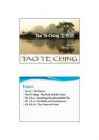
y Succinct to read in an afternoon, but profound to study for a lifetime y Can't go through every chapter and analyze every phrase, but will attempt to cover some of the key concepts mentioned in the book y Once we understand the essence, we can observe it in other scriptures, books, and in the world we live in y Book that teaches you how to fish instead of giving you a fish y Sharing of my personal and distilled interpretation of the many translations and explanations of the book y Doesn't mean one interpretation is better than yours or any others Tao Te Ching The Name y Tao =Way, Path, Truth; Te = Virtue; Ching = Scripture y In Math, Y = F(X), or equal to the function as applied to X y X = Tao = source, Y = Virtue = result of the function applied to Tao y True Nature is our source, Virtue is the function, or manifestation and action y Helping others or saving a drowning kid, is an action
Muslim jurists consult the hadith, or the written record of Muhammad's life, to both supplement the Qur'an and assist with its interpretation. The science of Qur'anic commentary and exegesis is known as tafsir. The word Qur'an means "recitation". When Muslims speak in the abstract about "the Qur'an", they usually mean the scripture as recited in Arabic rather than the printed work or any translation of it. To Muslims, the Qur'an is perfect only as revealed in the original Arabic; translations are necessarily deficient because of language differences, the fallibility of translators, and the impossibility of preserving the original's inspired style. Translations are therefore regarded only as commentaries on the Qur'an, or "interpretations of its meaning", not as the Qur'an itself. Angels Belief in angels is crucial to the faith of Islam. The Arabic word for Angels (malak) means "messenger", like its counterparts in Hebrew (malakh) and Greek (angelos). According to the
chosen in order to characterize the man himself. Emotive prose allows the use of elements from other styles (e.g. the newspaper style, the official style, the style of scientific prose). Emotive prose as a separate form of imaginative literature, that is fiction, came into being rather late in the history of the English literary language (e.g. in early Anglo-Saxon literature there was no emotive prose). The first emotive prose, which appeared, were translations from Latin of the Bible stories. Middle English prose literature was mostly educational, represented mostly by translations of religious works from Latin. In the 12 th and 13th centuries appeared "Tales of King Arthur and his Round Table", some of which were written in verse and others in prose. Emotive prose began to assume a life of its own in the second half of the 15 th century, when romances and chronicles describing the life
has reigned longer. Her Silver and Golden Jubilees were celebrated in 1977 and 2002; her Diamond Jubilee is being celebrated during 2012. Cultural Life in Great Britain Artistic and cultural life in Britain is rather rich, like in most of the European countries. It has passed several main stages in its evelopment. The Saxon King Alfred encouraged the arts and culture. The chief debt owed to him by English literature is for his translations of and commentaries on Latin works. Art, culture and literature flourished during the Elizabethan age, during the reign of Elizabeth I; it was the period of English domination of the oceans and colonies, and, due to the strong political and economic position of the country, there were few obstacles in the way of the cultural development. This time is also famous for the fact that William Shakespeare lived and worked then.
inclination toward to poetry of concreteness and attentiveness to the details of the world” (1986, 93). Everett sees in Larkin a certain insolent or thug vein originated, partly, by certain practice of “shocking the bourgeois, but in special reversed form: needling the aesthetic to the reader” (1989, 129). In the case of Larkin, the translator will avoid that tendency so in rows inclined to “poetize” the poetry translations, regarding who their author could be, and will consider the eagerness of Larkin about, in words of Everett, creating “an unobtrusive art”, that never has to be confused with “artlessness” (1989, 132). We found in Larkin a peculiar mixture of fluid orality and very noticeable structure, whose maximum examples would be “Here” and “High Windows”, Brownjohn says that: Larkin has never written easily (...) But any sense of effort or
Emotive prose allows the use of elements from other styles (e.g. the newspaper style, the official style, the style of scientific prose). Emotive prose as a separate form of imaginative literature, that is fiction, came into being rather late in the history of the English literary language (e.g. in early Anglo-Saxon literature there was no emotive prose). The first emotive prose, which appeared, were translations from Latin of the Bible stories. Middle English prose literature was mostly educational, represented mostly by translations of religious works from Latin. In the 12 th and 13th centuries appeared "Tales of King Arthur and his Round Table", some of which were written in verse and others in prose. Emotive prose began to assume a life of its own in the second half of the 15 th century,
speakers - 37 people Inability of non-native speakers to express their feelings and emotions clearly -21 people The next question concerned advantages of English being a global language, and students gave their opinion about the issue. Again, they were offered to choose the 3 most important statements out of 6 different options and the most of the students have chosen the following: No more translations needed for everything - 76 people More opportunities for people to travel, work, change living location, etc. - 65 people Being able to communicate no matter where you are - 58 people The rest of the advantages are mentioned below with the following results: No language barriers between the nations - 57 people International trade facilitated by increased opportunities for communication between nations- 31 people
Jaume I, Castellón (Spain) in 2006. For more than 21 years, José Luis combined his profession- al activity in several chemical process production companies with his education in Translation Studies. Since 2007, José Luis is a full-time researcher, and a full-time lecturer as well since 2009, at the Universitat Jaume I. His main research field of interest is audiovisual translation, and is specialized in comparing translations for dubbing and subtitling. José Luis teaches audiovisual and scientific translation, and has been involved in the development of software tools both to automate translation conventions for dubbing and to make subtitle reading speed calculations. © 2013. Fédération des Traducteurs (fit) Revue Babel All rights reserved 420 José Luis Martí Ferriol Additionally, he occasionally acts as a free-lance translator of scientific and technical assign-
correct through his reforms. Kantemir honored this tradition of reform not only through his support for Peter, but by initiating a decade-long debate on the proper syllabic versification using the Russian language. Vasily Kirillovich Trediakovsky, a poet, playwright, essayist, translator and contemporary to Antiokh Kantemir, also found himself deeply entrenched in Enlightenment conventions in his work with the Russian Academy of Sciences and his groundbreaking translations of French and classical works to the Russian language. A turning point in the course of Russian literature, his translation of Paul Tallemant's work Voyage to the Isle of Love, was the first to use the Russian vernacular as opposed the formal and outdated Church-Slavonic. This introduction set a precedent for secular works to be composed in the vernacular, while sacred texts would remain in Church-Slavonic. However, his work was often incredibly theoretical
manual; many mutually incompatible ones are entirely consistent with that evidence. Moreover the underdetermination here is not merely the standard underdetermination of scientific theories by the evidence on which they are based. It is radical: not even the world's totality of physical fact suffices to vin- dicate one of the rival translation manuals as against the others. Therefore, no translation is correct to the exclusion of its rival translations. But if sentences had meanings then there would be correct translations of them, namely the translations that did preserve their actual meanings. Therefore, sentences do not have meanings. The problem here is to justify the premise that not even the world's total- ity of physical fact rules in one of the rival translation manuals as correct. The defense of that premise remains obscure. 108 Theories of meaning Summary · According to the Verification Theory, a sentence is meaningful if and
Counter-Countermeasures ("look- Countermeasures (jamming, false ing-through" jammed radar) radar echoes) This book employs certain typographic conventions for simplicity and economy. Plaintext is always set lower case; when it occurs in the running text (as opposed to its occurrence in the diagrams), it is also in italics. Cipher-text or codetext is set in SMALL CAPS in the text, keys in LARGE CAPS. They are distinguished in the diagrams by labels. Cleartext and translations of foreign-language plaintext are in roman within quotation marks. The sound of a letter or syllable or word, as distinguished from its written form, is placed within diagonals, according to the convention widely followed in linguistics; thus /t/ refers to the unvoiced stop normally represented by that letter and not to the graphic symbol t. D. K. 1. One Day of Magic: I
GCGCTGACGTCATGGTTCGTGGACGGGACTCATAGGGGGAGTCGTCGTAGTATACGTGGT AACCTGGGAGTAGGTTGTCGGGTCTTTTCGATAACCTCGAGTAGGCCCGACCCTACGCCCA GCACGCATACTTGAAGAGAGTGCCGAGAGTGCTCATAGTGACGGTCTGTTATGTCCGCCGA GCATT Restriktsioonikaardid: BioEdit version 7.0.5.3 (10/28/05) Restriction Mapping Utility (c)1998, Tom Hall gi|24648965|ref|NM_142773.1| Drosophila melanogaster CG7069-RA (CG7069), mRNA Restriction Map 27.02.2007 8:39:03 2693 base pairs Translations: none Restriction Enzyme Map: 1 TAAAATAAGCAAAAACTGTCCATTGTGATGTAAAATAAAAACAAAGCCACATAGTTTTAAATAAGT TTTAAGTAGGTATG 80 1 ATTTTATTCGTTTTTGACAGGTAACACTACATTTTATTTTTGTTTCGGTGTATCAAAATTTATTCAAA ATTCATCCATAC 80 MslI DraI 81 CGTTCTTAGGAATCAGGTCCCAGGTGTCACGGGTATACAAGGTGAACGGACAATTTGGATTCTATA GCGACGATACGGTC 160 81 GCAAGAATCCTTAGTCCAGGGTCCACAGTGCCCATATGTTCCACTTGCCTGTTAAACCTAAGATATC GCTGCTATGCCAG 160 BsmFI EcoO109I AccI Hpy8I HphI TspGWI DrdI
Veebi kasutamise võimaluste laiendamine puuetega inimeste jaoks. http://www.webaim.org/ World Enable Rahvusvaheline ettevõtmine puuetega inimestele, nende poolt ja nende kaudu võrdsete võimaluste pakkumisel Internetile juurdepääsu tagamiseks. http://www.worldenable.net 3. Üleriigilised ja rahvusvahelised juurdepääsu alased kampaaniad Viewable with any browser Brauseri tüübist sõltumatute veebilehtede kampaania. http://www.anybrowser.org/campaign/index.shtml#translations RNIB's Campaign for Good Web Design 2003 http://www.rnib.org.uk/xpedio/groups/public/documents/publicwebsite/public_goodwebde sign.hcsp Campagna per l'accessibilità delle biblioteche in rete: progetto CABI Itaalia sidusraamatukogudele juurdepääsetavuse kampaania. CABI projekt. http://marciana.venezia.sbn.it/CABI/index.html 4. Meililistid ja foorumid BLIST The Comprehensive Index of Blindness-Related Emailing Lists
The tetralogy Kolme katku vahel (Between Three Plagues, 1970-1980) depicts the life of Balthasar Russow, pastor and chronicler in Tallinn in the Sixteenth century. Lennart Meri (1929-2006) discussed the role and place of Estonians, a small nation of coast dwellers, in world history, surprising with his erudition in the memories of the past enjoining them with the problems of today: Hõbevalge (Silver White). Looking at the statistics for the year 1974, translations from 72 languages into Estonian had been made (literature of 90 nations); the greatest number from Russian. The works of Estonian authors had been published in 46 languages (usually translations into the languages of Soviet nationalities). The most numerous orders for Estonian books had come from Sweden, Finland, Germany and the USA. 1 The international Finno-Ugric Congress played an essential role in establishing literary contacts.
2: Complex and derived constructions. Berlin: Mouton de Gruyter. Luc van Doorslaer 2009. Risking conceptual maps: Mapping as a keywords-related tool underlying the online Translation Studies Bibliography. – Luc Van Doorslaer ja Yves Gambier (toim.), The Metalanguage of Translation. Benjamins Current Topics. Amsterdam: John Benjamins, 27–43. Helge Dyvik 1998. A translational basis for semantics. Language and Computers, 24, 51–86. Helge Dyvik 2004. Translations as semantic mirrors: from parallel corpus to wordnet. Language and computers, 49 (1), 311–326. Eesti Väitlusselts 2008. Arutlev haridus: Eesti Väitlusseltsi õpik. Tallinn: Eesti Väitlusselts. Kirjandus 261 Birgitta Englund Dimitrova, That’s close! On translators, interpreters, researchers, texts and their interrelations, Ljubljana 2007. Mati Erelt, Reet Kasik, Helle Metslang, Henno Rajandi, Kristiina Ross,
 annaabi.ee