Leidsid 33 sarnast õppematerjali, mis on seotud failiga "The Great Plague of London". Need materjalid aitavad sul teemat sügavamalt mõista.
fire, plague, diary, though, 1666, samuel, england, major, built, fires, estimated, sent, although, fact, english, thought, other, bill, king, himself, case, carry, kept, started, houses, cathedral, wood, stone, first, century, live, never, woke, went, hour, friend, green, massive, disease, killed, arrived, merchant, parcel, cloth, netherlands, julyJüri Gümnaasium THE GREAT PLAGUE IN LONDON Research paper Ervin Sagor 10.h Supervisor: Kristel Kriisa Jüri 2011 TABLE OF CONTENTS INTRODUCTION The history of England has always been fascinating for me and plague was one the most horrifying diseases in human history with millions of deaths across the world. That is why I chose the Great Plague as the topic of my research. The purpose of my study is to educate myself and gain more knowledge on the history and find out how people lived in England in the seventeenth century. For a start, I will give a short review what the bubonic plague is. Then I tell about Black Death in England before the Great Plague, city life before and during the plague
London History The Romans AD 43- AD 410 The Romans finally invaded Britain in AD 43 from Kent. The Romans lead by Julius Caesar attempted to invade Britain twice before that in 55 and 54 BC but the invasions were unsuccessful. They made their way to the river Thames and sailed up it. The Romans knew it was important to control a crossing point at the river Thames, so they decided to build a settlement on the north bank. Although small settlements had been built on the banks of the Thames, the Romans were the ones who built the first city. They called their city Londinium. The Roman engineers noticed that the point where the swampy river narrowed would make an ideal crossing point, they built London Bridge. Less than 20 years later the native Iceni tribe, led by Queen Boudicca, rose up against the Romans in revenge for mistreatment and burnt Londinium to the ground. The well disciplined Roman army defeated her forces and Londinium was rebuilt
What is London? London is one of the largest cities in the world, with an area of 1706,8 km2. It is the capital of England and The United Kingdom. It is in Central Europe. The city lies on the river Thames. London has 7,556,900 inhabitants, which is more than a quarter of the countries in Europe! For one city, London is very special. The beginning of London Before the founding of London, there had already been smaller groups of people in the area. There aren't any records on who they were. The first mayor settlement of London was in 43 AD. Romans came to the banks of the river Thames
The great Fire The Great Fire of London of September 1666 was one of the moost famous incidents in Stuart England. It was the second tragedy to hit the city in the space of 12 months. The fire started in Pudding Lane. The fire started in a baker's shop owned by Thomas Farriner who was the king's baker. His maid failed to put out the ovens at the end of the night. Once it started, the fire spread quickly. The city was basically made out of wood and with September following on from the summer, the city was very dry. Strong winds fanned the flames. In 1665, during the plague, the king, Charles II, had fled in London. His plan, in 1666 (he stayed in London and took charge of the operation to save the city) was to create fire-breaks. The heat created by the fire was so great that the lead roof on the old St Paul's Cathedral melted
Topic London Tallinn English College Tallinn 2007 1. Introduction London is the capital city of the United Kingdom and the largest urban area in England. The ancient City of London, to which the name originally belonged, still maintains its medieval boundaries, but the name "London" has long applied more to the whole metropolis that has grown up around it. London has been an important settlement for over two millenniums. It is also one of the world's leading business, financial and cultural centres and its influence in politics, education, entertainment and even fashion contribute to its status as a major global city
politically, but was, however an important crossing point for the romans over the river Thames. Londinium was at a very good place, so it soon became a trading centre. In AD 61 the city was devastated by Boudicca, who led a revolt againt the Roman conquest of Britain. The city was burned down and its inhabitants massacred. London was rapidly rebuilt, becoming the capital of the province Britannia. AD 122 Roman walls were built around it as a Around AD 400 the Anglo-Saxons invaded Britain. They destroyed the roman towns and formed many kingdoms that were hostile to one another. London fell into ruins. King Egbert united all the small kingdoms and formed one kingdom named Englad. Later king Alfred the Great chose London to be the capital of the country. During the reign of Edward the Confessor Westminster Abbey and the royal palace were built.
Contents Introduction...................................................3 London's early history.....................................45 The people of London......................................6 Buildings and bridges......................................7 Intruduction London is the capital of the united kingdom (UK), which is made up of Great Britain(England, Scotland, Wales) and Northern Ireland. The city lies in the southeast of England and covers an area of about 1,578 square kilometres on either side of the River Thames. With population of seven million, London is by far the largest city in the UK. Birmingham, the second largest, has just over one million inhabitants. Cultural life London is the worldclass centre. It has more than40 theatres, where audiences enjoy everything from musicals to William Shakespeare's plays
The Middle Ages are so called as the middle period between the decline of the Roman Empire and the Renaissance. The Middle Ages started in 1066. with the Battle of Hastings and the Norman Conquest. William the Conqueror took all the lands from the Saxon English and gave these to French nobles. Normans were known as great builders. This is assured by the fact that many great castles and other buildings, including the Tower of London, were built during the Norman Conquest. In 1086. Domesday Book was compiled. It is a detailed survey of England ordered by William the Conqueror. The reign of King William Rufus who was the son of William started in 1087 and lasted until 1100. Next king was Henry I who was the brother of William Rufus. His reign was from 1100-1135. In 1135 Henry I nephew Stephen got to the throne of England and reigned the country for 19 years. He was the last Norman king of England and his reign ended in 1154.
enlarged it and constructed Westminster Hall. The two centres which were to characterise the English capital for many years emerged: The City of L and Westminster. In 1193 Londoners elected Henry Fitzalwin their first Mayor and in 1209 a stone bridge was built to replace the earlier wooden one, which was the first real London Bridge. In 1349 the Black Death killed thousands of citizens. During the reign of Elizabeth I, the first map of L was published and the Globe Theatre built. Many people perished In the Plague (1603) and in the following Great Plague (1664-1665). It was ended by the Great Fire on Sept 2, 1666. It destroyed many houses and churches including St Paul's, and the Royal Exchange. However, the Fire meant that the City could be improved. The streets were widened and the houses were built of stronger materials. Sir Christopher Wren rebuilt 53 of the destroyed churches.
THE CITY OF LONDON History The City of London occupies one square mile in the middle of the capital. It once made up entire town of London, surrounded by the wall first built by Romans. The Romans also built a bridge over the Thames and there has been one in the same area ever since. The Roman Londinium grew up on the northern side of the bridge. In AD 61 the native Celtic tribe, led by Queen Boudicca, rose up against the Romans. They burnt down Londinium to the ground and killed most of its inhabitants. Roman armies eventually defeated Boudicca and Londinium was rebuilt. At the end of the fourth century AD the Roman Empire began to crumble and the Roman armies
Forms of Celtic language are still spoken in Britain. Romans (with Julius Caesar in the head of them) first tried to occupy Britain in 55 B.C., but there was a rebellion in Gaul so they had to leave to fight against it. Next time they came in 43 A.D. and their leader was Emperor Claudius. Romans brought a lot with them. Their brought paved roads, the sites of important cities, the seeds of Christianity, the Roman law, Roman baths, language and advanced civilization. They also built Hadrian's Wall in 122 A.D. Romans occupied Britain for four centuries. The Roman way of life all vanished after the invasions from Northern Europe by the Angles, Saxons and Jutes from the 5th century onwards. They ruined Londinium, but they were easily turned into Christianity and religion became more and more important. The Vikings, who came in the 9th century, first raided England to plunder it, but then they decided to stay
1: When was London founded, and by whom? London, England was founded in A.D. 43 by the Romans 2: What was its original name? Londinium 3: What happened to London in 61 AD? 61 AD Boadicea, the queen of a tribe of Britons, led a rebellion against the Romans 4: What was the population of London in the second century AD? Around 60,000 5: What happened in 851 AD? 6: What did Alfred the Great do? He defended Anglo-Saxon England from Viking raids, formulated a code of laws, and fostered a rebirth of religious and scholarly activity. His reign exhibits military skill and innovation, sound governance and the ability to inspire men and plan for the future, piety and a practical commitment to the support of religion, personal scholarship and the promotion of education. 7: What did Ethelred do at London Bridge? King Ethelred burnt down the bridge to split apart the invading forces of the Dane Svein Haraldsson
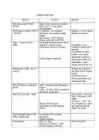
The Celtic period (400 BC Name: Celtic words (Llyn (a lake) + AD 43) Dun (a fort or strong place) ) Not important The Roman occupation (AD 43 Londinium not important Boadicea a revolt against - AD 410) politically. An important trading the Roman conquest centre. Devastation AD 61. Rebuilt. Roman walls built in AD 200. Anglo Saxons (AD 400 Destroyed the Roman towns. Many 1066) kingdoms. London in ruins. King Egbert one Flourishing. Attacks by Vikings. kingdom England (the 9th century) King Albert the Great
poem’s meaning To the Noblest & best of Ladyes, the Countesse of Denbigh Henry Vaughan: many obvious borrowings, striking opening lines. The World Andrew Marvell: many strands of 17thC thought, feeling and style, created the tradition of garden poems The Definition of Love, To His Coy Mistress, The Garden Ben Jonson: IX: Song: To Celia, II: To Penshurst; Hymn to Cynthia. 4. The arrival of classicism in England. The impact of the art collections of the Earl of Arundel and Charles I Inigo Jones, travel with Thomas Howard, Earl of Arundel. Purpose: in-depth study of ancient and modern architecture. Italy, Venice, Vicenza, Rome, Naples. New cultural scene, looked back to early Roman Empire. Arundel: influential, new ideal for gentleman’s life. Promotion of foreign culture, Renaissance Italy, world of classical antiquity. Virtue: civility, grace, elegant manners, interest in learning
The Presentations Triinu: "The Notorious Prisoners of the Tower" Built in 1078, has been used as a fortress, Royal Palace, a prison, the home for Crown Jewels. The first prisoner was Ranulf Flambard in 1100. The only woman tortured in the Tower was Anne Askew. Guy Fawkes was prisoned 5 th November 1605, hung in 1607. Walter Raleigh was knighted, married without queen´s permission. Last prisoners were in the Tower in 1952. Rita: "Alexander Fleming" Was a pharmacologist, has graduated 6 schools, studied anti-bacterial agents, found
and is called the Common wealth. 1660 The monarchy and the Anglican religion are restored. ☾ The church was restored. However, the conflict between monarch and Parliament soon re-emerged ☾ Prince William and Mary became the king and the queen so this way it was established that a monarch could rule only with the support of Parliament. ☾ Bill of Rights, which limited some of the powers of the monarch 1666 The Great Fire of London destroys most of the city's old wooden buildings. It also destroys bubonic plague, which never reappears. Most of the city's finest churches, including St Paul's Cathedral, date from the period of rebuilding which follows. 1688 The Glorious Revolution 1690 The Presbyterian Church becomes the official Church of Scotland" The Battle of the Boyne, in which William III and the Ulster Protestants defeat James II and the Irish Catholics. EIGHTEENTH-CENTURY
The Renaissance Between 14th and 16th century in Europe From French word rebirth It was an age of growth in Europe. New, powerful city states emerged. A new middle class had more and more money to spend. Great artists, writers and thinkers lived during this time. During the Middle Ages many people who lived in the countryside worked on the land that they got from the noblemen. In return, they were protected by them Between the middle and the end of the 14th century, the plague, also called "Black Death" killed almost half of Europe's population. It spread most rapidly in the larger cities where many people lived. This led to economic depression. When the plague slowly decreased in the 15th century, the population in Europe began to grow. A new middle class emerged --bankers, merchants and trades people had a new market for their services. People became wealthier and had more than enough money to spend
The City of London History The City of London occupies one square mile in the middle of the capital. It once made up the entire town of London, surrounded by the wall first built by the Romans. The Roman Londinium grew up on the northern side of the "London Bridge" in the past. Products such as olive oil, wines and fruit were brought by ships from different parts of the Roman Empire and unloaded onto wooden quays along the river. In AD 61 the native Celtic Iceni tribe, led by Queen Boudicca, rose up against The Romans. They burnt Londinium to the ground but Roman armies eventually defeated Boudicca. The city was rebuilt and was gradually surrounded with a wall
The UK & London The United Kingdom (or the UK) is a short way of saying the United Kingdom of Great Britain and Norther Ireland. The UK is situated north-west of the European continent between the Atlantic Ocean and the North Sea. The UK consists of England, Wales, Scotland and Northern Ireland. Its highest point is Ben Nevis in Scotland followed by Snowdon in Wales. The Severn is the longest river in the United Kingdom. Other important rivers are the Trent, the Mersey, the Tyne, etc. Lough Neagh which lies in the centre of Northern Ireland is thr UK's largest freshwater lake. The climate in the UK is variable. The weather changes so frequently that it is difficult to forecast
1. What were the two institutions that Henry VII establised? Explain. Henry VII established the Court of Star Chamber to make the barons give up their private armies and overall restored finances by collecting taxes. Also Henry VII extended royal control over local government through the local magistrates called justice of peace. 2. What was the idea of the Act of supremacy? With passing the Act of Supremacy, Henry VIII was made the head of the Church of England and he was now free to divorce Catherine and marry Anne Boleyn. 3. Why did Henry VIII get the title Fidei Defensor? The title was given to him by the pope because Henry VIII was against Protestantism and other religious reforms by J. Calvin and M. Luther. For that, the pope named Henry VIII the Fidei Defensor, meaning Defender of the Faith 4. Why did Mary I get the nickname Bloody Mary? Because during her reign, England became officially a Roman Catholic country,
· avon river · cumb valley · ford shallow place in the river Ancient Britons had their own religion and priests or druids and temples. In the year 55 BC Britain became a Roman province. Romans were highly developed and had their own language latin, which has also greatly influenced English. The military occupation of the Isles ended in 410 AD. The Romans eventually brought Christianity to Britain. Hadrian's wall on the border of Scotland and England. It began construction in 122 AD. An Anglo-Saxon attack on Rome forced the Romans to leave The British Isles. They were replaced by Germanic tribes Angles, Jutes and Saxons, who drove the Celts to the north (Scotland) and west (Wales). They came from the North and Baltic Seas. Along with them came their dialects, which constitute the basis for Old English. Around 4500 words are still used today. They also had their own religion and Germanic gods
It seems that the Celts, who had been arriving from Europe from the 8th cent BC onward, intermingled with the peoples who were already there. The Celts were extremely talented people, creative and artistic. More than 1 Celtic tribe invaded Br. The descendants of ancient Celts live in Wales, Scotland, Cornwall and Ireland. They lived in primitive society. Druids priests, more powerful than chiefs. Acted like prophets. 2. Stonehenge From prehistoric period. Was built on Salisbury plain between 2500 and 1500 bc. One of the most famous and mysterious archaeological sites in the world. One of the mysteries is how it was built at all with the technology of the time. Another is its purpose. It appears to function as a kind on astronomical clock and we know it was used by the Druids for ceremonies marking the passing of the seasons. It appears in number of novels. These days it is not only the interest of tourists but is also a
o The Celts are best known for their art- many bronze objects with elaborate designs; brooches; pins; mirrors; Celtic stone crosses o The Celts had 3 social orders: warriors, druids(priests) ordinary people 2) The Romans o (55 BC-Caesar) 43 AD- 410 AD- Claudius o From present-day Italy o Southern Britain became Britannia and was ruled by a roman governor o The Romans built over 20 towns: Colchester, Londinium, Winchester etc. They were good engineers and built roads and villas that had central heating, glass windows and mosaic floors o 122 AD- Hadrian's Wall; 138 AD- Antonine Wall o Druids(celtic priests) were banned and Britain was influenced by christianity 3) The Germanic Invasions I. The Anglo-Saxons o 5th century- 1066
History exam *Stonehenge - is a monument located in England. It is one of the most famous prehistoric sites in the world and is composed of earthworks surrounding a circular setting of large standing stones. The surrounding circular, earth bank and ditch, have been dated to about 3100 BC. Stonehenge was produced by a culture with no written language. Many aspects of Stonehenge remain subject to debate. There is little or no direct evidence for the construction techniques used by the Stonehenge builders.
London London is the UK's largest and most populous metropolitan area and the largest urban zone in the European Union by most measures. In July 2007 it had an official population of 7,556,900 within the boundaries of Greater London, making it the most populous municipality in the European Union. History: The first major settlement was founded by the Romans in 43 AD. Canute took control of the English throne in 1016, controlling the city and country until 1035, when his death resulted in a reversion to Saxon control under his pious stepson Edward the Confessor, who refounded Westminster Abbey and the adjacent Palace of Westminster. By this time, London had become the largest and most prosperous city in England, although the official seat of government was still at Winchester.
He discovered America in 1492. I Indian sun, they pray for fan. J we hate Jews, they are fools. K Bush is okey, because he is not gay. L Americans are large, they eat much. M Mc`Donalds is good, there is a lot of food. N is for Nigga who pulled the trigger. O is for Osama who wears pyjamas. P is for Pamela who likes camera. Puritans The Puritans were a group of people who grew discontent in the Church of England and worked towards religious, moral and societal reforms. The writings and ideas of John Calvin, a leader in the Reformation, gave rise to Protestantism and were pivotal to the Christian revolt. They contended that The Church of England had become a product of political struggles and man-made doctrines. The Puritans were one branch of dissenters who decided that the Church of England was beyond reform. Escaping persecution from church leadership and the King, they came to America.
........... 8 Population and Ethnicity..............................................................................................9 3 Introduction The official name of the country is the United Kingdom. The United Kingdom is an island country. It consists of the island of Great Britain and Northern Ireland. Great Britain can be divided into three parts England, Wales and Scotland. Each of them has their own capital city. Glasgow in Scotland, Cardiff in Wales and London in England. The country is situated in the north-western Europe. The territory of the United Kingdom is about 244,000 square kilometres and about 60 million people live there. The UK contains a number of small islands. The largest islands that belong to the United Kingdom are the Isle of Man in the Irish Sea and the Isle of Wight which lies off of England's southern coast
Alice Kipling Fleming - Sister of British author Rudyard Kipling who became a well-known psychic, producing automatic writing under the name "Mrs. Holland." Born June 11, 1868, Alice Kipling was privately educated. She went to India at age 16 and married British army officer John Fleming. While in India she wrote a number of poems, and in 1893 initially experimented with automatic writing. After a long illness she returned to England in 1902 and in the following year read the classic study Human Personality and Its Survival of Bodily Death, by F. W. H. Myers. As a result she contacted the secretary of the Society for Psychical Research (SPR), London, regarding her own automatic writing. She was one of the seven principal mediums involved in the famous cross-correspondences cases. Fleming continued to do automatic writing until 1910, when she suffered a nervous breakdown. Early Life
London London is one of the world's great cities. Located in the southeast of England, on the River Thames, it is the capital of the United Kingdom and has been the heart of its political, cultural and business life for centuries. London has always been the centre of the world. The origin of the city may be dated around the beginning of the 1st century when a Celtic tribe settled near the Thames. The Romans founded London about 50 AD. Its name is derived from the Celtic word Londinios, which means `the place of the bold one'
other European countries. English boys play it at school, and in public parks. When they grow up, they play as members of important amateur teams or as a professional in teams competing in football ,,leagues". Professional football is as much a business as a sport. Rugby football was first played in 1823. In rugby every player is allowed to carry the ball. The ball is oval, not round. Each team contains 15 players. The oldest game of football in England is probably the football match which takes place at Ashburn on Shrove Tuesday every year. The game starts in the centre of the town, and the distance between two goals is two miles. The only rule is not to use motorcycles, cars and lorries in the game. In 1958 one team buried the ball. The other team didn't know and ran after them. Later first team took the ball and won. 3) JAMES WATT He was born in the small port of Greenock on the river Clyde in Scotland in 1736. His
Kristi . 8a. klass LONDON History .... There were some people living on the banks of the Thames when the Romans came to England in 43 AD . The Romans built houses , a port and a bridge over the river and named the place Londinium. In September 1666 , when the Great Fire destroyed four fifts of the wooden buildings . The fire began in the kitchen of the King ´s baker in Pudding Lane and lasted for five days . London . London is an exiting city . The population of London is about seven million people and it is made up of the people of very many nationalities . There are nine piers where you can get a boat and enjoy numerous sights like .... The Tower of London Click to edit Master text styles Second level Third level
Legend has it that one day, when the Danes were about to lose a bloody battle, the sky suddenly opened and a red flag with a white cross on it dropped down upon them from the heavens. This is allegedly how the Danes obtained their national flag, the Dannebrog in a battle against the Estonians. In the middle of the 14th century Denmark sold its possessions in Estonia to the German Teutonic Order. Toompea became the seat of the German-born gentry. A wall was built to separate the Upper Town and the Lower Town. In 1285 Tallinn joined the Hanseatic league and became a junction of trade between East and West. Tallinn is said to be built on salt, as it was an important trading commodity. In the 16th century Tallinn had a population of about 7,000 8,000 making it one of the biggest cities in northern Europe. In 1629 Sweden took control of the whole of Estonia. Though hard times
Liis Toomsalu QUESTIONS part 2 1: How many people died in the Great Fire of 1666? The death toll from the fire is unknown and is traditionally thought to have been small, as only a few verified deaths were recorded. This reasoning has recently been challenged on the grounds that the deaths of poor and middle-class people were not recorded anywhere, and that the heat of the fire may have cremated many victims, leaving no recognizable remains. 2: How was the fire finally mastered? The battle to quench the fire is considered to have been won by two factors: the strong east winds
 annaabi.ee